A16z partner talks to AngelList founder about metasemes: The core is ownership, Meta will become obsolete
Original title: Chris Dixon and Naval Ravikant -- The Wonders of Web3, How to Pick The Right Hill to Climb, Finding the Right Amount of Crypto Regulation, Friends with Benefits, and the Untapped Potential of NFTs
The Tim Ferriss Show
Overnight porridge, Babbitt
"But the only people who own things in the metasomes are giant corporations, which is a strange idea, which basically says only Zuckerberg is allowed to own the metasomes, only he can own the entire metasomes, why can't we all have our own room, our own property in the metasomes? So the deniers and opponents of NFT and Crypto are basically saying, "We're not going to have a collectively owned future, we're going to have a corporate-owned future."
"I thought what we were going to do was replace Uber and Facebook and Twitter with web3-enabled primitives and the resulting networks, but I don't necessarily think so now, I think we're just going to create new things that we can't even predict or identify. But we're going to turn our attention to those things eventually." So, Twitter and Facebook will still be fine and will continue to exist, but we'll be looking at these new applications that are uniquely enabled by primitives like NFT and Token."
Naval Ravikant, founder of CoinList
Recently, The Tim Ferriss Show, hosted by angel investor and popular podcast host Tim Ferriss, featured A16Z partner Chris Dixon and "The granddaddy of equity investing" Naval Ravikant. The podcast covers hot topics like the wonders of Web3, Friends With Benefits (FWB), and the untapped potential of NFT. The full podcast is over 2 and a half hours long and is divided into four sections for ease of reading.

Part I:A16z Partners talk to AngelList founders about Web3: Why it will Beat Web2?"
Here is part two (with cuts) :
The evolution and development direction of NFT
Naval Ravikant:We are now getting into the heart of Web3, NFT (Non-homogeneous Token), which Chris has been doing since day one, and of all the investors I know, Chris is the first to get into NFT in a big way and stay consistent. In fact, WHEN I met him in February, all he wanted to talk about was NFT. And I didn't get it at the time, and I thought, "Yeah, anyway, Chris, that sounds cool. Nice toy."
Now I think, "What did you say again?" So I missed NFT, but NFT answered a whole bunch of questions I didn't know before. One problem is the emergence of a group of people who bought bitcoin early and got rich in this great movement of wealth transfer.
Chris used to refer to them when we moved from fiat money to some sort of scarce, mathematically backed currency. So does that mean that the people who entered the field in 2009-2015 or '16 are going to get rich and everyone else is poor? No, there's an interesting saying that's been around all the time, and someone says, "Every generation invents its own new Ponzi scheme and rejects the ponzi scheme of the previous generation." Now we're moving at a faster pace, so the ponzi scheme of the last generation might have been Bitcoin or Ethereum. If you think about what bitcoin is, it stands up and says: "We reject fiat money, we reject printing money, we reject Kings, rulers and tyrants, we want the people's money." We got it, and then someone said, "Wait, can you create your own currency? Well, I want to create my own currency."
So everybody's going to step up and say, "OK, I have my own currency, don't use your ledger, use my ledger."
... Just like in the real world, anything fashionable can hold its value. It could be real estate, it could be oil, it could be gold. It could be every house, it could be every business, it could be a pair of shoes.
The vast majority of the value of the object, of course, will tend to zero, this could be a flash in the pan, but at least for the "late" everyone offers an opportunity, "well, we can be any object defined as a value (we think valuable)", for example, we around the boring apes NFT created these cultural meme. HODLing is the Bitcoin community meme, right? You have to HOLD your bitcoin, which comes from the misspelled HOLD, and in the NFT world, you HOLD it for sentimental value.
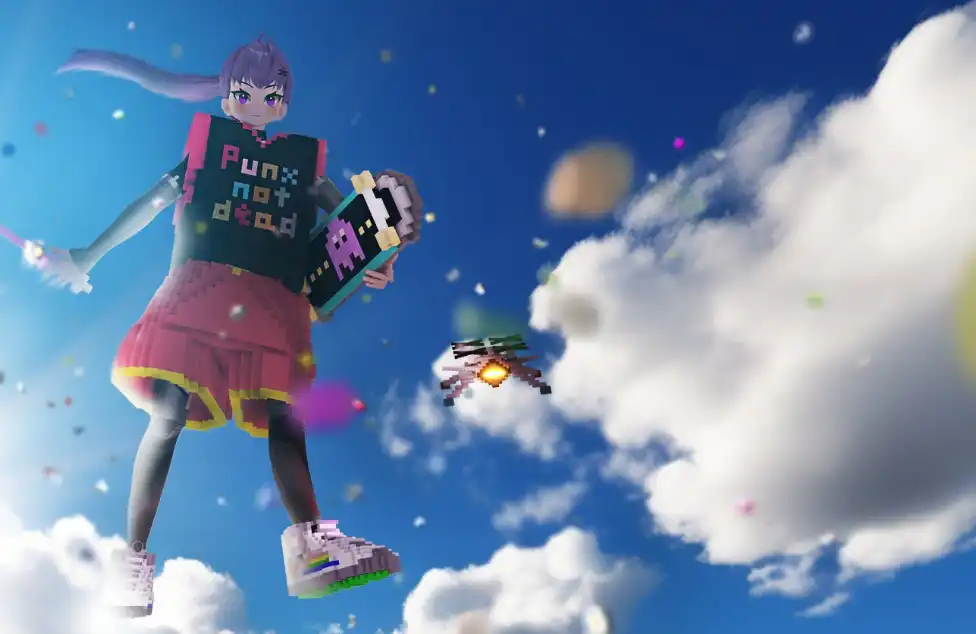
If you own Punk 6529 and someone comes to buy your Punk, you won't sell it. The most famous Punk has been adopted as a Twitter ID by its owner, and his CryptoPunk received a bid of around $10 million, but he refused to sell because it represented his identity. This actually makes it a cultural meme, and now its CryptoPunk may be even more valuable. So NFT is an absolutely fascinating rabbit hole, and I think Chris was probably the first investor to identify them in depth, going back to his investment in Dapper Labs. These people built CryptoKitties and evolved from there. So, I'd love to hear from Chris about NFT, how they've evolved and where they're going.
Chris Dixon:Yeah, obviously I'm excited about NFT, I think they're very, very broad, kind of like I call Primitive. As you can understand, the way we use it, it's kind of like the key fundamental building blocks of the Internet. The Internet has gone through a process where I think most of the problems that I mentioned before, you can only build with an open approach, and a lot of the problems, frankly, I think, come from advertising. The fact that we don't have native payments and tokens, all that forces people to do what Google wants, they want to have a digital closed loop before Crypto, and you can only do that through advertising.
So we built this huge infrastructure, and the Internet is now driven by banner ads and search ads and things like that. That's great for some companies, but it's usually terrible for creative people. Someone tweeted this great post yesterday: "Web2 company convinces you to give up your creation in exchange for little red hearts. But, yes, please tell me how NFT is a real scam."
Amazingly, they convinced all these people, oh, Instagram, what did they give? Zero. Facebook, zero. YouTube, 50%, right? Apple, they take 30% just when the user has the phone.
Do you know how many businesses don't survive when you take 30%? It's kind of crazy that we put up with all this. So now, as you say, put NFT aside and look at things like what's going on in the Substack? It's a messaging platform that you can access as a writer and get people to subscribe to. It's a relatively simple, very elegant idea, but the interesting thing you see now is that writers who might have made $100,000 or something before are now making $1 million a year. You see a lot of people saying, "Hey, this shouldn't happen. We're told the Internet is bad for creative people."
The Internet is not bad for creative people, but Web2 is bad for creative people. I just saw Spotify's stats the other day. They have 8 million artists, 14,000 of whom make $50,000 a year, and the rest less. Basically, with that kind of income, life is very difficult. I'm not blaming Spotify, by the way. A lot of the money is going to record labels and I think Spotify is a good company, it's just the logic of the model. And then there's an artist named 3lau, who I think is only moderately well known on Spotify, who made $11 million by releasing an NFT.
You could argue that $11 million is just a bubble, and if he makes just $100,000, it's transformative. This is the same as Substack. So now you have this very powerful new approach where these creatives, who were previously at best poorly monetized through banner ads, can go and create all sorts of interesting things. We have the arts, we have utilities, we have... NFTs is also a broad concept, so I think you'll see all kinds of interesting experiments, and I really encourage people to get involved in these communities to learn about them. For example, I will purchase NFT from Foundation, which is one of our investment projects. It is a high-end NFT art platform and planning platform.
I think we'll see more and more utility class use cases in the future. Games are really interesting right now, and I don't think the world has seen that yet, but I'll tell you, we have a game group at the company, and these guys from Riot and Blizzard, I think they're almost 100 percent involved in NFT now. They're on the cutting edge, especially for the next generation of young people, and there's going to be a lot of interesting stuff, and these are going to be real utilities.
I think NFT is as common a concept as the web. Think about the web. When it first came out, people said, "Oh, it's a web site." They tried to map it to the offline world, and it was like a brochure, but as we've seen over the course of 30 years, all the smart people came along and they innovated, websites? It's not a website, it's a social network, it's a SAAS tool, it's a... And NFT will be just as broad.
This is a core new concept, the idea of owning something on the Internet. Another way I like to think about it is, for example, imagine that every time you go to a hotel or a restaurant, they say, "Oh, you have to change your clothes, buy a new outfit." That's how the Internet works today, and then you leave and they say, "Hey, you've got to give me that stuff back." And then one day, someone came up and said, "No, you can take it."
Imagine the amount of innovation that would kick off, and that's what's happening on the Internet. We used to have this design of renting territory, and now we're just breaking it, so people say, "Oh, it's a bubble."
But I don't think so. I think this is the beginning of an incredible creative journey for the next 20 years. I'm sure of that.
Tim Ferriss:Chris, I'd love to let you talk more about games, because I think NFT in a game environment is easily understood by a lot of people, even if they don't play games. But many apps make sense to me. So I mean, you can talk about anything you want, right? For example, something like YGG, what does that mean? Because it was so fun for me -- and "fun" is a lazy adjective -- it was eye-opening and exciting.
Chris Dixon:So what is the model of video games today? It's the dominant model, and despite the new technologies, the old ways still exist. So the business of paying $60 or whatever for a video game like Madden football still exists, and companies like ELECTRONIC Arts do that. But now there are new, more modern companies, probably the best of which are companies like Fortnite and Supercell, Clash Royale and League of Legends.
Model is used by these companies, the game is completely free, you can always play, the only thing you buy is skin, so you can't buy the goods of can let you win, because people think it would destroy the integrity of the game, so all of this is to look cool, but it is a $40 billion a year industry, It's just virtual goods. All right, so does NFT, by the way.
But those virtual goods are locked into the game, right? And when you buy virtual goods, all the money goes to the company. A game like Axie Infinity where you don't buy from a company, you buy from one of the investors, it's more peer-to-peer, right? It's more like the eBay and Craigslist approach, where you buy from another person. Like in the case of Axie, there are hundreds of thousands of people playing the game, many of them living in the Philippines and relying on the game. So they went and did a lot of different things, which people call grinding.
You play with a bunch of stuff, and then they might improve the NFT, and then somebody else with a lot of money buys the NFT from those people, and the company only charges something like a 3% transaction fee, not all of the money. That is, the deal will charge a lower fee, but in exchange you get a very cool vibrant economy. So the game really exploded, it has about 2 million active users, and by the way, the game isn't on any app stores because it was banned by Google and Apple, but it still has such a large user base.
I think Axie may have really inspired a lot of people. And the YGG that you mentioned above is an independent company that we're actually an investor in, and its full name is Yield Guild Games, and it's actually what we call DAO, but essentially it's an online software organization where people can basically get Axie loans, So they can play it without having to pay an upfront fee and make money. It's like the guild model in the game, where people get together and join the same team, but all of a sudden you can have some real money and people can live off that. So I think this is the future of games, and a lot of the next generation of talent sees this and gets excited about it.
Tim Ferriss: Thank you Chris Naval, do you have anything to add?
Naval Ravikant:I mean, you both brought up a very interesting, subtle point that's probably worth making clear, which is that a lot of people when they first see NFT, their reaction is, "Well, I can just right click and save this JPG, how can this thing be valuable?" "And you all gave examples of how these things can be valuable, and the easiest answer to that is," Yes, I can copy any work of art, right? That doesn't mean I own the real art, it still has provenance, the art itself still has authenticity."
For example, the Bored Ape Yacht Club project, let's say we're building a meta-universe, we're building a 3D virtual space, and of course we don't want it to be Zach's 3D virtual space, we want it to be an open meta-universe. Well, if I walk into two rooms and one of them has an authentic Bored Ape Yacht Club with real pictures of Apes or CryptoPunks on the walls, my software tells me so. Then I walk into another room full of fakes and copies, and my software immediately tells me they're fake. Where do you think the cool kids hang out? Where do rich kids go to play? Where will the line be held? Therefore, NFT provides practical value in authentication by allowing you to create A meta-universe and then distinguish between space A and space B, but this is only at the simplest level.
You also illustrate that, in the game, NFT is a smart contract, which is something that can be used in the game. If I have a special loot or a special item I picked up in one game and then the developer or or the same group of users goes to the second game, I can transfer my NFT nicely and they will have some value, while right clicking on the saved JPG has no value at all. Finally, Tim, your example of NFT could also be a social contract between the creator of NFT and the fans of NFT, so that it gets a ticket to the future, which fake doesn't, or it gives the holder priority to the artist's future work, etc.
I like Chris' example of a web page. Because a web page is programmable, a web page can do anything, it's complete, it can run any piece of code. So we have these essentially complete programmable objects that are now suddenly scarce, and you can own them, you can transfer them, you can link them to the real world, and you can link them to the digital world through smart contracts.
Essentially, what blockchain does is allow for open composability and programmability between all these objects in the digital domain. If Bitcoin can have value, if Ethereum can have value, then in theory, NFT can have value as long as the smart contract of the social contract and the community that enforces it has value. Of course, most of them won't count, but some of them will.
Tim Ferriss: Chris, I want to ask you a question, you mentioned the word skeuomorphic earlier, and you wrote earlier that one of the most common mistakes people make when evaluating new technologies is to focus too much on making the old things better, so as we've seen, A lot of people are trying to copy and paste Web1 or Web2 into Web3. I'd like you to spell that word and give some examples of skeuomorphic design and then, if you can, give some examples of Web3 native applications or just examples of what might be possible.
Chris Dixon:I think it's a word Steve Jobs used, he used it to mean visual design, do you remember the original iPhone had a book-like app? So the idea in the design is to take something from the real world and use that design to make it look more familiar in the online world. I don't know, for whatever reason, my colleagues and I started using it internally three or four years ago. I'm not sure if we invented it or enabled it, I mean, transplanted it from the design world.
But we always use it to indicate an idea, so when you go back to early movies, early movies look like theater, and then over time, movies develop their own new grammar, right? This happens with every new technology. Like the early days of the Web, right? It's like pamphlets and magazines, and then people say, "Wait a minute, you can do new..." What we call native, like having a social network, can be a two-way medium. So I don't think people really started exploring "native" web experiences until the mid-2000s, and I believe the best way to invest is to develop native things. So this is a concept that we use internally a lot. People like to use blockchain to do things like supply chain management or offline tickets, and I'm glad to see entrepreneurs in all fields doing it, and I respect all entrepreneurs, but I think these are skeuomorphic ideas, they might work, but in 10 years people won't be talking about them, right? This is going to be something new, NFT, so let me give you an example of a really cool project called Loot, which we've never heard of before, and Loot is just such a game.
Tim Ferriss: Yeah, the creators of Loot, it seems, are also the creators of Vine.
Naval Ravikant: yes.
Chris Dixon:Yes, Dom Hofmann, a talented developer and product designer, created this thing called Loot. What is Loot? It's basically just a bunch of little cards with dungeons and Dragons elements, with words on them, and those are NFT themselves. But what's cool about it is that it inspires an entire community to build around it, as if Ernest Hemingway didn't write a book, he just wrote the first page of the book and asked the community to add the next, right? That's what Dom did. He wrote, "This is where it starts. Now let your imagination go crazy." By the way, Loot won't have a standard game, there will be a hundred different things built on top of it, all in Lootverse.
It's a tapestry of creative people who are adding different building blocks to this new structure. This is just a kind of think of new ways of building game very profound, these new building blocks, it is very simple and it is this simplicity makes them so powerful that it is just an early experiment, there will be more such cruel experiment, Loot without millions of users, but people like it is the best product designers in the world, so I think it will be a moment, Naval Do you remember del.icio.us and Flickr, from 2003 to 2005 all the core Web2 primitives came out.
Naval Ravikant:Yes, the advent of Flickrs triggered Pinterests.
Chris Dixon:That's right.
Naval Ravikant: Yes, your idea of skeuomorphic is even deeper. Like if you look at a basic computer, we use desktop computing mode, it has a desktop, it has files, it has folders, it's a skeuomorphism simulation from the physical world, and it helps people reason about how to use something by analogy. In fact, I made a big mistake, early in the history of blockchain, thinking that what we were going to do was replace Uber and Facebook and Twitter with web3-enabled primitives and the resulting networks, but I don't necessarily think that way now, I think we just have to create completely new things that we can't even predict or identify. But we eventually turn our attention to these things. So Twitter and Facebook will still be fine and will continue to exist. But we'll focus on these new applications that are uniquely enabled by primitives like NFT and Token. Chris Dixon: I think that's the right idea. I mean, people are still using Microsoft Office, it's still around, the Internet hasn't gotten rid of it, right? I think it's just layer upon layer. I also agree that value is created in cool stuff and will be created in raw cutting-edge stuff.
Naval Ravikant: At the border.
Tim Ferriss: Yes.
Chris Dixon:Yes.
Challenges facing Web3
Tim Ferriss: I will recommend a book and a movie, you might be making fun of me, "avalanche" is the first recommended this book, this is an incredible book, then you can watch or to watch a movie "number one player," the, of course, I don't think it's something coming, but I think a lot of things faster than expected. I've been deep down the rabbit hole for the past few months, but I'd like to ask, though, what are some of the weaknesses or challenges associated with Web3? For example, I remember buying some NFT and being advised to share them online, so I asked, "Wait a minute, if I share them online, then people can effectively see my bank account, which is filled with a certain amount of assets, all on the blockchain." Their answer, then, is: "It's your own bank." But THEN I asked: "I'm not sure I want to be 100 per cent my own bank, in the sense that there are lots of good reasons for people to use external banks, right? They don't want to stuff gold bars and money in their mattresses and deal with security issues."
Naval RavikantA: I've been to your house, Tim, and I think your security is pretty good.
Tim Ferriss: Yes, I do a good job of security, I do, but the question is, what are the challenges? I sometimes think, "Well, do I want Amazon to see my entire purchase history, or do I want the entire Internet to see my entire purchase history? For me personally, the answer is probably Amazon." I'd like to hear what you think.
Naval Ravikant:For me, safety is a big issue. I've been a Crypto supporter for some time now, and I have to be very careful to move all my investments into custodians and funds so I don't have to hold anything directly. You can give it to the escrow, and then there's a multiple signature that requires multiple people to agree to move something. Or set a time delay that doesn't transfer for six months or a year, etc., so there are measures that can help mitigate these security issues.
The industry is moving too slowly on this, and it makes me uncomfortable, but it's happening. But I think you can also remain anonymous in a number of ways. We mentioned Punk 6529, a pure Twitter identity whose real life identity is not known, but he is already regarded as an excellent NFT collector and curator. You can also create new wallets instantly, and the software is getting better. So you can actually make every purchase from a different wallet, which can be hard to track because there are plenty of ways to anonymize it, at least for the public. Or, if you can use a zero-knowledge proof or something like that.
So, these problems will be solved, but they are the problems of today, and when anyone can cast, hold and easily move NFT, it will be a happy moment, but many of the so-called alpha opportunities in the field will also disappear.
Tim Ferriss: Yeah, Chris, do you have anything to add?
Chris Dixon:Yes, I agree with that, and I think one of the things that goes hand in hand with security is usability and how to make everything easy to use and secure. I think everything will work out, but I agree with Naval that it's not done yet. For me, the biggest challenge in this area is probably the messaging around it, and I think there's a lot of misunderstanding around it, some of it self-inflicted, by the community, that makes a lot of people react negatively to Crypto and Web3 and so on, and I think it also probably leads to excessive regulatory action. What we're trying to do here is to explain these ideas, and ultimately to convince people, it's up to them to decide if they want to dig into it, and I've been working in this field for eight years, and I've never met anyone who knows a lot about it and is skeptical about it, never.
Naval Ravikant:Yes, if you're deeply skeptical about the idea of owning digital assets, then you --
Chris Dixon:You haven't understood it yet, no.
Naval Ravikant:That makes you a metasomes denier, because if you look at the metasomes described in Avalanche by Neil Stephenson and pretty much anywhere else, you'll see that there's a concept of "property" in the metasomes, and obviously there are people who own property and have jurisdiction over that property. Like, here's my room, these are the objects in my room, I can move them around, I can control who comes in and out of the room, I can control when someone tries to sit on my meta-cosmic couch, so all of this programmability comes from ownership.
It is a strange idea that only giant companies can own objects in the metasverse. This is basically Zuckerberg, I don't mean to offend him, but it's basically saying that only Zach is allowed to own the metasomes, only he can own the entire metasomes, why can't we each have our own room, our own property in the metasomes? So the deniers and opponents of NFT and Crypto are basically saying, "We're not going to have a collectively owned future, we're going to have a corporate-owned future."
Ironically, the best job in 2021 is to be a JPG collector, and I'm thinking too late, the best job in 2020 might be to be a DeFi farmer, which is crazy, but the world is moving so fast, adapting so fast, and the cutting edge is in Crypto, which is digital. If you have a natural curiosity about these things, your time will come. In fact, ACE participants and YGG participants may find that the best careers of the future, and the best careers of the present, may have to revolve around games, just playing them a certain way at a certain time, which is good news for all gamers.
Tim Ferriss: Yes, I would like to read two paragraphs from The blog Climbing The Wrong Hill: "The lure of The current mountain is so strong that humans have a natural tendency to move up next, and he ended up falling into a common trap highlighted by behavioral economists: People tend to systematically overestimate short-term returns rather than long-term ones, and this effect seems to be stronger for more ambitious people, whose ambition seems to make it harder for them to skip nearby upward steps. When you find the highest hill, don't waste time on the current hill, no matter how good the next step may be." I'm reading this because, after following Web3 in recent months, I find myself running a bit late, which is like the national anthem before the game starts. And I have never seen such a high IQ, more ambitious and capable people in give up whatever they are, in many cases is very attractive, and then spend all their time Web3 above, I have never seen anything close to it, this is not a trickle, to be sure, In all my time working in technology, I've never seen anything like it, which at least means it's worth looking into closely.
The original link
Welcome to join the official BlockBeats community:
Telegram Subscription Group: https://t.me/theblockbeats
Telegram Discussion Group: https://t.me/BlockBeats_App
Official Twitter Account: https://twitter.com/BlockBeatsAsia
 Related Articles