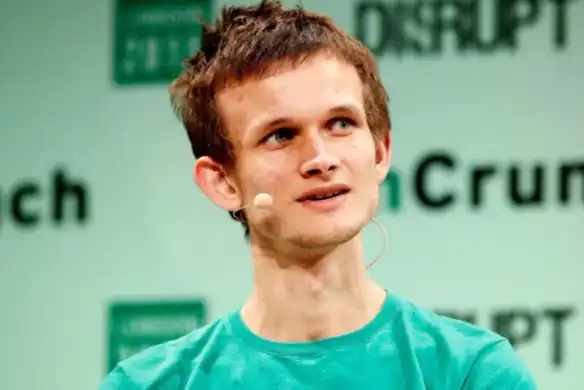
V God: The era of the Crypto city has come

Original title: "Crypto Cities"
Original author: Vitalik Buterin, co-founder of Ethereum
Original compilation: Nanfeng, Unitimes
< br>
Special thanks to Mr Silly and Tina Zhen for their early contributions to this article Feedback, and discussions of these ideas with many others.
An interesting trend from last year Yes, there is a growing interest in local management and the idea of local management embracing greater change, more experimentation. Over the past year, Miami Mayor Francis Suarez has adopted a Twitter-led strategy for tech startups, regularly reaching out to the mainstream tech industry and the cryptocurrency community on Twitter to drive citizen interest; Wyoming is now Has a DAO (Decentralized Autonomous Organization)-friendly legal structure; Colorado is experimenting with quadratic voting; and we're seeing more and more experiments in creating more pedestrian-friendly streets for the offline world environment. We’ve even seen projects of varying degrees of aggressiveness — Cul de sac, Telosa, CityDAO, Nkwashi, Prospera, etc. — attempting to create entire neighborhoods and cities from scratch.
Another interesting trend last year was the rapid mainstreaming of Crypto ideas such as cryptocurrencies, NFTs (non-fungible tokens) and DAOs. So what happens if we combine these two trends? Wouldn't it make sense for a city to have a coin, an NFT, a DAO, some anti-corruption on-chain records, or even all four at the same time? As it turns out, someone is already trying to do this:
· CityCoins.co is a City Token" project, which aims to make it a local medium of exchange, with a part of the issued coins owned by the city government. MiamiCoin (Miamicoin) already exists, and "San Francisco Coin" seems to be coming soon.
· Other experiments to issue "tokens", such as Seoul, South Korea is developing a token that can be used Cryptocurrency "S-Coin" for social welfare projects.
· Experiment with NFTs, often as a way to fund local artists. For example Busan (Busan, South Korea) is hosting a management-backed conference on what they can do with NFTs.
· Reno (Reno, a city in Nevada, USA) Mayor Hillary Schieve spoke to the urban area Blockchainization has a broad vision, including supporting local art through NFT sales, RenoDAO that issues RenoCoins (Reno coins) to local residents, RenoDAO can rent properties from management, lottery secured by blockchain, blockchain voting, etc. get income.
There are more ambitious projects creating cryptocurrency-oriented Cities: Like CityDAO, a project that describes itself as “building a city on the Ethereum blockchain”—governance and everything in a DAO fashion.
But in their current form, are these projects a good idea? Is there anything that could make them better? Let's see...
Why should we care about cities?
Management in many countries around the world are dealing with longstanding problems and rapidly changing people Ineffective and slow to act on basic needs. In short, there is a shortage of live players in management in many countries. To make matters worse, many of the out-of-the-box political ideas being considered or implemented in governance today are, frankly, rather terrifying. Would you like America to be taken over by a remake of the Portuguese dictator Antonio Salazar from WWII? Or an "America's Caesar" to defeat the evil scourge of American radicalism? For every idea that can reasonably be described as free expansion or democracy, there are ten that are just different forms of centralized control, walls, and pervasive surveillance.
Now consider local management. As we saw from the examples at the beginning of this article, cities and states have real dynamism, at least in theory. There are huge, and very real, cultural differences between cities, so it's much easier to find a city where the public is interested in adopting any radical idea than it is to convince an entire country of it. There are very real challenges and opportunities to be addressed in local public goods, urban planning, transport and many other sectors of urban management. Cities have tight internal economies, and things like the widespread adoption of cryptocurrencies can actually happen independently. Furthermore, experiments within cities are less likely to lead to dire outcomes because cities are overseen by higher levels of management, and because cities have an easier safety valve: people who are dissatisfied with what is happening can more easily quit.
All in all, local management appears to be seriously undervalued. Given that criticism of existing smart city initiatives tends to focus primarily on concerns about centralized governance, lack of transparency, and data privacy, blockchain and encryption appear to be key components of a more open and participatory path forward .
What are the current urban projects doing?
There are actually a lot! These experiments are still small and largely figuring out, but they are at least "seeds" that can turn into something interesting. Many of the most advanced projects are in the US, but the world is interested; in Korea, Busan management is hosting an NFT conference. The following examples are some of the things that are being done now.
(1) Blockchain experiment in Reno, USA
Reno, Nevada (Reno) Mayor Hillary Schieve is a blockchain enthusiast, and she mainly focuses on Tezos ecosystem, she has recently been exploring ideas related to the use of blockchain in the governance of the City of Reno:
Create a RenoDAO organization, which is governed by Reno Coins (Reno Coins), Reno Citizens of the city will be entitled to receive these coins through an airdrop. There are a few ways that RenoDAO can get a source of income, one of the proposals is by renting out properties owned by the city, and the income generated goes to the DAO organization.
Using the blockchain to ensure the security of all types of programs: e.g. Realms implement blockchain-secured random number generators, blockchain-secured voting, and more.

Above: Space Whale whale statue in downtown Reno
(2) CityCoins.co
CityCoins.co is a project built on Stacks, a project based on the unusual " Proof of Transfer" (PoX, proof of transfer) is a blockchain network run by block generation algorithms, built around the Bitcoin blockchain and ecosystem. 70% of the city coin (city token) project's coin supply is generated by an ongoing sale mechanism: anyone who holds the native token STX of the Stacks network can send their STX to the CityCoins smart contract to generate a city Tokens; those who hold city tokens can pledge their own tokens to generate STX income. The remaining 30% of coins are given to the city government.
CityCoins made an interesting decision to try to create an economic model that does not depend on any management support. Creating a city token does not require the participation of local management; a community team can issue a coin themselves. To "What can I use City Tokens for?", the project provides an answer that "The City Token community will create applications that use tokens for rewards", "Local businesses can also stake Offer a discount or benefit," and so on. In practice, however, the MiamiCoin (Miamicoin) community doesn’t stop there; the Miami government has actually publicly expressed its support for MiamiCoin.

The above picture shows MiamiCoin hackathon win Project: This website allows coworking spaces to offer benefits to MiamiCoin holders.
(3) CityDAO
CityDAO is the most radical EXPERIMENTAL: Unlike Miami and Reno (both existing cities that have existing infrastructure that needs to be upgraded and people need to be persuaded to adopt), CityDAO is a legal DAO organization based on Wyoming DAO laws, and CityDAO is trying to Create a brand new city from scratch.
So far, the project is still in its early stages. The team is currently finalizing the purchase of their first piece of land in a far corner of Nevada. Their plan starts with this land and then adds more land in the future to build cities governed by DAOs and make heavy use of radical economic ideas (like the Harberger tax) to allocate land, make collective decisions, and manage resources . Their DAO is one of the few advanced DAO organizations that circumvents token voting governance; instead, its governance mechanism is based on a type of NFTs called "citizen" for governance, and it has been proposed to use proof-of-humanity verification to further limit the idea of one vote per person. These NFTs are currently being sold to raise funds for the project; you can buy them on OpenSea (pictured below).

What do I think the city might do?
Obviously, cities can do a lot in principle. They could add more bike lanes, they could use carbon dioxide meters and far-ultraviolet lights to more effectively reduce the spread of COVID without inconveniencing people, and they could even fund life extension research. But my main expertise is blockchain, and this article is about blockchain, so... let's focus on blockchain.
I think there are two different categories of ideas for cities using blockchain:
1. Use blockchain to create a more credible, transparent and verifiable reality There are process versions.
There is a natural fit between blockchain and these two types of ideas. Anything that happens on the blockchain is easily publicly verifiable, and there are many free tools readily available to help people do this. Any application built on the blockchain can immediately connect to and interact with other applications in the entire blockchain ecosystem. Unlike paper-based systems, blockchain-based systems are efficient; unlike centralized computer systems, blockchain-based systems are publicly verifiable -- if you want to create a new form of voting system that A blockchain-based system is a necessary combination to allow citizens to provide massive amounts of real-time feedback on hundreds of different things.
So let's see in detail.
What existing processes could blockchain make more trustworthy and transparent?
Many people, including management officials around the world, have asked me on numerous occasions The simple idea is that management creates a whitelist-based stablecoin for internal use that tracks payments within management.
Each tax payment for an individual or organization can be tied to a publicly visible On-chain records, which will mint a corresponding amount of stablecoins based on these taxes (if we want to keep the personal amount private, then we can use zero-knowledge to make only the total tax amount publicly visible, while allowing Everyone believes that the calculation of this data is correct). In this way, transfers between parts of the management are "transparent", and the coins are only redeemed when individuals or employees claim their remuneration or salary.

This system is easy to extend. For example, the process of selecting which bidder wins a management contract can largely be done on-chain. There are many more processes that can be made more reliable with blockchain:
< /p>
Fair random number generator (e.g. for lotteries). For example, the VDFs (Verifiable Delay Functions) that Ethereum is expected to use can be used as a fair random number generator, which can be used to make the lottery run by the management more credible. Fair randomness can also be used in many other use cases, such as random democracy (Sortition) as a form of governance.
· Certificate. For example, a cryptographic proof that a particular individual is a resident of a city can be done on-chain for increased verifiability and security (e.g. if such proofs are issued on-chain, then This becomes very obvious if a large number of false certificates are issued). This can be used for various certificates issued by local management.
· Asset registration of land and other assets, as well as more complex forms of title such as development rights) level. These registries may never become fully decentralized bearer tools like cryptocurrencies, due to courts needing to be able to make assignments in special cases, but having the records on-chain still makes it easier to see disputes in disputes What happened in what order.
Eventually, even voting could be done on-chain. In this regard, many complex issues loom, so it is very important to be careful; a complex solution combining blockchain, zero-knowledge proofs, and other cryptography is required to achieve all the desired privacy and security features. However, if humanity is really going to move to electronic voting, local administrations seem like the perfect place to start.
What radical economic and governance experiments might be interesting?
In addition to the above-mentioned things that the management has been doing with the blockchain, we Blockchains can also be seen as an opportunity for management to conduct new and radical experiments in economics and governance. The experiments below are not necessarily my final idea of what I think should be done; they are more of an initial exploration and suggestion of possible directions. Once an experiment has started, real-world feedback is often the most useful variable in determining how to adjust the experiment in the future.
Experiment #1: A More Comprehensive City Token Vision
CityCoins.co is a vision of how city tokens work. But this is far from the only vision. In fact, this approach by CityCoins.co has significant risks, especially in terms of the economic model skewing heavily towards early adopters. 70% of the STX revenue generated by minting new coins goes to existing city token stakers. More coins will be issued in the next 5 years than in the next 50 years. 2021 is a good deal for management, but what about 2051? Once the management approves of a specific city token, it will be difficult for it to change direction in the future. Therefore, municipalities must carefully consider these issues and choose a path that makes sense for the long term.
Here is another possible description of how the city token works. It is far from the only alternative to CityCoins; see this excellent article by Steve Waldman arguing for a city-localized medium of exchange for another possible direction. Regardless, city tokens are a vast design space, and there are many different options to consider. Anyway, let's take a look at this example:
The notion of home ownership in its current form is a notoriously double-edged sword, and the various ways in which it is actively encouraged and given a legal structure are considered the biggest crimes we have committed today One of the mistakes of economic policy. There is an inevitable political tension between a home as a place to live and a home as an investment asset, and pressure to satisfy communities concerned with the latter often severely compromises the affordability of the former. Residents of cities either own a home, exposing them to excessive exposure to house prices and introducing perverse incentives against the construction of new housing, or rent a home, putting them at a disadvantage They are economically at odds with the goal of making the city a great place to live.
But even with these problems, many people still believe that homeownership is not just a good It's a personal choice, and something that deserves active subsidies or social encouragement. One big reason is that it prompts people to save money and increase their net worth; another big reason is that despite its flaws, it creates an economic alignment between residents and the communities in which they live . But what if we could give people a way to save and create this economic union without the drawbacks? If we could create a divisible and fungible city token that residents could hold as many units as they can afford or feel comfortable with, and that would appreciate in value as the city prospers, it would How about it?
First, let's start with some possible goals. Not all are necessary; a token that achieves only three of the five goals is already a big step forward. But we will try to achieve as much as possible:
· Obtain a sustainable revenue stream for management. The urban token economy model should avoid the redirection of existing tax revenues; instead, it should find new sources of revenue.
Between residents and cities establish economic ties. This means that firstly, as cities become more attractive, the city tokens themselves will obviously become more valuable. But it also means that, from an economic standpoint, residents should be actively encouraged to hold city tokens, rather than distant hedge funds.
· Promote savings and wealth accumulation . What homeownership does is this: When homeowners pay their mortgage, they will default to understanding their own equity. City tokens can do the same, accumulating tokens over time becomes more attractive and even gamifies the experience.
· Encourage more beneficial Social activities such as positive actions to help cities and use resources more sustainably.
· To ensure equality. Don't unduly favor the rich over the poor (poorly designed economic mechanisms often accidentally lead to this result).
The divisibility of city tokens avoids rich and poor The sharp binary division between , but we can go further, for example by distributing most of the newly issued tokens to residents as UBI (Universal Basic Income).
One model that seems to easily satisfy the first three objectives is to provide There is a benefit to the owner: if you hold at least X coins (which appreciate in value over time), you get some services for free. MiamiCoin is trying to encourage businesses to do this, but we can go further and include management services as well. A simple example would be making existing public parking spaces free only to those who hold at least some tokens. This will accomplish several goals simultaneously:
Create a way to hold city tokens motivation to maintain its value.
· Specially create an incentive mechanism for local residents to hold tokens instead of Other non-aligned distant investors. Furthermore, the utility of this incentive is limited for each individual, so it encourages widely dispersed holdings.
· Create Economic Union (The city becomes more attractive-> More people want to park -> tokens are more valuable). Unlike home ownership, this is with the entire town, not just a specific location in town.
· Encouraging the sustainable use of resources: this will reduce the use of parking spaces (although People who don’t have coins but really need parking spaces can still pay), supporting the desire of many local managements to open up more road space and make it more convenient for pedestrians. Additionally, restaurants can lock tokens through the same mechanism and request parking spaces to be used as outdoor seating.
But in order to avoid the wrong incentives, we must avoid becoming too attached to one particular idea , but should have multiple possible sources of income. A great way to do this is through zoning, which can give value to city tokens while also experimenting with new governance ideas. For example, if you hold at least Y coins, then you can vote quadratically on the fees that nearby landowners have to pay to bypass zoning restrictions. This hybrid market + direct democracy approach would be more efficient than the current overly onerous approval process, and the fee itself would be another source of revenue for management. More generally, any of the ideas in the next section could be combined with city tokens, giving city token holders more occasions to use them.
Experiment #2: More Radical and Participatory Forms of Governance < /h3>
This is where the idea of Radical Markets comes into play, like the Harberger tax , quadratic voting and quadratic financing. I've mentioned some of these ideas in the chapter above, but you don't need to have a dedicated city token to implement them. Management’s limited use of quadratic voting and quadratic funding is already happening: look at Colorado Democrats, and experiments that haven’t yet received management support, like Gitcoin’s Boulder Downtown Stimulus initiative. But we can do more!
One obvious sign that these ideas have long-term value The place is, developers are encouraged to improve the aesthetics of the buildings they are building. Harberger taxes and other mechanisms can be used to fundamentally reform zoning rules, and blockchains can be used to manage these mechanisms in a more reliable and efficient manner.
Another idea that is more feasible in the short term is to subsidize local businesses, similar to market Center stimulus, but bigger and longer lasting. Businesses have been generating various positive externalities in local communities that can be more effectively rewarded. Local news could get quadratic financing, revitalizing a long-struggling industry. The pricing of ads can be voted on in real time based on how much people like each particular ad, encouraging more originality and creativity.
More democratic feedback (possibly even retroactive democratic feedback!) may would create better incentives in all of these areas. A 21st-century digital democracy, backed by real-time online quadratic voting and financing, would likely be far better than a 20th-century democracy (which in practice seems to have mostly been characterized by rigid building codes, as well as in planning and approval hearings meeting obstacles). Of course, if you're going to use blockchain to secure your votes, it seems safer and more politically feasible to start with a novelty new type of voting than to reinstall the existing voting system.
This sunny punk image above is meant to evoke a positive image that if real-time quadratic voting could set subsidies and Price, what might happen to our city.
Summary
There are many worthwhile ideas for existing or new cities to try. Of course, the advantage of a new city is that no existing residents have existing expectations of how things should be done; but the very concept of creating a new city itself is relatively untested in modern times. Perhaps, the pool of billions of dollars in the hands of people and projects keen to try new things can tide us over. But even so, existing cities are likely to remain where the majority of people live for the foreseeable future, and existing cities could use these ideas.
Blockchain is among the more progressive and radical ideas in this regard Very useful, even with the inherent "trust" nature of city and city governments. Running any new or existing mechanisms on-chain allows the public to easily verify that everything is in compliance. In this respect, public blockchains are better: the benefit of the existing infrastructure of public blockchains is that users can independently verify what is happening, which far outweighs the loss in transaction fees, which are expected to soon be reduced by Rollups and Sharding (sharding) and reduced. If strong privacy is required, blockchains can incorporate zero-knowledge cryptography to provide privacy and security at the same time.
The main pitfall that management should avoid is sacrificing options too quickly. Existing cities can fall into this trap of issuing a bad city token instead of slowly issuing a good one. A new city can fall into the trap of selling off too much land, giving the full benefit to a small group of early adopters. It is ideal to start with self-contained experiments and slowly progress to truly irreversible action. But at the same time, it's also important to seize opportunities first. There is a lot that cities can and should improve, and there are plenty of opportunities; for all the challenges, overall, the crypto city's time has come.
Welcome to join the official BlockBeats community:
Telegram Subscription Group: https://t.me/theblockbeats
Telegram Discussion Group: https://t.me/BlockBeats_App
Official Twitter Account: https://twitter.com/BlockBeatsAsia

 Related Articles