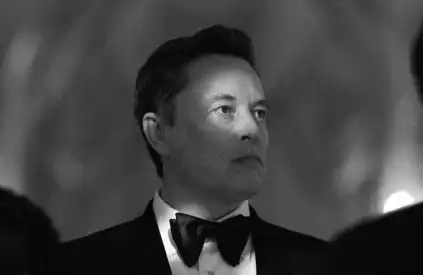
V God: Cryptocurrencies are ready for the mainstream, and Musk's obsession with Dogecoin is not malicious
原文标题:《 V 神接受 CNN 采访:加密货币处于泡沫之中,马斯克不会永远拥有影响市场的能力,以太坊有可能最终赶上并在市场价值上超过比特币 》
原文作者: CNN Business
原文翻译: 比推 Bitpush.News
Vitalik Buterin, co-founder of Ethereum", the coin circle called V God. In a recent interview with CNN Business, the 27-year-old Ethereum co-founder argued that the crypto market is in a bubble. However, he stressed that it is "notoriously difficult to predict" when a bubble will burst. The crypto craze may be over, or it may be months away. ... Elon Musk (Elon Musk)) will not have that kind of influence forever."
On Wednesday morning, Ethereum fell below $1,900, according to Coinbase, a stunning drop of more than 40% since Tuesday night. Ethereum bounced back to around $2,700 on Thursday morning, but it's still a long way from its record high of $4,384 set on May 11.
Born in Russia, Buterin started programming at the age of four; At the age of 6, she emigrated to Canada with her family and has dual citizenship of Russia and Canada. The complex document that created the "rabbit encyclopedia" at age 7; At 10, he can do three-digit mental arithmetic twice as fast as his peers. By the age of 12, I could write simple games in C++ language. Dropped out of college at 19; Became Ethereum's co-founder at 20.
At just 27 years old, Vitalik Buterin is already used to these cycles of cryptocurrency bulls and bears. In his eyes, the crypto market is more than just a game of money.

Cryptocurrency is no longer just a toy
"We've had at least three of these big cryptocurrency bubble periods so far, and a lot of times what ends up stopping is something happens and it suddenly becomes clear that the technology isn't quite there yet," Buterin said.
Buterin laid out his vision for Ethereum in a white paper in 2013, two years before its official launch. Today, it is the second largest cryptocurrency, behind Bitcoin. Unlike Bitcoin, which is considered "digital gold," Ethereum is a blockchain-based platform for developers to build and run applications. It's like the Android or iOS of cryptocurrencies.
In late 2017, Buterin published a tweetstorm questioning whether the cryptocurrency space was really worthy of its market valuation, which was just over $5 trillion at the time. He pointed out that there were few actual achievements, and that cryptocurrency prices fell soon after.
Unlike then, Buterin is encouraged by the "tremendous" advances in technology and applications in recent years. For example, Ethereum activity has skyrocketed in recent months due to the rise of NFT on social media, as well as several iconic exits, because NFT is based on the Ethereum network.
"It feels like cryptocurrencies are ready for mainstream adoption," Buterin said. "Four years ago, it was the complete opposite, when it wasn't ready at all. Cryptocurrency is no longer just a toy. While I don't know for sure, there is still a chance that Ethereum will eventually catch up and surpass Bitcoin in market value."

Boss Musk, the big mouth who loves dogs
However, Ethereum, and cryptocurrencies in general, still have problems. First, they remain highly volatile, especially for retail investors who are used to more modest moves in the stock market.
What's more, some billionaires seem to be using cryptocurrencies as playthings. Elon Musk's on-again, off-again love affair with coins is sending shockwaves through the field.
Musk tweeted on May 12 that Tesla would stop accepting bitcoin for payments because of concerns about the cryptocurrency's negative impact on the environment. (Because bitcoin's complex mining process requires a lot of computer power and electricity.) The sentiment in the crypto market shifted immediately. According to CNBC, nearly $365 billion in cryptocurrency market value was wiped off that day.
Buterin acknowledged that the cryptocurrency market tends to be "vulnerable" to disruptive events until it "builds up its immune system over time."
Musk's tweet moving the market is the first of its kind in the cryptocurrency space in recent memory. Buterin thinks it's reasonable to be a little crazy right now. But markets will eventually improve. Mr. Elon won't have that influence forever.
The Tesla billionaire has also repeatedly trumpeted Dogecoin, which was created to satirize the crypto market. Musk also mentioned Dogecoin again during his Saturday Night Live performance.
Buterin believes Musk's obsession with Dogecoin is merely a matter of interest, not malice.
He said, "He's a hundred billion dollar man, and he runs Tesla and SpaceX and all these things, but that doesn't change the fact that he's ultimately a human being, and humans get excited about Dogecoin. It's just a human instinct. I don't think Elon has any malice in these matters."

V God's wrath beheaded Shib
Another recent animal coin to get people excited is Shiba Inu, a meme coin that calls itself the "Dogecoin" killer.
After Buterin donated Shib, then worth $1 billion, to the COVID-19 Relief Fund in India, Shib collapsed by about a third in an instant. The sell-off highlights some of the illiquidity of these shanzhai coins. "The problem with these Dogecoins," he said, "is that the market for them is so small that by selling Shiba Inu, which would have been worth $1 billion, you might not even get a few million dollars."
Buterin also recently announced plans to burn, or remove from circulation, 90 percent of the shibs he holds, which are sourced from on-chain donations. Mr Buterin says he does not want to be a "power centre". In the interview, he stressed that he did not want the people who created shanzhai coins to send him coins for "marketing" purposes.
"First of all, I don't really know or understand these projects," Buterin says. So, I can't endorse them, and I see what looks like thousands of counterfeit coins called Freecoin in my wallet. I don't even know what this thing is."
Buterin exhorts people who want to do good with their cryptocurrency to donate it directly to charity.

Hidden dangers of government regulation always exist
Part of the reason for the recent cryptocurrency collapse has been concerns about domestic regulation. China's three financial and banking regulators said on Tuesday that financial institutions and payment companies should not engage in any cryptocurrency-related transactions or provide cryptocurrency-related services to customers.
Buterin acknowledged in an interview with Chinese news that regulation "is always an issue," although fears of an outright ban have receded. It seems harder and less realistic to do such a thing. At the same time, governments do have a lot of power to make it harder to get involved in the cryptocurrency space." Even if blockchains are decentralized, governments can't take them down completely, but they can block or restrict access.
"It is important to listen to the views of regulators so that we can do our best to address possible issues," he said. "Regulatory" risks have made the relationship between cryptocurrencies and regulators "more adversarial."

PoS revolution, will significantly reduce gas costs
Billionaire Mark Cuban complained in February that Ethereum was being held back by "ridiculous" transaction fees. "Transaction fees are really" very high "right now, and the Ethereum blockchain can only process 20 to 50 transactions per second, despite the huge demand for transactions," Visheng said.
But V is still confident that transaction costs will come down because the Ethereum team is working on a massive technical revamping to allow Ethereum to scale up quickly. Ethereum is moving from the "Proof of Work", the original algorithm of blockchain technology, to a newer concept called "Proof of Stack". In short, this upgrade means that participants in the Ethereum network will be appropriately rewarded to stay online and keep the network up and running. This would eliminate the energy consumption race that certifies work.

Environmental problems
Buterin said the shift to proof of stake would reduce Ethereum's energy use by a factor of 1,000 to 10,000.
"It will also reduce the energy consumption of the Ethereum network from the energy consumption of a medium-sized country to the energy consumption of a village," he said.
In stark contrast to the direction of Ethereum's improvement, Buterin said concerns about the future impact of Bitcoin on the environment may be realized. "I definitely think the concerns are real," he said. "The resources are really being consumed. It's not the kind of problem that's going to destroy the world, but it's definitely a big drawback." Buterin adds that this is reflected not only in the power consumption of Bitcoin miners, but also in the hardware needed to carry out the mining.
That's why V God has been emphasizing that as Bitcoin evolves and ADAPTS to technological advances, there will be more calls within the Bitcoin community to either move to proof of stake or to a hybrid model.
"If Bitcoin sticks to its old technology and doesn't change anything, there is a high risk that it will be left behind forever," he said.

Image source: Internet
The original link
Welcome to join the official BlockBeats community:
Telegram Subscription Group: https://t.me/theblockbeats
Telegram Discussion Group: https://t.me/BlockBeats_App
Official Twitter Account: https://twitter.com/BlockBeatsAsia

 Related Articles