The Current Situation in the Era of “Modular” Blockchains
Original title: "The lay of the modular blockchain land"
Original author: polynya
Original compilation: ETH Chinese Station
Throughout the first ten years of the blockchain industry, there is only a single type of area blockchain. Experiments like early plasma, multi-chain, and sharding tried to break through this situation, but it wasn't until the emergence of rollups, validiums, and data availability chains that heralded the end of the era of single blockchains. However, we are still limited to a "single" perspective and use limited vocabularies such as L1 and L2 to describe revolutionary new design domains. Here's a thought experiment from a few months ago, using more descriptive nomenclature.
I think if we want to understand blockchain modularity and blockchain Lego, we need to change our perspective, not sure about "modular" and "blockchain" Lego" which description is more appropriate. What do readers think? Do you have a better meme?
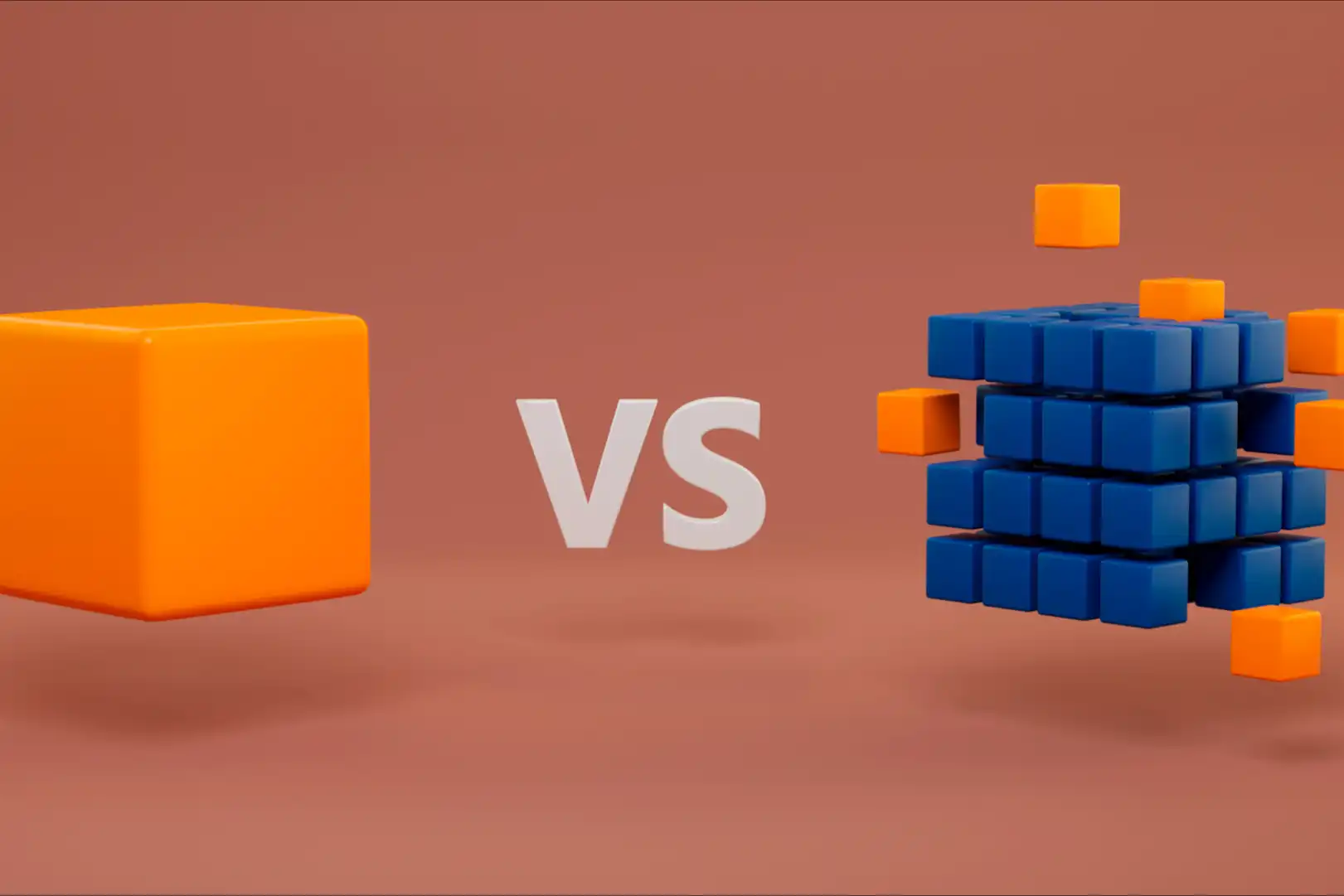
So first, what is a monolithic blockchain? In simple terms, a blockchain system has three tasks: execution, security, and data availability. For a long time, the blockchain system has been required to take on these three responsibilities alone, which has led to serious inefficiencies, which are also reflected in the blockchain's impossible triangle dilemma. Bitcoin and Ethereum chose high security and decentralization at the expense of scalability; while other chains made different tradeoffs.
In the era of modular blockchain, we can no longer be constrained by this, that is, to solve the inefficiency and the three problems of blockchain through long-standing professional technology Difficult dilemma. Today, instead of a single blockchain, we have three different types of chains or layers. Let's analyze the situation on this land:
Execution
This is where the user interacts and where all transactions happen. For end users, this layer has no difference in experience from a single-type blockchain and can be directly compared.
The focus of the execution-specific layer is to process transactions as quickly as possible, while "outsourcing" the challenging security and data availability work to other projects.
Rollups are the primary execution layer, but we also have validiums and volitions. Currently, Arbitrum One has a clear market first-mover advantage, Optimistic Ethereum then follow closely. But both A1 and OE are in their early stages and lack basic calldata compression optimizations such as signature aggregation.
StarkNet has now been on the public testnet for 3 months and is getting closer to MVP. I believe the last major hurdle is broad compatibility with components like web3 wallets, account contracts, etc. The predecessor of StarkNet - StarkEx, has implemented calldata compression technology, and signature aggregation is the default function of zkRs, so the transaction fee will be much lower than the current ORs, such as dYdX trades have an average transaction fee of < $0.2. Even if Arbitrum One were able to implement these optimizations in time, zkR would fundamentally achieve calldata compression better than OR. StarkWare believes that StarkNet v1 will be released on the mainnet by the end of the year to be compatible with the EVM through the Warp translator, but conservatively speaking it is likely to be released by early 2022 at the latest. Another advantage of StarkNet is that it is actually a volition, not a rollup, but we are still waiting for more details on this.
zkSync 2.0 is another promising EVM compatible zkR. Oh, and it's not actually a rollup, but a volition scheme similar to StarkNet. However we have more details about the architecture of zkSync 2.0. Arbitrum One, as a rollup itself performs all operations, but relies on Ethereum for both security and data availability. However, Ethereum is expensive as a data availability layer. So what volition does is let users choose between data availability on ethereum (rollup mode) and data availability on a different chain (validium mode). zkSync 2.0 will have its own data availability chain, zkPorter. The Rollup model is still the safest option, and zkPorter will offer very low fees (imagine ~$0.0X) while still being more secure than sidechains and other monolithic blockchains. We can already observe from Immutable X. My expectation is that zkSync 2.0 will release a public testnet this month and launch the mainnet in early 2022. Note, however, that there is always a certain delay with cutting-edge technology.
Of course there are other players, and I expect the executive level to be very competitive over the next few years. In the end I expect most projects to be volition-like, providing security on the most secure chain through proof-of-validity, and data-availability options for users. Finally, I would like to point out that the execution layer of monolithic blockchains is very uncompetitive, including Ethereum, so I expect more than 90% of all blockchain activity in the next few years to happen on rollups, validiums or volitions.
Security
To be precise, I understand "security" as "consensus ", but I think the word "security" is better to avoid confusion between the execution layer and the data availability layer, because the latter is not necessarily without a consensus mechanism.
Of the three, "Security" is by far the hardest layer. Currently, there are only two sufficiently secure, decentralized (or attempting to be) solutions: Bitcoin and Ethereum. Most other chains didn’t see the blockchain LEGO coming and made huge sacrifices in security and/or decentralization to achieve higher scalability.
So what does it take to compete with Ethereum as a security layer? First, Ethereum has achieved a broad token distribution through 6 years of active activity and highly inflationary proof-of-work. Second, Ethereum also implements a consensus mechanism that can handle a million validators without relying on in-protocol delegation. And Ethereum also has a culture of users and developers running full nodes and focusing on solutions like statelessness for long-term sustainable development. For me personally at the moment, the only realistic potential competitor to Ethereum is Bitcoin adding the ability to verify zk-SN(T)ARKs, but that seems very unlikely. On the other side are some revolutionary new technologies.
Data Availability
In the long run, Ethereum is still Having the best roadmap for data availability, both in terms of KZG commitment technology and data availability sampling, or purely utilizing its industry-leading security to deploy massive data shard chains.
But Ethereum's data availability layer may have to wait about 18 months. In the short term, validiums and volitions schemes could build on Ethereum's security while committing transaction data (in compressed form) to a separate data availability layer. We have data availability chains like Polygon Avail, Celestia, and zkPorter, and committees like StarkEx's DAC, who will fill in the gaps and have the opportunity to build network effects. It should be noted that some of these chains also focus on their security, but as mentioned above, I don't think these chains will compete with Ethereum in this regard.
As for candidates outside the Ethereum ecosystem, we may also see such as < Monolithic blockchains like span class="font">Tezos and NEAR provided sharded data availability before Ethereum. Although these chains are significantly inferior to Ethereum in terms of security and decentralization, they can serve as data availability chains.
In the end, it's not just about the data availability chain. We can have innovative data availability layers that guarantee validity and availability without requiring a consensus mechanism. I don't think any project has solved this problem in a decentralized way (arguably StarkEx DAC has solved it in a semi-centralized way), but if they did it might be more efficient than a data availability chain. Even if it's not a hard guarantee, the cost savings may be worth the risk for some users.
Conclusion
We are entering a bold block The new era of LinkLego has brought order-of-magnitude efficiency improvements to the industry. I hope this article outlines the future competitive landscape. Monolithic blockchains are all but obsolete, they need to focus on execution, security, or data availability, and it is impossible to compete if they still try to satisfy all of these characteristics. Projects that have already chosen tracks, such as those listed above, will be big winners in the coming years and deserve attention and support. I expect that in the coming months and years, the exponential efficiency gains from the modular model compared to the monolithic model will be obvious to all, and people will rush to enter this field, especially is the execution chain field.
Original link
Welcome to join the official BlockBeats community:
Telegram Subscription Group: https://t.me/theblockbeats
Telegram Discussion Group: https://t.me/BlockBeats_App
Official Twitter Account: https://twitter.com/BlockBeatsAsia

 Related Articles