El Salvador's Bitcoin "Lemonade Stand Experiment"

Original Title: "The Bitcoin 'Adventure Experiment' in El Salvador"
Original Author: Santiago Pérez&Caitlin Ostroff, The Wall Street Journal
Translation by: Nan Feng
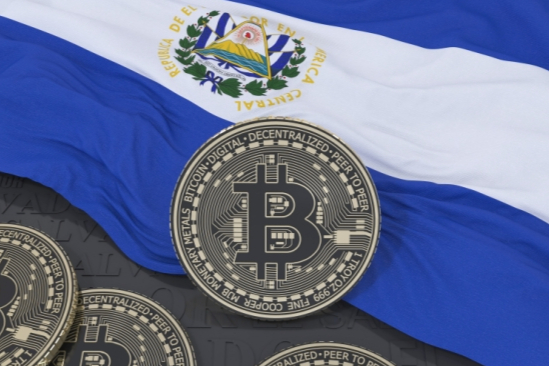
On June 9th this year, El Salvador passed a law with an "absolute majority" vote to officially adopt Bitcoin as its legal tender starting from September 7th (this Tuesday), making it the world's first country to adopt Bitcoin as a legal currency.
However, the small and impoverished country of El Salvador faced a bumpy start in adopting Bitcoin as a legal tender, as tens of thousands of people trying to download the Bitcoin wallet app "Chivo" caused server overload, leading the government to take the e-wallet offline for several hours. Chivo is the government-operated e-wallet that allows the use of Bitcoin or dollars to purchase goods or pay for services.
The government led by 40-year-old President Nayib Bukele planned to invest over $225 million in this initiative, including requiring businesses to accept Bitcoin in exchange for goods and services, the government accepting Bitcoin for tax payments, and granting a $30 worth of BTC to residents using the e-wallet Chivo (which means "Cool" in local slang).
However, the Chivo wallet did not appear in major app stores earlier this week. Some users reported on social media that they were unable to register with their phone number or official ID.

Above: A restaurant in Chiltiupan, El Salvador, promotes accepting Bitcoin payments. Source: Reuters
To commemorate El Salvador's official adoption of Bitcoin, the global Bitcoin community pledged to buy $30 worth of Bitcoin on September 7 (Tuesday) as a show of support for El Salvador. However, Bitcoin experienced a sharp drop on this day.
As it turns out, the volatility of cryptocurrency is much greater than that of traditional currencies, as it lacks the economic fundamentals to support its value, and transactions largely depend on market sentiment.
Following the Bitcoin price drop, El Salvador's President Bukele tweeted later on Tuesday that the government took advantage of the dip to buy an additional 150 bitcoins. Bukele wrote on Twitter that El Salvador now holds 550 bitcoins, with most of them purchased since Monday:

Above: Tweet from El Salvador President Nayib Bukele on Tuesday
Crypto enthusiasts referred to Tuesday as B-Day, or “Bitcoin Day,” because “we are eager to see how this ecosystem will develop,” said José Luis Guillén, founder of the Central American cryptocurrency and dollar exchange platform Coincaex. Coincaex aims to be one of the first foreign Bitcoin service providers licensed by the Central Bank of El Salvador.
Evidently, El Salvador's adoption of Bitcoin will be closely watched by cryptocurrency advocates, global financial institutions, and various governments.
Garrick Hileman, Head of Research at one of the world's largest cryptocurrency exchanges, Blockchain.com, stated: "This is a very significant milestone in Bitcoin's development."
The Salvadoran government has also launched a network of 200 Bitcoin ATMs and set up numerous stylish kiosks nationwide in squares branded with Chivo (see image below), where employees will be responsible for introducing Bitcoin to consumers.

Image: On August 29, a family at a Chivo kiosk in downtown San Salvador, the capital of El Salvador. These kiosks will introduce Bitcoin to consumers in squares near El Salvador.
On Tuesday, at the busy Antiguo Cuscatlán square in the country, the Chivo kiosk had almost no foot traffic. A group of young Salvadorans in charge of promoting the Chivo wallet app stared at their phones as some residents approached them to inquire about the wallet.
61-year-old resident Luis Alemán stated: "(The wallet) always has minor glitches, but these issues don't mean much." He plans to use the Chivo wallet to receive remittances from his children living in the United States, in order to save on fees charged by financial service companies. He added: "Waiting another day doesn't affect me either."
Many Salvadorans have also shared images on social media of fast food chains like McDonald's and Pizza Hut accepting Bitcoin as payment.
However, for this debt-ridden Central American country with a population of 6.5 million, the adoption of Bitcoin as a legal tender carries significant risks. Economists say Bitcoin's extreme volatility could undermine government tax revenues and foreign exchange reserves as the government lacks bothpolicy tools and financial resources to fend off speculative attacks.
“The government is betting more than $200 million in a virtual casino, which is taxpayers' money,” said Ricardo Castañeda, Senior Economist at the Central American Institute for Fiscal Studies.
The Salvadoran government has also disregarded warnings from the International Monetary Fund (IMF) and other creditors. The IMF had advised against governments adopting privately issued tokens that circumvent oversight and open the door to illicit activities. Salvadoran officials, however, argue that adopting Bitcoin can provide affordable financial services to the country's residents. The 40-year-old president also hopes to attract foreign investors to develop the country's geothermal energy from volcanoes to support cryptocurrency mining.

Above: A welder is making a metal bed frame at a factory in Santa Tecla, El Salvador, which accepts Bitcoin payments.
Many business owners in the country have embraced this government initiative, as it has expanded payment options for their customers through the user-friendly mobile app Chivo, eliminating costs such as credit card fees charged by banks to merchants.
“My mother thought Bitcoin was the devil's thing, but Bitcoin has many advantages,” said Fernando Alvarenga. His family business manufactures metal bed frames and griddles used to make Pupusas (a Salvadoran corn tortilla). Alvarenga sees the use of Bitcoin as another step towards financial innovation and diversification in the country since adopting the U.S. dollar as its national currency in 2001.
In June of this year, when the government first announced the adoption of Bitcoin, Salvadorans were taken by surprise. In early June of this year, American crypto entrepreneur Jack Mallers introduced this initiative at the 2021 Bitcoin Conference in Miami, with his talk titled “One small step for Bitcoin, one giant leap for mankind.” Jack Mallers stated that his company was working with Bukele to implement a plan and played a video during the talk of Salvadoran President Bukele speaking in English.
“Great ideas are beautiful, with great power,” said Bukele in the video. When Bukele announced that he would submit a bill to the Salvadoran National Assembly to make Bitcoin a legal tender in El Salvador, the excited audience rose to their feet in applause. A few days later, this three-page bill was hastily passed.
Owner of a clothing store and President of the Salvadoran Chamber of Commerce, Jorge Hasbún, expressed that when he heard the news, he was very shocked. He added that this initiative was hastily passed without consulting stakeholders or the private sector, and the last-minute disclosure of the relevant legal provisions was also insufficient. Hasbún stated:
「I am not ready if a consumer comes to pay with Bitcoin. We could have embraced this wave in a positive way, but the way this law has been implemented is not good.」
In fact, several years ago, people in the El Zonte region of El Salvador first encountered Bitcoin. El Zonte is a fishing village on the Pacific coast, known for its constant waves that attract foreign surfers. In 2018, with the support of American donors, the 3,600 residents of El Zonte began using Bitcoin. They developed a local digital wallet called "Bitcoin Beach," which currently has 35,000 users nationwide. The local charity organization, Hope House, started using cryptocurrency to pay for social activities such as school tutoring and beach lifeguard employment.

Image above: Enzo Rubio, owner of Point Break Café, a coffee shop in the El Zonte area. Since he started using the Bitcoin Beach wallet, this coffee shop has been accepting Bitcoin payments.
One of the founders of the local charity organization Hope House in El Zonte, Jorge Valenzuela, mentioned that once the news about the government adopting Bitcoin spread, the use of Bitcoin spread throughout the entire town, from mom-and-pop stores to trendy coffee bars. 「We have changed the narrative about El Salvador, turning it from a dangerous country into one that embraces crypto assets,」 he said.
The formal adoption of Bitcoin comes as Bukele faces increasing economic development challenges, a widening budget gap, and limited channels to enter the bond market. The country's diplomatic relations with the Biden administration have been tense, as international organizations accuse Bukele of using authoritarian means to control El Salvador.
In May of this year, the ruling party in Bukele's government dismissed all the justices of the country's high court. Last Friday, the newly appointed justices ruled that Bukele could seek reelection for two terms, allowing him to run for a second term. The U.S. Embassy in El Salvador stated that this ruling violated the country's constitution, which prohibits consecutive terms.
Despite Bukele being one of the most popular presidents in Latin America, his Bitcoin initiative has been highly unpopular. A poll conducted earlier this month by the Universidad Centroamericana José Simeón Cañas in El Salvador revealed that over 65% of Salvadorans do not want the government to spend taxpayer money on adopting Bitcoin, and 80% have little to no confidence in Bitcoin
The International Truckers Association of El Salvador stated in August of this year that mandating businesses to accept Bitcoin restricted economic freedom.
On August 27, hundreds of ex-soldiers who participated in the country's civil war in the 1980s protested outside the Salvadoran Ministry of Finance, demanding pension benefits from the government and opposing Bitcoin as legal tender.

Image above: On August 27, ex-combatants of the Salvadoran civil war held a protest in the capital, San Salvador, demanding improved pensions and opposing the adoption of Bitcoin as legal tender.
Alberto Amaya, 56, who served in the Salvadoran army's special forces, stated, "Bitcoin is suitable for countries with more advanced technology and a stronger economy."
Another ex-soldier, Juan Manuel Pineda, also remarked, "This is a crazy economic adventure. If we don't even have smartphones and no money for the internet, how are we going to use Bitcoin?"
Even some cryptocurrency advocates are reluctant to use the government-backed Chivo digital wallet due to privacy concerns.
Online pet food delivery service Smart Pet SV's owner Oswaldo Serrano said, "You give all your data, including your financial trends, in and out, to the government."
The funds in the Chivo wallet are controlled by the government on behalf of its citizens, so there is a security risk. Blockchain.com's Head of Research Garrick Hileman pointed out that this centralized funding carries the risk of attracting hackers.
On September 7, more than 1,000 people marched in the capital of El Salvador to protest the adoption of Bitcoin as legal tender. At noon local time, protesters set tires on fire and set off fireworks in front of the Supreme Court building, where the government deployed a large number of armed police at the protest site.

Above: Protest against the adoption of Bitcoin on the streets of El Salvador on September 7.
Additionally, in El Salvador, financial service companies are the main channel for the $6 billion in annual remittances received from Salvadoran immigrants living in the United States. These financial service firms will accept Bitcoin payments, but these funds will be immediately converted to dollars. Executives of these companies stated that their main concern is how to prevent U.S. regulated banks from cutting off ties with El Salvador due to AML and compliance risks since these U.S. banks provide financial services to Salvadoran banks.
"With El Salvador having two currencies (i.e., the dollar and Bitcoin), the question now becomes, will the Bitcoin ecosystem absorb more dollars through El Salvador? Would the U.S. be okay with that?" said Caitlin Long, CEO of the crypto-friendly bank Avanti Bank.
After the Bitcoin Law was passed, rating agency Moody's downgraded El Salvador's credit rating, and the country's dollar-denominated bonds came under pressure. Additionally, a World Bank spokesperson reiterated on Tuesday that, "given environmental and transparency concerns," the institution would not help El Salvador adopt Bitcoin.
Original Article Link
Welcome to join the official BlockBeats community:
Telegram Subscription Group: https://t.me/theblockbeats
Telegram Discussion Group: https://t.me/BlockBeats_App
Official Twitter Account: https://twitter.com/BlockBeatsAsia
 Related Articles