Dancing with The Sharks: A Brief History of giant FTX
FTX Trilogy, Part 2: Speedrun
Source: FTX
Original translation:Encryption valley Live

The data, which has never been made public before, shed light on one of the crypto world's underreported giants.
FTX aspires to be one of the most influential companies of the next decade. Generalist gained access to never-before-made internal data from FTX, providing a deeper insight into the cryptocurrency exchange's operations and future ambitions. In a three-part FTX series, we reveal who's at the helm, the company itself, and its future. This is part two of the FTX trilogy. The first part is here.
MrCheeze had a rough July.
A year ago, The player made a bet that no one would ever be able to finish The Legend of Zelda: Ocarina of Time in seven minutes. This is simply impossible.
Another player named Savestate took up the challenge. He knew that for the challenge to succeed, it had to be done perfectly -- without any inefficiencies or errors. In the end, he succeeded by milliseconds. On July 22, Savestate beat Zelda with a score of 6:59.767.
Why would anyone do this?
Savestate and MrCheeze belong to the "speed party" -- players who want to finish a game as quickly as possible (often in the hope of setting a new record). The Speed Party has been recorded in all kinds of games, such as Super Mario 64 (1 hour, 38 minutes and 21 seconds), Sonic the Hedgehog (54 minutes and 17 seconds), Grand Theft Auto V (5 hours, 49 minutes, 8 seconds).
While it's clear what the Zoom Party is after: super speed, it takes more than speed to be successful. In addition to nimble fingertip manipulation, the challenge of top speed requires a clear understanding of what can be ignored and what can be missed, but can still be successfully completed. The goal here is not to have the hero's vault full by the end of the game and complete all the side quests, but just to get through the game.
For all its strengths and weaknesses, FTX looks like it's on some kind of speed challenge. In just 26 months, the company has been valued at $18 billion, making it one of the most popular cryptocurrency exchanges in the world. That makes it one of the fastest companies ever to add value, ahead of legendary companies like Coinbase, Stripe, Square and Slack.

Valuation volume reached by companies in 3 years
But, like every speed challenger, FTX had to make some concessions to achieve that speed. In particular, the exchange has been quick and nimble in its regulatory response, brushing aside allegations of conflicts of interest and largely ignoring retail traders.
These mistakes can be costly. Supporters will find that the company seems to have the money, the connections and the will to tackle its most important problems. It remains to be seen, of course, whether FTX can effectively make up for these weaknesses.
Today, we explore different dimensions of the FTX empire with never-before-seen business data. Our investigation will cover:
• 初创阶段:FTX 的快速起步和随即而来的产品-市场高度契合。
• 产品:FTX 如何在可靠性和创新性方面实现差异化。
• 客户群:赢得来自世界各地的严肃交易者的认可。
• 指标:深入分析 FTX 的吸引力所在。
• 竞争:FTX 与 Coinbase、Binance、BitMEX 及其他交易所的比较。
• 最坏情况预测:FTX 可能出现的危机。
Let's find out.
Start-up review
It's hard to know what a company looks like in its early days. Thanks to Chris McCann of Race Capital, readers have an insight into what FTX was like in the eyes of early investors. The Race team agreed to share their investment memo with Generalist, the first time it has been made public.
Even at this early stage, the Outlines of FTX seem clear. As the memo highlights, this is a team that executes extremely well and has a great fit with the market. In less than two weeks, FTX's daily trading volume has grown from $50m to $150m. Two weeks later, daily trading had jumped to $300m.
The level of product innovation is also striking. A snapshot in the memo Outlines the pace of development.

On this list alone, FTX's products demonstrate admirable creativity and a frenzious love of risk. More cautious exchanges like Coinbase won't offer futures for the first few months of operation; It doesn't offer 101 times leverage because it's too risky.
Given FTX's market, the product design is understandable. Race Capital summed up market developments in 2019, noting that while cryptocurrency futures markets have seen volumes equal to the spot market, the futures market is still much less competitive:
On July 25, 2019, the total volume in the spot market was $10 billion per day and the total volume in the futures market was $11 billion per day. In futures markets, however, there are far fewer competitors, with the top three exchanges (BitMEX, Huobi and OKEx) typically trading three times more futures than their corresponding spot volume.
FTX was given an opportunity to attack. BitMEX, one of the leading exchanges in the futures market, was in turmoil. There was a "surge in net outflows" from the exchange as part of a commodity Futures Trading Commission investigation into the us clients it serves. FTX used the opportunity to gain a foothold in the futures market.
Race Capital led the $8 million round, with Lemniscap, One Block, FBG and others participating. So far, that trust has paid off beyond measure. Below, we'll break down the company from the ground up and try to make sense of its $18 billion valuation. First, we need to explain what we mean when we say "FTX ".
Entity: a multi-doppelganger aggregate
FTX is not a single entity. Unlike most contemporary companies, the company is actually a collection of different entities that are linked to each other formally or informally.

The central nodes of this network are Alameda and FTX.
Alameda is a cryptocurrency investment firm founded by Sam Bankman-Fried (SBF), Gary Wang and Nishad Singh to take advantage of arbitrage opportunities that emerged in Asian markets at the end of 2017. It has evolved over the years to become one of the most influential distributors in the ecosystem, direct investment agreements and private companies. Sources confirmed that Alameda may be the single largest investor in the cryptocurrency ecosystem, trading billions of dollars in assets every day.
As mentioned earlier, Alameda was a major market maker for FTX in its early days, providing liquidity. Alameda now accounts for a much lower proportion of FTX transactions, as we will see later.
FTX is a cryptocurrency exchange incorporated in Antigua and Barbuda. FTX includes two subsidiaries: FTX.com and ftX.us.
For most people, the name "FTX" conjures up FTX.com. It's the company's most full-featured product, but it's not available in the U.S. for regulatory reasons. When we talk about the product suite later in the article, FTX will primarily refer to FTX.com.
Ftx.us is an eclectic version of FTX's international platform, and its relationship with FTX.com is similar to BinanceUS 'relationship with the more widely known international product, Binance.
But now things are getting more confusing. Last August, FTX acquired Blockfolio, a cryptocurrency news and portfolio tracking app. We will discuss the implications of this acquisition in more detail later. But just last week, FTX said it was renaming the Blockfolio brand to... FTX. All right, that makes it even more confusing.

For the sake of presentation, Blockfolio will be referred to by its original name, unless FTX refers to FTX.com.
FTX has issued its own token, the FTT, for use in all scenarios. Like Binance's BNB, FTT holders receive discounts on fees and other benefits. If you choose to pledge an FTT, you will receive a range of benefits including higher voting rights, bonus NFT, airdrop bonus, and higher rebates. FTT can also be used to meet the collateral requirements of an account, which we will explain in more detail later. To preserve scarcity and maintain their price, FTX would "buy back and destroy" the FTT.
Finally, there is Serum, a decentralized exchange (DEX) that FTX founder SBF helped set up and advised on in the early days. Unlike Uniswap or Sushiswap, Serum is built on Solana instead of Ethereum, which allows for faster throughput.
These can be difficult to understand, but should become clearer as we read the business. With the background and terms clearly defined, it's time to delve deeper into the product.
Product: Power center
Why start a cryptocurrency exchange?
When SBF considers entering the cryptocurrency space, strong competitors abound. Coinbase has raised more than $500 million, bitan trades more than $1 billion a day on a good day, and BitMEX is emerging from the derivatives race.
As we've said before, SBF's decision was largely driven by dissatisfaction with the product on the market at the time, but it also reflects where power lies within the cryptocurrency ecosystem. Despite fierce competition, exchanges represent the heart of the industry, their on-ramp, capital hub and data source. If SBF aspires to greater influence, the best option is to create exchanges.
By building a high-performance core, offering high leverage, and offering a unique trading market, FTX has become home to some of the most active traders in the market, and has shown a willingness to expand its empire with new products.
Core of high performance
This came up again and again in my interviews: FTX is excellent. SBF and his team drew inspiration from Alameda's expertise and built a trading platform that was perfect for serious traders.
The first is its reliability. One source, who is not an investor, said FTX was the most reliable exchange on the market, keeping open even at peak times when other exchanges were closed due to heavy trading volumes. This is managed by a strict budget of user API calls: there are about 20 transactions per second on the platform. This is a limitation for some people -- to accommodate this limitation, FTX adjusts this budget based on account size and activity.
The sources also expressed fondness for FTX's liquidity and risk control engines. While high liquidity is clearly effective in reducing trade rollbacks (with losses borne by the exchange's customers, as happened on the rival OKEx platform), it is the risk control engine that gets the most praise in my conversations.
Unlike other exchanges, FTX accepts "cross margins". This means that a variety of currencies, including the US dollar, BTC, ETH, AAVE, XRP and dozens of others, can be counted as a user's margin. This is a significant improvement. Most exchanges handle cryptocurrencies separately, meaning your collateral is calculated on a case-by-case basis by asset class.
For investors who want to increase leverage, such rules create problems: either your margin is below the required level, because it covers only a small proportion of your holdings, or you have to painlessly convert one asset into another.
Highly leveraged
Part of FTX's popularity lies in the leverage it provides to traders. Thanks to this risk control engine, FTX is able to offer higher margins in a simpler and more convenient way than other exchanges.
Although not very old, FTX has been offering 101 times leverage since shortly after its founding. Hypothetically, this means that if a trader has $100,000 in their account, they can invest $10.1 million. While winning trades can make a lot of money because of this leverage, losers can also lose money quickly because of bad bets.
After a recent round of funding, FTX said it was reducing the leverage available on its platform to 20 times. Leveraged trading accounts for a relatively small portion of the trading volume on the platform, the company said in its announcement. The average margin investment at the time of the announcement was double, according to the SBF.
While the change is said to encourage "responsible trading", the 20-times leverage limit still leaves FTX high. Huobi recently reduced its available leverage to five times from 125 times, while OKEx and Kraken have also reduced their maximum leverage to five times. Bitfinex offers up to 10 times leverage.
Of course, FTX is not alone in this high position. Binance followed soon after the SBF announcement, also opting for a 20x limit, up from a maximum of 100x. BitMEX still offers 100 times leverage on some contracts.

While providing leverage may not be the main reason for FTX's success, it plays a part. As the company seeks to reach a more cautious audience and expand into more regulated regions, a softer approach also seems needed.
Unique trading market
If Coinbase is typical of a conventional cryptocurrency exchange, FTX is unafraid to lead the way. Yes, the platform offers physical and contract trading, but it also caters to those with more eccentric tastes.
Want to dabble in timber contracts? Very good.
Want to bet on Trump's 2024 campaign? no problem
Interested in hyping up an upcoming IPO? This way, please.
FTX is a highly creative exchange that seems to be constantly looking for new opportunities to offer new products. The timber market, for example, was launched just a day after FTX received the request. It reportedly only took two hours to launch. With a culture that strongly encouraged experimentation and market-makers such as Mr Alameda on hand to provide liquidity, this made sense.
In addition to spot and contract trading, FTX also offers the following trading markets:
Equity token:Instead of switching to Robinhood, investors can use FTX's "equity token" to gain exposure to public securities. These tokens sync the prices of related securities like Tesla, Robinhood and Alibaba and can be traded around the clock, allowing investors around the world to participate. Binance offers a similar product.
Lever token:Traders can choose to invest in tokens like ETHBULL without managing an actual leveraged position or dealing with the collateral issues described above. The ERC20 asset gives investors a three-fold long position in ETH, meaning that if ETH rises 10 per cent on a given day, ETHBULL will jump 30 per cent. FTX offers leveraged long and short tokens for ETH, BTC, DOGE, MATIC, EOS, etc. FTX was the first exchange to offer such a product, giving investors another easy way to increase leverage.
Fluctuation token:The other ERC20, the volatility token, does exactly what you'd expect: it tracks volatility in the relevant markets. It's the cryptocurrency equivalent of the VIX (CBOE volatility Index). The Fear Index token (BVOL) tracks 1x volatility of BTC, while the iBVOL is a reverse BTC volatility token. So far, FTX is only offering volatility tokens for BTC.
Forecasting products:Right now, speculators can bet on two presidential election products: Donald Trump 2024 and Jair Bolsonaro 2022. These are contracts that are due for delivery at $1 if the said candidate wins the election, or $0 if he loses. In the last election cycle, Trump 2020 products saw a surge in sales in the final campaign phase. There seems to be very little trade in this category right now, with less than $40 in the first 24 hours at the time of writing.
Fiat currency market:Users can trade between fiat currencies, for example, converting dollars into euros. Other currencies supported include the British pound, the Canadian dollar, the Brazilian stablecoin (pegged to the real) and the Turkish lira stablecoin.
No wonder one FTX investor described the company's product innovation as "ridiculous".
Expanding footprint
FTX's latest move seems to be typical of the company's boldness. While the many trading markets mentioned above represent its core products, FTX is not content to rest on its laurels.
One of the more recent moves is the platform's NFT test. FTX provides a system for creators to upload and sell their creative products. Judging by the state of the page, this seems to be a relatively new venture - most of the items sold are FTX branded, including hoodies, water bottles, hats and, of course, a set of FTX condoms with the words "More fluidity for a silky experience" printed on them. Oh this...

(At least buyers can be sure it's one of the few 100% effective birth control options: anyone who sees it is sure to run.)
To make things even more interesting, bidders can buy a $1 million lunch with SBF or snap up a limited-edition Travis Scott T-shirt. (Intriguingly, the ftx.us version of this page offers almost exclusively NFL player cards.)
Are these NFT's?
That's a good question. Most of the items on the NFT page do not show real uniqueness and deviate from the form of NFT's most popular collectibles and digital artworks.
Is this a sign of broader ambitions? Could this page become a sort of Craigslist for the cryptocurrency world? That seems unlikely. For now, the company's NFT product feels like a rough first edition. Over time, FTX may hope to be comparable to professional NFT platforms such as OpenSea.
FTX Pay is also in its early days, although it benefits from a clearer product concept. FTX seems eager to pick up where Stripe left off. The Collison brothers decided to end their support for Bitcoin payments in 2018, and while there are rumors of a return, FTX is hoping their crypto expertise will help propel FTX Pay.
FTX Pay represents FTX's first foray into payments. Through a simple widget, users can accept payments in fiat or cryptocurrency, receiving funds in a digital wallet. Of course, FTX notes that the use of corporate accounts is "recommended", which may foreshadow its broader business function.
Overall, FTX has managed to build an empire that is both very reliable and distinctly experimental. It has proved a good fit for its customer base.
Client: Dancing with sharks.
"It's a shark-infested market," one source said of FTX.
When I asked what that meant, they explained that unlike, say, Coinbase, most users on the platform are serious traders, often professionals. This means that users should be wary of the importance of people on the other side of a particular trade, especially when it comes to more baroque polyphonic investments.
This impression is consistent with SBF's account. He points out that FTX has a "supersized proportion of large traders", with the bulk of its volume coming from users who trade more than $10m a day.
While we know a bit about the nature of FTX's customer base, we can dig deeper. In doing research for this article, we were able to obtain unprecedented FTX user data and metrics thanks to leadership cooperation. First of all, Generalist made no promises (explicit or implied) to obtain this information, nor did the FTX team interfere in any way with the position or content of our reporting.
Institutional and retail traders
As of June 17 this year, FTX counted 1.25m retail trader users, of whom 130,000 (10 per cent) traded actively each month. A further 2,700 institutional clients use the platform, of which 1,017 conduct monthly transactions (38%).
As you might imagine, retail and institutional users differ significantly in volume and almost equally in revenue contribution to exchanges. Retail investors contributed $372bn to the average monthly trading volume, and the exchange's monthly revenue was $43m. Institutions brought in an average of $446bn in monthly trading volumes, compared with $23m for exchanges.
From these figures, it can be inferred that the average active retail trader trades about $3m a month and contributes $337 in income. The average active institution trades $439 million a month, bringing in $23,000 in revenue.
While these numbers vary with the market, they give an insight into the complexity of its customer base.
The whale and the little fish
By looking at the concentration of trading volumes, we can get a clearer picture of whether FTX is powered by a particular pod of whales or a school of minnows.
A rather strange chart shared by FTX gives us a clue.

The two columns on the left are what we're trying to sort out. FTX basically divides its volume concentration into 11 levels, each of which is the decimal logarithm of the previous category, capped at $30bn.
Don't worry if you don't understand it at all. The easiest way to understand this data is to ignore the logarithm and look at the range on the left.
Level 11, for example, represents volumes that contribute about $30bn or more a month to the FTX business. Tier 10 represents monthly transactions between $3.16 billion and $31.6 billion. The ninth tier represents transactions that contribute between $316 million and $3.16 billion per month, and so on.
This is an unusual way to present this information, but it makes a different sense: it is valuable to know how much of an exchange's trading volume comes from each of its clients, which are 10-fold different in size.
With this in mind, we can see that FTX's user base has benefited from some serious whale traders. More than 25 percent of the total volume comes from groups that trade more than $30 billion a month. More than 50% of the trading volume comes from groups that trade more than $3 billion a month. This is a market designed for large volume traders.
Regional basis
The presence of the Turkish lira in FTX's fiat currency trading zone shows that FTX's user base is global. Looking back at the march data, Turkey is actually FTX's largest market in terms of user base, with more than 20% of users coming from the country. Other countries in the top 10 included South Korea, Gibraltar, Australia, China and Japan.
(BTW: we can't confirm that the "GBR" in the figure below refers to Gibraltar, but since the UK is not included in the tally, it seems the most likely conclusion)

These shares change when analysed by volume. Most trading comes from institutions, which FTX does not classify as individual countries. But other than that, most deals come from Taiwan, followed by Mainland China and Hong Kong. This breakdown suggests that FTX's energy base is indeed in Asia, including Singapore and South Korea.

Finally, looking at countries' income contributions, we see the other side. For example, although South Korea has fewer users than Turkey, they are the biggest revenue contributor. Switzerland, Australia, Gibraltar and Canada rounded out the top five. We can assume that users in these countries are relatively active and involve higher transaction costs.

Perhaps tellingly, the United States is not included in this analysis.
Management: master of leverage
Given the intensity of SBF's schedule, it might be expected that other PARTS of FTX would also be operating at high speeds. "I've never seen a team that loves their work so much," says a source. "They work so hard."
We talked enough about SBF in the first briefing, so today we will focus on other key people, then on the culture of FTX and finally on the leverage of employees.

A key figure
In addition to SBF, FTX's most important leaders are Gary Wang (CTO) and Nishad Singh (Vice President of Engineering).
According to an FTX employee, Wang was SBF's roommate at THE Massachusetts Institute of Technology, where the two formed a strong friendship. After graduation, Wang worked at Google, building the company's aircraft products. Sources say Wang actually joined Google after his travel startup was acquired, but we can't confirm this.
In any case, that experience gave Wang experience in building systems with high traffic and low latency -- which is certainly good for building a trading platform.
FTX employee Zane Tackett described Wang as an introvert who earned respect through his work. As an "expert" engineer, Wang is known for firing up FTX's risk engine in a matter of weeks, an insane feat. The core of the system is still in use today.
Nishad Singh provides a solid balance. If Wang is an introvert, Nishad Singh is a more practical man. Wang often fought individually, while Nishad Singh was in charge of the entire engineering team.
As mentioned in the previous article, Nishad Singh attended the same high school as SBF, although it is unclear what their relationship was at that time. From an early age, Nishad Singh showed that he had the unusual determination and ambition necessary to work at FTX. In fact, as a young man, Nishad Singh set the world record for the 100-meter race at the age of 16.
Wang and Singh are said to share an interest in SBF's effective altruism, which gives the three of them some common worldview.
In addition to Wang and Singh, FTX's functional leadership team consists of Sina Nader (FtX.us Director of Operations), Brett Harrison (FTX.us President), and Dan Friedberg (FtX.us General Counsel).
Before joining FTX, Nader was in charge of the cryptocurrency division at online brokerage Robinhood, and his move is something of a coup. Although Nader was originally expected to run FTX's US subsidiary, he ended up as head of trading. As we'll discuss later, FTX has thus embarked on a rather remarkable BD binge, forming partnerships with major sports leagues such as MLB, most of which are spearheaded by Nader.
The head of FTX.us, vacated by Nader, was replaced by Brett Harrison. He was also at Jane Street, and sources say he was the "old boss" at SBF. Given his experience building trading systems at Jane Street, Headlands Technologies and Citadel Securities, he seems well suited to the role of ftX.us head.
The less high-profile addition of Dan Friedberg as general counsel could prove crucial. While FTX has kept a low profile so far, its size (and high-profile advertising deals) means it is likely to attract formal regulatory attention, so the former Fenwick & Amp; West's partners will also have plenty of work to do.
Is Friedberg up to the job? He has been actively discussing BTC and other cryptocurrency-related legal issues for several years, which should provide plenty of experience. The success of FTX's voyage into the American market may depend in large part on his reputation and shrewd decisions.
culture
To understand FTX's culture, you must first understand what makes the company different, notably, SBF's company and Coinbase's.
Over the past few years, Coinbase has successfully built up its users' trust. By growing slowly and cautiously, while keeping its app simple to use, Coinbase has become the best-known exchange in the United States. In many ways, it is like a typical large Silicon Valley company, drawing talent from an elite pool of companies like Facebook, Google, Airbnb and others.
FTX is speed oriented, and everything the company does seems to be geared toward that. FTX favours young, success-hungry Wall Street types over veteran tech engineers used to the sensible balance of work at mature companies. In addition to being willing to work very hard, these people benefit from the working environment. SBF highlighted this in their conversation with us: FTX has a strong preference for hiring people who really know the product and really know the deal. As a result, its culture is more akin to an East Coast quant fund than a Silicon Valley startup.
This preference for people who know what the job is is also reflected in organizational structure. SBF said he was "sceptical" about a similar role for "project managers". He explains that he prefers to give management authority to people who are specifically involved in a task, rather than just someone who is responsible for an abstract plan, because of the risk of miscommunication or the wrong direction -- it is difficult to provide sound advice if the core issues are not understood.
FTX is also keen to hire traders, with the aim of reducing delays. At FTX, at least, the people who are most capable of solving problems quickly are the ones who really understand them.
leverage
Perhaps the most striking thing about FTX's management is the amount of energy efficiency leverage it has achieved. With just 82 employees, the company runs one of the world's largest cryptocurrency exchanges, rolls out new products at a pace only Binance can keep up, and has signed up a string of hot partners.
This is simply jaw-dropping. Take a look at this chart for comparison:

FTX is surprisingly efficient, supporting $2.7bn of transactions per employee per month. That's more than 110 times more than each Coinbase team member, putting Binance, Kraken, and Uniswap in the shade. Only BitMEX, with 13 employees, has surpassed FTX.
Perhaps even crazier is that FTX's entire technical team consists of only a few engineers. How many?
Six.
Yes, I didn't mistype the numbers, but according to FTX staff, that's all they actually have.
A platform that handles hundreds of billions of dollars a month is built and maintained by the same number of people as a hockey team.
It also seems plausible that a company that benefits from offering leveraged products can benefit from leverage itself.
Measurement: Scale breakthrough & NBSP;
Looking at FTX's internal data gives a detailed look at the company's business growth, revenue mix and retention. Unless otherwise stated, all data are current as of June 21, 2021.
Business growth
Like other cryptocurrency market participants, FTX has benefited from a bumper year for the industry, with a surge in users, volume and revenue.
Daily active users rose from an average of 2,032 in 2019 to 14,922 in 2020, a staggering 634% increase. The company managed to maintain a strong pace in 2021, averaging 60,753 daily active users, up 2,890% from 2019 and 307% from the 2020 average.

Weekly and monthly active users are also growing rapidly. Of course, this is also due to a massive increase in total enrollment. FTX had 74,000 users in June 2020 and 1.2 million a year later, an increase of 1,521%, which is quite an incredible increase indeed.
Naturally, trading volumes are rising in tandem. Between 2019 and 2020, average daily transactions grew nearly 600% to more than $1 billion. In 2021, that figure effectively doubled 11-fold to $10.9 billion in daily transactions.

This traffic flows between FTX's different platforms. The company separates ftx.us and Blockfolio transactions to give us an idea of the traffic on those platforms. Here, the time span of the data is relatively short, from late January to mid-June this year.

As we can see, Blockfolio's maximum daily transaction volume during this period was only $25 million, indicating that a feature added in 2021 is relatively new. Daily trading volumes on FTX.us are much higher, topping out at $600m.
Both have little effect on total trading volume. During the period shown in the chart above, FTx.us contributed less than 1 per cent of transactions, while Blockfolio contributed 0.036 per cent. For now, at least, the vast majority of FTX's business is outside the US.
One interesting aspect of FTX's trading volume is Alameda's declining share. At the start of 2020, about 45 per cent of flows came from the fund -- a proportion that fell rapidly from March that year. As of June 2021, Alameda contributed only 5% of the flow, which is a strong indication that FTX has successfully diversified its sources of liquidity.

Finally, let's look at revenue. In 2019, FTX's average daily income was $40,437, rising to $237,616 the following year. By 2021, it had surpassed $2.2 million, an 840% increase. That brings the company's annual revenue to $803 million, before factoring in further growth. While FTX is unlikely to keep growing at such a high rate, management will certainly not relax. SBF has said publicly that he expects revenue to exceed $1 billion in 2021.

Income portfolio
Where does this revenue come from?
Like other exchanges, FTX earns its income from fees on contracts, fees on spot trades and interest. We can see that the company has successfully diversified its revenue over time, for example, with growing spot revenue. Even the recent Blockfolio purchase seems to be generating revenue, which is certainly more than anyone had expected given the low volume. "Other" revenue includes a smaller portion such as NFT sales.

Following the revenue mix shown above, FTX shared its fee-related data. Over time, the company appears to have reduced its global platform fees to about 0.02%.

It's worth noting that ftx.us typically charges five to ten times that, at about 0.2%. Blockfolio costs more, at about 0.8%. This partly explains why Blockfolio seems to have a higher revenue share than its transaction share.

While FTX may be able to reduce fees for Blockfolio and U.S. exchanges as volumes increase, these improvements will also effectively increase revenue.
Users of retained
In my conversation with SBF, he was the most active when I asked him about retention. He answered forcefully:
"We want to never lose a customer. If we lose a customer, we lose. I want to understand why or why they chose another platform, and how we can improve and do it better."
FTX's figures suggest that this persistence is paying off. Most user bases, especially the 2019 user base, have seen transactions increase over time, often by a large amount. For the May 2019 group, for example, trading volumes were 580 per cent higher in May 2021 than in May 2020.

Is this continued growth due to widespread retention, or are whales trading more through FTX? Judging by the retention rates of monthly active traders, it should be the latter.

While it's true that early user group retention increased (48% between 2020 and 2021 for the May 2019 group), it didn't translate into such a large increase in transactions. The retention rate of the relatively new user group seems to have declined slightly.
spending
The SBF has previously said THAT FTX has the ability to grow on its own terms. While Generalist has limited access to this information, we have some evidence to back it up.
Specifically, the average spending figure for 2021 is $428,610 per day and $156 million per year, up 421% from 2020. With trading volumes up 11-fold and revenues up more than eight-fold, at least in these rough numbers, FTX seems to be living within its means.
What caused the spending surge? We don't know, but we can guess a good reason: marketing.
Marketing: Appeal to the masses
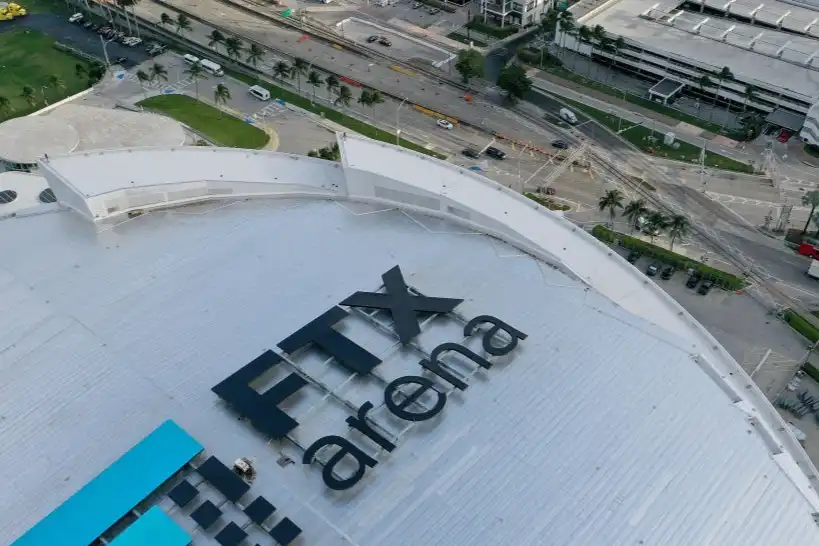
On June 4, the FTX team announced that they had just bought the naming rights to the Miami Heat's stadium. In 2021, the site previously sponsored by American Airlines will become the "FTX Arena ".
If the $135m payout represented a statement of intent, FTX's subsequent actions were even more so. Two days later, WHEN FTX acquired the naming rights to Team SoloMid, an electronic sports Team, for $210 million, "TSM "suddenly became TSM FTX, with three more letters. Just three weeks later, FTX signed a deal with Major League Baseball, becoming the first cryptocurrency company to partner with it. The league's referees now wear the FTX logo on their jerseys.

FTX is keen on the US market. Recognizing that Coinbase was late to the game and had established a more established brand, FTX was willing to be aggressive and take a rough and easy approach to raising its profile. There are some reasons why the company chooses this way of marketing. The main points are as follows:
• FTX 希望成为主流。About half a billion dollars in marketing can be spent on more targeted marketing programs. FTX is clearly aiming for something bigger -- to appeal to the masses. FTX sees itself more like Robinhood, the online brokerage, than Gemini, the cryptocurrency exchange.
• FTX 对体育感兴趣。Of course, advertising at NBA and MLB games is a surefire way to reach a larger audience. But we should not interpret FTX's field choice as an accident. Sports betting is one market FTX may want to tap. We will discuss this further in next week's article.
• FTX 正在增强软实力。What better way to win the hearts and minds of American regulators than to be a supporter of America's favourite pastime? Binance may never have been able to do so, given its origins, but FTX is in this way infusing American culture into its corporate identity. This may make FTX seem more local.
Bold initiatives such as sports sponsorship are complemented by more modest ones. While it is slightly cynical to label FTX's charitable work as "marketing", especially given the founders' visceral interest in effective altruism, they have influenced how users view their business.
FTX seems to be taking a cue from online payment provider Stripe. FTX has also created a climate initiative of its own, similar in structure to the Paris Climate Initiative, to support research and innovative technology.
In addition, FTX has made a donation pledge, giving 1 per cent of its net commission to worthy causes. As you might imagine, this seems to be based on effective altruism, focusing on effective but less eye-catching issues like deworming. Here, too, FTX has done a good job of engaging its users, not only donating money itself, but encouraging others to join in. So far, users have donated nearly $7.5 million, or 66 percent of the total. This suggests that the community may have taken FTX's values as its own.
Overall, FTX is a company hungry for attention, but with its own distinct identity. We hope that this character will be maintained as the company develops further around the world.
Acquisition: Acquire Blockfolio
"Crypto practitioners think more about technology, whereas Sam thinks more about CAC (cost of user acquisition)."
Blockfolio's acquisition confirms that assessment. By acquiring Blockfolio for $150m, FTX has both increased and diversified its customer base, preparing it to better serve retail customers in the future.
First, let's take a closer look at Blockfolio's products. Founded in 2014, the company started as a simple tracker of cryptocurrency prices and the value of assets held by individuals, and over time transformed into a more full-featured app featuring cryptocurrency news. It raised $17.5m in financing before being acquired by FTX.
Blockfolio has been further enriched since the acquisition. The most important of these is the addition of a transaction feature, where users can buy and sell cryptocurrencies directly through the app.
From this perspective alone, Blockfolio doesn't seem to benefit FTX. Price and portfolio tracking are the main strengths of exchanges, and while Blockfolio's well-crafted mobile application does have value, FTX would probably have to spend much less than $150m to build something similar.
But given Blockfolio's user base, the acquisition is a smart move. First, Blockfolio has a large number of daily active users (DAUs). While FTX surpassed 60,753 daily active users in 2021, Blockfolio averaged 821,000 daily active users between December 2020 and January 2021.

This user group has a very high viscosity. As FTX points out in an internal document, "Blockfolio users typically use the application several times a day, at very short intervals ".
In total, Blockfolio has 6.5 million to 7 million users (tracking differences lead to floating differences), with approximately 1.75 million active users in 2020.
Crucially, the geographical distribution of this user base is different from that of FTX. While FTX is heavily used in Asia, Blockfolio's users are mainly in North America and Europe. The United States is its biggest stronghold, accounting for 18 percent of users. Rounding out the top five were the Netherlands (6.41%), the United Kingdom (5.96%), Germany (5.74%) and Russia (3.74%).
What does it all add up to?
FTX is essentially buying 6.5 million users for $150 million -- a customer acquisition cost of $23 per user. While we can't expect Blockfolio to boost FTX's trading revenue immediately, we do know that FTX's average monthly revenue per individual trader is $337, and if Blockfolio can match that, it would be a very good deal. In total, it takes only two days to enter the payback period. Even assuming that FTX only takes advantage of Blockfolio's 1.17 million U.S. users, the acquisition cost is still a decent $128.
This gives us the Outlines of an interesting M&A strategy. Companies that have accumulated large numbers of users often struggle to monetize them effectively. Sure, a company like Blockfolio can add ads or content subscriptions, but the margins are certainly not as high as the deals. Later, we may see FTX capture more companies with large user bases but low ARPU (average revenue per user). We'll discuss this in more detail in next week's article.
In the end, it's not hard to see how Blockfolio adds to FTX. In addition to adding an intuitive and easy-to-use application to its portfolio, FTX has added a large and highly viscous user base in areas where it has little penetration. As a result, the cryptocurrency company has effectively gained access to key markets, especially the United States. That could be crucial as FTX prepares for greater competition.
Competition: The battle of risk peddlers
An internal document shared by the leadership reveals what FTX considers its biggest competitors. Many are expected, but others offer a glimpse into what FTX plans to do next.
The list of competitors is:
• oinbase
• Kraken
• BitMEX
• BlockFi
• eToro
• Revolut
• Uniswap
• Sushiswap
• Bakkt
• DraftKings
Most surprising of all is the absence of Binance, Gemini and Robinhood. The designation of the much smaller Bakkt as a competitor was also unexpected. From the list above, we can see that FTX is interested in traditional banking (Revolut), cryptocurrency equity accounts (BlockFi) and sports betting (DraftKings).
How does FTX stack up against its peers?

Direct competitor
Binance, which has the largest volume, is probably most similar to FTX. Both offer a wealth of asset classes and trading markets. Both companies have also taken much the same path, prioritising speed over compliance. Now both seem to be changing their style, but it's not going well for BinanceUS -- Brian Brooks resigned as CEO of BinanceUS on Friday (Aug. 6, ET). As a former head of the Office of the Comptroller of the Currency, it was expected that Brooks would steer Binance into compliance. Mr Brooks's departure because of "disagreements over strategic direction" suggests that progress has not been smooth. FTX is hoping for a smoother transition to compliance.
BitMEX, a derivatives - focused exchange, is another interesting comparison. You may remember the memo from Race Capital, FTX's lead investor in its first round, that derivatives trading was FTX's first track, but it has since expanded its reach.
Although BitMEX was founded in 2014, five years before FTX, it now trades less than a fifth as much. The company has also been plagued by regulatory issues, with founder Arthur Hayes facing imminent federal prosecution for allegedly failing to prevent money laundering. This is a cautionary tale for FTX, but it also gives it more room for manoeuvre at the moment.
Coinbase, Kraken, eToro, Bakkt, and Robinhood can also be seen as direct competitors, although they're not exactly a match. Only some of those companies offer cryptocurrency contracts, and Robinhood is, of course, best known for investing in stocks and options.
For brevity, let's focus on Coinbase. As the largest trading platform by revenues, it feels like a particularly interesting foil to FTX. Perhaps most striking is that FTX's offerings are far more varied. While Coinbase could once consider itself a true innovator, it has gradually fallen behind over the past few years. Have any meaningful new products been introduced in the last year or so? The company lags behind many relatively less mature companies when it comes to bringing tradable assets online. Many of the older digital currency-related products are not yet online. But the leadership doesn't seem to care, which only complicates the problem.
This is perhaps the second most important difference between Coinbase and FTX: management. While Brian Armstrong has done many things well, many have questioned whether he is qualified to run a company of Coinbase's size. Several times in the company's history it has been revealed that he lacked control, allowing ambitious lieutenants-Balaji Srinivasan and Asiff Hirji to do what he wanted. It's also because Coinbase doesn't have a clear vision for the next decade or more.
While we may worry about the durability of SBF (in the face of continuous hard work), or the high risk tolerance, no one is complaining that FTX's founders lacked the vision or the guts to make it a reality.
Where FTX falls short compared with these exchanges is in design. While the volume is high, FTX pages are dull. That may be the downside of hiring wall Streeters rather than ex-Googlers. While Coinbase and Kraken both have beautiful, intuitive consumer-facing apps, FTX still feels a bit clunky by comparison. Acquiring Blockfolio will help improve the design, but the entire product will need to be recolored and the process improved.
Coinbase also has some particularly handy features for businesses and developers, especially through products like Bison Trails. While FTX has surpassed Coinbase in some respects, it still has a lot to do to truly match the most trusted players in the cryptocurrency industry in terms of functionality.
DEXs
Uniswap and Sushiswap are both decentralized exchanges (DEXs), an alternative to FTX and direct competitors to Serum. Will DEXs replace centralized exchanges like FTX, Coinbase and Kraken? It seems likely, though it will take at least a few years. The creation of Serum suggests that FTX thinks this is possible and is willing to hedge its bets.
However, as far as the current situation is concerned, Serum still lags far behind the largest DEX. According to Coinmarketcap's rankings at the time of writing, Serum is ranked 23rd in terms of daily trading volume, followed by BakerySwap and PancakeSwap. Uniswap V3 trades $1.7 billion a day, compared with $21 million for Serum.
Of course, there is still time to make up for it, though for now FTX is a minor player in the niche of DEX.
gambling
All that remains is a handful of rival companies that give us a clue to FTX's future plans. Where does FTX stand relative to Revolut? What about DraftKings? For now, at least, these comparisons are theoretical. Can FTX get into sports betting? We will explore these issues in detail in our third briefing.
Valuation: Take a different approach
We can use the data provided in the previous section to compare FTX with its peers on a valuation basis.

At 18 times annual revenue, FTX's valuation looks reasonable, at least at first glance, on a peer valuation comparison table. While that's a pretty big jump compared to Coinbase, it's a welcome valuation compared to Bakkt (75 times), Uniswap (20 times), and BlockFi (50 times).
Do these companies have higher margins than FTX? Are they growing faster? While we can assume that all companies are benefiting from the cryptocurrency boom, FTX's growth rate is truly insane -- daily revenue is up 840% year on year. It is hard to imagine Bakkt, where product market fit seems less clear, outperforming FTX.
A look at the valuation relative to the average daily trading volume reveals more information. While this indicator may not be interesting in isolation, it can be used to make an intriguing comparison. FTX, for example, trades at 2.5 times the average daily trading volume, while Coinbase trades at just under 30 times.
What accounts for this difference?
Clearly, in terms of revenue, Coinbase has managed to generate more revenue from the volume it facilitates. That may be down to its high fees, at least in large part. Kraken's valuation/volume multiple is on par with Coinbase's.
Can FTX raise its fees and maintain its trading volumes? Possible. But fee income could be snatched up by competitors. The company seems to be taking a different approach. FTX seems to want to bring as much volume as possible to the platform and then make money in various ways, rather than focusing on the transaction fee. (In this respect, it is playing the same game as Nubank, Brazil's digital bank, in the realm of new banking). We believe that if FTX had the strongest and most liquid exchange, it would naturally expand into all sorts of other financial relationships, including equity trading, savings, payments and so on.
So while the company's fee income is not that high, the value of its trading volume is unlimited. Despite a big jump in valuation in 2021, FTX looks undervalued in many ways.
Worst case scenario: a possible crisis at FTX
Of course, FTX may still fall short of its potential. While its many aspects are impressive, no company is immune to risk. Because of its strategic decisions, it has become more dangerous in many ways. Like the unfortunate Speedster, FTX may find it's going too fast and forget what it needs to pick up later. At some point, the company may find itself short of resources and facing unpayable debts.
In particular, FTX could face disruptive regulatory actions, public relations mistakes or risk missing out on fundamental shifts in the ecosystem. Here are the worst-case scenarios:
regulatory
"I don't know why there is no regulatory action against them," one source said. The cryptocurrency investor's confusion is mainly that FTX doesn't seem to play by the rules.
One example cited by the source was the equity token product issued by FTX. Depending on the jurisdiction, the issuer of shares, even synthetic shares, can only be a suitably regulated business. FTX does not appear to have such a licence in any of the major markets, according to this person.
Can FTX manage to correct this oversight before regulators catch their eye?
The US market is particularly noteworthy. FTX has made it clear that it considers the market important, spending heavily on marketing and acquisitions. But so far, the new head of the SECURITIES and Exchange Commission, Gary Gensler, has taken an aggressive stance on cryptocurrency, calling it the "Wild West." Many in the industry are bracing themselves for tougher rules and scrutiny.
More recently, other regulators have shown a willingness to act. In July, New Jersey's attorney general lashed out at BlockFi, halting its operations in the state. The attorney general noted that the firm sold securities to customers in New Jersey without complying with its securities laws.
Will other agencies follow? FTX's large, high-risk suite of products and the nature of the offshore company may expose them to scrutiny.
For now, FTX appears to be doing everything in its power to reduce the risk of regulatory displeasure. The latest round of funding appears to be motivated at least in part by a desire to woo some of the world's most influential financial institutions, such as Sequoia Capital, SoftBank and Third Point. These funds have deep experience in navigating regulatory uncertainty and should provide important guidance to FTX.
SBF himself seemed to take the matter seriously, and almost everyone could see that he was taking it seriously. In a recent interview, he said he spends five hours a day dealing with regulatory issues and is eager to work with different regulators. He hired a number of senior leaders to work together on regulatory issues, particularly GC Dan Friedberg. This proactive approach is in stark contrast to BitMEX's Arthur Hayes, who has historically viewed these regulators as harmful and unhelpful stewards.
Finally, while it is no panacea, it does not hurt that THE SBF has shown an interest in the administration. He gave $5.2 million to Biden's campaign in 2020, making him the second largest donor to an incumbent president after Bloomberg founder Michael Bloomberg.
Can all this money buy positive impact? It seems unlikely. But as FTX seeks to win new markets and protect its existing business, it is competing on several fronts. So it may not be enough.
Public relations disaster
Within a year or so, Robinhood had successfully gone from rebel darling to pariah in the field of public opinion. Once lauded for its innovative zero-commission model, the online exchange has faced waves of criticism.
Among its failures: gamification of trading, offering leverage to amateur investors, and a business model that relied on risky, high-frequency investments. Once seen as empowering a new generation of investors, the company is increasingly seen as a dopamine-jacking social product. Whether these two statements are fair or not doesn't matter; Even the darlings of the tech world are not immune to a vote of no.
FTX needs to be careful not to fall into the same trap. In many ways, FTX still bears the stamp of its primary goal of rapid growth. The firm offers highly leveraged, speculative investments with virtually no knowledge required of traders. It is tapping into the mass market, especially with its sports partnerships. It is not hard to imagine that this combination of products and target users could cause problems for immature investors, enticed by leverage to make unwise financial decisions with disastrous results.
To prevent this, FTX should invest in user education and structure its product in such a way that unprofessional investors understand the risks of their bets.
Changes in the market
Like all companies in the industry, FTX's rapid growth is highly correlated with the success of the entire cryptocurrency space. As anyone who has watched the sector knows, this is a highly volatile market that can completely change from hot to cold in a matter of hours. And the coming winter could be a long one.
Unless the industry collapses completely, FTX should be able to survive such extremes. The company is well capitalised and appears to have been living within its means. As such, it should hold up until the next crypto rally. In fact, it may even use this industry cooling-off period to suck trading volume from smaller exchanges and buy distressed assets that can expand its product suite. But that is only one possibility.
In this regard, FTX appears to be actively repositioning itself. I'll share more ideas in my next briefing, for example, that moving into sports betting will untie the company's strong correlation with the cryptocurrency industry and ensure a stable revenue stream, so the price of Bitcoin will no longer have a big impact on the company.
Perhaps even more worrying is the possibility we mentioned earlier: users moving to DEX. Very likely. After all, the basic tenet of cryptocurrencies is a belief in decentralization. As the market matures, why should believers with large holdings of cryptocurrencies rely on and empower a traditional entity?
For now, FTX appears to be on track. And, thanks to Alameda's extensive investment practices, FTX is always on the front lines of promising companies being created to spur innovation in their own businesses -- whether through imitation or acquisition.
FTX is a company built to transcend time.
In its first two years, it accumulated a large number of loyal users, completed huge transactions, and generated significant revenue. The exchange has driven innovation in the cryptocurrency space and now appears poised to teach its Gospel to a wider audience.
But what if building a company isn't a race to the top?
What FTX will need to learn over the next few years is how to balance the speed of growth with corporate control, substituting deliberate for chaotic, and occasionally slowing down to ensure long-term growth.
The original link
Welcome to join the official BlockBeats community:
Telegram Subscription Group: https://t.me/theblockbeats
Telegram Discussion Group: https://t.me/BlockBeats_App
Official Twitter Account: https://twitter.com/BlockBeatsAsia

 Related Articles