Why ape faces are taking Twitter by storm
Original title: Why are Ape heads Taking Twitter by storm?
By Kyle Chayk
Whitefish, CryptoC
Editor's note | |
BAYC founder Gargamel says a sense of community has been missing on the Internet. We want your ape to be your digital identity." It's a collectible that doesn't hang on a wall or sit on a shelf, but fills the screen space in little squares or circles that are supposed to represent your self.
"Anything people create with their apes is only going to grow the brand," says co-founder Goner. Just as Silicon Valley start-ups are obsessed with "scalable software" that grows exponentially to serve more users, the NFT club aims for "scalable culture"; Like open source software, their cultural creation can be organically expanded through the efforts of many users, while remaining recognizable, forming a myth of user production.
In this article, the author recorded the creation process by interviewing the project creators, and wrote down the collection motivation and feelings of many BAYC collectors, which can intuitively show us the story of the first civilian global tribe in the metauniverse.

Source images courtesy Bored Ape Yacht Club
Launched in April, Bored Ape Yacht Club (BAYC for short) is an odd combination of a gateway online community, stock holding group and art appreciation society.
NFT clubs are gaining popularity in foreign currency and domestic markets. Are they just another get-rich-quick stunt, or do they represent the direction of cultural progress?
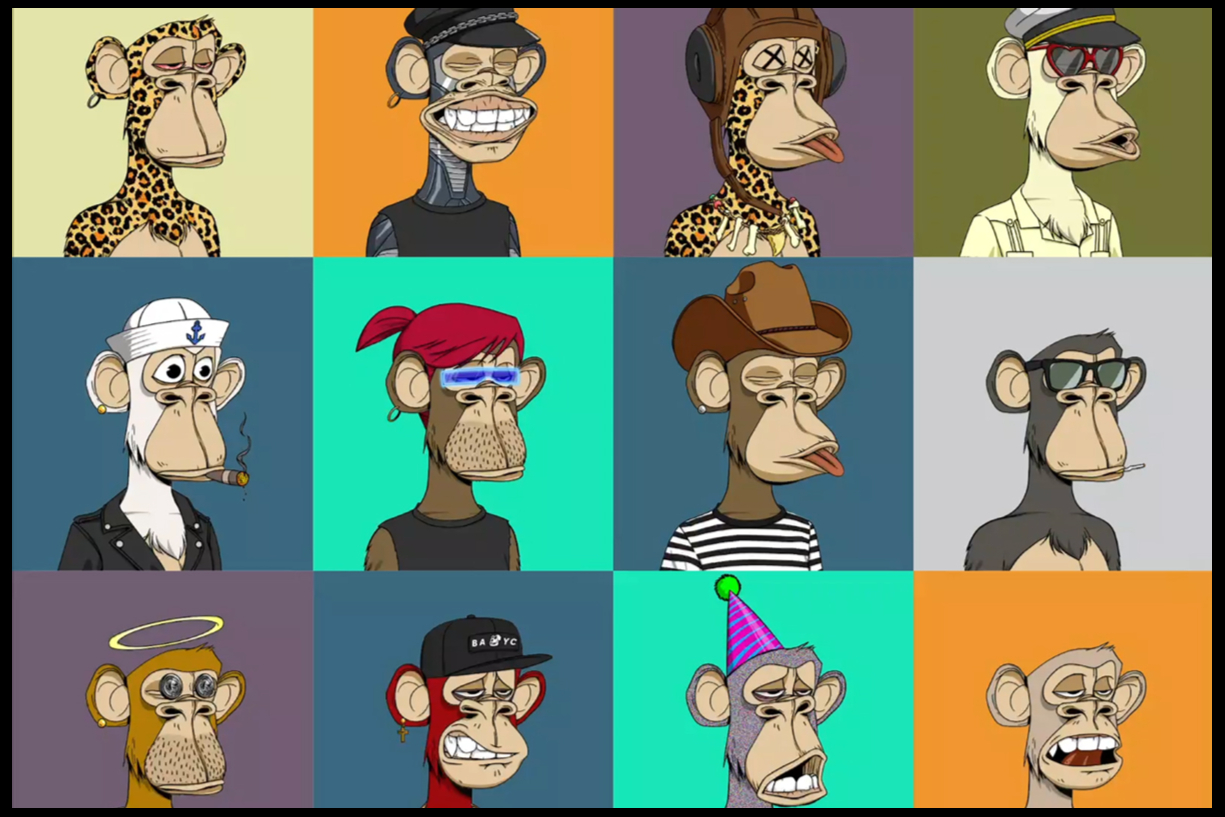
On social media, the agreement was fragile and the alliance short-lived. It pays to be as emotional as possible -- conflict drives more traffic than politeness or cooperation. But in early May, Kyle Swenson, a 25-year-old clothing dealer in Orlando, Fla., noticed a change in tone on Twitter. The growing number of accounts he follows have changed their profile pictures to cartoon apes: apes wearing sunglasses or rabbit ears, apes with leopard prints or rainbow fur, apes smoking cigars or with laser eyes. Many looked indifferent or showed their teeth, some still had cigarettes in their mouths, or their eyes were red as if they had been poached. In the chaotic jungle of Twitter, the apes huddle together, greeting each other and feeling calm. The heads are from a website called Bored Ape Yacht Club. The site, which officially launched on April 30, offers 10,000 unique cartoon-like primate images to sell as NFT for about $200 each, paid in ETH. An ape NFT" can serve as your ape club membership, "the site advertises beneath an illustration of a decayed wooden building with strings of colorful lights hanging from it.
Within a day of its release, all 10,000 images of the Boring Ape Yacht Club sold out. On May 3, when Mr. Swenson decided to buy one, he paid about $1,700 at OpenSea, an NFT marketplace. His ape has an edgy look -- sailor hat, plaid shirt, down vest --" similar to the way I like to dress, "Swensen says. A few weeks later, he bought another. He's traded NBA Top Shots before, but this one felt more relevant. "It's a kind of FOMO psychology," he tells me. "I've observed a lot of old NBA Top Shots players I care about very much change their Twitter avatar to an ape." He managed to buy four apes during the initial launch and, he told me, "it became a sort of status symbol, a bit like wearing a fancy watch or a rare pair of trainers."

Source images Bored Ape Yacht Club
In contrast to previous NFT avatar projects, BAYC has created rich and detailed images drawn from the personal tastes of its founders.
BAYC's initial NFT sales totaled more than $2 million. Since then, the series has sold for almost $100 million, with the cheapest apes often fetching nearly $14,000. In recent months, the project has inspired a wave of similar club projects and a frenzy of NFT avatars among crypto enthusiasts. Collectors can buy cute cartoon Cats from Cool Cats, a company that released thousands of its own NFT on July 1 and sold out soon after. (Boxing champion Mike Tyson has one as his head). They can buy sharp-edged science fiction girls from Fame Lady Squad, punk ducks from SupDucks, 3-d rendered pills from BYOPills, and MEME loaded Shaba inu from The Doge Pound, And bonsai trees from the Zenft Garden Society. Every week new projects are being launched, promoting their wares on Twitter, the main public place for cryptocurrency talk, and all hoping to sell all their NFT." "Everyone saw the ape's success and quickly abandoned their original project," says Aleksandra Artamonovskaja, founder of London-based curatorial consultancy Electric Artefacts (who has bought and sold some NFT heads). "I pay my rent by trading JPEG images over the Internet. That's what I told my parents."
Every avatar club is an odd combination of a gated online community, a stock holding group, and an art appreciation society. When an ape (or a cat or a pill or an alien) is bought at a high price, the value of the NFT's set of all 10,000 originals rises, just as a painting fetching a record price at auction may increase the value of an artist's overall work. When a buyer changes his Twitter profile picture into a picture of a new NFT club, it's a status sign and a signal for other buyers of the club to follow him on social media. (" I changed it to an ape and got hundreds of Twitter followers the first day, "swensen says.) At the heart of most clubs is Discord, a real-time chat app. BAYC's Discord server has more than 13,000 people -- fans and NFT holders -- and a constant stream of discussions in channels like #crypto-talk and # sport-bar. Through this combination of social and financial involvement, club members form a unique bond amid the endless noise of the Internet.
As Drew Austin told me, "There's a new dynamic when everyone is involved, where not everyone can say whatever they want, criticize everything and get away with it." He is a technology investor who owns three apes and co-owns two others. The BAYC founder says this sense of community has been missing on the Internet. Contrary to their reputation for redundancy, the NFT can help fill the gap." "We want your ape to be your digital identity," co-founder Gargamel told me in a recent video chat. It's a collectible that doesn't hang on a wall or sit on a shelf, but fills the screen space in little squares or circles that are supposed to represent your self.
Neither Gargamel nor his co-founder Gordon Gunner (both using pseudonyms) are likely technology managers. Prior to founding BAYC, Gargamel was a writer and editor. Gunner was planning to attend an MA course but fell ill and switched to cryptocurrency day trading. The men, both in their thirties, were "literary nerds," according to Gargamel, who wore wireframe glasses and a well-manicured goate. They grew up in Miami and met over a drink at a bar 10 years ago. Gunnar, who has a tattoo on his chest, told me, "We kicked up a row about David Foster Wallace."
When Gargamel and Gunner started brainburst NFT earlier this year, avatar clubs were a new trend. Gargamel and Gunner are familiar with CryptoPunks, a collection of 10,000 pixelated figures that became a blue-chip artwork in the NFT market after being released in 2017 by a company called LarvaLabs. CryptoPunks, which can now sell for as much as $200,000 each, weren't originally the basis for social profile clubs, but some collectors (including Jay-Z) use them as avatars - the ultimate symbol of digital NFT, showing off an NFT as a profile picture or "P.F.P." "It's like having a Harvard degree in the NFT world," says Austin, who owns two apes. Gargamel and Gunner also took note of the success of Hashmasks, an arts company that sold 16,384 NFT images in January for a total of more than $16 million. Both projects were closed systems, and their developers did not commit to any extensions beyond the initial, limited release. Gargamel and Gunner seek a solution that they can develop over time. "We saw an opportunity to do projects with a much larger story arc," gargamel said.
One of the duo's early thoughts was CryptoCuties, a group of NFT" girlfriends, "but that struck them as too kitsch, not to mention creepy. (The male-dominated crypto world can sometimes feel like a fraternity; The creators of a recent project drew criticism -- and later apologized -- for featuring images of women with black eyes and taped mouths.) Another concept is a shared digital canvas: anyone can draw on it. But it seems that this could easily pass for a toilet wall in a small bar. Gargamel said, "The first thing some people do is draw a dick." But the image of the pub appealed to the couple, and it led to a science-fiction storyline. The year is 2031, and people who invested in cryptocurrencies early on have become billionaires." Now they're just fucking bored. What are you doing now that your wealth is beyond your wildest dreams?" "You're going to play with a bunch of apes in a club, making fun." Why ape man? In cryptocurrency parlance, risking large amounts of money to buy a new currency, or NFT, is known as "ape in." "We also happen to like apes," Gunner told me.

Source images Bored Ape Yacht Club
BAYC members get commercial rights to the avatars they own." "Anything people create with their apes can only grow the brand," says co-founder Gordon Goner.
Until then, avatar projects tended to be low-resolution, often pixelated graphics, in the style of 8-pane animated games. Whether it's a man, a monkey or a ghost, these images are pretty common. BAYC, by contrast, creates rich and detailed avataras based on the founder's personal tastes. Bored Ape YachtClub (an ironic title) is set up to evoke places like Churchill's Bar, an old Miami music venue frequented by Gargamel and Gunner. "We were inspired by hardcore in the '80s, punk rock, and hip-hop in the' 90s," gunner says. We've always called ourselves the NFT's theBeastie Boys. From the apocalyptic Tiki bar setting on its website to the cheerful style of the ape itself, BAYC feels more like a TRIPLE-A video game than an isolated NFT set. Complex visuals, subcultural fashion accessories (the shadow of Hot Topic), and literary descriptions make BAYC a sort of statistical group image of cryptographic circles. "We learned from Hemingway's iceberg theory," Gargamel told me. "10 percent is visible at the top, and all the scaffolding is built underneath."
Gargamel and Gunner hired two other friends, programmers under the names No Sass and Emperor Tomato Ketchup, to do the necessary blockchain programming. For the project's art resources, they hired professional illustrators, which accounted for a large portion of their upfront costs (about $40,000, according to the group). As with many head clubs, the cartoon ape's features were then fed into an algorithmatic program that randomly generated thousands of images with unique combinations of bodies, heads, hats and clothes, like digitally dressed dolls. Certain traits -- arched hair, laser eyes, robes -- are present only in a few people, making apes with them all the more desirable and therefore valuable. Each image is hidden until the first wave of collectors have paid, so buying one is a bit like playing a slot machine -- get an ape with the right sequence of features and you can resell it for a big profit. It's also a bit like participating in a multi-level marketing plan. Typically, a small number of cryptocurrency enthusiasts buy hundreds of NFT's each, then sell their stock when prices rise; New collectors must be constantly found in order to profit from previous ones.
A large number of NFT projects fail or have no secondary market at all. The creator already knows about rug-pull, gives up the risk, and absconds with the collector's money. Artamonovskaja, founder of ElectricArtefacts, speculates that BoredApe Yacht Club succeeded because it was relatively easy to obtain. "No one can afford CryptoPunk," she told me. An ape seems to be the next best purchase --" a cool avatar for a reasonable price." Artamonovskaja bought an ape for about $1,500 shortly after its launch, which she now regrets; The same ape (with a Pop-punk feel and a Bayc-branded baseball cap) is currently on sale for up to $12,000.
For a founder who netted $2m from the initial sale, launching a new NFT is no different from printing money. The cute silliness of the image belies the huge amount of money. Austin, the investor, told me that the way he buys his avatar is like "trying to make a risky trade, which is interesting because WHAT I see is a damn boring ape." Still, Gunner told me, he and his fellow founders are reluctant to use the apes as "investment vehicles." He added: "If you think about it in terms of artists and eccentrics running hedge funds, it's going to give us a heart attack."
As with many crowdfunding projects, the founders of each NFT club provide potential buyers with a "road map" before launching, explaining what they will do with the money raised. They promise YouTube channels, donations to charities and additional NFT for collectors as well as physical goods. BAYC has sold branded baseball caps, donated hundreds of thousands of dollars to ape preserves, and provided each collector with a dog'S NFT (BAKC), courtesy of the Boring Ape Dog Club. But it was also one of the first clubs to offer individual buyers the commercial rights to the apes they owned: each member was allowed to brand their own projects or products and sell them independently. In the three months since the club was founded, the ape owners have put the cartoon primates on a craft beer line, created a YouTube series, made painted reproductions and designed a skateboard deck. Kyle Swenson, a clothing dealer, launched a publication called The Bored Ape to cover the community. One owner named their ape "Jenkins the Valet, "gave him a backstory as the main gossip at the yacht club, and is crowdfunding for an ape-themed novel. (The NFT is not completely secure -- ownership is represented by a single line of code on the blockchain, and anyone can theoretically copy the ape image and use it as an avatar. But the club does regulate such misappropriation." "Encrypted Twitter has this understanding: you just don't steal people's avatars, "Artamonovskaja told me.)
For most brands that produce culture, whether Supreme streetwear, Marvel superheroes, or pop music, letting intellectual property flow freely is forbidden; Exclusivity is the business model. BAYC's founders, by contrast, see their openness as an asset. "Anything people create with their apes is only going to grow the brand," says Gunner. Just as Silicon Valley startups are obsessed with "scalable software" that grows exponentially to serve more users, the NFT Club aims for scalable culture; Like open source software, their cultural creation can be organically expanded through the efforts of many users, while remaining recognizable, forming a myth of user production. Dom Hofmann, co-founder of the now-defunct social network Vine and creator of the NFT club project Blitmap, told me: "It's a bet on the idea that fans might learn, over time, what's best for the universe they care about." Investor Austin envisions the Boring Ape Yacht Club as a "decentralized Disney" of the future.
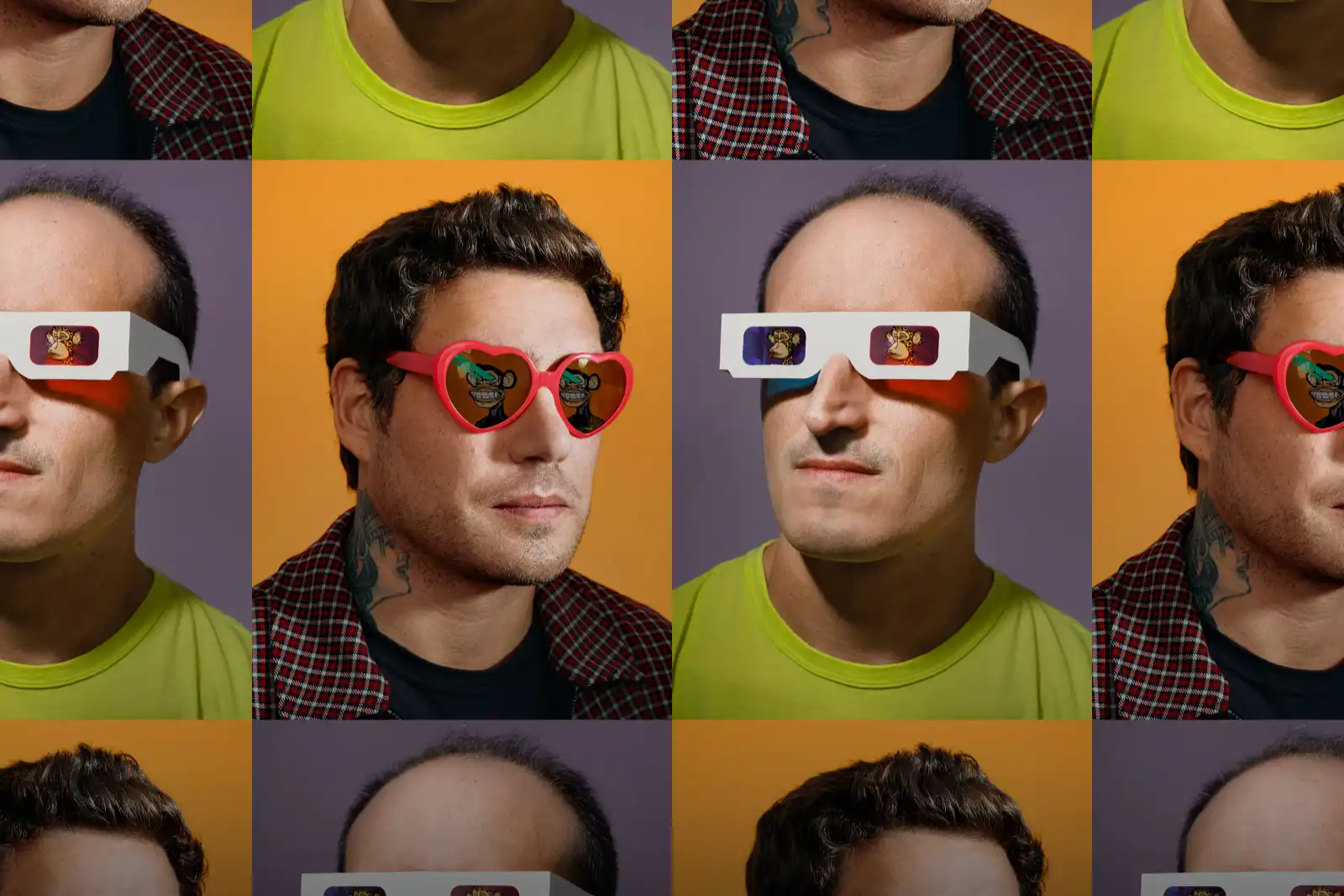
In part, it is this possibility that makes NFT club buyers so eager: buying a hot new avatar could be like acquiring a small slice of the rights to the next Mickey Mouse. But for Cryptopunk, which inspired BAYC, becoming too expensive is considered a diversion. There's not necessarily one answer to what makes a group cool and what makes it rich. Startup founder Garrigan keeps two of his four boring apes, one of which is a creature in a small cap and heart-shaped sunglasses that is set as his current Twitter profile picture. "The more it's related to status, the less I want to keep it," Says Galligan. "If a club's sole purpose is' price increases '"-- the cryptocurrency's cry for price increases --" then, that's a little less interesting."
The original link
Welcome to join the official BlockBeats community:
Telegram Subscription Group: https://t.me/theblockbeats
Telegram Discussion Group: https://t.me/BlockBeats_App
Official Twitter Account: https://twitter.com/BlockBeatsAsia
 Related Articles