Messari: Why is Optimism the most influential Layer 2 solution
原文标题:《 The Optimism Ecosystem 》
原文来源:Will Comyns, Messari Research
Original compilation: Kyle, Defi's Way
Transactions on Ethereum are slow and expensive. In many cases, the gas charges that the DEX has to pay to execute a smaller value exchange may be more expensive than the value of the transaction itself. In 2021 alone, Ethereum fees increased 845% from the previous year as the Ethereum network reached full capacity. Since January 2020, the average block capacity of the Ethereum network has grown from about 70% to a sustained 98%. Therefore, extending the solution becomes critical.

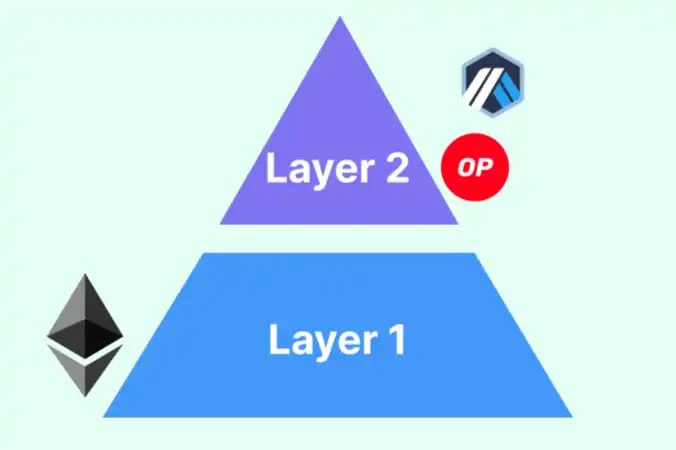
Ethereum scaling solutions can be divided into two broad categories: Layer1 (L1) and Layer2 (L2). L1 scaling refers to the technique of increasing the capacity on the Ethereum chain by changing the Ethereum architecture. L2 Extension refers to the technology that extends Ethereum by moving computing and transactions from the Ethereum base chain to a second layer.
While there are a number of effective L2 extension solutions built on top of Ethereum, one of the most notable is the Optimism supported by well-known investor A16Z. By running computation off the chain, Optimism can reduce Ethereum gas costs by 10,000% or more and increase throughput by a factor of 200.
What is Optimism
Optimism, formerly known as Plasma Group, is the development team behind Optimistic Rollup extension technology. Rollup is a smart contract on Ethereum that connects the Ethereum mainchain to L2. Rollup receives transaction data from the Ethereum master link, sends it to L2 where the computation is performed, and receives the result of L2 computation. It is important to note that there are two variants of ROLLUP: Optimistic ROLLUP and ZK-Rollups. Optimism is only used in Optimistic Rollups.
On Optimism, the transaction that is sent to L2 is received by Sequencer, which is responsible for accurately executing the received transaction. Sequencers are rewarded for executing trades correctly, but punished if they act maliciously by cutting down their collateral funds.
If someone suspects Sequencer of fraud, they might alert the arbitrator contracts on the Ethereum mainnet. This validates the results generated by Sequencer using the Optimistic Virtual Machine (OVM), an Ethereum Virtual Machine (EVM) -compatible execution environment built for L2 systems. If by chance Sequencer's result is invalid, Optimistic Rollup will perform a proof of fraud and Sequencer's funds will be forfeited. Some of the confiscated funds will be awarded to informants. The whistleblower challenges Sequencer's results during a period known as the "Challenge Period." This period typically lasts about a week, which causes a one-week delay in the transfer of assets from Optimism back to Ethereum.
While there is a problem with withdrawal delays, the savings in gas costs can be substantial. This is because Rollups is able to increase efficiency through a range of compression techniques that replace data with computation whenever possible. This results in a 100-fold savings in on-chain space.

Source: Vitalik  
Synthetix
While Optimism has not yet started on the mainnet, it had a soft start with Synthetix in January. The full transition from Synthetix to Optimism is still a work in progress as it is being integrated in stages, but so far it has been a success. Due to its beta deployment in Optimistic, Synthetix is way ahead of other projects in terms of integrated Optimistic Rollup.

Credit: The Block
While this transition has proven, and will likely continue to prove, to Synthetix's advantage, it is also an opportunity for the Optimistic team to demonstrate to the community the power of Optimistic Rollups.

资料来源: Optimism
Synthetix chose to be one of the early adopters of Optimism, not only because they felt it was the best solution, but also because they hoped it would inspire other high-quality projects to adopt it as well. Choosing L2 solution is not only a matter of what is best for an isolated project, but also a matter of social coordination between projects.
If the other major DeFi protocols were to adopt modernism, then all transactions between them would be able to remain on L2. This means that users will not have to wait a full week to integrate their money back into the Ethereum mainchain before interacting with another protocol.
Uniswap and Arbitrum
While Uniswap is still committed to implementing Optimism in the near future, Compound founder Robert Leshner submitted a poll to the community on May 26 that shows that The Uniswap community has overwhelmingly supported Uniswap's deployment of Optimistic competitor's extended solution, Arbitrum, which completed its soft launch in late May.

Source: UNISWAP Snapshot
Like Optimism, Arbitrum is an extended solution based on Optimistic Rollup. There is little difference between the two. The benefit of both is that they are easy to integrate with the DApp, as they require few changes to the DApp's underlying smart contract. Because of this, these two solutions have become the first choice for many developers.
While these two solutions will directly compete for market share, there are only benefits to using both for dApps. Deploying on multiple platforms makes social consensus issues easier to manage. DAPPs that adopt parallel solutions to each other enable inter-protocol transactions to remain on L2. Uniswap's adoption of Optimism and Arbitrum will increase the number of dApps it can use for L2 to L2 transactions.
In theory, dApps should implement as many L2 extension solutions as possible, but in practice this is impractical.

4. Optimistic Discord& NBSP; Optimistic Discord& NBSP;
Makerdao's Optimistic Dai Bridge & NBSP;
Like many projects, MakerDAO has been exploring a number of scalability solutions to support its ecosystem, including Arbitrum and non-rollup solutions such as Polygon, BSC, and Avalanche; However, the only solution that can be recognized by the community is Optimism. Optimistic Dai Bridge will allow L1's Dai to be locked for L2 Odai casting. Once rapid withdrawals are enabled in Q3/Q4 this year, the oDAI can be destroyed in exchange for near-instant L1 Dai, thereby getting rid of the one-week lockdown associated with Optimism.
The near-instantaneous transfer of L1 Dai associated with the MakerDAO DAI bridge has the potential to make MakerDAO a major exit for Optimism. The conversion from L2 to L1 will be able to be done using the Optimistic Dai bridge route transaction. Because Uniswap V3 will extend with Optimism, the token will be able to swap on Uniswap for ODAI on L2, which swap on L1 Dai, and then swap back to L1 Token via L1 AMM.

Source: MakerDao blog
If MakerDao's DAI bridge can live up to expectations, this might increase the appeal of the Optimistic extension for other projects. Other projects may then build their own L2 Bridges, which will enable a wider variety of tokens to be exchanged directly from L2 to L1 using Uniswap V3. During periods of high demand, it has been shown that Uniswap V3 users are willing to pay high transaction fees for transactions.

一旦通过 MakerDAO 的 Dai 桥可以实现 L2 到 L1 的即时交易,那么在网络需求高的时期,Uniswap V3 的 gas 成本显着降低,这对 DAI 交易的影响将会很有趣。

Source: Optimism
Alternative solution: Polygon
While Optimism and Arbitrum are types of L2 extension solutions that leverage Optimistic Rollups, a notable alternative extension solution is Polygon, which is a POS side chain of Ethereum.
Currently, Polygon is getting so much attention that its native token Matic continues to thrive during the market selloff. While BTC was down 35% in May, Matic was still up 120%.

Matic's price spike stems from Polygon's current use by blue-chip DEFI programs like AVE, Sushiswap, and Curve.
Polygon's TVL has exceeded $10 billion and is directly responsible for Aave's surge to the largest DeFi protocol on ethereum.

The main advantage of Rollup-based L2 over Polygon is that they inherit their security from the main Ethereum blockchain, which is not the case with side chains. Side chains are independent blockchain networks that introduce their own layer of risk, the main associated risks being: censorship resistance, finality, and the guarantee of having capital.
Polygon may benefit from being a scalable leader, but with projects like Uniswap and Makerdao adopting a composable L2 solution for Optimism, Polygon may struggle to maintain market share in the future.
conclusion
Some have compared Ethereum to Manhattan; Everyone is trying to survive in this city, causing house prices to skyrocket. The only way to have room for everyone is to build skyscrapers, one layer on top of another. If the Ethereum network is to truly become the next global settlement layer, it must follow the same approach through L2 extensions.
Optimism has the potential to become the most influential L2 extension solution on Ethereum. It has proven its viability through soft launch with Synthetix and has a proven development team behind the project.
Projects like Uniswap and MakerDao have already committed to using it to extend, so there is good reason to be optimistic about Optimism.
The original link
Welcome to join the official BlockBeats community:
Telegram Subscription Group: https://t.me/theblockbeats
Telegram Discussion Group: https://t.me/BlockBeats_App
Official Twitter Account: https://twitter.com/BlockBeatsAsia
 Related Articles