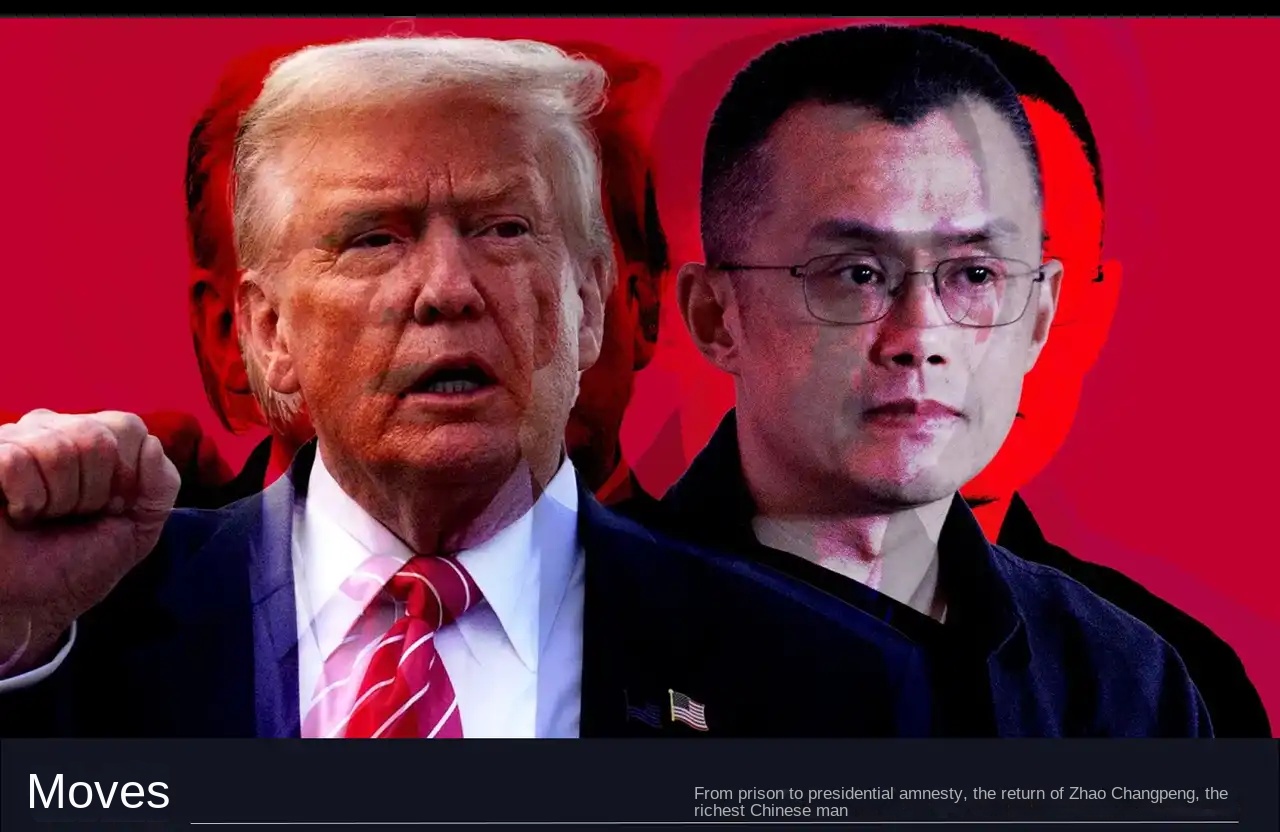
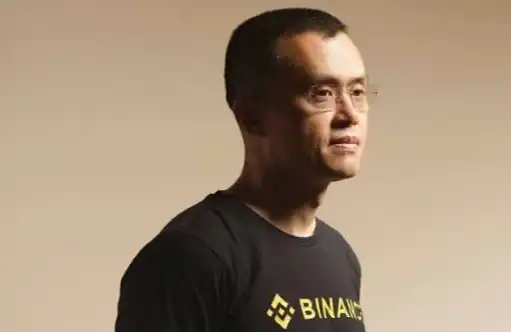
Dialogue with Zhao Changpeng: A man walking in the middle of the encryption industry
原文标题:《 对话币安赵长鹏:在加密货币的中间地带 》
原文作者: 段旭
Original source: Late Latepost
原文编译: 程曼祺
For most of the past year, Mr. Zhao has spent time in Singapore communicating online from a small room of less than 10 square meters.
From the cramped confines of this tiny country, the 44-year-old Chinese-Canadian is remotely in charge of a company valued at $100 billion. In the online virtual world, Zhao Changpeng is better known as CZ, the founder and CEO of Binance, the world's largest cryptocurrency exchange.
Before the epidemic, Zhao Changpeng is in the state of migration around the remote control of Binan. From Japan, Malta, Uganda and Singapore, he travels around countries with relatively liberal cryptocurrency policies, meeting with local practitioners and government officials, such as Uganda's president and Malta's prime minister.
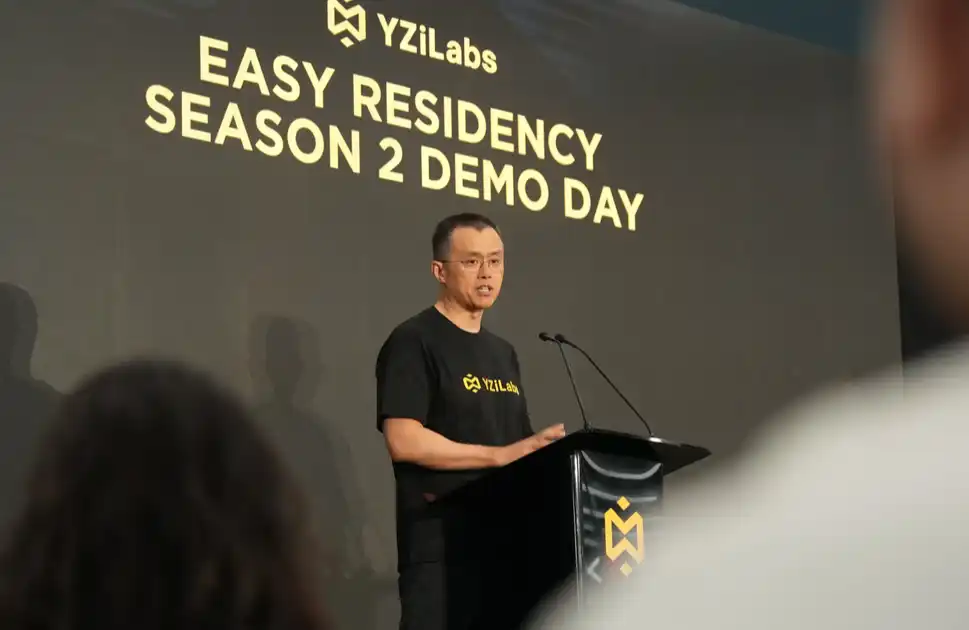
After the outbreak, he stopped in Singapore to connect his nearly 3,000 Binance members in more than 60 countries and regions with online meetings. He added a "big piece" to this new state -- a green screen. When there was a formal online event, he would stand in front of a green screen, obliterate the room and replace it with a virtual background with a bright yellow Binance logo.
Zhao Changpeng, who founded Binance and is a powerful figure in the cryptocurrency world, does not have the typical profile of entrepreneurs in the field. He is not a strong believer or a passionate evangelist.
He is characterized by "lack of character". Zhao Changpeng has a buzz cut and is neither tall nor short, neither fat nor thin. He thinks and acts the same way. He is the man in the middle in the blockchain industry.
Initially attracted by the freedom of cryptocurrencies, he has gradually transferred most of his personal assets to cryptocurrencies since selling his house in Shanghai in 2014 to buy bitcoin. According to him, cryptocurrency assets now account for 99 percent of his personal wealth. He never bought a fixed asset, such as a house, because of "too little liquidity".
On the other hand, Zhao Changpeng, who values freedom and liquidity, also views the government's regulation of cryptocurrencies positively. Far from being an extreme anarchist, he says, he cannot imagine how society could function without the government and the police, or how the crowd could fend for itself.
Binance, founded by Zhao Changpeng, is another intermediate.
Binance is not your typical company. It has no headquarters, no offices. Nearly 3,000 members work from home around the world. A Binance employee said that he flew to the city where HR is located and handled his entry procedures at HR's home.
However, Binance is not a typical decentralized community organization. It still has a CEO, Zhao Changpeng, senior executive positions and reporting relationships. It uses both OKR and KPI systems. When deciding on OKR, Zhao will decide on his OKR first, and others will dismantle Zhao's OKR -- just like most Internet companies that use OKR.
Zhao Changpeng's pragmatism lies behind his centrist approach and his compatibility with contradictory things. Centralized versus decentralized, firm versus wobbly -- he doesn't put much weight on these blockchain dimensions of evaluation. He judged a lot of things by whether they were reasonable, beneficial, and necessary.
On social media, for example, contrary to his "recluse" nature, Zhao is active because it helps him communicate with users. He has 2.6 million followers on Twitter, 700,000 more than Ethereum founder Vitalik Buterin.
In order to promote Binance key layout BSC (Binance Smart Chain) on Decentralized Finance (Defi) [2], Binance Smart Chain (BSC) is one of the Decentralized Finance sectors. Zhao Changpeng sometimes even deliberately attacked Ethereum -- the BSC is believed to target Ethereum. "Hours at BSC than Ethereum, which is good for BSC."
Acting with reasonable, pragmatic and useful standards, Zhao is also not so attached to blockchain and cryptocurrency itself. He entered the business in 2014 by selling houses to buy coins and seems determined. But during the downturn of 2015-17, he left the crypto business and moved into the then-hot cultural goods trading business, building a trading system for postage coins and collectibles like stamps, coins and phone cards.
Judging from the results, the incomplete commitment to cryptocurrencies has not affected Zhao Changpeng and Binance's success in the field. According to Zhao Changpeng, the core competitiveness of cryptocurrency exchanges is the same as that of similar products in the past, which is to serve good users. A pragmatic, inclusive and diverse style helps them serve as many global users as possible.
Against the backdrop of a new round of cryptocurrency bull market and volatility, we talked with Zhao about the market and value of Bitcoin, Binance's business transformation and organizational management, his observations on industry regulation, and his own state in a complex environment.
In 1989, at the age of 12, Zhao Changpeng left his birthplace in Jiangsu, China, and immigrated to Vancouver, Canada with his family. Many things were foreshadowed at that time. Zhao Changpeng, who was captain of his high school volleyball team for four years, said he was more like glue on the court -- not the tallest, not the strongest, he was "not the one to kill the ball," he coordinated the court.
1. "Bitcoin is a new technology platform, not an asset"
Later:What do you think of the huge volatility that Bitcoin has seen since mid-April, when it dropped from a high near $65,000 to as low as $30,000?
Zhao Changpeng: The market has a big rise will have a big decline, very normal. Neither I nor the people around me were particularly impressed.
Later:In February, after the price of bitcoin topped $50,000, you tweeted: "$50,000 for bitcoin is the new $10,000. If you don't buy it now, you'll regret it." Why so bullish on bitcoin?
Zhao Changpeng:I have never predicted the price of bitcoin on Twitter. But it's still very early days, and only about 1 to 2 percent of the world's population owns digital currency. From this perspective, there should be 50 to 100 times more room for growth.
Later:A common view is that the dollar's overrun was a big driver of the bull market that started in the second half of last year, and that bitcoin is rising not because it is good, but because the world outside is bad. What do you think is the cause of this bull market?
Zhao Changpeng:The US printing money has certainly contributed a lot to cryptocurrencies. Forty-two percent of the dollars were printed in the last year, and the value of holding the dollars is so great that many institutions in the United States have started to buy bitcoin.
There are also some factors within the industry. Last year's DEFI (Decentralized Finance) and this year's NFT (Non-homogeneous Token) are very popular. There is a lot of innovation. In addition, Bitcoin mining has halved in the past year, and the rate of new Bitcoins coming out is much slower. No one can say 100 percent which is more important.
Later:Before the bull market of 2017, bitcoin accounted for more than 80% of the total cryptocurrency market capitalization. After 2018, it began to fluctuate between 30% and 70%, and is now just over 40%. What do you think is going to happen next?
Zhao Changpeng:In the long run, Bitcoin's weight will decline. Bitcoin was the first digital currency, and it had network effects, like a global reserve currency in a digital currency. But bitcoin doesn't innovate at the same rate as new projects, and sooner or later something else will eat into bitcoin's share, but we haven't seen what yet.
Later:Including Ethereum and Binance's own Binance Coin?
Zhao Changpeng:Including them. Ethereum had a chance before, because it could do everything that Bitcoin could do, and there was a lot of innovation, and the community was very active. But Ethereum quickly hit performance bottlenecks. It's hard for cryptocurrencies to surpass Bitcoin in market capitalization right now. Bitcoin is the most decentralized because its founder is not there.
Later:The value of Bitcoin depends largely on how one defines it. What do you think is the essence of Bitcoin? A currency, an asset, something else?
Zhao Changpeng: I think Bitcoin is a set of new technology rather than something. When the Internet first came out, people thought of the Internet as just another communication channel. We had telephones, radio, television, and now we have the Internet. But the Internet is a new technology platform. There will be Internet radio, video and social media. Social media is not traditional, television, radio is traditional. So the Internet is not parallel to them at the application level, the Internet is the underlying architecture.
Blockchain and Bitcoin are also the underlying architecture. There will be currencies, assets, securities, bonds and all sorts of other things in the digital currency. This is a new platform rather than an asset. A lot of people don't understand how big this is, that when a new platform comes out, it's going to have a new version of everything that's traditional, plus more things that aren't traditional.
Later:But the "variety" of things doesn't seem to be there yet, and there's no killer app in the blockchain space. Why is that?
Zhao Changpeng:One is that the entire digital currency industry is still very niche, so there are no mass-market killer apps.
Second, there are apps that have done well in the cryptocurrency market, such as the 2017 "Initial Coin Offering," which I call "blockchain global financing," and it's a killer app. Before, entrepreneurs didn't have the tools to raise money globally. If you were a small Chinese retail investor, you wouldn't be able to invest in early American companies like Uber and Tesla. But an initial public offering can, and it's still in use, and there are a lot of scammers. The recent NFT is yet another new model that allows artists or content creators to better monetize their work. These applications are not supported by traditional finance.
2. "Do something, do it well, and it will be enough."
Later:How did you make the leap from traditional finance to cryptocurrency?
Zhao Changpeng:I read the Bitcoin white paper around mid-2013. Knowing the technology, I think it might work, but decentralization requires community. I need to see whether this community exists or not and what kind of people they are. So at the end of 2013, I went to a summit in Las Vegas, where all the big names in the industry, including Vitalik, were at the summit.
When I went there, I found that these kids were very sincere and hardworking. At that time, a man transferred some coins to me in order to teach me how to use my wallet. After learning it, I said I would transfer the coins back to you. He said no, you can keep it, and you can use it to teach another person. I took a look. It was about three hundred dollars, a few thousand RMB, not a lot, but it was a lot. These people are not really out to cheat money, not the newspaper said drug bosses, they are a bunch of technical kids.
When I was leaving the airport after the meeting, I said I was going to sell my house and buy bitcoin, and I was going to quit my job and join 100% of the industry, whatever it was, write code.
Later:Are you interested in a new opportunity and need to take the step of selling your house?
Zhao Changpeng:I had so little money then, don't spread it out, young, put it all in one place. I never tell people you are all in, but I can take my own risks. The worst case scenario is two years, bitcoin goes to zero, and I go back to the bank.
Later:Did you hold on to the bitcoin you bought in 2014? Cryptocurrencies entered a bear market shortly after that.
Zhao Changpeng:Good thing I've been holding it. I remember that less than a year after I sold my house, the Shanghai housing price doubled and Bitcoin dropped to one third of its original value, which is a six-fold difference. At that time, I was under pressure. Was everyone wrong, or was I just wrong? Chances are I'm the only one wrong. But I couldn't see why it was wrong, because I thought it was the future. Back in 2001, when the dot-com bubble burst, Amazon, eBay, and even Google also lost 98% of their value. Everyone goes through that phase.
Later:Did you have this idea of the blockchain as the Internet at the time or was it an afterthought?
Zhao Changpeng:To tell the truth is an afterthought, people in the authorities are not clearly seen. I just thought, how long is this going to last, five years, 10 years? But fortunately, it only lasted more than two years.
Later:How do you allocate your assets now? Have you bought any fixed assets such as a house?
Zhao Changpeng:I'm basically 99% cryptocurrency and I think it's all on BNB and a small fraction of it is bitcoin. I don't buy a house now, the house liquidity is too poor.
Later:You came into the business with a strong attitude in 2014, but it was 2015 to 2017 before Binance. Why did you leave the cryptocurrency business to become Bitech Technologies, a trading system for postage cards (collectibles such as stamps, coins, and phone cards) in the middle of a year?
Zhao Changpeng:Mr. Bigger had wanted to start his own digital currency exchange in Japan, but found it difficult to do so with technology and no knowledge of Japanese. The back of China's postage card is very popular, someone came to ask can provide, we said you are willing to pay we will sell. We didn't even think about doing an exchange until May 2017.
Later:What happened in May 2017 and why are we back?
Zhao Changpeng:The most direct is that a wave of market to come, the industry needs this, and the trading platform is my good at.
In the longer term, I think that any time in human history we've been able to increase the freedom of something without compromising its safety and ease of use, civilization has advanced a lot. I think in the next few decades, money will become more free, and security and ease of use will be maintained or even increased, which is what Binance wants to do. We want to provide some infrastructure services to the industry.
Later:A big reason blockchain technology can make money flow more freely and safely is its decentralized nature. From your entry into the industry in 2014 to the establishment of Binance, you are all a centralized company in the wallet, exchange and other industries. Why not directly do decentralized projects based on blockchain network?
Zhao Changpeng:I think people should find a combination of three things, one is what they are capable of, the other is what they like, and the third is whether the thing is of value to others. Not everyone is particularly familiar with chips, or how to mine mines, or the mathematical algorithm blockchain. My experience has always been on the trading system side, and it makes perfect sense for me to continue to be a trading platform.
Later:Trading platforms can also be decentralized. You recently said that decentralized exchanges will beat centralized exchanges in five to 10 years. Looks like you've changed your mind again?
Zhao Changpeng:Decentralized exchanges are indeed growing fast, but until now their volume and safety have been different from those of centralized exchanges, with barriers to entry for most novice users.
Of course, you can feel the direction of the waves when you're in the water. DEFI did put pressure on Binance's main station. I'm much more bullish on the direction of decentralization than I was in the early days. I think it's the future.
Later:Many people in the blockchain industry have a consistent choice of values and direction. For example, some people are obsessed with decentralization, some are obsessed with using bitcoin for payment, and some value improving efficiency. You seem to be more pragmatic and choose to change as the situation changes. This can be seen by some as lacking firmness. What do you think about yourself?
Zhao Changpeng:An industry should allow people with different ideas and qualities to coexist. I think no matter what the choice is, do something for the industry, do it well, it's OK.
3. "If it continues to rise in 2018, it may not have today's Binance"
Later:Binance has been the world's most traded cryptocurrency exchange since its inception six months ago. What do you think are Binance's core competencies?
Zhao Changpeng: Or because we have been adhering to the user as the core. This is reflected in some long-term and short-term interest games, such as the choice of currency and product function design.
We also put 10% of all transaction fee revenue into SAFU (Secure Asset Fund for Users, investor protection Fund) to protect Users' interests and deal with extreme situations.
Later:Now when the market fluctuates violently, the exchange such as Binance, Coinbase and Huobi will still have a jam, downtime, "suspend the withdrawal of coins due to the surge of traffic" and so on. Some believe exchanges are behind the apparent malfunction.
Zhao Changpeng:With the transaction volume of Binance today, the fee income is quite a lot, there is no need to manipulate anything to make short-term money. Smart people protect long-term trust.
"Late": You have the right people and money. Why haven't you solved the problems of downtime and delays?
Zhao Changpeng:It's not that simple. The common individual investor that does not understand quite to the system often says, you buy a server more not to solve? Where money can solve problems, we have spent money.
Traditional exchanges, such as the Shanghai Stock Exchange and the New York Stock Exchange, rely on individual traders to take orders to brokerages, who then pool them together with the exchanges, which serve only a few hundred brokerages. We have millions of users all over the world going directly to exchanges. I think we are the largest financial matchmaking market in the history of mankind. The structural pressures are totally different. This is not parallel to the server can be solved. What we have to do is make the Boeing 838 10 times bigger, but it's still a single airplane, and it can fly, which is hard.
At this stage, the growth has completely exceeded our expectation for 2018. We are still making various optimizations, but as the growth continues, there may still be some bumps in the road.
Later:In what specific way did it exceed expectations?
Zhao Changpeng:Mainly the number of users, far more than expected. In 2017, Bitcoin peaked at $20,000, and recently reached more than $50,000, a two-and-a-half times increase, but the number of active users has increased 20-fold. At that time, we had already expanded five or ten times, but we still couldn't carry it.
Later:You mentioned earlier that institutional entry has been a hallmark of this bull market. How has your institutional user growth been? Can you observe the entry of Chinese institutional power?
Zhao Changpeng:The overall agency figures have grown exponentially, especially in the past six months. Chinese institutions do not account for much of the overall market. In the United States, institutions account for about 80 or 90 percent of the market, while in China, retail investors account for 80 or 90 percent. In China, several people with a net worth of 100 million operate an account by themselves.
Later:How do you attract institutional users?
Zhao Changpeng:Institutional trading is completely different from retail trading in terms of API and trading speed. For example, the organization is a team operation, there are boss, group leader, small team, each person has different permissions, we call the sub-account function. Not many of these features were available for sale in 2017, and we didn't have them either. Now we have them.
Later:When did you start making these preparations?
Zhao Changpeng:The sub-account was around the end of 2018, which was a bear market. In fact, at that time, we mainly practiced internal skills. At that time, our core matchmaking was relatively fast, but the peripheral system was not enough. In 2017, we grew too fast to keep up with it. We were worried that if there was a very strong bull market in 2018, Binance would get stuck and we might lose our lead.
So in 2018, my internal communication was all about improving performance, expanding the system, and the bull market will come. Don't worry. Personally, I've been through a bear market before and my mental health was pretty good.
Later:So the bear market that began in early 2018 was actually a favorable external environment for Binance?
Zhao Changpeng:Yes, if it continues to rise then, we will not be able to handle it, not necessarily the Binance we have today.
Later:What is your forecast for future growth? What will you do in advance?
Zhao Changpeng:We have no way of knowing the future. But we judge that the probability of a large number of users will rise, we should at least be ready for expansion. It might not happen, then we're wasting money, it's not a big problem; But as it happens, we can't waste the opportunity.
Later:Many new users are now flooding the cryptocurrency market. Their risk awareness and trading skills may not be good, but exchanges like Binan and Huobi can easily add leverage, which is easy to lose money. How do you deal with this problem?
Zhao Changpeng:Binance should be the only one of all digital currency exchanges with a "responsible trading program." First, if a retail investor comes to play our futures or options, we ask him two questions: First, how likely do you think you are to lose money? If he writes less than 50%, we don't let him play, your mentality is wrong; Second, if he loses money, who does he think is responsible? If he thinks it's someone else's responsibility, it's Binan's responsibility, then you don't play, you play the spot.
Second, if it's a new individual investor, and he loses a certain amount of money, our system will tell him to stop trading and stop him trading for 48 hours. I believe we are the only trading platform that prevents users from trading.
Later:How many people have you stopped altogether? What is the cost of preventing?
Zhao Changpeng:I don't have the numbers. There should be a lot of people, but it won't hurt our income too much. Because this kind of user, he will only hurt himself, will not help us specially. After the injury, he still stops, but he stops early and later. We let him stop one day earlier, he loses less money, we earn less tens of yuan handling fee it doesn't matter, we retain long-term users. He learns how to make money, and we'll make more.
Later:Exchange users are particularly concerned about the safety of assets held in trust with you. Xu Mingxing, the man in charge of the OKEx exchange's wallet keys, caused a mass panic flight among users when he was investigated. What do you do with the wallet keys?
Zhao Changpeng:Binance is now entirely multi-signature and has long been independent of a single person. Our largest wallet requires signatures from 7 out of 15 people. None of them knew who they were, and only a few knew who they all were. And I and all of Binance's public names are not on the signatory list. Binantian has nothing to do with me. I can't even steal it if I want to.
Later:But it still needs someone in the middle, right? Is there any risk involved?
Zhao Changpeng:All with tools. Tasks pop up in the wallet keeper's software. Operations management people don't know who's in charge of the wallet.
Later:How to ensure that the people in the multi-signature list are not connected to each other?
Zhao Changpeng:They get a relatively high deal from Binance. Let's take out his desire to steal first. And it's not just one person who wants to steal, he's colluding with maybe eight or nine people. He gave the cat out of the bag when he tried to find out who the others were. It doesn't matter if someone has an accident. Software can remove people and bring in new ones.
We choose someone who is familiar, stable, reliable, with a family and kids. Being single is less stable. The location is global, as long as the Internet is available, but not all in one country or region, in case of earthquakes, floods, power outages. Now there's probably only one country in the world that doesn't have the Internet.
4. "You say I copied the Mercedes but I drove 10 times faster than him."
Later:In addition to the current centralized exchange, your new direction is decentralized finance. How is the overall development of this area?
Zhao Changpeng:BSC's daily transaction volume is now about four or five times larger than Ethereum, and there are hundreds of eco-projects, but BSC is just over nine months old, and it's picking up faster than we thought. In addition to BSC, we are also working on Dex (Decentralized Exchange). We also have a lot of projects on Ethereum and Porkal ecology.
Later:In fact, decentralized finance can also be done on Ethereum. For example, Uniswap, the decentralized exchange with the largest trading volume, is the Ethereum Ecosystem Project. Why did you launch BSC in September last year instead of existing stuff?
Zhao Changpeng:Let me explain, we didn't do the BSC. We had a lot of collaboration with the community when we started our own BNB. So when we got to the BSC, it was a bunch of people from the community who came in and said they were going to do a smart contract chain, close to Ethereum, and they wanted us to give them some money. They are willing to use BNB as the main currency of the chain, and then any transaction on the chain will use BNB, which is good for Binance because we are the largest holder of BNB.
So I had very little involvement in BSC. It was a community project, but the developers didn't like to show up. Actually, I didn't do anything and I didn't have the ability.
Later:Does Binance's centralized ownership of BNB not conflict with the BSC's stated direction of decentralized communities?
Zhao Changpeng:There are two parts to this. Is BNB very concentrated? Yes. But it's the fees we earn for our services. When we first launched BNB, we set aside 40 percent for the team, but because Binance quickly reached a profit point, we never spent or sold that cent, promising to destroy it all later. This is different from other coin issuing mechanisms, and you can think about whether we are too centralized.
Second, after the complete decentralization of BSC, the value will be greater, the market value of the whole BNB will be higher, and the network effect of attracting users will be greater. So profit-driven, we want to decentralize, and we're doing that.
Also, if you have a centralized organization holding a lot of money, it's not a bad thing, we don't hurt the community and break the plate, it costs a lot and it doesn't do us any good.
Later:One would argue that Ethereum is the more ideal state of the blockchain project. It's decentralized, and its founder Vitalik doesn't own much Ethereum. Is this where BSC wants to go?
Zhao Changpeng:That's not how we understand it. Maybe a lot of people think that in this currency, everyone has a little bit of fairness. But if only the small fish are coming in and no whales are coming in, there's probably only one reason that big institutions don't like it.
Around 2017, Vitalik sold a portion of Ethereum for $30 million, which may indicate that he was being particularly fair, or that he was focusing on the dollar at the time.
Why don't we take the dollars, why don't we take the BNB? That means we have confidence.
Later:What do you think of the competition between the BSC and Ethereum?
Zhao Changpeng:I don't see BSC competing with Ethereum. The people who use Ethereum right now are different from the people who use BSC.
Some people prefer Ethereum because Vitalik has fewer coins, is more decentralized, etc. But they are more expensive. Quite expensive, to be honest. It costs $10 for a single transfer, or hundreds of dollars for a more complex contract. Unless you're doing millions of transactions at a time, you can't pay the fees.
And in Southeast Asia, India and Africa, there are a lot of people at the bottom of the pyramid, and they are in large numbers, and we offer them a cheaper network that will enable more people to use and access blockchain.
Since the BSC started up, Ethereum transactions have not decreased, but they have not increased either, because it has hit a technical bottleneck, the network's peak traffic is 15 to 20 transactions per second. We're getting more and more because we haven't hit the ceiling yet. So there's no competition, it's just that we can now serve users that they can't serve.
Later:Can't the Ethereum community let the technology evolve again?
Zhao Changpeng:Sure, but it will take time. They don't have the same positioning as BSC, which needs to be able to process millions of orders per second in complete synchronization across millions of ledgers, which is a very high technology and will be difficult to solve in a few years.
I've seen Vitalik tweeting less lately. He's probably on lockdown. I really hope he solves this problem and the whole industry gets bigger again.
Later:BSC is faster and cheaper than Ethereum because there are a lot fewer nodes that need to synchronize the ledger, right?
Zhao Changpeng:That's one thing. We have 21 nodes. In addition, our nodes are relatively large, the machine performance is relatively high, and we have made some changes in the architecture.
Many people say that BSC has no innovation, but just copied Ethereum. In fact, the performance improvement of tens or hundreds of times is an innovation. You say I copied the Mercedes, but I drove ten times faster than it, is that an innovation?
5. "Decentalization is gray, not black and white"
Later:Recently, there have been some mixed statements about cryptocurrencies from governments around the world -- some governments are open to cryptocurrencies; Some governments are harsh; There are also efforts to integrate cryptocurrencies into existing regulatory systems, such as the recent news that the Office of the Comptroller of the Currency (OCC), the Federal Reserve, and the Federal Deposit Insurance Corporation are considering setting up an "interagency group" to regulate cryptocurrencies. How do you think national attitudes will affect the global blockchain industry landscape?
Zhao Changpeng:Sorry, I'm not going to comment publicly on specific regulators and their policies, but Binance is certainly actively communicating with regulators around the world. At the moment, the terms are different from country to country, which is a good thing. You can see which terms are more conducive to development and there can be multiple references.
Later:Based on your contacts, what are the common concerns of all countries? What are the common ideas and perceptions of the government?
Zhao Changpeng:Two or three years ago, when we went to talk to each other, everyone asked if this was for terrorists. It's humiliating to say that now. It seems like there's no common sense. Now they are more concerned about preventing money laundering and crime. In fact, the data on the blockchain is transparent, which makes it easier to analyze and track. There are some places where regulation is pushing this thing, where they suddenly understand that blockchain and cryptocurrencies don't make you more out of control, they make you more out of control.
Later:How will the government's compliance demands affect cryptocurrencies? Freedom is considered a major new value for cryptocurrencies.
Zhao Changpeng:There is a relationship between freedom and compliance, but there is no conflict.
I think compliance is very important. There are a bunch of people in the blockchain, digital currency industry who are ultra-liberal, and they want to live without the government, without the police, and with a bunch of people. I don't think humans can be that civilized. In a society where there is no government or police, how can everyone protect themselves and hire private security?
We still need some rules, to put it bluntly, we still need some regulation.
But if you wait for all the rules to be worked out before you start doing this industry, it may not be right, because the rules are worked out over a period of time. Regulation needs the case, in an industry that doesn't have it yet, to say you can do this, you can't do this, to let the industry grow, that's not possible.
Later:What kind of government is more active on cryptocurrencies, depending on the size of the country or the type of economy?
Zhao Changpeng:My personal feeling is that the first few years were small countries, because big countries are more complicated. In big countries like China and the United States, if the rules are not detailed enough, there will be many people who take advantage of the loopholes. But in the early days of the industry, it's hard to be very specific. But for example, Bermuda, the whole country on seventy thousand people, similar to a residential area in Shanghai, he does not need regulations, on a case a case to see, he can see over. And smaller countries don't have much need to protect their currencies. They don't care much about shocks, but think it will help them get ahead in new areas like fintech.
Now it's kind of the other way around, with several big powers competing. If China wants the yuan to become a global base currency, it could be very helpful if you issue a central bank digital currency and this thing gets accepted.
Later:Do you think the digital currencies issued by central banks are real blockchain applications?
Zhao Changpeng:It's very subtle here. The first version of the currency issued by most central banks was relatively centralized, with an issuer who could issue more, control the network, and reject some transactions. It does use blockchain technology, but most of its nodes are not publicly available. You say it's blockchain, yes, you say it's not, no. But I don't think you need to define it that much. Decentralization itself is gray, not black and white. If you're very decentralized, but you're very expensive, it's not as easy to use, and there's a fine tradeoff.
In the end, it's safe, easy to use and free. If these are high, they'll be used by a lot of people; If low, unless force people to use, but coercion is too difficult.
Later:What impact will central bank digital currencies have on digital currencies like Bitcoin, which do not have a government endorsement?
Zhao Changpeng:So far these are two systems, and they don't affect each other. But if there is a future opportunity for compatibility, it should produce a magical response.
6. "I'm not the one to kill the ball"
Later:Binance has no headquarters and all employees work from home. How do you guarantee the operation?
Zhao Changpeng:We now have less than 3,000 people in more than 60 countries and regions around the world. On a daily basis, they collaborate remotely with various office software, such as Google Docs, Google Meet, etc.
Later:Will anyone demand digital currency for their wages?
Zhao Changpeng:More recently. Because this year, the price of BNB is higher.
Later:How do you pay the tax?
Zhao Changpeng:Each person pays his or her own personal income tax, and then all companies (Binance has different registered entities in multiple countries) have to pay taxes at the place where the company is incorporated. If you're a community, you don't have to pay taxes, and the Ethereum community doesn't have the concept of paying taxes, but the company does.
Later:You used the word "company" in describing chat, so you're still a company?
Zhao Changpeng:We basically never use the word "company" internally. I just use it when talking to you because it's easier to understand. We use the word "organization" internally. We don't usually use the word employee, we call it team member.
Many of the company's traditional Binans are missing. We don't need headquarters and offices, we don't need to register in one place. But we can get a group of people to do things together. We have trust and a reward system.
Later:As far as we know, Binance uses both OKR and KPI, which are the most commonly used management tools in centralized companies.
Zhao Changpeng:Having goals doesn't mean being centered.
Later:How has your role changed as Binance has evolved to this point?
Zhao Changpeng:Now I can't do a lot of things by myself, it's very inefficient. For example, in the past, I was sometimes asked for approval for marketing activities, but now I don't need to get involved in marketing expenses below $3 million.
Now my biggest value in Binance is to gather the team, attract the strong people and draw in the external elites. So lately I've been talking on the phone all day and spending a lot of time talking.
Later:You also spend a lot of time on social media. You tweet a lot.
Zhao Changpeng:Twitter for me is a tool to interact with the community. When I talk on Twitter it helps us do some promotion, and it also helps me understand the complaints or emotions of the community.
In fact, I don't like to be out in the public eye, but in order to promote BNB and BSC, sometimes I will bemoan Ethereum people and deliberately mix them up. This little technique is also used. They scold back is not necessarily a bad thing, two people scold around a circle look, BSC is smaller than Ethereum, this is good for us.
Later:Your judgments about what to do and how to do it seem to be based on reasonableness and interest, and you'll do it if you think it's good.
Zhao Changpeng:I have several responsibilities: I lead a team and I have to do a good job and make the whole thing big. It's not necessarily a duty. It's my mission. I'm here to do something.
While I didn't like every single job in the subdivision, I particularly liked the overall sense of mission. Based on this consideration, I can abstract myself to the point where I do what I have to do, and I am very calm, not particularly excited, not particularly sad.
Later:How does this state of calm come about?
Zhao Changpeng:I've been like this since I was a little kid. I've always had a very smooth personality. I don't know how it got there. I've never yelled at anyone, including when Binance was stolen.
Later:Before you founded Binance, you moved around a lot. You stayed in Jiangsu until you were 12 years old, then moved to Vancouver with your family, worked in Tokyo and New York, and started your own business in Shanghai. How did this long migration affect you?
Zhao Changpeng:I really like the fact that there are a lot of different cultures mixed together, and that helps Binance to be able to be a little bit more global.
I was attracted to Bitcoin in the first place because of this. When I used to go to New York after working in Tokyo, I found it troublesome and expensive to transfer money. Bitcoin doesn't have that problem. It's easy for me to understand. You get more freedom and you get less cost.
Later:Of all the places you have been to, what is the one that has had the greatest influence on your personality and thoughts?
Zhao Changpeng:My most important adolescence was in Canada. Canada is an immigrant country, there are all kinds of ethnic groups, nationalities of people. In fact, the kids from the mainland usually hung out with the mainland kids. I was an exception. I had been playing volleyball for five years of high school, and for four years I was captain of the school team. I have all kinds of people on my varsity team. I have good white friends, Korean friends, Indian friends and black friends. Some of my Chinese friends complain about racism, but I never feel it.
Later:What was your style on the court? Competitive, sharp, or bring everyone along?
Zhao Changpeng:Actually the volleyball captain is a glue concept. He is usually a setter who organizes and coordinates the whole court and is not necessarily the most attacking person. There are several people in our team who are taller than me, grow stronger than me, jump higher than me and kill the ball more hard. I'm not the one to kill the ball.
The original link
Welcome to join the official BlockBeats community:
Telegram Subscription Group: https://t.me/theblockbeats
Telegram Discussion Group: https://t.me/BlockBeats_App
Official Twitter Account: https://twitter.com/BlockBeatsAsia
 Related Articles