Zha Changpeng's Latest Share: The Future Scale of the Cryptocurrency Industry is at Least $40 Trillion, Uncertainty is the Greatest Joy in Life

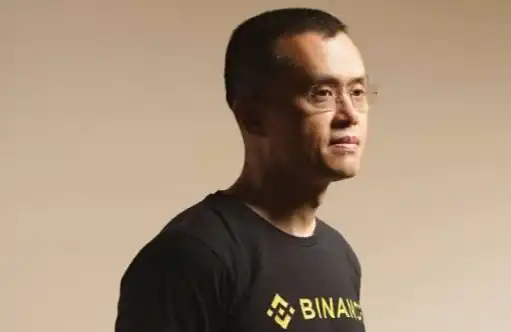
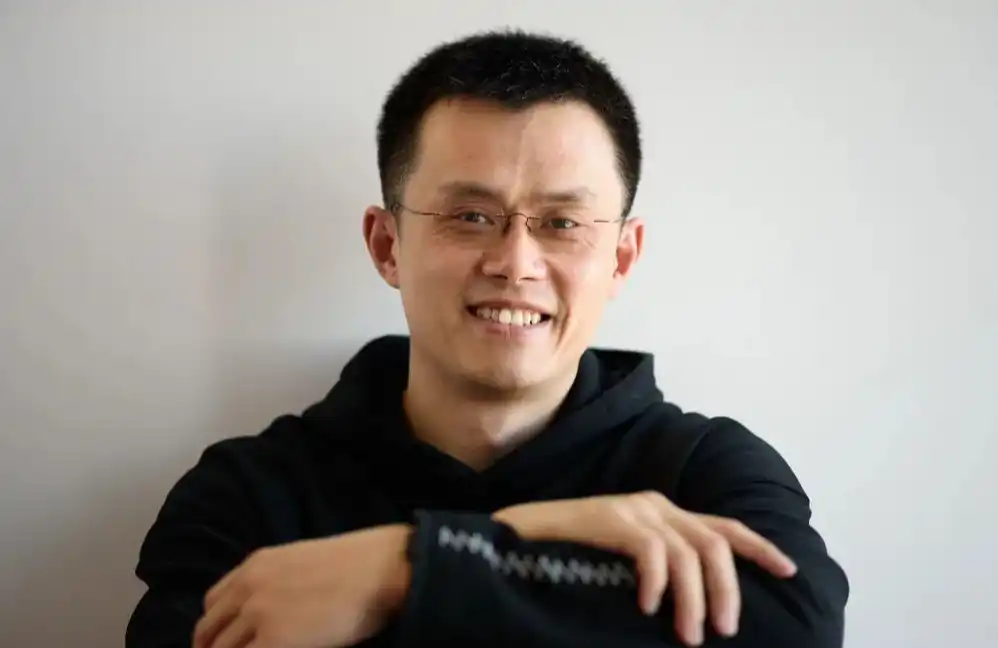
On the evening of December 4, at an event during Binance Blockchain Week, Binance founder Changpeng Zhao (CZ) participated in a group interview, sharing his views on the most concerning questions about Binance in the market.
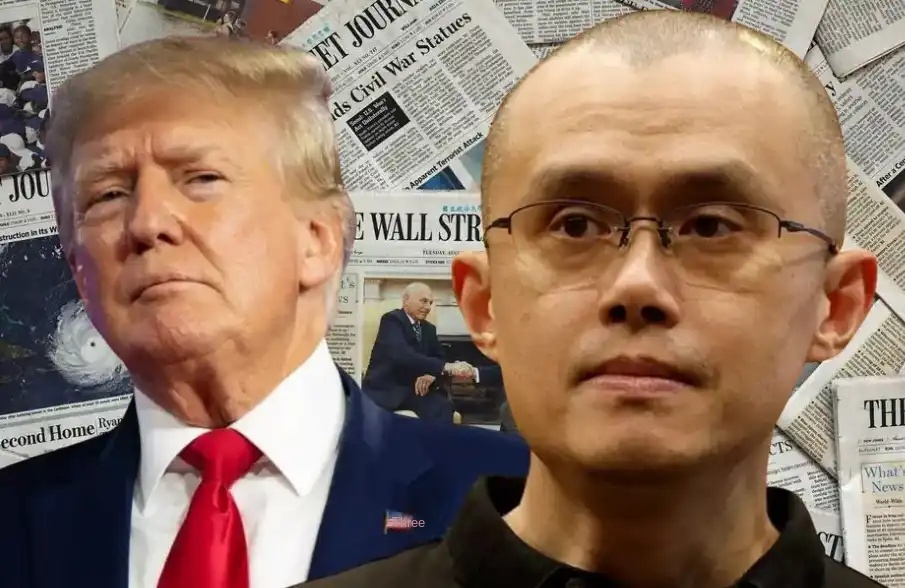
For CZ, this year was unforgettable. A year after being convicted and fined $4.3 billion during the Biden administration, he was pardoned by U.S. President Trump. On the day he received the news, he was obviously in high spirits and posted several messages on social media thanking Trump.
The pardon not only meant a physical level up in his freedom, allowing him to visit Washington, but it was also an epic boost for Binance. Binance's business in the U.S. had been severely affected by regulation in the previous years, and during the interview, he mentioned that the U.S. is now an emerging market for the current Binance.
BlockBeats conducted a summary of the interview. Without altering CZ's original intent and tone, the content was streamlined. Below are CZ's latest thoughts and opinions.
Question: In the next three to five years, what are some of the unresolved issues for cryptocurrency to enter daily life? How do we get there?
CZ: That's a great question, and I think one obvious issue is "payment." In Bitcoin's whitepaper, cryptocurrency was originally designed as electronic cash for payments. Many people have indeed tried to create payment products, but what we mostly see on-chain right now are various financial products with speculative attributes. Truly "user-friendly payments" have not yet been widely adopted.
There are many reasons for this, with one typical issue being "price volatility." Now that stablecoins exist, theoretically, everyone could use stablecoins for payments. However, in reality, it will take time to mature these technical solutions into truly mainstream products.
One potential viable path, in my opinion, is to integrate with traditional payment networks, such as with products like the Binance Card, combining cryptocurrency assets with the Visa and Mastercard systems. Users swipe a card, and the merchant receives fiat settlement, while the user pays with cryptocurrency assets. These kinds of solutions are actually very good.
Unfortunately, due to regulation and some policies of the Biden administration, we lost most of the Binance Card business, so these cards have not fully returned yet. I hope that in the coming years, similar solutions will regain popularity. In any case, there are many different solutions for payments, but I believe this is the most important direction.
Q: How did you originally envision Binance's model and vision? What has actually happened today? What were some things you initially "got wrong"? What predictions have proven to be correct?
CZ: I think predicting the future is always very difficult. When we first founded Binance, I set a goal for myself to become a top ten global exchange within three years, but we became the global number one in just five months.
Initially, we also thought we should establish a physical headquarters somewhere, with an office, a sign, a building, operating like a traditional company. But later we found that doing so actually raised a lot of issues. So we shifted towards building a fully decentralized organization, with no headquarters, no centralized offices, and the like. Then we found out that this approach had regulatory issues, as regulatory bodies need to know where your headquarters are located, which jurisdiction you fall under, so we adjusted our course once again.
The journey has really been about trial and error, back and forth. Now, I think the landscape is much clearer, where centralized exchanges will be companies that are "licensed, regulated, with a clear headquarters and physical office." On the other hand, on-chain decentralized solutions are becoming increasingly popular, and fully decentralized protocols will continue to evolve.
Q: In the next cycle, what type of projects or founders do you think will stand out? And which ones will be eliminated?
CZ: This is a fairly broad question, but I think the first point to consider is the "product" and the "founders building the product." These founders are truly building a product that can be used daily, focusing on users, rather than hype. Teams that are product-driven and user-driven will always stay.
Secondly, the crypto industry is very volatile; we are likely in a bull market now, but there will definitely be a bear market later, followed by another bull market, then another bear market. Regulatory environments in different countries also vary, sometimes strict, sometimes lax, in a back and forth, multiple-cycle manner. So the founders who can truly survive are those who are not afraid of volatility and can persist in the long term.
Q: How do you view DAT companies, and is this model sustainable?
CZ: I believe that the DAT model will continue to exist; its underlying logic is sound. Its essence is to help traditional companies that "cannot directly purchase Bitcoin or crypto assets themselves" to gain exposure to crypto assets.
Many companies' CFOs are allowed to allocate company funds to stocks, but there is no internal process or authority to allow them to directly buy cryptocurrency. The DAT structure fills this gap nicely.
Under the DAT structure, there can be many different types. Because MicroStrategy has been particularly successful, now everyone wants to replicate it. Just like the internet, one successful internet company doesn't mean all internet companies are well-managed. The fee structures of different DATs also vary greatly, and I personally always believe that the lower the management fee, the better. DAT companies should strive to be as simple and transparent as possible.
Some patterns are very direct, such as MicroStrategy continually buying Bitcoin, and DATs related to BNB are just buying BNB. If you know how to use BNB correctly, leveraging tools like Launchpad, Launchpool, airdrops, etc., you can achieve a comprehensive annualized return of 10–15%. For the traditional stock market, this is a very attractive return.
Some DATs want to be more "flashy" and more "active," such as allocating 10% of funds to invest in a basket of different crypto assets. This fundamentally becomes another business model, with a completely different risk structure that heavily relies on the professionalism of the management team.
Q: You have already received a pardon from former President Trump. Will you open up new businesses in the United States in the future and have more cooperation with the Trump family?
CZ: First of all, I currently have no business relationship with the Trump family. I am, of course, very grateful for the pardon granted by former President Trump, which allows me and our business to operate more freely globally, including in the United States.
I very much hope to help the United States become the "global center of cryptocurrency." From the company's perspective, the United States is actually an "emerging market" for us because in recent years during the Biden administration, our relationship with the United States was very tense. During that time, we tried to disengage from the United States as much as possible and reduce all connections with the country.
We have Binance US, but its scale is very small. On the day we went to court with the SEC in 2023, it had a 35% spot market share, and now it is down to single digits, with bank channels almost completely cut off, and licenses lost in most states.
As I understand it now, the situation has reopened. The United States is a very important market and is a global leader in many areas such as tech talent, AI, and more. However, in the blockchain field, most of the largest companies are not in the United States.
I hope to bring back many high-quality crypto businesses to the United States and also help American institutional investors gain exposure to BNB and the entire BNB ecosystem project. Currently, many American institutions not only cannot access BNB but also do not understand the BNB ecosystem.
So whether from an investment perspective or from the standpoint of supporting entrepreneurs and helping high-quality projects grow, we will more actively participate in the US market to help build a stronger crypto industry ecosystem locally.
Q: You have been very active on X and often receive public attention and even attacks. How do you maintain your mental health and stability in this situation?
CZ: For me, it's actually quite simple.
Online attacks can generally be divided into two categories. One is from traditional mainstream media, which has long been entrenched in an anti-crypto narrative, saying things like "cryptocurrency is only used by bad actors" or "Bitcoin is being abused by criminals." These narratives are fundamentally rooted in the traditional system's fear of new technology.
In the US, especially on the Democratic side, there is a lot of criticism of crypto. I don't do politics; I just state the facts. And I believe that most ordinary Americans actually want to have cryptocurrency.
The other category is people who have lost money in trading. Many people, when they make money from investments, attribute it to their own good judgment; but once they lose money, they start blaming the trading platform or others. I sympathize with their losses, but everyone must take responsibility for their own actions.
I have faced many challenges, including being jailed, but I am very clear that along the way, no one has been defrauded because of my actions, and users have not lost their assets because of us. So I sleep well every night because I know I am helping a lot of people.
Now, I can automatically block out negative voices, but I still actively seek constructive negative feedback. These are all feedback that can help improve the product and help us. As for those who are simply abusive or venting their emotions, there is no need to take them to heart.
Q: How do you view the next steps in mainstream adoption, and what role can Binance play in it?
CZ: I think this process will be relatively slow. The first step is for the regulatory framework to become clearer, and I myself advise many governments. Currently, there are not many countries globally that truly have a clear, forward-looking crypto regulatory framework.
The US is now starting to move forward, which is a good thing, but Trump was only in office for one year, the GENIUS Act has just passed, and the Clarity Act is still in progress. I believe it will eventually come to fruition, but it will take time to refine how it will be implemented, what imperfections the first version of the rules will have, etc.
Once the regulations are in place, banks will also need time to adapt and adjust to protect their own businesses. The crypto industry we talk about is actually a very new, very young industry. To achieve mainstream adoption, the best way is to deeply integrate with the existing financial system rather than completely severing ties.
errorThe content is primarily in English, with basic Arabic language support having just been added. The storybook has also been translated into thirty to forty languages using AI. The team is expanding the content while optimizing the product experience, such as significantly improving the accuracy of speech recognition when children interact with the AI.
The team currently has over 60 full-time members, in addition to several hundred content contributors. For the first 8 to 9 months, we mostly funded this team out of our own pockets. Later, someone created a meme coin based on the project, and the community collectively donated around $11 million. We are now mainly focused on how to use this money wisely to expand the platform's influence and design better incentives for content contributors.
Overall, the project is progressing well, but it is entirely nonprofit, and it will always be free for children. If you have children aged 2–6, you can let them try it out. I believe it will be very engaging as they "play" while learning words, concepts, and expressions.
Next, we will continue to expand into more languages. Practical experience has shown that Chinese and Arabic cannot simply translate English lessons directly but rather need to redesign a system based on each language's conventions.
The project has already been implemented in some kindergartens in Abu Dhabi. Local leaders are very supportive and have even offered financial assistance. However, what we lack now is real-world implementation scenarios rather than money. We also want to create a Korean version, but our team's capacity is limited, so progress is slow.
My ultimate goal is to make this tool powerful enough for anyone to create courses on the platform, truly transforming it into a user-generated content educational platform. Of course, creating engaging and high-quality content that captures children's attention is not easy, so we are heavily leveraging AI to lower the barrier to content creation.
Q: What is the social issue or specific project you care most about, and where do you plan to donate money in the future?
CZ: I have always believed that money is not meant to sit still but to be used; money is a tool.
Currently, the social issue I care most about is education. Honestly, up to now, the amount I have personally spent from my own pocket is not substantial, probably around one to two million US dollars, mostly used for the sixty-plus staff at Giggle Academy. The significant $11 million donation from the community is of a larger scale. That money is not fundamentally mine; I am simply responsible for using it on appropriate educational projects.
As for the arrangement of personal wealth donations, I am still exploring. During my time at Binance, I had access to many readily available resources, such as charity teams, security teams, etc., which were like a natural leverage. Now that I have left, I no longer have my own charity team. Going forward, I might need to establish a small team again or directly integrate into a mature team. In reality, with just one or two people, they could help me systematize the project screening and evaluation.
During this time, I've met many people working on social projects. For example, I recently met a former VC (Venture Capital) partner named Bill who had also served time in prison due to some events and spent over 90 days in solitary confinement. He is now working on a project related to soil microbiomes, aiming to restore soil damaged by fertilizers and chemical agents, allowing the land to regain its nutrients. This project is being pursued on a non-profit basis but has a sustainable business model of its own that can self-finance.
Initially, I had mentioned that I would not focus too much on climate issues. However, I later learned from him that soil restoration can sequester approximately 30% of atmospheric carbon emissions, showing a strong connection to climate matters.
I have encountered many such individuals and projects recently. Besides education, I do not have a specific long-term focus point yet and often rely on experts in these fields to make judgments.
Additionally, I have privately donated money to projects such as prison education and orphan assistance through some charitable organizations, both in Thailand and other countries. While the overall scale is not significant, the donations cover a variety of types and are still in the experimental phase.
My ideal scenario is that all future donations will be conducted on the blockchain using cryptocurrency transactions, ensuring that every step from fund outflow to the final beneficiary is transparent, trackable, and publicly visible.
However, the practical issue is that many final beneficiaries may not be familiar with using crypto wallets. If I only donate using cryptocurrency, the number of people reached by the funds would be limited. Therefore, I am currently conducting small-scale experiments within various charitable organizations to determine which institutions are efficient and truly impactful. Once I find suitable partners, I will then scale up the involvement.
Question: When you imagine a world where "one billion people use Binance and Web3," what do you envision?
CZ: I believe the ultimate form should be where people no longer even mention the words "crypto" or "Web3." Similar to how we do not discuss the "TCP/IP" protocol today, in the future, people will not say, "I want to use blockchain," but instead will say, "I want to send money to someone," "I want to buy something in an app."
By that time, brand names may become a verb, just as we naturally say "Google it" today. The underlying technology should be completely abstracted, and there should be no need to discuss concepts like chains, gas fees, cross-chain, withdrawals, let alone complicated addresses.
In an ideal state, you would only need to enter the other party's name to complete the payment directly. Of course, given today's technological level, we are still far from that state. Most products in the industry today are still somewhat technical, aimed at developers or early adopters. We need a plethora of more user-friendly products that hide all the complexity in the backend.
This may not necessarily have to be done through Binance; it could be an ecosystem composed of many applications and platforms. However, from a network effect perspective, in the end, there will probably be one or two super entry points, similar to Google in the search engine field in the past, although it is now being partially replaced by AI.
So, in the future I envision, everyone will only know that they are using a certain product or brand, but will no longer discuss whether it is a Web3 world behind it.
Q: What are your thoughts on this new management architecture adjustment, and which areas do you think you will focus more on at Binance in the future?
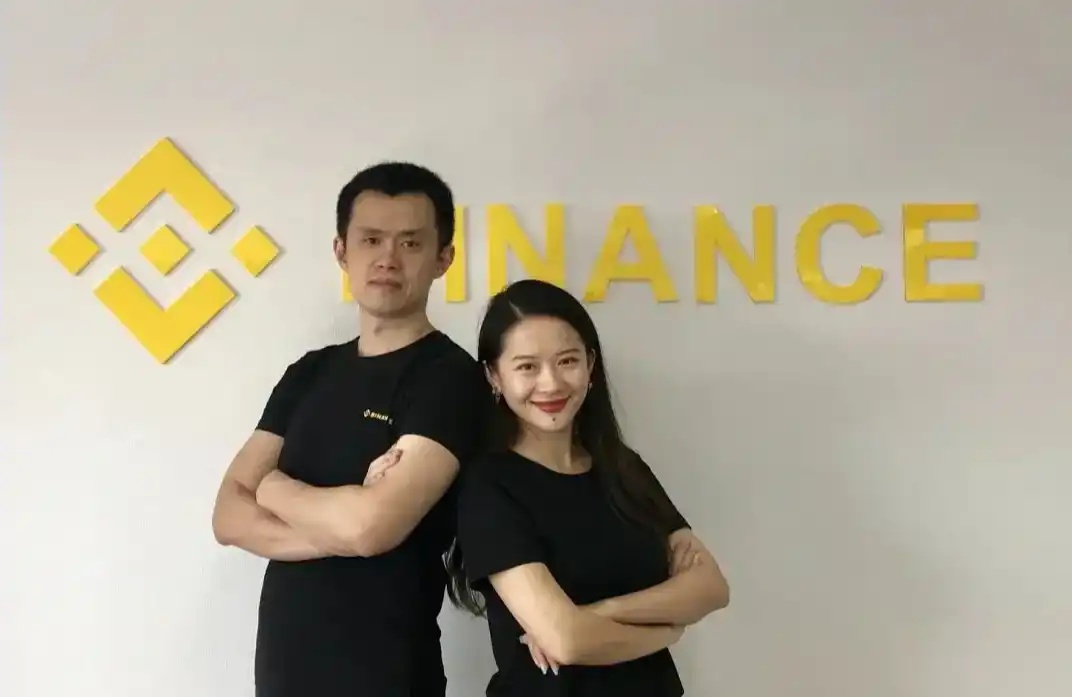
CZ: For me, this adjustment is very natural. He Yi, as a co-founder, has always been at the core of the company's strategy, extremely hardworking, and close to the community and product. She is one of the most resilient people I have ever seen, and this title change is essentially a formal acknowledgment of the existing reality. The external feedback has been uniformly positive, both in Asia and the West, with high recognition of her from everyone.
She is 9 years younger than me, in the prime age I was when I took over as CEO. It was a natural progression for her to lead a larger team, and in fact, before the official announcement, she was already performing the duties of a leader. She and Richard complement each other's abilities: Richard is good at regulation and English; although He Yi is still improving her English, her learning ability is extremely strong, and she is willing to communicate, which is a great configuration for the company.
As for myself, the night I stepped down as Binance CEO, I was in Seattle writing a farewell letter while shedding tears at 4 a.m. However, during that time in the United States, I adjusted my mindset through skiing and surfing and found that the company was still running smoothly without my deep involvement. Life moves forward, and I don't need to go back to that position.
Now I am focused on the BNB Chain ecosystem, Yzi Labs, and Giggle Academy, and I am advising governments on establishing regulatory frameworks. Not being involved in daily management allows me to devote my energy to driving ecosystem growth. The Binance team is already strong enough, and I believe that high-frequency, healthy leadership rotations can make room for the younger generation, which is beneficial for the company's long-term development.
Q: Which daily habit do you think is most important for your success?
CZ: I think the habit of learning something new every day is very important.
Most of what schools teach us are basic skills. They won't teach you entrepreneurship, negotiation, emotional intelligence, financial literacy, how to start a company, how to be a boss, and other important skills; you basically have to learn these things slowly in society on your own. Even in college, these are rarely systematically taught.
If you are in a strong professional field, such as a doctor or lawyer, you will indeed use a lot of the knowledge you learned in school in your daily work; but for most people, especially entrepreneurs, you must rely on continuous self-learning. So I think it's important to learn something new every day, as it will force you to maintain an open mindset, not confining yourself to existing frameworks, and make it easier for you to seize new opportunities.
Secondly, I believe that hard work and maintaining good health are equally important. Entrepreneurship is actually physically demanding, not just mental work; you need to have a body that can endure it. You need to cultivate good habits, learn to stabilize yourself under high pressure, sleep well, eat well, exercise regularly, and take good care of your body. Under this premise, you also need to be able to maintain high-intensity output, work sixteen hours a day efficiently while maintaining physical health.
So, in summary, it is important to learn something new every day, maintain an open mindset, work hard, take care of your health, and prioritize these things.
Question: You have experienced many ups and downs and have built one of the most impactful companies in history. If one day you stand before "God" and can only state 5 things you wish to accomplish before you die, what would they be?
CZ: I would actually simplify this question, if I could have one "wish," that would be enough. Honestly, I do not have a lot of wishes.
What makes life interesting is its unpredictability. If everything was a predetermined script, and you knew what was going to happen every day, it would take away the fun. The reason you work hard, strive continuously is because you are uncertain about the outcome.
It's like playing a game, if you know from the start that you will win 100%, the game is no longer fun. It's the kind of game that requires constant trial and error, teamwork, carefulness, strategic adjustments, that is more interesting.
I do have one wish, hoping that everyone can stay healthy, I think this is one of the most important things. However, health is something we cannot completely control, we can develop healthy habits, but there is still a lot of uncertainty.
Furthermore, I think the world itself is already very interesting. It is precisely because we only have one lifetime that humans cherish moments in this life. If you had infinite lifetimes, time would lose its value, and many things would lose their meaning. If you know you have only a limited chance to do something, you will cherish it more.
So, I won't list a long list of wishes, I have been very fortunate, and if there really is an opportunity to say a word to God, I would probably just say, "Please do not put me in too unfortunate circumstances, I am already satisfied with my current state."
Welcome to join the official BlockBeats community:
Telegram Subscription Group: https://t.me/theblockbeats
Telegram Discussion Group: https://t.me/BlockBeats_App
Official Twitter Account: https://twitter.com/BlockBeatsAsia
 Related Articles