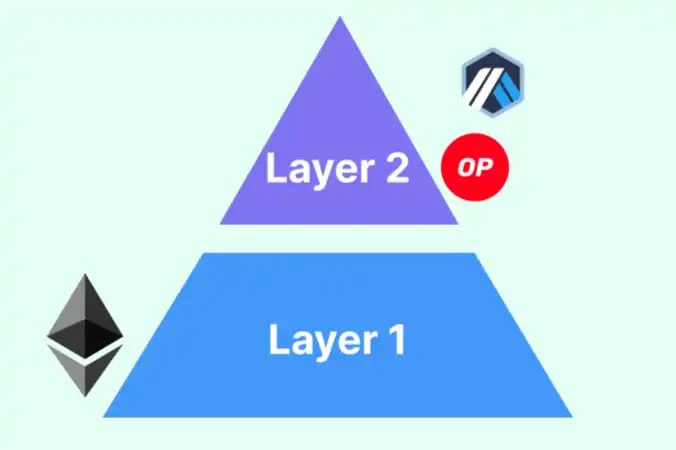
Layer 2 New Player: OptimisMPBC versus Arbitrum
原文标题:《 科普 | OptimismPBC vs Arbitrum 》
原文作者: Kris Kaczor
原文编译: 闵敏 & 阿剑
Let's take a look at the similarities between Optimism and Arbitrum:
· Both are Rollup, a true Layer 2 solution that stores all trade data on Layer 1
· 都是「乐观型(optimistic)」,即,使用欺诈证明
· 都使用定序器来实现即时「确定性」
· 都具备通用的跨链消息传递功能,可以用来构建高级代币桥,如 @MakerDAO 的快速取款桥:https://forum.makerdao.com/t/announcing-the-optimism-dai-bridge-with-fast-withdrawals/6938
Now comes the big story -- the differences. The biggest difference between Optimism and Arbitrum lies in the implementation of the fraud proof mechanism. That is, after the execution of a transaction, how to resolve the dispute if the status arises?
4. Optimism Using a single round of fraud proof. That is, Layer 1 performs the entire Layer 2 transaction on the chain to verify the state root. This makes the proof of fraud instantaneous, which is a plus.
However, there are some problems:
· 你需要监督交易执行,为此需要使用 OVM(即为了避免副作用而重新编写的 EVM)
· Layer 2 交易的 gas 使用量不得超过 Layer 1 区块的 gas 上限
· 每执行一笔交易,你都需要在链上生成状态根——导致成本上升:(
Possible safety hazard
Arbitrum uses multiple rounds of fraud proof. In simple terms, binary search is used to find the first opcode of the block causing the divergence. Once found, simply execute the opcode on the chain.
The advantages of multiple rounds of fraud proof are as follows:
· 它只需为一整批交易生成一个状态证明,并发布到链上
· Layer 1 区块 gas 上限并不重要,因为 Layer 2 交易不完全在 Layer 1 上执行
The disadvantages are as follows:
· Need EVM - >; AVM translation (thankfully automatic)
· 速度很慢——最坏情况下,需要长达 2 周时间才能完成欺诈证明。实际上是一周时间。
· 需要原始提款人在线并配合
From another perspective, Optimism is containerized while Arbitrum is virtualized.
The optimist approach has a major drawback. Imagine if there was a hard fork that caused the Ethereum Consensus rules to change and opcodes to be deleted/repriced or modified. At this point, suddenly re-executing the previous transaction on Layer 1 results in a completely different final state. I don't know how the Optimistic team will solve this problem, but I think they'll figure it out when the time comes. Arbitrum has complete control over the AVM specification, so you don't have to worry about this.
Both projects try to be as close to the Ethereum ecosystem as possible, but there are some differences. In general, you can still use what you know about EVM related tools (Solidity, HardHat, Waffle, etc.). But it's not that simple.
Optimism requires a special solidity compiler to generate the OVM bytecode. Therefore, it is only compatible with Solidity, and with a specific version of Solidity. On the other hand, the Optimistic Layer 2 node is just a Geth client that has been modified to improve compatibility.
On the face of it, Arbitrum is fully compliant with the EVM/JSON RPC specification, but its nodes are custom implementations. Arbitrum through automated EVM- >; AVM translation to support proof of fraud. Therefore, it supports any EVM language (Vyper, Yul +, etc.).
Optimism uses weth, and there is a built-in wallet abstraction. Arbitrum comes with ETH support.
Arbitrum provides a uniform permission-free bridge to bridge any token to Layer 2 (it deploies a common ERC20 contract as a Layer 2 counterparty).
Optimism prefers a dedicated bridge, but it is possible to build a generic bridge on top of it. On this point, @dmihal Know more;)
The final difference is the on-line implementation. Arbitrum will launch a "MainNet for Developers" at the end of this month, and Optimism will wait until July.
If you want to learn more, I suggest you watch this show by @stonecoldpat0 Hosted by & have spent @karl_dot_tech And & have spent @hkalodner A friendly debate between the two.
Personally, I am in favor of both projects. I can't wait to see their mainnet come online. The entire Ethereum community is crying out for a proper Layer 2 solution, not some extensible side chain.
If you want an example of how to optimise a bridge, check out https://github.com/makerdao/optimism-dai-bridge. We plan to release an Arbitrum compatible version next week.
The original link
Welcome to join the official BlockBeats community:
Telegram Subscription Group: https://t.me/theblockbeats
Telegram Discussion Group: https://t.me/BlockBeats_App
Official Twitter Account: https://twitter.com/BlockBeatsAsia

 Related Articles