Interview with BTCST Chief Protocol Consultant Tim Swanson: Synthetic Assets Still Have Huge Potential
Many projects are trying to introduce Bitcoin into DeFi. At present, the most popular is cross-chain, which converts Bitcoin into ERC20 tokens such as wBTC and renBTC. It is a vulgar scale, but this is by no means the only way Bitcoin plays in DeFi.
The success of the Bitcoin computing power token BTCST has made Bitcoin and DeFi has another possibility. BTCST successfully connected the Bitcoin primary market and secondary market, and became the "gray scale" of the mining circle. Then the team proposed a new concept, the synthetic asset protocol τ "Tao", which aims to use computing power as a mortgage to be the basis of the PoW consensus. Cryptocurrency provides DeFi-like financial gameplay.
For this reason, Rhythm BlockBeats interviewed Tim Swanson, the founder of Tau Protocol , listen to his understanding of computing power and DeFi

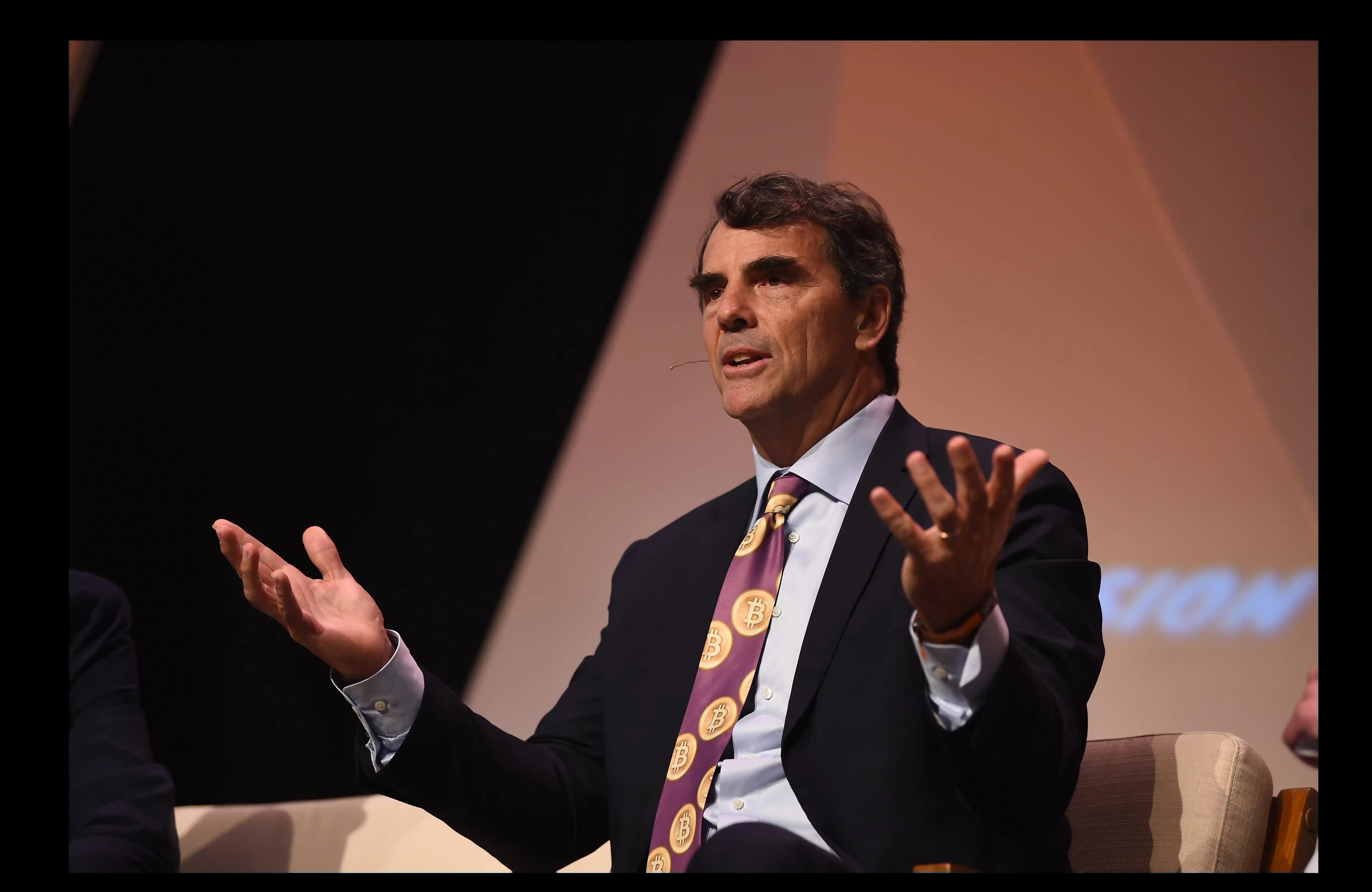
BTCST chief protocol consultant and Tau Protocol founder Tim Swanson
The following is the conversation between Rhythm BlockBeats and Tim Swanson:
Why are you optimistic about the synthetic asset track?
Rhythm BlockBeats: How did you learn about Bitcoin and enter the blockchain industry?
Tim Swanson: I first heard about it in July 2010 in an article on Slashdot.org Bitcoin, but I didn't really dig into Bitcoin until late 2012 or early 2013. I got into this space purely by accident, as I interviewed several early stage entrepreneurs and investors. These interviews were also compiled into several papers and books in 2014, and I subsequently served as a consultant on several projects.
Rhythm BlockBeats: Why did you join the BTCST team?
Tim Swanson: In January this year, I published a long article on the field of collateral-backed stablecoins. I call such models "parasitic" because they have long depended on the US banking system to survive and function. I have studied this field before, and many colleagues have provided help. For example, my boss at Clearmatics, Robert Sams, proposed the concept of "seigniorage shares" in 2014. In 2015, he also founded the first company focused on A consortium using a central bank digital currency known as USC.
Shortly after publishing the article, I wondered if anyone had created a " Computing power tokens can be used as collateral for synthetic tokens, so I searched on Google and found the BTCST white paper provided by Alex Zhao. I reached out to the BTCST team, made a few calls, and we found some common threads, such as the idea that came to be known as the "Tau Protocol".
Rhythm BlockBeats: There are many tracks in the DeFi field, such as lending, trading, etc. Why do you pay attention to the track of synthetic assets?
Tim Swanson:I think that although there is no absolute winner in the lending and trading track, for well-capitalized players, the track is relatively crowded. At this stage, there is no obvious winner in the track of synthetic assets, and because of the lack of maturity, it can be said that it is a blue ocean market with no barriers to entry. Therefore, there is huge room for growth in synthetic assets.
Rhythm BlockBeats: Why are you optimistic about the synthetic asset track?
Tim Swanson: For the current synthetic assets, this kind of product that lacks support and collateral guarantees, I may not yet The word "change" would be used to describe this attempt. At present, TVL (Total Value Locked, total locked value) has grown in an all-round way, but synthetic assets are still relatively small as a whole. This may change as trading firms and other financial institutions become more familiar with non-custodial practices such as on-chain lending.
Most projects related to compositing assets are just for existing Simple rebuilding of cash flows and models, and in the short term, synthetic assets may continue to highlight the problems of capital scarcity and leverage in traditional finance. We are probably at least a few years away from projects that do more than just replicate traditional finance.
What are the advantages of Tau Protocol?
Rhythm BlockBeats: Can you introduce Tau Protocol to us?
Tim Swanson: The first version of the Tau Protocol simply described an easy way to create, stake, and stabilize synthetic assets Model. Based on current feedback, future versions and iterations may include more complex models, providing better unmanaged stabilization solutions. For example, one suggestion is to borrow successful ideas from FRAX, such as the dual-token model, to maintain an anchor to an external unit of account, the US dollar. Another idea is to incorporate a governance token that allows outside participants to make proposals and vote.
Rhythm BlockBeats: Compared with Rebase and arbitrage-like synthetic asset protocols, what are the advantages of Tau Protocol?
Tim Swanson: In my opinion, for any unmanaged, algorithmically stable project, human intervention should be minimized as much as possible, otherwise it will be self-contradictory. A month ago, the BTCST community launched the first application of Tau, τBTC, an algorithmically stable time-weighted average price (TWAP) of Bitcoin.
A key advantage of τBTC is that approximately 12% of Bitcoin The computing power supports τBTC, and large institutional miners like Genesis Mining, Atlas Mining, and BTC.TOP all support it. No other synthetic asset protocol can gain this unique advantage from Tau Protocol and BTCST.
Another advantage is that we recently held a new community proposal and voting (STP 8: Restorative Token Supply Adjustment), further revised the mechanism of token supply adjustment, including the new "Carrot and Stick" program, which aims to provide additional methods to stabilize value, which is actually The hardest part of maintaining a credible marketplace.
For details, please see: https://btcst.medium.com/stp-8-restorative-rebase-b4fbbdfd96c
;
Rhythm BlockBeats: We use τBTC as an example, for the miners in the primary market and the secondary market What is τBTC worth to the average Bitcoin investor?
Tim Swanson:If the stability of τBTC is considered credible and recognized by the market as a Schelling point, then in theory, any market participant who wishes to obtain Bitcoin as collateral can use Bitcoin uses τBTC as well. This provides more flexibility and application scenarios for τBTC in the DeFi ecosystem, while the original Bitcoin on the original ecological chain will not be able to cope with these problems due to poor performance and high electricity costs.

The Future of Synthetic Assets
< span style="font-weight: bold;">Rhythm BlockBeats: The asset layer is very important in the DeFi ecosystem. What kind of asset scale will Tau Protocol plan to achieve?
Tim Swanson: Behind the creation of a synthetic asset protocol supported by real Bitcoin computing power, it is necessary to continuously develop protocols and platforms to provide better services for Bitcoin and DeFi participants. Regarding the scale, it is difficult to quantify "how big", but what I want to say is that the goal of Tau Protocol is to become the best synthetic asset protocol based on the BSC network. I've been lucky to have several friends who have been providing feedback and assistance, and the entire crypto world has taken a lot of interest in Tau Protocol. If a new version of Tau Protocol is released, I hope many people will use it, centralization is not what we want. So please feel free to suggest how the current version can be improved and come up with new ideas for future iterations.
Rhythm BlockBeats: In addition to BTC, do other PoW cryptocurrencies plan to introduce Tau Protocol?
Tim Swanson: This is an open question for us and we'd like to hear community feedback. I want to emphasize again that Tau Protocol and BTCST are community-driven projects, so we will always listen to user feedback. If the community thinks it is possible to enter a τETH, or τDOGE, let the community vote.
Rhythm BlockBeats: What new plans does Tau Protocol have in the near future?
Tim Swanson: Over the past month Various ideas emerged. In the short term, I put my knowledge and experience into a new product from the BTCST development team called Tau Sage. It has wide-ranging utility, such as tracking and identifying the authenticity and uniqueness of NFTs, and more. Therefore, it can serve as a protection tool for investors, informing users about artists or redundant copies on the market. Imagine Tau Sage becoming a verifiability oracle for NFTs, just like how Chainlink became an oracle for blockchains.
For more information about Tau Sage, please refer to: https://btcst.medium.com /stp-7-sage-proposal-authority-oracle-for-nfts-14bd3f31663
Tau Sage has verified authorization records for 11,531 BakerySwap NFTs using hashes. You can check it out here: https://app.btcst.finance/# /nft.
Welcome to join the official BlockBeats community:
Telegram Subscription Group: https://t.me/theblockbeats
Telegram Discussion Group: https://t.me/BlockBeats_App
Official Twitter Account: https://twitter.com/BlockBeatsAsia

 Related Articles