Has the NFT bubble really burst?
NFTS Combat Bubble Burst Claims As Real Life Use Cases Push Forward
Originally written by Lawrence Wintermeyer

Arguably, since the beginning of the NFT boom, many people have been saying that we are in the midst of a giant bubble. The signs of a bubble are already there: shocking news stories, high-profile figures entering the game, huge amounts of money spent on merchandise, some of which are almost worthless, even NFT's appearance on Saturday Night Live
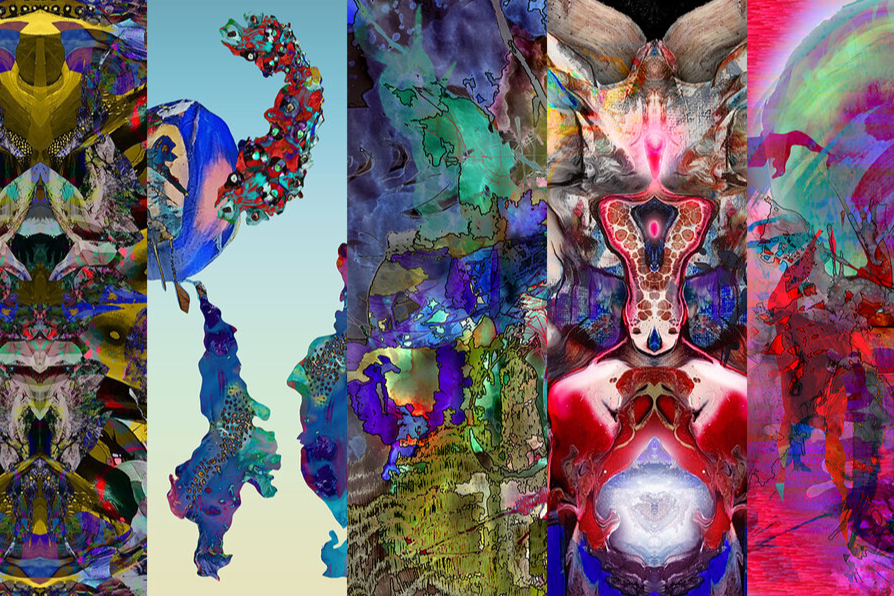
Who are the big winners from the NFT boom? The answer is obvious. Beeple, a digital artist, sold an NFT collage for $69 million at Christie's; Dapper Labs' hugely popular game NBA Top Shot has seen sales soar. These two success stories have prompted a host of content creators and startups to dive into the NFT space, generating nearly $300 million in revenue in the first two months of 2021 alone.
The big question is: how long will the NFT boom last?
Does the Beeple break new ground and bring an exciting new frontier to the art world, or is it time for artists to "jump ship" to the NFT field? In the same way, some people must be wondering if the NBA Top Shot is just an "upgraded" version of Cryptokitties, just a first-moder advantage and not a new way for the NBA or teams to market their products
The calm after the storm
The NFT hype has died down, with average NFT prices down more than 60% in April from February's high and volume down, but that doesn't mean it's "noon time" for NFT. It may simply be undergoing a market correction as investors become more cautious about their purchases. Indeed, as long as there is evidence of long-term potential in the NFT market, some investors will choose to wait until economic growth slows.
Noelle Acheson, managing director of research at CoinDesk, recently told Business Insider: "The NFT boom is not so much about price and quick profits as it is about a new model of creative monetization. If artists and other content creators continue to mint NFTs and consumers see the value in them, then it makes sense for the market to grow in the long term."
"The open question, however, is whether tokenized ownership of NFT still has real value compared to physical art in the real world, which is more unique and can actually change hands."
Zeev Farbman, CEO of mobile app company Lightricks, admitted: "Whether this is a major revolution in the opportunities for digital creators to make more money remains to be seen."
Clearly, the emphasis is shifting from guesswork to stability and use cases, with investors keen to understand whether NFT projects have enough capacity to sustain themselves in cyclical markets. While a number of industries are exploring NFT, there are clearly several areas that are attracting more attention from VCs.
An authenticated collection
If the NBA Top Shot has taught us anything, it's that NFT collectibles can attract millions of users when combined with popular sports leagues, intuitive user experiences, and clever marketing.
Ethernity is one of the leading players in the field of NFT identification, having auctioned digital art backed by celebrities alongside the likes of football star Paolo Maldini and Philadelphia 76ers billionaire Michael Rubin. The startup recently announced the launch of a physical collection that combines with NFT in the form of a limited edition "El Nino" baseball bat. San Diego Padres shortstop Fernando Tatis Jr. The collaboration with artist collective Impossible Brief shows that NFT can do more than prove a person's ownership of digital objects.
"With the NFT boom we've seen in recent months, it seems to me clear that authenticated NFTs from real world sports and entertainment figures are the only real future for NFT collectibles."
Nick Rose Ntertsas, chief executive of Ethernity, said: "When we launch collectibles by Tony Hawk, Muhammad Ali or legendary footballer Pile, it is all genuine, endorsed and supported by those individuals, which adds to the potential value of the work."
Sports is just a vertical, and the studios are getting in on it. Warner Bros. recently partnered with NFT marketplace and publisher Terra Virtua to release the NFT collection of Godzilla and King Kong, just as the Hollywood blockbuster was released. If you're spending more than $150 million to make a movie and you want to maximize your return, Terra Virtua believes the industry must look for the "next step" in NFT collection.
By creating the best framework for brands to make it easy for them to create NFT for their fans, and by developing a VR-based gallery where fans can enjoy their collections, Terra Virtua wants to provide users with the best experience of NFT publishing, collection and royalty collection.
Digital Art & NBSP;
The art world was one of many industries affected by the COVID-19 event in 2020, with sales of fine art and antiques falling 22 per cent to $50.1 billion. This may make the dizzying cryptographic art phenomenon of early 2021 even more influential.
On the surface, the stuffy and pretentious art world seems like an odd testing ground for cryptocurrencies, and its liberal community tends to despise the gatekeepers. But many believe NFT will revolutionise the industry in all sorts of ways, from opening up digital works to a wider audience to democratising Spaces that once belonged to super-rich galleries and big-name artists.
NFT can also encourage greater innovation by creators. Take the Latvian art collective Kiwie, whose mission is to chain street art. Kiwie pays homage to street graffiti from around the world (including its iconic Fat Monster character) by casting NFTs containing geo-tagged works that are geo-tagged with their real-world counterparts. Investors who buy NFT street art receive a collectible metal card showing the work and own the art in action.
In the future, digital tokens representing virtual works as well as physical works themselves are likely to be increasingly sold.
Earlier this month, Kiwie sold an NFT to the Zuzeum art gallery in Riga, which intends to display the work in an upcoming exhibition as if it were a traditional artwork. To date, six of the 1,001 NFTs in the collectible collection have been sold on Rarible, with an average selling price of 2 ETH, or about $5,000 at the time of this writing.
"Anyone can be the creator of NFT," said Lightricks' Farbman. "Anything that can be digitized will be digitized."
"The NFT market now feels more like an oasis than a desert, where any competent creator with the tools can make digital art and make money from it."
"Content creation platforms and tools are essential to our current creative ecosystem and have become even more relevant with the rise of NFT."
Metaverses and SuperFarms
Gaming platforms are perhaps the most obvious beneficiaries of the NFT frenzy. Not only are the respective communities similar in number, but there are precedents for virtual goods such as clothes, avatars and weapons in immersive meta-universes such as World of Warcraft and Second Life.
Elliotrades, co-founder of SuperFarm, a cross-chain NFT platform, predicted that "the utility of NFTs will be the tool to reach a billion users in the cryptocurrency space. NFTs in video games, in particular, will create a trillion-dollar asset industry in what looks like a toy."
"Gamers currently spend more than $100 billion a year on digital stuff. They inherently understand and value digital assets. What they don't know is whether these things will actually be owned and stored on the blockchain in the future.
Elliotrades, who recently debated with NFT luminary Edmund Schuster at cryptocurrency conference BlockDown, is creating another unique model at the intersection of NFT and DEFI, which allows users to make money from their NFT. The idea of earning interest by lending an anonymous player a special virtual sword may be nerve-wracking for some, but that's just how the digital world works and how new markets are made.
Elliotrades claimed that NFT in games would become a trillion-dollar asset sector, which may sound like hyperbole to many people. What we can say is that things are moving in the right direction, and if you think startups in this space are confined to the margins, take a second look. Vorto Gaming, creator of NFT-based game Hash Rush, will soon list on the Swedish Stock Exchange.
The Vorto team is in talks with a number of well-known brands and characters to help them build their NFT collection. What is its goal? Usher in a "new era of gaming experience" -- not just for developers and publishers, but for gamers.
Since NFTs are stored on the blockchain and can interoperate across different gaming platforms, these assets may be more popular with gamers than the assets they are designed to replace, as they can easily become obsolete if a new game is released.
NFT fragmentation
As cryptocurrency investors know, bitcoins can be broken up into 100 million constituent parts, called satoshis, making it possible for ordinary people to buy some, and the same thing is now happening in the NFT space.
Earlier this month, the Unicly platform fragmented 50 Cryptopunk NFTs by offering users an uPUNK collection of 250 million tokens. The total market value of these tokens has exceeded $20 million.
Fragmentary NFTs -- which owners can sell as replaceable tokens -- may seem like an odd concept, like edible decorative fruit.
However, investors with smaller amounts of money may see the benefit of owning a percentage of art that could appreciate significantly in value over the next few years. For them, it might be like buying toinized Google shares for $85 a share (now more than $2,300) shortly after Google went public in 2004. Unicly brings together NFT Gallery, Trading Platform and Defi products.
NFT is still worth watching
In many ways the NFT boom is calming down, but like the grid outside the garden door, the low hum of the generator is still distinctly audible. Because some NFT projects look problematic, they could start to attract the attention of regulators if they look like collective investment schemes or other regulated financial products. Platformers have a responsibility to be careful -- no one wants to see NFT suffer a similar fate to the Utility tokens of the IC0 boom era.
The people who believe NFT is the future don't throw away their horns, they just switch them to silent mode for a while.
The original link
Welcome to join the official BlockBeats community:
Telegram Subscription Group: https://t.me/theblockbeats
Telegram Discussion Group: https://t.me/BlockBeats_App
Official Twitter Account: https://twitter.com/BlockBeatsAsia
 Related Articles