Popular Science | 7 things you can do on Layer-2 right now
Original source: Ethereum enthusiasts
People expect Ethereum to be the premier infrastructure for open applications around the world. However, due to the unique design of Ethereum, the growing network is expensive and slow to use when demand is high—after all, the blockspace< available per unit of time< /em> That's all.
Although the Ethereum blockchain may rely on "Eth4" to greatly increase the transaction throughput of the base layer. The even better news is that we don't have to wait for Eth4 to achieve throughput scaling.
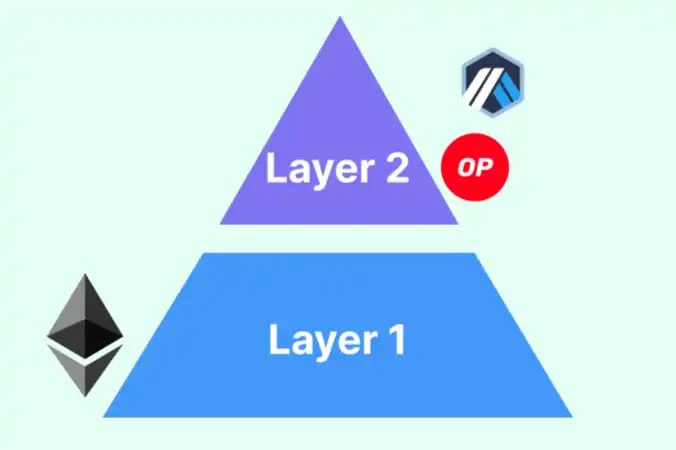
The ready-to-use solution is Layer-2 (L2) scalable solution.
The basic idea of the Layer-2 solution is to build on Ethereum, directly dependent on the security of Ethereum and finality, but transfer the transaction processing requirements on the main chain to the off-chain, so as to achieve near-instant transaction processing speed and reasonable transaction costs - the scope of functions is the same as that of the bottom layer of Ethereum, transfer, transaction, pledge token, all can achieve.
L2 is not a fantasy on paper. Many L2 solutions are out there, and new L2 solutions and integrations seem to pop up every day. At the time of writing, around $300 million in value is secured by L2 projects; the technology models employed by these projects can be broken down into two categories: ZK Rollup and Optimistic Rollup .

The age of L2 scaling solutions has arrived, and this is just the beginning. If you want to be a trendsetter, now is an excellent time to try out and evaluate various L2 solutions. So, which of the L2 services available today are the best?
We have listed 7 great L2 services here, check them out!
1. Lend funds/loans on Polygon using AAVE
Earlier this year, Matic — a project built around Matic Plasma chains and Matic PoS sidechains — changed its name to Polygon and transformed itself into an effort to "make Ethereum the Internet of Blockchains."
The implication of this rebranding is that the team will start embracing optimistic rollup, zk rollup, etc.
Not long after, the popular DeFi lending protocol Aave announced the New Frontiers plan, testing the waters of multiple scalability solutions, allowing users to choose. The first public integration activity of Aave is to access Polygon’s PoS sidechain.
It is worth reminding that the side chain does not directly inherit the security protection of Ethereum like most L2 solutions, but it provides the same throughput as L2 increase in volume. And judging from the New Frontier activities, it is very likely that Aave and Polygon will cooperate with each other in the direction of promoting rollup integration.
Meanwhile, you can process your Aave loan/lending funds at a much cheaper cost on the Polygon sidechain. You first need to add the Polygon network to your MetaMask plug-in wallet, then click on the "Polygon" tab on the Aave website, and then you can see the situation of this market.

2. Trading decentralized perpetual contracts
dYdX Yes A decentralized exchange known for providing decentralized margin trading, spot trading and perpetual contracts on Ethereum.
Of course traders want to trade as fast as possible and as cheaply as possible. And dYdX just announced the launch of the L2 perpetual contract trading system, with StarkWare's StarkEx scalable engine as the core.
StarkEx is both powerful and flexible. It can not only support data availability on the chain (that is, zk rollup), but also adapt to the data availability model off the chain (aka Validium, impressive). No matter which camp you want to put it in, it’s sure to take dYdX’s perpetual contract trading to the next level. The perpetual contract trading pairs already included in the L2 of dYdX are:
- ETH-USD
- BTC-USD
- LINK-USD
- UNI-USD
- AAVE-USD
If derivatives are your thing, you can go to dYdX's Perpetuals dashboard to see. There you can deposit funds directly into the L2 system and start trading straight away!
3. Earn SNX staking rewards
Synthetix is also a DeFi world derivatives project bellwether. As long as an asset exists, whether it exists on a blockchain or in the real world, it can theoretically be traded on Synthetix in the form of an on-chain synthetic asset.
The core of this powerful protocol is staking, where you deposit Synthetix's native token SNX into a fund pool controlled by the protocol contract as collateral. Providing such services can be rewarded: SNX stakers can receive additional SNX rewards and user transaction fee dividends in the Synthetix exchange. This is the core incentive mechanism behind staking SNX.
Fun thing is, now you can stake SNX on L2! Starting in early 2021, SNX staking operations will start running on Optimistic Ethereum L2 developed by the Optimism team. As the name suggests, this is an optimistic rollup scheme.

If you are interested in this novel staking method, you can use Synthetix's staking dashboard to deposit into SNX and stake your Gold migrates from L1 to L2. However, both Synthetix and Optimistic Ethereum are still very young - the ability to trade synthetic assets and other core features have not yet been integrated.
Also, there is a waiting period of about 7 days for withdrawals from optimism. In other words, don't deposit money you might need urgently!
Although it is still early days, there are rewards for participating in the Western Development.
4. Liquidity mining LRC rewards
Liquidity mining has emerged since last summer (yield farming) phenomenon, the craze has never been pushed. To put it simply, you provide liquidity and thus help the fledgling project grow, so you can get the token reward of the project (also known as "yield").
However, if the blockchain is very congested, the cost for users to do liquidity mining on Ethereum will be very high. All authorizations, deposits, pledges, and withdrawals will drive up costs!
But liquidity mining does not have to be so painful. A notable example is Loopring's L2 liquidity mining. Loopring is an exchange and payment protocol supported by zk rollup technology. The developers of this project also created the Loopring exchange, which provides users with automated market maker (AMM) exchange services on L2.

Because the prosperity of AMM exchanges depends on liquidity, Loopring is carrying out liquidity mining activities to attract liquidity. As long as users who provide liquidity for Loopring, they can get the project's native token LRC as a reward accordingly.
If you are very optimistic about the prospects of the L2 scalability solution, and you are also optimistic that Loopring will make great achievements in it, this time LRC liquidity mining is worth considering. You can start from the Loopring website, deposit assets into their L2 first, and then deposit into your favorite pool!
5. Trading DeFi tokens on DeversiFi
Same as StarkWare's StarkEx scalability Underlying, DeversiFi is an efficient, one-stop decentralized exchange, their features include limit orders, OTC transactions and free transfers.
These features naturally make them ideal for trading popular DeFi tokens such as UNI, MKR, and AAVE.

Of course, the Loopring AMM mentioned above can also be used to trade DeFi tokens, this is not DeversiFi’s unique recipe.
Advanced traders may prefer DeversiFi as it offers more features (compared to standard AMM exchanges), so if you are looking for A transaction-centric L2 app, don't miss DeversiFi.
6. Donate to projects listed on Gitcoin
We know that around Ethereum Many projects in the Fangfang and DeFi worlds are built on the model of open source software. This is why everyone has recently paid attention to Gitcoin, which is a platform that helps open source software developers around Ethereum, DeFi, etc. to earn income.
Gitcoin is most famous for its Gitcoin Grant, which means that projects can crowdfund funds, and the channels include targeted donations and quadratic funding. kind. Although the project can receive donations at any time on Gitcoin, what's even better is that the Gitcion platform has now integrated support for zkSync, and users can donate through L2 anytime, anywhere, and save gas fees.
The whole process is very simple. To add the item to your cart, go to the checkout page and select the "Pay with zkSync" option. At this point you will be directed to a webpage that will help you deposit funds in L2. You not only save a lot of gas fees, but also support the ecology of Ethereum, the best of both worlds.

7. Use Chuanliu payment on Superfluid
Superfluid is a set Stream money protocol. Users can use this to create payment streams to disburse funds in real time and without interruption. The protocol uses two different scaling schemes — xDAI and Polygon — so users can choose.
If you have ever imagined a DAO that can handle multiple revenue streams and use a portion of the revenue to reward contribution If someone has an NFT, then Superfluid is built for it.
The coolest part is that in Superfluid, streams are not locked and can still be freely transferred between accounts. You can split and combine your income streams as you like - if you are receiving a token, you can forward it to any account you designate, and so does that recipient. This is essentially an Internet of wallets interacting in real time!

Conclusion
The golden age of L2 has just begun. As top L2 solutions continue to rapidly innovate, iterate, and deliver robust, usable products, the entire ecosystem will evolve further.
The zkSync team has just announced the launch of zkPorter, an unprecedented scalable system, which has a great chance to become the primary expansion of the Ethereum ecosystem in the next few years architecture.
Some well-known applications, such as Uniswap, are also about to launch their L2 integration solutions.
In addition, there are some solutions dedicated to ease of use, such as Connext's Vector, which can be used as the center to connect Ethereum and all L2, and can The shadow of scalability will soon be a thing of the past.
Ethereum is scaling, already scaling.
(End)
(There are many hyperlinks in the text, click on the bottom left" to read Original article "taken from EthFans website)
Original article link:
https://newsletter .banklesshq.com/p/7-things-you-can-do-on-layer-2
By William M. Peaster
< p>Translation: Ajian
Welcome to join the official BlockBeats community:
Telegram Subscription Group: https://t.me/theblockbeats
Telegram Discussion Group: https://t.me/BlockBeats_App
Official Twitter Account: https://twitter.com/BlockBeatsAsia
 Related Articles