NFT Time Machine Replicator
Original source: Phillips Fuchs Asia
01 When innovation is overwhelming
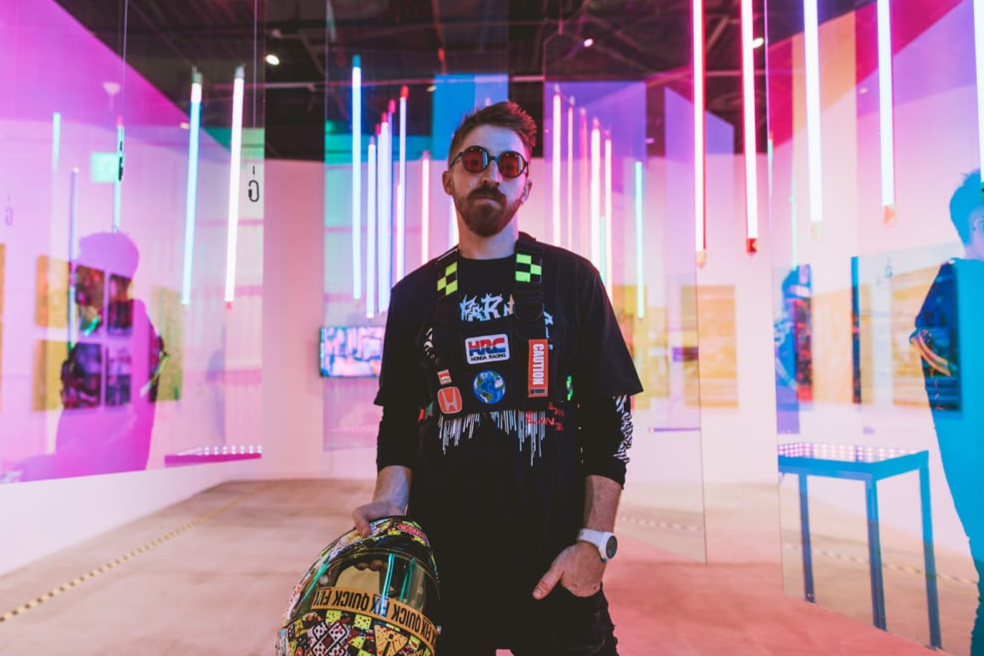
Mad Dog Jones, born Michah Dowbak, created a story about a time machine with the Replicator. Visually composed of an image of a photocopier in an office in downtown Los Angeles, the work is filled with nostalgia for a technology that was once considered cutting-edge but is now in decline. This image is just the beginning of a well-designed story in which Dowbak skillfully connects creative medium, form, and function with innovative technological NFTs (non-homogeneous tokens).

A still image of the first Replicator
Dowbak uses NFT smart contracts to create Genesis digital art works that "automatically reproduce" a child, which will continue to "reproduce" a new generation of independent NFT for about a year. However, Dowbak also adds contingency to the algorithm, making the Replicator jammed like a real photocopier through a self-referent twist.
A branch of NFT that hits a "paper jam" will spawn a unique "paper jam" and stop the next generation from reproducing, thus preventing the subsequent generation from multiplying exponentially. As a multigenerational NFT digital artwork, the Replicator iterates through the seventh generation, each of which is unique, visually distinct from the classic citrus hues of Dowbak, to show the virtual photocopier's journey through time.
02 Replicator: A History of Art

Andy Warhol, "Four Marilyns," c. 1962 Copyright © 2021 The Andy Warhol Foundation for The Visual Arts, Inc. / DACS, London Copyright © Bridgeman Images
The Replicator combines medium and form, and its "Genesis" nature of continuous creation reminds us of Warhol's use of repeated images in his creation, thus integrating medium and subject matter.

Sol LeWitt, Open Cube: Square Spiral Interior High, circa 1977. Private Collection © Bridgeman Images Copyright © 2021 Sol LeWitt/Artists Rights Society (ARS), New York
Dowback's algorithm of combining chance to create functionality is reminiscent of Ellsworth Kelly's work in the early 1950s and Sol LeWitt's variations on open cubes. Both are the product of a mathematical system or set of instructions, and because of the element of uncertainty, the work can never be predicted in advance.

Wade Guyton's work was exhibited at La Sucriere at the 2007 Lyon Biennale. Photograph by Kostandino Tzelepis/ Wireimage, September 2007
Jammed paper gives the Replicator its unpredictability, in contrast to the paintings of Wade Guyton, who deliberately misuses common digital technologies (such as inkjet printers) and convincingly transforms "errors" into works of art to explore our ever-changing relationship with images.
03 Everything is in the digital world
Dowbak's digital illustration, a blend of "Cyberpunk" and natural aesthetics, was initially honed and developed into his signature art style online. Growing up in the woods of Thunder Bay, Ontario, Canada (where he still lives), the artist's natural surroundings became an inescapable theme. He has always been outside the centre of the traditional art world, which has also contributed to his decision to display his work online. Since 2017, the artist has amassed more than 250,000 followers on social media Instagram, and in November last year, he began exploring NFT as a creative medium to further engage with fans.

Mad Dog Jones, Dream Castle (Night), #1/1
For Dowbak and other digital artists, the blockchain technology in the NFT is enough to provide new possibilities for verifying ownership and authenticity of works of art, creating a thriving market for long-undervalued digital art. The workings of the market itself and the creation of value through innovation are central themes in Dowbak's work.
Last November, he published a series of works on the cryptocurrency art platform Nifty Gateway: He sold 100 works for $1 each. Over the next few months, as he successfully released more work, the popularity of his work increased and the price of his work increased, which led to the creation of his recent digital art series Crash + Burn. The collection consists of seven new and unique works that can only be acquired by raking together five of Dowbak's $1 works, which he sold in November, and swapping them for -- he will destroy them when he receives an offer from a collector. To create greater scarcity and thus drive up the prices of the rest of his works on the secondary market, thereby rewarding his early collectors.


Above: Lost Path (Sunset), #1/1; Next: Dream Sky, #1/1
04 "Who is going to dominate the supply?
The Replicator brings Dowbak to an unprecedented new level of innovation in the area of "toen-omics," and as the Replicator continues to evolve, buyers will have a number of options. The owner of the work can choose to sell it at any time; However, after any NFT produced during the iteration of the work is resold, all subsequent generations of the NFT and any "paper jam" works that may be generated in the process will belong to their new owners.
Will the first owner sit back and wait for all seven generations of the harvest to come to fruition, or will he choose to forgo works of art that are still productive? Will the market value scarcity more, or the untapped potential of the first few generations?
Through the technological possibilities brought by his chosen medium, Dowbak has created a deeper connection and interaction with the collector community, which not only demonstrates his innovation, but also demonstrates that NFT promotes the transformation and development of the traditional art market with the symmetry and authenticity of the information flow in the blockchain technology. Just as Dowbak used the photocopier in "Replicator" to symbolize a specific moment in technological progress, we are in the midst of an exciting innovation that will open up new creative possibilities for artists and permanently rewrite the established rules of the art world.
05 The Replicator manual
The Replicator is a NFT digital artwork made up of seven unique generations. The first-generation work, which consists of a Genesis office photocopier image, will be sold at this auction. After that, the next generation of NFT will be automatically generated every month or so, and the total production of each generation will decrease by one, for a total of six times, until the seventh generation stops.

Mad Dog Jones offers a simulation of "Replicator" on the artist's website
Each generation of NFT works is unique and different from other generations. Any generation of NFTs created by the Replicator, and any NFT from each generation, will transfer ownership during production, and all subsequent NFTs and any "paper jam" that may occur in the process will go to the new owner.

Mad Dog Jones incorporates the concept of a real photocopier, and like a photocopier, the Replicator also jammed, resulting in a unique piece of "paper jammed art" that stops producing the next generation. Up to three "paper jams" per generation, with a "paper jam rate" of about 50 to 80 per cent from the second to the sixth generation, also helps curb overspeed production of NFT.
Due to statistical differences, it is impossible to predict exactly how many NFTs the Replicator will eventually generate, but over the course of a million simulations, the average total is 220, with a 99% chance of getting between 75 and 300 NFTs. The process takes an average of a year.
On Mad Dog Jones (b.1985)

The original link
Welcome to join the official BlockBeats community:
Telegram Subscription Group: https://t.me/theblockbeats
Telegram Discussion Group: https://t.me/BlockBeats_App
Official Twitter Account: https://twitter.com/BlockBeatsAsia
 Related Articles