Where does the value of NFT come from?
Opinion: Is NFT scarcity just a lie?
Originally written by Robert Brisita
Jerblockquotey, the crypto valley
Where does value come from? Is it inherent in tangible objects? It's in the making; Is there an advertisement behind it? No matter what you believe, it all comes down to effort, the effort that someone puts into creating something, the input and output of human creativity. This paper explores the efforts in the digital art space and the role of non-homogeneous tokens (NFTs).
What is NFT? In short, it is the only verifiable digital object that is immutable in the system in which it is created. Think of it as a "support contract" or an "appreciation contract" to encourage creators and provide a source for their digital work.

Digital Dadaism
Digital assets come in many forms: authenticity certificates, ringtones, music, audiobooks, videos, downloadable content (DLC) and now NFT. The underlying motivation for the masses is the need for collection by some and the need for customization by others. In the past month, there have been several high-profile, high-priced NFT sales. Although framed in dollar currencies, these are actually paid for by Ethereum (ETH). Over the past five years, the dollar value of Ethereum has ranged from $10 to $2,000.
Who wants to be a Pixelaire! ?

Expensive pixels -- three images (the third is 1x1 transparent) for a total of about 46,255ETH ($46,000 - $92.5 million).
Here are the three sales in terms of input and output, the above range in dollars, and the 'price per pixel' (PPP) for each of the above images:

Knowledge of pixels
The common denominator here is that all participants have a special interest in the currency being used and its supporting system. Those cryptocurrency enthusiasts hope to prop up new online markets that depend on their own stakes. Most interesting are the sales of Beeple and Metakovan, both of whom are business partners of one company (holding 2% or 200,000 tokens and 59% or 5.9 million tokens respectively), which sells tokens against Beeple's art for its open art project.
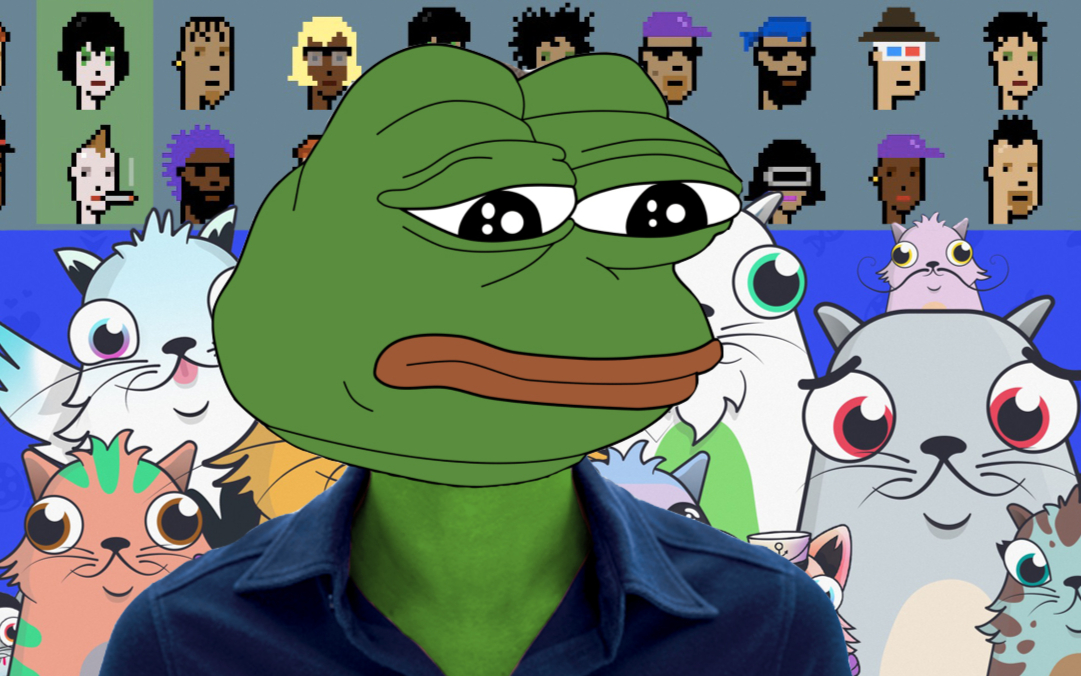
What did you actually buy? Works of art? Tokens? Strictly speaking, this is a data link that represents NFT. Some NFT projects do better than others. For example, CryptoPunks are indexes to an array of addresses, and all of the data are unique and stored on a chain in a centralized server. In addition, Cryptokitties actually includes unique data in their NFT and adds gamification elements to their contracts. There are other platforms that allow for further creativity, such as Async.art and their programmable art approach. In terms of data (metadata), the best approach is to decentralize File storage, the most popular being the Interplanetary File Systblockquote (IPFS). This technique takes into account the contents of the file rather than the location or name. The format of the metadata file has not been standardized.
Unfortunately, most markets and platforms use the Ethereum network. Currently, this is an expensive traditional decentralized blockchain, which is a base-layer Layer 1 network. Technology moves at such a rapid pace that it is hard to believe that major changes in scalability, safety and sustainability can occur without accidents in a reasonable amount of time.
The energy cost lies in the inefficiency of using a proof of work (PoW) to provide a safe state for all participants. The tradeoff is security over availability. The most basic analogy is to imagine that if participants A and B own an acre of forest, they both have A business opportunity to reward the first person to cut down 100 trees. Suppose A reaches its goal and wins the commercial contract, and B throws away all 99 trees they cut, and the competition starts again.
The costs are high, not only because of the environment, but also because of the process of the transaction. Even before the sale, a creator has paid to cast NFT on the Ethereum network. The range is $100- $600 based on recent dollar prices and additional fees for some platforms and markets. Owners of any future contracts must consider these costs before supporting creators. Even before that, creators and their supporters have to go through the process of creating wallets and acquiring cryptocurrencies, with a user interface (UI) that leaves much to be desired.
Of course, when selling an NFT at the high price of ETH (thousands of dollars and millions of dollars), the cost is negligible. As a new creator, this is a huge barrier to entry. Paradoxically, this process even advocates waiting for the right time of day, so transaction costs are lower. The currently popular planning platforms and marketplaces have become invitation-based to prevent the flood of hype attempting to capitalize on bots and FPPPERS amplifying. The leaderboards amplify sales of top creators through a positive feedback loop. This creates further barriers to entry for legitimate creators.
Virtual symbiosis
Let's step away from this picture and focus on the positive. Output data is visible; the underlying technology is invisible. The great thing about the modern blockchain space, and the beauty of decentralization, is that no one person is bound by any particular technology; Especially if there is no pledge. Using the most popular blockchains only really supports the technology, not the efforts of the creators. It is fascinating to see hobbyists clinging to old and inadequate technologies for special interests. Technology prioritizes individual sovereignty over centralized control and interests.
There have been better implementations of low-cost and eco-friendly technologies. EOS and WAX side chains are now available. Polkadot and Near, which are in beta release, tend to be more decentralized than EOS. Wax bills itself as the "King of NFTS," targeting video game and entertainment attributes. AtomicHub uses Wax and allows for finer control in the build of NFT. It works harder than some platforms and marketplaces, but it has the ability to serve individual and multiple creators. Multiple creators can act as a collective and can be hosted on a portfolio or a series of portfolios to create a network circle. When a sale is made, a 2% platform commission fee is charged; This is quite different from the approach we've seen before.
There is no getting around the need to create a wallet and obtain the corresponding cryptocurrency. But 2-3 clicks is better than browsing Settings created or supported on different sites. If Ethereum ever gets its act together, there are Bridges in all of these implementations that allow for movement from one blockchain to another.
It is increasingly clear that browsers are the primary observers of the entry into the digital world, and supporting this focus will benefit the creators of the browsers. Brave is the only browser positioned as potentially the default gateway for individuals to interact with cryptocurrencies without the friction mentioned earlier. Imagine creators using properties on semantic tags to allow patronage and purchase of certain data? This would bypass sites that use virtual currency to visualize appreciation, and these virtual currencies cannot be exchanged for currency value. The preferred end result is a microtransaction system that, if done well, can be backed by currency. This opens the door for creators who create value on the platform and benefit from this interrelationship.
Scarcity is a lie
In mature physical markets, the word "scarcity" is used to mean value. Further value comes from the owner's protection of the scarce resource. Tangible collectors can buy, sell and trade, but cannot copy. Digitization removes all this and preserves the effort to produce. Traditional market ideologies do not apply in a virtual space. Only by artificial means can the word 'scarcity' exist in the numbers. Scarcity technically means unpopular and outdated. This is the democratization of the market that is difficult for ordinary people to understand. The new system calls for new terminology. The new perspective is different from the way society treats concepts. Stop selfishly installing $100 billion worth of warehouses at ports for tax purposes.
Multiplicity is prestige
Technology allows information to spread. Perfect copies can be transmitted without limit. It is not a single copy, but can be copied by anyone according to their own needs. Value is determined by the number of holders of content, not by a unique owner. There is no longer an incentive to restrict access. The output of one person can be enjoyed by all. Think of it as free advertising; Digital word of mouth. A real psychological shift, where popularity transmits value in society.
Dissolution of institutions
Male creators accounted for 96.1 percent of sales, according to the auction house. There are no women among the top 40 selling artists. Eighty percent of the creative people at New York's top galleries are white. According to statistics, a maker has little chance of success, because there are many factors that are beyond their control.
The secondary market
Most makers make their living by serving customers. Now through NFTS, they have direct access to supporters. In traditional markets, these creators are usually only paid for their initial sales, and supporters have the ability to resell the creators' output, which often generates higher value. The NFTS allows creators to be paid in the secondary market. Currently, platforms and markets have a 5-15% royalty range, but the real power lies in the creative community; It is within their reach to demand a sustainable and transparent platform where makers get the majority of sales returns and backers get 5-15% in royalties.
Here's an opportunity for creators to come together, stand up for what they believe in, and make that opportunity more equitable. As stated earlier, the overall goal should be to bring about a microtransaction system that supports creators. The focus of this article is on digital art, but this applies to all creative ventures: cultural creativity, fashion, jewelry, music, etc. What a beautiful story it would be if it was the makers who freed us from the system, the corporations and the corruption.
Welcome to join the official BlockBeats community:
Telegram Subscription Group: https://t.me/theblockbeats
Telegram Discussion Group: https://t.me/BlockBeats_App
Official Twitter Account: https://twitter.com/BlockBeatsAsia
 Related Articles