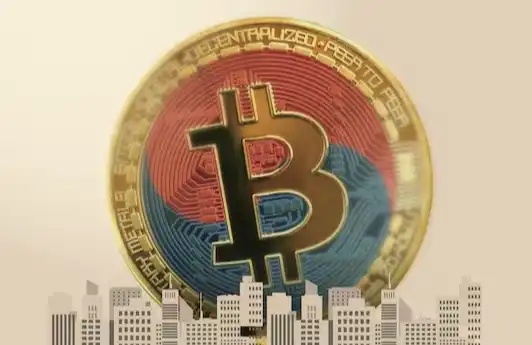
Why is the "pickle premium" back?
Original title: "Bulk Exchanges Fail to" Speculation Power ", South Korea Kimchi Premium Signals Show Eminent Witness"
Original source: Wave Blocklike
In the Korean market, the Bitcoin "kimchi premium" has fluctuated sharply, while at the same time, domestic and foreign exchanges have been exiting in bulk.
On April 7, the BTC price on Upbit, an active exchange in South Korea, briefly rose to more than $71,000, a 23% "kimchi premium", an all-time high. The kimchi premium, which represents the difference between the price of bitcoin on the South Korean exchange and the spot rate on other global exchanges, fell back in the hours that followed.
The "kimchi premium" started back in 2017 and 2018 when digital currencies were on the rise. During the last bull market, the number of Koreans involved in currency speculation soared. In January 2018, the premium for ETH in South Korea reached a staggering 53%, marking the peak of the "kimchi premium".
According to a set of data at that time, as a country with an economy much smaller than that of the United States, China and Japan, in the fourth quarter of 2018, the fiat currency in South Korea accounted for 50% of Bitcoin trading volume, and the number of people involved in coin speculation reached 10% of the total population. Based on this, South Korea was once labeled as a "speculative country".
In this bull market, the enthusiasm of the South Korean market remains undiminished. "Crypto Boom" is a term widely used in the local media. For a few days in mid-March 2021, the volume of trading in South Korea's digital currency market, as measured by CoinMarketCap, briefly exceeded the average daily volume of the country's stock market.
CoinMarketCap (CMC) also recently removed a number of exchanges in South Korea from the platform's calculation of bitcoin prices due to the high premium. Platform officials said the data will be added after prices on the Korean exchange stabilize.
What's happening in the Korean crypto market?

Behind the kimchi premium
According to data from South Korea's digital currency trading industry in mid-March, the Upbit Composite Market Index (UBMI) of the exchange is nearly 10 times higher than it has been since the index went public on October 1, 2017 (1,000 points).
This represents a tenfold increase in the total value of digital currencies listed on South Korean exchanges in nearly three years and five months.
In South Korea, the pattern is particularly pronounced, with Upbit currently the trading platform with the highest average daily trading volume, which is more than three times that of the other four well-known trading platforms, including Bithumb, CoinOne, Gopax and Korbit. Data shows that recently, the huge volume of Upbit transactions has directly driven up the total volume of the Korean market.
In March, the five South Korean exchanges had a combined trading volume of about $13.89 billion in recent days, far higher than the $5.75 billion on the six U.S. exchanges in the same period, according to statistics. Taking into account the population base, the Korean market has recently reached the highest volume of transactions in the world.
When the "pickle premium" spiked again, the community began to read the signal.Ming Qu, CEO of Quest Capital, explained the recent state of the Korean market for Blocklike:
"Now the south Korean market is indeed very warm, have appeared in the pickle premium. There are some reasons for this: first, South Korea exchange is not USDT, may not use a USDT discrepancy gold, only to be able to use the won deals. This leads to the user in the Korea exchange money but in fact it is difficult to turn to other places, by the same token, the difficulty of foreigners want to earn the premium."
"Second, the fiat channel within the country means access to government support and access to real Korean investors. Domestic exchanges have compliance requirements, so you have to support fiat exchanges. This is one of the main reasons why many overseas exchanges set up 'Korea' sites, but then quietly quit."
"Third, South Korea will soon be faced with the issue of digital currency tax. It may take some time for the law to be formally implemented, but the tax has already been decided, which has a big impact on the Korean market."
For the current South Korean market, Quest Capital CEO Qu Ming remains optimistic that the trend of compliance is beneficial to the South Korean digital currency market. He believes that the real technology and ability to localize the project will inevitably highlight its value.
The share of bitcoin-fiat transactions has been rising since mid-March.According to CoinHills data today, the current bitcoin to fiat currency transactions accounted for 79.63 U.S. dollars, still ranked first; The share of the won has risen to 7.92%, ranking second; The euro ranks third at 4.53%; The Japanese yen (4.03 per cent) and the Turkish lira (1.59 per cent) rank fourth and fifth.
(Photo: Coin Hills data as of April 9)

In response to the "kimchi premium" debate, digital currency analyst Joseph Young also tweeted to deny that the Korean kimchi premium heralded a peak in BTC prices.He argues that bitcoin and digital currencies are different from what they were in 2017. South Korea's digital currency sector is regulated, laws are coming into effect and market sentiment is more optimistic than before.
"Compliance" vs. "Closed" : Mass Exchanges Exit
South Korea has tightened regulations and moved away from a digital currency regulatory posture that is very similar to Japan's.
In 2021, with the increasing heat of digital currency in the market, the regulatory policies in South Korea continue to increase.
On March 4, 2020, the South Korean government passed the Special Kim Law on compliance exchanges (laws on reporting and utilization of specific financial transaction information, etc.), including the license system for digital currency exchanges. The rules will be implemented on March 25, 2021, and exchanges that do not meet the rules will be unable to continue operating. Also highlighting AML details, South Korea's Financial Services Commission is seeking legal amendments that would force digital asset service providers to report the names of their clients.
In October of the same year, the Financial Commission issued specific rules for the implementation of the Special Kim Law (referred to as the "Enforcement Order"), which explicitly stated that the Korea Exchange was not allowed to share liquidity with any other exchange. The rules have become a bottleneck for many overseas trading platforms to enter the South Korean market.
South Korea is still one of the important markets for digital currency in Asia in 2020, a turning point in the market industry. Summing up the process of digital currency supervision in South Korea last year, it can be seen that South Korea has a positive attitude towards the relevant research and transnational cooperation on the issuance of digital currency by the central bank, and has gradually clarified the supervision on the issuance and transaction of digital currency.
From the perspective of regulators, last year, the Ministry of Finance of South Korea and the Financial Services Commission of South Korea issued relevant regulatory rules, which mentioned anti-money laundering, taxation and so on for many times, and committed to actively implementing regulatory licenses. In addition to the clear regulatory framework, the South Korean government also emphasizes the application of blockchain technology, and gives corresponding subsidies.
This year, South Korea has seen a flurry of currency speculation and a surge in digital asset transactions.
The soaring volume of digital currency transactions has been matched by an increase in tax evaders and the use of digital assets for illegal activities such as money laundering. South Korea's problems are not so different from those of the rest of Asia.
In February, it was disclosed that the government would classify income generated by investing in digital assets as other income and tax it at a 20 percent rate (with a basic deduction of 2.5 million won) starting next year, when the tax was finally finalized.
In late march, a study of digital currency declaration and the use of specific financial transactions the official opening of the amendment, South Korea has this year on March 25, the implementation of "digital currency trade real-name", involving digital assets, including digital currency, companies must report to the government agencies, the trade, to comply with the requirements of the anti-money laundering, and urged the practitioners in the original time to complete the declaration in accordance with the regulations. From 2022, overseas exchanges will also be obliged to declare.
As a result of the policy tightening, many South Korean trading platforms have started to exit in bulk. According to reports in South Korean media, at least 10 digital currency exchanges in South Korea are on the verge of collapse, with many unable to maintain operations due to the need to meet real-name trading requirements.
Recently, the South Korean government has taken action against illegal digital currency activities. At a meeting on digital assets held by regulators including the Financial Services Commission, the Ministry of Finance and the Ministry of Justice, the authorities said they would strictly crack down on illegal activities related to transactions, including market price manipulation, money laundering and using digital assets to evade taxes. And hinted at increasing efforts to monitor digital currency transactions to facilitate the collection of income tax on digital assets. That led to a drop in bitcoin's "pickle premium" that day after the meeting. The amendment, issued at the end of March, also explicitly required companies in the industry to thoroughly check the identity of customers and report suspicious transactions.
According to the public information, the major digital currency exchanges in South Korea currently include Upbit, Bithumb, CoinOne and Korbit, which were the early ones to get the right to open accounts at commercial banks. As more and more investors flock to the market, the consensus has been reached on Korean digital currency: the government and commercial banks in South Korea are strictly controlling the eligibility of exchanges to open accounts, which has become a major pain point for non-top exchanges operating in South Korea.
Qu Ming, CEO of Quest Capital, believes that the regulatory trend in South Korea is very similar to the situation in Japan, and that in the future, the exchange bank account qualification, relevant license and policy supervision will continue to be stricter for a long time.
Another analysis shows that in the first quarter of 2021, Korean investors are more inclined to chase the rise and kill the fall of short-term investment. In a highly volatile market, the BTC of the Korean exchange appears to be at a discount to that of the American and Chinese exchanges; With low volatility, the BTC of the Korean exchange is more likely to trade at a premium to that of the U.S. and China.
At present, the trading assets in South Korea market are relatively concentrated, with the top ten assets accounting for more than 60% of the total trading volume. South Korea has a strong preference for mainstream assets with strong cross-regional consensus, which is similar to the American market, but much higher than the Chinese market. Recently, NFT concept, payment and lending and other financial applied currencies, logistics, human resources and other applied currencies are more popular in the market.
As the country's digital currency exchanges become more compliant, South Korea's real-name exchange system and regulatory policies may become another example in Asia. Under the development of compliance, we still need to observe what new enlightenment the "kimchi premium" can bring to the market in the long run.
The original link
Welcome to join the official BlockBeats community:
Telegram Subscription Group: https://t.me/theblockbeats
Telegram Discussion Group: https://t.me/BlockBeats_App
Official Twitter Account: https://twitter.com/BlockBeatsAsia

 Related Articles