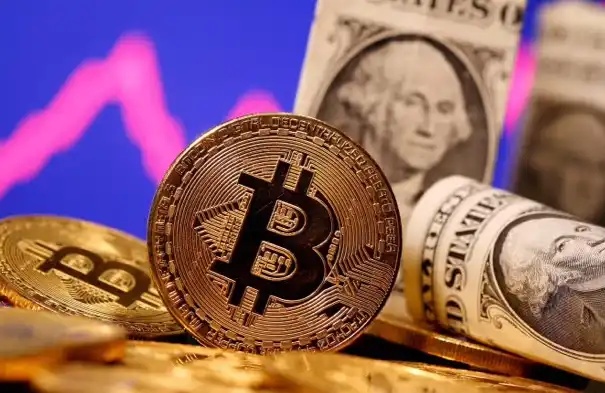
How will new Bitcoin price highs in 2021 be different from 2017?
Original author: Blockchain Robin
Preface
Almost every other day, Bitcoin hits a new all-time high Point (ATH) - December 2020 year close at $29,100. This comes after a previously reached 3-year high of $19,800. Bitcoin is once again in the spotlight due to the enthusiasm of newcomers and the usual speculation about future prices. The fact that Bitcoin continues to grow is an affirmation of its increasing legitimacy. Bitcoin's ATH in 2021 is indeed very different from 2017. Spurred by unregulated ICO speculation, the previous ATH was inconsistent with then-current organic growth and the state of the technology, and therefore unsustainable. Prices continued to fall in 2018 and 2019, and many critics were happy to see their bearish predictions come true: "See, it's just a bubble, and I was right!"
In the same period, many countries started a complex regulatory process, and institutional investors started to see Bitcoin as a very interesting alternative to traditional assets. Since its inception, Bitcoin has undergone — and is undergoing — constant development to improve the network (such as increasing transaction speed, reducing fees, and increasing privacy and security). These and many other factors make this new ATH completely different from the previous ones. What has changed? Let's analyze some of these factors.
1. Technology maturity and acceptance
The launch of any new technology, especially one as disruptive as Bitcoin, is initially accompanied by hype. Only after time has passed and the hype has worn off can the technology be fully evaluated for eventual introduction to the market.
A $20,000 Bitcoin in 2017 Is Mostly Hype and Fear Of Missing Out (FOMO) results: Early adopters are intrigued by the promise of this new technology, but most of the interest does come from speculators. 4 years later, after a 2-year period of consolidation and renewed growth, Bitcoin has passed its initial hype period and is now positioned as increasingly mature, both from a legislative and technical point of view. In its favor, Bitcoin and the open-source technology stack upon which it depends should not be considered a "static technology" as its development is continuous and improvements are often released - and some improvements will greatly Change the characteristics of the network.
The diagram below shows a typical innovation adoption life cycle. Bitcoin, which has not yet been adopted by the majority of early adopters, is sparking the interest of the early majority of users who now have a richer storyline to evaluate the technology and its value proposition.

Source: Charlie Karlsson
The technology life cycle is represented by four stages.
- < p>Research and development phase.
Ascending stage, that is, the paid cost has been recovered, and the technology starts Accumulate strength.
Mature stage, when the technology has stabilized.
In the decline stage, the practicality of the technology is reduced to a certain extent back.
Even if not strictly applicable to Bitcoin, due to technical Due to the singleness of the project and the decentralized nature of the project, the current state can be positioned as an upward stage: the initial challenges have been solved, the technology is relatively mature, and its value can be proven with existing use cases. An interesting consideration for this question is that the R&D phase of Bitcoin is an inherent requirement of the nature of the network and is ongoing. In fact, everyone can propose improvements to the network in the form of Bitcoin Improvement Proposals (BIPs), which are then evaluated by the community and, if consensus is reached, implemented on the network. Here you can find a comprehensive list of all successfully implemented BIPs to see how fast the Bitcoin network is growing.
2. Legislative clarity and institutional investors< /h3>
Arguably, legislative clarity and institutional investors go hand in hand, as the legislative clarity is that Bitcoin is considered a desirable alternative investment fundamental.
2.1 Legislation as legalization
< p>In 2017, with a few exceptions, legislation around cryptocurrencies was virtually non-existent. Most countries are unwilling to consider them within their legislative framework, and some countries have set out to ban them. Currently, more than 130 countries have issued laws or policies on this topic. The rules cover a wide range of implications for cryptocurrencies, from the classification and definition of terms, to warnings to potential investors, restrictions on payments, and the regulation of ICOs. Broad countries are interpreted broadly. For example, the classification of cryptocurrencies in different countries is like this, and there are different regulations on taxation:
< span>Israel→taxed as an asset
Bulgaria→taxed as a financial asset.
Switzerland → Taxed as a foreign currency.
Argentina and Spain→Pay income tax.
Denmark → pay income tax, losses can be deducted.
UK→Companies pay corporate tax, unincorporated companies pay income tax, and individuals pay capital gains tax.
Nevertheless, most of these regulations have to be considered preliminary as most countries are Efforts to establish a comprehensive legislative framework for cryptocurrencies. Globally, the most favorable frameworks for the development and growth of blockchain ecosystems can be found, arguably, in countries such as Malta, Switzerland, and Singapore.
2.2 Institutional Investors and Bitcoin
In 2017, cryptocurrencies were seen as having a strong anti-establishment narrative, and thus a rather small investor base and appeal. On Wall Street, no one is really talking about Bitcoin as an asset or an investment. Many prominent investors such as Buffett, Bill Gates, and Jamie Dimon continue to describe Bitcoin as "rat poison" and therefore worthless.
Three years later, things are very different: Greyscale Investment (2020) An interesting report paints a completely different picture than in 2017, showing that more and more investors are familiar with Bitcoin, up 11% year-on-year, and even believes that Bitcoin is slowly moving towards mainstream acceptance. In 2020, more than 62% of surveyed users claimed to be "familiar" with Bitcoin.
< span>

Source: Greyscale Bitcoin 2020 Investor report
While retail interest in Bitcoin grows, institutional investors target There are more and more investment vehicles. Greyscale recently launched their Bitcoin Trust, an investment vehicle that allows investors to trade shares in the fund holding pools of Bitcoin. According to Bitcointreasuries.com, Greyscale holds 546,544 bitcoins, or about 70% of the 775,137 bitcoins held by listed companies. As the chart below shows, Grayscale is doing well: just recently, business intelligence firm MicroStrategy purchased over $1 billion in Bitcoin (about 70,000 BTC). In addition to companies investing directly in Bitcoin, other companies such as PayPal also allow their user base (360 million) to invest in Bitcoin.
Not all investment vehicles are created equal : Options and futures are speculative bets on future prices and therefore do not give investors any ownership of Bitcoin. Instead, Greyscale and MicroServices purchased the bitcoins directly and thus have full ownership over them - contributing to the overall supply and demand dynamics of the bitcoin network. Below you can find a comprehensive list of all companies investing directly or indirectly in Bitcoin, broken down into publicly traded, privately traded, and ETF-like.

Source: Bitcointreasuries.org
Issuance is different Investment vehicles that cater to the different risks/exposures of each type of investor, contribute to a virtuous circle of interest and increase the accessibility of Bitcoin to traditional investors - an example of this is open interest in Bitcoin options Record volume, now at ATH, exceeds $7 billion - a 400% increase since September 2020.
< span>

< span>Source: IntoTheBlock
More investment vehicles, plus clearer legislation , leading to a paradigm shift in investors’ perception of Bitcoin. This opens up the possibility of developing entire derivatives and credit markets, as well as creating services that mitigate the complexities and security risks inspired by holding large amounts of Bitcoin. For this problem, some companies, such as Fidelity, have developed services as early as 2018: 1. Provide institutional investors with custody services for encrypted currency assets to protect their large positions; 2. Allow investors to use Bitcoin is used as collateral for the transaction.
Today, institutional investors hold Owning and investing in Bitcoin just got easier. This trend is likely to continue over the next few years and Bitcoin will soon be seen as a "mainstream" alternative asset.
3. On-chain indicators
The next section relies purely on-chain to discuss on-chain metrics such as demand and supply, the number of Bitcoin holders, and the overall strength of Bitcoin vs Altcoins. Since Bitcoin’s circulation is constant (average 6.75 BTC every 10 minutes), increased attention from retail and institutional investors is likely to lead to a large increase in demand — and price.
3.1 Splitting of Bitcoin. Bitcoin Dominance and Alt Coins
Bitcoin It has experienced a price increase of more than 160% in 2020, mirroring most other cryptocurrencies. In the previous bull market of 2017, the impetus for rising prices came from the speculative phenomenon of ICOs, where new coins were minted out of thin air, mostly without any value proposition. Especially in December 2017 and January 2018, the market capitalization of the entire cryptocurrency market showed irrational growth. Small cryptocurrencies x2, x3 in a week. This trend is reflected in the Bitcoin odds ratio, which measures the combined market capitalization of Bitcoin versus altcoins. At the height of the hype in 2017, Bitcoin dominance averaged around 82% throughout the year, only dipping as low as 40% during December. The trend has been consistent since then: while Bitcoin hit a new ATH, most other cryptocurrencies didn’t recover from the ensuing bear market and today’s valuations are much lower compared to historical ATHs. The increasing dominance of Bitcoin over Altcoins, now reaching 70%, is a manifestation of this split.

Source: TradingView
It can be said that Given the special properties of Bitcoin, today's Bitcoin has split from all other currencies. There has been a silent consensus among cryptocurrency users. Bitcoin is a currency, but other currencies are completely different from Bitcoin.
3.2 Evolving Network
The Bitcoin network is stronger than ever and this credible status is confirmed.
1) Bitcoin network hashrate hits ATH. It represents the total computing power provided by miners to maintain the network. As a decentralized peer-to-peer network, Bitcoin runs on electricity provided by miners. A high hash rate is a sign of the health of the Bitcoin network. The higher the hash rate, the harder it is for malicious actors to 51% attack the network.
< span>

< span>Source: IntoTheBlock
2) Bitcoin address Numbers are also at ATH: There are now more than 33 million wallets holding Bitcoin balances, up 16% from 28 million YOY in January 2020.
< span>

< span>Data source: IntoTheBlock
Among them, 96.92% of the addresses are profitable, only 1.39 % of addresses are at a loss, and 1.69% of addresses are at breakeven (data as of January 1, 2021).
Source: IntoTheBlock
3.3 Comparison between holders and traders
< br>
Another interesting metric is about unspent transaction outputs (UTXO). In a nutshell, they can be compared to the cumulative available balance on the Bitcoin network: the amount remaining after a transaction has been executed.
The average holding time for one Bitcoin is 3.1 years. In addition, more than 21.9% of bitcoins (4 million BTC) have not been touched for more than 5 years, 11.92% (2.2 million BTC) are 3-5 years old, and 13% (2.5 million BTC) are 2-3 years old. Only about 5% (1.1 million BTC) of bitcoins were moved last week, and 7% (1.34 million BTC) were moved between last week and last month. In 2017, short-term trading - focusing on the red-yellow area - was very common, and now most users choose to hold Bitcoin - take the green-blue area as an example.
< span>

< span>Source: IntoTheBlock
Thus, 64% of total Bitcoin addresses are believed to hold Some - a strong increase considering it was 17.4 million in December 2019 - as they have not touched their bitcoins for over 1 year, 24.5% (8 million) are considered volatile (1-12 m), while only 11% (3.7M addresses) of Bitcoin users are considered traders (<1M). The overall trend shows that the trend of holding Bitcoin and not trading Bitcoin in a short period of time is becoming more and more obvious.
4. Bitcoin: a scarce and deflationary commodity< /h3>
Bitcoin is an increasingly scarce commodity over time. The finiteness of Bitcoin is often underestimated, and it is without a doubt one of its most attractive and interesting features. Every four years, the release of bitcoins is cut in half until all 21 million bitcoins are mined, which is estimated to happen in 2140. The most recent halving took place in May 2020 and reduced the reward given to miners for processing bitcoin transactions from 12 bitcoins per block to 6.75 bitcoins. Therefore, this also increases the cost of electricity production for a single bitcoin. To compensate, today's decrease in supply is being met by an increase in demand, both from retail investors and institutional players who have purchased high amounts of Bitcoin - as described in the previous section.
Because of Bitcoin's characteristics such as divisibility, portability, and scarcity, Bitcoin Often compared to gold as a store of value. The Winklevoss brothers (co-founders of Facebook) even believe that Bitcoin is better than gold because, in fact, it is "the only scarce commodity in the universe" because in the future, advanced technology will allow us to mine gold from asteroids . Due to its deflationary nature, Bitcoin certainly also represents a safe haven for those from countries such as Venezuela, Turkey, and Iran whose economies are in poor condition or whose currencies are severely inflated by economic sanctions. Send money home, for international trade, or just to pay for essentials. If traditional fiat currencies continue to experience high levels of inflation and volatility in the near future, more people will look to Bitcoin as a safe asset to protect their wealth from economic instability and inflation .
5. Last but not least
Bitcoin has a history of 12 years and it is the most secure financial network in the world: it securely stores more than $500 billion and operates normally More than 99% of the time, it has never been hacked. It is increasingly being legitimized by regulators and attracting the attention of retail and institutional investors as an alternative asset. The price of 1 bitcoin is now hovering above $30,000, which is 50% higher than the previous high in 2017, which also confirms a strong upward trend ..
The technology stack behind Bitcoin is very atypical: open source, decentralized, encrypted , which is the foundation of network decentralization and privacy protection. One point that needs to be emphasized is that whether it is technology, legislation, or the application of Bitcoin as a technology and currency, it is always in progress and cannot be considered static-to do so would seriously underestimate its flexibility. Bitcoin is the liquid currency of the 21st century: programmable and constantly improving.
The adoption cycle of a highly disruptive technology is necessarily long: when it was first invented in 2009 At the time, its concept was almost utopian and understood by few banks, who called Bitcoin "technopopulism." These concerns are legitimate, and the status quo cannot be blamed for such justification. However, the environment has changed profoundly since then. The four major developments pointed out in different chapters have resulted in a completely different environment, one that is now more receptive to Bitcoin, both from an ideological and a practical point of view.
It is impossible to predict the future application or future price of Bitcoin. On the contrary, it can be predicted that the world will gradually get used to Bitcoin: in the end, countries will slowly go through the cycle of rejection and acceptance, realize the value of Bitcoin, and formulate corresponding legislative frameworks; It will continue to improve, with more use cases; more investment vehicles will be created to cover all investors.
All of these reasons explain how “new Bitcoin price highs in 2021 will be different from 2017 ?”
Original link
Welcome to join the official BlockBeats community:
Telegram Subscription Group: https://t.me/theblockbeats
Telegram Discussion Group: https://t.me/BlockBeats_App
Official Twitter Account: https://twitter.com/BlockBeatsAsia
 Related Articles