Hong Kong issued its first cryptocurrency license, which can only provide services for professional investors or institutions
Original title: " Hong Kong issued the first cryptocurrency license, which is limited to more than 8 million professional investors. Will Beijing refer to it? "
Original Source: Wu Shuo Blockchain
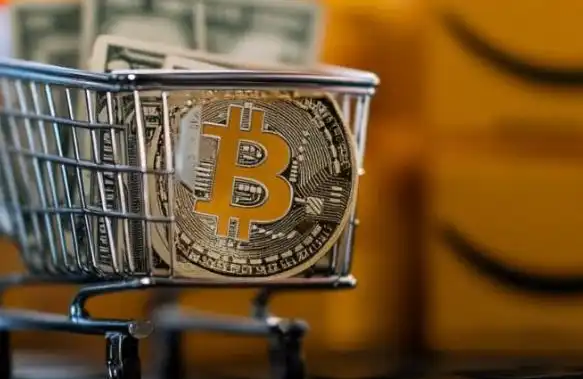
On December 15th, OSL Exchange, a subsidiary of BC Technology Group (863.HK), announced , obtained the first virtual asset license issued by the Hong Kong Securities and Futures Commission. The license type is Type 1 securities trading and Type 7 automated trading services. This means that Hong Kong has issued the first cryptocurrency license.
In August 2020, the Hong Kong Securities Regulatory Commission has agreed in principle to issue a license to OSL Digital Securities . OSL stated that in addition to the Hong Kong license, according to Singapore's "Payment Services Act", OSL has formally applied to the Singapore Monetary Authority for a digital asset license.
The Securities and Futures Commission of Hong Kong clearly stated in the "Position Statement" issued on November 6, 2019 If a digital asset online trading platform provides at least one security token transaction on the platform, it falls under the jurisdiction of the China Securities Regulatory Commission and must be regulated by Type 1 (securities trading) and Type 7 (providing automated trading services). Management license.
Type 1 regulated activity is dealing in securities, which mainly involves Trading/brokerage of options; buying and selling bonds for clients; buying/selling mutual funds and unit trusts placing and underwriting securities for clients. Usually securities companies and investment consulting companies will hold this license. Type 7 regulated activity is the provision of automated trading services and the establishment of an electronic trading platform for matching customer orders. To apply for the No. 1 and No. 7 licenses, more than two persons in charge of the organization are required to have relevant industry qualification certificates or equivalent experience; the main body of the company must be a Hong Kong company, or a foreign company registered in Hong Kong, and at the same time be equipped with corresponding directors and Person in charge, etc.
OSL emphasized that after the platform is officially launched, customers can trade high-quality cryptocurrencies through OSL's safe and compliant platform, including Bitcoin (BTC), Ethereum (ETH ) and security tokens (STOs) that have passed strict screening. OSL emphasizes that customers need to pass strict KYC and anti-money laundering compliance processes; in order to prevent market misconduct, OSL will use market monitoring, transaction monitoring and other prevention and control measures for digital assets.
However, the OSL license cannot provide services to retail investors, and can only be used for professional investors or institutions. Personal assets should not be less than 8 million Hong Kong dollars, and institutional assets should not be less than 40 million Hong Kong dollars. If you are an investor, you not only need to meet the above requirements, but also need to have a Hong Kong bank account and can only use Hong Kong dollars for transactions.
According to Hong Kong law, professional investors refer to 1. Entrusted management of not less than 40 million Hong Kong dollars 2. Individuals with a total portfolio value of no less than HK$8 million or its equivalent in foreign currency; 3. Individuals with an investment portfolio of no less than HK$8 million or its equivalent in foreign currency or with no less than Corporations or partnerships with assets of less than HK$40 million or equivalent foreign currency; 4. Corporations whose sole business is holding investments and wholly owned by individual professional investors.
Different from Japan and Singapore, Hong Kong still has no laws specifically targeting the virtual asset industry system, but on the basis of existing financial service licenses, companies applying for virtual asset licenses will be issued corresponding licenses within the framework of virtual assets.
Hong Kong’s virtual asset regulatory framework has the following characteristics:
- The licensed platform is currently only open to professional investors.
- Support security token issuance business
- Fiat currency and Virtual assets must be stored in isolation, and customers’ hot and cold wallets must be covered by insurance
- Customers can use the investor protection mechanism under the traditional financial system, and can also enjoy the special protection for virtual assets launched by the Hong Kong Securities Regulatory Commission Measures
- Strict KYC / Anti-Money Laundering Process
Huobi (1611.HK) and OKEx (1499.HK) also announced the progress of applying for licenses and related certificates in Hong Kong on the HKEx website respectively, but Huobi and OKEx applied for licenses within the traditional financial framework And certificates, rather than licenses within the virtual asset regulatory framework, which means that it cannot start the virtual asset trading platform business.
Huobi announced in August that its Huobi Wallet has obtained a trust or company service provider license. and Huobi Asset Management obtained Type 4 (advising on securities) and Type 9 (providing asset management) regulated activity licenses; OKEx announced in June that its subsidiary has obtained a certificate of registration as a Hong Kong trust company.
Wu said the blockchain previously pointed out that Huobi and OKEx are mainly engaged in retail business. Accepting the regulation of Hong Kong’s virtual asset framework requires major strategic adjustments. At least institutions applying for licenses in Hong Kong need to give up the fat of retail investors.
It is worth noting that just 5 days ago, on December 10, Singapore's second DBS Bank, which is controlled by the big sovereign wealth fund Temasek, has announced that it will launch a cryptocurrency exchange that will offer four fiat currencies (SGD, USD, HKD, JPY) and four of the most established cryptocurrencies (Bitcoin, Ethereum, Bitcoin Cash and Ripple). At the same time, the exchange will also provide custody services for cryptocurrencies. On December 11, BC Group announced a service agreement with DBS Bank to provide certain technical services to DBS Bank.
The executive director of BC Group is known as "Hong Kong Shell King" Gao Zhenshun. According to New Fortune, there are rumors that this "Fujian Gang" financial expert born in 1951 was originally just a "little tailor" in Tsim Sha Tsui, Hong Kong, and later turned to foreign exchange. With his extraordinary financial skills, he turned into a financial talent. He has accumulated a lot of money and has cooperated with Ma Yun, Huang Guangyu, Xu Zheng, Ning Hao, etc.
Beijing and Hong Kong’s financial industry have been in close communication, for example, before the launch of the Science and Technology Innovation Board Reform of the Hong Kong Stock Exchange. Previously, central bank officials revealed that they were considering writing ICO into the securities law. The central bank law recently once again emphasized that the issuance of coins is strictly prohibited, but it also leaves room for virtual commodity transactions such as Bitcoin. Whether Beijing will refer to Hong Kong's actions in the future is worth looking forward to.
Original link
Welcome to join the official BlockBeats community:
Telegram Subscription Group: https://t.me/theblockbeats
Telegram Discussion Group: https://t.me/BlockBeats_App
Official Twitter Account: https://twitter.com/BlockBeatsAsia

 Related Articles