Mentougou "wolf is coming" again? But the market is not what it used to be
Original author: Twenty-three painters
December 15 is the day when the Mt.Gox liquidation compensation proposal is due. The 142,000 BTC in the exchange is expected to be distributed to users who suffered losses in 2014.
At around 18:00 Beijing time today, the Mt.Gox official website announced that the liquidation compensation plan has been submitted to the Tokyo District Court today. The Tokyo District Court and the investigation committee will review the relevant procedures of the liquidation plan. Regarding the specific content of the plan, it is expected that relevant personnel will be notified in due course.
Although the "Mentougou incident" has been a bearish time bomb for many years and has repeatedly challenged the market's ability to withstand pressure, the history of Mentougou is not the focus of this article. This article will focus on some recent observations: Mentougou's "Wolf Story" is repeated, but the market is no longer what it used to be.
The story of "Wolf is coming" will be repeated
In March 2020, Mt.Gox entrusted liquidation lawyer Nobuaki Kobayashi to draw up a compensation liquidation draft with three main points:
1. Creditors can choose two ways to accept compensation: legal currency or It is an encrypted currency (BTC or BCH);
2. Other forked coins such as BSV will be sold and exchanged for legal currency;
3. Priority implementation is less than 200,000 yen ( about RMB 13,000) for small creditors.
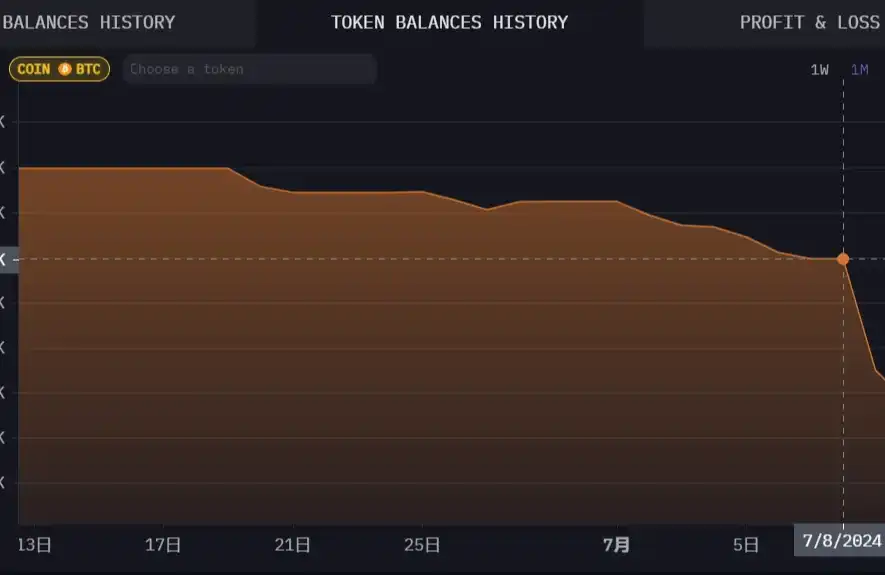
According to the official 2019 data, Mentougou’s current asset situation: about 630 million US dollars in cash, 142,000 BTC and 143,000 BCH. Once the liquidation plan is passed, the market may face greater selling pressure as Bitcoin has skyrocketed dozens of times compared to 2014.
In March, Bitcoin plummeted, Kobayashi may feel that it is not worthwhile for everyone, anyway, it has been delayed for many years, so let's wait. On July 1, 2020, Mentougou "pigeoned" everyone again. Kobayashi may feel that the price can still rise. The day before the date of submission of the liquidation compensation plan, the official said that it will be postponed for three and a half months (that is, October 15). On October 15th, it was officially postponed to December 15th.
Although Kobayashi is a lawyer, his level of currency speculation is still commendable (PS: Sun Zhengyi can actually consider hiring Kobayashi to trade bitcoins for him). Kobayashi Nobuaki, the liquidation lawyer commissioned by Mt.Gox, once publicly stated that between December 2017 and February 2018, he had sold 35,800 bitcoins through off-market transactions to repay the losses of users in 2013. According to data from Huobi, Bitcoin peaked at $19,875 in December 2017 and fell to $5,873 in February 2018. This is enough to prove that Kobayashi chose a good time to escape from the top, but the market is really not enough to smash. After smashing 30,000 bitcoins, it has already dropped to around $6,000, and it is really not worthwhile to spend the remaining 142,000 bitcoins.
Kobayashi sold 30,000 bitcoins in three months, and the price of BTC also fell from almost 20,000 US dollars to around 6,000 US dollars, although it cannot be said that it is Mentougou’s liquidation compensation was caused by Mentougou’s selling, but Mentougou’s liquidation compensation did affect the market trend to some extent. This shows that the market for Bitcoin was really small at that time, and there were too many retail investors in the market. Once large investors sell, it is easy to form a herd effect, and the price of Bitcoin is easy to rise and fall.
The resilience of the Bitcoin market has increased, and the trading subject has changed
Institutional funds have entered the market on a large scale, Market entities began to switch from retail investors to institutions, the "herd effect" of retail investors began to weaken, and Bitcoin began to show value investment effects.
2020 is a year for institutional investors to quickly enter the circle and frantically grab BTC chips. According to Grayscale’s official news, as of December 14, EST, Grayscale’s total assets under management reached $13 billion, of which the total BTC holdings were 565,026.71. On October 14, Grayscale said in its third quarter 2020 financial report that it had inflows of $1.05 billion across all products. As of the announcement of Grayscale’s third-quarter financial report, the net inflow of funds this year was 2.4 billion U.S. dollars, which is more than double the total funding from 2013-2019. The users of Grayscale’s products are mainly institutional investors (81%), followed by qualified investors and family offices (8% each). 57% of purchasers came from outside the United States.
Bitcoin began to compete with gold, and its value was recognized by more people. On November 9, JPMorgan Chase pointed out in a report that Bitcoin is cannibalizing demand for gold ETFs. Today, institutional investors such as family offices see bitcoin as a digital alternative to gold.
Last month, Dalio suggested that due to Bitcoin's high volatility and potential government ban, it is not a Great store of value. But he also said: "I may have missed something about Bitcoin, so I want to correct that."
This month, Dalio said, I In my opinion, Bitcoin (and some other digital currencies) have established themselves over the past decade as a meaningful alternative to gold-like assets. Bitcoin has both similarities and differences to gold and other mobile wealth assets (unlike real estate) that are in limited supply.
On December 10, DBS Bank, the largest commercial bank in Southeast Asia, announced that it has been approved in principle by the Monetary Authority of Singapore to be awarded the "Recognized Market Operator" ( RMO) license, and officially launched the all-round digital trading platform DBS Digital Exchange. The businesses involved in DBS Digital Exchange mainly include security token issuance, digital asset trading and digital asset custody services. Currently, the supported digital assets only include Bitcoin (BTC), Ethereum (ETH), Ripple (XRP) ) and Bitcoin Cash (BCH) are the four major mainstream assets.
Market dominance began to change hands, Mentougou liquidation is no longer so scary
The encryption big V on Twitter, Waro said, "The most worried One of the events (for lack of a better word) is this month's Mt.Gox thing that happened on Dec 15th...at the moment we're just going up and down with no clear up or down signal and since I don't Swing moves, so I'll be out of the market (spot only) for now."

The panic among retail investors is still there, but the dominance of the market has actually begun to change hands. As we have mentioned above, the liquidation of Mentougou has been shelved for a total of 3 times. The first three times were in March, July 1, and October 15. The performance of the market before July 1 and October 15 showed a certain downward trend. However, on December 15, although retail investors panicked and left the market, the market still experienced a strong rise, and institutions continued to increase their holdings. I don’t care. For example, Grayscale increased its holdings by 7,615.64 BTCs last Friday alone, and increased its holdings by 3,893.96 BTCs on Monday; Nasdaq-listed company MicroStrategy completed the issuance of convertible bonds worth US$650 million, which will be used to purchase Bitcoins ;Twitter netizens today even broke the news that Zuckerberg bought $3 billion worth of bitcoins (no official confirmation yet). For institutional investors, the selling pressure of Mentougou may actually be more of an opportunity. The figure below shows Market trends around 1st and 5th December:


Institutional lightening has become the dominant factor affecting the new market trend .Due to rules such as Grayscale’s non-redeemable and locked positions, the market has created an illusion that Grayscale “only buys but not sells”. But institutions will not always hold positions. The GBTC obtained by institutions has a six-month lock-up period. After the unlocking period, due to the high premium of GBTC, it is actually normal for institutions to reduce their holdings, which has also become an important force affecting the market. We observed that the first ETF that bought GBTC sold GBTC twice recently, and BTC dropped by thousands of dollars the next day.
According to the data released by ARKW, ARKW sold 141,000 GBTC on November 25, and 575,000 GBTC on November 30, totaling 716,000 GBTC. It is very interesting that BTC fell by 8.39% on November 26th; on December 1st, BTC fell by 4.73%.

Summary
Bitcoin is no longer the small pool composed of retail investors and large investors; now, more and more institutional investors and the world's rich are beginning to emerge Enter the encryption market. Mentougou’s “Wolf Story” is no longer able to scare institutional investors; even if Mentougou’s assets are liquidated as scheduled and the market goes down in the short term, it has enough resilience to withstand selling pressure. Against the background of the era of great wealth transfer, institutions seem to have entered the stage of frantic fundraising, and the market is still in a rising cycle.
Original text Link
Welcome to join the official BlockBeats community:
Telegram Subscription Group: https://t.me/theblockbeats
Telegram Discussion Group: https://t.me/BlockBeats_App
Official Twitter Account: https://twitter.com/BlockBeatsAsia

 Related Articles