The Suzhou digital RMB red envelope test is coming soon, whether it can achieve "dual offline" attracts attention
Original author: Zhou Ailin
Original source: First Finance and Economics
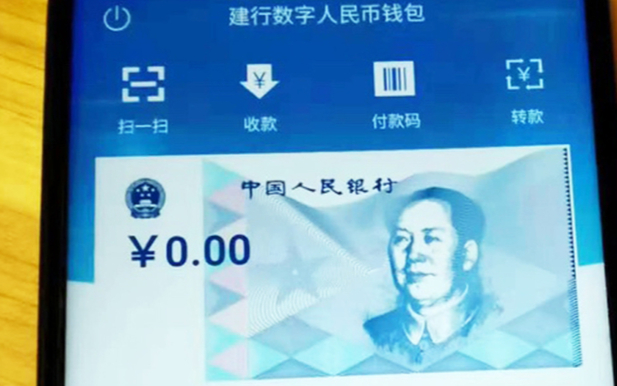
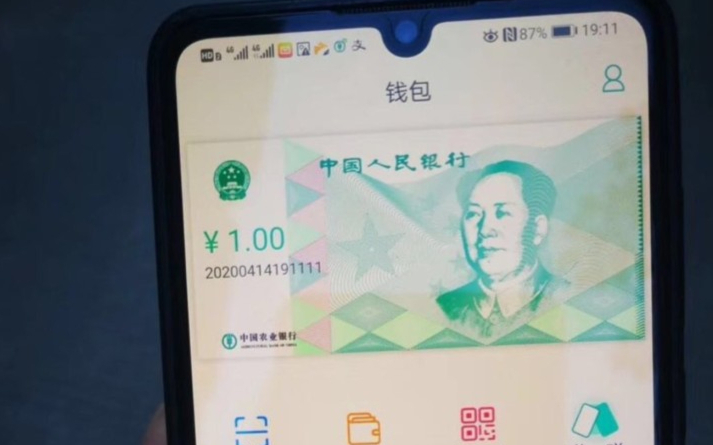
Since this year, central bank figures The renminbi pilot program continues to spark heated discussions. On November 23, the news that Suzhou will launch a digital RMB red envelope test on Double Twelve once again attracted market attention. Previously, at 8 o'clock on October 11, the appointment work of "Lixiang Luohu Digital RMB Red Packet" was successfully completed, and the system successfully completed the pilot appointment registration, which was an important step in the development of digital RMB.
On November 23, relevant enterprise technicians participating in the digital renminbi pilot project told Yicai.com reporters that the digital renminbi pilot project in Xiangcheng District, Suzhou has been progressing for a long time. For example, part of the benefits of some civil servants began to be distributed in the form of digital renminbi. "The pilot in Suzhou this time is more about further testing the application of digital renminbi, which is similar to the previous pilot in Shenzhen."
However, Suzhou's digital renminbi red envelope pilot may be slightly different from Shenzhen. Li Lianxuan, chief researcher of the Okey Cloud Chain Research Institute, told the first financial reporter that from the current media information, the biggest difference between the central bank’s digital renminbi test in Suzhou and the test in Luohu, Shenzhen is that it can use “offline” and “touch” Two functions.
"Businessmen in Suzhou installed POS machines that support NFC (near-field payment), in fact, to test the "touch" function of the central bank's digital renminbi. In fact, the "touch" function is already very common. For example, mobile phones can now be equipped with NFC, support POS machine swiping cards, virtual access cards, etc. " he said.
Some people in the industry also told the first financial reporter that what deserves attention is the "dual offline technology" of the central bank's digital renminbi. Third-party payment tools such as Alipay need to be connected to the Internet when conducting transactions, otherwise the transaction cannot be carried out; and the dual offline payment function of the digital renminbi, even if the two parties to the transaction are offline, as long as the two mobile phones are touched and the wallet key is exchanged, the transaction can be completed. Transfer transactions.
However, "dual offline payment" will cause "double spending problem". Li Lianxuan explained that the so-called "double spending problem" refers to the situation in which the same digital currency is used repeatedly due to the reproducibility of data in the digital currency system. For example, user A has 100 yuan in the digital wallet, and user A has two mobile phones. In the offline state, user A logs in the digital wallet on the first mobile phone and transfers 100 yuan to user B; The second mobile phone logs into the digital wallet again and pays user C 100 yuan, which is equivalent to user A using the only 100 yuan twice. From a theoretical point of view, "dual offline state" may not be able to solve the "double spending problem".
The current central bank digital currency technology patent has not explained how to solve the "double spending problem" in the case of dual offline, so we need to wait for more technology patent information disclosure in the future . However, the premise of the "double spending problem" is that users have malicious motives and capabilities, but in reality, laws and regulations can be relied on to curb users' malicious behavior, or strict recovery after "double spending" occurs.
"How the central bank's digital renminbi can safely realize "dual offline payment" is the biggest highlight of this test." Li Lianxuan told reporters.
Welcome to join the official BlockBeats community:
Telegram Subscription Group: https://t.me/theblockbeats
Telegram Discussion Group: https://t.me/BlockBeats_App
Official Twitter Account: https://twitter.com/BlockBeatsAsia

 Related Articles