Prospects of blockchain in gaming: New Economy, NFT, Meta-Universe and Dao
Many of the blockchain builders and investors believe that the best way to lure users into the nascent cryptographic economy is not to upend the global financial order but to play games that are markedly less risky.
& have spent
That makes sense. The common feature of video games and cryptocurrencies is that virtual economies run on a Shared set of rules, and that user groups tend to be technologically savvy.
& have spent
In theory, there should be less resistance for blockchain to enter the game market, but in practice, the gaming industry has not fully embraced blockchain.
& have spent
So what is the future of blockchain in gaming?
& have spent
Is this an opportunity to trade goods? Or does unleashing value in a virtual world Shared by billions of players have a deeper meaning?
& have spent
Digital ownership in the game economy
& have spent
While game players over the years has been trading virtual assets, from the second life real estate and world of warcraft gold, to Dota and Fortnite hero of the skin, but so far, almost all these virtual economies are running in a closed environment, game companies sell in-game assets does not allow players to get legal tender.
& have spent
Again and again, players tried to avoid it, only to fail because the market was riddled with fraud and mistrust.
& have spent
Blockchain-driven games can open up these markets, so players can freely exchange and get real value from their labor and skills without relying on a third party.
& have spent
Before delving into the blockchain side of things, let's give an overview of two of the most compelling core virtual properties in gaming:
& have spent
(1)currencyIn gaming, money is the medium of exchange used to purchase various items and abilities in a video game or virtual world. For example, Second Life's Linden Dollars, World of Warcraft gold, And Fortnite's V-Bucks
& have spent
(2)itemsItems in the game include items in the player's inventory, from weapons, armor, skin, to collectible monsters and trade CARDS. They can be bought and sold either through barter or through in-game currency in a closed system.
& have spent
These virtual economies are overseen by video game developers, who have complete control over the game world's monetary policy and inventory databases. After all, they decide and enforce the rules of the game.
& have spent
Does this sound familiar?
& have spent
If the "real world" economy is run by centralised institutions capable of changing and adjusting monetary policy on the whim of public opinion or censorship, the current video game economy is a microcosm of this behaviour.
& have spent
Tokens of in-game assets
& have spent
Blockchain provides a decentralized and secure system for recording virtual property rights. In the game, all items, skins, etc. can be tokens and traded.
& have spent
Consider that Fortnite, the most profitable video game of all time (bringing in more than $1bn in its first 10 months alone), is not a closed-loop system but an open, democratic market. V-bucks can be pegged to legal tender (probably 1:1, for ease of use), which will allow gamers to effectively trade their scarce skin for real cash. Players can share the value generated in the game economy, and even maintain a continuous revenue stream, while participating in management and decision-making as the game develops.
& have spent
While there have been regulatory and technical barriers to building such a system, blockchain provides a compelling solution to the latter.
& have spent
One of the most popular use cases discussed in blockchain games is the coinage of in-game assets in the form of irreplaceable tokens (NFT). In short, NFT is a unique digital asset that can represent ownership of anything from enchanted swords in MMORPGs to rare trading CARDS or collectible virtual cats. They promote digital ownership of unique or limited goods.
& have spent
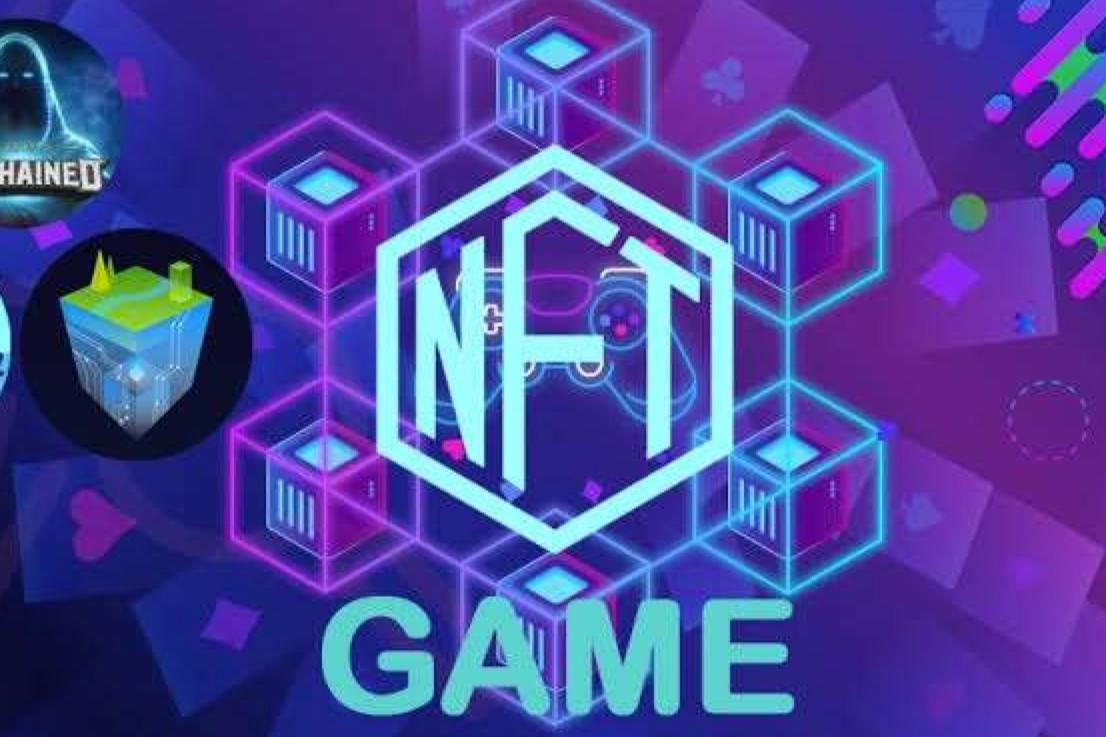
Here are some examples of blockchain games using NFT:
CryptoKittiesNeon DistrictAxie InfinityMyCryptoHeroesGods UnchainedBlockchain CutiesChainbreakersDecentraland
& have spent
Some of these games are similar to popular games such as Pokemon and Magic Collection, where collecting rare CARDS or creatures is central to the game design. This is one of the ways blockchain games try to ensure that they do: bring real digital ownership to the familiar gaming experience. But why should players consider these blockchain games?
& have spent
NFT and cryptocurrencies in the video game economy open up new game design mechanics that allow players to get real value from their skills. This is known in the blockchain gaming world as "Play2Earn".
& have spent
Instead of being a casino for players, games can be built or chosen to enter systems that reward skills and progress for real value, rather than extracting every penny from players through exploitative design.
& have spent
One of the special features of blockchain games is that most blockchain games are built on open protocols, which allow a degree of composability and interoperability between the game and the application that is rare in traditional game design.
& have spent
So what happens when game developers are free to connect or build on the existing virtual economy?
& have spent
Games in the meta-universe
& have spent
In blockchain gaming, there is a Russian doll-like approach, which stacks new games or experiences on top of each other to form a highly experimental and radical approach to game design.
& have spent
The meta-universe, the concept of Shared virtual worlds introduced in Neal Stephenson's influential cyberpunk novel "Snow Crash," is a popular and useful framework that blockchain game developers often refer to. In essence, it is the compass for blockchain gaming.
& have spent
One of the current meterverse games launches is Codename:Metaboss, a "casual" MMORPG game in which players of multiple factions battle each week against an army of NFT players drawn from other games or applications such as the blockchain games listed above.
& have spent
The game also has two other virtual assets: FRAGS, a "soft currency" that grants new entrants and winning factions for later decisive battles; CHERRY, an in-game currency used to trade NFT, as well as trophies, awarded weekly to the winning team's exclusive NFT.
& have spent
Metaboss demonstrates the combinational possibilities of a Lego-like, NFT integrated game mechanic that allows virtual worlds to cross and interact with each other.
& have spent
The meta-universe game mechanics may seem like little more than an odd experiment in a small corner of the video game industry, but the evolution is closely tied to the open source software development model and spirit that produced Linux, as well as cryptocurrency itself.
& have spent
The rise of decentralized autonomous labor unions
& have spent
So far, we've discussed how blockchain can introduce new forms of virtual economy and gaming experience. However, there is a use case for blockchain in the game, which may be less rooted in creating something similar to the physical world, and which opens the door to a whole new gaming experience. The emergence of decentralized Autonomous organizations (DAOs).
& have spent
A DAO is a virtual organization that allows like-minded individuals to safely allocate resources and make decisions in pursuit of common goals. DAOs differs from traditional companies that work through loose teams in that it emphasizes a hard-coded incentive structure. Basically, an individual's reputation, or in some cases, money, is tied to their decisions within the organization, thereby theoretically eliminating bad actors and inefficient hierarchies.
& have spent
Similar to how NFT and cryptocurrency democratize the familiar concept of in-game economics, DAOs can elevate the concept of online guilds that are common in the game world.
& have spent
With the advent of online games in the 1990s, especially MMO RPGS, gamers quickly established social structures in these virtual worlds, forming "guilds", "clans" and other communities, coordinating around common goals (" missions "), and sharing the spoils of victory (" spoils "). See also the MMORPG "raid" phenomenon, in which guilds fight over status and resources.
& have spent
Blockchain-based DaOs are similar in that they are decentralized social structures mediated by technology: but add the dimension of owning your own assets and accounting system. Like video games, they mostly operate in virtual Spaces, and rule sets often have huge trading value. They also tend to be very elitist in their design.
& have spent
An example of a DAO that operates directly in a video game environment is Metaclan, an encrypted native esports DAO that promotes the adoption of blockchain games by showcasing Play2Earn mechanics for various games in the form of "missions." Each mission was created in collaboration with the game studio to give cryptocurrency and NFT rewards to new game players and Metaclan members. Metaclan's first mission was developed in collaboration with Axie Infinity, an NFT-based Pokemon like game that can be bred, fought and traded on the open market.
& have spent
Metaclan has a cryptocurrency called War Fund and a non-financial transaction bank through which members can equip themselves with high-quality non-financial transaction game items, conduct "raids" in the game and return to the guild with the spoils of victory.
& have spent
If we take a closer look at metaclan construction, we find that video game culture is heavily contained within this particular space of the blockchain industry.
& have spent
Metaclan was built based on open source code from Moloch, a DAO that funded protocol development for the Ethereum blockchain, which in turn powered most of the scattered applications and games in the space.
& have spent
In Moloch, members with shares can propose funding for new tasks or projects, and communities can vote on whether to allocate funds from the "union bank." If a member disagrees with the group's collective decision, he or she can use the game term "Rajit," liquidate their holdings immediately, and leave the DAO.
& have spent
Metaclan's seed funding came from another Moloch-based DAO, Metacartel, which focuses on funding consumer applications built around Ethereum, including games.
& have spent
Individuals instantiating DAOs based on Moloch are often referred to as "summoners"
& have spent
Summoner, wizard, guardian, mercenary, chaos... It's clear that DAO embraced the game dictionary with enthusiasm. While clearly derived from the overlap of nerdy domains, the term provides a common language for new players who want to experiment in blockchain-driven games.
& have spent
Blockchain Game: What's next?
The integration and development of Play2Earn's game design, seamless cross-game interoperability and decentralized collaboration and funding through virtual guilds are still in the early stages of experimentation. From the uncertainty of virtual currency legislation to the well-known general user experience caused by resistance, there are many regulatory and technical barriers to the adoption of mainstream currencies.
& have spent
The blockchain game is still in its early stages. But if the user experience becomes easier for laypeople, and the game itself can be as engaging as traditional video games, it could prove to be the perfect application of encryption.
& have spent
Can blockchain meaningfully democratize the gaming industry, allowing players to have fun and profit at the same time?
Welcome to join the official BlockBeats community:
Telegram Subscription Group: https://t.me/theblockbeats
Telegram Discussion Group: https://t.me/BlockBeats_App
Official Twitter Account: https://twitter.com/BlockBeatsAsia
 Related Articles