On the risk of DeFi ecology stability currency | stability currency is really stable enough?
Source: Medium
The original translation: B - Day, rhythm BlockBeats
It's fair to say that in the process of development in the field of encryption, I think this three kinds of encryption currency become the mainstay of the industry: BTC, ETH (including ERC20 tokens) and a stable currency. But until recently, the stable currency began as the main source of liquidity and attention of the other, and quickly became popular in the industry.
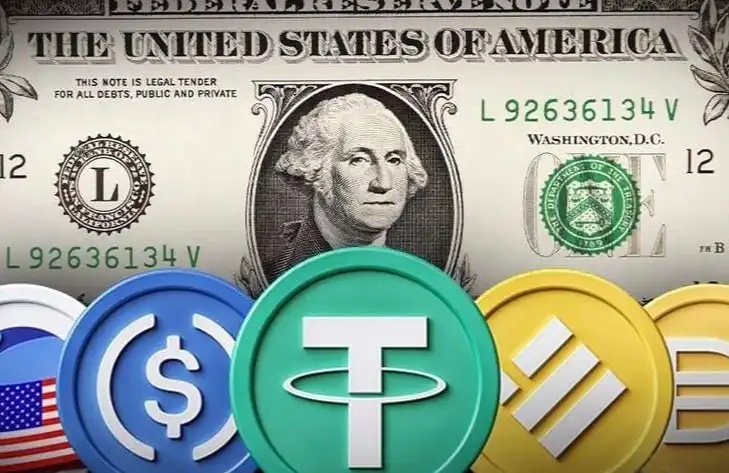
For years, there was only one stability coin of major concern in the cryptography industry -- Tether. Indeed, it is still the king of stabilisers, commanding 90% of the market by market capitalisation. But there are other projects in this area that are getting a lot of attention. For now, we will focus on USDT and two other items that together represent the largest category of stability COINS: USDC and DAI.
If there is no stable currency, encryption monetary flow pool will look much like Coinbase: by t/t deposit and withdrawal complete encryption and currency exchange.
Stable currency has two main reasons.
The first main reason is that, in the field of encryption, banking business is likely to be using very trouble, and there are unstable factors.
Even opening a bank account as an encrypted entity can be difficult, with the bank repeatedly telling the account holder that their business does not fully fit the bank's risk profile. Even if you have an account, it can be closed at any time, and it's safe to say that no head player in encryption has never had his or her bank account closed. And if your BTC/USD trading platform is supported by USD legal tender, losing your bank account may mean the end of your trading platform.
So people in the encryption world generally distrust Banks and prefer not to rely on them.
The second major reason is assignability.
If you have a dollar, on Bittrex want to send it to Coinbase, that you may not be so lucky can complete the liquidation (unless you want to t/t). But if you have USDT on encryption Kraken trading platform, you can send it to the money, if you are in the USDC OKEx, you can send it to Uniswap.
Cryptocurrencies have relied on stabilising COINS for most of their existence. Over the years, USDT and Bitfinex have been the only legal currency access channels for most non-U.S. ecosystem users. Other users are piggy-backing on their banking, and they just list all the markets against USDT instead of supporting USD. As a result, users can convert dollars into Tether, create accounts, then transfer them to any trading platform and make other token transactions, and Tether's vault does support the entire industry.
But as more and more attention to the stable currency, also more and more doubts. And a lot of people are worried about a stable currency collapse will bring systemic risk to the ecosystem. Want to know what will make money, OKEx, Huobi and Ann Bitfinex market collapse at once? The answer is USDT implosion.
But not all stability COINS are created equal. One question many providers of cryptocurrency flows must answer is how trustworthy they really are. What should be the main trading pair of the trading platform? What should be the guarantee level for DeFi stabilisation currency loans?
Most people agree on the main advantages and disadvantages of these stability COINS:
USDT
Advantage:Strong market liquidity and dollar endorsement.
Disadvantage:Regulatory issues remain unresolved, capital evidence is opaque, and there is a risk of bank controls. There is no stabilisation currency that is broadly similar in scope.
USDC
Advantage:Dollar endorsement, trustworthiness, compliance.
Disadvantage:Market liquidity is general, there are bank control risks, blacklist can freeze users' funds at any time. Similar to the stabilized currency volumes of TUSD, PAX, HUSD, BUSD, etc., so are some other currencies (USDS, etc.).
DAI
Advantage:No banking/centralization risk.
Disadvantage:Poor liquidity in the market. Have similar DeFi stable currency, such as sUSD.
How to make a trade-off between these stable currency, select the most appropriate?
First of all, you need to know your situation. Are you worried about small imbalances or big ones? Are you worried about being regulated or about touching unregulated money? Does your user base have easy access to banking or trading platform services?
The answer is not necessarily one size fits all, but some of them are quite universal. Finally there are two main factors:
1. The use of a stable currency, how high?
2. The stable currency to create and change how easy is it?
Although liquidity is important, it is mainly because of these two factors:Market liquidity comes from the utilization rate, and stability comes from the exchange rate.
usage
No matter what platform you use, liquidity is very important, in fact this is probably the most important factor in a stable currency. The stable currency can be stable exchange rate is the biggest issuance? You how big is your market liquidity is expected?
USDT has the largest market liquidity. It trading billions of dollars a day, you can easily in the trading platform trading $100 million, USDT premium won't even have 1% change, there is no other stable currency can do it. USDC is, of course, by the dollar endorsement, has repeatedly stressed that USDC.
It is worth emphasizing how important the advantages of this usage are.
USDT trades against the dollar account for a significant proportion (perhaps the majority) of all OTC transactions in encryption. For the top three spot trading platforms by volume, the trading pairs are almost entirely USDT based. USDT's market capitalisation is 10 times that of its nearest rival, and its turnover is nearly 100 times.
It is also worth noting that USDT is particularly dominant outside the West.
Part of the reason is that the local bank business difficult to do, so the USDC online value is low; Another part of the reason is that people are more suspicious of regulation. Western a lot of people will see a stable currency to think: "oh, my god, I really hope this is the FDIC insurance by the federal deposit insurance company bank account support!" And many Asian people see this kind of situation will think: "I wish no government subsidiaries can freeze most of the money."
A lot of people wonder why the Tether into the price of the news of the case didn't let USDT crash?
The answer is probably, the most concerned about the news of people are not those who use Tether. However, for a large independent of any government or agency of the wealth of the digital form and can facilitate the transfer requirements, tend to drive the market demand for USDT.
Although USDC is used in the United States and some agencies for encryption, DAI also USES it in DeFi. But overall, USDT has been a leader in the stability currency industry.
Platform so if you want to be able to serve the most of the encryption client, and is expected to have hundreds of millions of dollars in trading volume, USDT is the most simple choice. It will allow the vast majority of customers and volume flow into your pool encryption, and DAI and bank of America account will not do so. And USDT also will be able to use the world's top spot encryption trading platform integrated liquidity.
Convertibility.
USDT trades a lot, but is it a stable currency? Is it worth $1?
In the final analysis, can let a thing be true of the stability of the currency is only one thing: use 1 dollar.
All market liquidity, ultimately, depends on it. If you can't call the stabilizers, and no liquidity provider is willing to buy them at $0.98, there's nothing to stop it from falling to $0.90, or $0.50, or $0.10.
In this respect, the USDC wins. You can convert $1 to $1USDC for no cost, no limit on size, and instant delivery using its self-built portal, Coinbase, FTX's dollar basket, and many OTC counters. If you want $2 billion in stability, someone will be willing to sell you a USDC for less than $1.01. If you are offering 50 per cent of the market value, someone will buy for more than $0.99: it is pure arbitrage because they are confident they can create/convert. What if you tried to do this with some other coin?
1 USDC = $1 is very real, and the USDT?
The answer here is complicated.
There is a fee to create and convert a USDT, and no one would buy a $5 billion USDT for $1, because they can redeem it for up to $0.999. And unlike usDCS, which take as long to create and redeem as the ETH block, USDT can take a few days. It is not on Silvergate's SEN, the gold standard for instant encrypted dollar transfers; It doesn't even have a bank in the United States. And the process is more manual, leading to artificial delays.
But beyond that, questions remain about the money to support the USDT. The USDT has been rumored for years to be unsupported. A year ago, it was revealed that hundreds of millions of dollars in USDT support had been frozen by multiple governments because of their use of third-party payment processors.
So, when you try to use USDT create or dollar what happens?
First of all, you have to pay a handling fee of 0.10%. Second, you are likely to spend a day waiting for wire transfers to be cleared and processed.
So is it useful? Can you really convert your USDT back into DOLLARS?
Generally speaking, the answer is yes. Over the past few years, billions of USDT have been created and exchanged. It's clunky, slow, expensive, and sometimes you even encounter resistance (which is scary!). But in the end you can do it, and some people can do it on a large scale.
It in the bank? In the past year or two, it has been relatively stable, although before that, the Tether hopping between different Banks. This is likely to happen again, it may cause serious delays.
USDT isn't perfect, but 95 to 100 percent have dollar endorsements, depending on how you treat frozen funds. And assuming they are $500m short, Bitfinex generates enough revenue to make up for it, if necessary. LEO is also likely to raise enough money to make up the shortfall.
So, the final conclusion is that, you can create and change USDT, but may be very slow is very expensive, sometimes interference.
What about DAI, how it is to create and exchange?
Creation is not economical, and while anyone can do it, it is not cheap: you must lock in more than $1 for each DAI, because DAI is not backed by dollars, but by the ETH; And because of ETH's volatile market, DAI requires a lot of additional collateral.
And exchange is almost non-existent. You can exchange your DAI for your ETH, but only if you have created it. In theory, everyone who creates and sells can buy back their DAI and cancel their ETH loan.
But if A created 1 million DAI, and sell it to B, B can't change it, because he doesn't have any ETH loans to Maker. So when DAI in the trading platform, DEX and borrowing pool changed hands, it will lose a lot of convertible.
This is not just slow and expensive: for most people, switching DAI is virtually impossible. And no one can exchange it for any amount.
To make things worse, if A creates 1m DAI and sells them, then forgets the password - the 1m DAI will never be able to be redeemed because the remaining total redemptions will be 1m less than the DAI in circulation.
There's another way to redeem it: you can activate Maker's emergency shutdown program.
But doing so will need to have MKR and possible loss of $25 million, and then wait for a make, shutting down the complete Maker agreement, and shall assume the prices of assets and liquidation risk. The world's only Maker itself and a16z enough MKR to start off, if someone else tries to accumulate the amount, must be in a short period of time to buy 2.5 MKR of ADV.In fact, this is not a reasonable choice.
So when it comes to creation and exchange, there's a clear hierarchy:USDC & gt; USDT & gt; DAI.
So how does all this work out?
Many things are important if you want to figure out what to list, but liquidity and recognition are key. As a result, many exchanges choose USDT over USDC: they may gain more liquidity and volume in the market and be able to serve more customers.
But that's not the topic of this article. The topic of this article is risk, particularly with respect to DeFi.
DeFi like most CeFi, are based on a stable currency. With the continuous expansion of the industry, especially the Compound and other company's recent successful cases, understanding of currency flexibility is becoming more and more important.
There are a lot of questions can be asked, but now we only focus on an example: if you have a DeFi lending platform (for example, Compound, or Synthetix, or Maker), you should have more worried about a stable currency risk? And generally DeFi there should be more worried about a stable currency broke, what a stable currency is one of the most worrying?
Market liquidity is important here, but it's not that important either. Of course, your market impact on $10 million part-time USDT is less than that of USDC or DAI, but we're not really worried about the 0.50% here; All related agreements require a deposit of close to 20%. So which stabilizers are most likely to explode below $0.80 or above $1.20?
If someone tried to (or required) to buy or sell $200 million of the ETH/X, what is the effect of the X? The main concern here is that a major source of demand (liquidation may come from a certain agreement) may blow up a stable currency, and then makes the DeFi half of the market sell-off in the market, and produce a chain reaction of liquidation.
From that perspective, the USDC is pretty good. You can quickly create/exchange virtually unlimited USdcs locally without any hassle. So if someone really wants to sell a $20 million USDC, the liquidity provider can buy it for 99 cents, quickly redeem it all -- and cycle through it to buy more and more if they need to. The USDC is not the most liquid market, but it is highly flexible because it is created and converted well.
The USDT is similar to the USDC in that if the USDT crashes, liquidity providers can buy the USDT and exchange it.
But because conversions can take a day, sometimes more, and the total balance sheet ready for arbitrage is limited, it is difficult for the world to trade more than $200m per cycle (in days).
So a very large amount of USDT buying or selling can cause a temporary disalignment that may take weeks to fully recover. And we've seen this before: a couple of weeks the USDT hit $0.90, or $1.10. But it won't be easy for USDT to spend any more money, because people will eventually realize that they can make 30 percent of their profits every day by buying and redeeming or creating and selling. And eventually bring into the fold billions of dollars of balance sheets in the cryptographic space (think trading platform revenues, loan books and VC firms).
Even if the Tether can no longer restore frozen funds, considering its $10 billion market value, and it will only make the share price fell a few percentage points.
As a result, Tether will bend, but it is unlikely to break completely. It's not perfect. In a big crash it could move 5-10%, putting more pressure on lending. But it may not let an industry collapse on its own.
What about DAI? Frankly speaking, DAI is terrible.Really terrible.
This is a very cool idea and agreement - no bank account $decentralization.
But it is slow and expensive to create, and requires permanently locking in extra capital. In a market crash, many people may need to sell ETH/DAI to meet margin calls, which puts pressure on DAI to buy.
And lock all the necessary collateral will bring encryption liquidity provider's balance sheet a lot of pressure, too difficult to do large scale. So DAI may be blowing up, it's really terrible! , many security positions, perhaps because of DAI will broke.
But even that is not as bad as going the other way. What if a group of customers lent 500 million DAI and 400 million ETH together? So the ETH went up eighteen percent. What happens?
These customers is now close to bankrupt, it is necessary to carry out the liquidation. This means that someone has to take their place, someone must buy their 500 million DAI, in exchange for 472 million ETH. Even if they may gather 472 million without the influence of the ETH, but it also means they bought 500 million DAI for $0.98. What can they do with these DAI?
In real sense, basically no liquidity providers can change so much DAI. Remember, you can only change what you create. And the biggest marketmakers may not create it. So liquidity providers cannot in 0.98 yuan to buy, and then change to make money. They can't even buy at $0.90, spend a week time exchange, and then make money, they are "no change".
So basically, there's nothing to stop it from going down, going down a lot.
How much of the world's balance sheet is willing to pay for a non-convertible stability currency, $500 million of selling pressure, with no prospect of being able to sell it? At what price will they buy? I don't know. Maybe $0.50? Someone might stand up and say: "I'm willing to pay $0.50 for 500 million DAI. That sounds like a good deal. Oh, by the way, I happen to have $250 million in cash ready to deploy immediately to a decentralized lending platform in the event of market volatility.
DAI is brittle. When bending, it will fracture, and fracture very badly.
USDT, DAI and USDC have their own advantages and risks of different types, and it's not easy to compare them. But in this case, when it comes to a survival risk to DeFi, sorting is very clear: USDC is the most safe; USDT is in middle position; The DAI is the most terrible.
We know that DAI is worse than USDT, collapse risk bigger is not welcomed by a lot of people, but we think it's the truth.
Of course, this is not to judge which is better, project overall DAI innovation, cool, decentralized these are very important, and USDT liquidity in the market, the largest this is very important to daily is practical.
But in the end, if there was a problem in a loan, that is because the ETH/DAI liquidation or bank freeze all irrelevant: in either case, all bad. And in terms of liquidity, market depth or collapse risk, DAI is a house of CARDS.
This is why we consider DAI to be one of the biggest survival risks in DeFi. Similar to how CeFi is built on USDT, many fields are based on DAI. Unlike ETH, the system is built assuming that DAI does not move.
So what does this do to DeFi?
1. An agreement should be established to bring DAI down to $0.50 without unnecessary systemic failure.
DEXs should not use DAI as the only stable currency.
The industry should be careful not to put too much money into DAI.
4. Borrowing books should regard DAI as similar ETH and (w) BTC downward space, but with significantly lower liquidity in the market. This means that the losers need similar levels of collateral, large positions may require more collateral.
5. DeFi is likely to have to accept, in the place where needs a stable currency, they are likely to need to have a bank account. The full significance of a stable currency is on behalf of $1, if without the support of legal tender, any encryption native currency can fully achieve this goal.
Efforts should be made to create a more freely convertible version of DAI.
Welcome to join the official BlockBeats community:
Telegram Subscription Group: https://t.me/theblockbeats
Telegram Discussion Group: https://t.me/BlockBeats_App
Official Twitter Account: https://twitter.com/BlockBeatsAsia

 Related Articles