The history of encryption: the origin of the value Internet
Original title: "the origin of value Internet"
Ethereum lovers
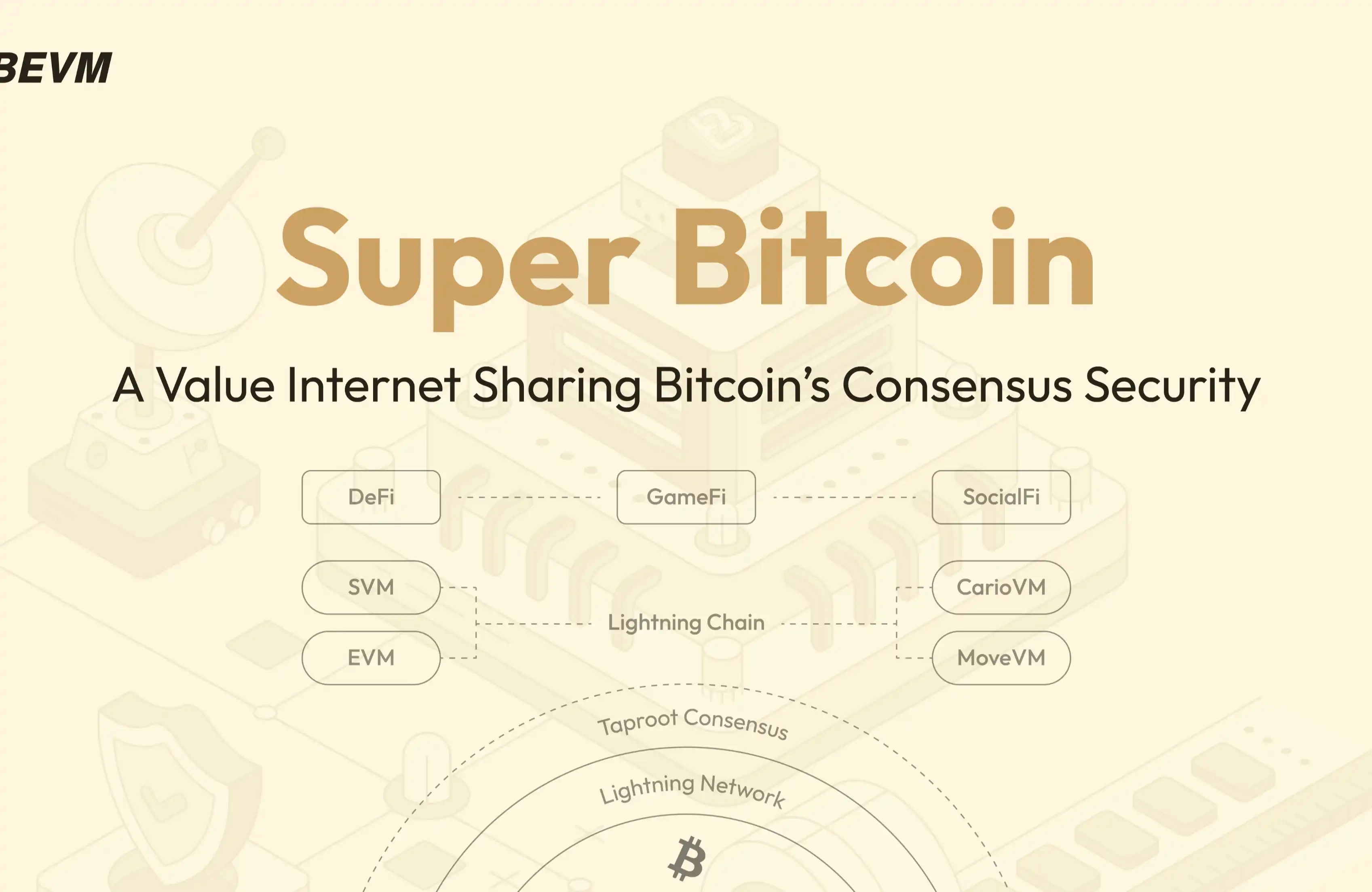
BlockBeats beats"Value Internet" is a relatively new concept, there is no precise and authoritative definition, but it is just like the rapidly changing encryption industry -- it needs to be improved and falsified in its creation. Here is a definition of the value Internet on the Internet:
Value Internet is a kind of advanced Internet form after the maturity of information based Internet, especially after the popularization of mobile Internet. It is not a substitute relationship with the information Internet, but to solve different problems in different application scenarios, is the superposition of value attributes on the information Internet.The core feature of value Internet is to realize the interconnection of capital, contract, digital assets and other values.
Here is the full text:
The art of encoding information, also known as cryptography, is a method of protecting information. The main problem that cryptography addresses is how can Alice ensure that Eve (a third party that Alice does not want to know about) cannot read critical information when sending it to Bob? Before the Internet, there were many clever ways of encoding and sending messages, and then cracking them. Cryptography is also a powerful force driving technology: Alan Turing, the father of computer science, cracked the Nazi code during the second world war.
Early networks were formed by interconnected computers designed to withstand nuclear attack. One drawback of early networks, however, was that they were not encrypted, so even high school students could hack into them. Now that the Internet has billions of users, powerful cryptographic tools must be used to protect the growing digital global economy. Unlike the Internet, however, the global economy is highly fragmented, divided into 180 regional legal currency systems. Bitcoin is an Internet native currency built on the history of cryptography and decentralized networks. Bitcoin is the pinnacle of technology.
Encryption can be traced back to ancient Rome. Julius Caesar himself communicated in transposition codes: "if he had secret instructions to convey, he would write them in transposition codes... He will make a pact with his cronies to use the letter shift (i.e., +3) as the key. For hundreds of years, the Caesar code was effective at protecting important information.
The Caesar code (and its variants) were later cracked, and one of the ways to crack it was through pure violence, by testing combinations of letters and frequency analysis. In the 9th century, al-kindi, the father of Arab philosophy, developed a method of frequency analysis to crack the Caesar code. In all languages, some letters appear more frequently than others. The letters/text used in each article followed the same frequency allocation, that is, E appeared most frequently, reaching about 12%, while Z appeared only about 0.07%.
Here's an example of frequency analysis. We can use the + 3 Caesar cipher (replace all the letters with the last three letters of the alphabet) to encrypt a paragraph (see figure below for the ciphertext). If an attacker intercepts the message and calculates the frequency of the letters, it can be easily cracked. After calculating the frequency of the letters in the encrypted message, we found that the frequency of H was about 12%. Referring to the English letter frequency table, we can push H back to E, so as to get the conclusion of letter shift +3.
Frequency analysis drove the development of cryptography from simple alternative cipher to multi-table alternative cipher. Multi-table substitution passwords cannot be cracked by traditional frequency analysis. It was it that the nazis used to invent the infamous Enigma machine. The success of the second world war was largely due to the breaking of the Nazi enigma. At first glance, the cipher machine looks like a simple typewriter. Type a letter on the keyboard and the corresponding letter on the bulb board lights up. Behind the cipher machine is a circuit that executes a multi-table substitution cipher.
(editor's note: there is a GIF here, but the display is not correct)
Simply put, the A entered on the enigma's keyboard is encrypted into the signal B on the bulb board. When decoded, the input B lights up A, and vice versa, as it passes through the complex circuitry of the rotor and the reflector. After the outbreak of the second world war, the Nazi regime added a patch board and more rotors to the original, making the wiring more complicated. One of the drawbacks of the enigma machine is that every input letter does not light up the same letter: A never lights up A, Z never lights up Z, and so on. The clue raises the possibility that the enigma, which could produce as many as 150 trillion combinations, could be quickly cracked.
British cryptography expert Alan Turing used another type of electromechanical device called the Bombe, which can try multiple combinations at once, to crack the enigma machine. But the nazis had a more powerful encryption technique than enigma: the Lorenz cipher. To crack the lorentz code, Bombe engineers developed the first electronic computer, the Colossus, with the help of Turing. The Colossus USES vacuum tube analog transistors to represent the basic computer language, creating binary code by turning on (1) or off (0) transistors with an electric current.
The Colossus design evolved into the computer we know today.The drive to decipher was a powerful catalyst for the technological revolution. With computers connected to each other over long distances, a truly decentralized communication network was born. If a node is destroyed, or even an entire city is destroyed, the message to be sent can avoid the failure point. Unlike existing telephone lines, television and radio stations,"Computer communication has no hub, no central switching station, no governing authority, and the assumption is that the connection between any city is completely unreliable."2
The network, known as Arpanet, was born at the height of the cold war to defend against nuclear attack.Interestingly, Arpanet network has strong fault tolerance, which makes network communication extremely difficult to control. As John Gilmore, an Internet pioneer, put it, "Arpanet sees censorship as a disruption and therefore bypasses it." Despite the resilience of Arpanet, the network has one drawback: it is unencrypted. In 1973, a group of high school students successfully broke into the military network 4.
Internet pioneers Vint Cerf and Bob Kahn were among the first to think about how cryptography could be applied to the core Internet protocol (TCP/IP) to prevent network intruding, but neither could.Vint cerf proposed the technique of public key cryptography.For example, Julius Caesar could use public-private key cryptography to make his ciphertext more difficult to crack, that is, to tell his confidants the private key representing a sequence of custom letter shifts, rather than a simple + 3 letter shift.
Public-key cryptography cannot be cracked through frequency analysis because a single letter can represent multiple letters at the same time (F can map both H and E). Today's computers, however, can easily crack even the improved Caesar code. The only way to avoid all possible combinations of computer brute force is to use a very long private key, such as a 256-bit long key (imagine the security of a 256-bit private key made up of 1s and 0s). However, if Caesar's private key itself is cracked, the message is no longer secure. In the case that the private key needs to be actively Shared with cronies, the risk of private key leakage will increase.
The difference between the sharability of the public key and the confidentiality of the private key is not highlighted: Caesar still needs to actively share the private key; The core concept of public key cryptography, essentially asymmetric cryptography, is that because public keys can be Shared, even passing the key around does not increase the risk that your ciphertext will be compromised.
So how can Internet computers safely communicate without actively sharing private keys? The transport layer security protocol (TLS) solves this problem using asymmetric encryption: anyone can communicate with you through your public key, but your private key need not be Shared with anyone else.
With asymmetric encryption, anyone who knows your public key can send you an encrypted message. Although the message is sent publicly over the Internet, it can only be deciphered using the corresponding private key and vice versa. Asymmetric encryption technology makes public key cryptography the basis of open Internet security information transmission. The transport layer security protocol USES a 256-bit key that cannot be cracked violently. 256-bit encryption means that there are 2^256 possible combinations (very large) 6.
Despite innovations such as the transport layer security protocol, today's Internet security is still flawed. People must keep an infinite number of "private keys" and share them with others. Credit CARDS, for example, do not have the advantage of asymmetric encryption. Once you have used a credit card, you must regularly disclose to third parties the private key to access your funds. Your key information is only as secure as your private key, which must be actively Shared with strangers.
The "private key" in quotation marks is not actually a private key, but is closer to the "passwork", such as our bank card "password", QQ "password", email "password", are just "password". It may be possible to control a set of public and private keys to complete the corresponding functions, but its operation is different from that of asymmetric cryptography. Whether the password will be known to a third party also requires specific analysis of the technology used. Your decentralized wallet, for example, often requires you to enter a pre-set password when using funds, but the password is used to decrypt a Json file, and the process does not communicate with the outside world, so it is not exposed.)
Moreover, the advantages of the Internet have not yet been fully applied to the global monetary system. The United Nations has recognized 180 different regional fiat currencies around the world, many of which are incompatible or need to overcome significant cross-border transaction friction. Bank accounts in Argentina are fundamentally incompatible with those in countries such as the us. By 2017, billions of people around the world had no bank account.
According to the bank for international settlements,"There are two major weaknesses in the current payment system: the inability to provide financial services to the vast majority of the world's population and the inefficiency of cross-border micropayments."Therefore, after the development of the decentralized network into the global Internet, although people have basically realized the freedom of speech, the currency is still subject to fundamental restrictions.
Based on cryptography and decentralized networks, we have found solutions to the shortcomings of the digital economy.
After the 2008 financial crisis, cryptographers who went by the pseudonym satoshi nakamoto came up with a decentralized Internet currency called bitcoin. Unlike modern monetary systems, bitcoin is designed to be globally accessible. Around the world, anyone with an Internet connection can use a bitcoin wallet to send or receive value. The bitcoin network is also growing as the Internet connects to the world. Bitcoin is a decentralized global value transfer Internet, and the validity of bitcoin transactions is verified by the full bitcoin node running the software.
Bitcoin's decentralized network is evolving like Arpanet before it, with more than 55,000 full nodes (as of October 2019) in at least 96 countries/regions around the world. Like Arpanet, bitcoin is fault-tolerant and can withstand a nuclear attack. If one full node fails/is attacked, there are tens of thousands of other nodes that can verify the integrity of the network. Unlike Arpanet, bitcoin itself is built on ultra-secure cryptographic elements. Strong cryptographic support is also one reason why bitcoin is universally accessible.
Let's talk again about possible combinations of 256 bit keys. There are more possible combinations of 256-bit keys than there are atoms in the universe. Now, suppose you want to create a bank account with the following characteristics:
You don't need to actively share the private key
Accounts can be generated by users of the Internet around the world
You can transfer value from an account in one country to an account in another
Transfers do not require permission from any intermediary, bank or country/region
These are the characteristics of bitcoin. To participate in bitcoin's global economic system, you need a computer to generate unique personal keys from 2^256 possible combinations. It's like picking an atom from the universe that belongs to you; With this atom, you can transfer value to another atom in the universe. No one else can pick the same atom at random. The process can be likened to creating a bitcoin "bank account," or address.
Anyone can send bitcoins to your public key, but you must use the corresponding private key to spend the bitcoins. Thanks to asymmetric encryption, you don't have to share your private key with others. Unlike a credit card or bank account, transferring bitcoins does not require the holder to disclose his or her private key, and there is no associated security risk. Unlike the global monetary system, bitcoin, like the Internet, is open to the public. As a result, bank accounts are no longer necessary to participate in the global economy.
Now, central Banks are working on bitcoin's distributed ledger technology to create digital fiat currency. The international monetary fund says digital currencies are particularly useful for the billions of people who cannot open traditional bank accounts. The central bank's digital currency may raise awareness of bitcoin.
A recent bis survey showed that 80 per cent of the 66 central Banks surveyed around the world were studying central bank digital currencies. This innovation was inevitable, and bitcoin acted as a catalyst. Today's pre-arpanet monetary system is fragmented, centralised and with flawed security.
Bitcoin is the key to eventually unlocking the Internet of value.
Then, strong encryption will benefit the public and no longer rely on trust. Data can be protected well. No matter what the reason, no matter how good the excuse, no matter what happens, no one else can access your data. In this case, money can have the same properties.
- in the hearing
endnotes
https://plus.maths.org/content/exploring-enigma
http://content.time.com/time/magazine/article/0,9171,979768,00.html
https://www.bloomberg.com/opinion/articles/2019-04-11/facebook-and-google-made-themselves-vulnerable-to-regulation
https://www.washingtonpost.com/graphics/national/security-of-the-internet/history/
https://www.khanacademy.org/computing/computer-science/internet-intro/internet-works-intro/v/the-internet-encryption-and-public-keys
https://www.wolframalpha.com/input/? I = 2 * * 256
https://globalfindex.worldbank.org/
Note: there are 2^256 possible combinations of bitcoin's private key address space. However, it is also safe to use a 128-bit public key in the ECDSA signature scheme.
https://blogs.imf.org/2019/12/12/central-bank-digital-currencies-4-questions-and-answers/
Extended reading:
"Central Banks around the world are discussing how to manage the digital finance technology and distributed ledger technology used by bitcoin. Bitcoin is expected to make payments in a very short time and at very low cost," said a Reuters article titled "the fed is considering central Banks' digital currency" published on February 5, 2020.
(after)
The original link: https://medium.com/@burningw0rds/decrypting-the-internet-of-value-ed12848a2286
By Mike Co
Translation & amp; Proofread by min min & amp; O sword
Source link:https://ethfans.org
Welcome to join the official BlockBeats community:
Telegram Subscription Group: https://t.me/theblockbeats
Telegram Discussion Group: https://t.me/BlockBeats_App
Official Twitter Account: https://twitter.com/BlockBeatsAsia
 Related Articles