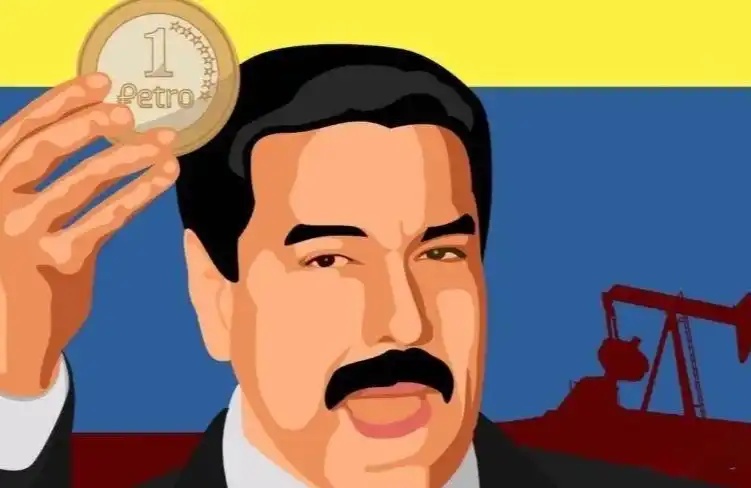
The world's first legal digital currency, the Petro, is in trouble
Longhashreports, is a "cryptocurrency" developed in venezuela, the status quo is worrying.
Blockbeats published an article in April this yearVenezuelans are slowly starting to trade petrodollars. Over the past month or so, venezuela's petrodollar has not seemed to be going well.
In late 2017, Venezuelan state television and radio introduced Petro. After considering launching Petro on two different blockchains (ethereum and NEM), venezuela finally decided in October 2018 to develop its own licensing chain based on a version of the DASH blockchain.
To use Petro, you have to trust the Venezuelan government. The only way to connect to the Petro network is to get permission from the government.
Petro's code is not open source and has only a blockchain browser and an official wallet.
The Petro is still in circulation, though it looks less optimistic
Petro isn't done yet. It's just so low key that even the Venezuelan government doesn't bother to promote it. Just look at the official twitter account of Sunacrip, which is supposed to manage Petro and other cryptocurrencies in venezuela. But for now, Sunacrip's account is almost entirely devoted to government propaganda, rather than educating venezuelans on how to use Petro. Even venezuela's mainstream government television channels rarely mention Petro, once considered a panacea for the country's economy.
For now, Petro is available in limited ways. The easiest way is to go to the Petro website and buy Petro with BTC or LTC. New users must be approved by the government, which sets Petro's exchange rate. Since its launch, the price of a Petro on its official website and on the website of the central bank of venezuela has remained exactly the same at $60.
Another way to get Petro is through the main office of Sunacrip, which buys certificates in the bolivarian or other currencies of venezuela. You can also buy Petro at the Venezuelan exchange authorized by Sunacrip. This has only recently become public with the emergence of the Amberescoin exchange, which offers a PTR/BTC market. In orders placed at the end of April, it is clear that each Petro is quoted at around $40, much cheaper than trading through the official government website, but trading volumes are very low.
One notable detail is that in order to register with the exchange, KYC and anti-money laundering processes must first be completed, which may be more stringent than in the United States.
Venezuela's exchanges appear to operate very quietly so that their owners do not face U.S. government sanctions for trading Petro. But it is worth asking whether there is any practice of artificially inflating trading volumes by purging or other means on exchanges that are neither well known nor experienced.
No one understands Petro's true value
On the website of the central bank of venezuela, one PTR is worth 80,000 VES. At the central bank's exchange rate, one dollar is equal to 5,202.26 VES, meaning that for the central bank of venezuela, one PTR is worth $15. However, as the chart shows, local Banks list completely different prices.

In daily life, people hear the word Petro, venezuela is likely to be in their bank balance is converted into the equivalent of Petro, may also be the government Petro of PTR = 80000 VES (1) the price as the minimum wage workers unit of account, or is in the government without their consent in Petro pension. At some government events, some products are sold under Petro; Sometimes supermarket products are also priced with PTR. Otherwise, it would be difficult for the general public to know that PTR is still in circulation.
So why is Petro still in circulation? There are two main reasons. One reason is that the government pays its internal suppliers with PTR, which they accept either because they are profitable in exchange rates or because they have no choice. Another reason is that in addition to the government, a small group of people are taking advantage of Petro's price swings to earn BTC or dollars.
What we do know for sure is that if the Venezuelan government accepts the exchange of BTC and LTC for Petro, in addition to setting up a cryptocurrency remittance platform, that means the government has an intention to stockpile cryptocurrency.
Above all, it is hard to trust an asset like Petro. The unknowable true value; The only real supporter of the currency is the Venezuelan government; Even trading Petro carries the risk of U.S. sanctions. But while Petro may be unreliable, that hasn't stopped the Venezuelan government and a small group of people from using it.
Welcome to join the official BlockBeats community:
Telegram Subscription Group: https://t.me/theblockbeats
Telegram Discussion Group: https://t.me/BlockBeats_App
Official Twitter Account: https://twitter.com/BlockBeatsAsia
 Related Articles