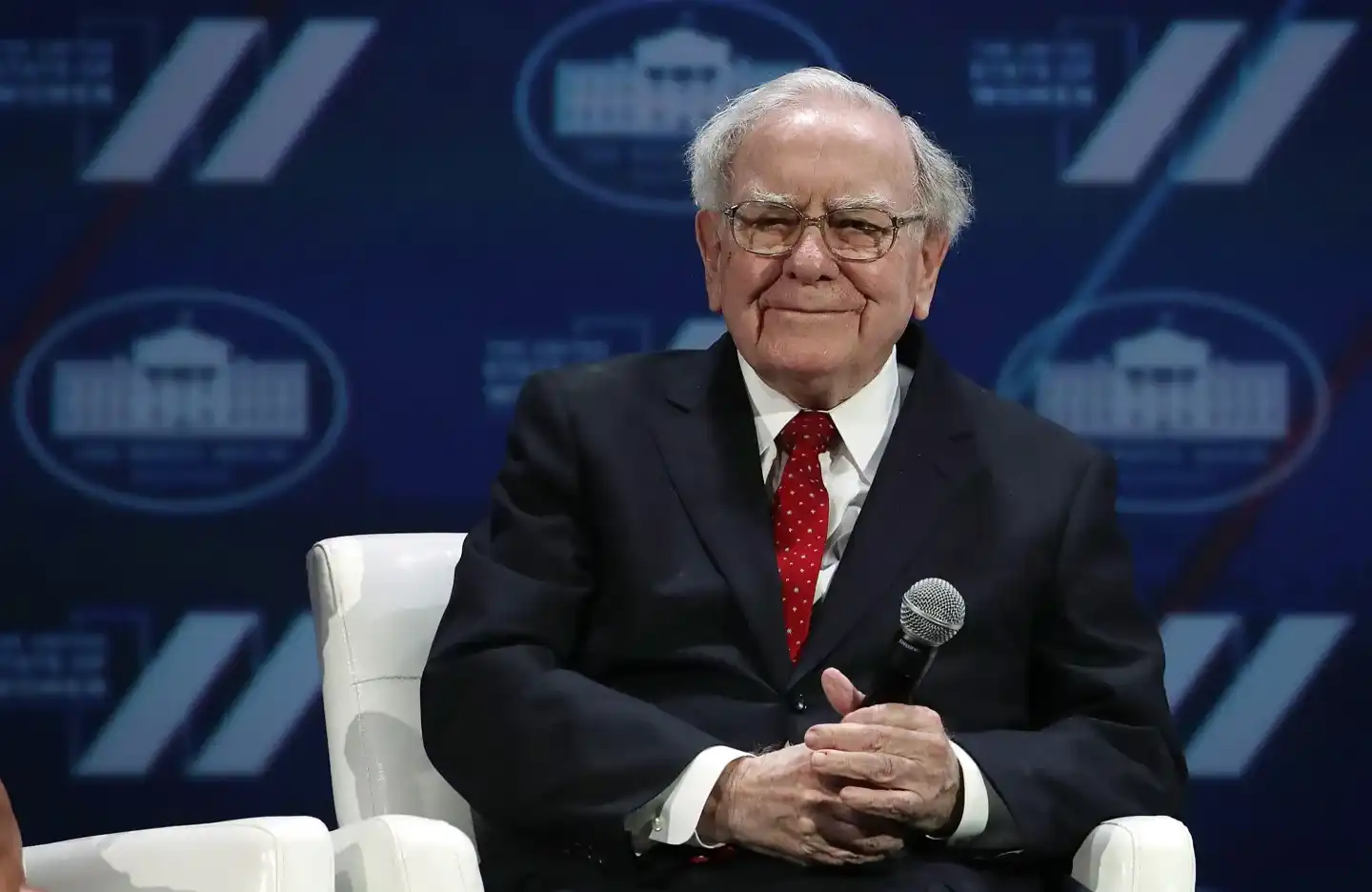
If buffett were to buy bitcoin, how would he buy it?
Would buffett still buy bitcoin? Didn't buffett call bitcoin the square of the rat poison?
Believe many readers after seeing the title, the heart is full of doubts. In fact, what BlockBeats wants to discuss in this paper is not buffett's views on bitcoin, but the case of buffett's early use of options to "copy the bottom" of Coca-Cola stock, and make a brief review of the hot option concept and strategy in the current encryption industry. This article is only a discussion of buffett's business techniques and does not constitute any investment or purchase advice. Please note the higher risk of options.
This article will avoid all options mathematical language, try to use the most straightforward words and the simplest examples to explain the basic logic of options.
First, we need to talk a little bit about options.
According to baidu baike, options originated in the U.S. and European markets in the late 18th century. Option contracts give the holder the right to buy or sell an asset at a fixed price on or before a specific date. In other words, an option is a contract of rights and obligations that allows both parties to bet against each other on the underlying asset.
A simple example to explain, if you want to charge a $8500 COINS, but three months after the admission money in place, then you can buy 3 months after price for $8500 call options, if after 3 months the currency price more than $8500, you can exercise right, still for the price of $8500 to buy. If you don't have more than $8,500, say $6,000, then of course you're not going to exercise the option, you're going to lose the royalties that you paid for the call option at the time, but you're going to be able to bargain on the spot market for $6,000.
On the other hand, if you are a miner, want to lock in advance to dig the currency income, then you can buy 4 months after price for $8500 put options, if 4 months after the currency dropped to $6000, you can still after exercise in accordance with the selling price of $8500, in the same way any COINS, you can't, turn on the spot market sell-off. In case you're confused about the ups and downs, here are the options call/put + buy/sell explanations.
One might ask, again, what's different about hedging when miners use futures and options?
There are two main differences. First, the amount of funds occupied is different. Generally speaking, the option royalty used for hedging is less than the futures margin, which means the improvement of capital efficiency. The 2nd is the difference of risk, no matter the price rises or falls after futures hedging, below the premise that does not explode in a set of insurance policy, benefit is locked in completely, neither because quotation falls to suffer loss, also won't because quotation rises and gain. The advantage of option hedging is that if the currency rises sharply, miners can give up their options and sell them on the spot market, so they don't jump, but can still exercise their options when the market falls, locking in mining profits. The downside of option hedging, however, is that if the price does not change in the future, it is almost as if the miners have lost their royalties.
Similarly, some cryptocurrency trading platforms, such as hufu, have introduced a variety of "refund options" to help users avoid the risk of a sharp fall in currency prices, which are essentially put options.
We can conclude from these three examples that options are divided into Call and Put options, and each option corresponds to two operations: buying and selling (or buying and issuing). Then, in pairs, the underlying strategies of all options can be divided into four types: buy long, buy short, sell long, and sell short.
Take the call option (figure D) as an example to analyze the profit and loss structure of BlockBeats. Take the exercise price of $8,000 as an example. If the price of bitcoin is lower than $8,000, the person who bought the call option will lose the royalty. Instead, he will earn the difference between the current price and $8,000, on top of the royalties.

(note to BlockBeats: ABCD are profit and loss charts of selling bearish, buying bearish, selling bullish and buying bullish respectively)
Therefore, for the buyer (buyer) of the option, the worst case is to lose the option's royalty, the best case is that the underlying asset exceeds the exercise price threshold and gains profits. Therefore, in the option transaction, the maximum loss of the buyer is limited and the maximum gain is unlimited. For the seller (issuer) of the option, the worst case is that it becomes the buyer's counteroffer and incurs a loss by cashing in on the underlying asset.
Since the buyer's profit and loss structure is more advantageous, should the option be the main buyer?
Don't. In fact, most options are not exercised, which means that in most cases, the option seller has a high probability of making money by collecting royalties. Therefore, it is not appropriate to say that the buyer of the option has unlimited returns and limited risks.
A more difficult question is how are options priced? What influences the price of the option? The mathematical pricing model of option is more complicated, which is not the direction of this paper. The option price is influenced by the underlying asset price, time, implied volatility, strike price and interest rate. For example, the underlying asset price is the price of bitcoin, the time is the length of the expiration date of the exercise, and the implied volatility is the expectation of future market volatility (while in general, the mentioned volatility is usually historical volatility, which is a description of the price changes in the past).
"Never burn out" is a phrase many people use to praise options, but in blockbeat's view it is more of a marketing concept. Because it's possible to lose money if you buy the option outright, or if you sell the option outright, the option's "no-sell" advantage over the futures simply means it can avoid the "pin drop" effect in extreme intraday conditions.
To return to the example mentioned at the beginning, "the buffett option strategy is copied to bitcoin", which is actually a viewpoint expressed by AKG Venture on his weibo recently. Let's think about whether such a viewpoint is reasonable with the above knowledge.
A search at BlockBeats found that Mr Buffett had indeed used an options strategy to invest in coke shares in 1993.
Coke's stock price was hovering around $40. Mr. Buffett sold five million put options that expired in December at $1.50 each and had an exercise price of $35.
If coke's share price is above $35 by the end of December, Mr Buffett will have made $7.5m in royalties; If it falls below $35, buffett is using cash to make a bargain at $35. It can also be seen that selling put options to spread the entry cost requires strong fundamental pricing power, as well as an analysis of price fluctuations, otherwise it will evolve from "successful bottom hunting" to "high trading", with heavy losses.
In fact, Coca-Cola never fell below $35 in 1993-94, so buffett ended up making $7.5 million in royalties. Back to the original question, can such ideas be reused in current bitcoin operations?
For example, you are optimistic about the market by half, also optimistic about the long-term value of bitcoin, or value the appreciation of the currency standard, but you think there may be a short-term callback of bitcoin, want to bargain for a position, but are afraid of not callback directly up, that is, want to get on the bus but do not dare to get on the bus at the current price.
At this point, you can choose to sell future put options on bitcoin, such as a $6,000 put option that will be exercised in March 2020. If bitcoin doesn't fall below $6,000, the option buyer won't exercise the option, so you get royalties. If bitcoin falls below $6,000, take $5,500 as an example. Although the buyer of the option may exercise the option and cause a certain loss to you, you can also buy $6,000 of chips without worrying about giving up the bargain because of market sentiment.
What are the risks? If the put position is not well controlled, or if the price analysis is wrong, such as when bitcoin falls to $1,000 without a stop, the investor suffers a huge loss. It can also be seen that selling put options to spread the entry cost requires strong fundamental pricing power, as well as an analysis of price fluctuations, otherwise it will evolve from "successful bottom hunting" to "high trading", with heavy losses.
The big question is, how much margin does it take to sell a put option? For this purpose, the block pulse BlockBeats interviews with the leading industry of the option derivatives trading platform Deribit, head of the other party, said: "the currency standard superposition sell a put option is the very common one kind of revenue enhancement strategy, under the rules of Deribit combination margin, if hold empty positions of both sides, can reduce the margin of the footprint. 1 BTC positions, usually require only 0.1 BTC + current option price margin."
How else can options be used? Trading volatility. In popular terms, spot and futures can either buy up or down, but can't buy volatility, while options with nonlinear changes in underlying assets can accomplish complex volatility strategies.
When the consolidation form enters the convergent end, the variable disk is imminent and the direction is uncertain. In this case, the long volatility can be achieved by buying both the call and put options on the expiration date at the same time (in practice, the option price and Greek value parameters should be selected according to demand).
As long as the underlying asset volatility, whether up or down, can be profitable. Of course, if the underlying asset had the misfortune to stay sideways, the investor would lose all of his rights.
To take a simple example, in September 2019, bitcoin has been in a wide range of volatility between 9,500 and 12,000 dollars for a long time. When the triangle arrangement enters the end of the form, and the trading volume gradually shrinks and the volatility gradually decreases, bitcoin will soon choose the direction. At this time, whether it is holding spot or taking long or short leverage, it may not be as good as taking long volatility.
Others are keen on the doomsday option. The so-called doomsday round option refers to the option that is very close to the expiration date and is about to be exercised. Especially for the fictitious value doomsday round without the exercise value, it is very easy to have the dramatic fluctuation of the market in the later period, and the leverage ratio can even reach hundreds or thousands of times, so it attracts a group of people to place bets with low probability and high odds. To take a simple example to understand the doomsday round, in a football game, a goal scored from the last three minutes is significantly different from a one-point lead after the first half of the quarter. The former has a lower probability of scoring, so the former will have an excess return if the bet succeeds.
Block rhythm BlockBeats need to remind the majority of investors, however, is that the end of the round rich options often there are only two kinds, one kind is a daydream, the other is a perennial professional traders make a living, the research is quite deep, so retail by the end of the fantasy to buy wheel overnight thing, is the basic unable to realize, but may be lost to bankruptcy.
Of course, there are still many strategies in the complicated option market, for example, professional traders will trade according to whether the parameters of Greek value deviate or not. For the reason of space, this paper omitted some complicated conceptual explanations in the introduction of options, such as implied volatility, true value, imaginary value, and the difference between European and American options.
Since the 2018 bear market, the scarcity of opportunities in the physical market has prompted investors to leverage futures contracts, creating a huge derivatives market. OKEx, an established cryptocurrency trading platform, has just launched an option contract for bitcoin. The person in charge of the contract said that "the first day of the launch of options for bitcoin by OKEx achieved $7.7 million, and there is a huge demand for such derivative platforms." BlockBeats has also repeatedly mentioned that as the cryptocurrency market becomes more mature, derivatives trading volumes will far surpass the physical market in the future, eventually achieving an order of magnitude lead.
As futures contracts become the "standard" for cryptocurrency trading platforms, competition in derivatives has spread to options. However, due to the complexity and nonlinearity of options, it is not suitable for ordinary retail investors to blindly invest in options, and the liquidity of options in the current cryptocurrency market is limited. Therefore, even if the buyer can control the loss of royalties, there is still a great risk in trading options.
When entering the market, we often think of is, spot up to make money, futures down can also make money, options sideways can also make money; But the fact is often, without a deep understanding of the rules, without the premise of a strategy, blind trading, eventually lead to up, down, sideways losses.
Welcome to join the official BlockBeats community:
Telegram Subscription Group: https://t.me/theblockbeats
Telegram Discussion Group: https://t.me/BlockBeats_App
Official Twitter Account: https://twitter.com/BlockBeatsAsia
 Related Articles