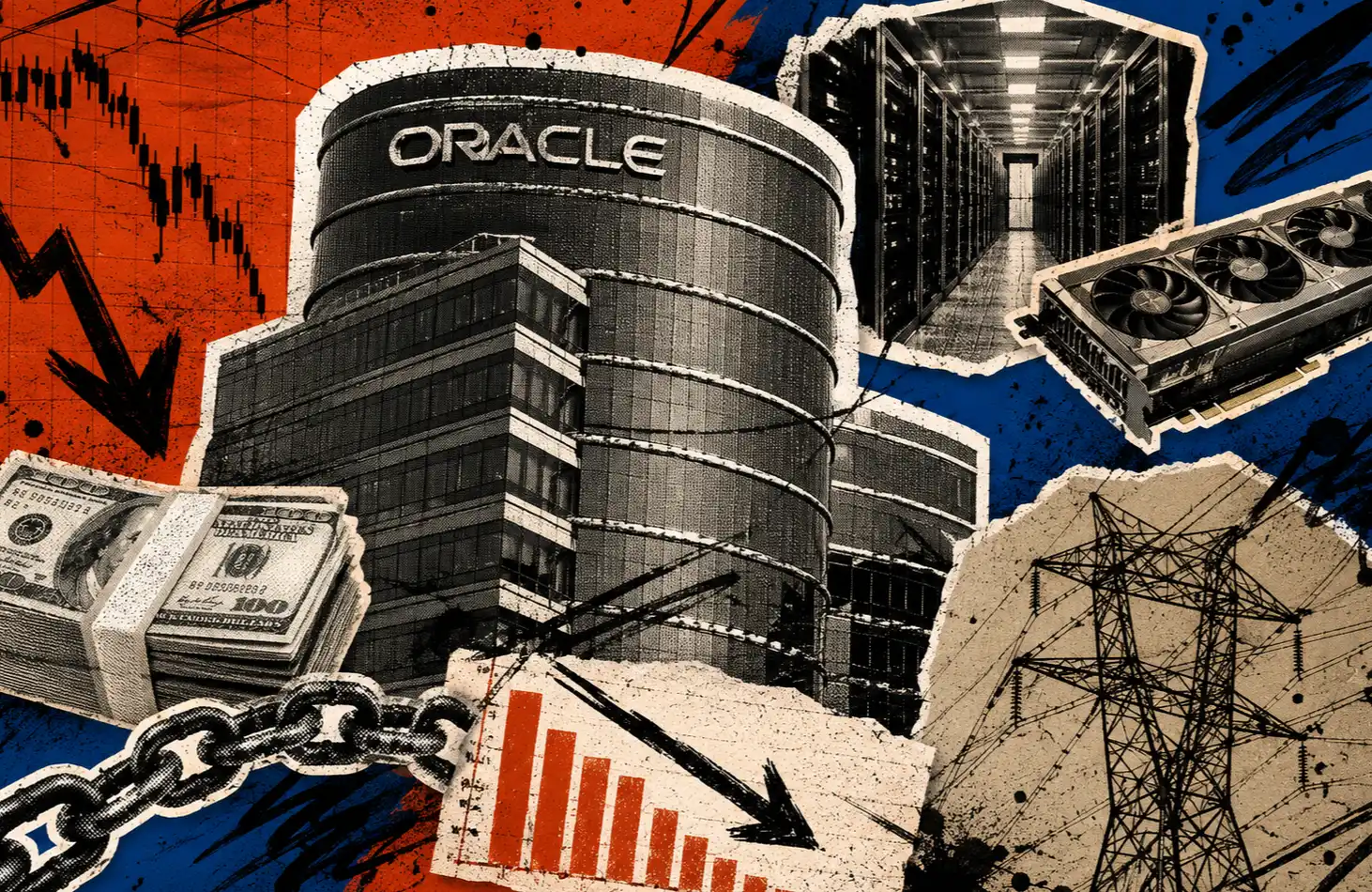
Why did Oracle plummet after using up its $20 billion quota in one go?

TL;DR
· Market sources indicate that Oracle is advancing a total of $20 billion in equity and bond financing, fully utilizing the financing cap committed on Investor Day.
· New bond spreads and credit default swaps show a split between investment-grade ratings and near-junk bond pricing.
· Related tickers: ORCL and its newly issued bonds and CDS, Microsoft/Meta/Google bond issuance windows, CoreWeave.
On November 2, market sources indicated that Oracle is advancing a total of $20 billion in equity and bond financing, planning to issue $10 billion in common stock and $10 billion in senior notes, fully utilizing in one stroke the financing cap for fiscal years 2027 to 2030 committed on Investor Day five days earlier. The company's stock closed down 8.76% that day, erasing all of the more than 10% gain from Investor Day.
The financing itself is not surprising. What has the market on edge is the price.
200亿 in five days, stock back to starting point
The two $10 billion issuance plans are being advanced on the same day, with uses written quite broadly: capital expenditures, debt repayment, investments and acquisitions, dividends and buybacks are all listed. This means the full $20 billion cannot all be counted as AI spending, but it does cover the most cash-intensive stretch of data centers.
The stock reaction is more direct than the financing structure. Market data shows a close of $130.67 on Friday and $119.22 on Monday, a single-day drop of 8.76%, with a cumulative decline of about 18% over the three trading days through November 2. The more than 10% bullish candle on Investor Day was completely wiped out by a single bearish candle, widening the year-to-date decline to about 33%.
Baird analyst Rob Oliver believes the issuance is fully consistent with the structure disclosed on Investor Day and does not understand why the market is panicking. That argument holds at the level of "is there new information"—the size, pace, and instruments were all discussed five days earlier.
But the market has written its answer in the price. The same structure, sold at different spreads and discounts, means completely different financing costs. The selloff reflects how expensive this sale was.
Rating still investment grade, price at junk bond's door
First, distinguish something easily confused: rating agencies and the bond market are not talking about the same thing. Moody's gives Oracle Baa2 with a negative outlook, and S&P and Fitch give BBB, all still within investment grade. But the compensation bond buyers demand is already set by another standard.
According to market quotes, the new bonds' spread over comparable US Treasuries is about 240 to 335 basis points, with the longest tranche's coupon talked up to above 8.6%. The five-year credit default swap, i.e., the cost of insuring against bond default, is about 292 basis points, up about 265% within a year.
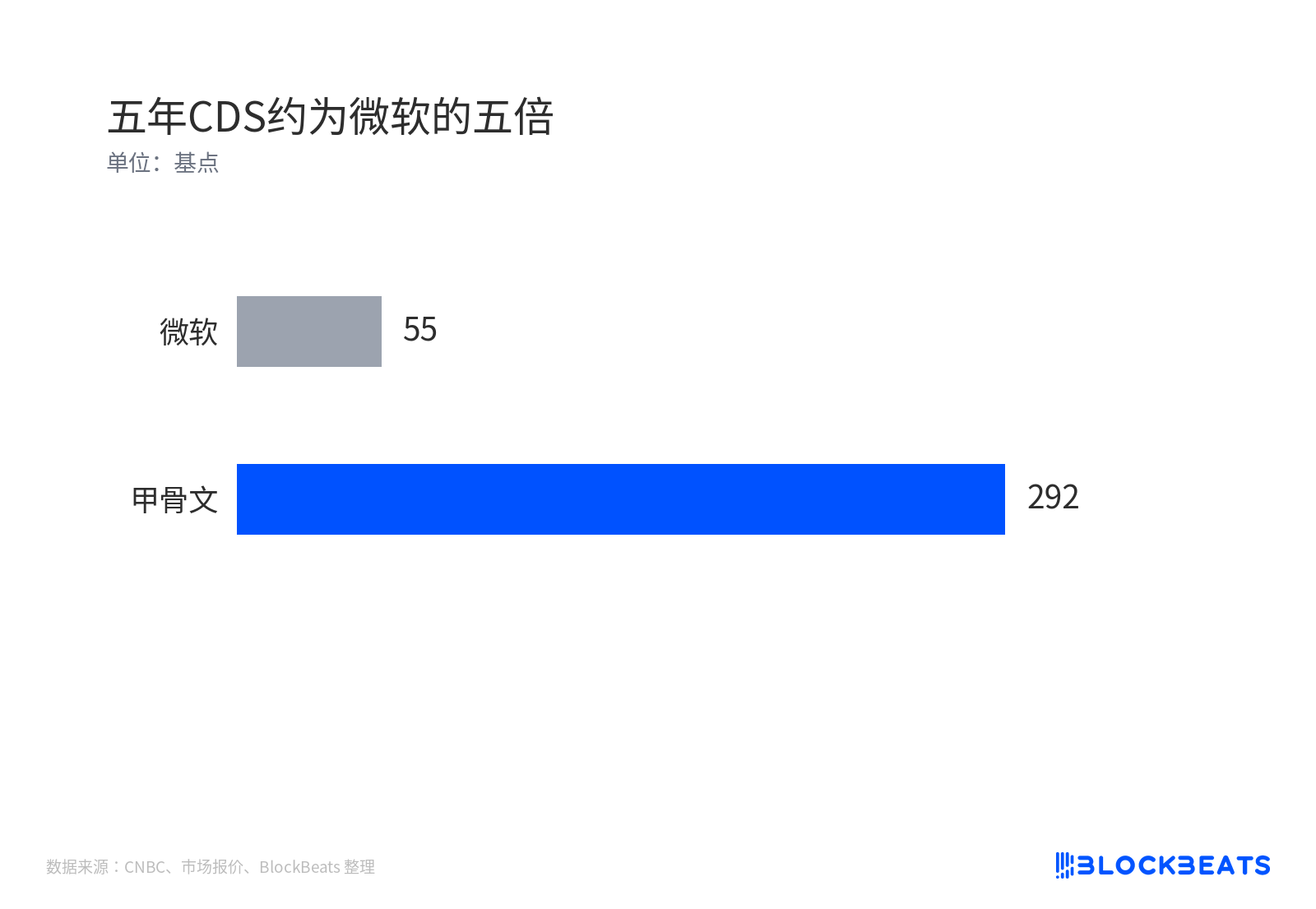
Five-year CDS is about five times that of Microsoft
A horizontal comparison makes it clearer. Oracle's outstanding 2066-maturity bonds yield about 8.4%, while Apple and Microsoft bonds of similar duration yield about 6.1%. Both are called investment grade, yet the cost of borrowing differs by more than two percentage points.
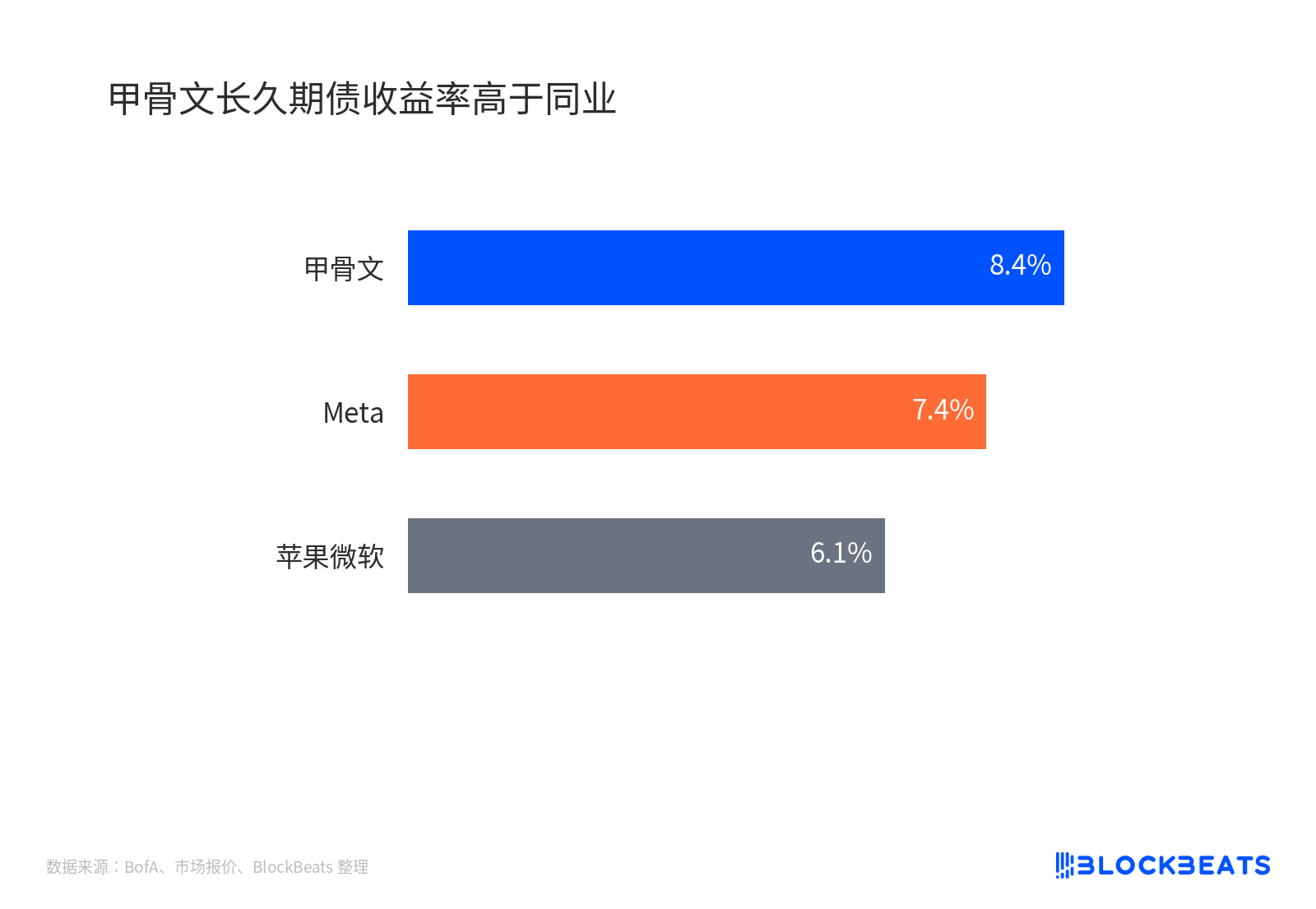
Oracle's long-duration bond yields are higher than peers
Credit research firm CreditSights put it more directly: Oracle's new bonds trade in the secondary market like BB-rated debt, the upper tier of junk bonds. The firm also believes this is the last public bond offering for capital expenditure over the next several years. The first half is current pricing; the second half is a forecast.
The cap locks the public market, but not off-balance-sheet financing
On Investor Day, the company defined $20 billion as the last round of public market financing for this cycle. Under the company's plan, starting in fiscal 2029 growth will rely on internal funds, and the ratio of net debt to adjusted EBITDA will fall below 3.5x.
The problem lies in the boundary of this commitment. The $20 billion cap constrains public market equity and bonds, excludes refinancing of existing debt, and does not automatically cover leases, supplier financing, and customer prepayments. The company's disclosed scope indicates there will be additional supplier financing-type liabilities, and the bond covenants contain no financial commitments and do not restrict further borrowing.
This explains why two interpretations coexist. UBS analyst Karl Keirstead previously treated the cap as easing financing anxiety. Dynasty's Pat Nerney sees it as a narrative red line. If the company returns to the market in the second half of fiscal 2027, the "last round" claim will not hold.
"Last round" must be proven by fiscal 2028 cash flow
Two numbers remain unresolved. The final equity offering price and share count are undetermined. Market chatter about an approximately 11% discount, corresponding to around $116, is a rumor from the pricing stage. Based on last Friday's closing price of $130.67, $10 billion equates to about 76.5 million shares, or about 2.5% dilution. If the discount materializes, both the share count and dilution ratio will be higher.
The other is free cash flow, the money left after operating inflows minus capital expenditure. The company guides to turn positive in the second half of fiscal 2028 and at least $30 billion in fiscal 2029. Before this trajectory materializes, Oracle's debt scale still depends on the timetable it has set for itself.
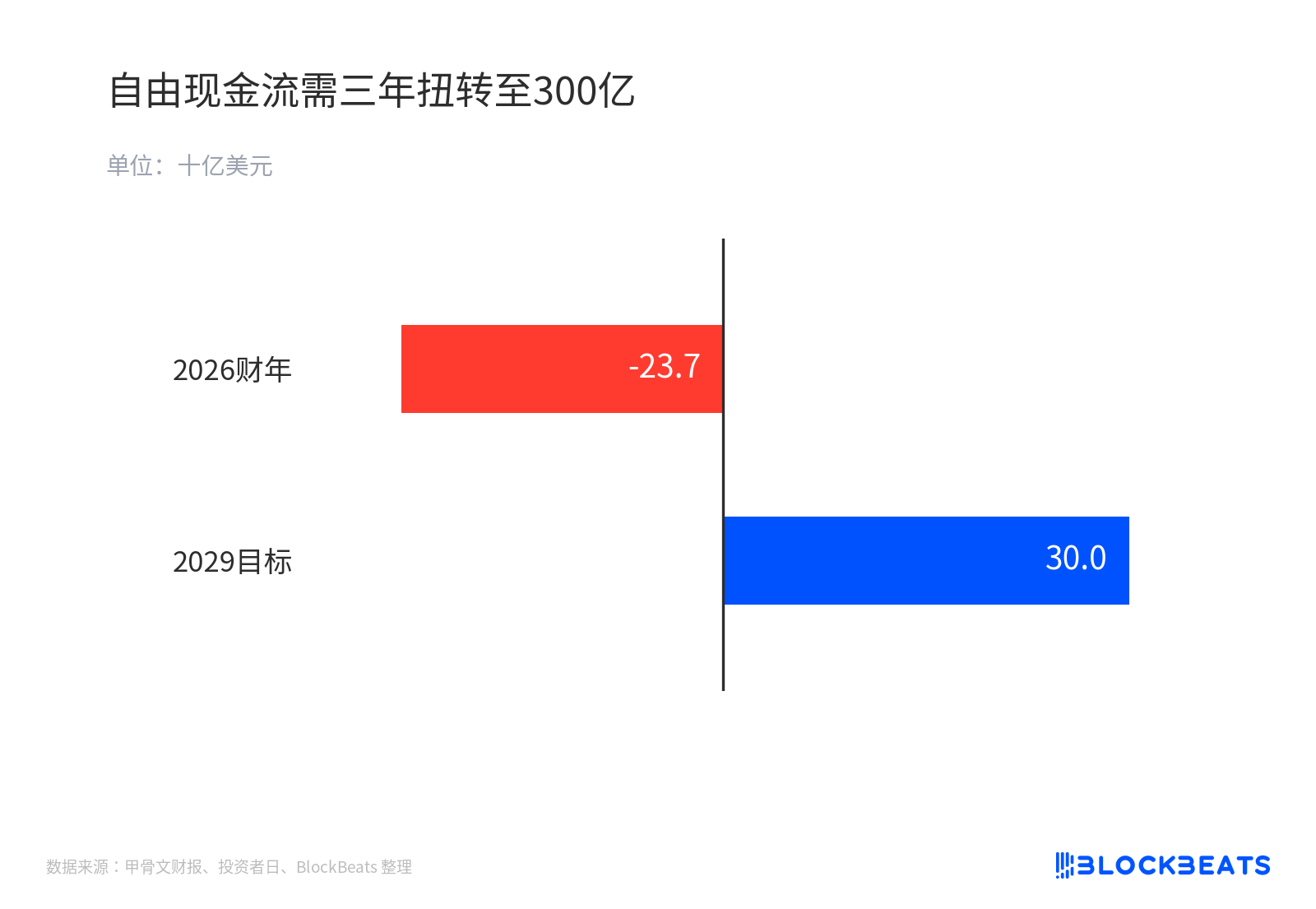
Free cash flow needs to turn around to $30 billion in three years
The debt scope also warrants attention. Beyond the $20 billion cap, leases, supplier financing, and customer prepayments are not within the constraints. How fast these liabilities can grow is the stress test for the "last tranche" narrative.
The cost of capital has been repriced. The higher interest on new debt, the potential equity discount, and the roughly 265% surge in credit default swaps within a year together constitute the market's pricing of Oracle's AI infrastructure. Whether this pricing will continue to move higher depends on the final equity pricing, fiscal 2028 cash flow, and how much additional liability can grow beyond the $20 billion cap.
Welcome to join the official BlockBeats community:
Telegram Subscription Group: https://t.me/theblockbeats
Telegram Discussion Group: https://t.me/BlockBeats_App
Official Twitter Account: https://twitter.com/BlockBeatsAsia
 Related Articles