Fed rate hike expectations see a massive reversal in a month: from 64% to 11%, why did the market suddenly turn?
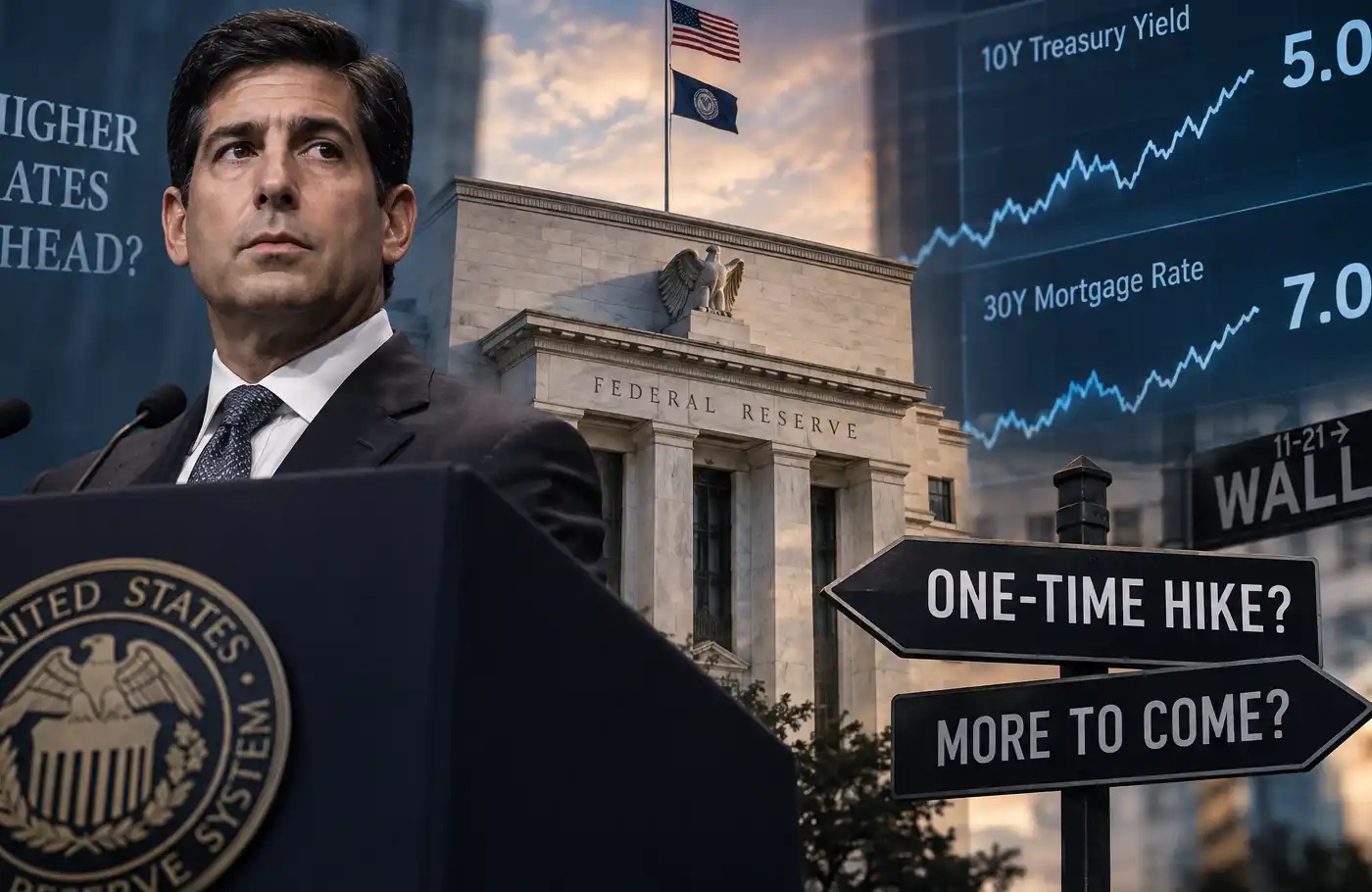
With only days left until the Federal Reserve's October policy meeting, financial markets' expectations for monetary policy have shifted significantly.
A month ago, the federal funds rate futures market priced in about a 64% probability that the Fed would raise rates in October. Now, that probability has fallen sharply, and the market widely expects the Fed to keep rates unchanged on October 28.
But the question is that U.S. economic fundamentals do not appear to have deteriorated enough to explain this shift.
In a market weekly report published on October 26, Monkey Business author Eric Salzman questioned this: U.S. inflation remains clearly above the Fed's 2% target, consumer and business spending remains resilient, and the labor market is still relatively strong—so why have investors suddenly stopped believing the Fed will continue raising rates?
The author argues that the recent change in monetary policy expectations may reflect more the financial market's own adjustment rather than a fundamental turn in macroeconomic fundamentals.
Rate hike expectations plunge, but economic fundamentals have not weakened in tandem
According to futures market data cited by the author, the probability of a Fed rate hike in October fell from 64% to near zero within a month. However, market data updated later on October 26 showed that the rate hike probability was actually about 11% to 12%, rather than completely zero. The market priced in about 88% odds of keeping rates unchanged, with rate hike expectations clearly concentrated toward the December meeting.
This change means the market has not completely ruled out the possibility of further tightening, but has begun reassessing the timing of rate hikes.
Salzman is skeptical. He noted that inflation remains above the Fed's target, economic activity has not clearly stalled, and consumers and businesses continue to spend. In other words, the main economic conditions supporting the Fed's tightening stance have not disappeared.
By contrast, recent financial market volatility has been more pronounced.
Over the past week, U.S. technology stocks have remained under pressure, especially as concerns about returns on artificial intelligence investment have intensified. At the same time, U.S. Treasury prices have risen and yields have pulled back, suggesting some funds may be reducing exposure to equity market risk and shifting to U.S. Treasuries, whose yields remain at relatively high levels.
The author believes this flow of funds may be influencing the market's judgment on the future path of interest rates.
AI trade cools, funds turn to U.S. Treasuries
Over the past week, doubts about the artificial intelligence investment cycle have continued to intensify.
AI cloud computing service provider CoreWeave's stock price continued to weaken, while Meta was sold off by investors after further raising its artificial intelligence capital expenditure plans.
According to the article, Meta plans to increase full-year 2026 capital expenditures to $135 billion to $145 billion, while disclosing its first free cash flow deficit since its 2012 listing. Following the release of the related news, Meta's stock price fell about 7%.
The core issue facing the AI industry chain is changing: the market is no longer solely focused on whether AI businesses can drive revenue growth, but is increasingly concerned about when massive capital expenditures will translate into sustainable cash flow.
Meanwhile, a Wall Street Journal report cited by the author shows that Anthropic's revenue for the six months ended June 30, 2026 was approximately $16 billion, but its operating loss still reached about $8 billion. This further highlights the cost pressures faced by AI companies during rapid expansion.
As the market reassesses AI investment returns, the correction in tech stocks may also prompt some institutions to reallocate assets.
Last week, the Nasdaq index fell 4.5% cumulatively, while the U.S. 10-year Treasury yield dropped 9 basis points to close around 5%. The real yield on 10-year Treasury Inflation-Protected Securities (TIPS) fell 12 basis points to 2.65%.
Salzman believes that some investors may be reducing their previously concentrated bets on AI trades and moving funds into U.S. Treasuries, whose yields remain attractive.
However, he does not believe the current U.S. Treasury rally has long-term sustainability.
In his view, the recent pullback in U.S. Treasury yields may be a phased rebound within a bear market, compounded by safe-haven inflows. As long as U.S. inflation and economic growth remain resilient, long-end rates still face the risk of rising again.
The author himself also holds a position through PFIX to hedge against the risk of a sharp rise in long-term rates, reflecting that his overall judgment remains biased toward rising long-term yields.
This also constitutes a contradiction in the current financial markets: investors are reducing risk exposure due to concerns about AI investment returns, but the decline in yields driven by funds flowing into U.S. Treasuries does not mean that U.S. inflation pressures have been fundamentally resolved.
Rising Oil Prices and Midterm Elections Further Increase Policy Uncertainty
In addition to the AI investment cycle, Salzman also emphasized the impact of energy prices and political risks on the market.
Over the past week, WTI crude oil futures rose 4.29%, closing at $103.27 per barrel. Escalating geopolitical tensions in the Gulf region have pushed the market to refocus on energy supply risks.
Meanwhile, with U.S. midterm elections approaching, uncertainty over the political outlook is also increasing.
For the Federal Reserve, these factors mean inflation risks have not yet been resolved. Especially with energy prices remaining elevated, even as risk appetite in financial markets has recently declined, one cannot directly infer that monetary policy needs to shift toward easing.
On one hand, the market has begun to reduce bets on an October rate hike; on the other hand, it still faces potential tightening pressures from high oil prices, sticky inflation, and resilient economic growth.
The author believes that a divergence may have emerged between short-term adjustments in financial asset prices and monetary policy fundamentals, and this divergence will ultimately need to be verified by subsequent economic data.
GDP and PCE Data Will Determine Whether Rate Hike Expectations Reverse Again
The key event this week is the Federal Reserve's policy meeting on October 27-28. The market widely expects rates to remain unchanged, so investors should focus more on how the policy statement assesses inflation, economic growth, and the need for further rate hikes ahead.
At the same time, a series of important economic indicators are due for release this week.
On October 29, the U.S. will release the preliminary third-quarter GDP figure, with the market consensus cited in the article at approximately 3.2% annualized growth. The same day will also see the release of the September Personal Consumption Expenditures (PCE) price index, including the core PCE inflation gauge that the Fed closely watches, as well as personal income, consumer spending, and initial jobless claims.
The third-quarter Employment Cost Index (ECI) to be released on October 30 will provide further evidence for assessing wage cost pressures.
If GDP growth remains strong, core PCE inflation stays elevated, and the labor market shows no significant cooling, the market may have to reassess the previously rapid decline in rate hike expectations.
Conversely, if both economic growth and inflation data show signs of cooling, the recent repricing of tightening expectations in the bond market will gain more solid fundamental support.
Salzman's core judgment is that the current speed at which the market is changing its expectations for the Fed's policy path may have exceeded the actual pace of change in economic fundamentals.
The market is trading on the Fed pausing rate hikes, but a pause in rate hikes is not the same thing as the end of the tightening cycle. The GDP, PCE, and employment cost data in the coming days will serve as important evidence for determining whether the current adjustment in rate expectations is a genuine turning point in the policy trend or a temporary deviation caused by short-term fluctuations in financial markets.
Welcome to join the official BlockBeats community:
Telegram Subscription Group: https://t.me/theblockbeats
Telegram Discussion Group: https://t.me/BlockBeats_App
Official Twitter Account: https://twitter.com/BlockBeatsAsia
 Related Articles