Capital floods into US Treasuries for safe haven, how does Wall Street view it now?

TL;DR
· On October 22, the U.S. 10-year Treasury yield fell below 5% and closed at about 4.95%, down about 17 basis points on the day, while the Nasdaq fell about 2.6% the same day.
· Buying came from AI spending concerns triggered by Meta's earnings, France's budget deadlock, and crowded short covering, with safe-haven flows and forced buying back mixed into the same rally.
· Related tickers: U.S. 10-year and 30-year Treasuries (TLT), Nasdaq and Philadelphia Semiconductor Index, Meta, Nvidia, French government bonds (OAT).
On October 22, the U.S. 10-year Treasury yield fell below 5% and closed at about 4.95%, down about 17 basis points on the day. The 30-year closed at about 5.29%, down about 15 basis points. On a closing basis, this was one of the largest one-day declines since the Silicon Valley Bank episode in March 2023.
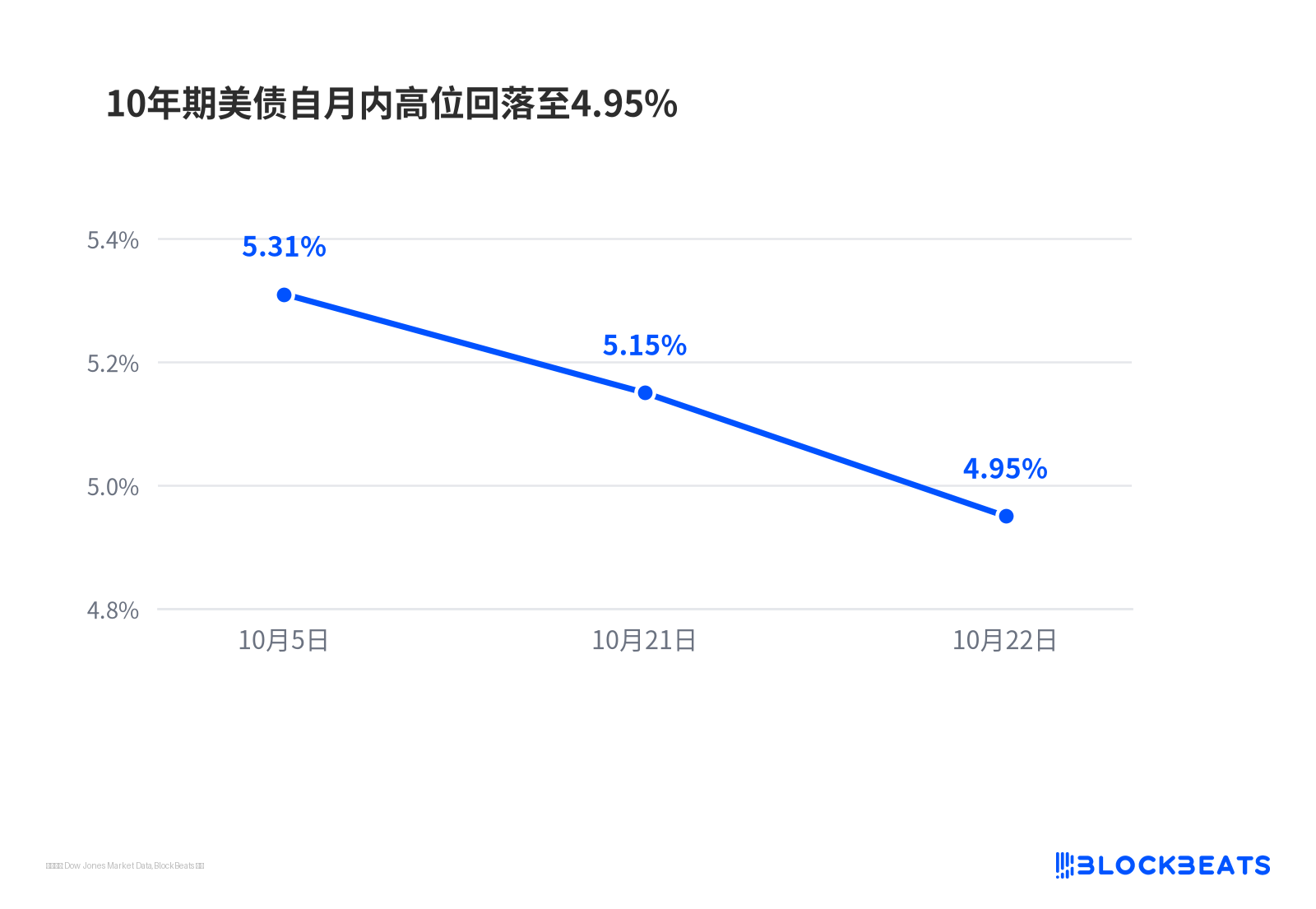
The 10-year U.S. Treasury yield pulled back from its monthly high to 4.95%
On the same day, the Nasdaq fell about 2.6%, and the Philadelphia Semiconductor Index fell more than 6% at one point intraday. The French 10-year government bond yield rose to 5.14%, and its spread over German government bonds widened to the widest since the 2011 European debt crisis.
The logic of the bond market needs to be clarified first. Investors rush to buy bonds, prices are pushed higher, and only then do yields move lower. The so-called "falling below 5%" describes buying, not bad news.
But Jeff Sherman, deputy chief investment officer at DoubleLine, said on Bloomberg Television that day that this was just an oversold repair. He remains significantly underweight the long end, with some portfolios even short the back end of the curve. On the same day, he also said he had begun buying AI-related high-yield corporate bonds. What the market is actually repricing, and why a long-bond bear is buying AI credit, are two things that need to be looked at separately.
Stocks fell first, then safe-haven flows poured into Treasuries
The most conspicuous move that day was in stocks. The Nasdaq closed down about 2.6%, its biggest drop in about four months, and the Philadelphia Semiconductor Index fell more than 6% at its intraday low.
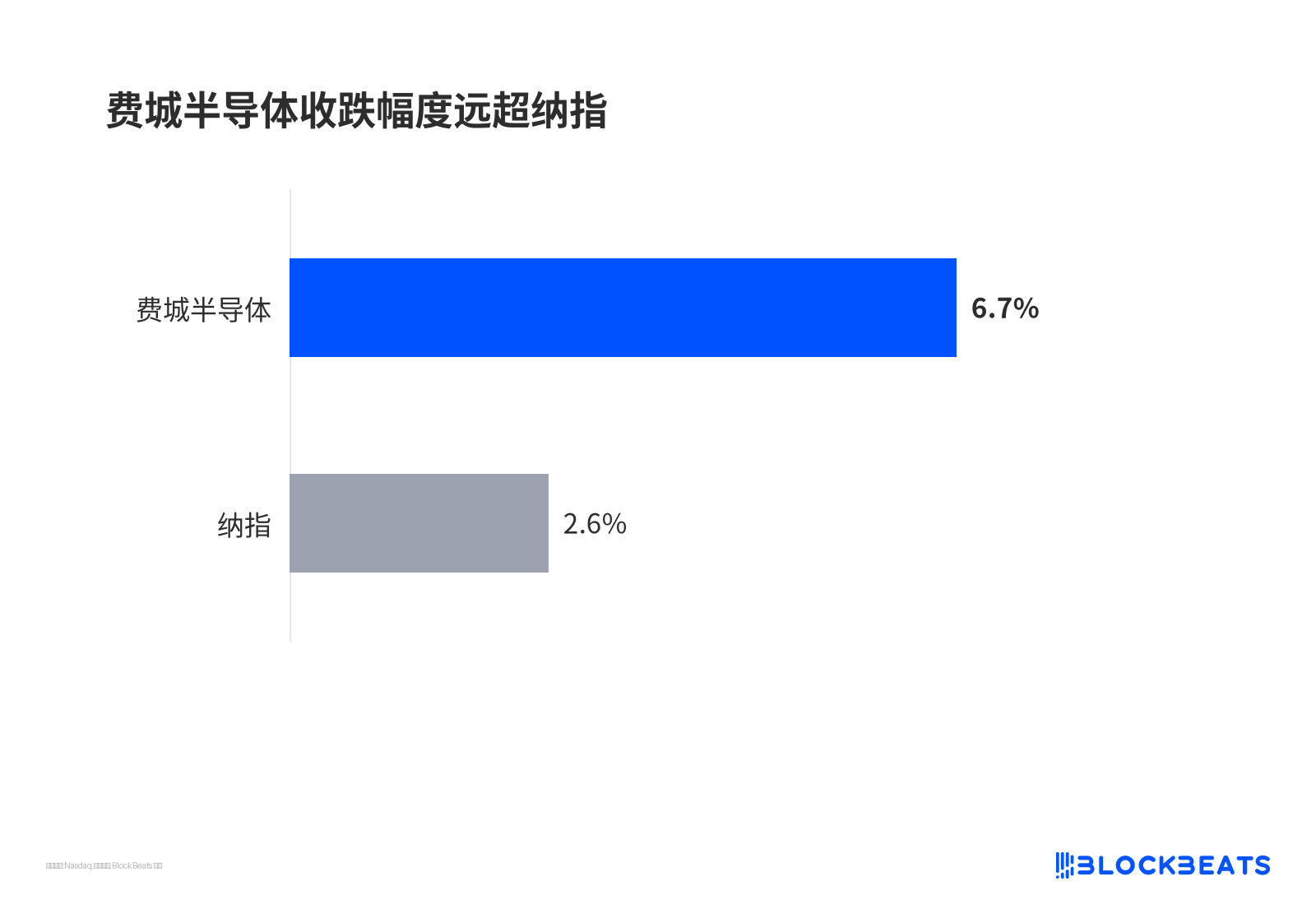
The Philadelphia Semiconductor Index closed with a decline far larger than the Nasdaq's
The trigger was Meta's earnings. Its free cash flow turned to about negative $2.1 billion, its AI capital expenditure guidance was raised, future lease and contractual commitments stood at about $825 billion, and the company also plans to issue non-voting new shares to raise funds; the stock fell 5% to 7% that day. The message the market read was very direct: the AI race has begun to ask who will pay, and for how long.
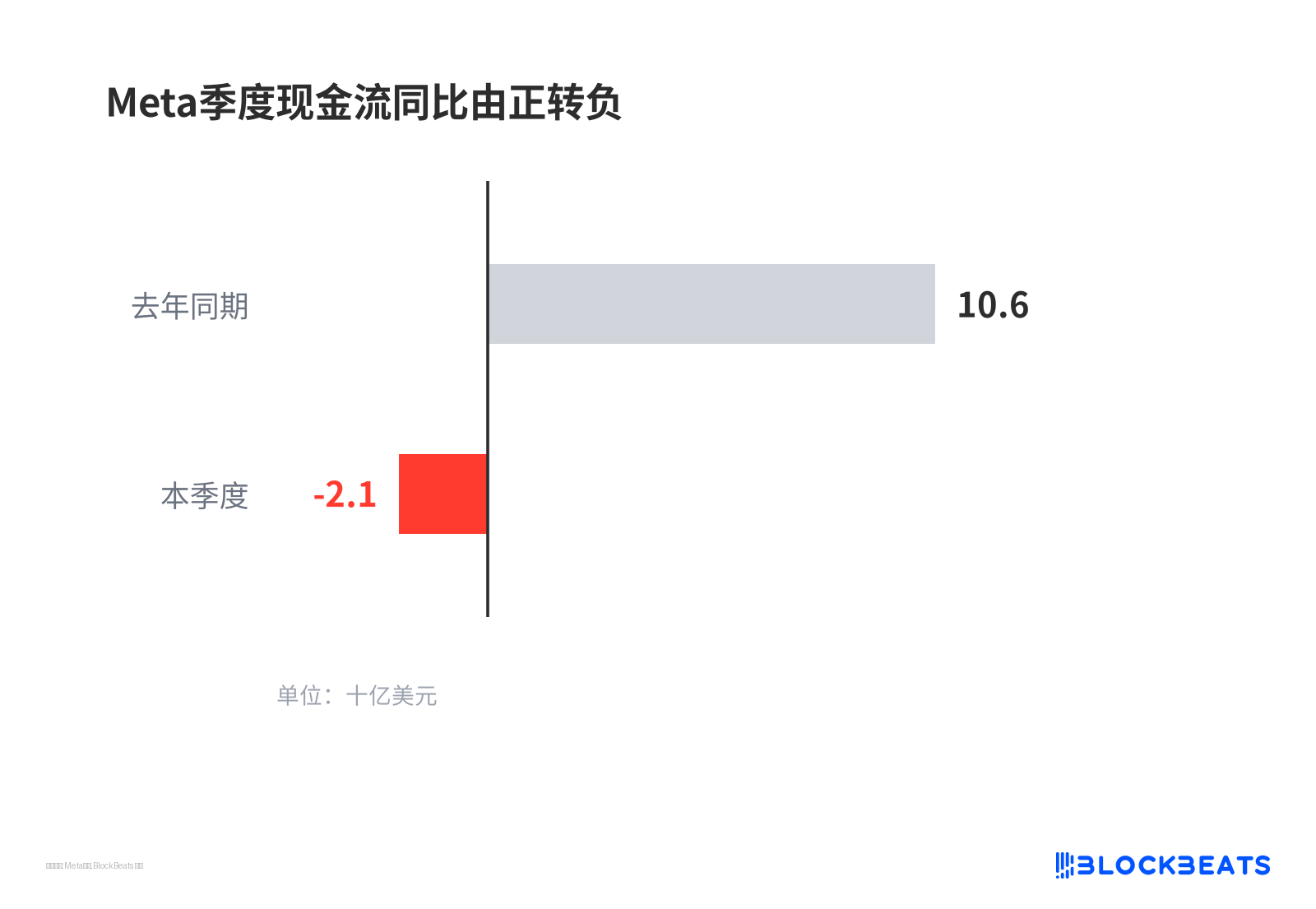
Meta's quarterly cash flow turns negative year-over-year
Nomura strategist Charlie McElligott said that day that the market is repricing in real time the probability of a "growth scare" in the US. In plain terms, investors are beginning to doubt that the AI capital expenditures that have supported US equities for more than two years will deliver returns more slowly than financing costs.
France amplifies the safe-haven bid by another layer
The French 10-year government bond yield touched 5.1415% intraday, the highest since mid-2002, with the spread over German bunds widening to about 174 to 178 basis points, the widest since November 2011.
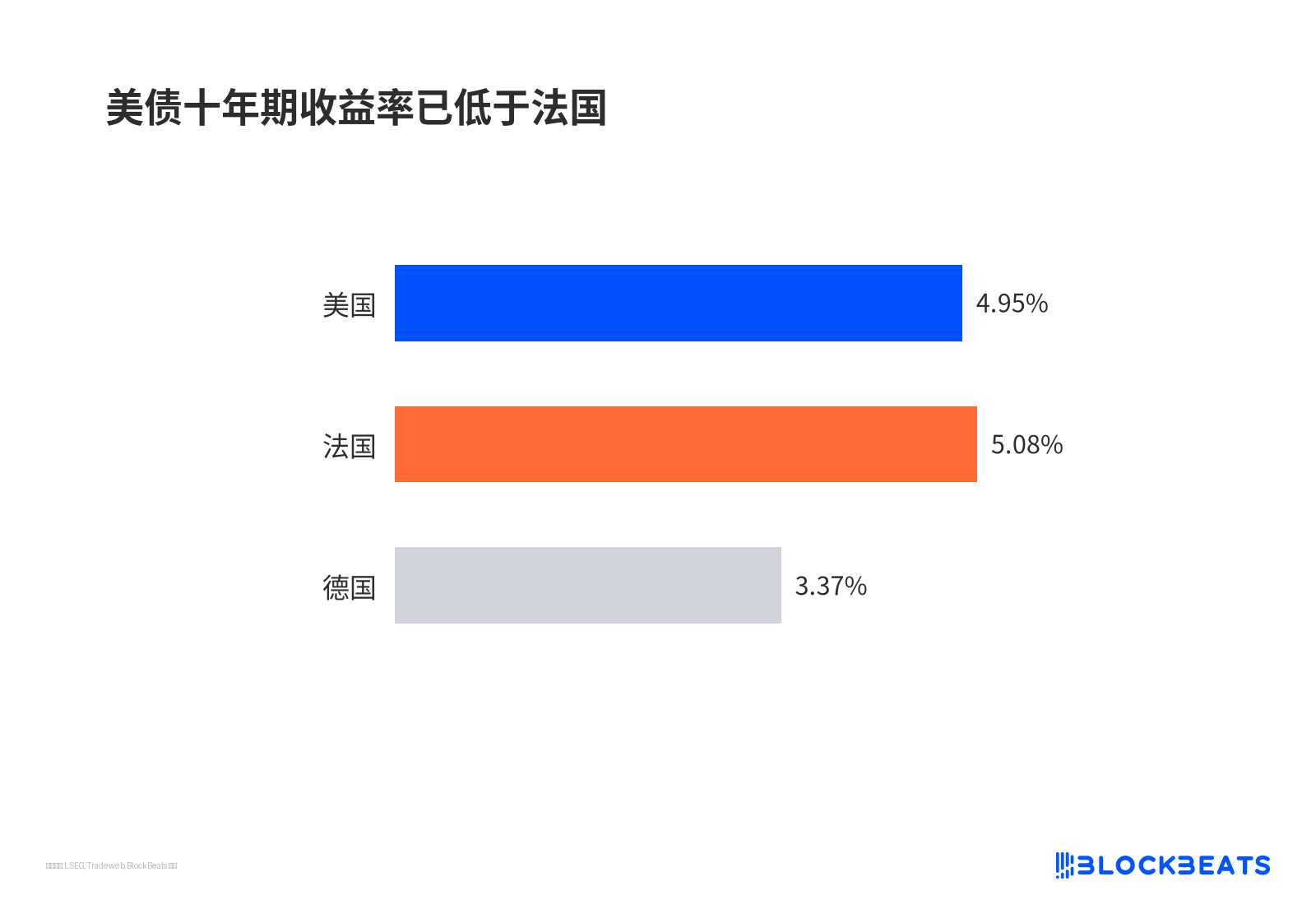
US 10-year yield now below France's
France's deficit is about 5.4% of GDP. Prime Minister Lecornu has proposed an approximately €54 billion reduction plan, and the 2027 budget will be difficult to pass in parliament, with weekend protests escalating and military police deployed, while the 2027 election is also approaching. For bond investors, the risk premium on French government debt is being repriced, and capital is simultaneously seeking safer havens.
German and US government bonds are benefiting as a result. Oil prices rose that day on Middle East tensions, which should have pushed up inflation expectations and weighed on bond prices, but the actual impact was overshadowed by risk appetite. This round of buying stems more from growth concerns; inflation is not at the center of pricing.
Shorts are crowded, and the rally includes forced buying
Options market pricing also leans toward further bond market gains. Chicago Mercantile Exchange long-bond futures positioning shows shorts are still piling up.
For every basis point yields fall, bond prices rise a little, and the mark-to-market losses of shorts expand accordingly. Once losses reach a certain level, they can only buy back to close, and the buying itself pushes prices higher. What happened that day was both real safe-haven money entering and forced buying, mixed together, making it hard to distinguish how many basis points each contributed.
Reading a single-day 17 basis point move directly as a trend reversal is exactly where the danger lies.
Sherman shorts the long end while buying AI credit
Sherman maintained the opposite judgment. His reasoning is that US government borrowing is massive, rising yields in markets such as Japan are weakening overseas demand, and these pressures "will still show up."
He also publicly criticized US Treasury Secretary Bessent. Bessent had previously said "I am the house" and called some critics "Terminal bros" (people staring at Bloomberg terminals). Sherman's response was that such remarks humiliate investors.
But in the same interview, he said he had begun "nibbling" on bonds issued by hyperscalers and new cloud providers that specialize in renting out GPUs, because yields of 12% to 15% are enough to cover bad outcomes. The two statements placed side by side are not contradictory. What he is bearish on is AI stock valuations; what he endorses is that beaten-down AI credit has coupon protection.
In the same selloff, equity and credit have been split into two asset classes. This is only the positioning of one institution, Sherman's, and cannot be extrapolated to mean that institutions broadly are bottom-fishing in AI.
Whether 5% can hold will be decided by supply and earnings
The only thing that can be confirmed on October 22 is that, in a high nominal rate environment, the market can still switch to risk-off mode within a single day, and the switch was very abrupt. It cannot prove that the long-end bear market is over.
Supply-side pressure has not changed. Bessent has already expanded long-end Treasury buybacks, yet still failed to prevent long-end yields from hitting more than two-decade highs in early October. Buybacks can improve liquidity, but they cannot change the total volume of deficit-driven debt issuance.
The first thing to watch is whether the 10-year yield can hold below 5%. If supply pressure quickly pushes it back up, these 17 basis points look more like an overcrowded short squeeze than a trend reversal.
France is another specific variable. If weekend protests and the budget process continue to deteriorate, the France-Germany spread will widen another notch, and safe-haven buying will return to US Treasuries. If the situation eases, this safe-haven premium will also fade very quickly.
A longer thread runs through AI earnings. If the next batch of companies continues to confirm upward revisions to capital expenditure and deteriorating free cash flow, pricing of growth shocks will continue. Conversely, if earnings once again prove returns, long-end yields will, after a rebound, once again face supply pressure, and that would fit Sherman's bet.
Welcome to join the official BlockBeats community:
Telegram Subscription Group: https://t.me/theblockbeats
Telegram Discussion Group: https://t.me/BlockBeats_App
Official Twitter Account: https://twitter.com/BlockBeatsAsia