Understanding Lighter Q3 Investor Meeting: Where Will the Next Growth Come From?

$137.67 billion in trading volume, $8.55 million in revenue.
This is what Lighter delivered in the third quarter of 2026. At the same investor meeting, the team also discussed the Robinhood partnership, options, U.S. licensing, technology upgrades, and LIT buybacks and unlocks.
These developments can be understood together: Lighter is operating its own trading platform while integrating trading services into more wallets, exchanges, and financial applications. Getting more customers to trade through different entry points and then using trading revenue to buy back LIT is the business logic that runs through this meeting.
Profitability
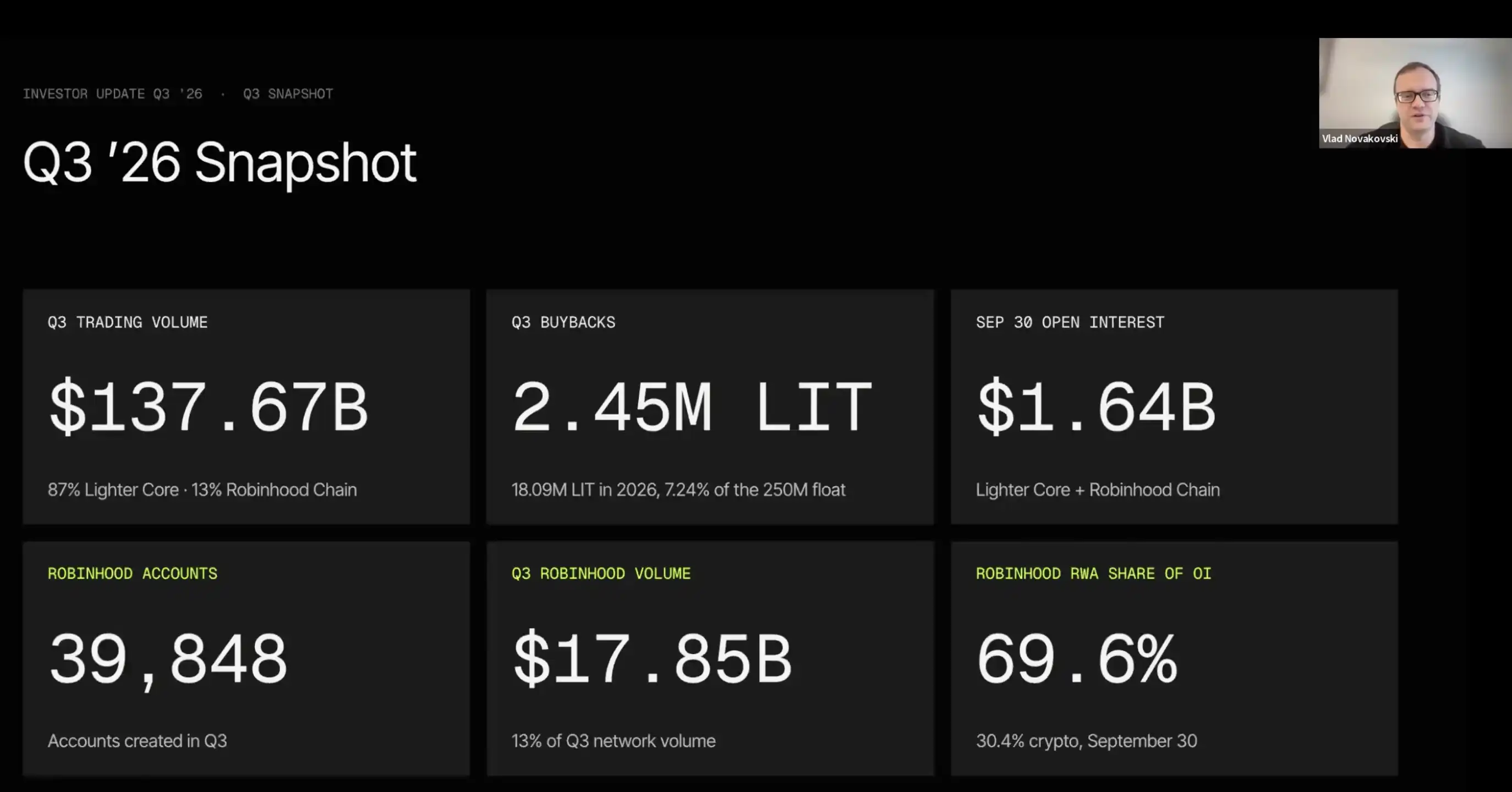
According to data disclosed at the meeting, Lighter's third-quarter trading volume reached $137.67 billion, and open interest at quarter-end reached $1.64 billion, roughly doubling from the previous quarter.
Many people associate Lighter with "free trading." But free covers standard account ordinary trading, while the platform also charges customers who need faster speed and more features.
For example, professional traders often need to place large numbers of orders programmatically and are more sensitive to order execution speed. Lighter offers Plus, Premium, and other paid accounts for these users, and standard accounts also pay a 0.01% fee when using advanced order features.
This fee model made further progress in the third quarter. The share of taker trading contributed by Premium accounts rose from 13.1% to 18.2%. Taker trading means directly matching against existing buy and sell orders in the market. An increase in this paid trading means the same volume has the opportunity to generate more revenue.
Therefore, Lighter has two directions for expanding revenue: bring in more traders, and get customers with professional needs to pay for tools and speed. Ordinary traders continue to enjoy free trading, professional traders buy the services they need, and the platform builds a revenue source between the two.
Robinhood Integration
Robinhood is the most significant business case in this meeting.
Lighter is the exclusive perpetual contract partner for the Robinhood wallet. Users operate within the wallet, the trading services behind it are provided by Lighter, and the two sides split trading revenue 50-50.
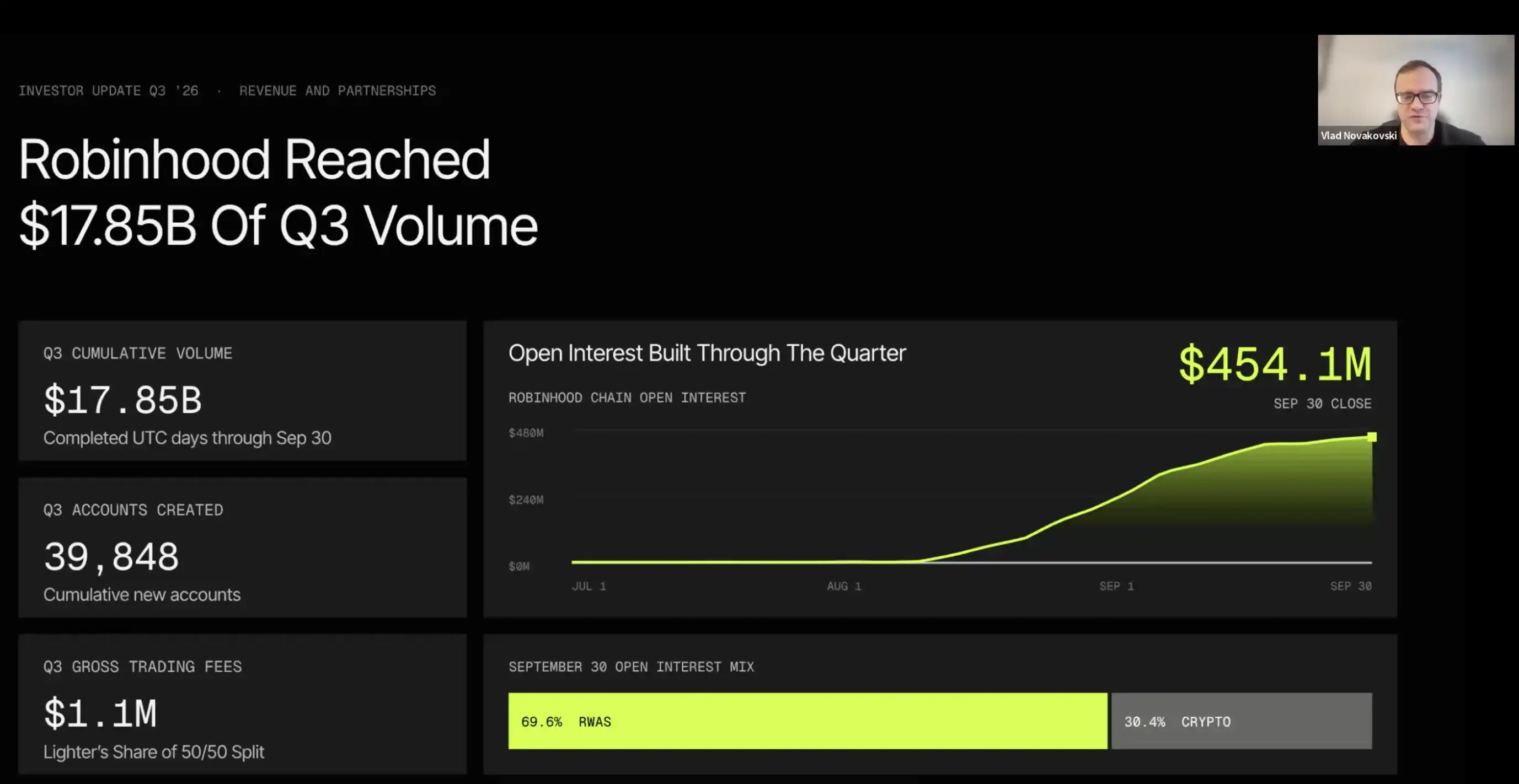
In the third quarter, this partnership generated $17.85 billion in trading volume, accounting for about 13% of Lighter's total network and contributing about $1.1 million in revenue to Lighter. At quarter-end, open interest in this business had reached about $454 million.
For Lighter, this validates a way to scale the business. Running your own trading platform requires getting customers to learn about the product, visit the website, and then start trading; by integrating with Robinhood, it can directly serve customers already in their wallets. Robinhood can also leverage the ready-made trading system to add features for its users.
Wherever customers are willing to trade, Lighter aims to bring its services there.
This partnership also brings different trading demands. In Robinhood's business, nearly 70% of open interest comes from RWAs; traders on Lighter's own platform lean more toward crypto assets. Customers coming through different entry points focus on different markets.
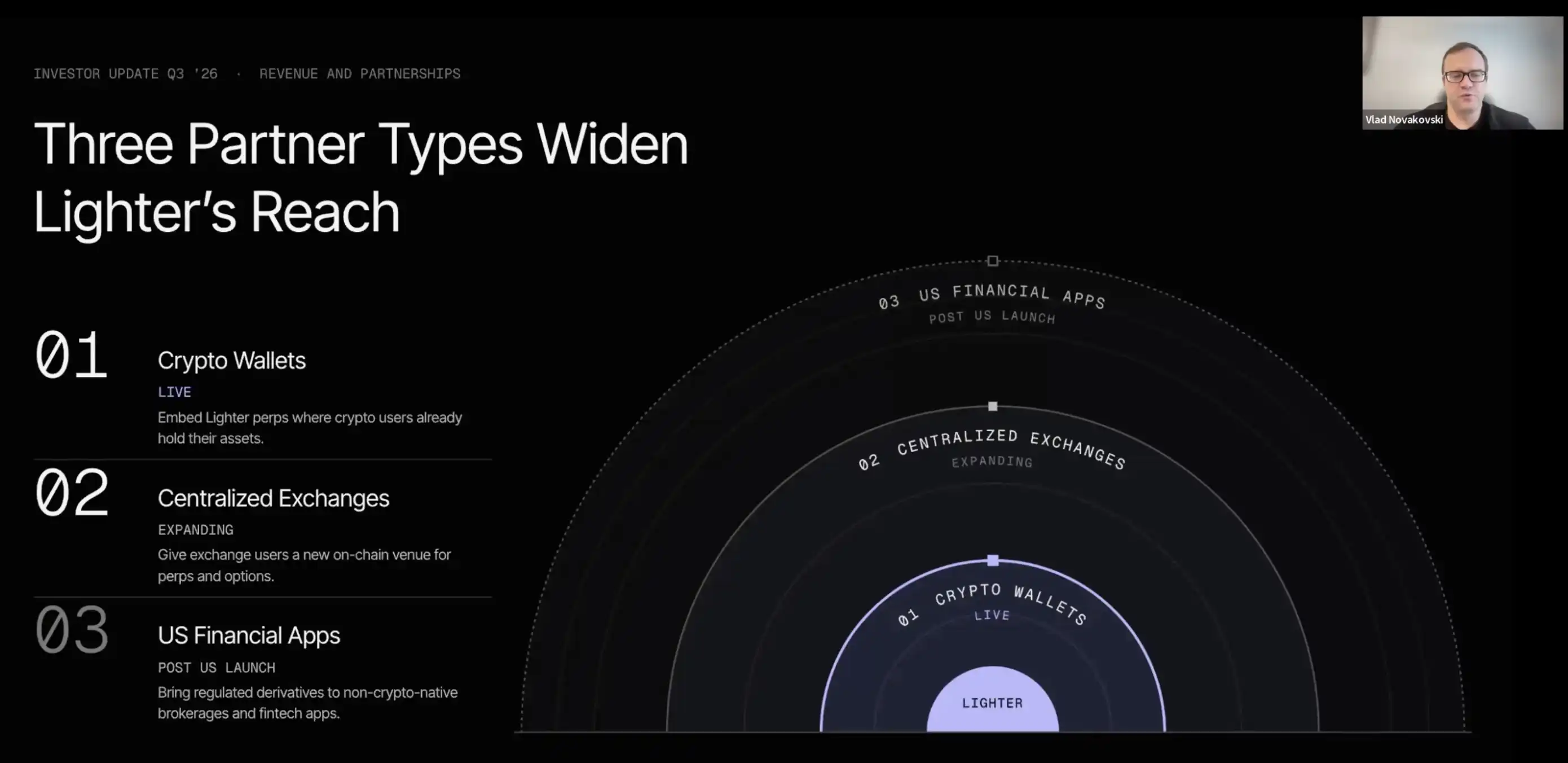
The team therefore categorizes partnership directions into three types: crypto wallets, centralized exchanges, and financial applications that can be integrated once U.S. licenses are obtained in the future. The first two categories can bring existing crypto users, while the latter has the opportunity to reach more brokerages and traditional financial clients.
To drive these partnerships, Lighter not only opens up development tools but also assigns engineers to help partners complete customized integrations. For a company looking to add contract trading features, having someone assist in building the product is easier to advance than simply receiving a technical interface document.
On-Chain Options
Once customers come in, what trades they can make is another equally important matter.
The team stated at the conference that binary options went live the week of the conference, with standard call and put options planned for launch by year-end.
Binary options are relatively intuitive, settling based on whether the price meets agreed conditions. Standard options offer more combination possibilities—they can be used to bet on price direction, hedge position risk, trade volatility, or build strategies that collect premiums.
For example, if an asset holder wants to keep their position while mitigating losses from a price decline, options can provide the corresponding hedging tools. For professional institutions, perpetual contracts and options can also be used together to manage risk across an entire portfolio.
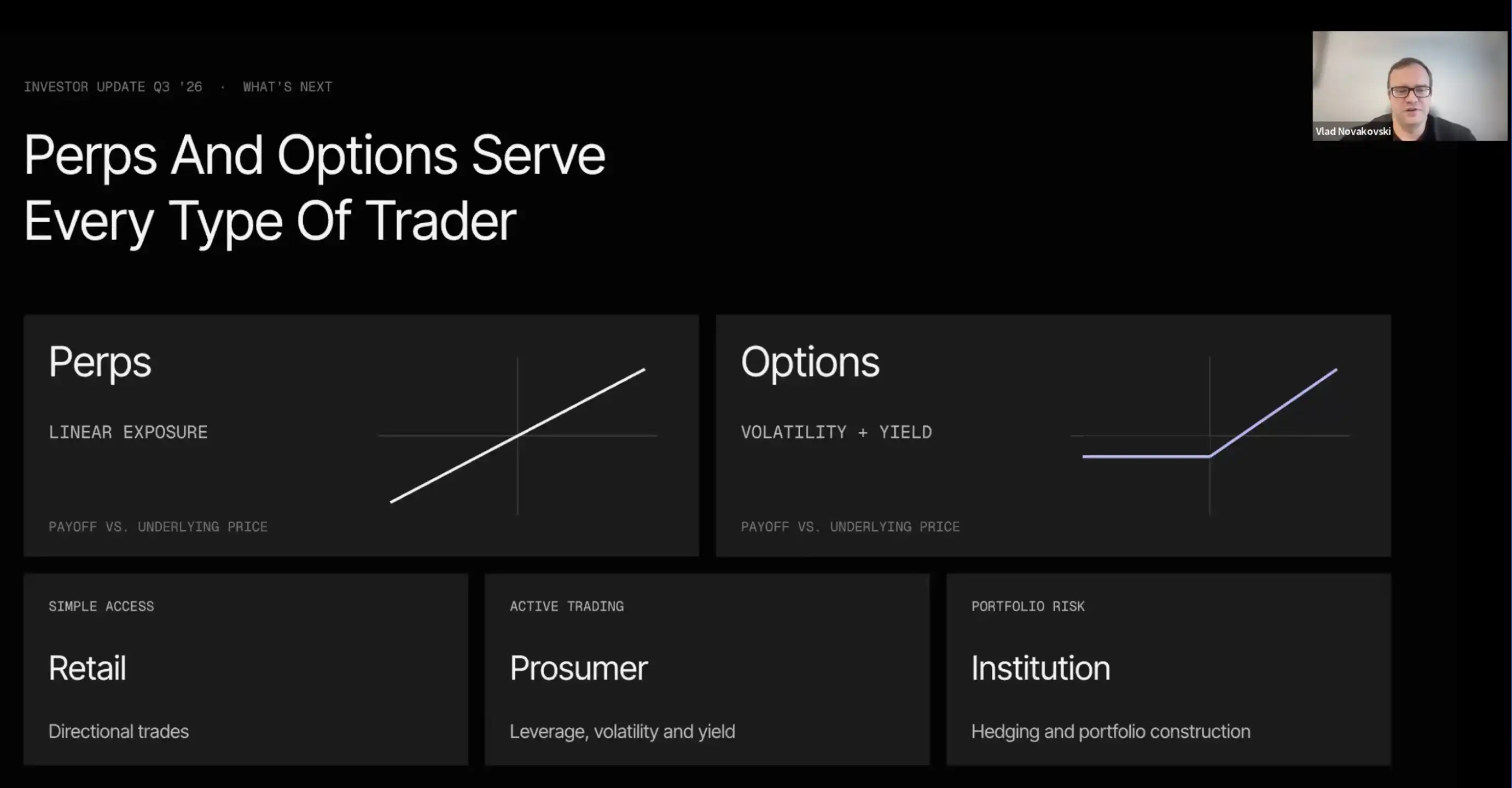
The trading demands Lighter aims to capture thus become broader. Some come in to open a long position, some need to hedge risk on existing assets, and others need to run complex strategies over the long term. The more complete the product offering, the more opportunities customers have to complete these trades in one place.
Alongside options, "portfolio margin" is also being advanced. The name sounds technical, but the core idea is simple: group positions that can partially offset each other's risk together to reduce redundant capital occupation.
According to the team's introduction, collateral in the account can currently be shared, but the margin required for each position is still calculated separately. The planned new system will evaluate spot, perpetual contracts, and options of the same asset together, calculating how much loss the entire portfolio would suffer during significant market fluctuations.
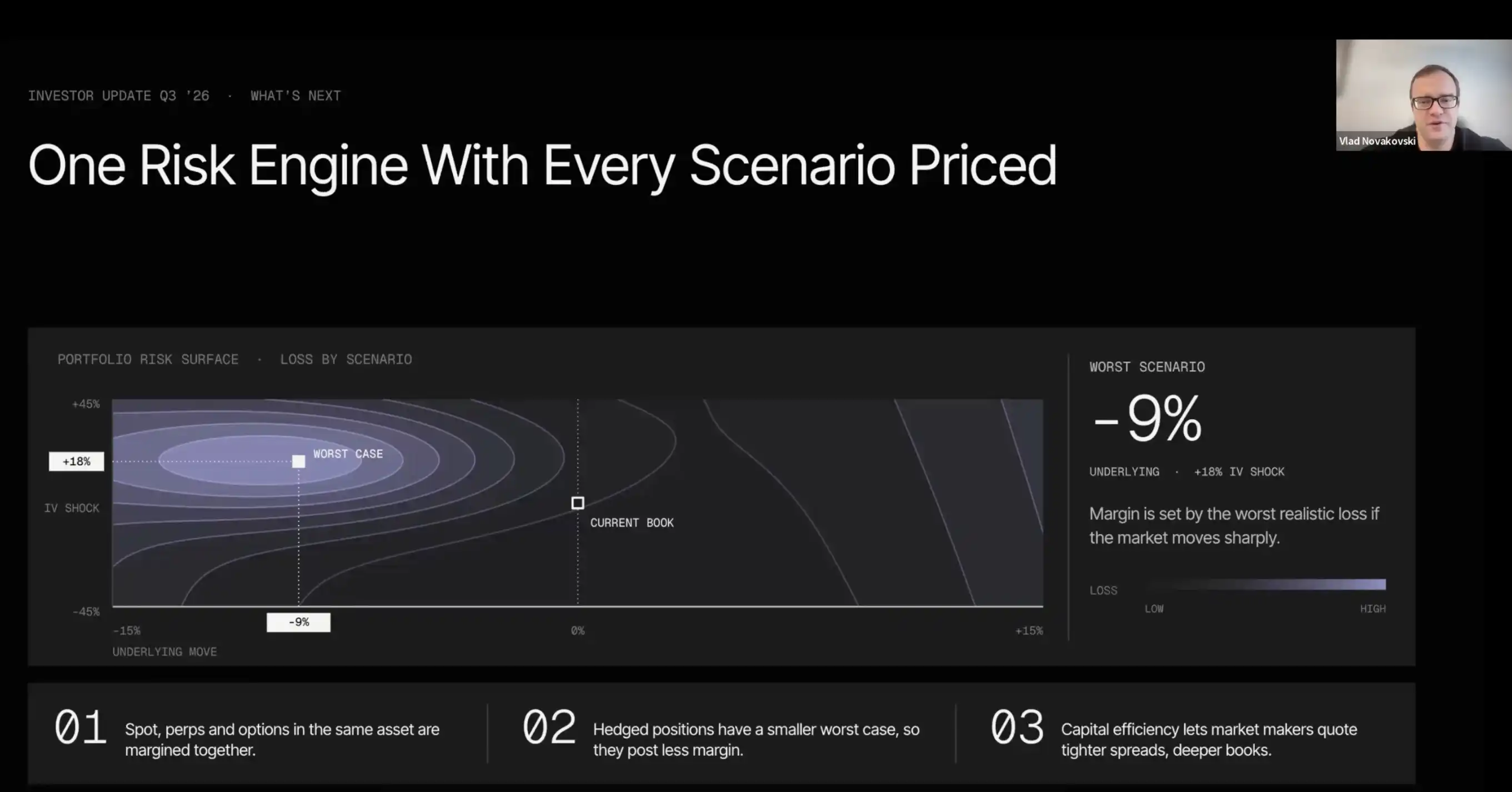
If some positions can hedge each other, portfolio risk will decrease, and the required margin may also be reduced. This way, traders won't need to tie up as much capital for each position separately, and market makers can allocate more capital to place orders and quotes.
This will ultimately affect ordinary people's trading experience. Improved capital utilization for market makers helps narrow bid-ask spreads, increase executable orders, and make it easier to complete a trade at a suitable price. Whether the options business can be done well depends not only on how many products are launched, but also on whether these products are easy to trade.
Technical Upgrades
More trading products and more partners all require the underlying system to keep up.
Lighter disclosed that the cost of generating zero-knowledge proofs this year has dropped by more than 50%, with average block proof time shortened from about 5.3 minutes to about 1 minute.
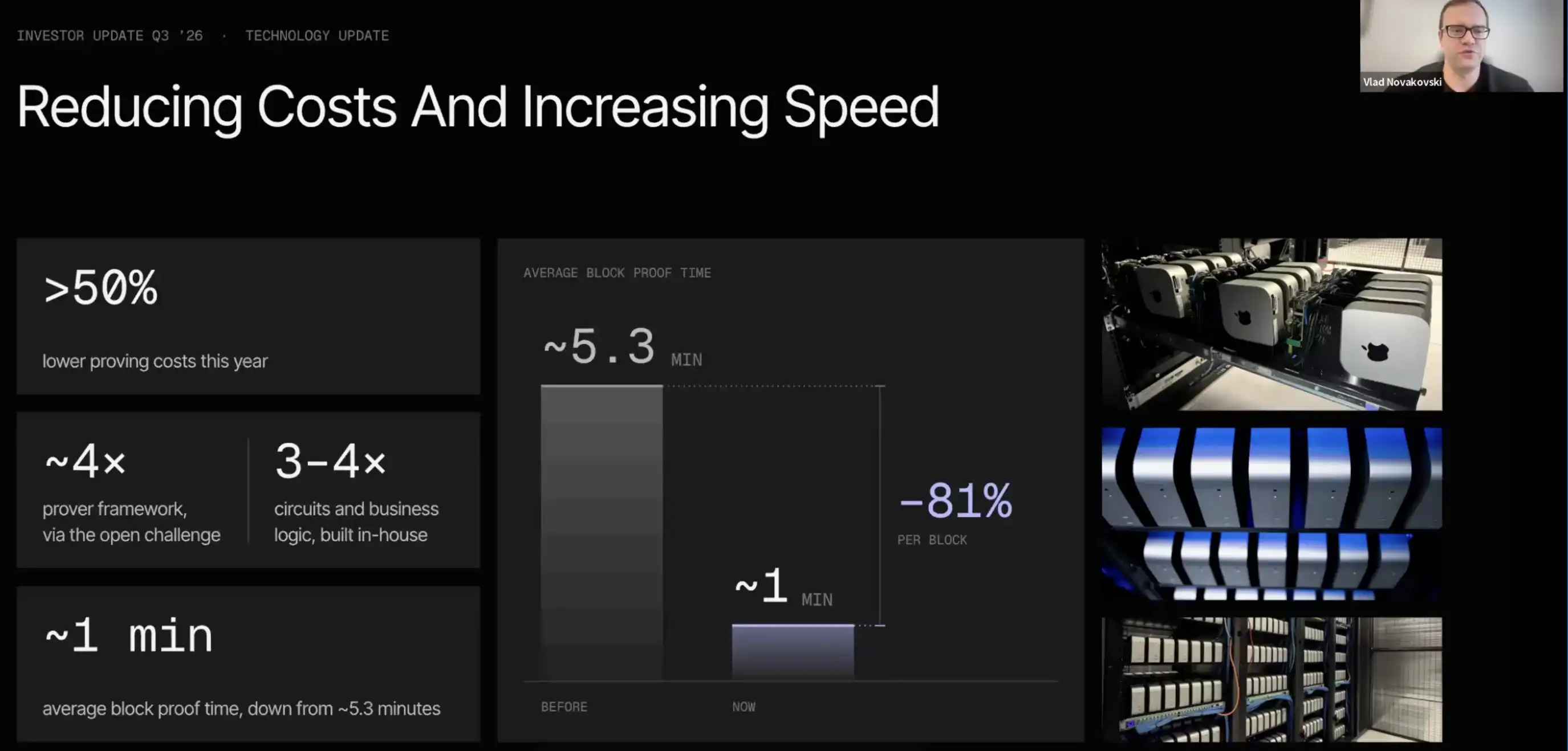
Verifying transactions costs less, and processing proofs is faster. For Lighter to provide low-cost trading over the long term, it needs to continuously reduce the cost of running the system.
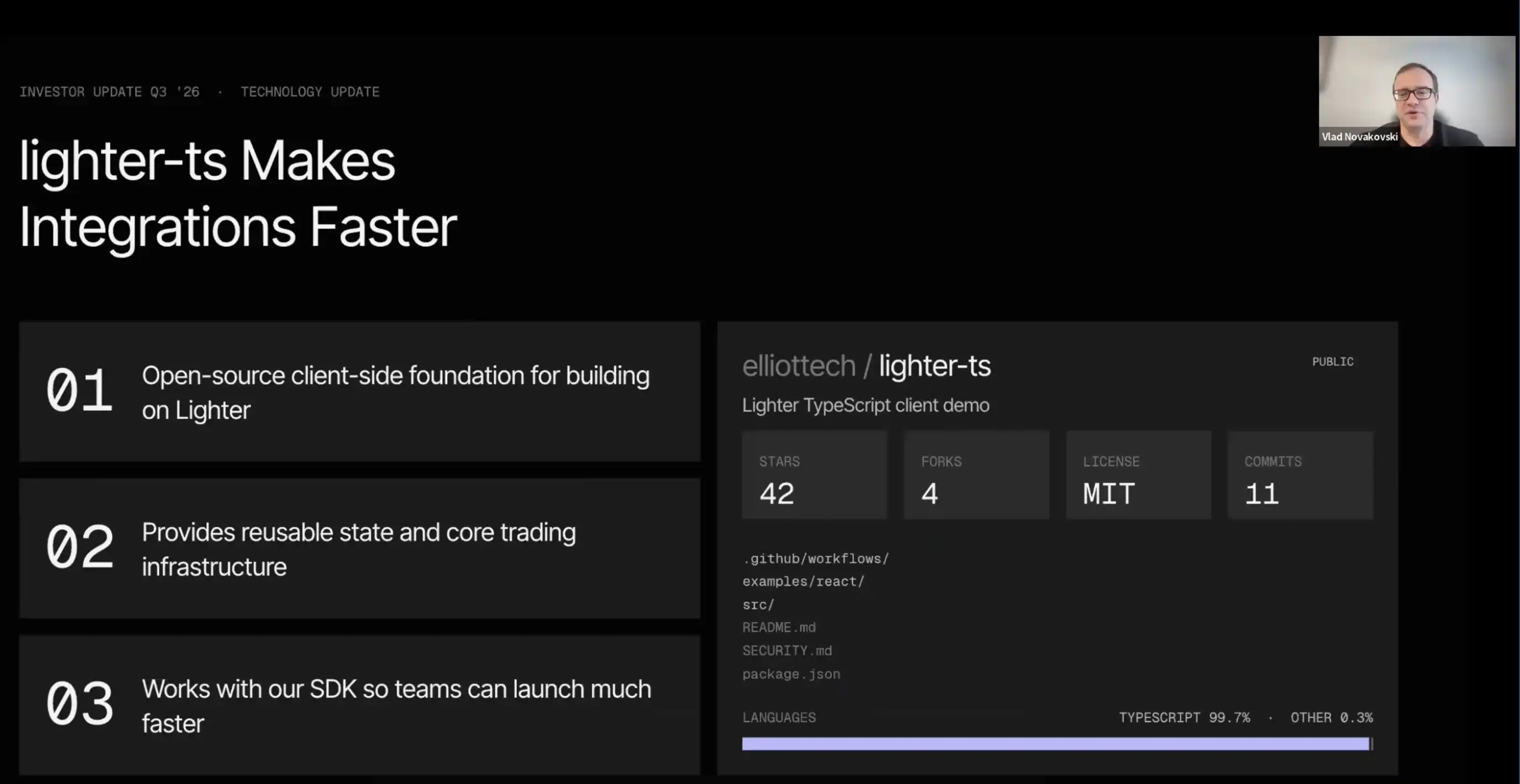
Another task is making it easier for others to integrate. The open-source tool lighter-ts provides reusable trading components, allowing developers to add Lighter's trading capabilities to their own products without building every feature from scratch.
LighterEVM, planned to launch on mainnet by the end of the year, will further expand what developers can do. It allows external teams to develop on-chain fund management, request-for-quote, deposit, and trading applications around Lighter's core trading system.
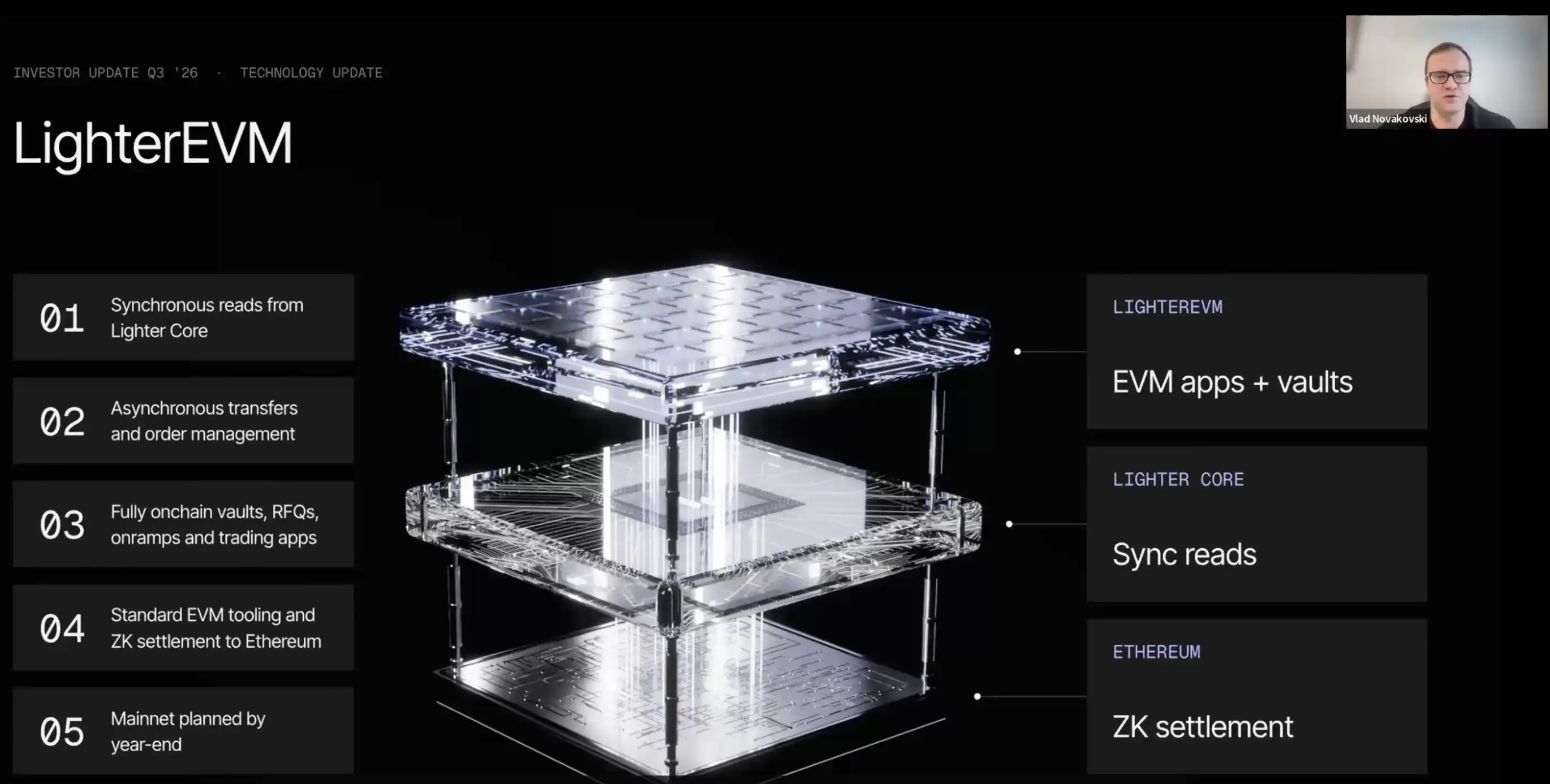
The division of labor can be understood as: the core system handles trading, while LighterEVM provides developers with space to write applications. These applications can read data from the core system and submit transfer and order requests, helping different customers use the same set of trading services.
Security was also a key focus of the Q&A. The team explained the multi-layered checks between trade execution, proving, and Ethereum verification, as well as internal and external reviews and validation work on critical components. For financial institutions preparing to integrate trading services, this foundational work directly affects their willingness to collaborate.
U.S. Licenses
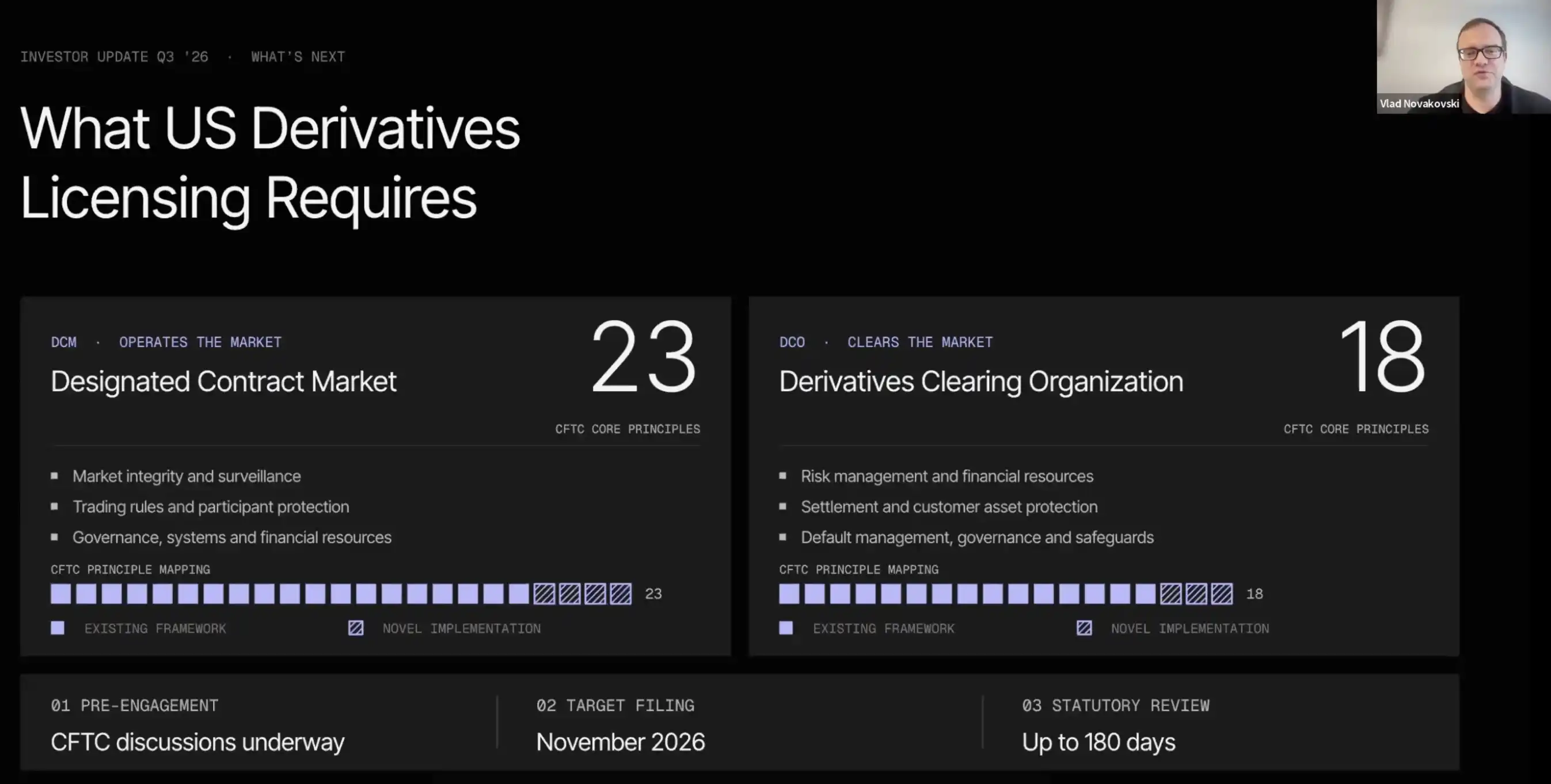
Lighter plans to submit applications to the U.S. Commodity Futures Trading Commission (CFTC) in November 2026, seeking both DCM and DCO qualifications.
DCM corresponds to operating a trading market, while DCO corresponds to clearing. Simply put, the former involves how orders are matched and how the market operates, while the latter involves margin, settlement, and how defaults are handled.
The licensing path the team is pursuing covers perpetual contracts and options. The review window mentioned at the event is a maximum of 180 days, and the team hopes prior communications will help smooth the process, though no confirmed approval date was given.
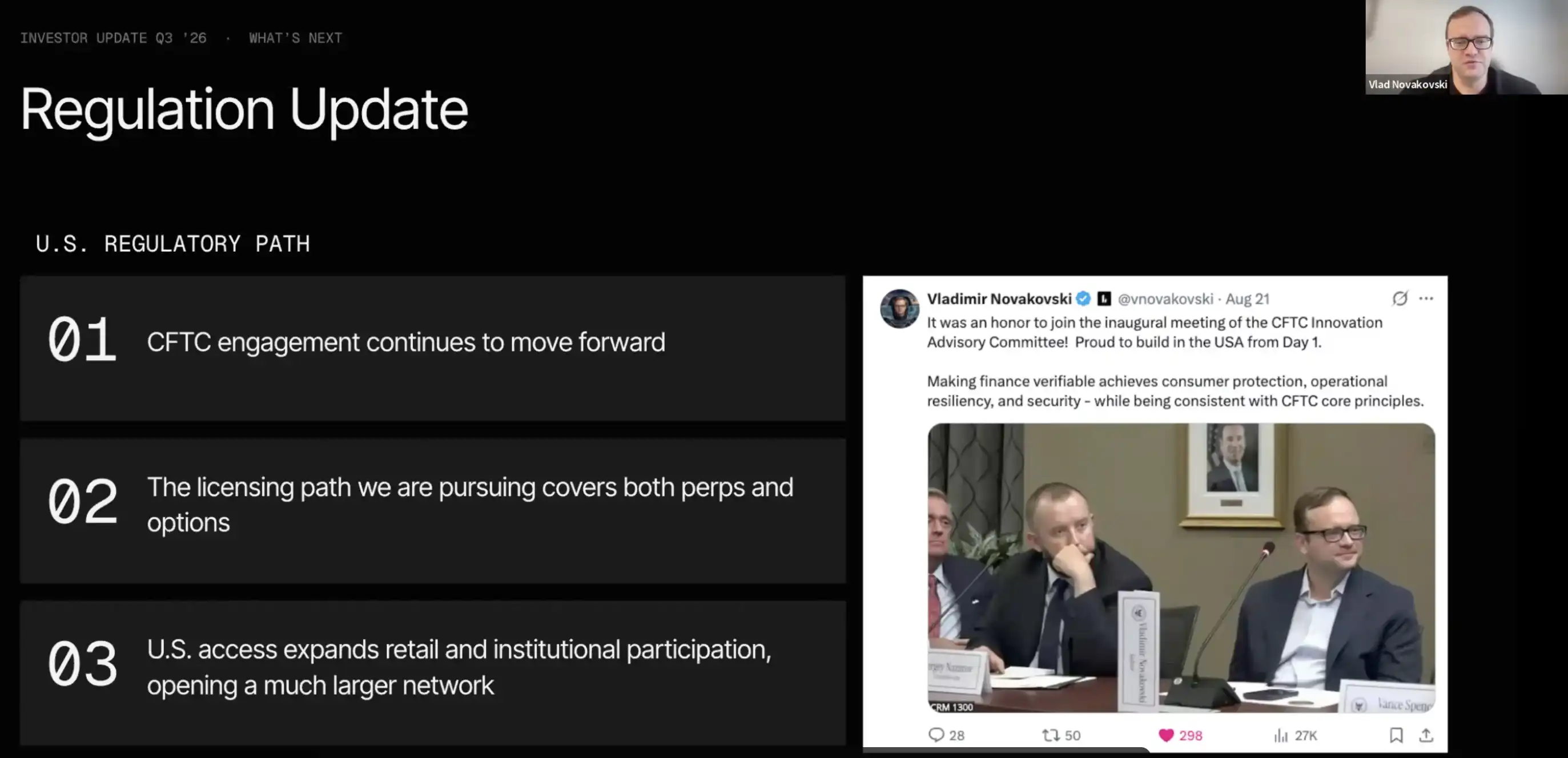
The significance of this for the business lies in expanding the range of customers it can serve. U.S. retail traders, institutions, and financial applications requiring licensed trading services are all within the market Lighter hopes to enter.
Robinhood is also directly relevant here. The existing wallet partnership has already given both parties experience operating products together. The team stated that after obtaining the relevant licenses, it hopes to integrate perpetual contract or options services into more of Robinhood's U.S. businesses based on Robinhood's product needs.
At the same time, Lighter also hopes that other brokerage-type institutions will route customer orders to its trading market. What it wants to capture is the trading services business behind multiple financial applications.
Licenses determine which markets can be entered, options expand what customers can trade, and partners help these services reach customers. Only by advancing several directions simultaneously is there a chance to convert technical capabilities into greater revenue.
Token Buybacks
For LIT holders, how these businesses ultimately reflect on the token is the most direct question.
Lighter's arrangement is to use 100% of trading revenue for LIT buybacks. In the third quarter, a total of 2.45 million tokens were repurchased, and cumulative buybacks through the third quarter of this year reached 18.09 million tokens. The team stated that the repurchased tokens have been burned.
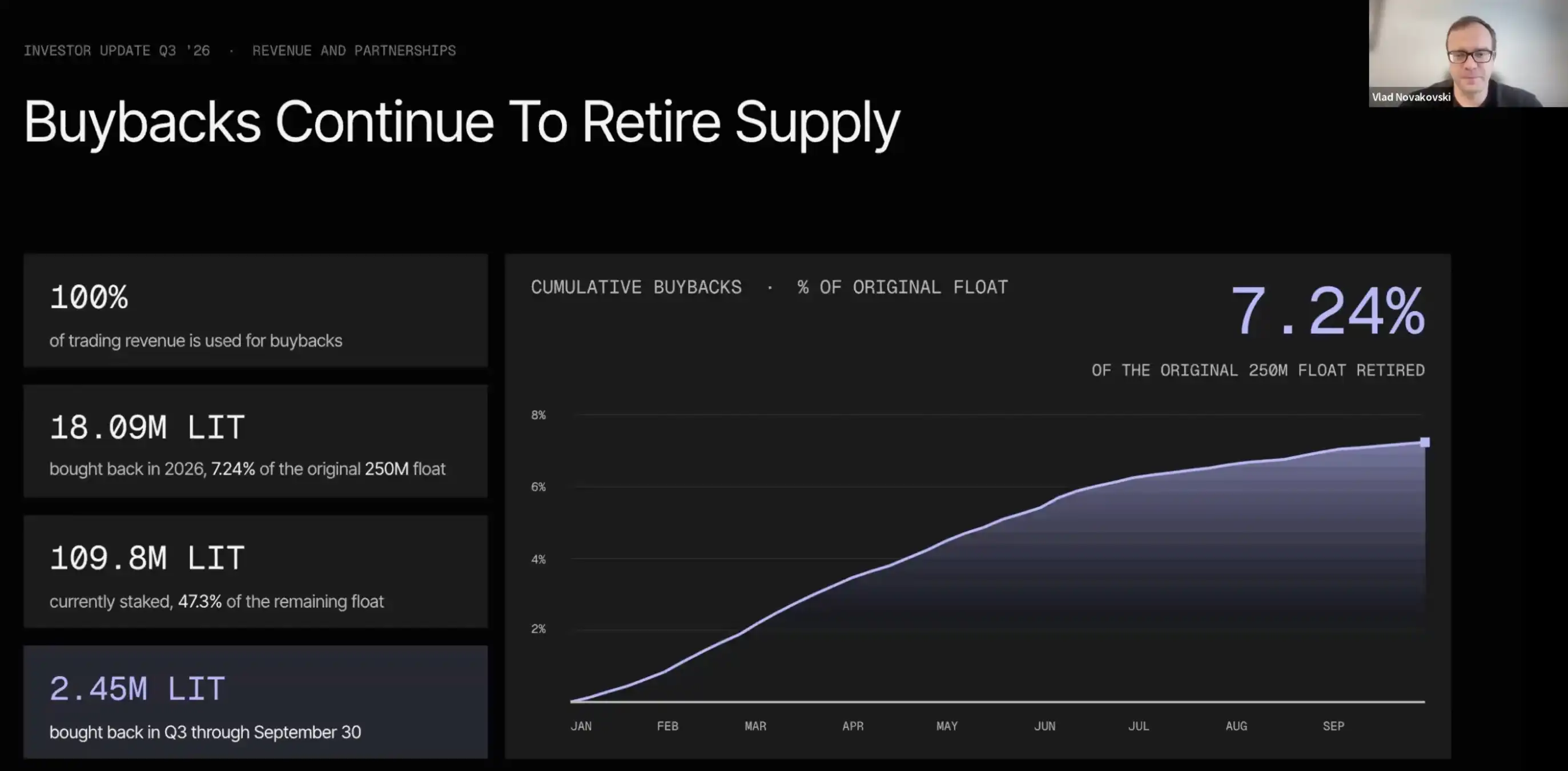
Staking adds a use case for LIT. Paid traders can stake to receive fee discounts and higher API usage limits, and the staking volume disclosed at the event has reached approximately 109.8 million tokens. The more stable trading demand becomes, the more attention this type of usage demand deserves.
On the unlocking side, the team's arrangement is a linear release over 36 months starting January 29, 2027. Meanwhile, the team is in discussions with existing investors and potential strategic partners, hoping that collaborators interested in increasing their LIT holdings can take over a portion of the shares that existing investors are willing to transfer.
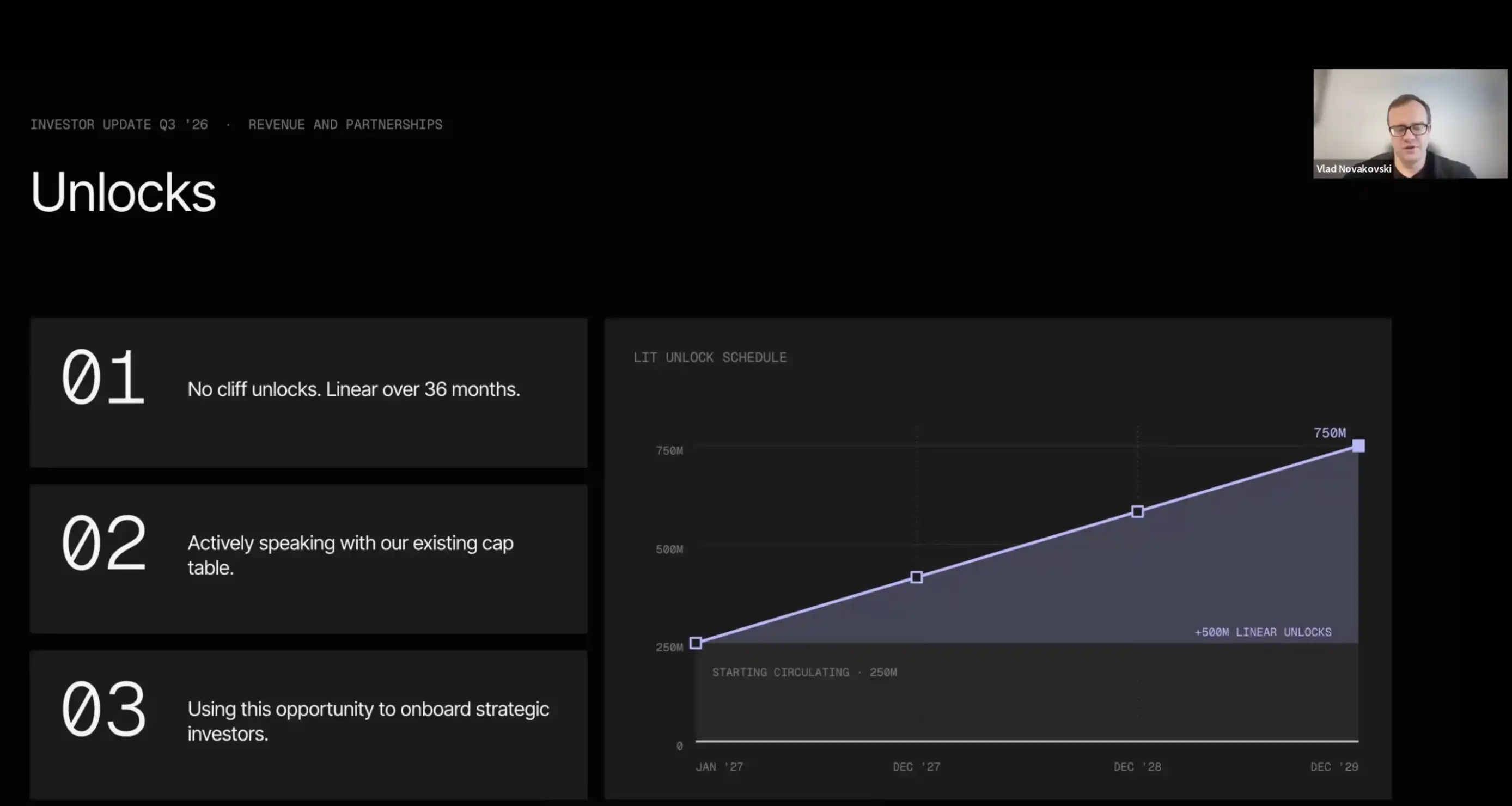
Some partners want to use Lighter's trading services while also holding LIT. Advancing business cooperation and token allocation together helps bring in partners willing to participate for the long term.
Welcome to join the official BlockBeats community:
Telegram Subscription Group: https://t.me/theblockbeats
Telegram Discussion Group: https://t.me/BlockBeats_App
Official Twitter Account: https://twitter.com/BlockBeatsAsia