Are AI orders enough to pay off debt? Credit markets are pricing in distress for high-leverage infrastructure first.

TL;DR
· U.S. September CPI came in above expectations, and CoreWeave's five-year CDS rose intraday to 1194.5 basis points, implying a five-year default probability of more than 60%.
· What the credit market is pricing is the time mismatch in AI infrastructure. Order backlog will not be recognized for years, but buying GPUs and building data centers must be paid for now. CoreWeave's second-quarter equipment spending was $6.42 billion, while operating cash flow was only $679 million.
· Related tickers: CRWV, ORCL, DELL, HPE, NVDA, Samsung Electronics, SK Hynix.
U.S. September CPI rose 3.7% year over year and 0.6% month over month, both above expectations, with gasoline prices up 9.1% month over month and contributing about half of the monthly increase.
Hours after the data was released, CoreWeave's five-year CDS (credit default swap, essentially default insurance) rose intraday to 1194.5 basis points, setting a record, while the yield on bonds maturing in 2031 briefly topped 16%.
The selloff also hit equities. According to reports, Dell fell about 19% over two trading days, South Korea's KOSPI index plunged on October 15 and triggered a circuit breaker, with Samsung Electronics and SK Hynix leading the decline.
CoreWeave is a neocloud, meaning a new cloud provider that borrows money to buy GPUs and then rents out computing power. The money for buying cards and building data centers must be paid now, while rent is collected slowly under multi-year contracts, so when rates move, it feels pressure sooner than Microsoft and Google.
The $104.2 billion order backlog (RPO) management uses for its defense refers to future revenue from signed contracts that has not yet been recognized, not cash on the books.
On the same day, CoreWeave CEO Michael Intrator wrote in an internal memo that the market "misunderstands and is irrational," and that the $104.2 billion backlog is enough to cover debt. What the credit market is offering, however, is distressed pricing.
CDS quotes a distressed price, CEO says the market is irrational
The credit market reading is blunt. CoreWeave's five-year CDS set an intraday record of 1194.5 basis points, and converted using common models, the implied five-year default probability is more than 60%.
The yield on 2031 bonds reached as high as more than 16% intraday, while 2032 unsecured debt briefly fell below 80 cents, already at distressed-debt levels.
Oracle didn't escape either, with its five-year CDS simultaneously hitting a record high. For an investment-grade issuer, this reading means downgrade pressure and forced-selling risk are both rising.
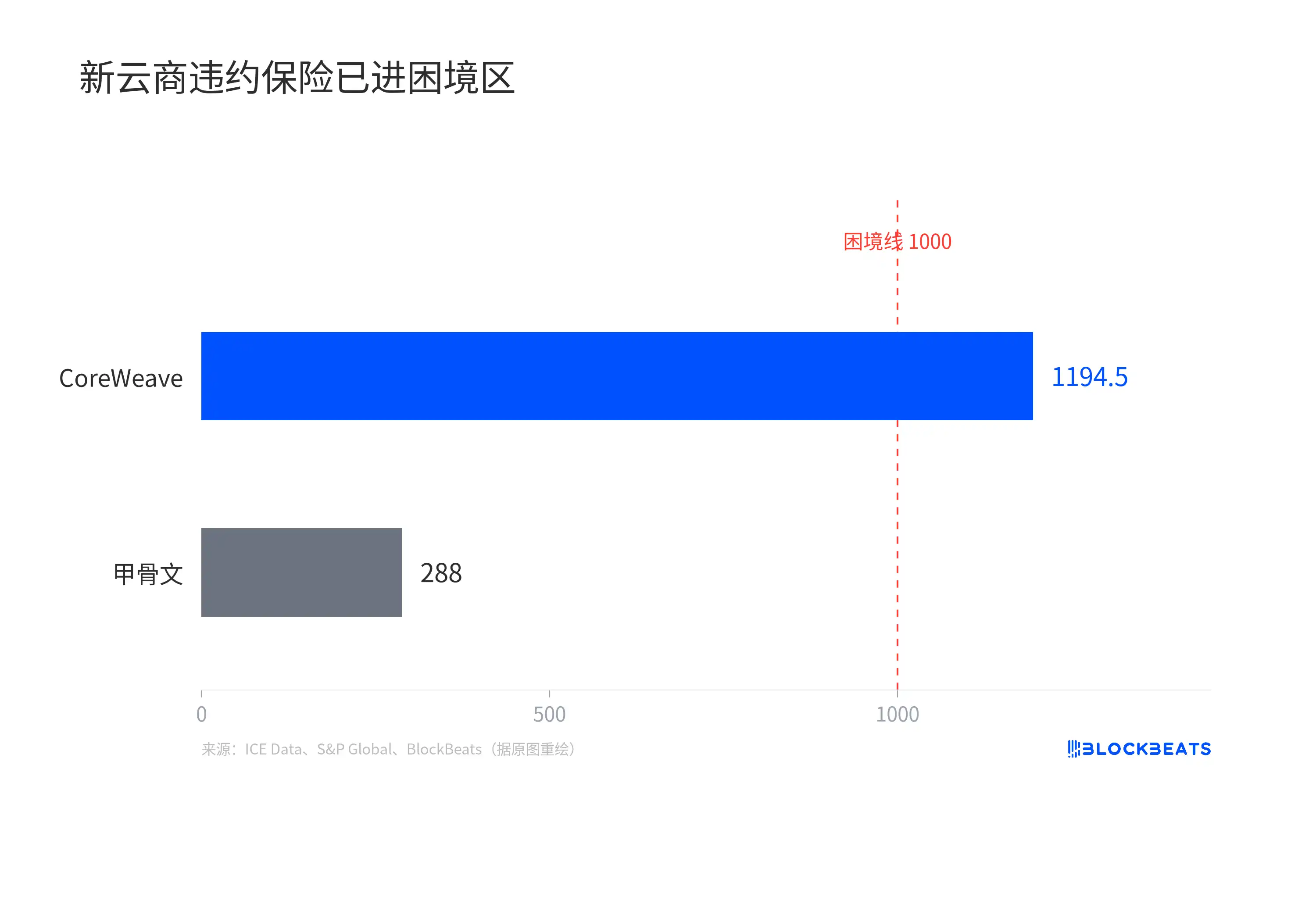
New cloud provider default insurance has entered distress territory
Intrator's memo offers a different narrative. The market "misunderstands and is irrational," and the $104.2 billion in reserves as of the second fiscal quarter is enough to cover debt, with more than $25 billion in net commitments added in the third fiscal quarter.
But reserves are revenue recognized gradually over many years, not cash that can immediately repay debt. In the second fiscal quarter, CoreWeave's operating cash flow was about $679 million, equipment spending was about $6.42 billion, interest expense was about $640 million, and debt and leases combined were about $50 billion to $52 billion.
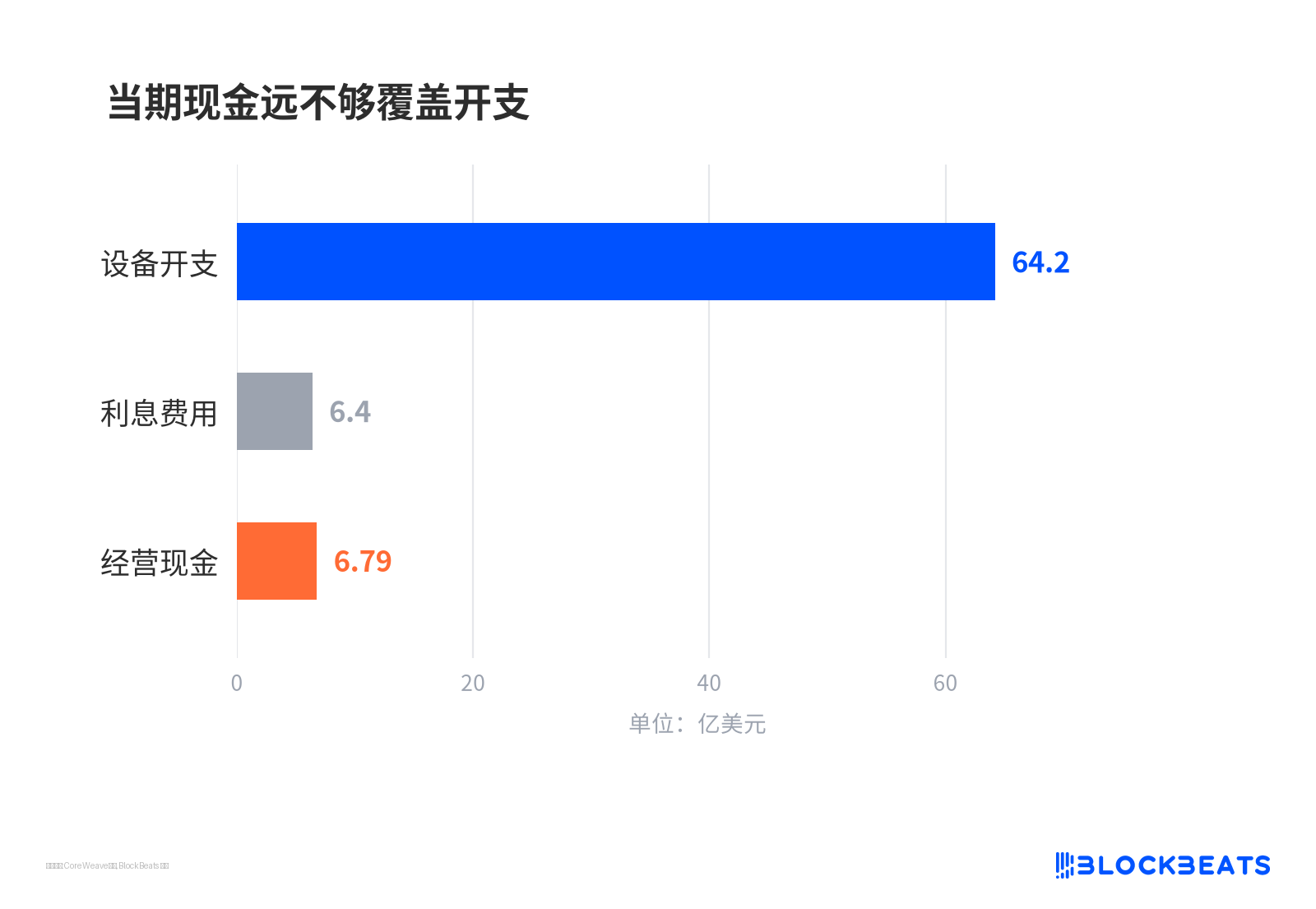
Current cash is far from enough to cover expenses
Management's defense rests on a debt-servicing metric that has not yet been independently verified.
Barclays downgrades Dell, hardware growth broken down into memory price increases
On October 14, Barclays analyst Tim Long downgraded Dell, Hewlett Packard Enterprise, and NetApp from overweight to equal weight, citing valuations that had run ahead and the fact that he saw no "meaningful enterprise AI inflection point."
His more striking judgment came from channel checks. Hardware vendors' strong enterprise revenue was "more about memory costs than enterprise AI." Dell fell about 11% the same day and another about 7% to 8% the next day, for a two-day cumulative drop of about 19%.
And the day before the research report was published, Michael Dell himself publicly said enterprise AI was just beginning and demand would still exceed supply through 2030.
The disagreement can be reduced to one specific question. When an AI server sells for more, is it because customers are expanding purchases, or because memory price increases are raising the unit price of the entire machine? Barclays' channel checks show enterprise AI accounts for only about 5% of IT budgets, and hardware accounts for only about a quarter of that.
If that ratio holds, server vendors' revenue growth is closer to a component price-increase cycle than an enterprise adoption inflection point.
Jensen Huang says no need to backstop, Nvidia itself is also a shareholder
On October 15, Jensen Huang said in a Bloomberg interview in Stockholm that CoreWeave's strength is growing every day, its cost of capital is actually falling, and Nvidia does not need to backstop it.
But Nvidia holds about a 10% stake in CoreWeave and is also its equipment supplier. "No need to backstop" and being bound by its own interests can both be true at the same time, and part of the demand risk is inherently on Nvidia's books.
Nvidia is both a seller and a shareholder. The overlap of multiple roles means its verbal endorsement of a customer's credit condition naturally needs to be discounted.
How quickly the $104.2 billion reserve is realized is the dividing line
A boundary needs to be drawn here. Elevated CDS means the financing window is narrowing and the cost of hedging AI trades is rising, but it does not mean default has already entered a countdown.
The sharp selloff in South Korean memory stocks also includes narratives about memory competition and increased Chinese supply, and cannot all be attributed to CoreWeave.
Current prices also do not prove that AI compute demand itself has run into trouble. This round of adjustment looks more like a repricing of financing costs, not a vote on compute demand.
What determines the direction is the speed at which reserves are realized. If the $104.2 billion reserve steadily converts into operating cash flow on a quarterly basis, this selloff is just a rate shock. If reserve conversion continues to lag interest growth, the problem slides from the valuation level to the solvency level.
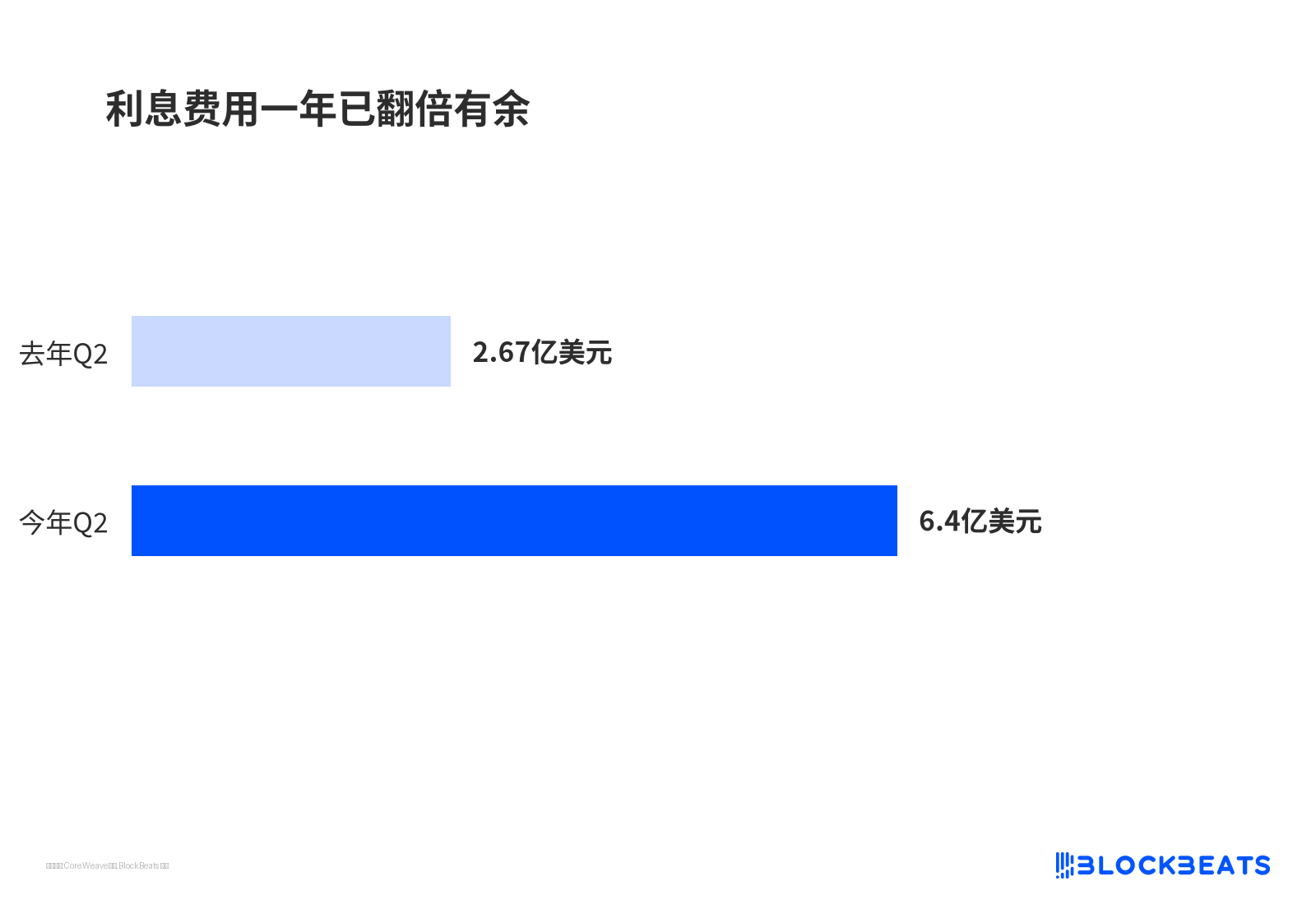
Interest expenses have more than doubled in a year
And whether the refinancing window continues to narrow and whether inflation pushes the Federal Reserve into action will determine how long the credit market is willing to wait.
Welcome to join the official BlockBeats community:
Telegram Subscription Group: https://t.me/theblockbeats
Telegram Discussion Group: https://t.me/BlockBeats_App
Official Twitter Account: https://twitter.com/BlockBeatsAsia