BIT Investment Opportunity Theme Forum Held in Hong Kong to Discuss Next-Stage Market and Asset Allocation Opportunities
Source: BIT
On the afternoon of August 26, during the Bitcoin Asia 2026 conference, the global digital asset financial service group BIT (formerly Matrixport) held an Investment Opportunity themed forum in Hong Kong. The forum, with the theme "Traditional Capital Markets, Digital Assets, and More Possibilities," brought together over ten keynote speakers including institutional investors, family office representatives, renowned stock analysts, media, and scholars to engage in in-depth discussions on macroeconomic trends and digital asset allocation strategies. During the week of the forum, Bitcoin was experiencing a strong upward trend, briefly breaking the $80,000 mark and reaching a three-month high. Driven by changes in macro liquidity expectations and a recovery in market risk appetite, the discussion on whether digital assets have emerged from a temporary low point and entered a new phase of allocation continued to heat up. On that day, over 200 investors, institutional representatives, and industry partners from Hong Kong and around the world attended the event.
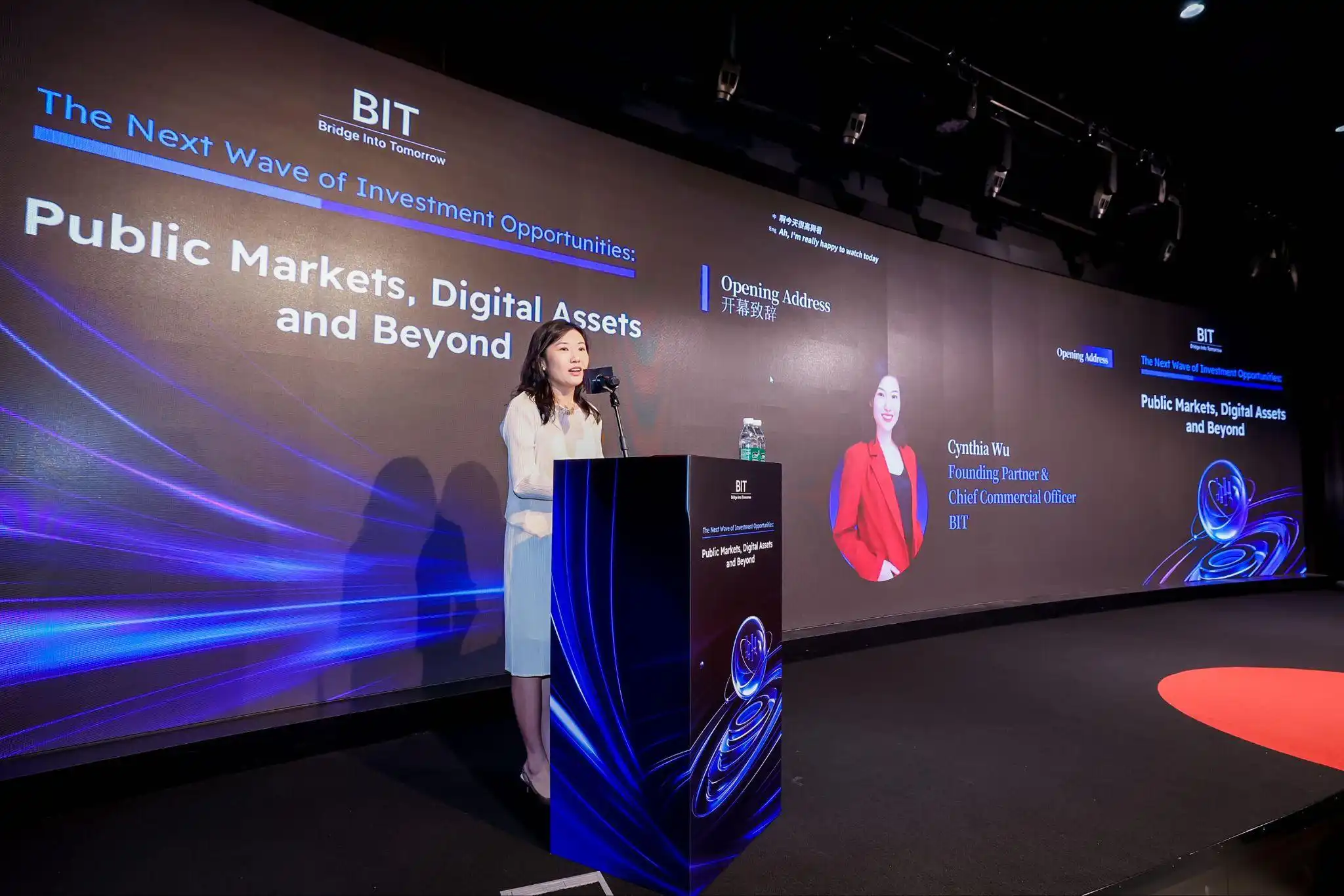
Macro Outlook: Transitioning from Digital Assets to Multi-Asset Allocation, Understanding the Merrill Clock and Asset Rotation Patterns
The forum was opened by Cynthia Wu, Founding Partner and Chief Business Officer of BIT. Over the past seven years, BIT has consistently viewed security and risk management as a critical foundation of its business development, continuously improving its trading, custody, and operational systems. For over seven years, BIT's business has always revolved around the core principle of "providing clients with long-term sustainable financial services on a foundation of controllable risk." This year, BIT has further extended this philosophy to more asset classes, officially transforming into a multi-asset digital financial platform: in February, it launched U.S. stock spot trading services, followed by the introduction of U.S. stock margin trading, securities lending, and options, with a total cumulative trading volume of about $4 billion in related products. By integrating risk management into its business development, BIT continues to provide long-term services to its clients. This process would not have been possible without the long-standing trust of its clients and the support of partners in infrastructure, products, and services, as BIT itself is still engaged in continuous learning and development. Next, the platform will further enhance its service system by introducing features such as Hong Kong dollar deposits and withdrawals and Hong Kong stock trading, aiming to further connect traditional finance with digital assets.
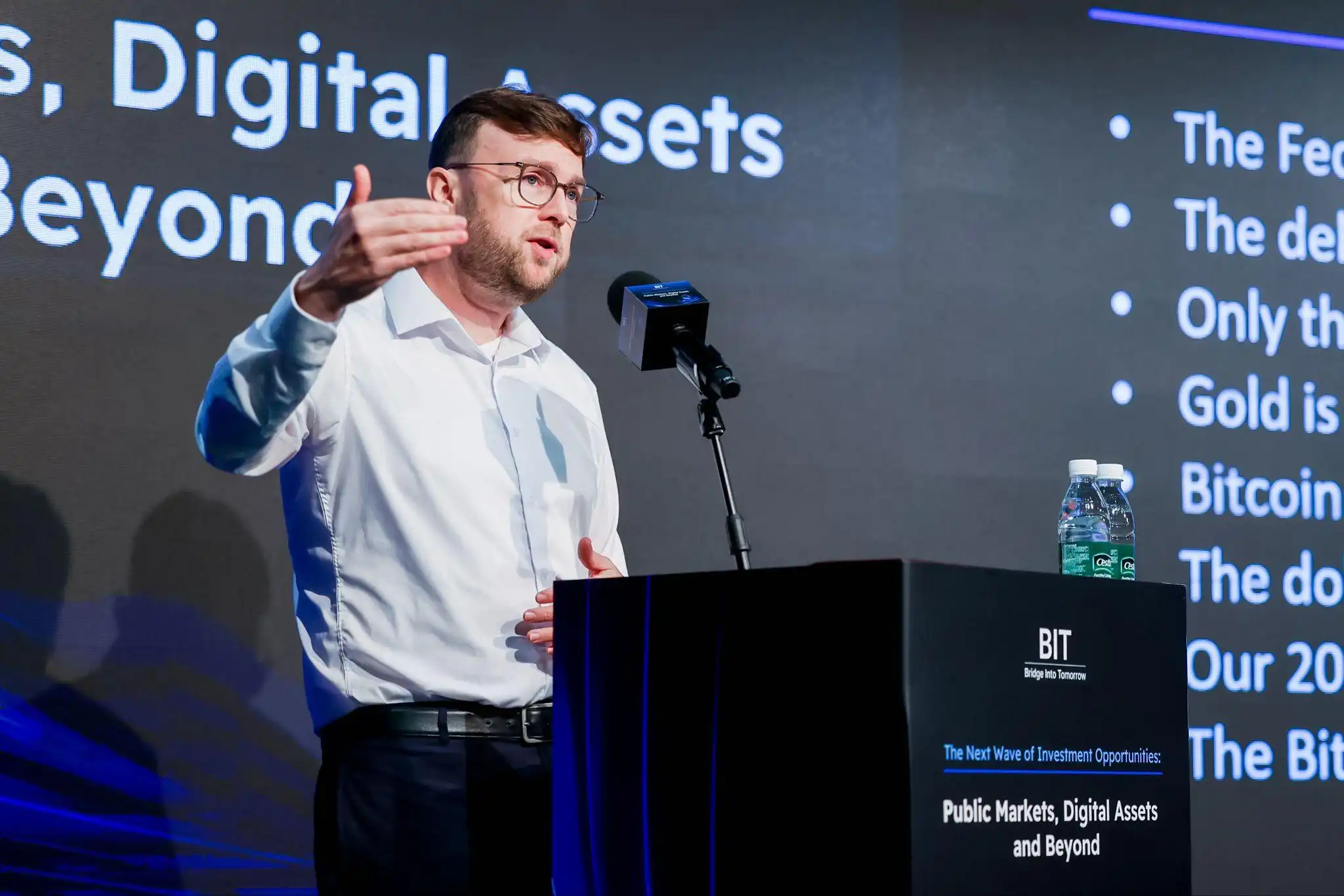
Following this, BIT's guest analyst, Markus Thielen, delivered an in-depth presentation on macro cycles, systematically reviewing historical patterns and helping investors at the event understand the next direction of asset value. Based on an analysis of historical data on Bitcoin's market price over the past fourteen years, Markus refined a price fluctuation pattern based on the market consensus of the "halving every four years": a "35-month uptrend, 12-month correction" cycle. When the price falls below the one-year moving average, it usually indicates a bear market phase. However, when the price returns above the one-year line and the 21-week moving average, along with signals such as the monthly RSI nearing a cyclical low, the fading demand for put options, and the breakthrough of a long-term downtrend, it often signifies the end of a correction and the start of a new uptrend. He emphasized that Bitcoin's price cycle, overlaid with the longer-term macro "debt-liquidity supercycle," exhibits staggered stages rather than a simple linear relationship: the scale of U.S. debt and Bitcoin prices do not move in sync, but the debt trend determines the slope of the long-term uptrend, the dollar and liquidity dictate when the market will rally, and Bitcoin's price cycle determines the pace of this round of appreciation and correction. According to his analysis, the current triple intersection point of "ongoing debt expansion, the end of a strong dollar, and Bitcoin coincidentally completing a roughly 12-month correction" suggests that the next uptrend cycle lasting approximately two to three years is underway. He shared an intuitive valuation anchor point from his research: based on the current scale of U.S. debt, Bitcoin's fair value should be around $100,000, indicating that the current price is still relatively low.
Roundtable: As the Valuation Logic of the AI Sector is Restructured, Where Will Global Funds Migrate?
The first roundtable was hosted by PANews CEO Sunny, inviting BIT Brokerage Business Leader Elio Cui, AVS CEO Ming ZHAO, Delin Family Office CEO Crystal He, and Hong Kong renowned stock commentator and full-time trader Sunzhi Dahu to discuss the current situation where cash flow of AI giants is tightening: Can AI still attract long-term fund inflows, or has fund rotation already opened up new directions.
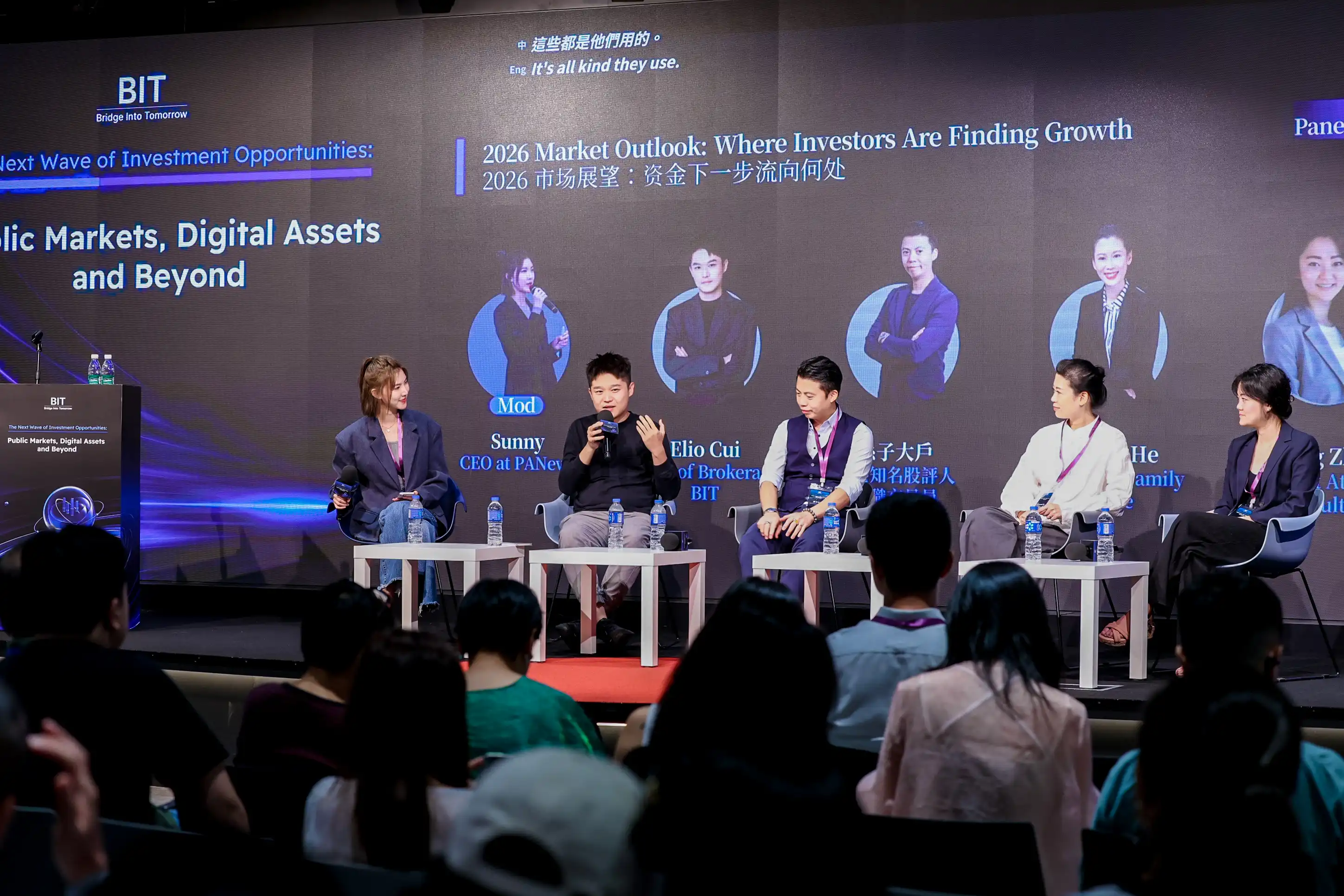
In June of this year, the combined market capitalization of the seven technology giants evaporated by about $2.4 trillion in one month, becoming the starting point of this discussion. The guests discussed whether the capital expenditure guidance in the AI industry will slow down, and whether cash flow can cover such a large-scale investment as the balance sheets of various companies continue to expand. When viewed on a longer technology cycle scale, this round of adjustment appears to be a benign cleansing akin to the 2000 internet bubble burst— the race track itself will not disappear, and only companies that can weather the cycle will settle down.
As for the next direction of fund allocation, the guests' judgment shows a parallel differentiation between "defensive certainty assets" and "structural high-volatility assets": Some funds are still willing to stay in high-growth tracks such as AI to pursue excess returns, while another portion of funds is turning to gold, RWA, and high-quality assets with stable cash flow to hedge against uncertainty. Gold continues to be sought after amid geopolitical uncertainty. Elio provided an explanation for this: As market expectations for interest rate hikes or a Fed pivot heat up, funds will shift from pursuing high-volatility, high-growth assets to relatively scarce, higher-certainty assets like gold, Bitcoin— which is why he is currently focusing on gold, Bitcoin, RWA, and high-quality cash flow infrastructure companies. He is optimistic about the growth potential of stablecoins and RWA but also acknowledges a common challenge that RWA still faces— despite the large issuance, transactions remain sparse. Crystal He further corroborated this from the perspective of institutional investors: Trillion-dollar institutions like BlackRock and Franklin Templeton are all long-term in this track, but still face four limitations— a limited variety of assets (about 40% of the $314 billion issuance is U.S. bonds), insufficient liquidity, mostly single-chain development lacking cross-chain collaboration, and the need for ongoing compliance and policy guidance.

The tokenization of the highest-ranked category of Real World Asset (RWA) has also faced a similar test. At first glance, this is due to the strong wealth effect and allure of US stocks, allowing a broader set of investors to access this asset class for the first time. However, the more fundamental reason is actually the "lowering of barriers," rather than the new asset itself—tokenization has allowed users who were previously unable to open accounts to buy US stocks for the first time. According to industry data, the total on-chain monthly transaction volume of tokenized US stocks in June 2026 was approximately $92.2 billion, equivalent to a weekly average transaction volume of about $21 billion, still only 1/180th of the Nasdaq's daily trading volume (approximately $383.7 billion). It can be seen that after the barriers were lowered, the question of whether liquidity and the underlying assets can be truly redeemed has never been truly validated by the market: once large-scale buying or selling or redemption is needed, investors often find that the liquidity of the underlying US stocks behind the tokens is not as abundant as imagined. This phenomenon reflects that the ability to directly connect to the US capital markets to provide a real target and a liquid trading channel, the short-term advantage remains difficult to replace.
Fireside Chat: The Web3 industry is transitioning from a narrative-driven free growth phase to a verifiable trust institutionalized stage
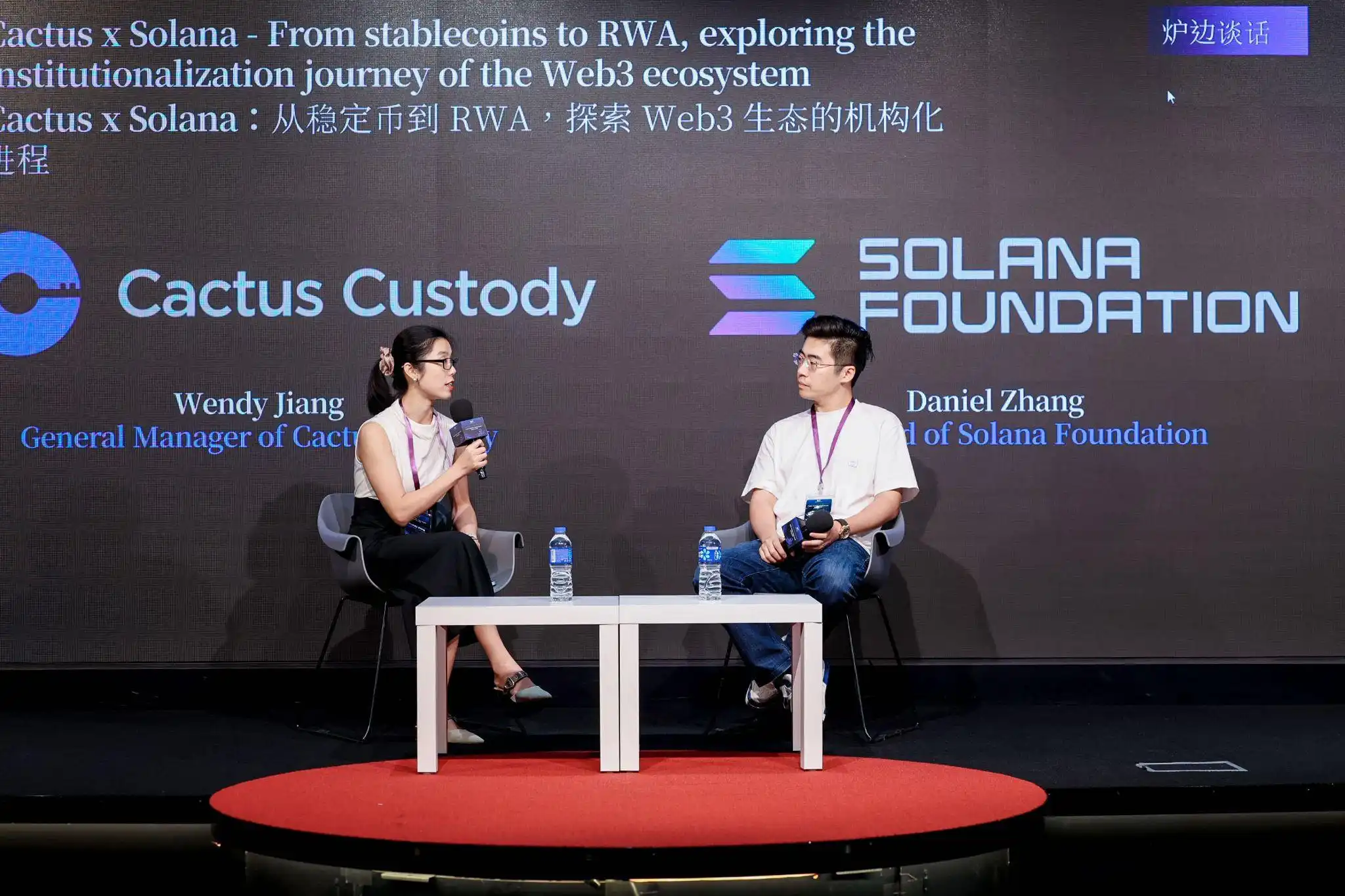
Wendy Jiang, General Manager of Cactus Custody under BIT, and Daniel Zhang, Head of the Chinese Community at the Solana Foundation, discussed the development ecosystem of public chains and the institutionalization path of stablecoins and RWAs. As the Web3 industry gradually transitions from a narrative-driven free growth phase to an institutionalized stage dominated by institutional funds and built on verifiable records to establish trust, the competition between public chains is no longer about whose story is more appealing, but about who can present secure records and genuine fund activity that can withstand the test of time and regulation. Daniel stated that the Hong Kong Securities and Futures Commission has currently only approved three cryptocurrency spot ETFs: BTC, ETH, and Solana, with Solana ETF being the world's first such product launched in Hong Kong; and under the Hong Kong regulatory framework, the types of tokens approved for trading open to retail investors are scarce. Public chains that can truly accommodate the long-term, large-scale distribution demands of RWAs and stablecoins are in fact reduced to only ETH and Solana as options. He also proposed a professional criterion: to measure whether a public chain has real economic vitality, one must not only look at the total supply of stablecoins but also consider the "transaction speed" of funds—based on transaction volume, Solana is currently tied with Ethereum in the top tier globally. Wendy used the metaphor of a "boulevard" to describe the role of custody institutions as a "service area" in the process of institutional funds flowing into the public chain ecosystem—the larger the traffic flow (institutional funds) on the road, the more need there is for complete gas stations and service facilities; both agreed that the industry's "window of opportunity" for new public chains has closed, and the historical records that can be accepted by institutions and regulators are difficult to replicate by latecomers.
Peak Discussion: The New Stage of Digital Asset Investment, from "Whether to Allocate" to "How to Allocate"
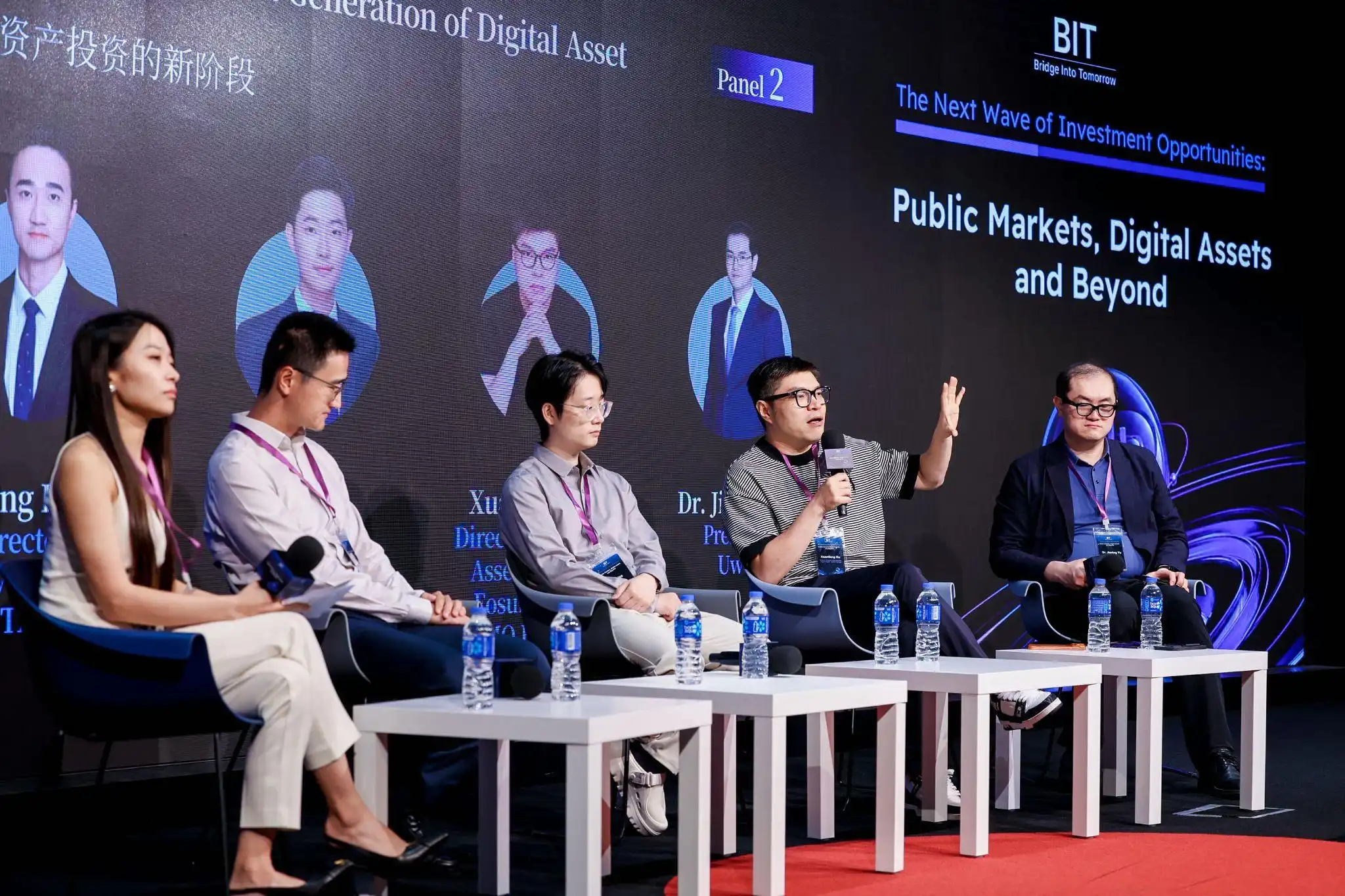
The second roundtable was hosted by Megan Xiao, Head of BIT Structured Products, and included TDTC's Investment Director, Ding Long, B7 Capital's CIO, Charles, Fosun Wealth Holdings' Director of Digital Assets, Hu Xuanfeng, and Uweb's President, Yu Jianing, to discuss the new stage of digital asset allocation. In the past, the focus was on whether "BTC will rise," but today investors are more concerned with "being bullish but missing the buy-in timing"—how to manage this price exposure and use structured tools for multi-asset allocation is gradually becoming a new approach. With this question in mind, the guests provided responses from their respective professional perspectives.
Uweb's President, Yu Jianing, first entered from the standpoint of investor mentality: he observed that students are shifting from speculators to multi-asset allocators, no longer persisting in waiting for the "final dip," and summarized four main allocation themes: "Carbon-Silicon Coexistence, Life Doubling, Quantum Leap, Anti-Globalization." Hu, from Fosun Wealth, approached from the asset attribute perspective: crypto assets are evolving from "hype concepts" to containers that package traditional assets onto the chain, and institutional-grade custodians are the key infrastructure for institutions to truly globally allocate assets. Charles, from a quantitative trading perspective, pointed out that while the Sharpe ratio of crypto strategies is higher than traditional markets, stability is lacking. The increase in market makers and institutions is squeezing arbitrage profits, the capacity for high-frequency trading is too small, and the era of "lying down and winning" with a single strategy holding "only one direction" is passing. In asset allocation, a portion of stable income products unrelated to Beta should be retained, and not all assets should be wagered on the coin price itself. TDTC's Ding Long added from the industry side: "mining production assets" and "balance sheet management" are two completely different things. Miners not only need to consider the stability of the power source but also need to use structured products from platforms like BIT to manage and enhance cash flow.
Megan summarized from BIT's own structured business: digital asset allocation is no longer just "Buy & Hold," but a dynamic management process with structured tools as the lever—"spotting trends" is important, but "anchoring tools and execution paths" determine whether one can cross the cycle. BIT's structured products are the specific carriers of this "tool + path" strategy: by toolizing and productizing professional strategies such as volatility management and yield enhancement, ordinary investors can acquire structural returns that were previously only accessible to institutions without building complex positions themselves. This is a solution to the question of "how to allocate."
Final Dialogue: Face-to-Face with Ni Daming—From Federal Reserve Policy to Whether Young People Should Leverage

In the final session of the forum, Elio Cui, Head of Business at BIT Brokerage, engaged in a dialogue with Phyrex Ni, a well-known Web3 industry KOL, on-chain data analyst, and macroeconomic researcher, addressing several highly anticipated topics and once again delving into Ni's unique insights.
Regarding the highly anticipated policy path of the Federal Reserve and the Treasury for the second half of the year, Ni offered a judgment that differs from the mainstream expectations: he believes that the Federal Reserve will most likely remain unchanged this year — "neither raising nor lowering interest rates." Ni analyzed the economy from a more grassroots perspective: from the supply chain transmission of oil prices to the drag on employment data from immigration repatriation policies, and to the unsustainable level of U.S. debt. Even the newly appointed Federal Reserve Chairman quietly abandoned forward guidance — all signs, in his view, point to a signal that "interest rates are likely to move lower."
Addressing the question that has garnered the most market attention, "Why did Bitcoin suddenly surge above $80,000 in the past two days," Ni, as a seasoned trader, provided a solid observation of market liquidity — the trading volume in this rally was not particularly high. A more accurate statement would be that "sellers have decreased, and buyers have increased." The imbalance in supply and demand pushed the price up, rather than a sudden influx of incremental funds. When discussing the bottom of this market cycle, Ni clearly had a "ledger" in mind: he judged that the bottom structure is basically in place now. Even if there is another retest, it will most likely only occur in the range of $57,000 to $58,000, with a low probability of dropping below $51,000. Supporting this assessment is his observation of Bitcoin spot ETF fund flows and institutional holdings behavior: ETF funds have recently switched from a net outflow in previous stages to a sustained net inflow. Most high-net-worth institutions and publicly listed companies that hold Bitcoin for the long term have not significantly reduced their holdings in the past few months. Some institutions that had previously sold off have also ceased selling off recently and are stabilizing — these signals collectively indicate institutional approval of the current price levels.
Faced with the sharp question debated online, "Should young people use leverage," Ni refused to preach from a superior position. He admitted that for young people with limited capital, leverage is indeed one of the few realistic paths to amplify returns within their risk tolerance. The real challenge has never been about daring to use leverage; rather, it is about whether one can always maintain the ability to "stay at the table" — this is where long-term learning and practice are required. Speaking about the cards he holds, he revealed that he has always used leverage from BIT's U.S. stock platform's options and margin trading tools to dollar-cost averaging into index ETFs such as VOO and QQQ. It is the secure and stable leverage ratio settings on BIT's platform that allow him to enhance capital efficiency.
From the macro debt cycle to stablecoin infrastructure, from the public blockchain competitive landscape to real drawdown data of quant strategies, and to a candid interpretation of Fed policy and leverage philosophy by seasoned traders, this forum excelled in professionalism, presenting attendees including investors, institutional representatives, and industry partners with a panorama of the next wave of investment opportunities. As the viewpoints acknowledged by the guests in attendance have always emphasized, "the market is never short of opportunities; what is lacking is understanding it at the right time and in the right way."
About BIT
BIT (formerly Matrixport), founded in 2019, is a leading global digital asset financial service group. Headquartered in Singapore, the Group has offices in seven countries and regions globally, connecting traditional finance with the digital asset market through robust governance, technological capabilities, and compliance operations.
BIT provides comprehensive digital asset services to global institutions and professional investors, including trading, custody, asset management, liquidity, and financing services, and supports the on-chain introduction and application of Real-World Assets (RWA). Its entities hold relevant licenses in Singapore, Hong Kong, Switzerland, the UK, the USA, and Bhutan and are regulated locally, including the Major Payment Institution License (MPI) in Singapore and the Collective Asset Management License issued by FINMA in Switzerland.
The Group currently has over $6 billion in AUM, a monthly trading volume exceeding $7 billion, a total interest paid to customers of over $2 billion, a valuation exceeding $1 billion, and has been listed in the "2024 Hurun Global Unicorn List" and "2025 Singapore Fintech Unicorn List."
Disclaimer
1. This content is only for event summaries and general information sharing, does not constitute investment advice, financial advice, tax advice, and does not constitute an offer, solicitation, or recommendation for any securities, digital assets, or other financial products.
2. The guest speeches, viewpoints, and data contained in the article are the personal opinions of the speakers and have not been independently verified by BIT, and do not represent the views of BIT and its affiliates. BIT does not make any statements or warranties about their accuracy, completeness, or timeliness.
3. This article may contain forward-looking statements and descriptions of future markets, businesses, or products. Such statements are based on assumptions as of the publication date, are subject to uncertainty, and actual results may differ significantly. The launch timing and availability of related businesses and products depend on regulatory approval and internal arrangements, and may be changed or not launched.
4. Digital asset prices are highly volatile and may experience significant fluctuations in a short period due to market, technical, or regulatory factors, and investors may lose all their capital. Past performance does not indicate future results.
5. Leveraged trading, margin trading, options, and other derivative instruments involve high risks, and losses may exceed the initial investment, potentially leading to liquidation. Such products may not be suitable for all investors. Investors should be responsible for their investment decisions.
6. Structured products and certain services are only offered to professional investors who meet the relevant jurisdiction's suitability requirements. Specific terms, risks, and target clients are outlined in the product's legal documents.
7. Data in this article is sourced from third-party public information and industry institution statistics, as of August 28, 2026.
8. This content is not directed at individuals in jurisdictions where the publication or use of such information is prohibited by local laws and regulations, nor does it constitute solicitation in such jurisdictions.
9. The services provided by entities under BIT and their licensing status vary by jurisdiction, and the specific licensing scope of each entity shall prevail.
Welcome to join the official BlockBeats community:
Telegram Subscription Group: https://t.me/theblockbeats
Telegram Discussion Group: https://t.me/BlockBeats_App
Official Twitter Account: https://twitter.com/BlockBeatsAsia