Using a Gate account, experience all four stock products.
Facing the volatility of the South Korean and US stock markets, traders have long been thinking beyond just trading cryptocurrencies.
When AI signals a trend, they consider buying NVIDIA and SK Hynix; during the rebound of Hong Kong-listed internet giants, they look to trade Tencent and Xiaomi; when the market plummets, they also think about mimicking Buffett and Duan Yongping's moves by purchasing some Apple and Coca-Cola shares; when breaking news emerges over the weekend, they seek to hedge their stock positions in advance. As war approaches and market risks soar, gold, the US dollar, and crude oil also come into play.
In the past, fulfilling these needs may have required three or four platforms. However, with Gate's announcement of integrating direct stock trading, tokenized stocks, stock perpetual swaps, and CFDs into the same TradFi account system, we have now experienced all four types of products comprehensively, attempting to answer one question: amidst different investment needs, which product is the most suitable choice?
Stock Perpetual Swaps, Transforming Company Analysis into High-Elasticity Trading
To understand why Gate has simultaneously deployed four types of TradFi products, we can start by discussing the fastest-growing product, stock perpetual swaps.
While US stock spot trading solves the holding issue, stock perpetual swaps address the direction and capital efficiency. For cryptocurrency users accustomed to 24/7 trading and leverage tools, TradFi perpetual swaps are one of the most easily understandable types of traditional asset products, and market demand is rapidly expanding. Research from CryptoQuant indicates that the open interest in TradFi perpetual contracts for stocks, metals, and crude oil has more than doubled to over $2 billion since the end of May. In contrast, the open interest of the entire crypto perpetual market remains about 20% below its previous peak. Although TradFi perpetual swaps currently represent only about 3% of the entire market, they have become one of the few sectors that are still expanding.
1_0Gate TradFi Contract Open Interest Ranks Second in the Market
Gate has now launched 287 stock perpetual trading pairs. Users can use USDT as margin to long or short stock prices 24/7.
Following the launch of this product suite, Gate has seen rapid growth in related open interest and trading volume. Gate's data shows that as of July 30, the growth rate of its perpetual product open interest reached 153%, ranking first among centralized exchanges; the growth rate of trading volume reached 157%, ranking second. For a platform that already covers 287 stock perpetual trading pairs, these figures indicate that product expansion is translating into actual trading demand.
As for the practical operation, this product trades like any other perpetual contract, making it very easy to understand for crypto users.
After selecting the underlying asset, the page will display the candlestick chart, order book, funding rate, mark price, and estimated liquidation price. Users can choose between isolated margin and cross margin, adjust leverage, input the margin, and set the order price. Limit orders, take-profit, stop-loss, and other functions also follow the usual practices of crypto perpetual trading.
It is best suited for trading short-term events.
If one believes that NVIDIA's earnings report will significantly exceed expectations, they can open a long position; if they think Tesla's delivery data will be disappointing, they can directly short; if they already hold Gate Stocks but are concerned about a short-term market downturn, they can also hedge using stock perpetual contracts.
Compared to directly purchasing stocks, perpetual contracts only require a portion of the margin to gain a larger price exposure.
However, perpetual contracts have a funding rate. In short-term trading, this cost may not be significant; however, if the position is held for an extended period, the funding rate may continuously impact returns.
Therefore, stock perpetual contracts are suitable for short-term trading, event trading, and temporary hedging. They provide stock price elasticity, but users will not receive the underlying stock, dividends, or other shareholder rights.
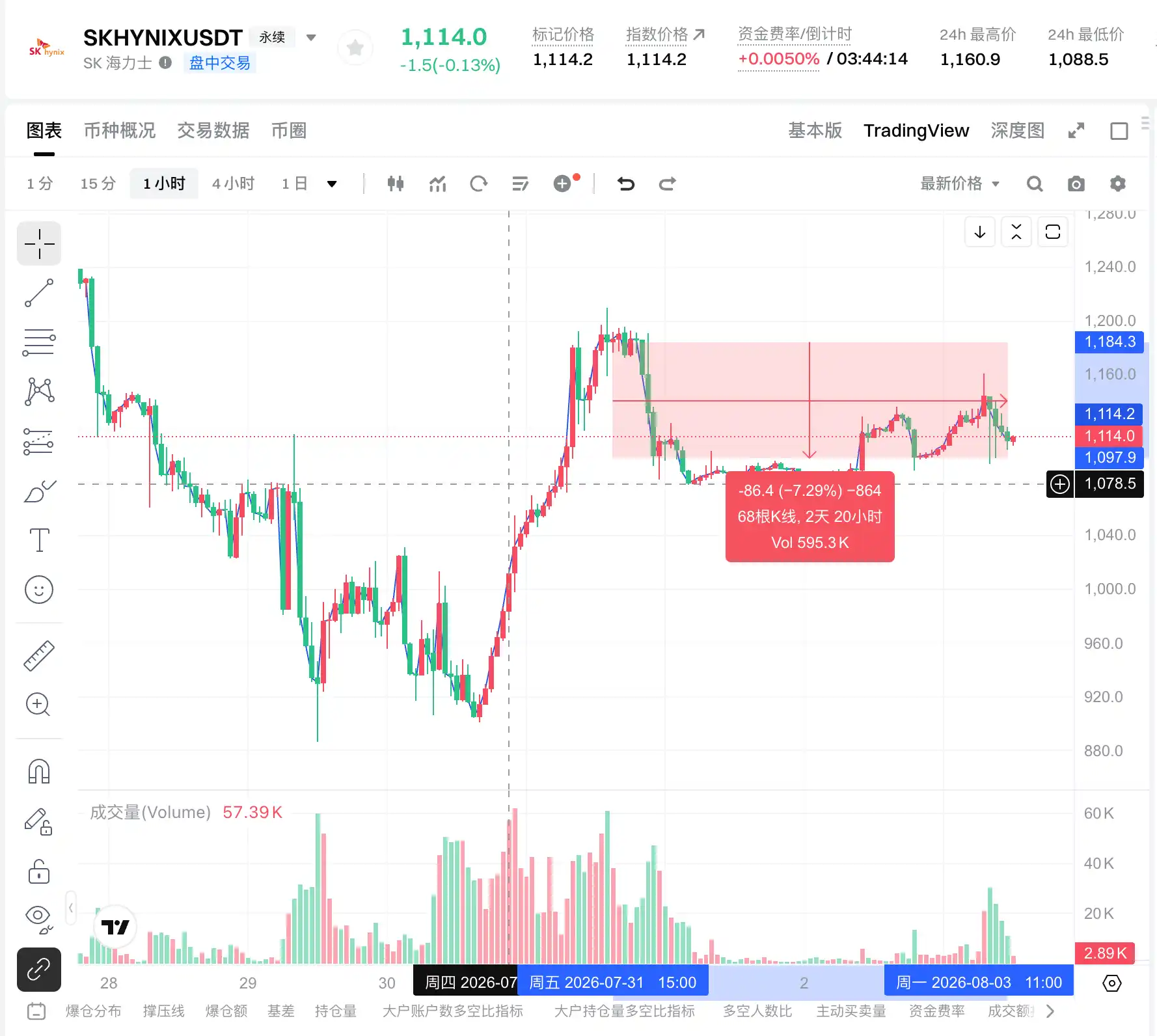
For a recent example, on Monday, August 3rd, SK Hynix plummeted over 8% at the opening bell. By hedging early through stock perpetual contracts, users could have entirely avoided this decline.
CFD, Extending Stock Trading to Global Assets
Another part of Gate TradFi that has already achieved a significant trading volume is CFD. If a user's focus is not just on one company but the interconnection between assets like gold, the U.S. dollar, oil, and global indices, they need to enter the CFD market.
CFD stands for Contract for Difference. Users do not hold the underlying stocks, gold, or oil; they only settle the price difference between opening and closing.
Gate CFD currently covers over 690 types of assets, including stocks, indices, forex, metals, and commodities. Its weekly trading volume has surpassed $200 billion, ranking first across the entire network.
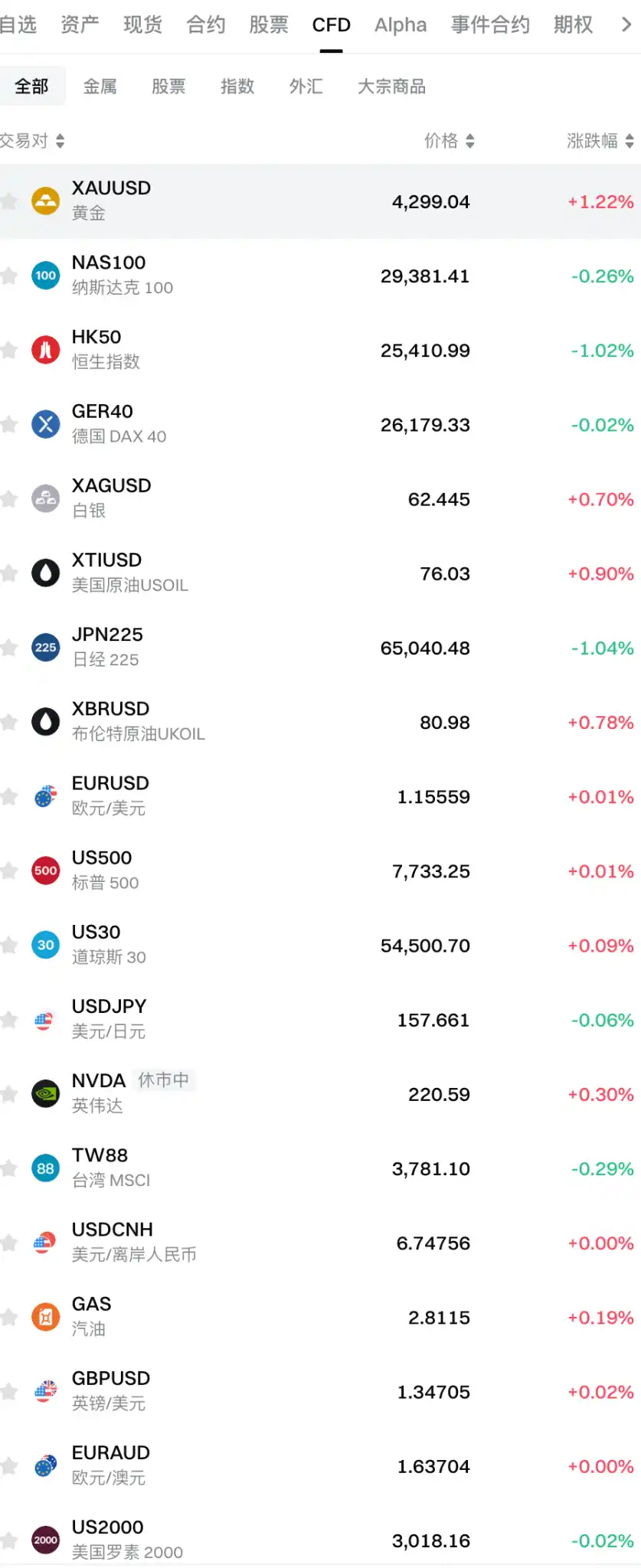
In addition to stocks, CFDs also offer currency and index trading.
It solves a multi-asset trading problem.
Users can go long on NVIDIA, short the Nasdaq index, establish a gold long position, and an oil short position within the same account without needing to access separate stock, futures, and forex platforms.
Prior to use, users need to transfer USDT into the CFD account, where the system displays it as USDx at a 1:1 ratio. USDx serves as the internal margin and valuation unit, and upon exiting a position and completing settlement, users can convert it back to USDT according to the rules. The CFD account also supports asset yield, adopts a tiered income mechanism, with an annualized interest rate of up to 3.00%. Trading and idle fund appreciation can proceed simultaneously.
All CFD products share the same set of funds, making cross-asset rotation and hedging more convenient.
A distinctive feature of Gate CFD is the multi-level adjustable leverage. Taking gold as an example, the platform offers independent contracts with leverage of 20x, 100x, 200x, and up to 500x, with different leverage levels for silver, oil, and other assets. This allows for the separate management of low-leverage trend positions and high-leverage short-term positions. However, the higher the leverage, the smaller the tolerance for adverse price movements.
In testing, orders, take profit, and stop-loss on the app and web interface can be synchronized in real-time. It is important to note that CFD trading may involve commissions, spreads, and overnight fees. The trading hours typically follow the underlying market and differ from 24/7 trading of perpetual stocks. Therefore, it is more suitable for experienced users familiar with margin trading and holding costs who wish to trade stocks, gold, indices, forex, and oil.
Gate Stocks, Putting US Stocks, Hong Kong Stocks, and Korean Stocks into One Account
Stock perpetual and CFD meet trading needs. If a user wishes to hold a company long-term, the most direct path is still Gate Stocks.
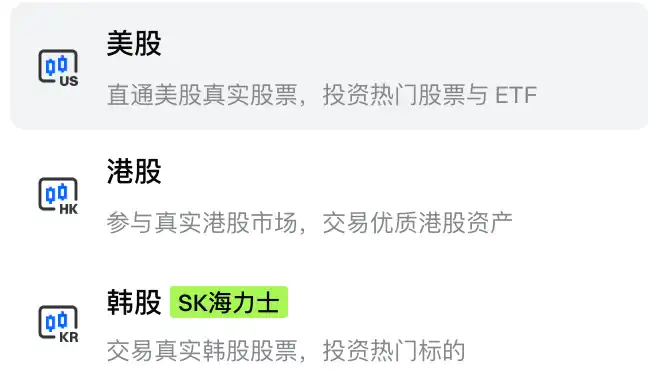
Upon entering the stock page, users can switch between US stocks, Hong Kong stocks, and Korean stocks, or directly search for company names or stock codes. We searched for NVIDIA, Tencent, and SK Hynix, and all three companies could be found within the same stock account.
Currently, Gate Stocks cover over 10,000 US stocks and ETFs, 1,500+ Hong Kong stocks, and 1,000+ Korean stocks, totaling more than 12,500 securities. After searching for a stock, the page displays candlestick charts, quotes, and position information. Users can enter the number of shares or the amount to purchase, then submit the corresponding order. The platform supports the purchase of fractional shares starting from 0.01 shares, and US stocks, Hong Kong stocks, and Korean stocks are all managed through a USDT-based stock account, eliminating the need for manual conversion between USD, HKD, and KRW.
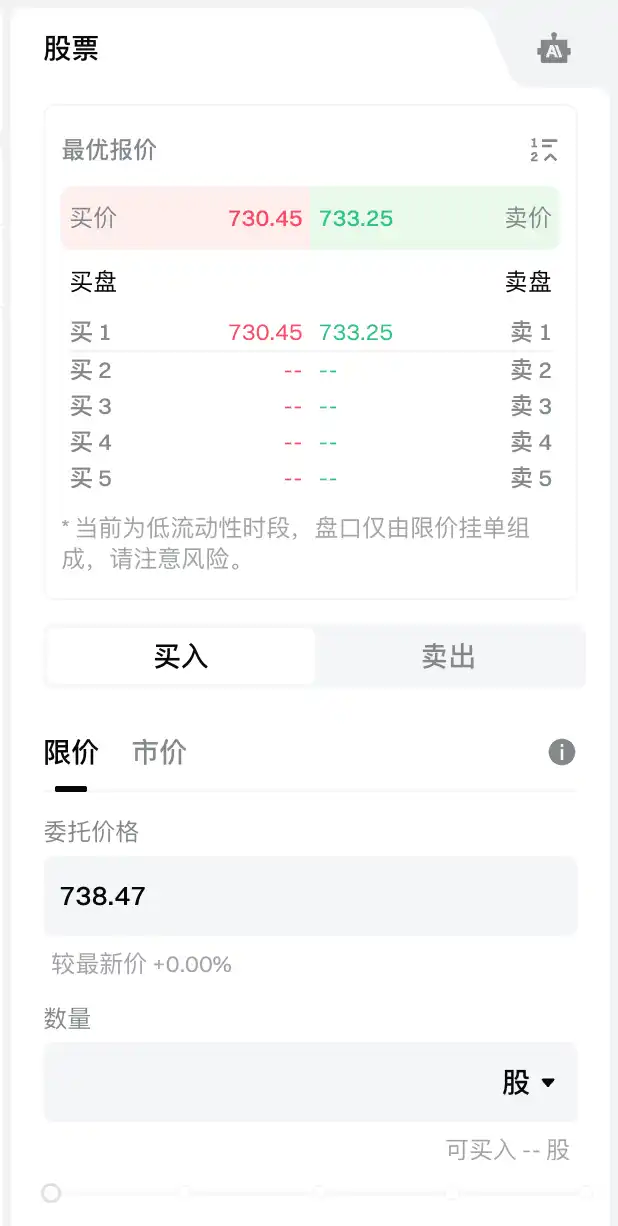
GATE Stocks' actual order placement logic is similar to traditional brokerage firms.
Gate Stocks also supports 24/7 trading for US stocks, Hong Kong stocks, and Korean stocks. In addition to the pre-market, regular market hours, and after-hours sessions provided by stock exchanges, users can also trade overnight and on weekends to respond to breaking news.
While 24/7 trading solves the issue of being able to trade during market closures, it does not mean that every time slot has the same liquidity. After the underlying stock exchange closes, available liquidity typically decreases, and bid-ask spreads may widen. When placing orders overnight or on weekends, users still need to monitor the order book and available trading volume, especially when using large market orders cautiously.
According to Gate, direct stock holdings correspond to actual stock ownership, and corporate actions such as cash dividends, stock dividends, stock splits, and reverse stock splits are handled in accordance with rules. On July 31, the platform further upgraded its stock services, announcing zero fees for US stocks and ETFs, where eligible buy and sell orders for US stocks and ETFs incur no platform trading fees, and there are no minimum transaction fees, account opening fees, or account maintenance fees.
Gate also supports inter-brokerage transfers for US and Hong Kong stocks. Users can transfer stocks from external brokerages to Gate or move assets from their Gate stock accounts to other brokerages. Gate itself does not charge stock transfer fees, while the original brokerage may charge fees based on its own standards. The ability to transfer assets between brokerages is a key distinction between direct stocks and stock price products that can only be traded within a platform.
In addition, stock accounts also feature functions such as stock following, idle fund interest accrual, Pre-IPO, and IPO Access. These complement stock selection, fund management, pre-listing investments, and other scenarios, gradually making Gate Stocks closer to a comprehensive brokerage account system.
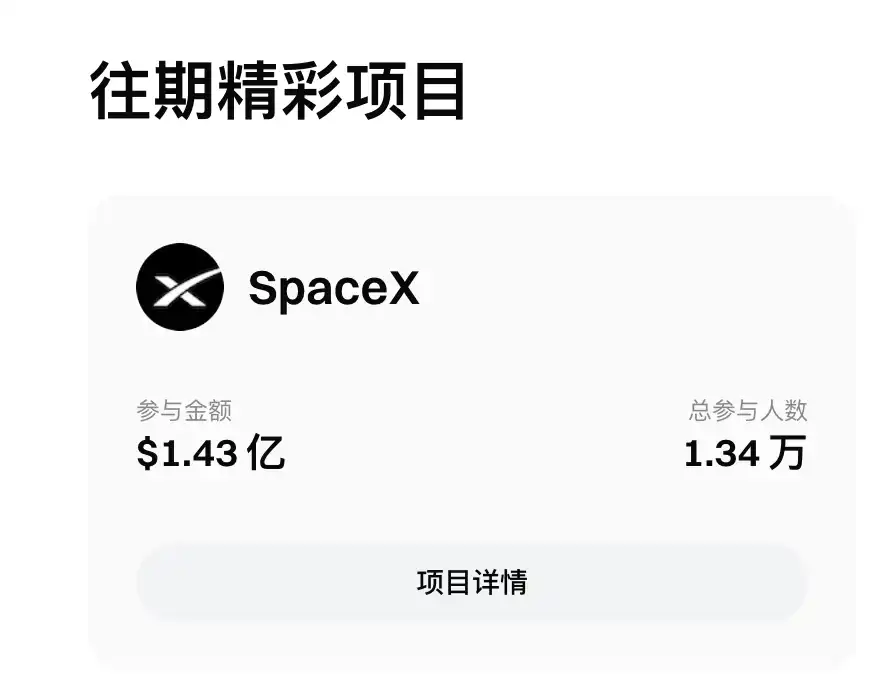
Gate has previously hosted SpaceX's IPO event.
For users whose primary earnings come from stock price appreciation and dividends, such as those who intend to hold NVIDIA, Tencent, or SK Hynix for the long term, Gate Stocks' asset relationships and fee structure are easier to understand. Users do not need to constantly monitor funding rates, nor will they be liquidated due to insufficient margin.
gStocks, Allowing Stocks to Participate in Crypto Finance
After experiencing real stocks, tokenized stocks become easy to understand.
Gate currently offers gStocks, xStocks, and Ondo Stocks. According to the page statistics at the time of this experience, the three sections respectively contain 78, 43, and 45 trading pairs.
For this test, the recently launched gStocks was selected as a sample. Upon entering the trading page, the overall operation is similar to regular spot trading. Users can select the asset, view the order book, and place orders using USDT. gStocks uses a 1:1 underlying stock reserve mechanism, supports 24/7 trading, has a minimum starting amount of 1 USDT, and for users familiar with spot trading, there is almost no additional learning curve.
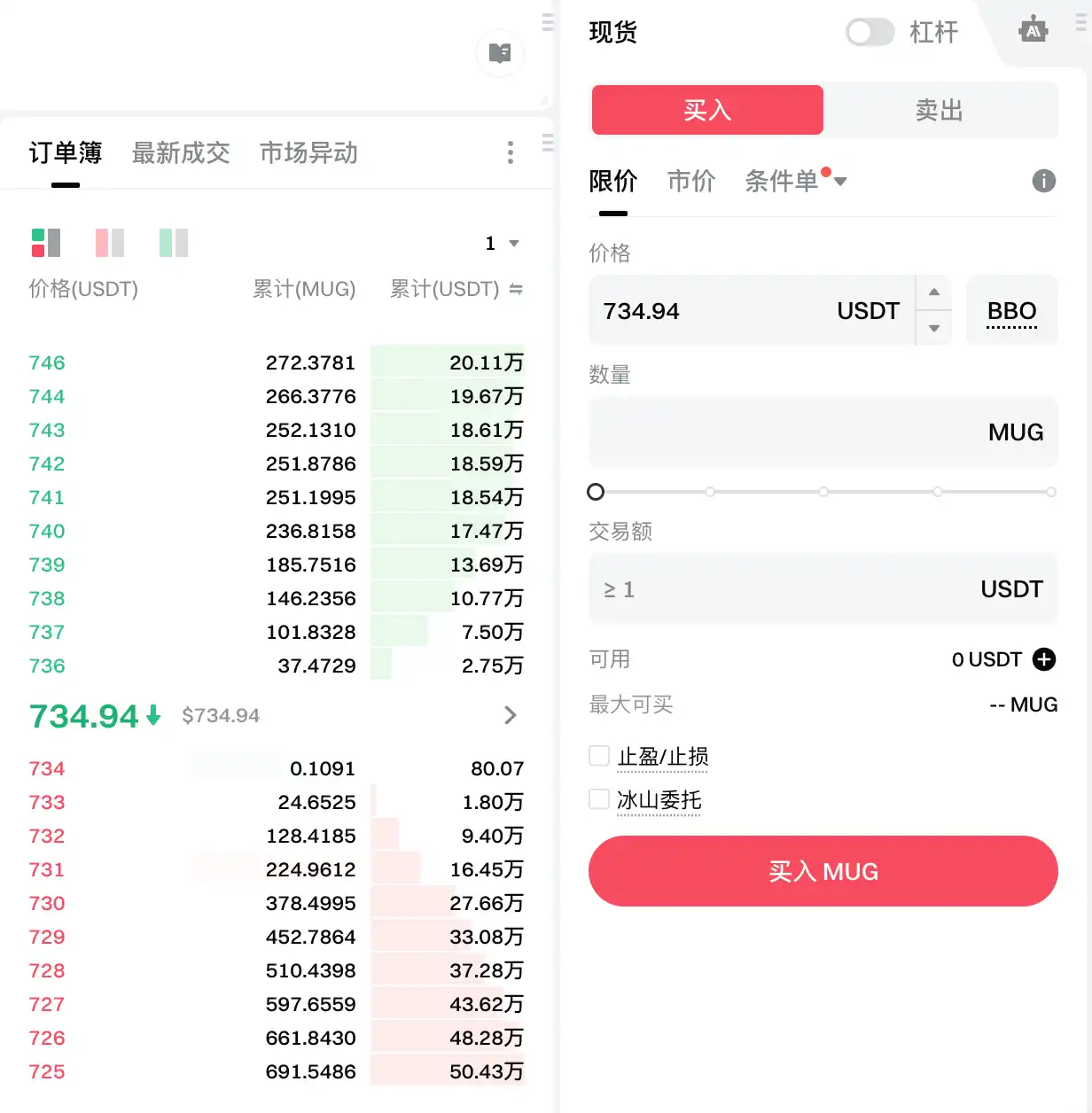
For gStocks, liquidity comes from the platform, and users can directly see the order book.
Liquidity is one of the most important issues for trading. Compared to the 0.1% depth of general trading (daily trading depth), gStocks has the best trading depth among the top 10 mainstream coins.
The key difference between gStocks and direct stocks ultimately lies in how the assets are used.
Direct stocks are more similar to traditional holdings, while gStocks can be further used for collateral for borrowing, yield farming, unified accounts, margin trading, and stock dividends.
For example, if a user has a long-term bullish view on a company but does not want to sell their holdings, they can use eligible gStocks as collateral to borrow USDT or include them in a unified account as margin.
As capital efficiency increases, so does risk. If the price of gStocks falls, the loan-to-value ratio may deteriorate. Moreover, continuing to build a high-risk position after borrowing funds will add new sources of losses.
Therefore, gStocks are more suitable for users familiar with spot trading, who wish to trade around the clock and continue to use their stock exposure for borrowing and unified accounts. For those who only want to hold onto company assets long-term, direct stocks would be a clearer choice.
When Four Stock Products Enter a Single Account
After a full overview of Gate's stock product line, it is apparent that these four types of products are not interchangeable but correspond to four very different trading needs.
· Direct Stock is responsible for long-term holding. Users hold real stock assets, can enjoy dividends, support transfers, do not have the common funding fees of perpetual products, and are more suitable for long-term holding and value investment.
· Tokenized Stock is responsible for asset integration. Bringing stock exposure into a crypto account allows the position to continue to participate in lending, financial management, and unified margin;
· Stock Perpetual is responsible for short-term trading and hedging. It provides two-way trading, a 24/7 market, and higher capital efficiency, while also accompanied by funding rates and liquidation risks;
· CFD is responsible for cross-asset trading. Users can establish a more comprehensive macro strategy around stocks, gold, forex, indices, and commodities, but they also need to manage commissions, spreads, and overnight fees.
The real difference Gate has made is not in a single function but in reorganizing traditional financial products using the funds and operating methods familiar to crypto users.
What used to require several platforms to accomplish can now start from one Gate account. Indeed, with the increase in the number of products, user understanding costs will also rise. However, once the underlying relationships are clarified, the choice becomes simple: choose Direct Stock for long-term holding, Tokenized Stock for asset integration, Stock Perpetual for short-term trading, and CFD for cross-asset trading.
Product coverage cannot directly replace liquidity. Having 12,500 individual stocks, 279 Stock Perpetuals, and over 600 CFDs reflects Gate's breadth, and the ultimate trading experience for users still depends on the specific asset, trading period, and order size.
Traditional brokers still have more mature research tools, options systems, and customer service. Gate's advantage lies in its USDT fund path, 24/7 trading, and cross-product efficiency. Whether these advantages can be transformed into long-term trust still needs to be proven by execution quality, asset transparency, and system stability.
For crypto users, what has truly changed is not that there are more choices, but that the choices have become clearer.
Welcome to join the official BlockBeats community:
Telegram Subscription Group: https://t.me/theblockbeats
Telegram Discussion Group: https://t.me/BlockBeats_App
Official Twitter Account: https://twitter.com/BlockBeatsAsia
 Related Articles