He Only Invests in 5 Super Early-Stage Projects a Year, Dreaming to Build a Different Kind of AI Fund | In Conversation with Li Rongbin, Founder of First Rule Ventures

The Dynamic Insight Beating podcast is officially launched.
This is a podcast that focuses on how AI and cutting-edge technologies are transforming society, industries, and daily life. Starting with interviews, we chat with entrepreneurs, investors, researchers, developers, content creators, and anyone whose work and life are being transformed by technology, discussing all that unfolds.
Subscribe now.
Episode Summary
In this episode, we chat with Lee Rongbin, the founder of First Rule Ventures, about the birth of a new fund.
Lee Rongbin, a former underground punk band vocalist who has run a music label and lived and worked in Africa for many years, later entered the early-stage investment industry. His current venture, First Rule Ventures, focuses on AI applications, only invests in the seed round, and only backs 5 projects per year.
At a time when most funds and attention are still flowing into AI infrastructure, why bet on AI applications? Should early-stage investors focus on technology, narrative, or people? After small funds like yours have also joined in early-stage investments alongside behemoths like Sequoia and Hillhouse, what is their position? When an investor claims they want to be "humane and tasteful," is this an aesthetic preference or a business strategy?
In this episode, we discuss underground music, Africa, Crypto, AI applications, entrepreneurs' confidence and insecurities, and delve into the most fundamental yet challenging aspects of investing.
Be honest. Only then will you understand why you set out.
Guest
Eraser Lee Rongbin, Founder of First Rule Ventures, focusing on AI applications, new business models, and cultural innovation driven by emerging technologies. Twitter: @losteraser777
Host
Sleepy, the scriptwriter of Dynamic Insight Beating. Twitter: @sleepy0x13
In 1849, California was not yet the California we now know.
That year, tens of thousands of people flocked to San Francisco. Many believed that by squatting by the river and sifting through the sand, they could change their fate. As history later revealed, the most consistently profitable individuals were not the gold prospectors themselves, but rather those who sold shovels, tents, and patched up the miners' pants.
Technological revolutions often start this way, where the initial hype doesn't necessarily surround the most compelling development. In the early days of the internet, it was about bandwidth, servers, browsers, and portals. The early days of mobile internet revolved around phones, chips, operating systems, and app stores. As for AI, the first wave of money naturally flowed towards compute power, models, data centers, chips, the cloud, and various infrastructures.
Over the past two years, there has been a particular texture to the buzz around AI. The surface never lacks novelty, with models being replaced one after another, and hackathon weekends being busier than weekdays. However, when conversations shift to funding, the enthusiasm wanes. Money still leans towards infrastructure, with AI applications rarely getting their turn.
It is in this lukewarm environment that a new early-stage fund has been officially announced.
It's called First Rule Ventures. Its positioning may seem out of touch, focusing on AI applications, only investing in the first round, and backing just 5 projects a year. What's even more out of touch is that they have branded themselves as "personable and tasteful."
The founder of First Rule Ventures, Li Rongbin, English name Eraser, is an old friend of ours. Previously a lead singer in an underground punk band, he ran an indie music label, and spent 6 years as a Founding Partner at another fund. He also spent 6 years in Africa, assisting Chinese companies with overseas expansion and on-the-ground investments. Returning to the world of tech and early-stage investment, he caught the wave of Blockchain and subsequently AI.
His background in underground punk, music labels, Africa, and VC is not quite the typical path of an ordinary investor.
However, it is precisely this path that has shaped his unique approach to investment. He sees investment as a form of expression. To him, an investor is more like a curator, placing one's beliefs into the portfolio.
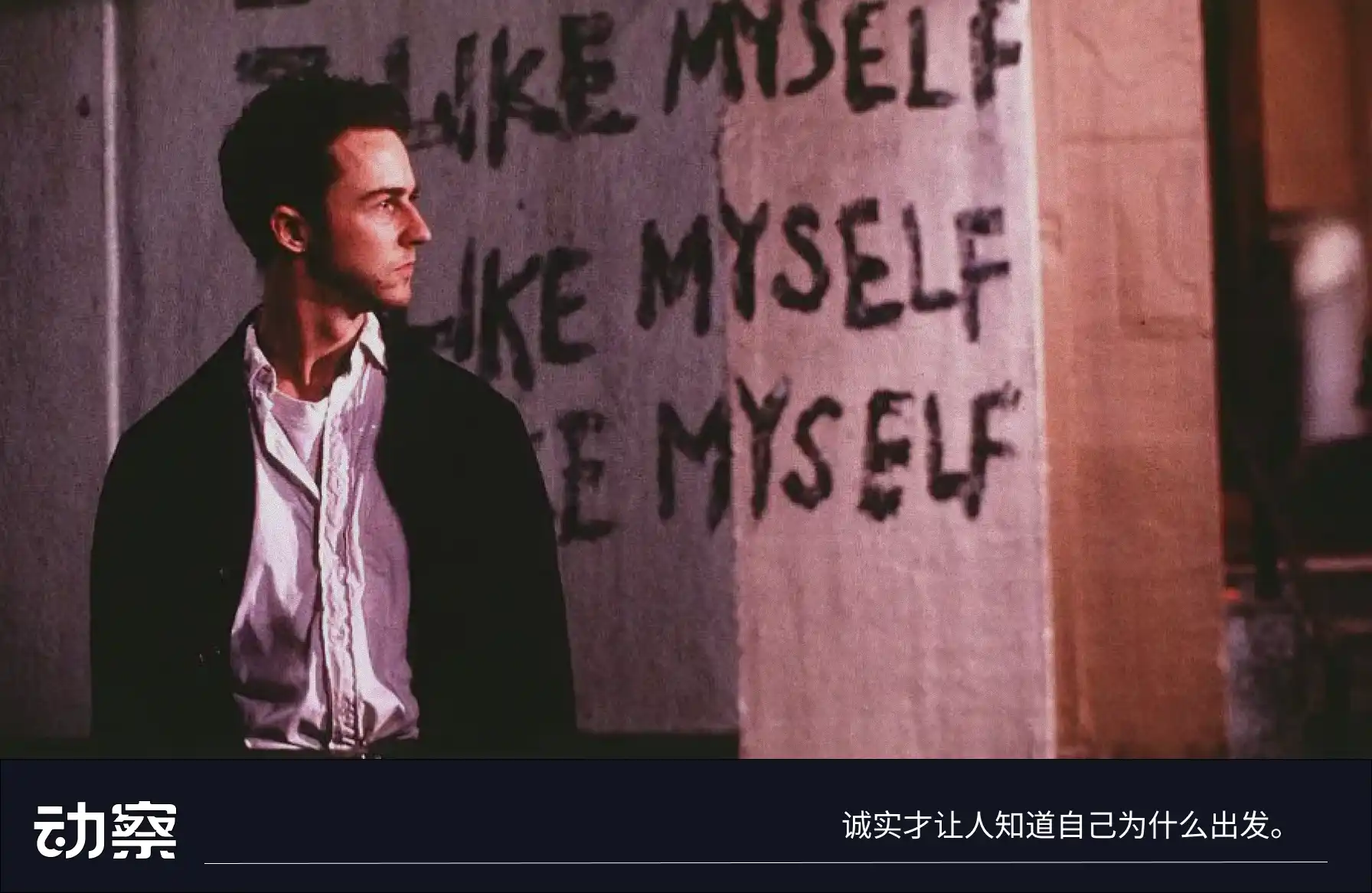
The name First Rule Ventures is inspired by "Fight Club." Li Rongbin mentioned that he appreciates the film's attitude towards the material world—both rebellious and compliant. On one hand, an investor must respect returns and be accountable to LPs; on the other, a good investor must challenge the consensus and seek out things that have not yet been fully endorsed by the market.
We approached him with a few questions for a discussion.
When big money is all chasing AI infrastructure, why still invest in AI applications? In a market where early funds are competing with giants and large funds, what is the position? For a fund that claims to "only invest in 5 projects," is it really exercising restraint, or is it forced to be small? Moreover, when an investor says they have "personal touch and taste," is this statement about aesthetics or business.
Below is our interview content.
Investors Should Also Have Expression
Rongbin Li's transition from underground music to investor may seem like two completely unrelated paths. One appears to be closer to expression, while the other seems more about computation. But Rongbin Li himself doesn't see it that way. He repeatedly emphasizes that artists have expression, entrepreneurs have expression, and investors should also have expression.
An investor's expression is not about writing a few pretty slogans or chasing the hottest trend of the moment; it's more like the answer a person provides with their money and time. What kind of people, products, and world do you truly believe in.
Beating Dang: First, please introduce yourself in your most recent role.
Rongbin Li: Hello, everyone, I am Rongbin Li, the founder of First Rule Ventures.
If I have to mention any other role, in a very traditional or not-so-trendy way, I am a slash youth, but now I'm actually a middle-aged slash. Before this, I was the lead singer of an underground punk band and also ran an underground music label. Before founding First Rule, I was also the Founding Partner of another fund for about 6 years.
Beating Dang: From a rock band and music label to an investor, these are two very distant professions. Why did you want to become an investor?
Rongbin Li: I was originally very interested in entrepreneurship. My direction in graduate school was Entrepreneurship. At that time, I had this idea that I must start a business, I must have my own company.
But when I returned to China and started looking for a job, I actually didn't know which industry I wanted to enter. I just wanted to find a more versatile job first to understand various industries. So, I joined a strategic consulting company.
The professional ethics of the consulting company tell you that as a strategic consulting consultant, your success is never your own; you have to satisfy the client and make the client successful. After a strategic consulting career of about two years, I felt quite in line with this value system.
When you see someone else succeed, standing on the stage or expanding their business, and you know you played a part in it, that feeling amplifies my sense of self-worth.
Later, I started to wonder, what other professions could lead to this kind of fulfillment. Strategic consulting, to some extent, is still somewhat detached, merely giving advice without truly engaging in the company's actual operations.
Eventually, I thought that perhaps investing would be a better way to go, where you could help the entrepreneurs you want to support. So, I transitioned from a consulting firm to the investor side, overseeing investment operations. Later, I spent 6 years in Africa, assisting Chinese companies in expanding to Africa, engaging in on-the-ground development and participating in some of their investments.
During that time, I felt that seeing entrepreneurs move forward with your help was a very gratifying experience.
My strength is having broad interests, but my weakness also lies in having broad interests. Because if you have a wide range of interests, it's challenging to deeply focus on a single entrepreneurial track. Entrepreneurship is extremely demanding, you encounter various issues, and may need to immerse yourself in an industry for over a decade.
Entrepreneurs' hands and feet are tied; they can't wander too far into areas outside their industry. But as an investor, the tracks and entrepreneurs you focus on are diverse, and your daily work is not monotonous.
So I feel that this endeavor is more suitable for my personality. Therefore, I chose investment and have been involved in investment for over a decade.
Interviewer: Is your music label still active?
Li Rongbin: The label is a different story. To be honest, running a label is quite challenging. One reason is that I am indeed a bit busy now, and the second reason is that one thing I always wanted to do was to build a bridge between artists and the commercial world.
Artists have personalities. I think most underground artists are quite extreme; they find it challenging to grasp the commercial aspects, but they are all very talented and highly creative individuals.
They are actually similar to many top entrepreneurs. Many top entrepreneurs have very peculiar temperaments. I was thinking, can I create a bridge in between? I can understand what the artists are thinking, comprehend their aesthetics, appreciate their work, and at the same time, express it in commercial terms to help them achieve some commercial success.
However, I later found that this matter was greatly influenced by streaming platforms, the current Chinese performance market, and the underground music scene. So, the current status is an indefinite hiatus, hoping to restart someday.
Ergo Beat: You need to help artists with the business side while also understanding these artists. The intersection of these two directions ultimately presents the overall tone of First Rule Ventures.
Li Rongbin: Yes. In fact, I have always felt that artists have their own expression, and entrepreneurs also have their own expression. The product they create, whether you look at its positioning, product values, or the target audience for the service, all reflect the expression that they have always wanted to make. It's very similar to an artist.
At the same time, I think investors should also have an expression. An investor's expression is not about what they say or about chasing what is currently trendy or the hottest trend. I believe that investors themselves also need to have something they adhere to and want to express. So, this is also the original intention behind my founding of First Rule Ventures.
You can see this from the name itself. It also represents some of my personal aesthetics and what I want to express.
From the name "First Rule Ventures," if you are a fan of "Fight Club," you should be able to get it. This is my favorite movie in life, and it has a very interesting line, which is also one of the classic lines in the movie:
"The first rule of Fight Club is: you do not talk about Fight Club."
Later, I thought, if we want to inherit or pay tribute to the rebellious spirit in "Fight Club," the kind of rebellion and resistance to the material world portrayed in the movie is somewhat like what investors need to do.
On the one hand, they need to consider the final investment return as the standard for success. But at the same time, if they want to make some great investments, they must resist the current world, resist the current trends, and resist what everyone is following. They must find something that is non-consensus.
So, I think this core spirit is quite similar to what "Fight Club" conveys.
From another perspective, I also think that entrepreneurs themselves are very much like the main characters Jack and Tyler in "Fight Club."
They are actually the same person but with completely different personalities. Jack is very calm but often insecure, frequently doubting the meaning of his existence. Tyler is another persona that split off in his mind, very optimistic, very rebellious, taking him to do many things that rebel against the current capitalist society.
This is very similar to entrepreneurs. Over the past decade, most of the entrepreneurs I have seen have basically been jumping back and forth between extreme confidence and extreme self-doubt.
It's possible that one day they encounter some development issues, product problems, or marketing challenges, and they call me at 3 a.m., saying, "Bin, do you think we can't continue, are we done for?"
At that time, I really hope I could be their Tyler, inspire them and say, "No, we are far from done, we need to continue working hard, we need to resist the world."
However, there are also some entrepreneurs who, after achieving some success, become extremely confident. They may think, "I am Tyler, I can do anything, I can lead a new culture, lead a new trend." But often, this is a very dangerous time. Many things Tyler did in the movie were close to self-destructive madness.
So at that time, they also need a Jack by their side to calm them down and bring them back to reality.
So I think this may also be the relationship between investors and entrepreneurs. They may be a whole, but they need to constantly switch back and forth, helping them avoid these risks on the entrepreneurial path.
I think this is quite in line with my understanding of the relationship between entrepreneurs and investors. So later, I took this name.
Only Invest in the First Round, Only Invest in Five Projects
In the VC industry, scale is often seen as a kind of victory.
The larger the fund grows, the larger the Check Size, the more the Portfolio piles up, and the logos on the website become more crowded. The success of an investment firm often ends up being a visual effect. A full page of logos, like an airport billboard.
But this time, Rongbin Li did it in reverse.
First Rule Ventures only invests in the first round, investing in only 5 projects per year. This is, of course, due to the reality of fund size, but it is more of an active choice. Because if an investor really wants to accompany entrepreneurs in the early stages, it is impossible to accompany too many people at the same time.
Dynamic Beating: Specifically for First Rule Ventures, when did you start planning to do this?
Rongbin Li: I probably started thinking about this around June to July of last year.
At first, it was because of the VC I worked for before, where I was a Founding Partner, and it has now grown into a relatively large firm. Of course, many people want the VC they work for to grow.
But later I thought, what I truly love is actually the very early stage. It's when you meet the founder very early on, and you are so impressed by a glimmer of what they have, that you are truly willing to help them. Often by the later stage of investment, the founder is already more mature. What they need more of is new resources, more significant funding. What we can actually do is much less than what we could do in the early stage.
On the other hand, the early stage is also when the founder most needs an investor to be there with them, to overcome many difficulties together, to do many things together. I feel that this aligns with what I most want to do.
动察 Beating: Was this JumpNet: Also 算是一个深思熟虑之后的想法,还是因为一种冲动?
Li Rongbin: I think it's half and half.
I have always loved early-stage investment, and the previous fund started small and grew bit by bit, over 6 years.
Later, I found myself yearning every day for the very small beginnings we had. Where the entrepreneur is, fly to that city, and then chat with them for a day and night. In that process, everyone is in a state of being good friends. But later on, as it grew bigger, it seemed like we slowly stopped being good friends, and you became more of just a person with money, not necessarily the entrepreneur's first choice.
This part was more of a thoughtful decision.
The impulsive part is, on one hand, I feel that the current rapid development of AI is indeed too fast, and it makes you wonder if you don't express yourself now, will it be too late. Will this round, you have not participated in this potentially great revolution. The next time you try to express yourself, will it be too late as you reach middle age.
So I think it might be a combination of thoughtful consideration and impulse.
动察 Beating: It seems like you are actually more of an external partner to various startups, not just an investor.
Li Rongbin: Actually, I have always wanted to say that investors are great, but not as great as we imagine them to be.
Why is an early-stage investor called an "angel investor"? Because they really are like a Guardian Angel. But sometimes, people also exaggerate the abilities of investors or what investors can actually accomplish.
What I truly enjoy is when an investor is like someone who best understands the entrepreneur's crazy ideas, understands the difficulties they face, and knows how hard it is for them.
Many VCs will say they are a Founder's partner. But I think if a Founder really needs an external VC as a partner for the startup to continue, does that not indicate that the Founder is not in the best state, and in that case, why wouldn't the investor just start their own thing?
So the state I want is something between a Co-Founder and a pure Investor.
Entrepreneurs know that when they encounter difficulties, whether it's at three in the morning or five in the morning, they can call me first, seeking help. When nothing urgent is happening, we can go out for a chat, have a drink, talk about recent events, instead of being stuck in a small space, having to Co-Found something every day, meet every day, work together every day.
I think it's a bit like being in a romantic relationship. If you wake up every morning and see your partner, go to bed with your partner, you don't know if one day you'll feel a bit annoyed during this process, wanting some freedom.
I think Founders also need this. If a Founder wakes up every day and the first thing they see is their VC, and the last thing they see before going to bed is their VC, I think they would get tired of it.
What Does He Really Believe In
Early-stage investment always faces one question: what direction to look at.
Looking at technology, you can easily be dazzled by technology; looking at resumes, you can easily be dazzled by big companies and big schools; looking at the narrative, you can easily be captivated by a beautiful story; looking at data, you often find that there isn't much data in the early stages.
Li Rongbin said he values people more and more.
But the term "valuing people" is quite broad. Everyone says they value people, the real issue is what exactly you value.
His answer is passion, or more accurately, whether a person's understanding of the world has its own mainline. Products can change, the market can change, companies can pivot many times, but if a founder can see the same starting point behind every turn, then this person is worth investing in.
Joint Inquiry Beating: How do you evaluate whether a startup should be invested in from your perspective?
Li Rongbin: This is a great question. Actually, I come from a technical background, so in investing in the entire tech industry before, whether it's my previous experience with Blockchain or the new AI, I think I had a misconception before, which is that I tended to magnify the tech-first mentality. People with a tech background tend to have this characteristic. They may think the product is excellent, it touches them deeply, or this new technology makes them feel great, possibly changing humanity.
But later, after more than six years of early-stage investment and VC, I increasingly felt that the role of individuals is more significant.
When it comes to individuals, I don't think there has to be a specific template, such as coming from a big tech company, a prestigious university, or having a certain amount of experience. I believe that one crucial thing is passion. If someone truly believes in what they are doing, no matter how many times they pivot or transform, their starting point still comes from their understanding of the world and a genuine belief in the value of their work.
I really admire this type of Founder. They may have changed tracks many times and pivoted their products frequently, but if you look closely at their trajectory and products, they all follow a common thread based on their understanding of the world and their deeply held beliefs and values.
Interviewer: Can you give an example of Dynamic Observation?
Li Rongbin: Let me talk about a project I recently invested in, a Portfolio company of First Rule Ventures.
This Founder was originally a lawyer who became a partner at a top law firm after a few years, demonstrating exceptional legal skills. He always believed that elite services like those provided by lawyers should not be exclusive to the wealthy but should also be accessible to ordinary people. In other words, he envisioned a scenario where technology and knowledge are democratized, offering a better way for the general public to handle the risks of the world.
So, he left the law firm to start his first entrepreneurial venture, creating a decentralized organization called Legal DAO. He brought lawyers from around the world together to provide legal services to the underprivileged and ordinary individuals. However, from a business perspective, it later failed.
Subsequently, he used AI to develop a legal AI project called LegalNow. This AI service differed from the popular legal AI services available today. For example, services like Harvey are more oriented towards selling to lawyers or law firms, or using AI to assist the upper-middle class in reducing costs.
However, his goal was to leverage AI to help regular people solve legal issues. Only in the final mile would a lawyer provide services, significantly reducing the cost of legal services.
Of course, this initiative was not well-received by lawyers because their time is highly valuable, and they sell their time as a service.
They continued down this path to explore further AI capabilities. At that time, they were somewhat pressured as the company faced cash flow issues, and the team morale was low. In this scenario, they thought about creating a shell product, leading to the development of the Global GPT project.
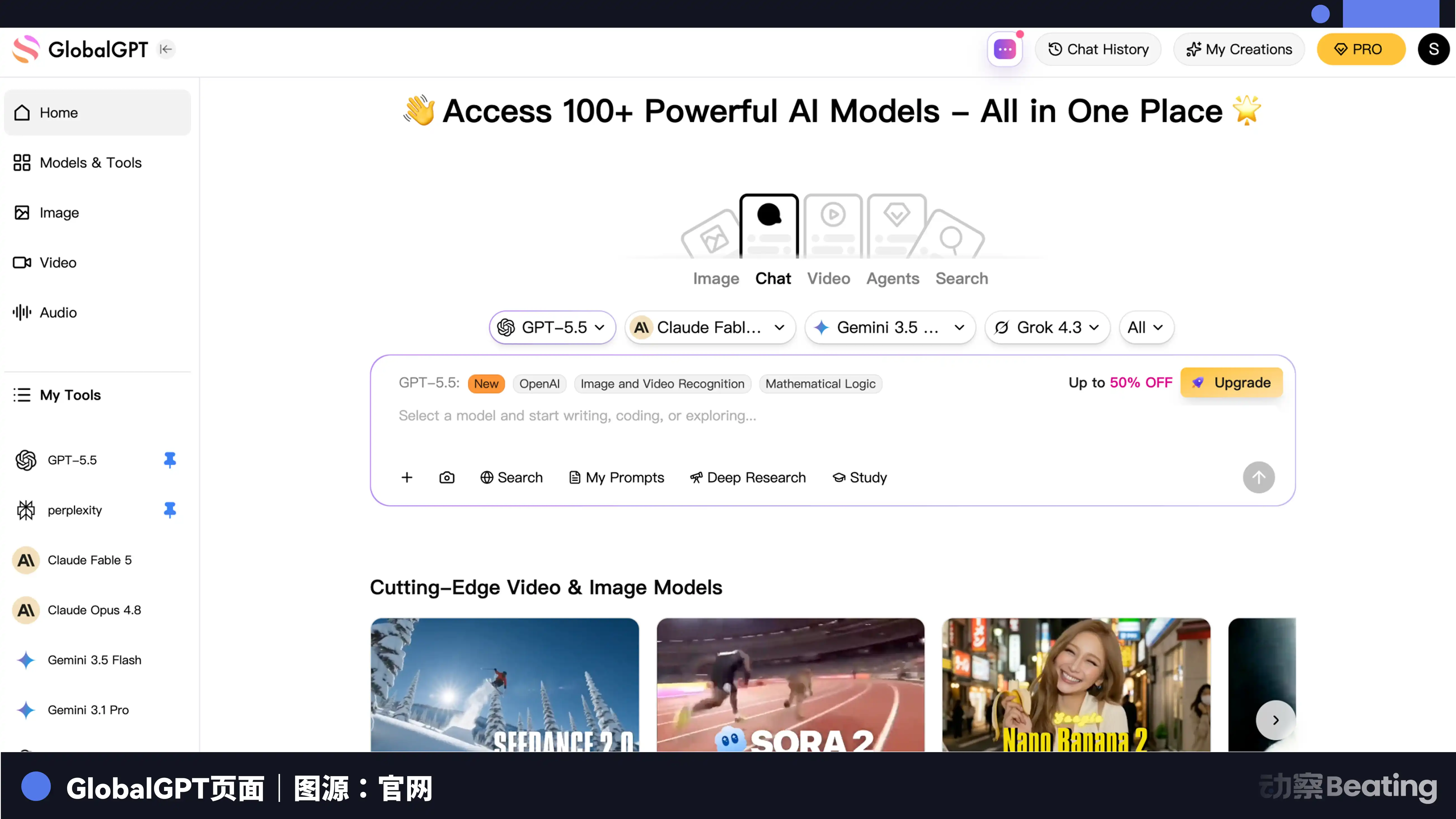
The hallmark of Global GPT is that, although it appears to be a shell, it was designed from day one to serve the general public, ordinary people, as an AI product.
Firstly, its market consists of many people who are not from top-tier tech countries or cities. For example, many of its users come from Southeast Asia, Eastern Europe, and even fifth- or sixth-tier cities in the United States. Its current Annual Recurring Revenue (ARR) is around $10 million, with a global user base of approximately 2 to 3 million.
Its upcoming product to be launched is a Proactive Agent Network called Yumi. It is a very user-friendly product that allows ordinary people, even those with no computer technical experience, to operate their own Agent.
Therefore, as you can see, it already has 4 to 5 products. Each product may seem widely different, but ultimately, they all follow the same logic, which is the founder's vision of how the world should be. He believes that technology should serve the common people, not just the tech elites. All the products he has created revolve around this principle.
Many people might think that this product doesn't seem to have much technological content, isn't very fancy, isn't the kind of product that fits a narrative, or hasn't coined a new term. But I prefer entrepreneurs like this. I admire how he has consistently adhered to his own understanding and values of the world. All his products are centered around this.
So, in the end, what we need to consider is whether I agree with these values. If I share his values and agree with his worldview, then I believe he is worth investing in.
Dynamic Beating: Investors and curators seem quite similar, showcasing their values through their own portfolios.
Li Rongbin: Yes, that's right. Even when I was running the record label, it was the same. When you sign a band, it's not because that band is popular, but because the music they make aligns with the type of music you like.
I like post-punk, so for me, I might not sign a metal band. Even if they are doing very well and have strong commercial value, I would still think it's not my expression. I appreciate it, but I need to have my own attitude, so I wouldn't sign them.
Dynamic Beating: I recently saw a viewpoint that said all shell-like products have a business model behind them that revolves around acting as a middleman to sell tokens. How do you view this perspective?
Li Rongbin: Indeed, many projects are like that. If you act as a middleman to sell tokens, it often involves deceptive marketing or obtaining discounted tokens through other means.
However, take Global GPT, for example. Their client base consists of individuals who are not highly sensitive to AI. In other words, not all of their users need to fully utilize their tokens to the maximum extent. Most of their users are not even API users but rather end consumers of their products. For these everyday people, the token usage is relatively low.
Therefore, they don't need deceptive marketing tactics or token dilution to maintain a healthy profit margin.
From the perspective of ordinary people, if I want to experience various cutting-edge base models or new multimodal models at the best of times, subscribing to each one individually would indeed be costly, especially if my usage is limited.
Most of Global GPT's users are ordinary people who are unlikely to exhaust all the tokens in their monthly package. In a way, it has tapped into a new market segment. Ordinary people are willing to one-click subscribe to everything but also acknowledge that they won't use everything, and this difference is where their profit lies.
So, you could say they are indeed wholesaling tokens and retailing tokens. However, in this process, they do not engage in token dilution or deceptive marketing practices.
Dongcha Beating: When did you invest in the Beating project?
Li Rongbin: Actually, it was very recent.
Dongcha Beating: That's quite quick because First Rule has just announced its establishment.
Li Rongbin: Yes, they have just announced it. But I already have three portfolios. We only invest in five projects a year, so I've already completed half of my KPI.
Investing in only five projects a year is something I genuinely want to achieve. I used to chat with investors and entrepreneurs, telling them that VCs are very busy nowadays because everyone promises to help and be your most loyal comrade.
I told entrepreneurs to check their website. If they display over 50 Portfolio Logos, they probably can't be your most loyal partner because they genuinely don't have the time to support you.
This comes from my personal experience. With our previous fund growing significantly, we have invested in over 100 projects in our history. Honestly, when you have a bad memory, sometimes you might even forget that I invested in a project five years ago.
So I think this is really ridiculous. Many VCs will say they are faithfully standing behind you and will support you whenever. You see 100 logos on their official website, and you ask them if they remember what any of those companies actually do. I think maybe many investors don't remember, especially those at the Founder level.
So later I thought, if we really want to express my aesthetics, express my understanding of the world, and truly support entrepreneurs, like Tyler and Jack, then I really can't invest too much.
Later on, I did the math for myself. In one year, if you really want to be close to someone, you should be with them at least one day a week.
Beating the Bush: There are five workdays in a week, so are you only investing in five a year?
Li Rongbin: Yes, five workdays. And sometimes we may need one or two days, maybe even including the weekends. So I think if you work overtime every day, the most you could do is seven.
In most cases, when you need help, we spend a whole day discussing your strategy, direction, funding, so maybe one day a week is needed. So I think managing 20 to 50 projects you've invested in at the same time is really difficult.
So later on, I set a number for myself, 5. Of course, some people saw it later and said, "Is your fund too small then, only able to invest in 5 projects?" I also admit that strictly speaking, the first phase of the early-stage fund I'm currently working on is definitely not a large fund. It's definitely not a fund that can write very large checks.
But because my positioning is to only invest in the first round, invest in only 5 projects a year, and then run alongside you at the earliest stage. So I think that's enough.
Walmart and the Founder's Corner Store
Large funds investing early-stage is no longer news.
Names like Sequoia and Hillhouse come with their own brands, resources, follow-on funding capabilities, and a certain market endorsement. As long as they are willing to go early-stage, the space for small funds is bound to be squeezed. For entrepreneurs, this is also a realistic choice. Taking money from a large fund often means a better narrative, stronger endorsement, and being more visible to the next round of investors.
So, why do small funds exist?
The analogy given by Li Rongbin still comes from music. A major label can sign Nirvana, can sign the best bands, but it is often the small label that hears those voices first before the major label. The small label may not necessarily have the most extensive resources, but it has the earliest judgment, the strongest aesthetics, and the most intimate relationships.
The market may not necessarily need many venture capitalists in the middle. Either be a Walmart or be a boutique store owner.
Deep Dive Beating: Do you think the current model you are following, staying small and focused, only investing in the very early stages but then deeply engaging post-investment, will become a trend?
Li Rongbin: There are many different voices in the market. Some say that more and more large funds are now participating in the early stages, which will squeeze the survival space of early small funds. I think there will definitely be squeezing. Especially when they have a better reputation, a stronger brand, and indeed better resources than early small funds, it will definitely pose a threat.
But equally, from the entrepreneur's perspective, when he has to choose, for example, if Sequoia or some other early-stage fund invests in him, I would definitely welcome them in. They can come in as Co-leads with us, or even if they lead, I can follow.
Just from another perspective, you are not its only one. As an entrepreneur, you are just one of its 500 girlfriends. So you must consider what it can bring to you, whether it is really what you need.
For example, if he thinks that after a big VC invests, he can get very good resources, then of course, I also hope that my project is funded by Sequoia. But when entrepreneurs are raising funds for the first time, they also need to think clearly about what they really want.
What I hope is that the market will not have only one type of VC.
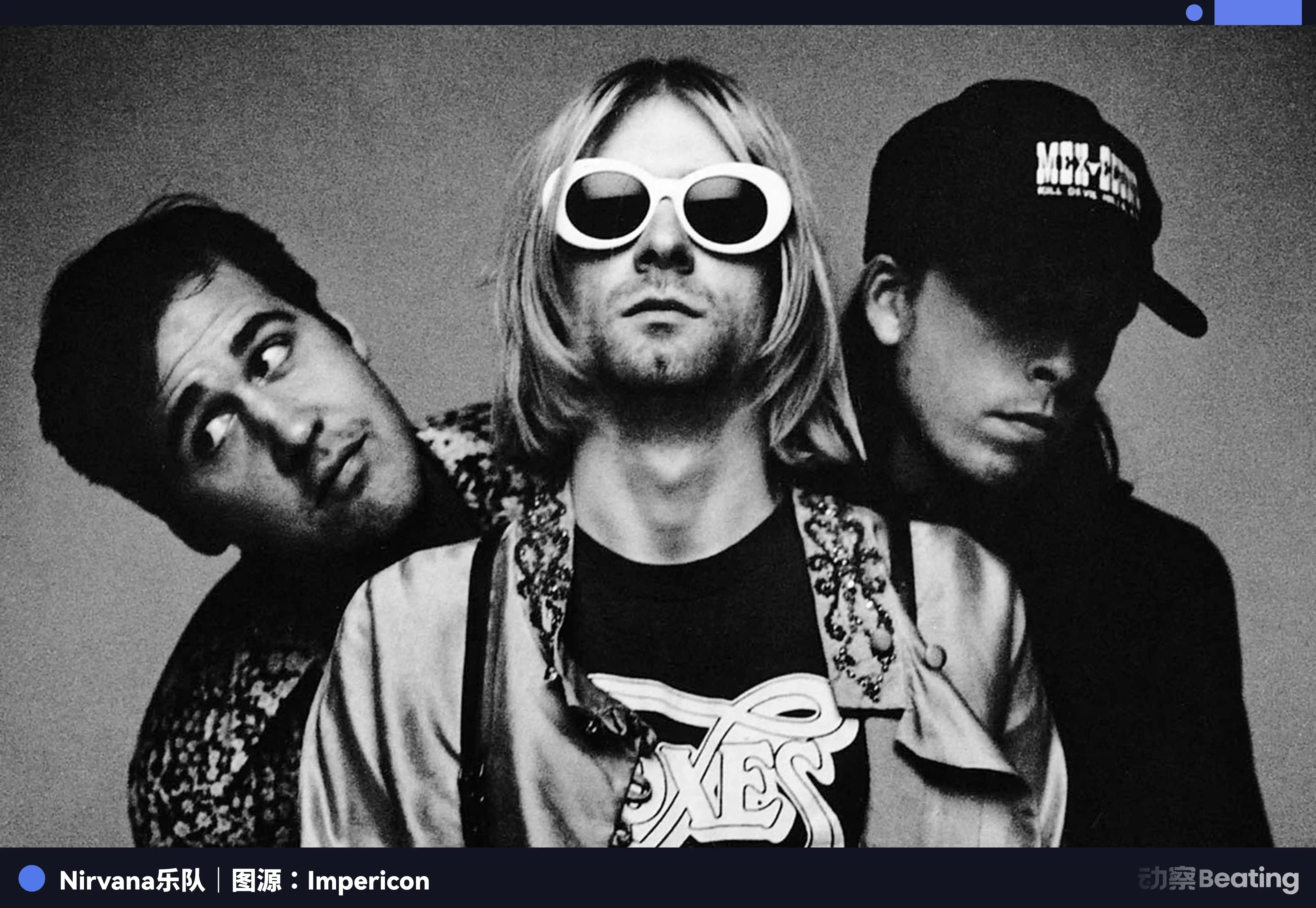
It's like going back to the music industry I am most familiar with. Many great rock bands were also signed by major record labels. For example, Nirvana, and various early classic bands, were actually signed by major labels.
But before they were signed by major labels, they also had small labels silently working to help them. This is two separate things, and both small and major labels have ultimately achieved success in the commercial sense, and the bands themselves have also received the resources they deserved.
For example, when a band is not yet very famous, they cannot reach a major label. They choose a small label to help them release their first album, do some promotion for them. Although resources are very limited, they start to gradually build a fan base. The second album is then signed by a major label, which I think is very reasonable.
Latterly, major labels also found that these indie labels signing these bands also made a lot of money, so they would consider acquiring those indie labels, or they would also use scouts to discover those early bands. I think there is no problem with that, it's just that everyone's aesthetic expression is definitely inconsistent.
So it all comes down to the entrepreneur. Does he want to choose someone who can have up to 5 girlfriends at most, or someone who can have 500 girlfriends at the same time? Who does he prefer to spend more time with, who does he prefer to be with, this is entirely the entrepreneur's choice.
I think there may not be a middle-ground VC in the future market. It is either not very large, or not so serious about helping entrepreneurs.
There may be polarization. Either you are a very tasteful, very aesthetic, very early-stage, very focused VC. Or you are a large VC, but at the same time have a Division, have a team focusing on small early-stage companies.
Dynamic Beating: Anyway, either you are Walmart, or you are the owner of a small shop.
Li Rongbin: Yes, and the things you sell must be different from Walmart. You can't say that the things you sell are more expensive than Walmart's, and at the same time, they are the same brand as what Walmart sells. That definitely won't work.
Honesty Is Rarer Than Intelligence
When entrepreneurs meet investors, they usually prepare a BP, data, market analysis, competitive landscape, and a polished narrative.
Li Rongbin said that he actually thinks there is no need to prepare much.
Of course, this statement cannot be taken literally. Rather than a meticulously packaged story, he would rather see a person truthfully explain why they are doing this. What do they really care about, what do they believe, what is their judgment of the world.
In recent years, storytelling has become very important in technology investment. It has even become so important that it has overshadowed the business itself at times. Entrepreneurs who can tell a story are more likely to get funded, and entrepreneurs who can create new terms are more likely to be remembered.
Li Rongbin said he is a bit worn out now.
Dynamic Beating: If I am an entrepreneur and want to talk to you about investment, what should I prepare?
Li Rongbin: I really think there is no need to prepare much. The most important thing is to chat, talk about why you are doing this, what you believe in, whether you really like me. Because this is a two-way selection process.
Top entrepreneurs never lack good investors, and good investors never lack projects. So it's like dating, you express your deep view of the world, what you think the world should be like. I see if it is within my understanding of the world.
Or, he will make me think about something I have never thought of, he will inspire me, make me feel like the world has changed again, then I will invest in such an entrepreneur.
So I think there's actually no need for elaborate preparation. Just sit down and have a chat, a genuine chat is even better.
Personally, I don't feel the need to be overly prepared. Sitting down and having a real conversation is actually better.
When it comes to those very fancy entrepreneurs, although I haven't reached a point of natural aversion, I do sometimes feel that everything is just too perfect. Regardless of their background, resume, the industry they are currently in, or their product, everything just seems too perfect. Over the past few years, I have encountered such entrepreneurs and have even invested in some. But to be honest, not every entrepreneur who appears perfect has ultimately succeeded.
Beating: You still prefer individuals who may have a bit of a wild side.
Li Rongbin: I wouldn't call it wild. I think it's honesty.
He can truly express some of his opinions without everything being overly processed, and not everything appearing perfect. That kind of mindset is actually not good. Because the journey of entrepreneurship is like continuously leveling up in a game, it's wild. You're not just climbing up the ranks in a big company. I think entrepreneurs need a bit of wildness.
Beating: I saw in your previous article that you were looking for businesses that pursue the essence of commerce. Listening to you now, you are actually looking for those who can not only pursue the essence of commerce but also have a storytelling ability. Or, is storytelling seen as an essential skill for entrepreneurs in this day and age?
Li Rongbin: To be honest, in my previous VC experience, we were quite obsessed with storytelling. When I see an entrepreneur using their unique storytelling logic to describe what they want to do, I get very excited. But now, I'm slowly losing interest.
After seeing so much about storytelling, you start to feel like it's just the same old thing.
So now, I feel that storytelling ability is very important, and I have to admit that it is very important. But in the current state of AI, I believe business is more important. No matter how fancy your product is, how good the trend is, at the end of the day, the essence of commerce is a topic that can never be avoided.
Therefore, I think if you respect the essence of commerce from day one, what you want to do is in line with the essence of commerce. If you are not good at storytelling, we can help you. But if from day one you only know how to tell stories, without understanding the essence of commerce, then maybe it will end up as a burst bubble.
This has had a significant impact on me. Because we have also participated in bubbles before and have witnessed the bursting of some bubbles.
In a situation where storytelling is key, the test for entrepreneurs and investors will reach an extremely critical point. For example, your exit strategy and timing, whether you can get out before the bubble bursts.
Entrepreneurs are no exception. If they can rely on the takeoff of a bubble, continuously iterate on their product and business model to make it solid and well-rounded, then it's fine. However, most entrepreneurs who are only good at storytelling tend to falter after the narrative unfolds and takes off, failing to solidify that business logic. In this case, this bubble is bound to burst, and it will all end in a mess.
Interviewer: Do you think value investing in this AI era is the same as before? For example, SpaceX, with a trillion-dollar valuation; previously, analysts said Zoom's price-to-sales ratio was a thousand times. It seems like this perspective might conflict with the point we just discussed.
Li Rongbin: Yes, I have to admit that this is the current state of affairs. From AI becoming a mainstream topic to now, it has only been a little over two years. For the investment career of a fund or the entrepreneurial journey of an entrepreneur, it's actually just a fleeting moment. So I think the current situation does not represent the future always being like this, nor does it mean they are not in a bubble.
I think they definitely have a bubble. But when you ask whether they are not worth that money, the market has given them this price, and the market is the most accurate; you must respect the market.
From my point of view, like those two companies you just mentioned, including some highly valued companies seen in the primary market now, many of them have nothing but are valued at tens of billions of dollars. Now, thinking back, maybe they do have a reason for the high valuation. So I find it difficult to judge whether expensive is indeed value investing, or whether cheap must be value investing.
It definitely depends on the investor, entrepreneur, and the society's overall perception of it. Ultimately, it's how you see the world. Some people think buying luxury goods is a great deal, while others think, it's all about carrying things, why would I buy a $10,000 bag instead of a $500 bag.
It is the different perceptions of the world, so existence is reasonable.
Interviewer: In one of your previous articles, you said something interesting. You mentioned that over the years, you increasingly feel that investment is not an industry of who is more intelligent but an industry of who is more honest. You also said that the market may not necessarily reward smart people, but it will certainly punish dishonest people. What stories have you been through?
Li Rongbin: After many years in investment, everyone will definitely have experienced dishonesty. I just feel that there seems to be more dishonesty in this industry now.
From my previous experiences, including observing the investment frenzy in a particular sector today, I feel that being honest does not mean rigid or that if I have 1, I absolutely cannot say it is 1.1 or 1.2.
I think the most important thing is to be honest with yourself about what kind of company you want to be. When facing investors, have you truly expressed your inner thoughts to them? When investors look at themselves, they need to clarify whether they are investing in a project out of FOMO, a fear of missing out from the last round, a desire not to miss out this time, or for the sake of the brand or some kind of intangible influence.
I believe it is essential for a person to be very honest with themselves. Understand your own goals, know what you are truly aiming for, and then stick to those goals.
Especially in the process of a VC firm growing up, sometimes in the later stages, many actions may become distorted, the firm may be dishonest with itself, forgetting the initial purpose of why it started, forgetting what kind of projects it wants to see, and forgetting what logic it believes the world should develop by.
It may become a follower, investing in projects that everyone likes. And in fact, whether investing in projects that everyone likes or deliberately investing in non-consensus projects, to some extent, is being dishonest. Because as a VC, your primary target is always your LP, and your secondary target is your entrepreneurs. If you deliberately try to create a rebellious state, or deliberately create a "I am just chasing non-consensus" state, it is actually a form of dishonesty.
I think there are quite a few people in the market now who are deliberately doing things. So I am thinking that this time, starting anew, I will definitely not deliberately do anything, but let everything happen naturally. That's how I feel in my heart, so that's how I'll proceed.
This does not mean that I will no longer invest in mainstream projects, nor does it mean that every project I later participate in will be super underground or part of an extremely independent band. It's enough that you are very clear about what you are thinking.
Can AI Applications Still Be Invested In?
Investing in AI applications is quite awkward right now. On one hand, the infrastructure narrative is still strong, with large-scale models continuing to encroach on the application layer. Many investors feel that current AI applications are like the electric horse carriages created just after the invention of electricity.
On the other hand, applications cannot wait for the infrastructure to mature completely before emerging. The history of the internet and mobile internet shows that many applications emerged when the infrastructure was still inadequate, hit a ceiling, and then forced the next round of infrastructure upgrades.
Li Rongbin opposes the blanket view of AI applications as "electric horse carriages." He prefers to see the technological cycle as a series of twists and turns with upward trends. Each time the infrastructure is halfway upgraded, a batch of applications emerges, hits a wall, the infrastructure upgrades again, and the next batch of applications sprouts.
In this process, early investors do not necessarily have to invest in a product that will still exist 10 years later. Being able to invest in a good application at each small cycle is also a kind of victory.
Beating Observation: Although AI seems very exciting now with various events and hackathons happening every week, it is actually very difficult to get funding for AI applications. However, not long after your announcement of establishment, you made a move on several applications. In addition to what was mentioned earlier about large funds investing in early-stage projects regardless of cost, what is the real situation like now?
Li Rongbin: This is a very good topic. If we look back at each round of technological evolution and compare them, the first wave always endlessly burns money to build infrastructure. The infrastructure bubble expands to a certain extent, then bursts, some applications survive, and these applications once again become the infrastructure of the next round, where new applications grow on them, and then the bubble bursts, and the cycle repeats.
I think this time is no different. It's just a question of how far along we are now, and this is worth discussing.
Many people may feel that at the moment we are still in the very early stages of AI, and I agree. Therefore, the most high-probability investment opportunity at the moment is still in infrastructure.
Earlier, we discussed the larger cycles: infrastructure development, bubble expansion, bubble bursting, collapse of small apps, followed by the emergence of larger entities. But I believe that within each significant cycle, there are smaller cycles. As the infrastructure is being built, when it is halfway there, you will find that applications begin to emerge.
I recently read the viewpoint of a foreign VC who said he would not invest in today's AI applications because he believes current AI applications are like electric carriages. I disagree with this.
If you look back at every development of the Internet, many ideas and applications actually emerged when the technology was not yet matured. It's just that when these things grow to a certain point, it is found that they have reached a ceiling. After reaching the ceiling, there must be another round of large-scale technological upgrades to break through this ceiling.
Within this framework, there may be several small ceilings between each major ceiling.
For example, in the Blockchain field that I am familiar with, from Bitcoin to Ethereum, people realized that this was a huge technological leap, and we finally could run smart contracts. Then various applications appeared on Ethereum, and that wave of applications was many times more innovative than it is now, with a lot of creativity.
However, soon everyone found out that Ethereum's infrastructure was not sufficient to support such grand visions. As a result, many things started to fail, and Ethereum kept scaling, with Layer 2 and Layer 3 solutions emerging. During this process, even more new applications appeared.
So I think, as an investor, if you can invest in good projects during each small infrastructure upgrade, I think you have also won, and you have won big.
Therefore, you don't necessarily have to bet that this thing will still exist in 10 years. I find it difficult to guarantee that the projects I invest in today will still exist in 10 years, and this is not false modesty; I think it's impossible. But that doesn't mean that if you invest in them as an investor and support them, your returns will be lacking. Or the person you invest in may transform in the future to create something that will still exist 10 years later. I think all of this is possible.
History always rhymes, but not every time after a major upgrade, everything becomes entirely new. It is a continuous wave that is constantly undulating upward.
So you mentioned earlier that application financing is challenging, which is true, financing is indeed difficult. Especially for large VCs, their current understanding of this world must be that the infrastructure is still not robust enough, and they need to continue investing in infrastructure.
Another point of view is that the Foundation Model will devour a lot of software. I think this is also correct. But I also believe that there are a few things that it will not devour.
Right now, I am investing in AI applications, mainly looking at three things.
The first category is those with a unique channel.
Let me tell you a story from Africa in the past, which is also a classic case in business history, Transsion Mobile. Initially, Transsion Mobile's product, you could say, had no highlights; it was just a Shenzhen knockoff. However, because it had its own unique channel in Africa, the first thing they did when they entered Africa was to paint the walls, imprinting their advertisements everywhere. In the most remote mountainous areas and villages in Africa, they would open their own exclusive mobile phone stores.
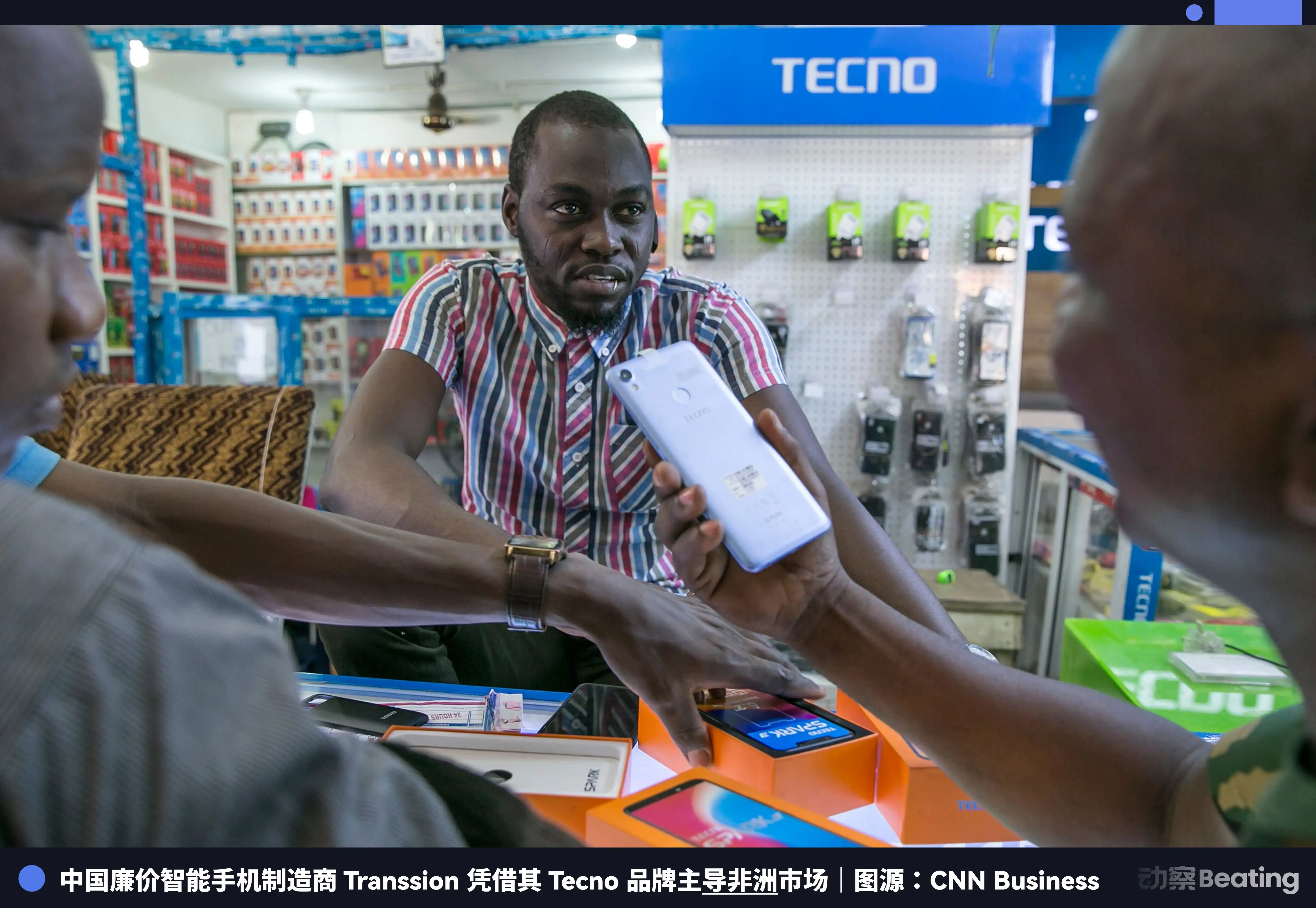
After establishing its channel, the product continued to upgrade iteratively, eventually leading to the emergence of high-end products. It was able to compete with Samsung for the high-end market in Africa and is currently the largest mobile phone brand in terms of shipments in Africa.
Therefore, I believe that in this new AI era, there will definitely be companies like this. They will control special channels, serve different demographics, and have made significant segmentation in terms of geography and demographics. Because the big players are not willing to do this dirty work.
The second type is someone who has over 10 years of experience in a specific industry and fully understands how that industry works.
For example, one of the individuals in one of my three portfolios is Chen Tao, the co-founder of ByteDance. He recently went All In to work on an AI content and social project. His co-founder is also an alumnus of my university, Nanjing University, and I have been supporting him for many years.
I believe their key characteristic is that one has been working on ByteDance since its inception until last year, and the other previously worked on a product called Amino Apps in the U.S., which had several tens of millions of users at its peak and was an application for community culture.
Both of them have been doing this for over a decade. They are very familiar with the key details of the entire social and content industry and how a company can grow from scratch to a giant. However, this time they feel that a new paradigm shift has occurred, where AI can bring some new enhancements to social and content.
At this point, I don't even know what AI social and content should look like in the next 10 years. I believe everything done today is still an experiment. But I trust that if anyone is to make this experiment, these two are probably the best individuals to do so. At least they understand what the basic logic of this matter is.
I think the logic of the next generation of social, or information distribution logic, and content distribution logic will indeed change in the AI era. For example, before ByteDance, people searched for information. ByteDance was the first to change it to information finding people, i.e., distribution. Next, I think it might be information finding information, where your agent is looking for other agents to access information between agents.
With the arrival of AI, information will further explode, and at the same time, we hope to help some creators in the industry who initially had no traffic but had very high-quality content. How do you help them distribute it? Under the algorithmic logic of major platforms in the past, these things did not get good distribution.
But if we assume that everyone has 10 agents as your information officials. Every day, they will be in the Agent-to-Agent network 24 hours a day to get all the information, to get to know other agents they want to know, and see various content passed to them by other agents. As AI capabilities become stronger, they might make better judgments because they have your context, so they know your aesthetics and what kind of content you want to see.
In this scenario, as it becomes more and more intelligent, it will already find that person who may have zero traffic and zero fans, but their content is excellent. This person will be seen by your agents, without needing to compete for your human attention. You only have 8 hours of attention. Even if they steal a second from you, they will have to spend a lot of traffic cost, and in the future, traffic will become more and more expensive.
So in this new Agent Network era, how can we approach social distribution and content distribution again? I think there is a great opportunity in this. So I would think that it is possible that this team will be the ones who can research and develop such a thing.
The third category is proprietary data.
This is something that has always been mentioned, but many people misunderstand, thinking that proprietary data is just the same as personal data. I don't think so.
For example, another project we have invested in is collecting taste data. Although this industry is not large and has not yet attracted the attention of big players, I believe that if one day a big player enters this space and wants to instantly spend $100 million to acquire the real taste data of 100,000 people, it would be a challenge.
Because this is data collected one by one over two years by the entrepreneur I invested in. Currently, you cannot buy people's taste data anywhere; you have to gather it through collection, surveys, and interviews.
So in the future, any company that can continuously accumulate private data in this field through its own business logic, steadily grow, and acquire more and more private data in this field will, in my opinion, have a promising future. For example, the solution they are currently providing to a top global multinational food company requires them to establish a private database for this food company to access individual taste data.
I think this is also a very good approach. It is increasingly like upfront engineering; you need to understand their needs, send engineers there to build a private database for them, deploy it locally, and at the same time, they subscribe to your service.
This is a very down-to-earth business model in terms of business model. Its data can also grow exponentially. As it serves more and more users, the human taste data it collects will also increase. When it becomes the world's largest taste database, a big player may offer $2 billion to acquire this data. I hope to exit in this way.
A Helping Hand
Early-stage investment faces a very practical problem. You invest early, but you may not be able to stay until the end.
Especially in the AI era, the product cycle has become shorter. A product that looked cutting-edge three months ago may have been overtaken by updates three months later. The fluctuations in Blockchain have been fast enough, and AI is even faster.
This means that the exit strategy for early-stage investors may also change. IPOs are good, of course, but not every company can be expected to IPO. Acquisitions, primary and secondary markets, and phased exits may become more realistic paths.
Li Rongbin said that he would be very good to entrepreneurs, but after all, he is not raising children.
This statement may not sound nice, but it is very honest. Investment is not charity, nor is it a parent-child relationship. The mission of an early-stage investor is to accompany the entrepreneur in the earliest stages, help them get started, and give them a boost. When the entrepreneur grows up and no longer needs you, you should also gracefully exit.
Beating the Pulse: This leads us to the topic of exits. The boom-and-bust cycles in the blockchain field have already become quite short, but in the AI field, the lifespan of a product may be even shorter. With such a high-frequency cycle, as an investor, is it not even more challenging to exit?
Li Rongbin: Indeed, it is more challenging. However, there are increasingly more acquisitions taking place, especially by large U.S. companies. Judging from the current activity in the capital markets, I believe that for some time in the future, at least in the recent past, there might also be a window for IPOs.
But as an early-stage investor, you cannot say that all your projects will definitely IPO. So my advice to entrepreneurs is that they should choose the right time or when they feel they have achieved their goals, then exit.
I will be very good to entrepreneurs, but after all, I am not raising children. I will wholeheartedly dedicate myself to them, treat them very honestly. At the same time, I will also tell them, perhaps now is a good time to sell the company. Or maybe I feel that I have already delivered the value I intended to help you with, you have grown so much, and I can't help you in the future, so could you let me exit first, even if it's in a secondary market.
I will do this very honestly. Because I have also fulfilled my mission, I have done what I can to help them, and now they no longer need me. I have been with them for this period, been their girlfriend for this period of time, and that's enough. They have a better future ahead, have succeeded, can shake me off, and I can confidently leave. It's about giving them a boost, sending them on their way.
At the same time, because you just mentioned that the volatility will be greater, I am prepared for that. Every company I invest in now will not directly consider the current product as the successful product that will earn money in the end.
Another very important point is that I will help them continue to raise funds and support them until they discover the best product.
Beating the Pulse: Do you think now is a good time for entrepreneurship?
This question has several contexts. I recently saw news that in Silicon Valley, the United States, they are starting to advise people not to go to college, but to drop out and start a business. Additionally, now that AI has come out, it seems to make everyone feel like they can do anything and that they are invincible, which may easily lead to a misjudgment of their abilities.
So do you think now is a good time for entrepreneurship? Or are there actually more pitfalls?
Li Rongbin: First of all, I think we need to define what entrepreneurship is. When I talk about entrepreneurship, or when everyone talks about entrepreneurship, it sometimes actually encompasses everything. For example, if I am currently a VC, I am also in entrepreneurship. Someone starts an OPC, they are also in entrepreneurship. My wife is an artist, and she may feel that being a solo artist now is also entrepreneurship.
I believe any era is a good time for entrepreneurship. Because if you have something you want to create, sell it, and you've made it a success, then you are an entrepreneur.
But I think right now is indeed suitable for those with an idea, and at the same time, AI can help them with some basic testing, feature development, and initial product iterations, allowing them to try out their idea first. In this scenario, I think it's quite suitable.
However, if you want to pursue a narrow definition of entrepreneurship, where you come up with an idea, then seek funding, after the first round of funding develop the product, go for a second round of funding, and eventually go public, I think it's a very competitive period now.
From the outside, it seems very hot, as if there is news of new funding every day. But in reality, every VC is very anxious, and entrepreneurs also find it hard to secure funding.
I remember a very interesting witty remark I saw a few days ago from a senior figure I greatly respect.
He tweeted, saying that there used to be a saying in entrepreneurship that went, "I have everything ready, I have a great idea, now I just lack an engineer." When he actually got down to it, he realized that what was lacking was not just an engineer, but a product, a front end, a back end, operations, marketing, a whole bunch of things. What he lacked were leaders in various technical domains and technology stacks.
Now with AI, it turns out all of these can be done. He realized that what he truly lacked was that idea.
I think this is quite to the point.
Everyone is excited, saying that entrepreneurship has become very simple now, the barriers are lower, and AI can do everything. But in the end, you really have to ask yourself, is your understanding of the world mature, and is your understanding of the world really correct.
I can't say whether you are right or wrong, but you can try. Now you don't need to spend VC money to try. You can subscribe to a CC, subscribe to a Codex, and then you can try it out. So, start by trying.
Insight Beating: For those who want to start a business now, please give them three pieces of advice.
Li Rongbin: It's not really advice.
First, be a little more honest, honest with yourself, honest with others.
Second, think about what your understanding of the world is like, and you need to continuously test your understanding of the world.
Third, entrepreneurship is very difficult, very tricky, especially how to achieve both speed and slowness, this is a particularly difficult thing.
We ourselves as VCs are the same, living in anxiety every day, feeling like we need to speed up constantly, but also telling ourselves to slow down. You can only invest in 5 projects a year, you must slow down, you can't just jump on whatever looks good.
It's the same for entrepreneurs. They may have 100 fresh ideas in a day, but in the process of constantly and quickly executing, you have to keep telling yourself to slow down. You really need some accumulation to form an understanding of the world, to form some real judgments on the future development direction of this world.
Be a Little More Honest
After talking to Li Rongbin, I found that he actually cares a lot about his position. Where you sit determines what you see and what kind of relationship you have with the people on stage.
If you sit too far away, you can only see the excitement. If you sit too close, you are easily swallowed by the sound and light. The best position for early-stage investors may be the front row. Close enough to see the exhaustion, excitement, confidence, and self-doubt on the faces of entrepreneurs. At the same time, you are not yet close enough to stand in for them.
The AI show has just begun. The infrastructure is still being built, the models are still swallowing software, and the applications are still in constant trial and error. Many products that look lively today will disappear soon. Many products that look rough today may only be an early form of something bigger.
At a time like this, investing in AI applications is of course risky.
But all truly integrated technologies will eventually become applications. Processing power won't comfort a founder who collapses at 3 a.m., models won't understand why a user in Southeast Asia is willing to subscribe to a non-fancy AI shell product, and data centers won't know why a food company is spending money to simulate human taste.
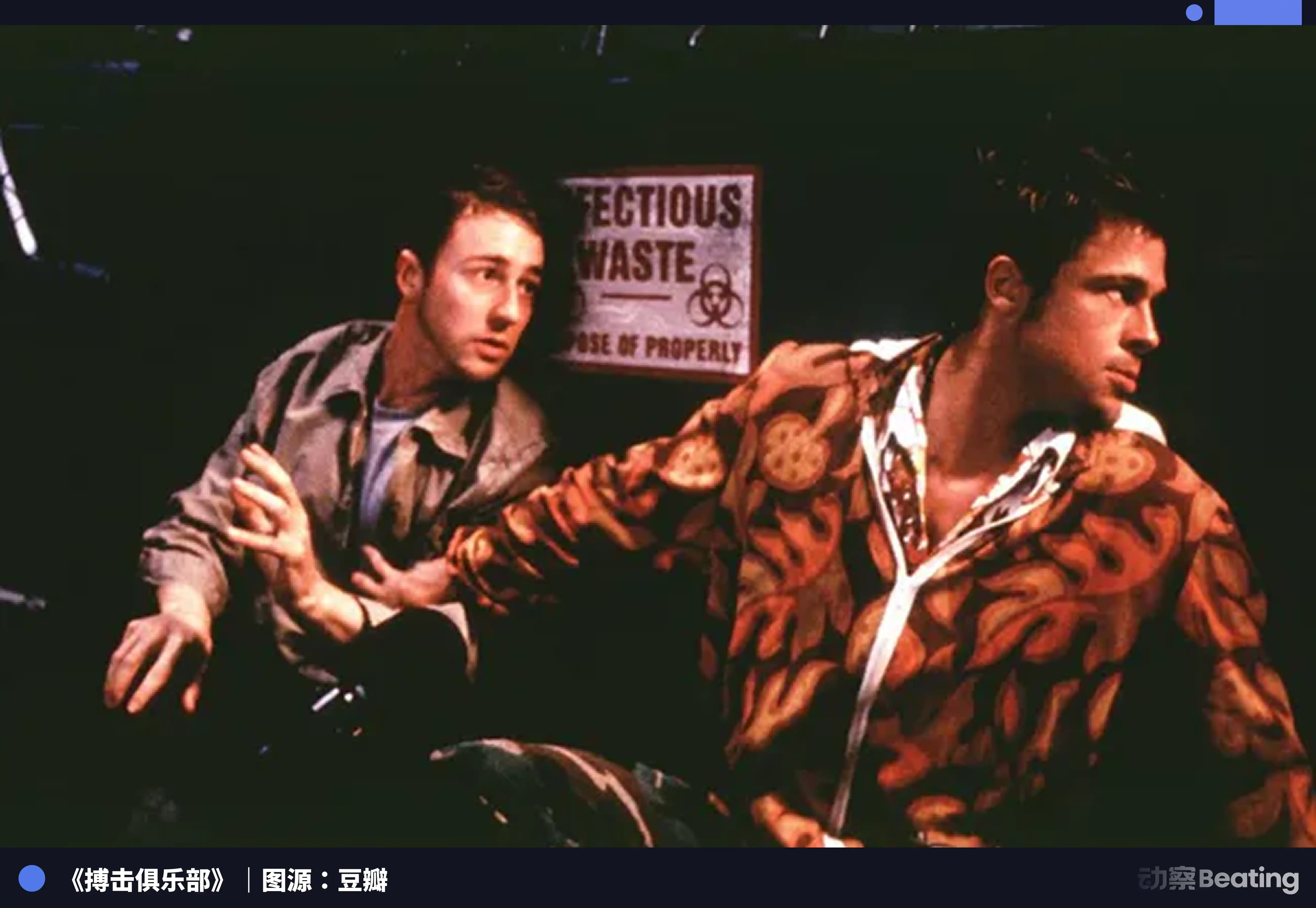
In "Fight Club," Tyler Durden says: "It's only after we've lost everything that we're free to do anything."
Only after losing everything can one be free to do anything.
This statement may sound a bit heavy when applied to a new fund. Investors cannot truly lose everything, and LP money is not meant to be burned for romantic self-expression. However, it does speak to another truth. Many times, only by letting go of things that seem right can a person begin to ask themselves what they really want to do.
A larger fund, more portfolio logos, a safer consensus, a story that is easier to be understood by the next round.
All of these are the right things.
Li Rongbin has chosen a less convenient path this time. Investing in only 5 projects per year, focusing only on the first round, emphasizing AI applications, and insisting on being "humane" and "tasteful." This approach may seem out of touch, of course. Yet, in an industry where everyone is eager to prove their intelligence, someone willing to talk repeatedly about honesty, aesthetics, and what they truly believe in is itself a very rebellious act.
Intelligence sometimes makes people run faster.
Only honesty lets a person know why they set out in the first place.
Welcome to join the official BlockBeats community:
Telegram Subscription Group: https://t.me/theblockbeats
Telegram Discussion Group: https://t.me/BlockBeats_App
Official Twitter Account: https://twitter.com/BlockBeatsAsia