To earn this money, they waited for 7 years

The first-ever stablecoin company, Circle, dropped nearly 20% overnight due to a leaked list.
The list included Visa, Stripe, Mastercard, Coinbase, BlackRock, Google, IBM, and Ripple. They are preparing to participate in a new alliance to create a USD-backed stablecoin called Open USD. This coin is planned to launch later this year and may initially be deployed on some mainstream blockchains. There will be no fees for minting and redeeming, and after deducting operational costs from the reserve earnings, the remaining profits will be distributed to the companies adopting it.
Market instantly grasped the situation.
It's not just about adding another coin. The portion of Circle's deposits that generates the most interest income may be replaced.
This news is interesting as these big names have had this plan for a while.
In 2019, when Facebook introduced Libra, these same players were already at the table. Visa, Mastercard, PayPal, Stripe, Uber, Spotify, and Coinbase were all present. Facebook clearly understood back then that it couldn't do this alone. It needed to package the initiative into a Swiss association called the Libra Association.
Seven years later, Facebook is no longer in the lead role.
But the table remains set.
The Unstable Table of 2019
In 2019, also in the summer of June, when Facebook unveiled Libra, they narrated a compelling story.
Many people worldwide still lack bank accounts. Cross-border remittances are too expensive. The traditional financial system is too slow. The internet has made information flow almost free, so why should money remain trapped within banks, card networks, clearinghouses, and a myriad of intermediaries?
This story sounded like charity.
But those around the table all knew this was not philanthropy.
If Libra succeeded, it would become a new high-speed lane for money. Users could use it for payments, remittances, and purchases. Merchants could accept it. Facebook was also planning to launch a wallet called Calibra to integrate it into Messenger and WhatsApp.
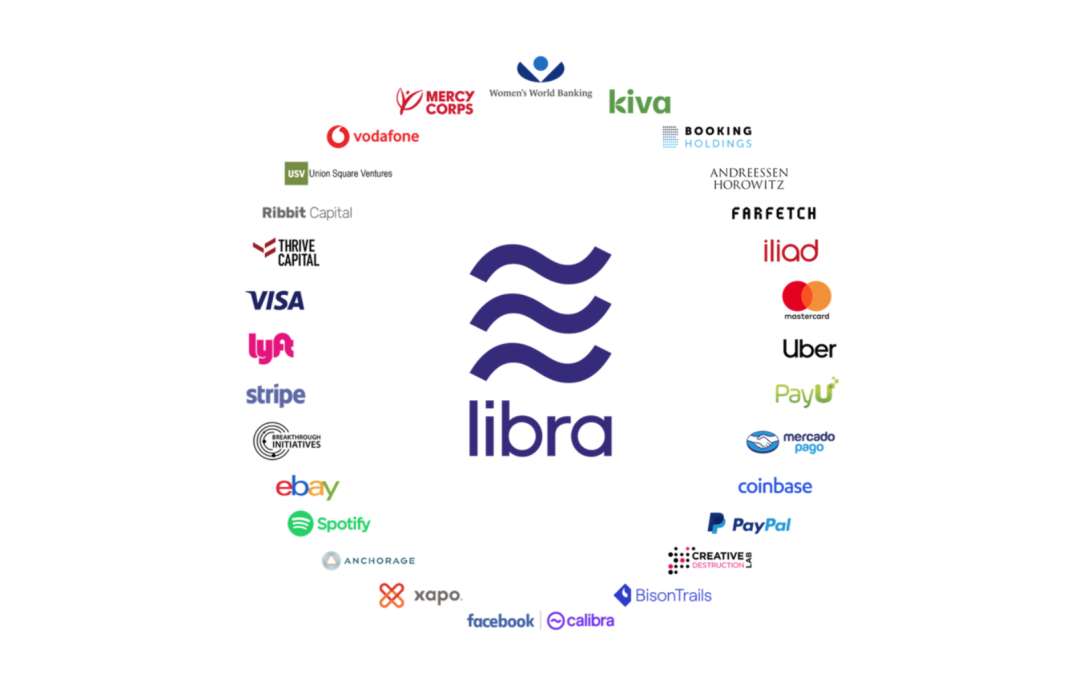
Libra's former alliance; Image source from the internet
This is not about launching a coin.
This is about rewriting how money moves on the internet.
Facebook knew this was too big, so it brought in many companies. Each member seemed to have an equal say. Facebook said it wouldn't control the system. It would just be one member.
Regulators were not convinced. They didn't see a modest payment innovation; they saw a social network with billions of users, backed by global payment and internet companies, trying to issue a private digital currency.
Central banks saw currency sovereignty.
Congress saw Facebook.
Banks saw a payment gateway.
But for users, it was simpler. A company that already held social relationships, photos, ads, and behavioral data now said it also wanted to help you manage your money.
Soon, pressure hit those alliance members. PayPal left first, followed by Visa, Mastercard, Stripe, eBay, Mercado Pago, and Booking. The project was renamed Diem, the narrative changed, ambitions scaled back, shifting from a basket of currencies to a USD stablecoin. Diem's assets were later sold to Silvergate. Eventually, even Silvergate succumbed during the 2023 bank turmoil.
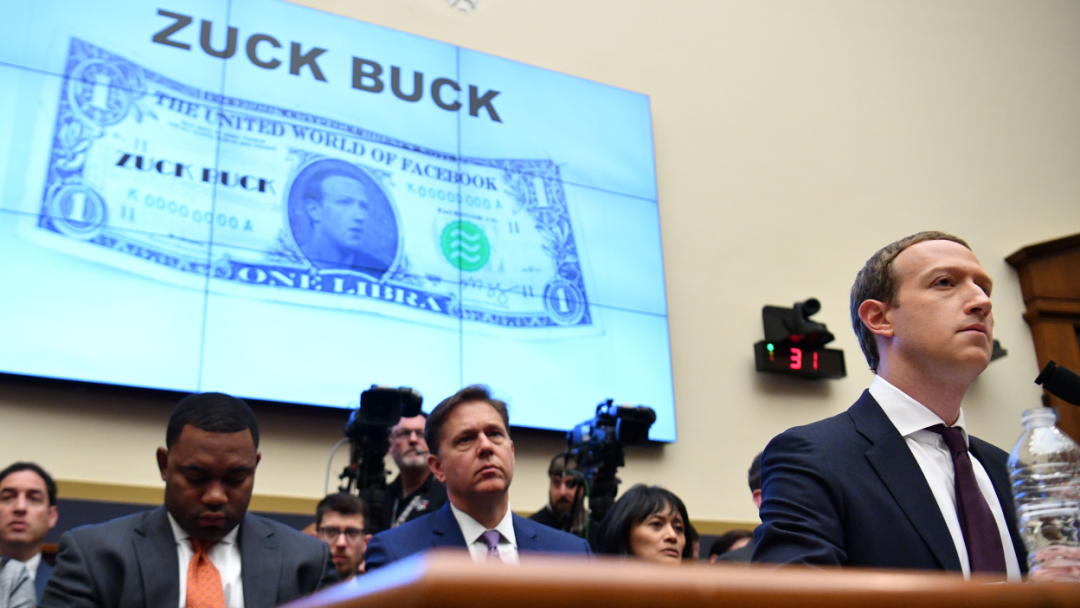
In 2019, Zuckerberg testified at a Libra hearing, with the community meme "Zuck Buck" displayed in the background
Superficially, Libra died a thorough death.
One whitepaper, one wallet name, one set of code, one list of departures. What's left is just a footnote in industry history.
But if you remove Facebook from the middle and look at that table again, you'll find another story.
The companies that left didn't avoid stablecoins.
They just didn't want to run into that wall with Facebook in 2019.
But they will certainly admit that with Facebook, they saw a larger world.
What Hasn’t Really Changed Is Who Gets the Interest?
The stablecoin business may look new from the outside, but it's actually quite ancient inside.
A user hands a dollar to the issuer, and the issuer gives the user an on-chain dollar certificate. The user uses this certificate to transact on exchanges, wallets, and payment platforms. Meanwhile, the dollar is placed by the issuer into a bank deposit, short-term Treasury bonds, or a money market fund.
The user still holds one dollar.
What the issuer receives is the interest generated by that one dollar.
When interest rates are low, this arrangement is not very noticeable. However, when interest rates rise, stablecoin issuers suddenly become akin to money-printing machines. They don't have to pay interest to holders, yet they can enjoy the yield from the reserve assets.
This is how Circle's story unfolded.
USDC has high credibility, its reserve transparency is more readily accepted by U.S. institutions compared to Tether, and Coinbase is its most important distribution channel. After going public in 2025, the market once viewed Circle as one of the few stocks that could directly bet on stablecoin growth. A significant portion of its revenue comes from reserve returns. The larger USDC grows, the more attractive its income appears on the balance sheet.
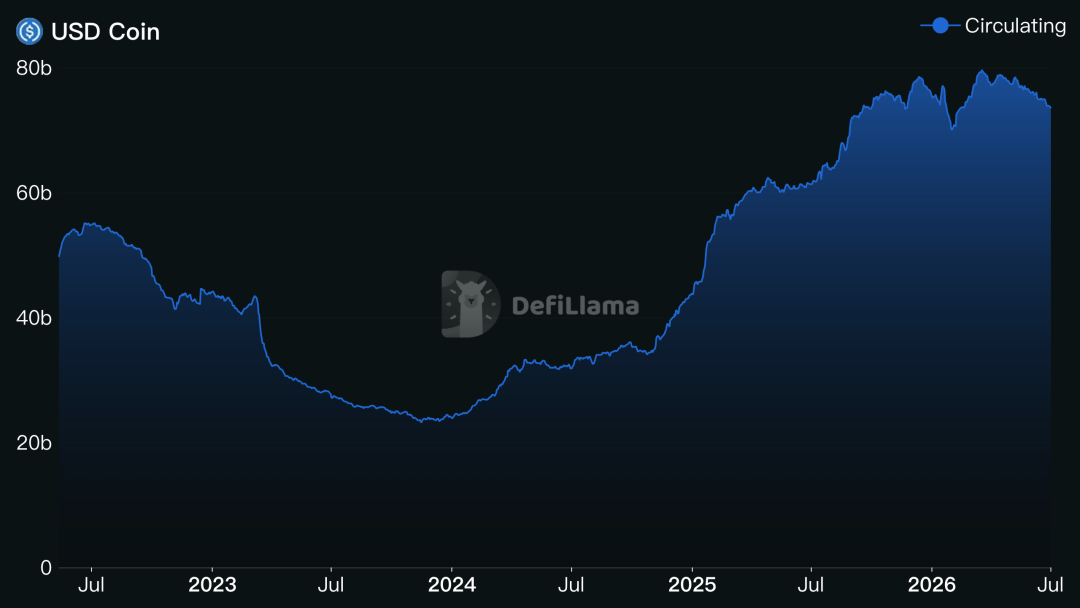
USDC's market value has been steadily rising since its 2024 low, peaking earlier this year; image source from DeFiLlama
But this also exposed its vulnerability.
If a stablecoin is just a standardized product of "putting dollars on-chain," why should the issuer take away most of the interest in the long run?
The harshest part of Open USD's statement this time was not "we are also going to issue a coin," but "reserve returns should be shared with adopters."
This statement struck at Circle's wallet.
The approach of Open USD is quite "crypto": sharing the money earned with everyone involved in running this network. This is a story of "outsiders of the crypto world using crypto thinking to tackle someone who came out of crypto but claims not to be part of the crypto world."
Companies like Visa, Stripe, Mastercard, and Coinbase are not necessarily concerned about the coin's price. A stablecoin should not have a price. What they care about is distribution, settlement, merchants, wallets, accounts, and settlement balances. Whoever controls where users' money sits is closer to the toll booth of the next-generation payment system.
What Libra wanted to do in 2019 is also this.
It's just that back then, its face looked too much like Facebook's.
After the Failure of Libra, the World Stepped In
A lot has changed in seven years.
Most importantly, the United States finally established a legal framework for stablecoins. In 2025, the GENIUS Act was signed into law, setting boundaries for the issuance, reserves, regulation, and anti-money laundering requirements of payment stablecoins. This framework is not perfect and has sparked many controversies, but for large companies, it at least changed the question from "can we do it" to "how should we do it."
The infrastructure has also evolved.
In 2019, Libra had to explain why it needed its own blockchain, why a consortium could handle global payments. By 2026, the public blockchain had become a ready-made financial pipeline. Trading platforms, wallets, custody, and on-chain risk management are much more mature.
Payment companies are not new to the game either.
Visa had already experimented with settling transactions using USDC. Stripe reopened the door to crypto payments and later acquired the stablecoin infrastructure company Bridge. Coinbase has always been involved in the distribution chain of USDC. For these companies, Open USD is not a sudden pivot but a consolidation of efforts from the past few years under one unified name.
The narrative has also converged.
Libra once talked about a global currency, financial inclusion, and serving the unbanked. The rhetoric was grand, sounding like it aimed to bypass the existing financial system.
Open USD doesn't say that.
It talks about a USD stablecoin, compliance, launching later this year, multiple blockchains, over 140 business partners, fee-less minting and redemption, and sharing reserve yields with adopters.
This narrative lacks the romance of Libra and isn't as daunting as Libra used to be.
It no longer feels like a social network trying to mint money. It feels more like a consortium of companies that already control the payment rails, aiming to move the dollar onto tracks they are more familiar with.
That's the change over seven years.
The Alliance's Old Problem Persists
But there's a common problem with alliances.
Too many cooks in the kitchen.
When there are too many people involved, ambitions soar, and actions slow down. Every company wants the new system to emerge, but no one wants to give up their customer relationships. Visa has the network, Stripe has the merchants, Coinbase has the trading users, BlackRock cares about reserve assets. They can agree on "stablecoins will be crucial," but that doesn't mean they can agree on "who gets the most benefit."
Libra didn't just die in the hands of regulations.
It also died under the weight of the alliance.
An alliance has to answer too many questions at once. Who issues, who custodies, who handles AML, who takes on redemption pressure, who enjoys reserve returns, who answers the phone when things go wrong.
The most challenging part of a stablecoin isn't its issuance moment.
Issuing a token isn't difficult. What's difficult is convincing enough people that this token can be redeemed for dollars at any time. What's difficult is getting exchanges, merchants, wallets, market makers, payment companies, and banks to all treat it as real money. What's difficult is ensuring that the redemption channel is always open, the reserve assets are not discounted, on-chain transactions are not congested, and regulators have someone to call.
Value doesn't come from a list.
It comes from liquidity, trust, and habit.
That's also why Circle hasn't been sentenced to death.
USDC has been running in the market for many years. It has liquidity, redemption experience, institutional relationships, and many on-chain applications default supporting it. For many businesses, switching to another stablecoin is not just a matter of looking at a list. Finance, legal, risk management, technology, every layer needs to be reevaluated.
Open USD is more likely to initially become a settlement network between enterprises.
It can run within Stripe's merchant network, operate on Coinbase-related chains, becoming the default option in certain cross-border, B2B, and on-chain financial scenarios. It doesn't necessarily need to immediately replace USDC. Just by diverting additional traffic and some distribution rights, it is enough to revalue the market for Circle.
So, can this be done?
Yes.
But if "getting it done" means envisioning it like Libra did back then, becoming the new money in the daily lives of billions of people, then it's still early. The average user doesn't care whether they are using USDC or Open USD. Merchants don't want to deal with another currency. Most people just want their money to arrive, fees to be low, and no surprises.
When stablecoins truly become part of mainstream life, perhaps no one will even say, "I'm using a stablecoin."
Just like few people think about the clearing network when swiping a card.
Circle Takes a Hit in the Market, Not All Unjustified
So, was Circle a victim of overkill?
Let's break it down.
If the market's intention is to wipe out USDC as soon as Open USD launches, that's going too far. A planned new coalition will not automatically inherit liquidity and trust just because the member list looks good. Circle's position didn't appear overnight, and it won't disappear in a day either.
But if the market's intention is to devalue the scarcity that Circle has enjoyed so far, then this hit is not unjustified.
After launching, the most attractive aspect of Circle was its purity. It didn't mix trading, custody, subscriptions, and market sentiment like Coinbase. It appeared to be the embodiment of stablecoin growth itself. The larger the stablecoin market, the more profit it makes.
Purity is sometimes an advantage. Sometimes it is not.
When reserve yield is the main income source, interest rates will affect it. When distribution relies on partners like Coinbase, partners will affect it. When more major companies realize they can issue compliant stablecoins themselves, issuance rights will affect it. Open USD has brought all these issues to the forefront at once.
It reminds the market that stablecoin issuers may not be the new Visa.
It may be more like an intermediary layer that packages the dollar in an on-chain format.
If this intermediary layer is trustworthy enough, early enough, and deep enough, it is certainly valuable. But if stablecoins become a standard commodity, the real strength may lie in the on-ramps. Merchant on-ramps, wallet on-ramps, exchange on-ramps, developer on-ramps, cloud and identity on-ramps.
These on-ramps, coincidentally, are not in Circle's hands.
So, Circle's decline is half emotion and half a reevaluation of its business model.
To say it was a complete overkill is not entirely honest.
To say it's all over already is too hasty.
A more stable judgment would be that the market has shifted Circle from being "one of the few tickets to the stablecoin era" to "a strong issuer in the stablecoin competition." The former enjoyed imagination, while the latter must face gross margins, distribution costs, interest rate cycles, and the judgment of new alliances.
Facebook Quits, But They Still Want to Do It
Looking back at Libra, the easiest conclusion to draw is that Facebook failed.
At that time, Facebook was too big, too infamous, and too arrogant. Perhaps Zuckerberg later renamed Facebook to Meta, half because he genuinely believed in it, and half because he felt that the name Facebook had already been labeled, the feng shui was off, and it needed a change.
It placed something inherently sensitive into a shell that was bound to raise suspicion. Regulators didn't need to understand every technical detail to instinctively feel uncomfortable.
A social network claiming to improve the global financial system sounded off in 2019.
Today, it's an inspirational story. Because these companies have not yet made that money.
They simply learned not to turn this into a grand narrative. Don't let a super platform take the spotlight. Don't claim to be creating a global currency, nor make users feel like a social app is now reaching into their wallets.
Seven years later, the story has become much more modest.
It's still the dollar.
It's still a coalition.
It's still a mix of payment companies, tech companies, asset management companies, and crypto companies.
Only this time, they say they are building open standards, a settlement tool, a stablecoin network, the underlying pipeline for enterprise payments.
The idea hasn't changed.
The posture has.
Facebook quits, but they still want to do it. Because the bill behind this has always been there. Internet commerce has already claimed most of the entrances for advertising, social interaction, content, cloud, and software. The movement of money still has too many toll booths of old systems.
Whoever can turn the dollar into an internet-native balance will be closer to transactions, interest, risk management, merchant relationships, and users.
Libra died at the door back then because it charged in like a person carrying a flag.
If Open USD can survive, it may be precisely because it is not carrying a flag.
It's more like a pipeline.
A pipeline doesn't need to be liked. It just needs to be quietly connected into the wall. By the time everyone notices, the water has been flowing from there for a long time.
Original Article Link
Welcome to join the official BlockBeats community:
Telegram Subscription Group: https://t.me/theblockbeats
Telegram Discussion Group: https://t.me/BlockBeats_App
Official Twitter Account: https://twitter.com/BlockBeatsAsia