Shenzhen Made, American Sold: The Multibillion-Dollar AI Business Selling Anxiety to the Middle Class

From the Silicon Valley of 2024, a strange wristband began to appear. It has no screen, doesn't show the time, doesn't pop notifications, not even an LED.
OpenAI's Ultraman wears it, athlete C Ronaldo wears it, a16z's partner wears it, the folks from Sequoia and Benchmark all wear it. In addition to the wristband, there is something even more discreet, a titanium metal ring, hidden on the middle or index finger, unlike a wedding ring, unlike jewelry.
This watch, which does not display time, in 2026, was valued at over $10 billion.
These things, regarded by Silicon Valley as social identity, looking at the appearance box, will be printed with three English words, Made in China. To be precise, Made in Shenzhen.
This is Silicon Valley in 2026, one of the hottest tracks of capital, health wearables.
On the wrist are Whoop and Google-acquired Fitbit, on the finger is Oura, these three companies have turned the business of "detecting body data" into a tens of billions of dollars level.
The End of an Era, Three Scandinavians and a Harvard Boy
January 14, 2021. Fitbit founder James Park finally handed over his self-made company to Google for $2.1 billion.
Just six years ago, Fitbit rang the bell at the NYSE, and its market value once surged to nearly $11 billion. It taught the world a number, ten thousand steps a day.
But the slogan "ten thousand steps" is too old.
In 2021, the group of people who started wearing wearables no longer satisfied with knowing how many steps they had taken. They want to know darker things, such as how stressed I am today, whether my sleep was good last night, and if my body is already on the decline.
Successor to Fitbit, it's not a bigger watch. It's a ring from Finland and a wristband from Boston.
The story goes back to the Finnish town of Oulu in 2013.
In Oulu, where the winter sun shines for only four or five hours, three engineers Petteri Lahtela, Kari Kivelä, Markku Koskela come together, ready to do something they think no one is taking seriously.
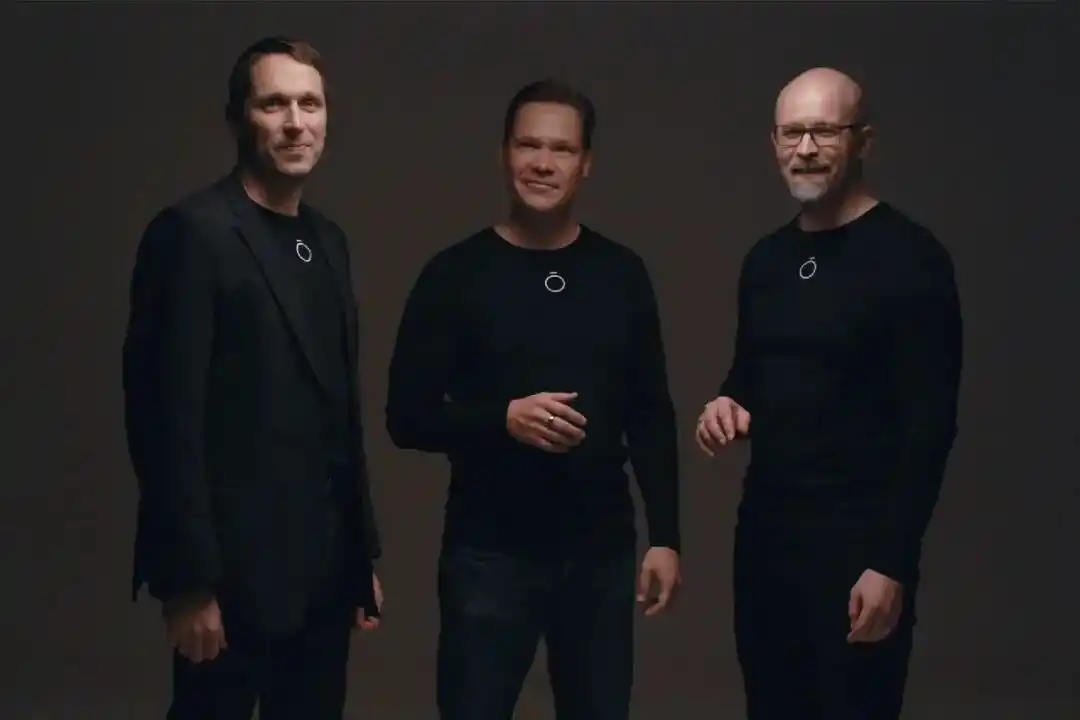
Oura Three
At that time, all wearable companies were focusing on "exercise volume," but their judgment was just the opposite. Less than 5% of the world's population exercises regularly, while 95% of people sleep every day.
So the Finnish approach was not the wrist but the finger. Fingers have high blood flow density, stable signals, and, most importantly, can be worn 24/7 without removal.
The prototype of the Oura Ring was developed in that perennially gloomy city.
The first generation was a bulky ring, much more retro-looking than now. It crowdfunded on Kickstarter in 2015, raising $650,000 without even touching the edge of the trend. The Silicon Valley trend that year was the Apple Watch.
Oura was a Finnish startup that was only quietly discussed in the biohacking community and almost unknown in other parts of the world.
Another part of the story took place in Boston.
In 2012, on the Harvard campus, 22-year-old Will Ahmed was the captain of the Harvard squash team. He noticed something that puzzled him. People who had trained the same amount on the team had vastly different recovery levels the next day. Some felt great, while others felt like they had been run over by a truck. The coach used his naked eye to decide who should do another set, a method not much different from the 1950s.
He wanted to create something that would tell athletes every morning whether they were ready for training. This was the starting point of Whoop. In the early days, Will had no money for marketing. He did something foolish, going to LeBron James and Michael Phelps' private coaches, handing them the wristbands, and asking them to try them on.
Over a decade later, the bills look like this.
Oura, in October 2025, completed a $900 million Series E financing, with a valuation of $110 billion, led by Fidelity. By 2025, it had sold a total of 5.5 million rings, with nearly 3 million sold in the past year. In 2024, revenue was $5 billion, expected to exceed $10 billion in 2025 and $15 billion in 2026. In May 2026, it secretly submitted an IPO application to the SEC.
Whoop, in March 2026, completed a $575 million Series G financing, with a valuation of $101 billion and over 2.5 million global members. Subscription revenue doubled year-on-year in 2025, with an annualized run rate of $1.1 billion. The investor list includes Cristiano Ronaldo, LeBron James, Rory McIlroy, and institutional investors such as the Qatar Sovereign Fund, Mubadala from Abu Dhabi, Abbott Pharmaceuticals, and the Mayo Clinic.
The two companies together are worth $21 billion. This is twice the peak market value of Fitbit.
Oura and Whoop don't even want screens. Screenless, message-less, call-less. And after Fitbit integrated with Gemini this year, it continues to strengthen its position.
They used fewer features to eliminate more features. Oura's doctrine is that sleep determines health, while Whoop's doctrine is that recovery determines whether you can go another round.
Step counts are for the overweight, recovery scores are for the social elite.
Why Wearables Are Taking Off Now
Oura was founded in 2013, and Whoop in 2012.
Both companies endured a full decade. And under the relentless pursuit of these two companies, Google prompted Fitbit to make a huge change.
In December 2024, Oura's Series D valuation was only $5 billion, but by October 2025, its Series E valuation had more than doubled to $11 billion. Whoop, on the other hand, had a $3.6 billion valuation in its Series F round in 2021, but by its Series G round in 2026, it had soared to $10.1 billion, almost tripling.
The real takeoff in valuations all happened after 2023. Why?
Because ChatGPT came out.
This is the secret hidden deep within this business. It's not really a health business at all.
Whoever gets their hands on users' round-the-clock long-term physiological data will seize the opportunity of the AI era, and this ticket is even scarcer than WeChat's social graph back in the day.
Let's start with an overlooked truth.
Before 2023, wearable devices were stuck in a rut—tons of data were collected, but no one could understand it. Do you know what HRV 42ms means? Do you know what to do with 1 hour and 23 minutes of deep sleep? Fitbit stumbled here, telling you the data but not what to do next.
The emergence of large models solved this "what next" for the first time.
As early as September 2023, Whoop integrated OpenAI's GPT model to launch Whoop Coach, and later introduced Daily Outlook, providing you with a personalized brief every morning—how's the weather, what events yesterday affected your recovery, and whether you should have that important 9 a.m. meeting today. Oura went even further. In February 2026, it released its own large language model, focusing specifically on women's health, from the menstrual cycle to menopause. Data, interpretation, action—this closed loop finally came together.
This is the real reason why Fidelity, ICONIQ, and the Qatar Sovereign Wealth Fund are willing to give Oura a $11 billion valuation and Whoop a $10.1 billion valuation. They are not buying a health company but the sole gateway to user body data in the AI era. This valuation logic is similar to the one used when investing in Snapchat and Instagram back in the day. They are investing not in the product but in the position where data is stored.

Sports stars like Cristiano Ronaldo endorse Whoop
This is the real reason why Fidelity, ICONIQ, and the Qatar Sovereign Wealth Fund are willing to give Oura a $11 billion valuation and Whoop a $10.1 billion valuation. They are acquiring the gateway to user body data in the AI era, where health is just a facade. This valuation logic mirrors that of the investments in Snapchat and Instagram, focusing on the accumulation of data.
Fitbit was slow to react and only caught up in May 2026.
On May 7th, Google rebranded the Fitbit App to Google Health. They also launched a 12-gram screenless wristband called Fitbit Air, starting at $99, without a screen, notifications, or buttons. The accompanying Gemini AI Health Coach started charging a subscription fee of $9.99 per month on the same day.
Following the same strategy as Whoop—screenless hardware, AI, and monthly fees.
Google has also opened up its ecosystem, allowing Apple Watch and Oura users to import their data into Google Health for Gemini to analyze. Apple's HealthKit is closed, with Oura and Whoop managing their respective data.
Google has humbled itself to aggregate data. The early bird catches the worm; therefore, it must foster an open ecosystem.
Let's delve deeper. In the future, everyone will have a personal AI Agent, perhaps named Siri, ChatGPT, Xiaoi, or Dou Bao.
But fundamentally, they all require data nourishment. OpenAI has taken textual data, Midjourney has taken image data, Google has taken search data, but the realm of body data remains unclaimed. Whoop, Fitbit, and Oura are vying for this position.
The dividend of the previous era was traffic. The dividend of this era is the data inside your body.
Huaqiangbei: The Purchase Order Behind Every US Stock Market IPO Bell
Whoop CEO Will Ahmed has publicly announced that the next step is an IPO. Oura has quietly filed its application. Two multibillion-dollar IPO candidates are waiting in line, ready to ring the NYSE bell in 2026 or 2027.
But when you look into their supply chain, the shipping address is not in Massachusetts or Helsinki, but in Longhua, Baoan, and Dongguan.
Of course, we are already very familiar with this script, as China's manufacturing industry has been performing for 20 years. Foxconn manufactures for Apple, Luxshare Precision assembles AirPods (holding over 70% global market share alone), Lens Technology produces glass panels for the iPhone, and CATL supplies power batteries to Tesla.
Every time the bell rings for a US stock market IPO, there is a purchase order from Huaqiangbei.
This time, it's the smart ring.
Disassemble an Oura Ring 4, and the titanium metal shell most likely comes from the Dongguan precision processing plant that makes cases for Apple watches. They immediately took on Oura's business since the raw materials, CNC machines, and polishing processes are readily available. The PPG optical sensor, accelerometer, and micro battery inside are almost all from the Pearl River Delta. The wristband of the Whoop 5.0, boasting fast-drying knit, is backed by textile manufacturing in Jiangsu and Zhejiang.
What Silicon Valley actually does is quite limited: defining products, writing algorithms, building brands, and gaining subscribers.
The truly challenging craftsmanship is also in China.
Squeezing sensors, chips, batteries, and antennas into a 2-gram titanium ring while ensuring waterproofing, 7-day battery life, and comfortable wear is not something all manufacturers can achieve.
In September 2025, a widely circulated incident occurred in the tech community. A YouTuber named Daniel Rotar was wearing a Samsung Galaxy Ring as he was about to board a flight home. Before passing security, he noticed the lithium battery inside the ring starting to swell, causing the ring to get stuck on his finger. The airport refused to let him board because the swollen lithium battery was considered a prohibited item for air travel. He was eventually taken to the hospital, where the ring was pushed off his finger with ice water cooling and medical lubricant. The doctors did not dare to cut it off, as cutting the titanium shell could have caused the lithium battery inside to explode.
This incident exposed a detail: the micro battery inside the ring lacks the watch's heat dissipation space, making any mishap a medical accident.
The factories capable of achieving a stable yield rate for such products are few globally, with the majority concentrated in the Shenzhen-Dongguan area. Inside their workshops, the production lines for Apple, Samsung, and Oura may be separated only by a partition wall.
Unfortunately, the supply chain capable of producing Oura cannot replicate Oura itself.
Chinese manufacturers are not lacking in technology, production capacity, or designers. What they lack is the authority to translate heart rate data into the Readiness Score framework and the brand premium that would make a16z partners willingly renew their subscriptions every month.
Aging Has Become the New Luxury
A morning for a 35-year-old engineering director in San Francisco probably goes like this.
6 minutes before the alarm goes off, the Oura ring gives a slight vibration, determining you are in a light sleep stage and wakes you up most comfortably. The first thing upon opening your eyes is reaching for the phone by the pillow. The Oura app displays today's Readiness Score: 73, in yellow. Below is a brief advice from the AI advisor, suggesting switching yesterday's intense training to light exercise due to slightly low HRV last night.
He sighs, postpones his scheduled 7 a.m. CrossFit to the evening, and then opens the fridge for a frozen berry, part of Bryan Johnson's recommended antioxidant recipe.
This morning, he doesn't check his stock account, Slack, or the news. He first confirms one thing: how is my body scoring today.
This is the true starting point of this business. It is the entrance.
The American millennial generation, born between 1981 and 1996, will be concentrated in the 30 to 45 age range by 2026.
They are the first generation in history to track their steps from their 20s. Unlike their parents, who only went for medical check-ups at 60, they start worrying about HRV, deep sleep duration, fasting blood sugar, and visceral fat ratio at 30. A generation raised on self-quantification collectively enters middle age.
The spiritual leader of this trend is Bryan Johnson. This 48-year-old tech billionaire, who sold Braintree along with its subsidiary Venmo to PayPal for $8 billion, pocketing about $3 billion personally, now spends $2 million a year on a reverse-aging plan called Project Blueprint, measuring over 100 physiological indicators daily.
He even did something that was criticized across the entire internet, transfusing his 17-year-old son's plasma into himself for a multi-generational plasma exchange experiment. Netflix even made a documentary about him, "Don't Die: The Man Who Wants to Live Forever."
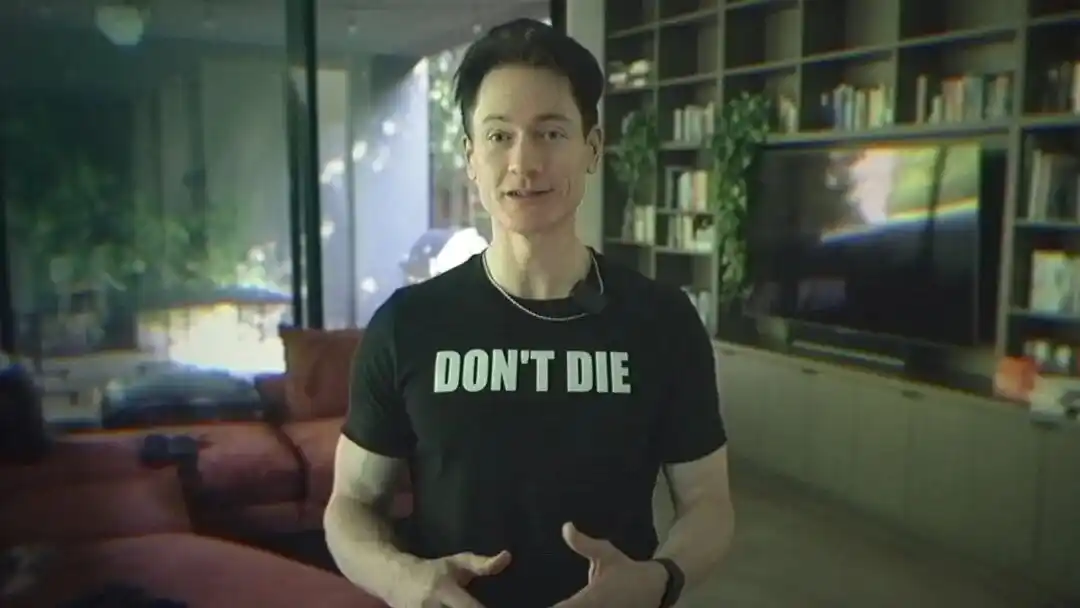
Bryan Johnson
The Chinese internet treated him as a weirdo and laughed at him repeatedly. But what he did defined the spiritual essence of Silicon Valley in 2026. Anti-aging has become the new luxury.
Luxury cars and watches used to be the totems of the older generation. The new Silicon Valley elite no longer show off a Rolex on their wrist; they flaunt a titanium metal ring on their finger, boasting about how well they understand their own bodies.
This spirit is also mirrored in China. Wang Xing repeatedly trended by checking in at marathons, Zhang Yiming's early morning workouts were widely spread, and even rumors about abnormal medical examination reports of Robin Li were hot topics.
The anxiety of the urban middle class has shifted. Previously, they worried about housing prices; now, they worry about metabolic syndrome. In the past, they flaunted their luxury bags; now, they show off their sleep scores. Before, they showed off their children, now they reveal their fasting blood sugar levels.
The midnight sessions at gyms in first-tier cities are filled with professionals from the finance, internet, and consulting industries. They wear Apple Watches on their wrists, but more and more of them also wear a ring or bracelet ordered from Amazon.
And the deepest fear of Silicon Valley executives is not gaining weight but aging prematurely.
This generation starts questioning at the age of 35 if they are already on the decline. Whoop directly addressed this anxiety with a product feature called Healthspan, which includes a key indicator called WHOOP Age that tells you your body's age. You're 38, but your body is 42. Once this number is displayed on the screen, no one can pretend they didn't see it.
Previously, the worry was not being able to afford a house; now, the worry is not being able to afford health. While you may come up with solutions for the former, once the latter is revealed, you can only subscribe and keep renewing.
There's a Type of Anxiety Called Subscription
The absolute values of the two devices cannot be compared with each other, nor can they be equated with clinical measurements. The accuracy of recovery scores and sleep scores will never match that of medical assessments, but their emotional value far exceeds necessity. With less than $6 a month, what you buy is a sense of certainty, so fundamentally, it is a psychological product.
Let's face it, it's no different from fortune-telling; it just replaces your astrological chart with HRV.
Zooming out, Oura and Whoop are selling a new type of middle-class religion called self-quantification.
The doctrine is summed up in one phrase: your body can be measured, optimized, and managed. Keep's earlier slogan of "self-discipline gives me freedom" is the same rhetoric, except Whoop has raised the price by 5 times to sell it to Silicon Valley executives.
And that engineering manager in San Francisco, when he wakes up tomorrow morning, the first thing he will do is open the Oura app. He will look at today's score, then put down his phone and start a new day.
The moment he puts on the ring, he thinks he has bought health.
In reality, he has subscribed to anxiety. And AI has turned this anxiety into a perpetually renewable subscription of care.
Welcome to join the official BlockBeats community:
Telegram Subscription Group: https://t.me/theblockbeats
Telegram Discussion Group: https://t.me/BlockBeats_App
Official Twitter Account: https://twitter.com/BlockBeatsAsia