An Inside Look at a Layoff Revolution Witnessed by a Meta Engineer

Author | Kaori
Editor | Sleepy
"Even if Meta were to lay off 90% of its employees, Instagram, Facebook, and other platforms would still function as usual."
Eva, a senior engineer at Meta who is not on the layoff list due to her good performance, is actively embracing AI tools.
However, she commented, "No one is safe; it's quite precarious, just a matter of time."
This is a story about how performance is evaluated, how promotions occur, how management operates, and even how effort itself is defined. From Mark Zuckerberg to newly hired junior engineers, no one can say for certain when this storm will end.
Layoffs Are Real, But the Reasons Are False
Since 2022, Meta has laid off approximately 25,000 employees.
In November 2022, 11,000 people were laid off, followed by another 10,000 in 2023. Mark Zuckerberg referred to it as the "efficiency year." In January 2025, Zuckerberg announced in an internal memo the layoff of 5% of the lowest performers, around 3,600 people. In March 2026, another 700 people were laid off. According to Reuters, around late May, approximately 8,000 more employees will be let go, accounting for 10% of the global workforce of nearly 79,000, with a second round planned for the second half of the year.
Layoffs are indeed happening, but not necessarily because AI is taking people's jobs.
Eva believes that most of the people being laid off at this stage would have been let go regardless of AI. "In the past few years, the entire CS industry has been hiring far more people than actually needed. The industry was booming, there was an overabundance of capital, stock prices were soaring, and many companies hired a bunch of people. When Musk acquired Twitter and laid off most of the staff, the app still worked, and there was no talk of AI at the time."
In 2026, Meta's capital expenditure guidance is $115 billion to $135 billion, nearly double that of 2025, with all of it going towards data centers, GPUs, and AI infrastructure. The money saved from layoffs is being redirected to computing power.
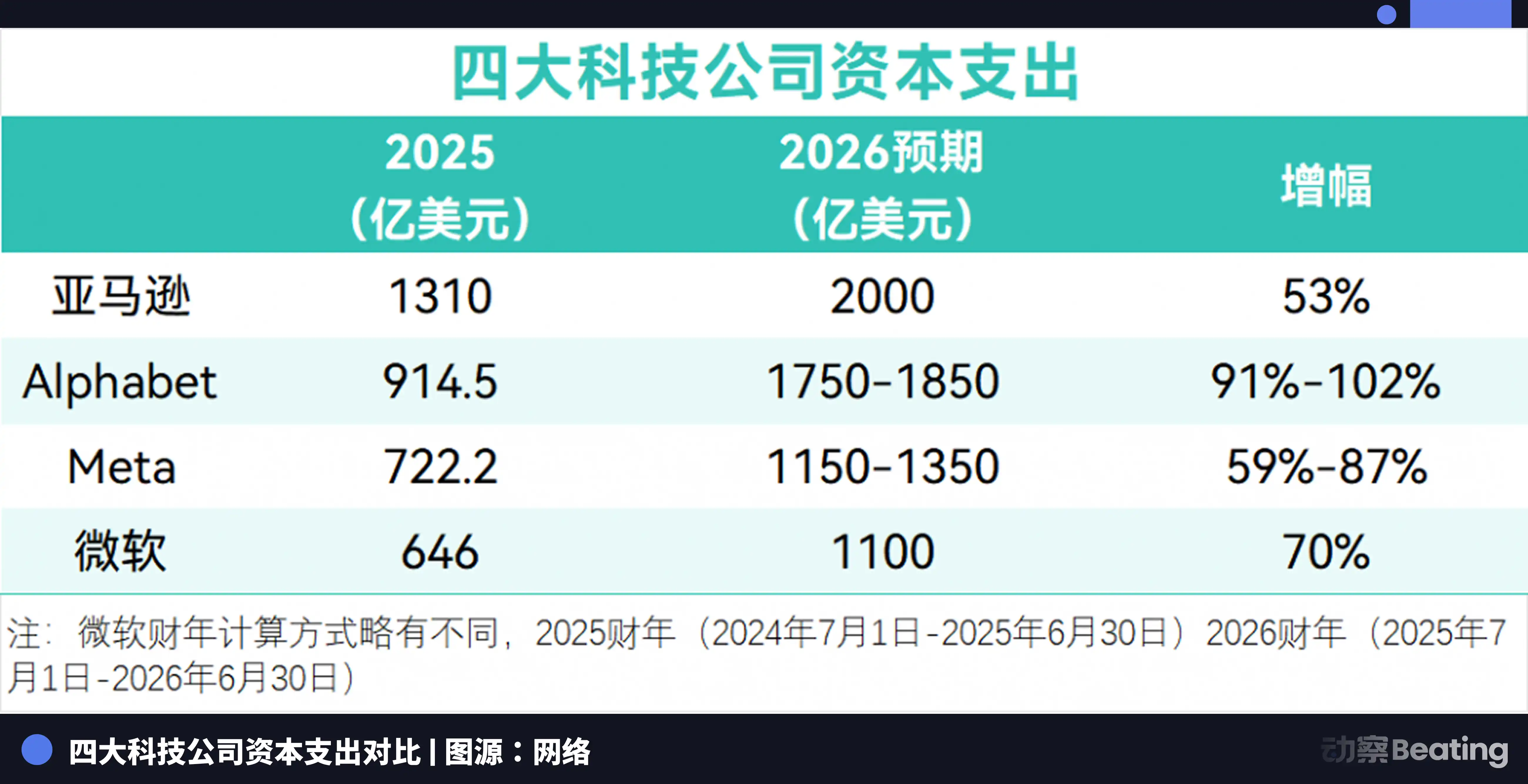
At this stage, AI plays the role of a respectable card, allowing companies to claim externally that efficiency has improved and that fewer employees are needed.
A small company is agile and nimble, but as it grows into a large company, decision-making slows down. It finds itself unable to compete with emerging unicorns and startups, so it starts streamlining, flattening hierarchies, and focusing on core products. AI has only accelerated this natural cycle.
When AI is Used in Performance Evaluation
However, AI's involvement has changed some of the rules around layoffs.
Meta's original performance evaluation method was quite unique among Silicon Valley tech giants. Managers didn't directly score employees; instead, they compiled a performance rating document based on self-assessment, peer feedback, and their own observations.
This was followed by a Calibration Meeting, where a group of about a dozen peers at the same level were brought together. Each manager took turns discussing the performance of their respective team members, explaining why someone deserved a particular rating. After a collective discussion, ratings were assigned to everyone.
This process was time-consuming, but its value lay in introducing multiple perspectives and peer comparisons, making it difficult for individual manager biases to determine the outcome. Eva believed it was relatively fair.
In early 2026, the Calibration Meeting was discontinued. Eva explained, "The company has reverted back to semi-annual performance evaluations, citing the use of AI to assist managers in writing their self-assessments, eliminating the need for so much collaboration, and making the process faster."
Meanwhile, Meta introduced an AI performance tracking system called Checkpoint, which automatically aggregates employees' work data from internal systems like Google Workspace to generate a contribution summary for managers. For software engineers, Checkpoint tracks over 200 data dimensions, including the proportion of code generated by AI, while also monitoring metrics like error rates and bug counts.
Meta's Chief People Officer, Janelle Gale, clearly stated in an internal memo at the end of 2025 that AI collaboration ability would be a core criterion for the 2026 performance evaluations.
Additionally, every time a Meta engineer writes a piece of code, the system automatically labels a percentage indicating how much of that code was AI-assisted. This data has now become part of the evaluation criteria.
Each team sets a minimum threshold based on its own circumstances, such as requiring 50% or 90% of the code to be generated by AI. You must meet this threshold, and after meeting it, the performance evaluation continues to assess the actual value of your work. "The company's idea is, 'Use it first, and then we'll see if you're using it well or not,'" said Eva.
Embedding AI utilization into performance, like a kind of mandatory promotion mechanism, does not reward those who use it more, but punishes those who don't.
This mindset is not unique to Meta.
NVIDIA CEO Jensen Huang openly stated at the March 2026 GTC conference that in the future, every engineer in the company will need an annual Token budget, allocating half of their basic salary in addition to be spent on AI. He even mentioned that if an engineer earning a $500,000 annual salary spends less than $250,000 on AI per year, he would be "deeply concerned."
Huang is in the business of selling Tokens, so why wouldn't a business promote its own product, but Meta has also at one point reached this quantitative enthusiasm extreme.
An employee spontaneously created an internal leaderboard named "Claudeonomics," named after Anthropic's Claude model, tracking the AI Token consumption of 85,000 employees. Within 30 days, the entire company consumed over 600 trillion Tokens.
The leaderboard featured badge levels from Bronze to Emerald, with the top 250 receiving titles like Token Legend and Cache Wizard. The top-ranked employee consumed 281 billion Tokens in 30 days, with some employees gaming the system by letting AI agents idle for hours without performing any actual tasks, purely to consume Tokens. Measuring productivity by Token consumption is like evaluating a truck driver based on fuel consumption—just because the engine is running doesn't mean deliveries are being made.
Eva didn't feel the pressure of the leaderboard within her own team, "Anyway, we don't have any direct relationship with this leaderboard. We just do our work as usual, and everyone just had a bit of fun looking at it." Her manager also didn't make a big deal out of it, but even after the leaderboard website was taken down, the underlying logic remained. The AI generation ratio in the code is still being tracked, and the minimum threshold still exists.
When everyone is being pushed to use AI, and everyone's output is increasing, the performance standard itself will also rise. "If 60% of people are performing better, then the standard will definitely be raised. As for how much of this improvement is due to AI and how much is from burning the midnight oil, it's hard to say."
The Wind of Internal Competition Blows into Silicon Valley
Eva's senior leadership is also under pressure. "Other senior leaders are all aggressively driving their teams. If they don't succeed in pushing their teams, their positions are not guaranteed either."
According to The Wall Street Journal, Meta has established a new AI Application Engineering Department, adopting a manager-to-engineer ratio of 1:50, where one manager oversees 50 people. This is twice the Silicon Valley traditional limit of 25:1.
Data from Gallup shows that the average number of employees per manager in the United States has increased from 10.9 people in 2024 to 12.1 people in 2025. However, Meta's 50:1 ratio is more than four times the industry average.
Eva has personally felt this change. In a normal large company, a manager would oversee a dozen or so people because they need to assist with your career development, have one-on-one conversations with you, and understand your needs.
The 1:50 ratio means that a team that previously had 5 managers now only needs 1, leaving the other 4 without a position.
As for how this new department will operate, nobody knows, although public opinion believes that this change will end in tragedy.
"Our other departments are currently maintaining their original management pace. Managers are still having one-on-one conversations with you about career planning, but everyone anticipates that this situation will not last long. Some teams have already started cutting front-line managers, leaving only the top-level managers directly overseeing everyone."
The management itself is also facing the questioning of whether their work has become meaningless. "Everyone is in the same state, all facing the question of whether your position is still necessary. The same goes for leaders; their days have not improved either."
AI is indeed helping managers improve efficiency by automatically summarizing what their subordinates have recently coded, posted, or attended meetings, and generating reports regularly. Previously, leaders had to search for this information themselves, but now AI summarizes it, and leaders only need to review it.
However, the other side of efficiency improvement is that management has become cheaper, and cheap things never lack substitutes.
As internal competition permeates through the layers, the most direct impact is still borne by those in entry-level positions.
As a senior engineer, Eva, when planning a project, used to hand over a small bug to a junior engineer. But now, if it's not a significant issue, he will simply open an AI window and resolve it in a few minutes. "There's no need to communicate with a junior engineer; I can handle it by myself in no time."
Large projects still require human effort, but the trivial tasks that once supported the workload of junior engineers are now easily handled by the AI at the disposal of senior engineers.
Eva speaks rapidly: "If you can early on be both an Engineering Manager, a Product Manager, an Engineer, and a Designer, able to do everything a person can do, build a feature on your own or even build a team, then your chances of being laid off might be slightly lower than others."
Regarding how many people will ultimately stay, Eva jokingly says, "At this moment, even if Meta were to keep only half of the people, it could still run. If AI continues to develop at the speed it's been hyped at, eventually maybe only 10% of programmers will be left to review what AI has done, align on product decisions, and the remaining 90% will be unemployed. Even so, Meta will still pivot."
Nobody Is Safe, Including Zuckerberg
Nobody feels secure.
Top leaders are stressed because other top leaders are rolling; managers are stressed because their span of control may go from 1:15 to 1:50; senior engineers are stressed because the bar is constantly being raised; junior engineers are stressed because their work is being effortlessly digested by senior engineers' AI.
Even Zuckerberg himself is in a state of anxiety.

The uncertainty of the AI era is real, every new feature Claude Code releases could potentially kill a company, Figma's stock price saw drastic fluctuations after a Claude Design announcement, and the entire SaaS industry is being dissected one by one.
Social networks may seem to have barriers to entry, but the barriers have never been as thick as imagined. Eva believes that the transition from QQ to WeChat took only about one or two years.
While worrying about the company's future, Zuckerberg is also aggressively downsizing. In Eva's eyes as an employee, this is a management strategy. "He wants to retain the most dedicated and smartest group of people. What's the best way to do it? He found that giving money is not the best way; layoffs have a better effect."
Creating insecurity is more driving of output than giving bonuses.
However, this strategy also has its costs. Top engineers will not tolerate this pressure indefinitely; they will move to a place that respects employees more. Layoffs can drive away the slackers, but they can also drive away those with the most choices.
The reason Eva herself stayed is very practical. Although Silicon Valley has become more intense, it's not as intense as in China.
Behind these individual choices, the overall industry trend is unavoidable. "AI will replace most jobs, and the Internet industry can never go back to the glorious days when you could earn a lot of money without being very busy."
If You Can't Beat Them, Join Them
AI has reshaped the way existing employees work and has also transformed the onboarding process for new hires.
Traditionally, Meta's engineering interviews consisted of three parts: Coding, Behavior Questions, and System Design. In the Coding part, candidates were given an algorithm question, such as sorting a set of data, to assess their choice of algorithm and considerations for performance and cost. The Behavior part was more subjective, asking how candidates would handle feedback and conflicts. System Design questions were typically architecture design questions reserved for Senior-level positions.
In October 2025, Meta introduced an AI coding segment to its interviews. Previously consisting of two rounds of pure Coding, the process now includes one round of traditional coding and one round of AI coding. Candidates are provided with a multi-file complex project in a CoderPad environment, with an AI chat window on the right side. During the interview, candidates can switch between multiple AI models, including the GPT series, Claude series, Gemini, and Llama. Within 60 minutes, candidates need to understand a codebase they have never seen before, break down the problem, and use AI to implement features or fix bugs.
The evaluation is not based on whether you can write code or prompts but on your judgment in collaborating with AI. The AI-generated results may be correct, incorrect, or partially correct, and it is up to you to interact with the AI to achieve the desired outcome and determine whether the AI-generated code is optimal. The interviewers observe in real-time every prompt and interaction.
Eva believes this approach closely resembles a real work environment, testing candidates on their ability to use the latest tools to solve complex problems quickly.
The new entrance criteria mean that future entrants to this industry will be expected to have the ability to collaborate with AI from day one. A candidate who went through this interview process reflected that AI did not make the interview easier; instead, it raised the bar. With AI assistance, interviewers expect candidates to solve even more complex problems in the same amount of time.
Faced with this situation, Eva's strategy is to join in if unable to surpass.
"If this is the trend, and you cannot change it, resisting the use of AI is futile."
Eva's daily work routine has been completely altered, simultaneously opening multiple AI windows to have them work in parallel on different tasks. "You only have one brain and can only do one thing at a time. But the advantage of AI is that you can run ten of them, having each one do something different for you."
From trying it out to getting the hang of it, it took about a month.
He has already integrated AI into almost every aspect of his work, from writing documents when planning projects, brainstorming, comparing solutions, writing SQL to assess potential impacts, to coding. After completing a feature, he even uses it to write various summaries and post social media tweets to increase exposure.
"You might be among the first group to utilize AI to the fullest, and perhaps you could end up being among the last group to be laid off. But no one knows how quickly they will be laid off or whether they will actually be spared in the end. We can only accept whatever comes our way," he said.
Beyond this self-consolation, the value of AI varies significantly for people at different levels.
For senior engineers who have accumulated enough experience and can identify problems and directions, AI serves as a real lever. What used to be a headache to think about doing a two-week analysis can now be started immediately. However, for those in the early stages of their careers, AI ironically removes the very part of the process, which is thinking and trial and error, that they need the most.
Efficiency has increased, but learning opportunities have disappeared.
Eva is unwilling to categorize herself into the optimistic or pessimistic camp. "You can't change this big trend, just like the workers laid off in the Northeast back then – they could only accept it. Some opened restaurants, and some ventured south for business. Who knows? Life is too long, and thinking about it is useless."
As the game has progressed to this point, the only certainty is that no one is a winner.
Welcome to join the official BlockBeats community:
Telegram Subscription Group: https://t.me/theblockbeats
Telegram Discussion Group: https://t.me/BlockBeats_App
Official Twitter Account: https://twitter.com/BlockBeatsAsia