GPT Images 2.0 Ultimate Guide: From Prompt Words to Full Workflow
Original Title: I want to master GPT images 2.0.
Original Author: @hooeem
Translation: Peggy, BlockBeats
Editor's Note: As OpenAI's GPT Images 2.0 capability matures, image generation is transitioning from "one-time picture generation" to "systematic production." However, in practical use, the difference between different users lies not in the tool itself, but in whether they have mastered a clear and reusable method.
This article is a practical guide. From storyboard narration and character systems to marketing material generation, it systematically breaks down the core usage of GPT Images 2.0 and summarizes a set of universal tips, structure, and workflow, including character anchors, editing protocols, and quality stratification, among other key techniques. Let every generation serve a clear output goal.
Below is the original text:
I have integrated the experiences of all AI geeks, design geeks, prompt word experts, and GPT image players into the ultimate guide on GPT Images 2.0, helping you go from beginner to master.
Storyboards, character sheets, product prototypes, social media campaigns, UI concept designs, infographics... and more—these can all be achieved with GPT Images 2.0.
Beginners often see it as a stronger Midjourney to "help me create a cooler comic character"; while professional users build a complete workflow around it and develop reusable "anchors."
Use Cases
Next, let me show you where GPT Images 2.0 truly excels:
1. Visual Storytelling
OpenAI's official examples have already demonstrated this: whether it's cartoon storyboards, storytelling breakdowns, or rhythmical comics, it performs well.
This has almost overturned the traditional production process, such as:
· Anime storyboards with character consistency
· More conversion-oriented social media carousel content
· Frame-by-frame breakdown of video scripts
· Comics with clear rhythm and strong readability
Tasks that previously required the use of multiple tools can now be generated directly within the same system.
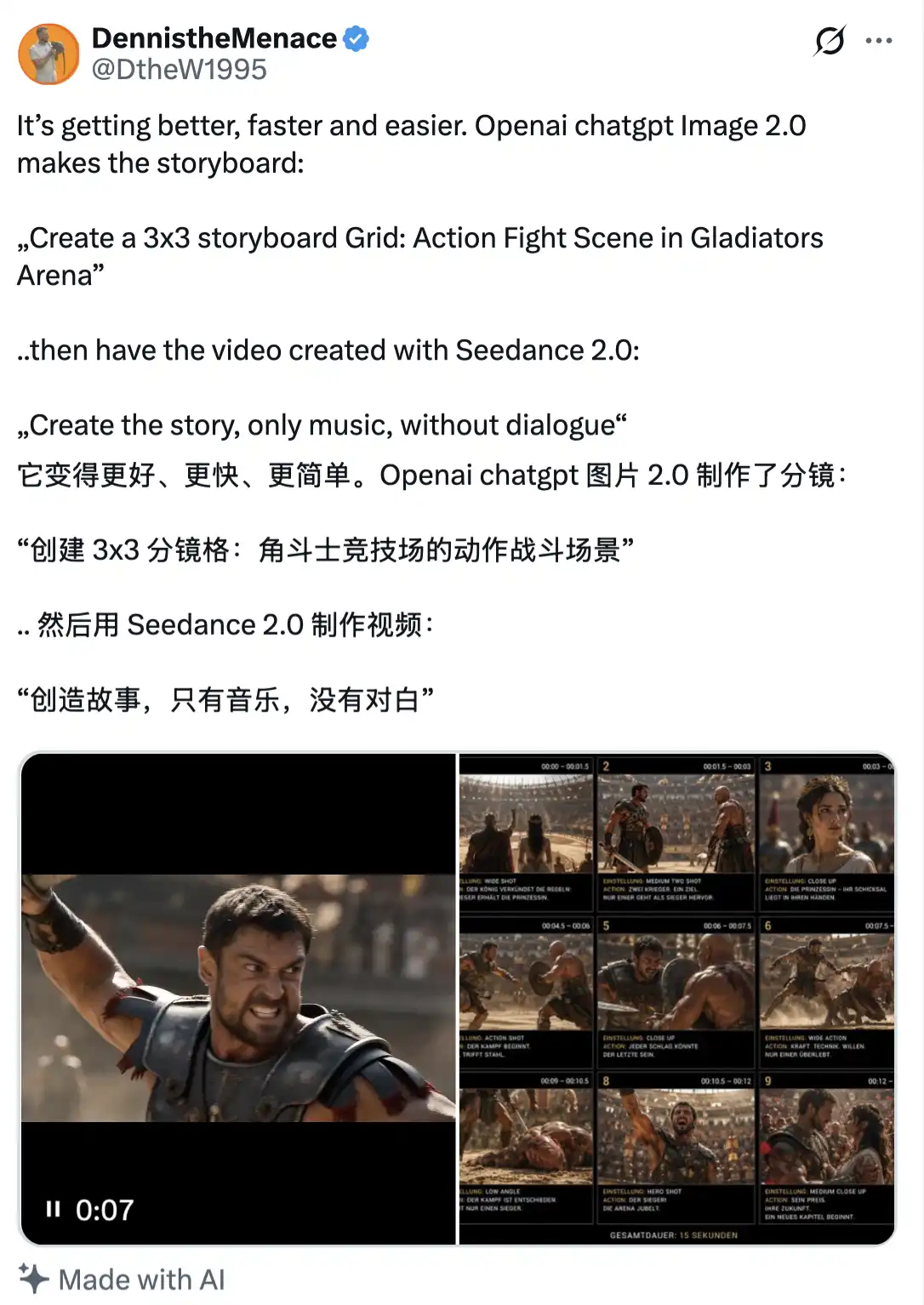
Professional users will choreograph
it like a director.
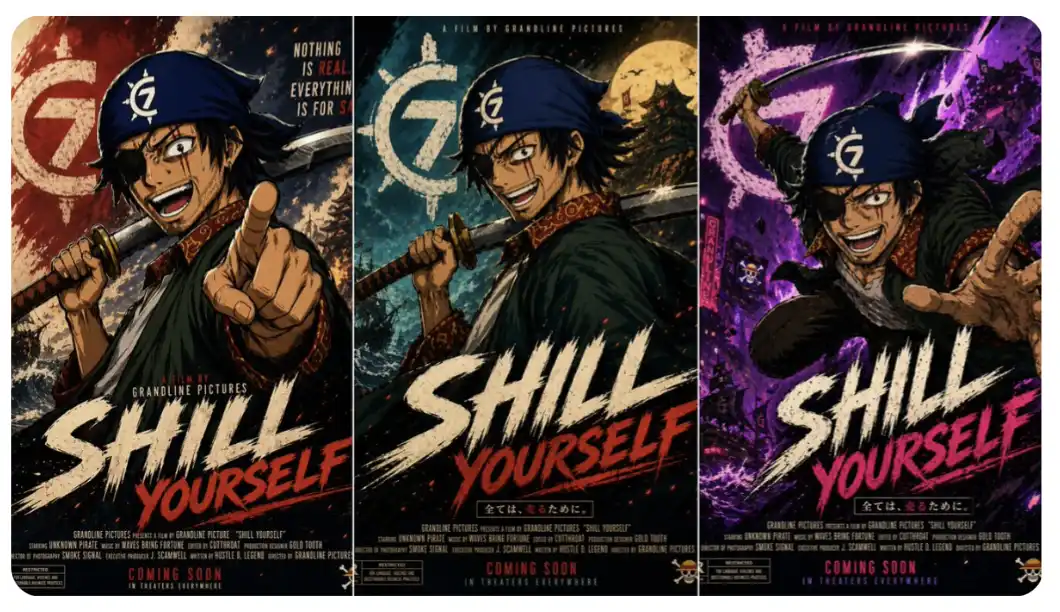
2. Character Systems
The real breakthrough is: it is possible to build reusable character anchors
and keep the characters from drifting across multiple generations.
Practical applications include:
· YouTube channel mascots
· Product characters that can be reused in different marketing campaigns
· Game character settings and development charts
· Reference images for comic book protagonists
You can create your own character (or import an existing one) and then repeatedly call and use it in different scenarios like this.
3. Campaigns
In the official demo, OpenAI showcased a South Korean hotel brochure, finely typeset editorial posters, and complete visual layout designs.
In real-world applications, this can cover:
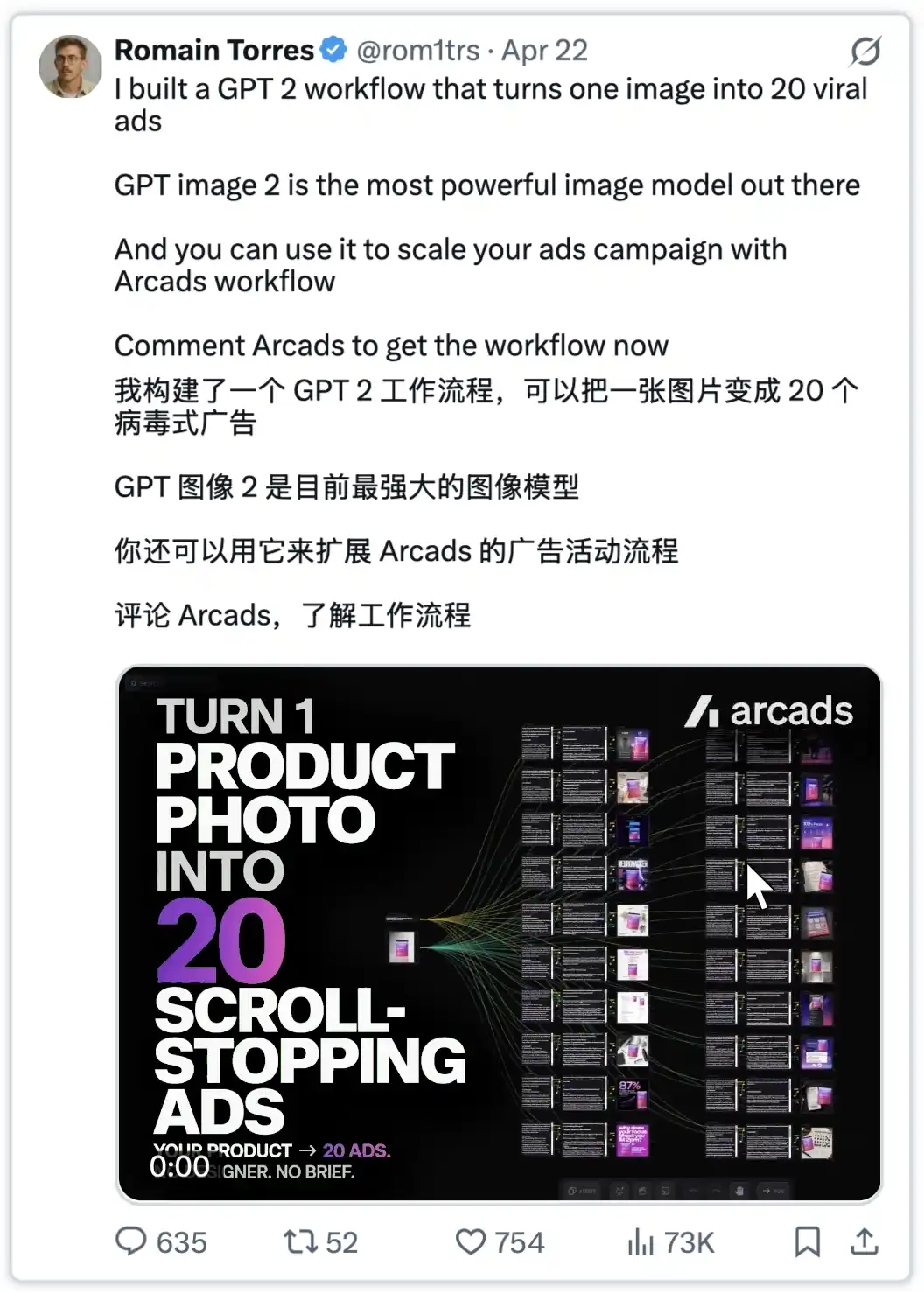
· End-to-end product launch campaigns
· Brand asset libraries
· Social media promotional materials
· Presentation slides and materials
You can even generate an entire brand refresh package in 90 minutes: 12 variations of posters, 8 sets of social media assets, and 3 packaging design options.
Traditional cost: around £8,000, while the cost with GPT Images 2.0 is much lower than this figure.
Look at this example:
4. Educational Content that Works
Academic posters, concept visualizations, flowcharts, and similar content can all be systematically generated. The official cookbook
recommendation is to treat these tasks as instructional design.
Common outputs include:
· Step-by-step explainers
· Labeled Process Charts
· Classroom Teaching Materials
· Visual Teaching Guides
5. Product Development
Includes packaging design, virtual try-on, product photography, collectible design, etc.
The key difference here lies in the "Prompt Method":
· Beginner: "Create a product image"
· Professional User: "Generate a high-end hero shot, luxurious style, studio-lit, pure white background, product positioned at a 3/4 angle"
The difference is not in modeling ability but in the precision and structure of expression.
How to Write Prompts
In any case, the above are just some application scenarios. So, the real key question is: how to write prompts for GPT Images 2.0?
Let's now get into the core part.
1. Universal Prompt Structure
Goal: [specific deliverable type]
Deliverable: [poster/storyboard/character sheet/mockup]
Scene: [environment and context]
Subject: [main focus elements]
Style: [photorealistic/editorial/anime/flat design]
Composition: [framing/layout/focal points]
Text: [exact words in quotes]
Constraints: [what stays fixed/what changes/what's forbidden]
The purpose of this template is to force you to clearly articulate the requirements.
2. Storyboard Mastery Prompt
Goal: Create 6-panel storyboard page
Story beats:
Panel 1: [opening shot - wide establishing]
Panel 2: [character reaction - medium shot]
Panel 3: [action or discovery - dynamic angle]
Panel 4: [emotional close-up]
Panel 5: [turning point - dramatic moment]
Panel 6: [resolution - final reveal]
Character continuity: Same face, hair, outfit, proportions throughout
Style: Clean anime storyboard with professional panel layout
Constraints: One clear action per panel, minimal dialogue, no background clutter
The result is that the narrative truly becomes "fluid," rather than a loose collection of disjointed scenes.
3. Character System
Goal: Create master character reference sheet
Character: [detailed physical description - height, build, distinctive features]
Include: Front view, 3/4 view, side view, expression variations, key poses
Style: [anime/realistic/cartoon - specify consistency level]
Layout: Professional reference sheet with clear labels
Constraints: Consistent proportions, no costume variations, clean background
(Simply upload the character), and in subsequent generated scenes: always reference this "master sheet," only adjusting posture, scene, or lighting, keeping the rest unchanged.
4. Campaigns
Goal: Create [launch poster/social asset/product mockup]
Audience: [specific target demographic]
Message: [core value proposition]
Mood: [luxury/energetic/trustworthy/innovative]
Text (EXACT): "[headline]" and "[subheading]"
Typography: [modern sans-serif/elegant serif/bold display - specify hierarchy]
Constraints: Brand colors only, no extra text, strong visual hierarchy
Key Detail: Enclose the text to be presented in quotes and explicitly request it to be presented "verbatim".
5. Advanced Tactics
Continuity System
A set of community-validated role consistency workflows:
· Create Primary Description: Describe only appearance, without scene details
· Name the Characters: Such as "alex" or "maya," for easy reference
· Reuse Core Details: Repeat key appearance features in subsequent prompts
· Separate Identity from Action: Change posture/scene while keeping the character constant
Example Primary Description:
"maya, 28 years old, fit physique, shoulder-length dark hair with blue highlights, iconic green eyes, a small scar above the left eyebrow, usually wearing a fitted black jacket"
Subsequent Usage:
"maya (referencing primary description), sitting at a café table, laptop open, morning light ambiance, 3/4 view"
Editing Protocol
Always specify:
· change only: parts to be modified
· preserve: parts to be retained (clearly listed)
· keep same: elements to remain consistent (lighting/posture/background/color)
Example:
"Only replace the laptop screen with financial charts. Preserve maya's posture, facial expression, lighting, background, and clothing. Keep everything else the same."
Quality Scaling Strategy
· Low Quality: Drafts, exploration, concept development
· Medium Quality: Social media assets, presentations, internal use
· High Quality: Print materials, final deliverables, client projects
FAQs and Immediate Fixes
Issue: Characters drift between different images
Solution: Use a character anchor system + primary description + repeat core details
Issue: Text appears but not entirely consistent
Solution: Shorten text, use quotes, specify formatting, enhance quality settings
Issue: Excessive editing changes
Solution: Use the "change only X" protocol and list the parts that need to remain consistent
Issue: Output appears too generic
Solution: Provide specific descriptions of material, lighting, composition, avoiding vague expressions like "make it look better"
Issue: Layout appears cluttered
Solution: Write prompts like a design brief, clearly outlining hierarchy, spacing, and layout rules
Winning Mindset
Amateurs ask: "What prompts should I write?" Professionals ask: "What workflow should I set up to produce the results I need?" The difference lies in: systematic thinking.
How Professional Users Utilize GPT Images 2.0
· Storyboard Engine
· Character Development Tool
· Marketing Material Generator
· Localization Enhancer
· Concept Development Accelerator
They don't write better prompts, they build better systems.
The Most Important Point
Stop treating it as an "image generator." Start seeing it as a "visual production system."
The real value lies in: turning ideas into deliverable assets—story-driven storyboards, scalable character designs, convertible marketing materials, sellable product images, genuinely effective content.
Approach it as a professional collaborator with a clear brief, not as a creative slot machine.
Next Steps
Choose a delivery type: storyboard, character design, or marketing material. Master one workflow first.
Welcome to join the official BlockBeats community:
Telegram Subscription Group: https://t.me/theblockbeats
Telegram Discussion Group: https://t.me/BlockBeats_App
Official Twitter Account: https://twitter.com/BlockBeatsAsia