After the Smoke Clears: 5 Possible Endings to the Middle East Conflict

Some say this is the most serious oil crisis since the 1970s.
In Thailand and Vietnam, gas stations have run dry, forcing people to work from home; South Korea's chip factories are starting to worry about helium supply; Japan has started discussing buying oil from Alaska; Africa's food aid agencies are worried about where to find food if the war continues for another three months.
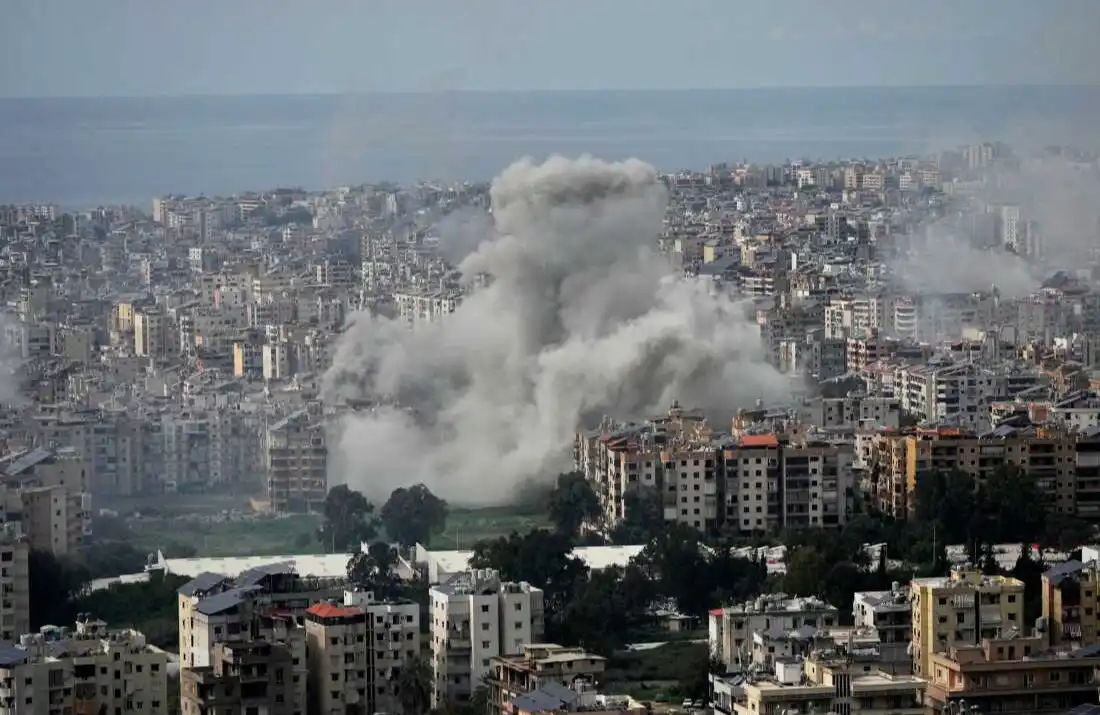
All these things are happening simultaneously this week, showing that the impact of the war on this world is more chaotic than we imagined.
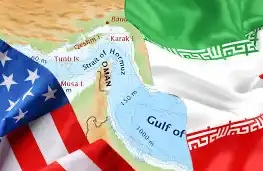
Since the start of the Middle East war, the Hormuz Strait has effectively been shut down, leaving nearly 20% of the global oil and liquefied natural gas supply hanging in the balance. Oil prices have surged 40% from pre-war levels, surpassing $110 per barrel, and Iran has openly stated that their goal is to push this number to 200. Qatar's Ras Laffan LNG facility has been bombed, a supply node representing 20% of global natural gas trade, and restoring capacity could take several years.
So when will this war end, and how will it end? BlockBeats has compiled five of the most likely scenarios.
Around April, a swift resolution
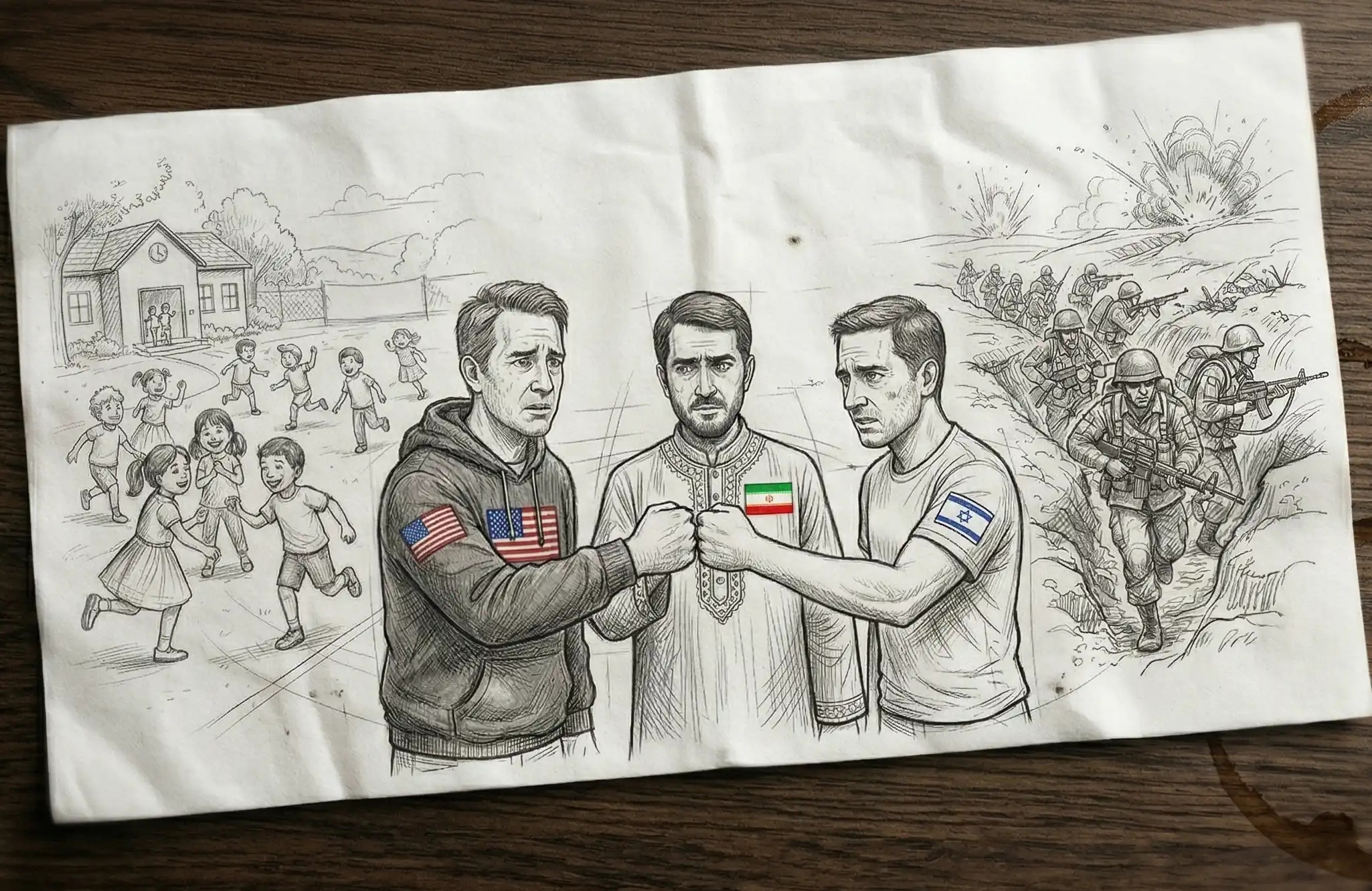
This is the most ideal scenario, and some analysis suggests it is the scenario President Trump most desires: the war will come to a quick end.
After all, Trump's mindset has never been like that of a general, but more like a CEO who, after completing one deal, is ready to negotiate the next. He himself has said: in American history, we have won almost every battle, but lost too many wars, not because we couldn't win, but because after winning, we didn't know how to exit. That's how it was in Vietnam, Iraq, and Afghanistan. He doesn't want to repeat it.
Therefore, in a military operation codenamed "Epic Wrath," the U.S. military has prioritized "precision beheading" strikes against the top ranks of the Iranian regime and "demilitarization" strikes against nuclear capabilities, missile facilities, and naval forces. Once these "tiger's teeth" that can threaten the security of the United States and its allies are completely pulled out, Trump plans to transition the military operation to the final phase.
According to the trajectory of this scenario, the ceasefire timeline will be around April, with several corresponding points.
The first point is the visit to China. Trump's original plan to visit China was at the end of March or early April, but it has now been postponed to late April or early May. Trump does not want to be distracted by an unresolved "Middle East turmoil" during his visit to Beijing; he needs to appear as a victor to gain a stronger position in the US-China trade negotiations. Treasury Secretary Besent also confirmed that the delay was purely due to the need to oversee the war, and the trade negotiations in Paris are progressing smoothly. This means the diplomatic path is clear, waiting only for the military side to wrap up.
The second time point is the midterm election. As the November midterm election approaches, Trump needs a stable economic environment, especially stable oil prices and the expectation of a Fed rate cut. If the inflationary impact of the war continues for more than six weeks, it will permeate the entire supply chain and show up in summer corporate earnings reports, making it tough for the Republicans by that time. Bring down oil prices from their peak to facilitate a Fed rate cut around September under the guise of "employment emergency," ensuring the final victory in the midterm election.
Iran's Bid, Buying a Way Out with Oil Commission
Currently, the US-Iran negotiation situation presents a bizarre "locked-room mystery": Trump claims progress is smooth, but Iran's Speaker of Parliament Kalibaf and official media vehemently deny any contact.
Trump recently revealed that the current dialogue is with a "completely different group of people" who brought a gift involving oil and gas, rumored to be offering 5% of Iran's oil sales revenue as a commission, directly paid to the US. If this number is true, considering Iran's export scale, it is a significant amount.
Who are these "completely different people"? They are likely Iran's regular army (Artesh), not the well-known Revolutionary Guard Corps (IRGC) loyal to the Supreme Leader. There is a deep-rooted contradiction between these two forces, where the Artesh is the national army, and the IRGC is an ideological tool. When the survival pressure reaches a certain level, moderates in the regular army might choose to bypass the Supreme Leader, secretly contact the US; this is not without precedent and is entirely possible.
However, from Iran's perspective, maintaining the "denial of negotiations" also has a certain political stance.
Iran is well aware of Trump's keen focus on the stock market performance. Just as the US announced a postponement of strikes, global oil prices and US stocks quickly stabilized. By denying negotiations, Iran aims to dilute Trump's economic "windfall" to prevent the US from gaining more leverage at the negotiating table. Secondly, it aims to maintain its ruling legitimacy. For the clerical regime relying on a tough guy image to stay in power, openly reconciling with the "Great Satan" is akin to political suicide.
Some senior military analysts also point out that while Trump threatened to bomb Iranian power plants, he recently relaxed oil export sanctions on Russia and Iran. This is not a sign of weakness but a reflection of Trump's "America First" logic. He needs Iran's oil to keep flowing into the market to stabilize inflation, but he will never allow Tehran to control the strait. This "holding a big stick in one hand while giving a green light with the other" approach fundamentally uses Iran's energy infrastructure as a dynamic leverage, testing the other party's bottom line with a 5-day grace period.
However, this script has its risks. Strategist Hansen offers a more sober assessment: this compromise is at best just a "pause button for war," as Iran's ideological foundation remains unshaken, and the next Revolutionary Guards, the next proxy militia, will sooner or later emerge. The more immediate obstacle comes from Saudi Arabia. Crown Prince MBS's attitude is very straightforward: there can be no turning back halfway. To Saudi Arabia, stopping halfway, leaving an Iran filled with hatred but still with a chance to breathe, is more dangerous than not starting at all. Saudi Arabia is pressuring Trump to use this historic window to entirely remove the hardline regime.
Furthermore, analysts point out that Prince Pahlavi, the Crown Prince of the Pahlavi dynasty who has been in exile in the United States for nearly half a century, is gradually becoming the "lowest common denominator" of the opposition forces within Iran. Perhaps for the United States, blocking the Strait of Hormuz is just a tactical move, and supporting Pahlavi (or a government centered around him) to take over Iran is the true "flag of the general" that can fundamentally eliminate the threat of Middle Eastern energy and reshape the geopolitical landscape.
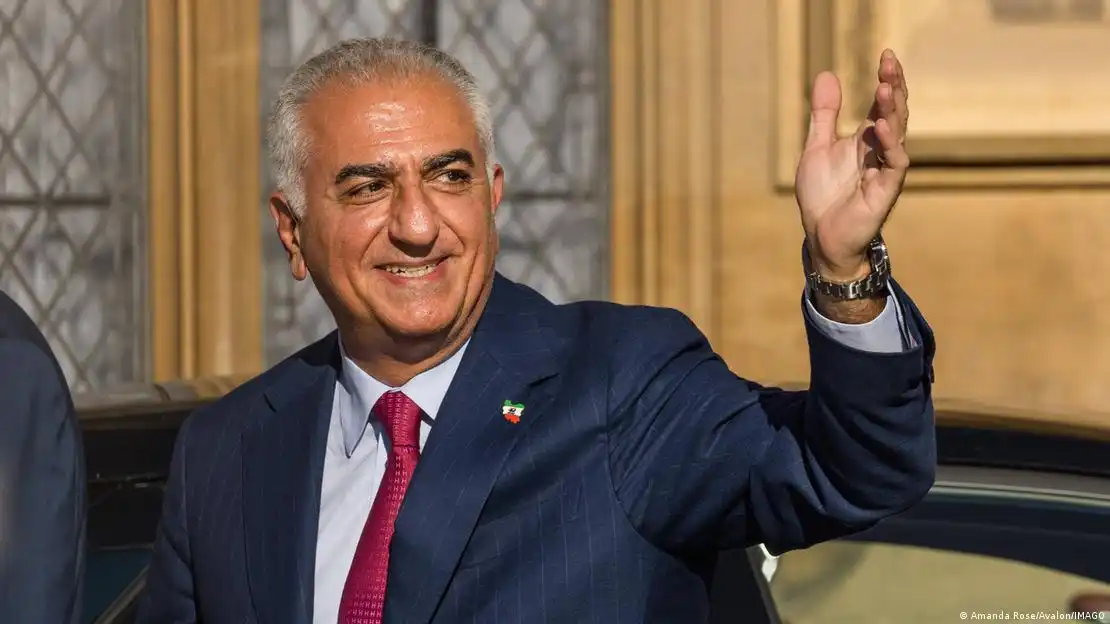
Reza Pahlavi, the son of the last Shah of Iran, in exile
Island Seizure, Continued Strikes Against Iran
If the negotiations break down, or if Trump decides to escalate military action while continuing negotiations, the focus of the battlefield will shift to several small islands around the Strait of Hormuz.
The islands of Qeshm, Greater and Lesser Tunbs, and Abu Musa, names that are not often mentioned in normal circumstances, control approximately one-fifth of the world's oil trade route. Whoever takes control of these islands holds the "master switch" of the Middle East's energy landscape.
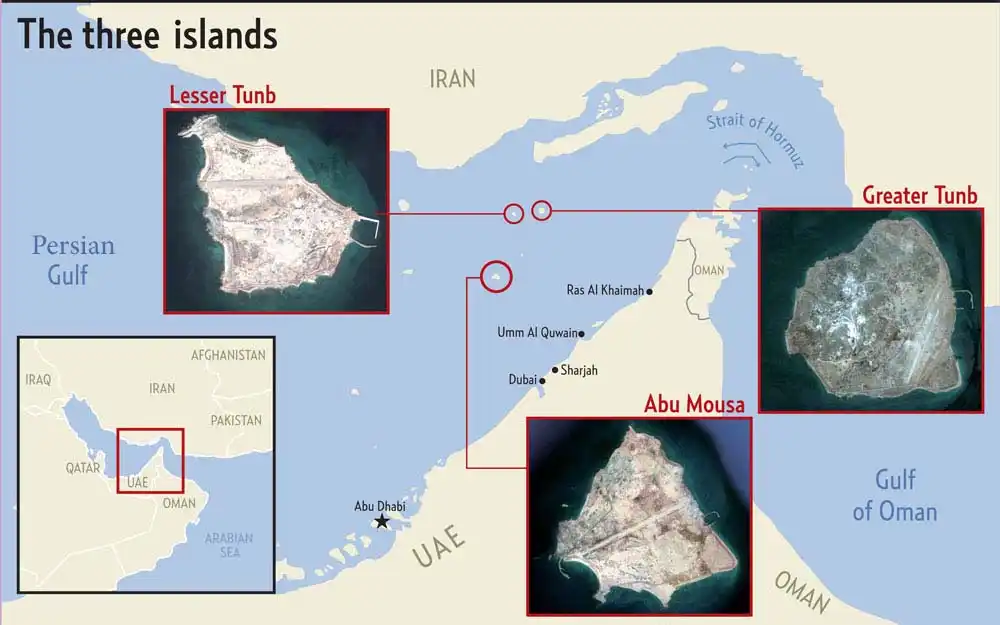
Map of Iranian islands
The U.S. military's strategic intent here is quite clear: bypass the quagmire of Iran's inland politics and directly control the "valve" of the strait. This is a typical strategy of "maritime centrism," not seeking occupation but aiming to choke the throat. The Greater and Lesser Tunbs and Abu Musa Islands also have an additional layer of value: they are disputed territories between the UAE and Iran, and after the U.S. military captures them, they are directly handed over to the UAE, establishing both a long-term allied defense circle and delivering a significant political gift to the Gulf States.
Some military analysts point out that signs of further U.S. troop deployment are quite evident. Recently, 17 flights of C-17 transport planes have flown intensively to the Middle East, with 6 of them coming from Bragg Fort, the home of the 82nd Airborne Division and Delta Force. The core capability of the 82nd Airborne Division is speed, capable of global deployment within 18 hours, with advance forces already in place. Amphibious Marines from Okinawa and California are responsible for the long-term control of large islands, and it will take another three to four weeks for them to be in position.
The so-called "five-day window" is actually to wait for heavy expeditionary forces to arrive at their designated locations and provide a final period of terrain reconnaissance for special operations units.
And the hottest variable here is the Island of Hormuz. This island carries 90% of Iran's oil exports, with extremely high strategic value. However, the island is covered with large oil storage tanks. Once a major fire breaks out, global oil prices will immediately spiral out of control, which is a consequence that the United States itself cannot afford.
An analysis report from the Hudson Institute points out that in the first ten days of the war, the U.S. military struck over 5000 targets. This high-intensity rhythm of "de-militarization" is essentially conducting a 21st-century "industrial capability deprivation war."
Therefore, this viewpoint believes that if the conflict cannot be concluded quickly but instead pressure is sustained, then further military action is more likely to involve precise control using special forces rather than all-out warfare. Because the goal of the war is not necessarily to overthrow the Iranian regime, but to achieve "tactical weakening." Similar to the Allied Forces' strikes on Germany's industrial capacity in the latter stages of World War II. The objective is to dismantle Iran's regional power projection capabilities accumulated over the past decades, including nuclear facilities, ballistic missile production bases, and naval forces.
In the end, Iran may be weakened to a "large-scale Hamas," meaning that while the regime may survive, its substantive threat capacity to the world may be lost over the next 10 to 20 years.
Jiang Xueqin's Prophecy: The U.S. Will Lose
Recently, the name Jiang Xueqin has become popular because a video of him lecturing on international affairs in a Beijing high school classroom two years ago has been repeatedly circulated. The lecturer was Jiang Xueqin, who, based on history and geopolitical logic, predicted that Trump might be re-elected and the U.S. might take action against Iran. As some of his predictions have been confirmed by reality, his YouTube subscriber count has soared rapidly, and many netizens have dubbed him "China's Nostradamus." Full interview translation: "Jiang Xueqin's Latest Interview Full Text: How to View the Current Global Changes")
His core argument about this Middle East war is: the U.S. may win every battle tactically, but at the strategic level, it is losing this war.
Why?
First, the U.S. military is too cumbersome, while Iran is too agile. Iran has prepared for this day for over twenty years, it is very clear about the U.S. military's operational logic, and has designed a targeted countermeasure for every scenario. The two aircraft carriers, the Ford and Lincoln, are indeed there, but because Iran has hypersonic weapons and a massive number of suicide drones, the aircraft carriers dare not approach Iran's coastline. The massive steel fortresses have turned into distant decorations. Through military simulations within the U.S. military, it has been repeatedly shown that the U.S. would lose, not because of insufficient firepower, but because this system is unable to deal with this type of adversary.
Secondly, once on land, it's a bottomless pit. Jiang Xueqin sees the plan to take over Halk Island as a classic sunk cost trap. The island is captured, but it's too close to Iran's mainland to hold. To hold the island, one must control the coastline; to control the coastline, one must penetrate the Zagros Mountains. The mission would endlessly expand like a snowball rolling downhill, following the path of the Vietnam War. Nobody intends to go down this road, but once embarked upon, it's hard to turn back.
Thirdly, the Shia theological framework is the Western world's most easily underestimated variable. In the Shia narrative, compromise with an unjust enemy is the true failure, even if it means certain death to resist. The U.S.'s choice to assassinate Ayatollah Khamenei and his family precisely touches on the Shia's deepest historical trauma of "betrayal." This won't make Iran yield; it will only further inflame the resistance will of the entire Shia world, intensifying the fight.
More tricky is that the U.S. now has no real exit ramp. If it withdraws troops, Iran will present an astronomical bill, around $1 trillion in reparations, along with demanding the permanent exit of the U.S. from the Middle East. In that case, Gulf countries would collectively lean toward Iran, the petrodollar system would shake, and Japan, South Korea, and Europe's confidence in the U.S.'s protection capability would collapse. If the U.S. continues to fight, its $39 trillion debt and economic structure relying on foreign purchases of the dollar simply cannot sustain a prolonged war of attrition.
To advance is a quagmire. To retreat is defeat.
Jiang Xueqin's depicted aftermath is bleak: the war evolves into a long-term drain similar to Ukraine, Saudi Arabia declares war on Iran and inadvertently drags Pakistan in, Iran drives oil prices to $200 per barrel, Qatar's LNG facilities suffer severe damage leading to a long-term 20% global natural gas trade offline, and an energy crisis erupts in East Asia and Southeast Asia first. Looking further ahead, three structural trends resurface simultaneously: deindustrialization due to the end of cheap energy, remilitarization due to the breakdown of the "Pax Americana," and a return to mercantilism due to shattered globalization.
On American soil, if Trump pushes for nationwide conscription, the politically polarized nation will see the National Guard deployed in cities, leading the U.S. into a prolonged state of unrest akin to Northern Ireland's "Troubles" era—not a civil war, but still far from peaceful.
This script has no winners, only varying degrees of losers.
Doomsday is Here, They're Waiting for the Messiah
Regarding this final scenario, many rationalists are reluctant to take it seriously because it sounds too much like science fiction. However, ignoring it is the truly unserious attitude.
Within Israel, there exists a kind of apocalyptic fervor. Some rabbis and believers no longer view this war through the lens of security or geopolitics but see it as a catalyst for the "Messiah's coming." In this framework, the greater the pressure Israel endures, the closer God's intervention is believed to be.
The most thrilling moment in this end-times script is the operation targeting the Al-Aqsa Mosque compound in Jerusalem. The script predicts that Israel may take advantage of the extreme chaos of war, using the long-standing "archaeological excavations" conducted underground as a cover to carry out a precise "controlled demolition," completely destroying this mosque. This destruction is to remove obstacles to building the Jewish "Third Temple."
Because, according to religious belief, the rebuilding of the Temple signifies the complete revival of the Jewish nation and the dawn of the Messianic era. In order to shift international pressure and religious outrage, this action may be cleverly blamed on a misfired Iranian missile or a stray bullet from the war, thereby triggering an unprecedented all-out religious showdown between Persians, Arabs, and Israelis.
The "Greater Israel Plan" emerges, based on ancient religious narratives, expanding the territory to encompass a vast area from the Nile River in Egypt to the Euphrates River in Iraq, even reaching parts of southern Turkey and Saudi Arabia.
By completely dismantling the existing geopolitical landscape, forcing all Jews scattered abroad to return to the land, a new world order dominated by theocracy will be established.
Supporters of this script include the approximately 7 million members of the "Christian United for Israel" organization in the United States and a large evangelical community, who are important financial and moral pillars of such agendas, sincerely believing that Israel is a key fulcrum for the Second Coming of Jesus. On a more secretive level, Freemasons, Knights Templar, Rosicrucians, and several specific factions within Judaism are believed to be involved behind the scenes in shaping the direction of policies in some way.
There are two interpretations of Trump's position in this script: he may simply be misled by advisors like Kushner and Rubio who have apocalyptic tendencies, becoming an unwitting actor, or after going through impeachment, prosecution, and miraculously returning to the White House, he himself may have developed some kind of "Chosen People" mission delusion.
The intervention of this mystical variable turns this Middle East war from a conflict that can be easily resolved through diplomatic negotiations into a system that self-reinforces once initiated, potentially dragging the entire world into an abyss of reshaping civilization and foundational beliefs.
Al Jazeera recently published an article titled "The US-Israel Strategy to Strike Iran Is Working," written by a US State Department advisor who believes that this US military action is systematically dismantling Iran's ability to project regional power. Critics only focus on the current casualties and economic costs, failing to see that the threats accumulated over the past 40 years are being systematically eliminated.
Interestingly, Al Jazeera, traditionally seen as pro-Arab and pro-Islam, publishing this article itself signifies one thing: a significant portion of the Middle East already believes that the US will emerge victorious this time.
How will it end? Five scripts, five endings, each may come true on its own, or they may overlap,
Trump wants a quick end, but the war may not fit his schedule; Iran wants to buy a way out, but Saudi Arabia won't allow this war to end that way; the US military wants to control the strait, but the cost of an island battle remains unclear; Jiang Xueqin says America will lose, but losing itself has a hundred forms; the doomsday believers are waiting for the Messiah, but history never follows the religious script.
The ship is sailing, the engine roaring, the deck filled with people, each pushing hard to steer it in the direction they believe is right.
But no one is at the helm.
Welcome to join the official BlockBeats community:
Telegram Subscription Group: https://t.me/theblockbeats
Telegram Discussion Group: https://t.me/BlockBeats_App
Official Twitter Account: https://twitter.com/BlockBeatsAsia

 Related Articles