Sign: A government-focused proprietary technology company
Original Author: @realyanxin
Cryptocurrency and artificial intelligence are accelerating the digitization of the world. Governments are also evolving in this wave.
The underlying infrastructure that connects digital systems with sovereign entities will define the next stage of human society.
Sign is precisely the builder of this infrastructure.
Government: Gatekeeper of the Real World
Cryptographic technology is entering a stage of integration with the "real world." Over the past decade, the industry has built ultra-fast blockchains and battle-tested smart contracts. The next step is to bring real assets and real users into the game.
But the real world is not a "lawless land." Governments still hold the keys to identity, assets, and public services. They define ownership, issue currency, enforce regulations, and control the systems on which people rely for survival.
A purely "on-chain" system may thrive in a niche community, but it is destined to have limitations. This is because humanity's most fundamental resources and institutions are still anchored within sovereign frameworks.
Collaborating with governments is not a betrayal of the crypto spirit but rather the key to unlocking billions of users and trillions of assets. Mass adoption has never been a user experience (UX) problem but rather an institutional integration issue.
Government Cannot Innovate Alone
The core of government is not focused on speed. Bureaucracies prioritize stability and responsibility over speed and innovation. Therefore, governments seldom develop cutting-edge technology internally; instead, they rely on private enterprises to design and operate critical systems.
In 2025, the U.S. government awarded over $800 billion in contracts to companies like SpaceX, Anduril, and Palantir. This pattern has become the norm in the high-tech sector.
B2G (Business-to-Government) is fundamentally different from B2B. The biggest challenge lies not in refining the product but in gaining trust. The government does not take risks on unknown entities. The barrier to entry is extremely high, but once crossed, the rules change:
· Long-term contract guarantees
· Very high switching costs
· Deep integration into government workflows
This explains why there are very few startups in the B2G track, as the gates are usually closed. The only exception occurs during technological revolutions, system rewrites, or moments when trust needs to be redistributed.
The emergence of cryptographic technology is precisely such a moment.
Accumulating "Tech Compound Interest" in the toG Business
“Proprietary technology” is not just code but also a vast system that cannot be easily replicated.
Government contracts are the best incubator for technology. Systems built for the government are highly specialized, requiring deep industry insights, long iterative cycles, and close collaboration. The perfection of engineering technology only comes from continuous real-world experience. Companies that repeatedly win contracts will continue to grow and maintain their lead.
At the same time, collaborating with the government puts us at the forefront of encrypted applications. For example, how to bridge traditional banking with stablecoin infrastructure under compliance? These issues only become apparent when you are truly operating within the system.
Systems, data, iteration all ultimately converge into an insurmountable moat.
Sign: Digital Sovereignty Infrastructure
Our core product consists of two main systems: digital money and digital identity.
Digital Money System: A sovereign digital currency channel supporting Central Bank Digital Currency (CBDC) and stablecoins. 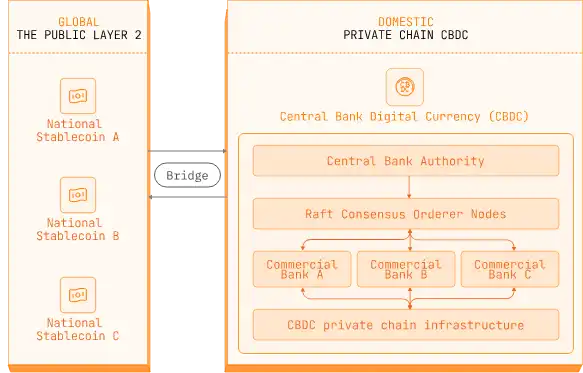
CBDC makes fiat currency programmable, while stablecoins maximize the liquidity of fiat currency in overseas markets.
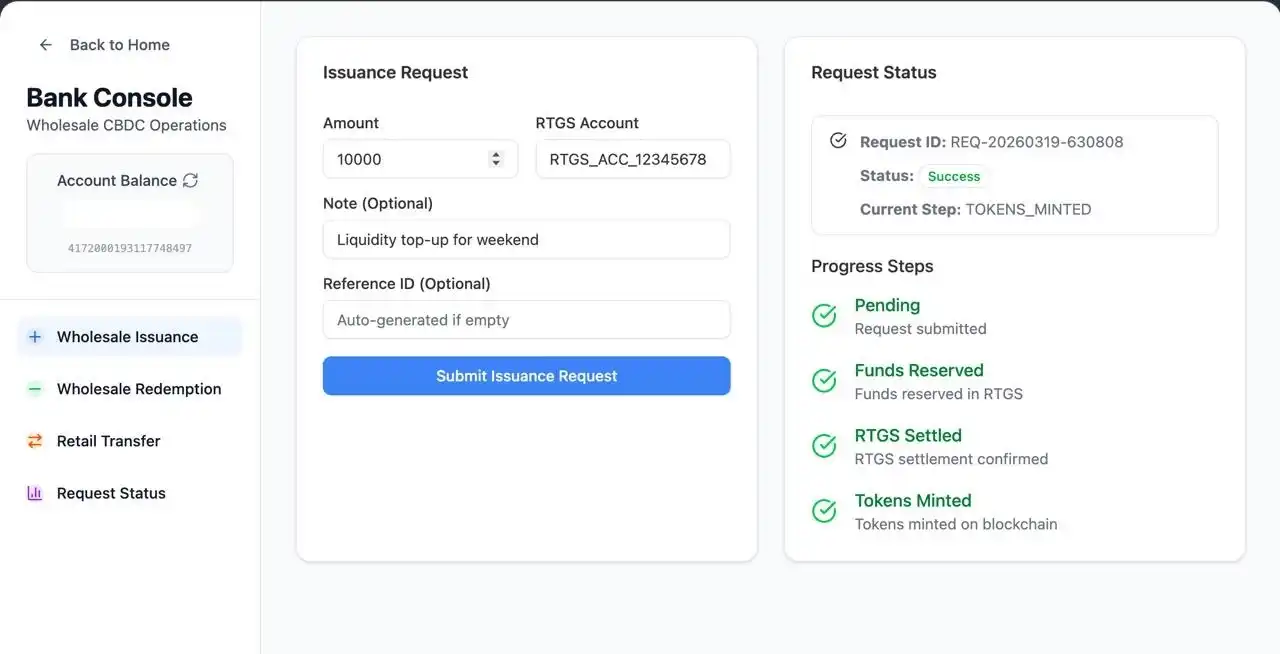
By the third quarter of 2026, Sign's system will begin deployment, serving millions of people and becoming the financial core of the entire economy.
Digital Identity System: A national-level identity and verifiable credential layer.
The government can issue encrypted identities, licenses, and permits. Real-time verification and settlement between departments can be achieved without the need for a cumbersome central database. 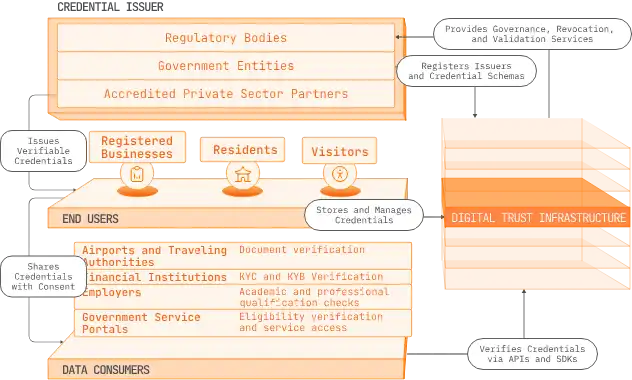
Once these cornerstones are in place, public services can stack like building blocks: taxation, welfare distribution, voting... Meanwhile, new business opportunities will emerge, generating lasting returns.
Sign is Accelerating the Evolution of Public Governance
Technology is reshaping government capabilities. When standardized data and interfaces permeate public systems, the government will have a national-level structured dataset.
This will be the cornerstone of “Sovereign AI.” AI will not exist in isolation; its capabilities are determined by the underlying infrastructure. When the government is fully digitized, AI will have:
Insight into real-time status data
Ability to perform tasks through a programming interface
Governance is turning into a software issue, a new paradigm that is real-time, data-driven, and automated.
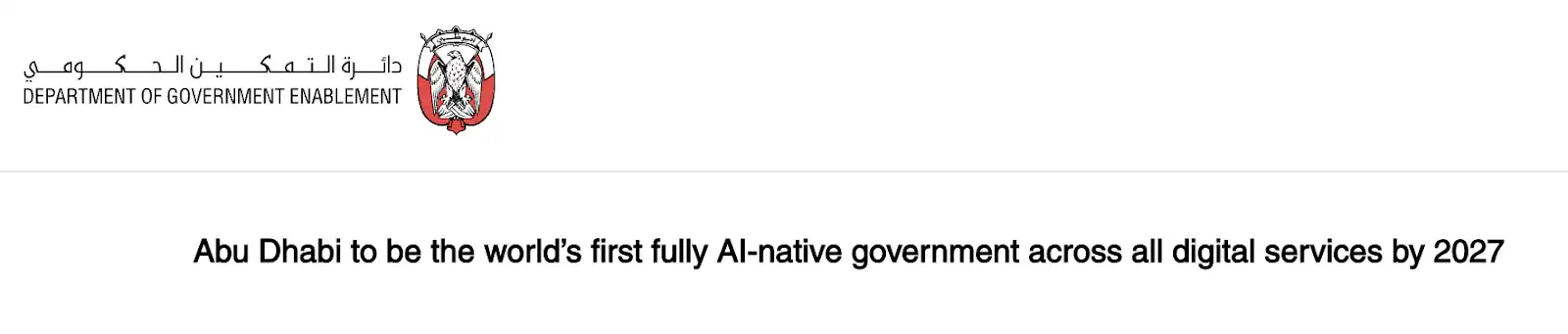 Meanwhile, the relationship between government and individuals is also changing. Digital infrastructure enables the government to connect directly with citizens, reducing intermediate steps. Welfare can go straight from the national treasury to individuals, and taxation can be completed in real time during transactions.
Nations are becoming more like companies, fiat currency is becoming more like stock, and citizens are becoming more like shareholders.
2026 Strategic Milestones
The wheel of transformation is already in motion. To support this era-defining shift, we are fully committed to driving the following core initiatives:
Banking-Stablecoin Integration Middleware: Bridging Two Worlds
We will seamlessly integrate the traditional banking system with stablecoin infrastructure.
Virtual Account System: Achieve a seamless mapping between Layer 2 networks and bank accounts, allowing for natural off-ramp of funds.
Verifiable KYC System: Identity verification aligned with banking Anti-Money Laundering (AML) standards to ensure impeccable compliance.
Bi-directional Fiat Gateway: Establish a high-speed, secure fund conduit between the banking system and the crypto ecosystem.
Regulatory Operating System (Regulatory OS): Compliance "Central Brain"
This system integrates three core pillars: identity, transaction monitoring, and policy enforcement.
It precisely links real-world identities to on-chain activities, utilizes on-chain intelligence to analyze fund flows, and enforces regulatory rules in real time.
All licensed platforms must connect to this system. This not only achieves ongoing compliance reporting and risk monitoring but also ensures that every transaction is transparently auditable.
This establishes a standardized, enforceable compliance foundation for the entire digital asset market.
Data Exchange Layer: Interdepartmental "Trust Link"
This is a blockchain-based cross-department data exchange ledger.
We refuse to cram all data into a centralized server and instead record the interaction traces between various government agencies.
The system features high throughput, tamper-proof, and verifiable characteristics.
Do not store any original sensitive data, only store proof of interaction. This ensures both the efficiency of cross-department collaboration and upholds the bottom line of data security.
Future governance will be written by code and upheld by sovereignty.
The world is splitting into sovereign digital systems, with each country building its own foundation and ultimately connecting with each other through a brand-new network.
Sign is deeply involved in this sweeping transformation.

This article is from a submission and does not represent the views of BlockBeats.
Welcome to join the official BlockBeats community:
Telegram Subscription Group: https://t.me/theblockbeats
Telegram Discussion Group: https://t.me/BlockBeats_App
Official Twitter Account: https://twitter.com/BlockBeatsAsia