IOSG: DeFi Upward, User Downward; Curator's New Paradigm of CeDeFi

Original Article Title: "IOSG Weekly Brief | DeFi Up, Users Down: The Curator's New Paradigm in CeDeFi #314"
Original Article Author: Danny, IOSG Ventures
The Rise of the Curator Model
The intensity of DeFi activity has returned to near DeFi Summer levels, but the on-chain stablecoin supply continues to expand. This means that there is more and more money on-chain, while the form of DeFi products is temporarily unable to be understood, used, and distributed by a wider range of users.
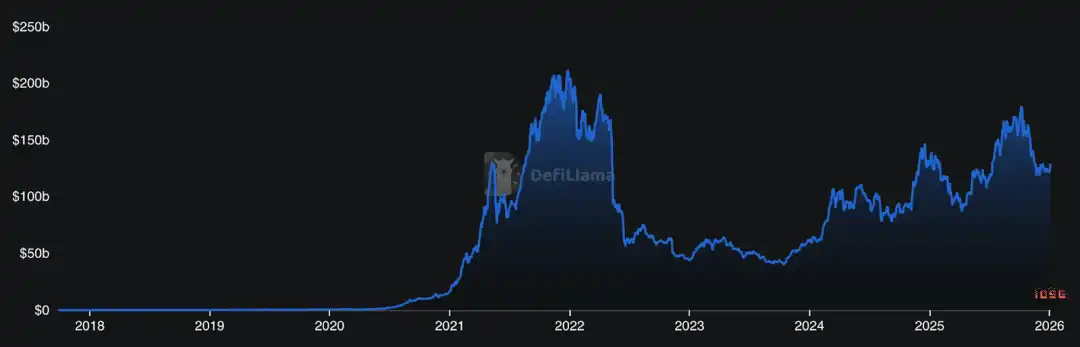
▲ DeFi TVL, Source: Defillama
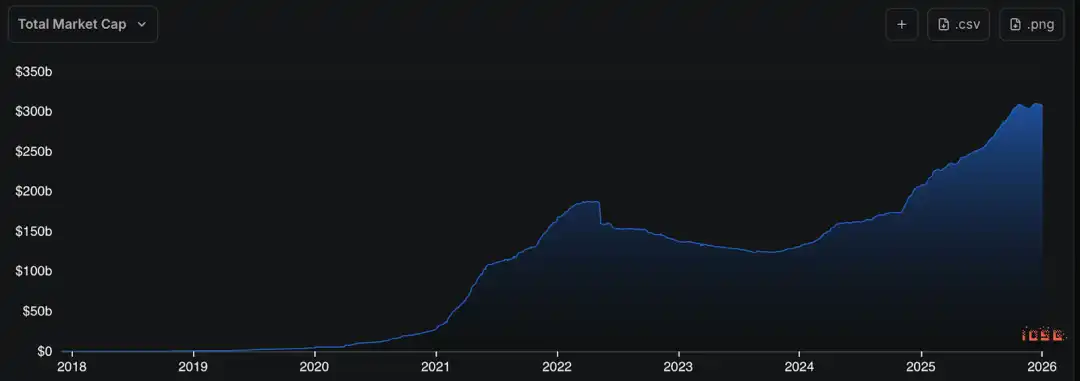
▲ Stablecoin MC, Source: Defillama
Over the past few years, DeFi infrastructure has addressed accessibility and composability but has turned into an extremely challenging game. For ordinary users, a seemingly simple stablecoin yield may involve nested borrowing rate differentials, multi-layer incentives (Funding/Airdrop), structured products (Pendle), and leverage loops (Looping).
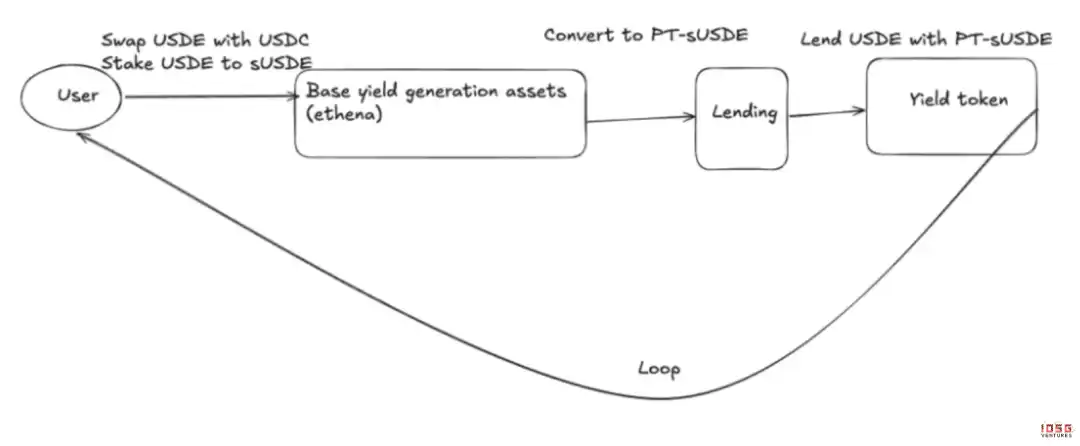
▲ USDE AAVE Pendle loop
Risks have long surpassed the scope of contract hacks and have evolved into the mutual amplification of LTV, liquidation liquidity, and oracle risks. For example, in October 2025, due to an internal oracle failure at Binance, the price of USDe on its platform briefly plummeted, triggering a cascade of liquidations.
DeFi is undergoing an "counterintuitive" evolution: the more mature the technology becomes (upward), the harder it is for users to understand the cost and risk assessment (downward). When individuals can no longer identify "whose money is being earned" and "where the risk lies," DeFi's growth hits a ceiling.
The Curator is a role that has emerged to address this distribution issue, with no direct translation in Chinese, resembling more terms like "strategist." As yield provision and risk pricing shift from the protocol layer, the Curator becomes the encapsulation layer bridging complex protocols and broad funds.
What is a Curator Business Actually Doing
In the Morpho-led system, the protocol provides neutral infrastructure, while the Curator determines which assets are available, the level of risk, and day-to-day management. It has three core responsibilities:
Strategy Selection
The value of the Curator lies in determining which yields are structural and which are merely opportunistic. Strategies are not a one-time deployment and require constant adjustments based on fund size and risk exposure. Even for the same USDC strategy, different Curators have vastly different results in extreme market conditions. The key difference lies in their ability to make ongoing assessments and dynamically deleverage.
Risk Pricing
In a modular system, the Curator is the one truly deciding on risk exposure. Decisions on acceptable collateral, how high leverage can go, all boil down to risk pricing. The Curator holds the right to price risk, not just execute decisions. Even top Curators can make mistakes, as seen with Re7 Labs, where reliance on the Pyth oracle's price updates led to incorrect liquidations of user positions. This serves as a warning: the current cycle's greatest systemic risk stems from this.
Productized Distribution
To users, in its productized form, it provides a single interface for entry and exit; to frontends (CEX/wallets), it offers non-custodial, risk-transparent yield modules. It's not about capturing protocol users but about helping funds find risk structures they can understand and tolerate.
The Curator is an AUM-driven asset management business. Due to the strong link between revenue and AUM, it creates incentive tensions: increasing AUM can amplify income, but rapid expansion can erode strategy capacity and magnify tail risks.
Market cycles have a very direct impact on Curator behavior. In a bull market phase, Curators tend to enhance capital efficiency, using leverage, incentive overlays, and circular structures; at this time, there are more borrowers, beta masks risks, APY is high, capacity is large, but so is the risk.
However, in a ranging or bear market, strategies are forced to return to true sources of income: interest rate spreads, RWA cash flow assets, low-correlation allocations. Real returns outweigh leverage, airdrop earnings, with defense capabilities prioritized over offensive capabilities.
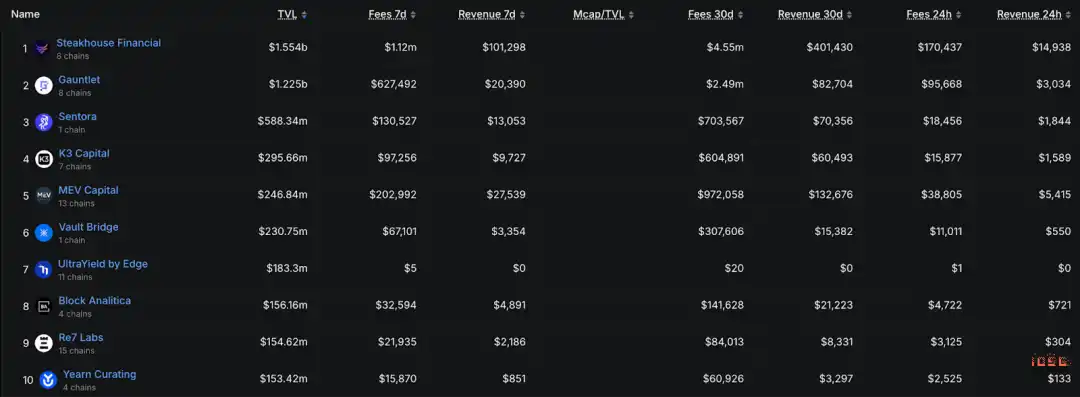
▲ Defillama: Curator
Evolution of Distribution Paradigm: Institutional Adoption and Retail Future
Risk Curator Protocols Total TVL ≈ $5.68b
AUM Highly Concentrated, with Steakhouse Financial at ≈ $1.55B, Gauntlet at ≈ $1.23B, the top two holding close to 50% of market share, exhibiting a very typical power-law structure.
As Curator-managed AUM continues to grow rapidly (2000% annual growth rate), their role has evolved from a strategy executor to a central node of DeFi risk and liquidity.
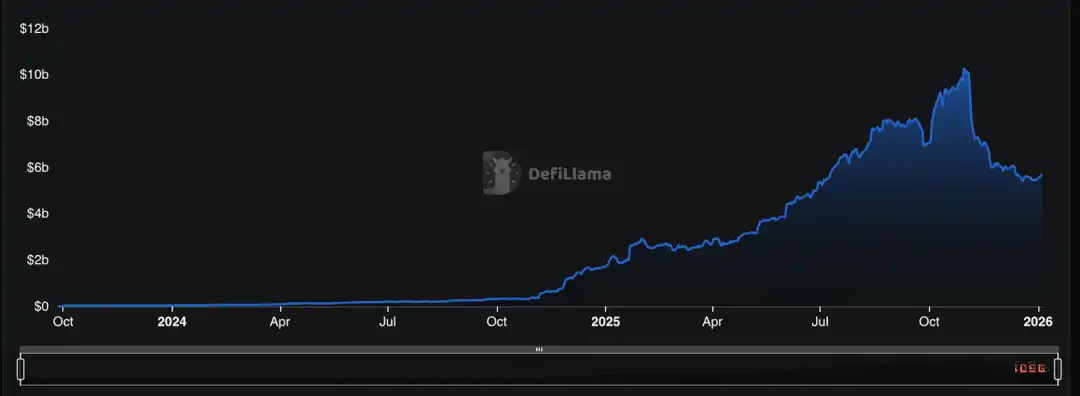
▲ Curator AUM, Source: Defillama
According to DefiLlama data, as of February 2026, the Risk Curator's total TVL is approximately $5.9B, with Steakhouse Financial ($1.53B), Sentora ($1.34B), and Gauntlet ($1.29B) together holding nearly 70% of market share, showing a significant top-heavy concentration effect. This means that if a top Curator's strategy or parameter judgment experiences systemic bias, its impact will extend far beyond a single protocol.
In the future, Curators will not converge into a single form but will differentiate into at least three categories:
First, Capacity-First Curator.
The core goal of this type of Curator is to carry large-scale, low-volatility funds, with a strategy that leans towards lending spreads, stable incentives, RWA revenue, and other sustainable sources, emphasizing parameter conservatism and explainability. This type of Curator is more easily accessed by CEXs, wallets, and Fintech front-ends and is the mainstream form of most large-capacity Vaults on Morpho. Some protocols even delve into the Vault tech stack, helping to build a more institution-friendly Curator business from the ground up.
Many current high-capacity Curators act more as borrowers, redistributing the AUM they manage to other Curators with more diverse income sources and more aggressive strategies, which will be discussed later. They decide who to lend money to, thereby creating more income for their AUM. They increasingly take on a role as a "Curator of Curators" and work closely with the opportunity-driven Curators mentioned later on.
For institutions looking to enter DeFi, the choice has also become whether to self-build or collaborate with a top Curator, personally take the field and become a curator. Leveraging its open, modular architecture, Morpho is becoming the preferred infrastructure for institutions' self-built Curator businesses. Bitwise is a typical example, launching an internally managed non-custodial treasury Curator service on Morpho in January 2026, marking the shift of professional asset management from DeFi "users" to "builders."
Meanwhile, Coinbase has chosen a different path, outsourcing the backend of its lending products (USDC lending and XRP, ADA, and other asset-backed loans) to third-party Curator Steakhouse Financial on Morpho — the frontend is a familiar Fintech interface for users, while the backend is DeFi-driven, known as the "DeFi Mullet" model.
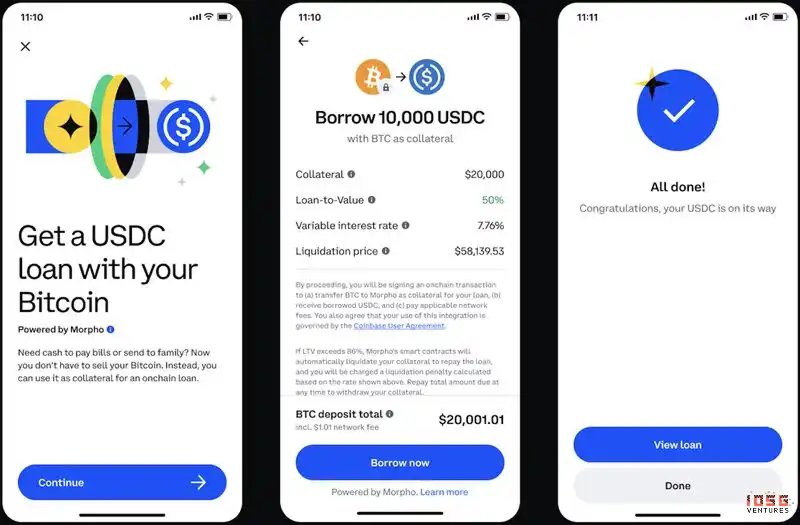
▲ Coinbase DeFi Mullet
The scale of institutional involvement is growing rapidly. Apollo Global Management, managing over $9.38 trillion in assets, signed a strategic partnership agreement with Morpho in February 2026, aiming to acquire up to 9% of the $MORPHO governance token over four years.
Apollo's strategy is two-pronged: on one hand, its credit funds have tokenized RWA assets such as ACRED and ACRDX through Securitize and Anemoy, gaining access to the Morpho lending market through top Curator curation like Steakhouse; on the other hand, by holding governance tokens, participating directly in shaping the future of on-chain credit infrastructure.
That same month, Taurus, providing custody services for over 40 banks, also integrated Morpho into its custody platform, allowing traditional financial institutions to allocate funds directly to Morpho Vaults within existing compliance frameworks and managed directly by a Curator. The institutional entry into DeFi issue has shifted from "whether to participate" to "to what extent to participate."
The second type, Opportunity-Driven Curator.
These Curators focus more on new structures, new assets, and early incentive windows, willing to sacrifice capacity, take risks in exchange for higher alpha. Typical features include explicit AUM limits, short strategy lifecycles, high volatility tolerance, and service aimed primarily at professional funds or the DeFi community.
These Curators Rush into the Emerging L1/L2 Ecosystem, such as when a brand new public chain (such as Hyperliquid, Plasma, Monad, Megaeth) launches, it is usually accompanied by a generous liquidity incentive program to attract early users and developers. Opportunity-driven Curators become early participants who quickly deploy their treasuries on these new chains, leveraging their expertise to capture these one-time early rewards, such as airdrops, high liquidity mining rewards, etc.
In addition, these Curators also explore new assets, new structures, and new DeFi primitives: unlike Bluechip Curators focusing on mature assets (such as ETH, USDC), opportunity-driven Curators are more willing to incorporate new asset categories into their strategies. For example, Re7 Labs became the RWA Asset Curator for BUIDL by Belid, pioneering the large-scale application of RWA in lending.
Another advantage of these Curators is their high sensitivity to market changes, enabling them to quickly respond and take advantage of market fluctuations or specific events for arbitrage. When building their strategies, they often include more complex logic, such as cross-protocol interest rate differential arbitrage, profit-taking through liquidation mechanisms, etc. Although this strategy carries higher risks, it may also bring returns far above the market average.
The third type, Productized Curator.
Productized Curators no longer just do backend configuration but further package the strategy into Vault as a service, asset, or stablecoin form, directly facing users. This path requires extremely high requirements for risk control, transparency, and responsibility boundaries, but once established, it also has the highest distribution efficiency.
The challenge for these Curators is to find high-yield strategies with large capacity—almost all DeFi strategies have an explicit capacity limit. Taking the current mainstream looping / basis strategy as an example, the market size is approaching $20 billion (about 10% of DeFi TVL), compared to only about $5 billion six months ago. Once the capacity is quickly filled, the marginal yield significantly decreases, and the parameter fault tolerance space shrinks rapidly. When such Curator productization is successfully built, it can better integrate into Fintech apps, incorporate Web2's capital, and become an important part of Curator's path to mass adoption.
Give DeFi Back to Users
The biggest issue with DeFi currently is that the complexity and risk exposure have surpassed the decision-making ability of individual users. This leads to users being uneasy about depositing money. Events like the collapse caused by funds misuse in yield-bearing stablecoins, such as Streamfinance, coupled with the bearish market, have led to an overall decrease in yield-bearing stablecoin TVL, with funds once again concentrating in conservative lending protocols.
Today, around 45% of DeFi TVL (~$56B) is pursuing new yield opportunities, concentrated in protocols like Aave, Morpho, Spark, among others. However, a significant amount of USDC remains idle for the long term, not due to a lack of opportunities, but because the cost of strategy understanding, risk assessment, and dynamic management is too high.
For most users, what is truly needed is not more protocol choices, but:
· A simple, trusted entry point;
· A diversified, constantly adjusting yield structure;
· A clear, understandable risk exposure method;
The entry point can be achieved by consolidating the current Vault exposure method or through productization. The yield structure can be improved by bringing more high-quality Curators to the market. I believe that what is currently causing a lack of confidence in the market, and what needs to be built more, is a healthy, transparent Curator auditing system, including:
· On-chain verifiable asset allocation paths;
· Structured risk labeling;
· In extreme cases, users know the exit conditions and exit paths.
This cannot completely eliminate risk, but it can transform risk from vague systemic uncertainty into understandable, quantifiable choices. Without this kind of transparency, Curators can easily evolve into a shadow banking system, no different in essence from Celsius, BlockFi. Conversely, if Curators can disaggregate, price, and pre-converge risks at the middle layer, it may instead become a protocol-level buffer, rather than an amplifier, allowing overall DeFi risk to be controlled by professionals.
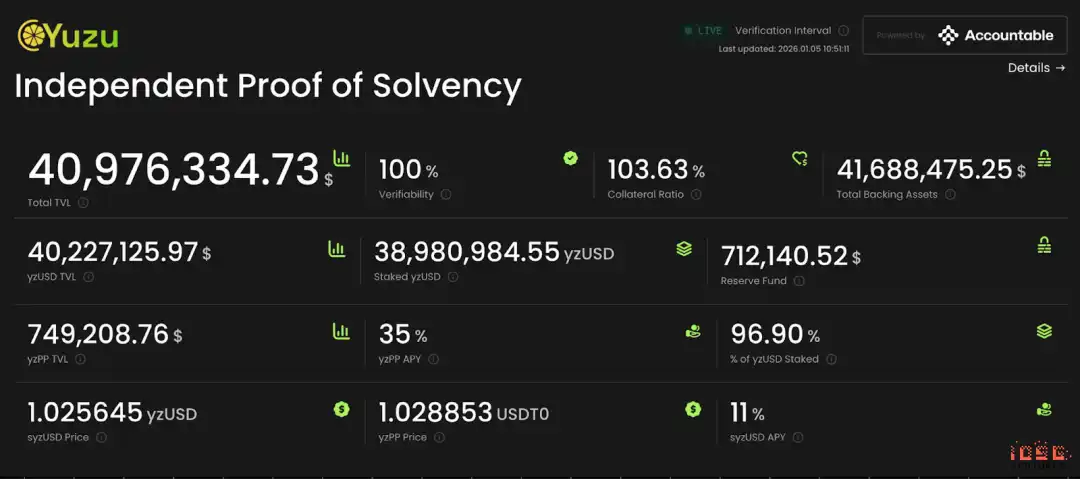
▲ DeFi dashboard for asset management transparency
In the long run, Curators are not the endgame of DeFi, but almost an unavoidable layer before DeFi can reach a larger user base. DeFi has already proven the feasibility of its infrastructure, and what is lacking next is an intermediate layer that can package, distribute, and embed these capabilities into real-world use cases. Curators are taking on this role.
When complexity is appropriately encapsulated, risks are clearly labeled, and responsibility boundaries are sufficiently clear, DeFi can truly return to its original promise: not just to serve the most professional few, but to become a financial system that is widely accessible.
Welcome to join the official BlockBeats community:
Telegram Subscription Group: https://t.me/theblockbeats
Telegram Discussion Group: https://t.me/BlockBeats_App
Official Twitter Account: https://twitter.com/BlockBeatsAsia