When Chinese Crypto Whales Start Buying Gold

Author | Lin Wanwan
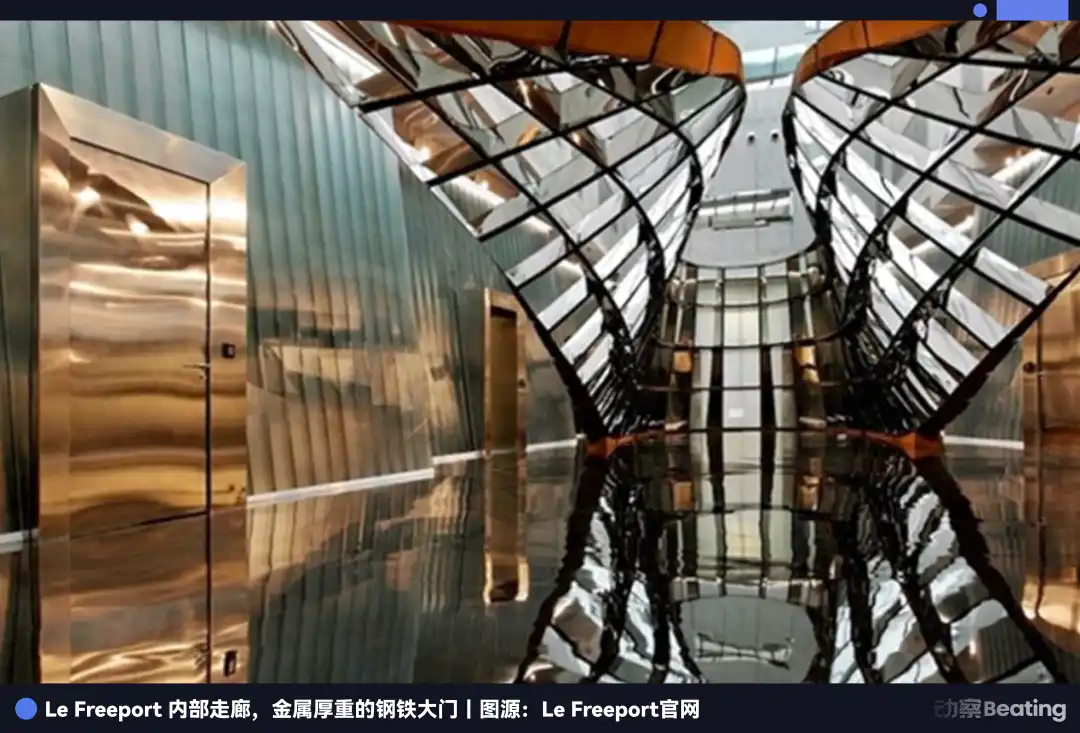
Located twelve minutes north of Singapore's Changi Airport, at the end of the runway, stands one of the world's most secure private vaults, with a cost of approximately 100 million Singapore dollars — Le Freeport.
This building, known as the "Asia's Fort Knox," has no windows, yet maintains a constant temperature of 21°C and a humidity level of 55% throughout the year, providing the perfect storage environment for artworks.
Behind heavily guarded steel doors lie billions of dollars worth of gold, silver, and various rare artworks, all of which enter without the need for customs declaration and without incurring any taxes.
Three years ago, one of Asia's youngest billionaire crypto moguls, the founder of BitDeer, Wu Jihan, acquired this rumored 100 million Singapore dollar vault for 40 million new dollars (approximately 210 million RMB).
The transaction was confirmed by Bloomberg at the time, with Wu Jihan's BitDeer behind the purchase. Some people mocked it as a "distracted" move by a giant in the crypto world, asking why he didn't just focus on mining Bitcoin on the chain. Why bother buying an off-chain vault?
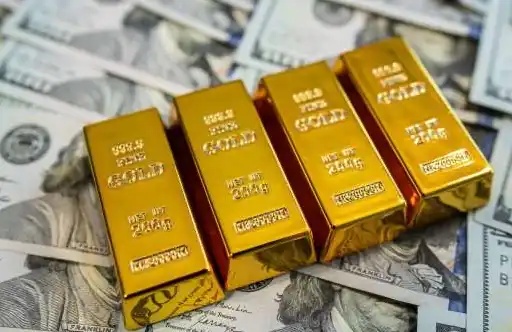
However, when gold skyrocketed to over $4,000 per ounce in 2025, looking back at this acquisition, rather than seeing it as a distraction, it appeared more like a well-timed move.
Yet, when Wu Jihan secured Le Freeport, what he bought was definitely not just concrete and steel doors. This fortress was designed from the start as a bonded zone tailored for super-rich individuals and institutions: high-level security, discreet exhibition space, and the added benefit of elegantly bypassing tariff barriers.
It exposed a fact that those Chinese billionaires who had overnight fortunes with Bitcoin had already set their sights on the oldest safe haven asset in human history: gold.
Gold's Retirement Home
In May 2010, Le Freeport officially opened in Singapore. This building was designed as infrastructure from the beginning, situated next to the airport with internal passages that almost directly connect to the runway, allowing valuable items to be transported from the airplane to the vault in just a few minutes.
The support of the Singapore government is evident in the equity structure. The National Heritage Board and the National Arts Council of Singapore were among Le Freeport's original shareholders.
At that time, Singapore was transitioning from a "trade port" to an "asset port." Le Freeport was included in the Global Art and Wealth Management Center Plan, riding on the Zero GST Warehouse Scheme, becoming one of the world's few vaults with functions of tax exemption, bonded status, and cross-border settlement.
Under this institutional arrangement, Le Freeport quickly caught the attention of global billionaires and institutions. Here, not only can substantial physical assets be held; it is also open to non-Singaporean passport holders, requiring no immigration procedures and no payment of customs duties.
If a $50 million Picasso masterpiece were to be placed in Le Freeport, the savings in taxes could amount to tens of millions when calculated at a 10%-30% tax rate.
As Le Freeport does not publicly release photos of its interior storage, we can only catch a glimpse of its interior from the publicly available images of The Reserve, a newly established vault next door.
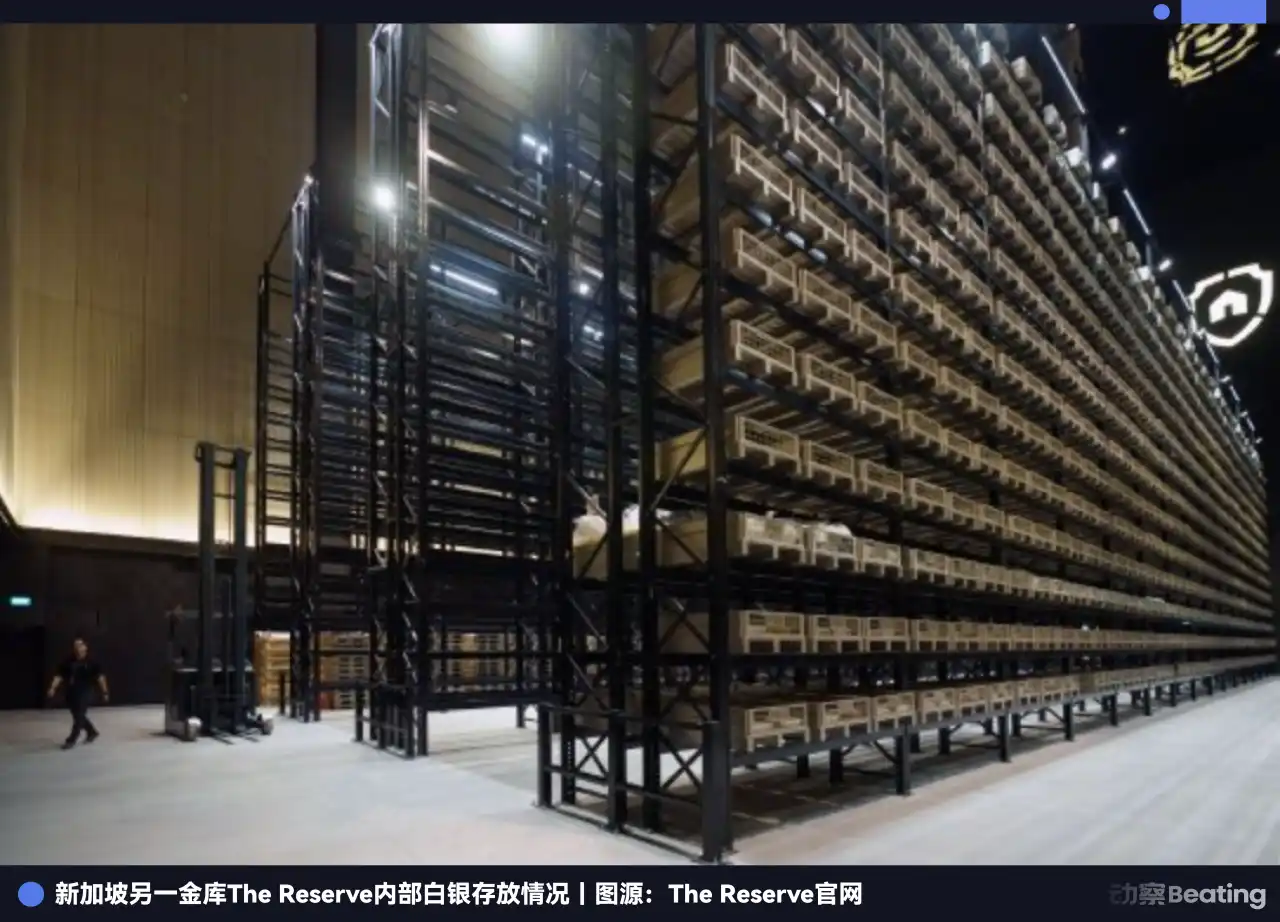
At one point, a group of top-tier institutional tenants gathered here, including JPMorgan Chase, one of the world's major gold traders, Christie's subsidiary CFASS, as well as UBS Group, Deutsche Bank, and other international financial institutions, facilitating the cross-border transit and custody of a large number of gold bars.
However, with some countries intensifying regulation of luxury goods and offshore assets, these institutions began to vacate their leases one after another, causing Le Freeport to fall into long-term losses.
Starting from 2017, Le Freeport was classified in the market as a "troubled asset," and the owners began trying to sell it. It wasn't until five years later that a real buyer emerged—Jihan Wu.
At that time, the cryptocurrency market was experiencing a true winter. The collapse of the LUNA algorithmic stablecoin raised doubts about the entire on-chain credit system; Three Arrows Capital declared bankruptcy, Celsius and BlockFi went bankrupt one after the other, deleveraging cascaded through the chain, culminating in the collapse of the FTX empire, exposing counterparty risks.
During this time, Chinese cryptocurrency entrepreneur Jihan Wu, through Bitdeer, purchased this vault that had previously been considered a "hot potato" for about 40 million Singapore dollars (approximately 210 million Chinese yuan).
Jihan Wu had co-founded the world's largest mining equipment manufacturer, Bitmain, at one point controlling about 75% of the global Bitcoin hashrate, making him a key figure in the previous mining cycle. After splitting off Bitdeer, he relinquished control of Bitmain as a Singapore permanent resident and shifted his focus to Bitdeer's hashrate and infrastructure business.
He did not publicly elaborate on this acquisition, only confirming it when asked by Bloomberg.
Today on Le Freeport's official website, it is clearly stated that it is not just a vault, but an exclusive private experience for a select few.
Think about crypto enthusiasts who have spent their whole lives studying how to secure private keys; the truly wealthy have long had their funds lying in the vaults of Singapore, some as part of a family trust document, others as mnemonic phrases engraved on steel plates.
Not only Chinese tycoons, but also emerging wealth from India and Southeast Asia, are quietly becoming regulars at Wu Jihan's Le Freeport.
Le Freeport has never disclosed its client list, but clues can be seen from information from international auction houses: many artworks are "directly stored" after being sold, no longer returning to the market for circulation.
A similar path also occurs in Southeast Asia, where listed billionaires directly transfer a portion of their cashed-out amounts to Le Freeport: gold bars, silver bars, high-end jewelry, limited edition Patek Philippes, vintage cars, and rare artworks, all making their way from the trading floor to this secretive warehouse.
Considering that there may be "vault members" among the readers, I will explain the gold storage process here.
There are armed security guards at the entrance; visitors first have their backgrounds checked online with their passports to confirm that they are not high-risk individuals wanted for arrest. To enter the core vault area, one must pass through at least 5 checkpoints, including identity verification, biometrics, bulletproof doors, personal item checks, and more. Inside and outside the vault are equipped with hundreds of high-definition cameras for 24/7 surveillance with no blind spots. Add to that the physical difficulty of moving a "30kg silver bar or a 12.5kg gold brick," even if someone breaks in, they can hardly take anything away.
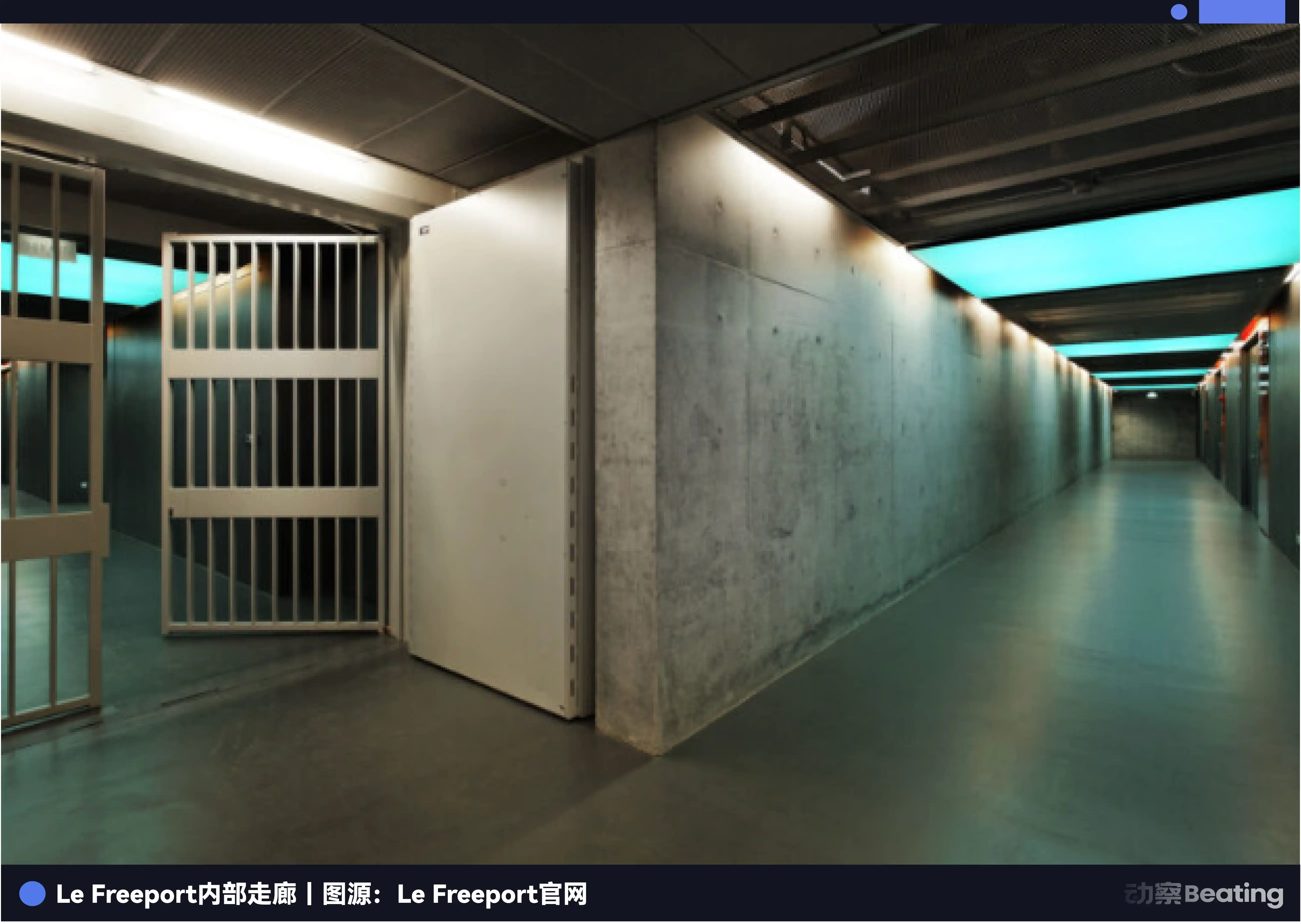
So while people outside are still discussing whether gold can rise in value, those inside are already discussing how many hundreds of bottles of Dom Perignon priced at $150,000 each to store first, which level and row to place the Picassos and Rembrandts on shelves to make it easier for their wives to take better-looking numbered photos.
For the common worker, the endpoint is the employee provident fund, while for Asian tycoons, the endpoint is these windowless walls in Singapore.
Of course, the vault only takes advantage of physical space; to have a greater say in the gold supply chain, one must go further upstream to infiltrate the game.
The Fujianese Have Tapped into the Veins of Gold
The Chinese Aunties are still lining up at the jewelry store to take advantage of the $5 discount per gram, while the old money families and the new blockchain rich are already arm wrestling by the ton: in this game, who calls the shots.
In May of this year, a financial technology company named Antalpha submitted its IPO filing to Nasdaq. In Antalpha's IPO filing, it mentioned a mining company co-founded by "Wu Jihan," Bitmain.
The document clearly states: "We are Bitmain's primary financing partner." Both parties have signed a Memorandum of Understanding agreeing that Bitmain will continue to use Antalpha as its financing partner, with both sides mutually referring customers to each other.
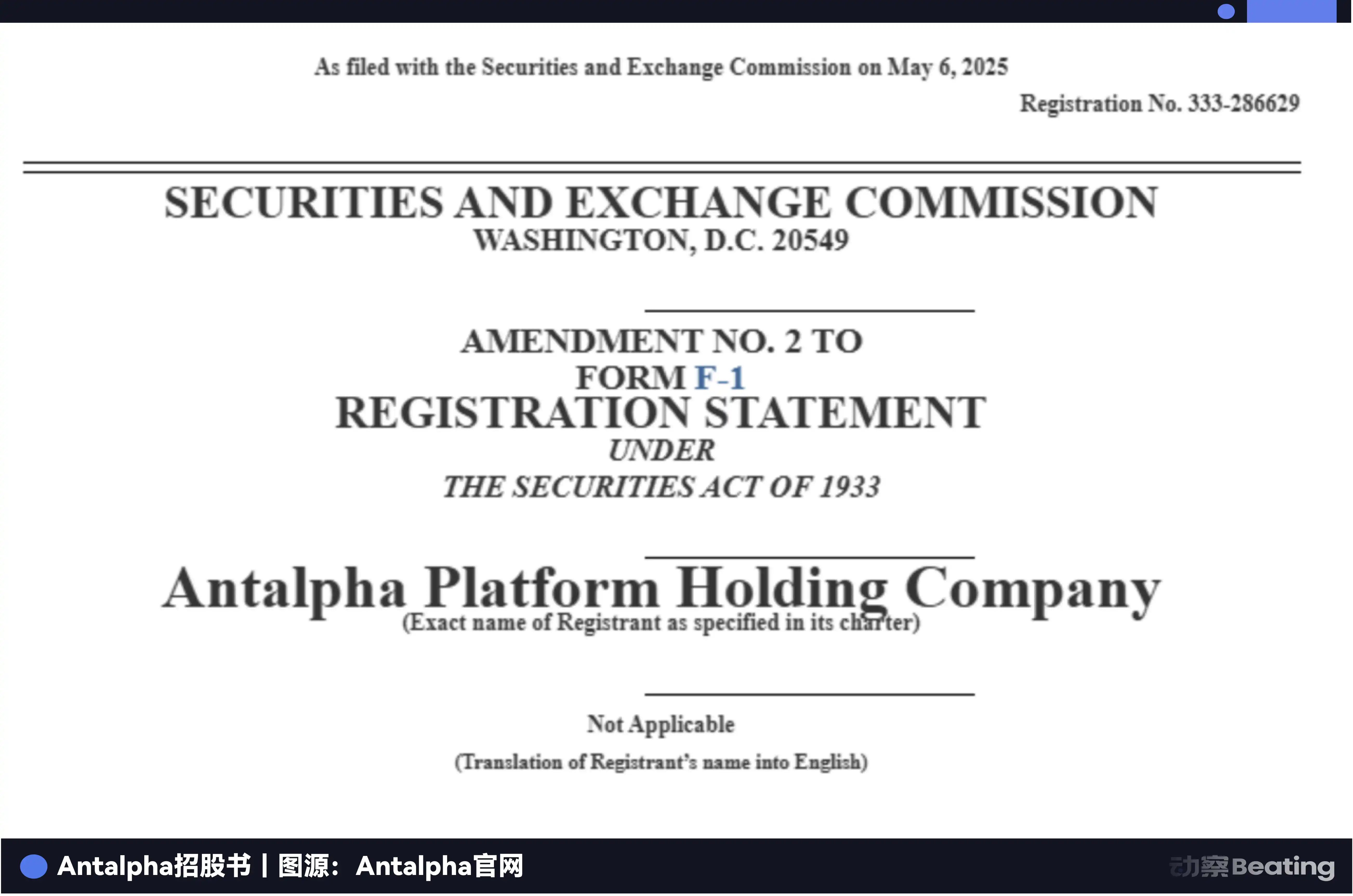
This company had previously provided supply chain financing and customer financing for the world's largest mining equipment manufacturer, Bitmain. This was a commercial legacy left by Wu Jihan.
Today, with Wu Jihan long gone from Bitmain, the one in charge now is another co-founder, a crypto billionaire from Fujian, China, Jihan Wu.
There are many places in China that have a strong belief in gold, but Fujian residents are definitely at the forefront when it comes to tying their personal fate to gold: Chen Jinghe from Longyan turned Fujian's "mediocre mine" into a world-class mining giant, Zijin Mining, a ten-bagger stock; Zhou Zongwen from Fuqing founded Zhou Dasheng in Shuibei, growing it into a top three nationwide chain store through franchising; goldsmiths from Putian, who used to walk the streets and alleys, now handle nearly half of China's gold wholesale and retail.
Gold mines in Fujian, gold shops in Fujian, one successful gold entrepreneur after another, inevitably making people suspect that Fujianese have golden blood flowing in their veins.
Evidently, the fiery blood in Jihan Wu has been ignited. With the business of blockchain gold, how could a Fujianese miss out?
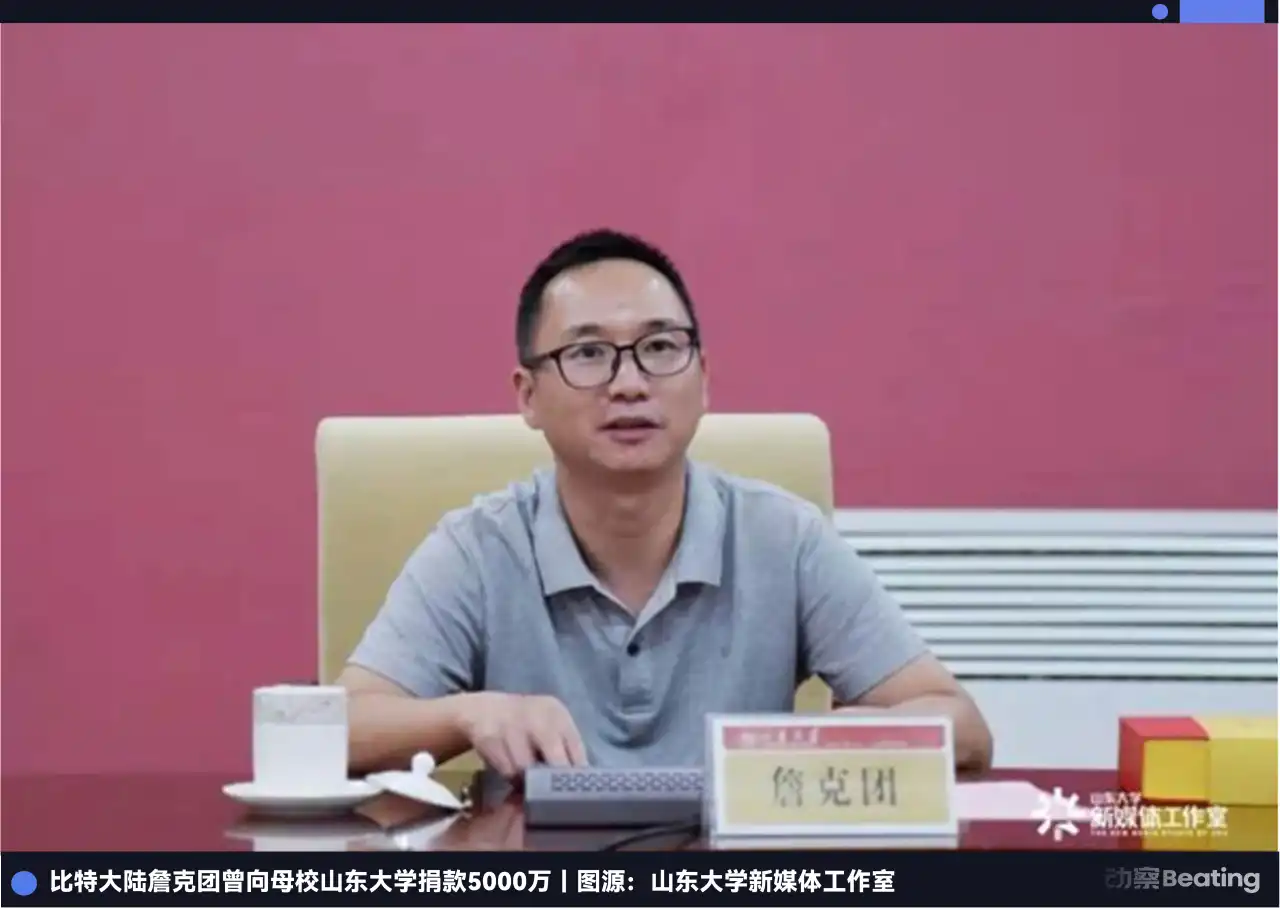
He has aimed his sights directly at Tether, the world's largest stablecoin issuer, now also one of the top 30 gold buyers globally, a newly minted "Blockchain Gold Lord."
In October of this year, Tether announced a partnership with Antalpha to build a "Blockchain Gold Treasury," planning to raise $200 million, with a gold token XAU₮ as the cornerstone, creating a "gold-backed digital credit system."
The division of labor is also very Fujian-style, with Tether responsible for minting real gold into tokens and storing the reserves in a private Swiss vault; Antalpha, on the other hand, is responsible for turning this token into a tradable financial instrument, designing collateral structures, creating loan products, establishing gold vault networks in Singapore, Dubai, and London, making "Blockchain Gold" a pawn ticket that can be redeemed for physical gold bars at any time.
In simple terms, it is a set of living "modern gold standard": Tether as the mint, Antalpha as the ticket number, the story background changed from the Bretton Woods system to a Swiss gold vault.
According to public reports, Tether has hoarded approximately 80 tons of gold in a Swiss gold vault, which is comparable to the official reserves of some small and medium-sized countries. However, Tether claims that due to "security considerations," the vault refuses to disclose the specific address.
And unlike central banks' operation of "locking gold bricks in a vault for decades without seeing sunlight," XAU₮ is shattered and thrown onto the chain, making it traceable, divisible, tradable, and collateralizable. The gold that used to only lie in a vault has been turned into a full set of "dynamic liquidity" that can circulate, be pledged, and be wholesaled to institutions.
Antalpha went so far as to have its own company, Aurelion, put up $134 million to directly purchase XAU₮, preparing to turn itself into the "first publicly traded treasury company with on-chain gold as a reserve asset." This is equivalent to transforming the traditional playbook of "stuffing gold bars into a Swiss vault" of old money into "stuffing a line of XAU₮ into a publicly traded company's balance sheet."
Tether CEO Paolo Ardoino succinctly outlined the logic's framework: "Gold and Bitcoin are two poles of the same logic, one being the oldest store of value and the other the most modern."
The gold price is also making its presence felt on this new high-speed track: global gold investment has increased by over 50% this year, and XAU₮'s market value has doubled during the same period. Those who fear risk and those who love to gamble are rarely walking on the same road this time.
They are trying to answer a larger question: can the oldest human wealth storage method come alive again on the blockchain?
A New Game Plan
In October 2025, the gold price surged past $4,000 per ounce like a faucet being twisted open, hitting a historical high and achieving a more than 50% increase for the year, making it one of the best-performing major asset classes globally.
Superficially, this is another round of the "gold bull market"; looking deeper, three forces are rearranging power dynamics on gold.
In the front row is central banks. Over the past few years, central banks worldwide have almost "bought on every dip," treating gold as a strategic reserve for de-dollarization and sanction hedging. They are not concerned about short-term fluctuations but only one question: in the worst-case scenario, can this thing still be exchanged for food, weapons, or allies?
The second row consists of Asia's ultra-rich. Money from China, Hong Kong, the Middle East, and Southeast Asia is quietly stacking up to form a new gold wall through Singapore's vault, Switzerland's underground vault, and family office trusts.
They are no longer satisfied with buying a few kilograms of "book gold" in the bank; instead, they are directly purchasing a wall: some are depositing money into Singaporean banks, while others are placing gold bars directly into the vault. These two types of deposits offer completely different senses of security.
Wu Jihan purchased Le Freeport, which is a node on this chain: from mining Bitcoin to safeguarding gold bars and artwork for others, transitioning from "on-chain returns" to "off-chain security."
The third row consists of the crypto nouveaux riches. What Jihan Wu, Antalpha, and Tether are playing with is a completely different game: Wu Jihan purchased a wall in the vault, while they purchased a variable line within the vault — XAU₮.
In this structure, Tether mints real gold into tokens and locks it in a Swiss vault; Antalpha mints tokens into assets, stuffs them into the balance sheet of a publicly traded company, and the collateral basket of institutional clients.
Thus, the role of gold has been quietly rewritten: for central banks, it is still the "ultimate collateral"; for Asian billionaires, it has become a "family cold wallet" that can be passed down through generations; for the crypto nouveau riche, it is a financial system with layers that can be continuously stacked, earning spreads and liquidity premiums.
For most people, gold is merely candlestick charts and weight; for these three groups of people, gold is a ledger involving family, sovereignty, and national security sentiment.
The narrative is changing one after another. The things stored in the bottom of the warehouse are incredibly ancient. After all, no matter how the road twists and turns, and how the story is spun, only capital is sincere. When the show is over and the lights come on, what they want is a sense of security that allows them to sleep at night.
Welcome to join the official BlockBeats community:
Telegram Subscription Group: https://t.me/theblockbeats
Telegram Discussion Group: https://t.me/BlockBeats_App
Official Twitter Account: https://twitter.com/BlockBeatsAsia
 Related Articles