The Dark Side of AI in the U.S.: Working for Chinese Bitcoin Miners

Original Article Title: "The B Side of American AI: Working for Chinese Bitcoin Miners"
Original Article Author: Lin Wanwan, Dorkneel Beating
By the end of 2025, a Chinese cryptocurrency equipment company, Bitmain, was added to the U.S. national security review list.
On November 21, the U.S. Department of Homeland Security initiated Operation "Red Sunset" citing national security concerns, bringing Bitmain to the forefront of the review. The accusatory terms cut deep: investigating whether its devices contain backdoors, and whether they could deal a deadly blow to the U.S. power grid in extreme circumstances.
Why would a Chinese mining company be singled out as a potential threat to the U.S. power grid?
This stems from extreme anxiety in the U.S. over core resources. At this moment, Silicon Valley is witnessing the most expensive "silence" in tech history.
Within AI data centers, tens of thousands of Nvidia H100 GPUs lie silently on the ground collecting dust. These $30,000 chips, dubbed "industrial gold" by Huang Renxun, were supposed to be running at full speed, breathing life into GPT-5 or Sora, but at this moment—they are powerless.
Humanity's most cutting-edge assets are now being choked by the most primitive physical bottleneck.
The U.S. power shortage has reached an incomprehensible level. A deficit of 44 gigawatts, equivalent to the entire electricity generation capacity of a moderately developed country like Switzerland. And in this self-proclaimed most technologically advanced country, the average wait time to power up a newly built AI data center has stretched to over 48 months.
The U.S. grid is like an aging old man.
Just when the AI giants were holding billions but couldn't find an outlet, they realized that a lifeline appeared in the last place they looked down upon—the Bitcoin mining field.
Wall Street suddenly realized: what these people are holding is the scarcest asset of the AI era—vast amounts of electricity already contracted with energy companies.
But they are realizing: this survival rule of "computing power equals electricity" had been vividly demonstrated by a group of Chinese engineers on the other side of the ocean a decade ago.
Because the first round of "power training ground" for the American AI era that is now being fixed was already completed in China a decade ago, and three years ago, due to a single ban, it was relocated to the U.S.
The game between the two sides of the ocean carries an inevitable hidden within chance. Just as the torrent of time cannot be diverted, each generation has its own destiny, and every footnote tells us: greatness cannot be planned.
American Power Inherits "Chinese Heritage"
History always tends to write down the answers first and then wait for the questioning person to appear.
In June 2024, the American Bitcoin mining company Core Scientific announced shocking news on Wall Street: they had signed a $3.5 billion agreement with CoreWeave, known as NVIDIA's prodigy, to lease out the electricity infrastructure originally used for Bitcoin mining to the latter for AI model training.
These stories caused a sensation in Silicon Valley, being referred to as the "hashpower marriage." However, across the ocean in China, for the miners and officials who experienced the "5·19" storm back in the day, these stories read quite differently.
Because companies like Core Scientific, IREN, Cipher, and other mining enterprises, where they housed the NVIDIA H100 infrastructure, a large part of it actually carries the genes of China.
To some extent, the first round of "electric power fortification" in the American AI era fully embraced the industrial heritage left after the great exodus of Chinese mining power.
And the person who unintentionally drew up the blueprint was called Zhang Jiantuan.
Zhang Jiantuan, a typical STEM graduate from the Institute of Microelectronics of the Chinese Academy of Sciences, whose original life trajectory was supposed to be coding and circuit design, quietly becoming a tech guru in some tech park.

It wasn't until 2013 that Zhang Jiantuan and Wu Jihan founded the company, Bitmain.
It is said that Zhang Jiantuan only spent two hours reading the Bitcoin whitepaper. He might not have fully understood the future of money, but he grasped the essence behind that math—the arithmetic game of hash collisions.
In 2016, Bitmain made a decision that shocked the industry: they threw massive wafer orders at TSMC. The Antminer S9, featuring TSMC's cutting-edge 16nm FinFET process, was born, not only a capacity miracle in chip history but also creating an unprecedented "thermodynamic furnace."
In Zhang Jiantuan's eyes, the S9 was a chip, but in the eyes of the national grid, it was a pure industrial load.
Unlike a factory that runs 24/7 or fluctuates with temperature, it operates on a smooth power curve 24 hours a day, indifferent to voltage, and without asking about its origin. From that moment on, a new system was born in the world: electricity transformed from a public service into a "B-side raw material" that could be instantly priced, traded, and liquidated; this energy source of electricity, which is hard to store cheaply once generated, parasitized its value in another form within strings of numbers; Bitcoin mining began to emerge as an industry: from hydropower in the mountains of Sichuan to wind power on the grasslands of Inner Mongolia, Bitcoin miners operate on every piece of land with China's power redundancy.
Perhaps at that time, Jackqu Group did not realize that the industrial standard he defined for Bitcoin mining machines inadvertently rehearsed a perfect energy supply solution for the extremely thirsty American AI ten years later.
In the craziest year of 2018, Bitmain alone swallowed up 74.5% of the global market share. But that's not the scariest part; the scariest part is that the remaining share was also completely dominated by the Chinese. Whether it was the Shenma mining machine founded by Yang Zuoxing, former chief chip designer of Bitmain, or the ASIC pioneer Canaan Technology, they were all of Chinese descent.
This was not a global competition at all, but a "Chinese engineer civil war" spanning 2000 kilometers: from the Obei Technology Park in Haidian, Beijing, to the Nanshan Smart Park in Shenzhen, the heart of 99% of the global computing power beat with a Chinese pulse. It was an absolute closed loop dominated by the Chinese supply chain, forcing Silicon Valley to look up.
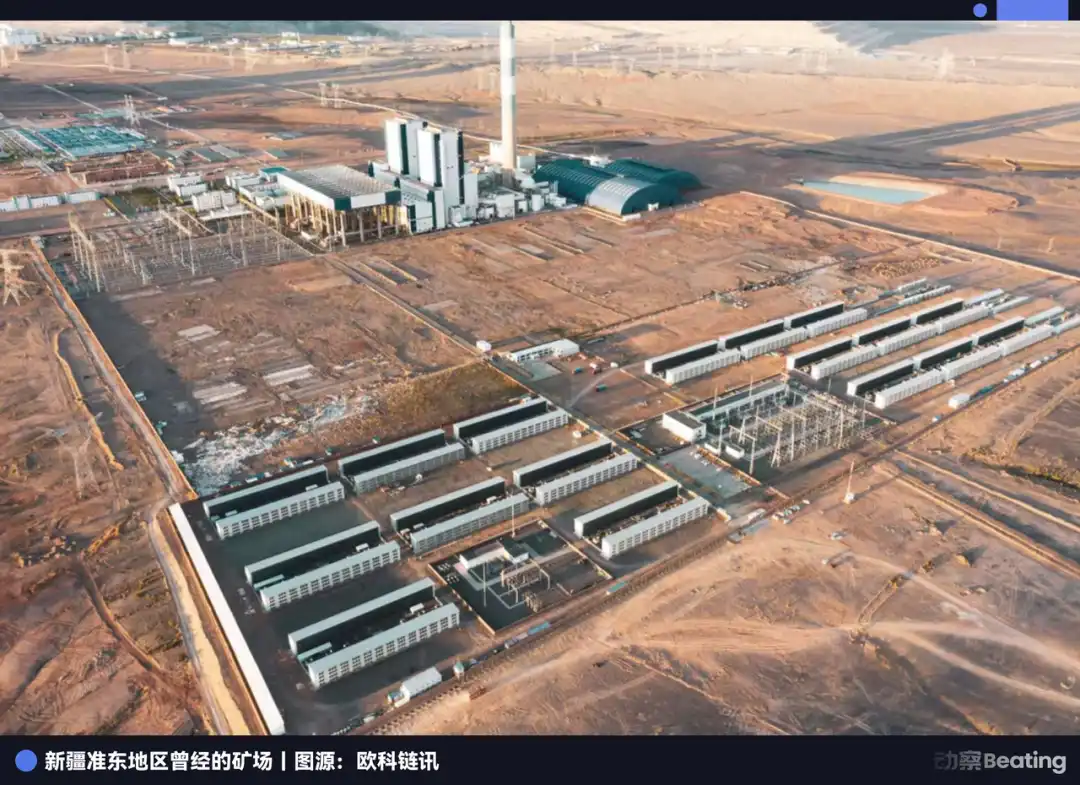
It wasn't until May 2021 that the continuous roar on the banks of the Yangtze River came to a sudden halt with a regulatory ban.
For the country, this marked the end of an energy-intensive industry; but for the industry, it was the start of an epic "technological migration." Thousands of containers were loaded onto cargo ships and sailed across the seas, carrying not only the latest generation of Antminer machines designed by the Jackqu Group but also a uniquely forged "power survival philosophy" developed in China.
One of the destinations: Texas, USA.
Here, they had an independent ERCOT grid and the freest, wildest electricity trading market in America. For these "compute power refugees" from the East, this place was simply an amplified version of Sichuan + Inner Mongolia.
However, when these Chinese people truly landed, the American energy sector was surprised to find that these were not refugees but a well-equipped "energy special forces."
When mining companies were in Sichuan, mine owners relied on drinking heavily with power plant managers, building relationships, and signing a kind of relationship-based "understanding" to get cheap electricity. However, in Texas, this logic was quickly upgraded to high-frequency trading algorithms.
Electricity prices in Texas fluctuate in real-time, changing every 15 minutes, and can soar from 2 cents to $9 in extreme cases. Traditional Silicon Valley data centers (such as Google, Meta) shied away from this volatility, as they were used to lying on fixed rates like hothouse flowers.
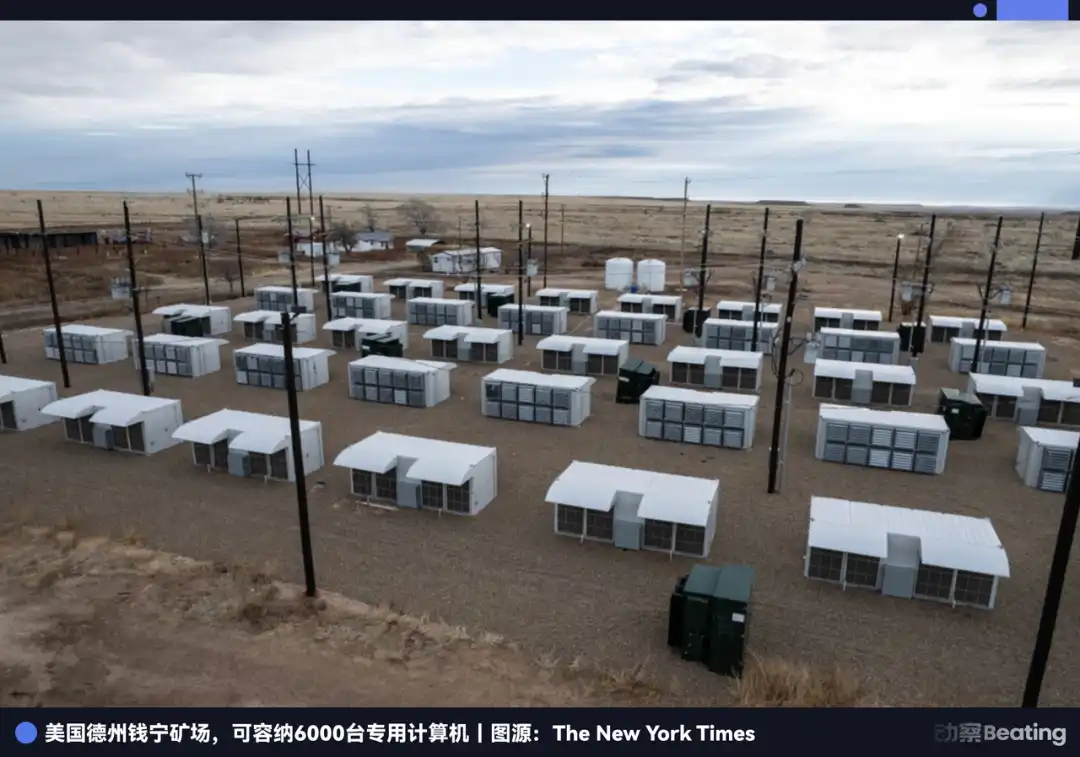
But what was the response of Jackqu Group's "disciples"? It was excitement.
They turned their experience of manually controlling power on and off domestically into an automated demand response program. When the electricity price is negative (such as when there is an oversupply of wind power in Texas, USA), they operate at full power, voraciously consuming electrons, to the point where the grid even has to pay them to consume electricity; when a heatwave hits and electricity prices soar, they can cut off hundreds of megawatts of load in seconds, selling electricity back to the grid at a much higher price than mining.
This kind of "energy arbitrage" has dumbfounded veteran American power traders. The likes of American mining giants like Riot Platforms and Marathon, who are thriving today and transitioning to AI data centers, rely precisely on this electricity algorithm brought over from China.
Another great legacy of the Zhang Ke era is the extreme pursuit of physical infrastructure speed.
The traditional American data center construction cycle is 2-3 years, a process of meticulous craftsmanship by elite engineers. But the "miners" do not follow this logic; their belief is that every second of downtime is a crime against profit.
As a result, on the plains of Texas, a "Chinese speed" that left local builders dumbfounded emerged: no exquisite glass curtain walls, no complex central air conditioning, only huge industrial fans roaring. This "modular, containerized, minimalist cooling" infrastructure solution forcibly compressed the construction cycle to 3-6 months.
This rugged yet highly efficient engineering capability was initially mocked in Silicon Valley as an "electronic junkyard," but it has now become a hot commodity—because the explosion of AI computing power is too rapid, and entities like OpenAI cannot afford to wait for 3 years; they need this "plug-and-play" infrastructure capability now.
Clearly, in Silicon Valley, you can buy graphics cards if you have money, but time cannot be bought.
This "time" is the legacy of that crazy era ten years ago. Back then, Chinese miners and their successors went on a frenzy in the United States to mine Bitcoin, building substations and amassing today's invaluable "grid-connected capacity."
Electricity quota has become the new hard currency of American capital. The so-called "inheritance" is not inheriting a pile of silicon scrap metal but inheriting the right of access to the power grid.
The reason why mining companies can secure multi-billion-dollar deals is simply because, in the current electricity shortage across America, they tightly control the key to unlocking the AI era.
The Migration Night of the "Invisible Champion"
This brutal joy will eventually culminate in a brutal ending.
2018 was a secretive watershed in business history. In that year, the founder of ChatGPT, Sam Altman, was still worrying about the survival of his non-profit organization; Musk had just barely survived on the brink of bankruptcy, and in their eyes, computing power was still only a meek server in a data center.
However, across the ocean, Jack's Gang and his Bitland have turned computing power into an industrial behemoth. They may not have understood the future of AI, but that hasn't stopped them from mastering the key to the future: how to tame those greedy silicon chips in gigawatts.
This is a story about grassroots heroes, national will, and a historical joke. In seven years, China nurtured in the wild currents and coal seas of the West a power-devouring behemoth; then, on a summer night in 2021, for greater financial security and a dual-carbon goal, they uprooted it with their own hands.
To understand how the U.S. today can bow so low to mining companies to harness AI's power surge, one must comprehend the "Energy Mobilization" on the banks of the Dadu River in Sichuan, China, a decade ago.
Zoom back to August 2019.
It was the heyday of Bitland, as well as a brief window for China's mining industry to transition from gray to white. At that time, the Sichuan provincial government issued a policy called the "Hydropower Consumption Demonstration Zone" to address the long-standing issue of "wasting excess hydroelectricity during the flood season" (i.e., generating electricity from water but being unable to transmit it, leading to wastage).
This was a real red-letter document in places like Ganzi and Aba in Sichuan.
According to Caixin's report at the time, under this policy, Jack's Gang's mining machines were no longer the hidden "black production" in the deep mountains but became honored guests helping the local power grid "smooth out peaks and troughs."
At that time, Bitland actually acted as a "super capacitor" for China's western energy network. Jack's Gang was proud not only of the 7nm chips but also of the ability to instantly convert surplus electricity into digital assets.
At that time, China held 75% of the world's Bitcoin computing power. From Wall Street to the City of London, anyone wishing to participate in this game had to follow Jack's Gang's lead and rely on the power load in Sichuan and Xinjiang, China.
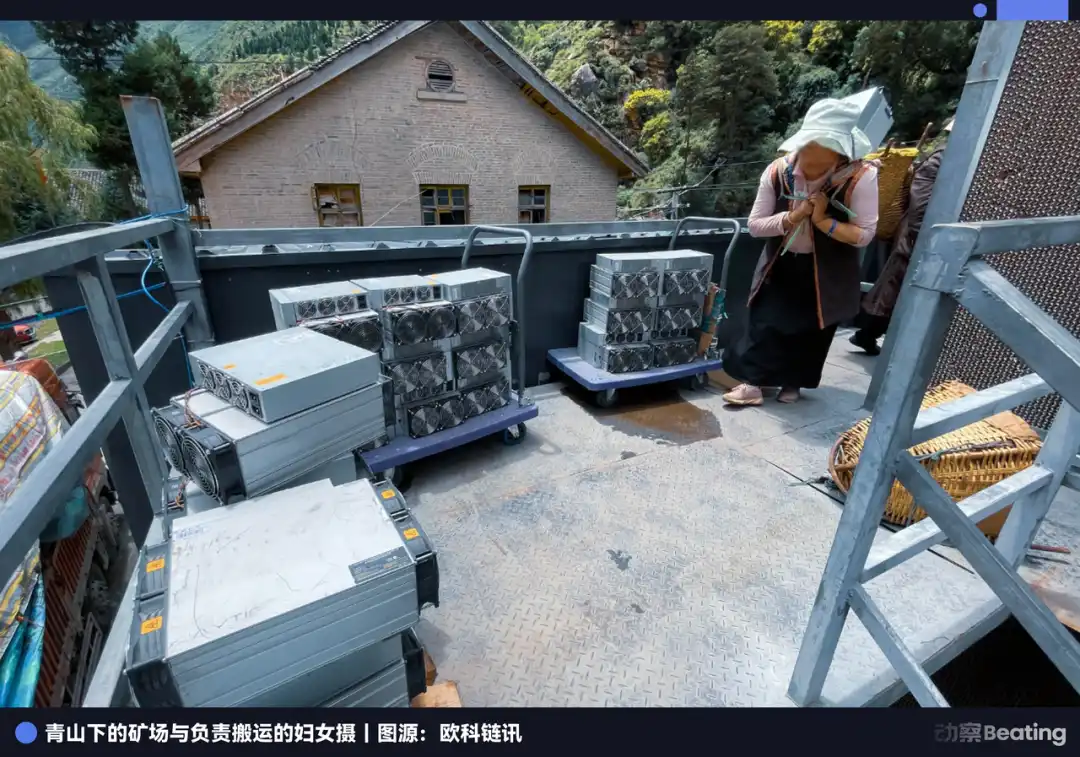
However, behind this "gray prosperity" always loomed two Sword of Damocles.
The first is "financial security." Regulators had long realized that this was not just a technological innovation but also a massive fund channel outside of foreign exchange controls.
The second is "energy consumption control." With the mention of the "3060 Dual Carbon" goal in 2020, the flow of every unit of electricity became a political account. The mining industry, a "high-energy-consuming, low-employment, no tangible output" sector, was destined to be sacrificed on the macro strategic scale.
The precise turning point in history is frozen in time on May 21, 2021.
That evening, the Financial Stability and Development Committee of the State Council held its fifty-first meeting. In the meeting summary, a sentence of very few words but significant weight appeared: "Crackdown on Bitcoin mining and transaction activities".
This was no longer the past "risk reminder" or "development restriction", but the highest-level "zero-out order".
The following month was the most thrilling 30 days in the history of China's mining industry. Inner Mongolia took the lead by directly cutting off the power supply to coal-fired mining farms; Xinjiang quickly followed suit, conducting a dragnet-style investigation.
The climax occurred on the night of June 19, 2021.
On that day, the Development and Reform Commission and the Energy Bureau of Sichuan Province issued a notice requiring the clearance and shutdown of virtual currency "mining" projects. This was the well-known "Sichuan Shutdown Night" within the industry.
A video from that night still circulates online: in a super mining farm in Aba Prefecture, as the midnight bell rang, on-duty personnel with tears in their eyes sequentially pulled down the knife switches on the high-voltage distribution cabinets. The deafening roar of the cooling fans, which had been running for years like an airplane taking off, vanished in an instant.
The indicator lights of millions of mining machines simultaneously went out. The world suddenly became terrifyingly quiet, with only the sound of the rushing waters of the Dadu River remaining.
At that moment, the global Bitcoin network's hash rate plummeted by nearly 50%. China, with a resolute decision akin to cutting off one's own arm to save oneself, forcibly detached this industry, which consumed billions of kilowatt-hours of electricity annually, from the national grid.
We successfully defended our financial front line and freed up valuable energy space. However, in the crevice of this grand narrative, an unexpected twist was planted: we left behind the electricity but expelled the group of people who "best knew how to use it".
Yet, the machines that were cut off from the power supply did not disappear; they began to roam.
In the second half of 2021, an unprecedented congestion occurred at the Yantian Port in Shenzhen. According to descriptions from freight forwarding companies at the time, thousands upon thousands of containers were piled up, all filled with S19 mining machines dismantled from Sichuan and Xinjiang.
This was an exodus of mining power reminiscent of the "Dunkirk evacuation".
The story comes full circle.
In 2024, when ChatGPT went global, AI giants suddenly realized: they lacked electricity, lacked substations, and lacked high-power data centers that could be rapidly deployed.
China had cleared out "outdated capacity" years ago but had packaged and delivered the capability of "how to build and operate large-scale high-energy-consumption mining centers" to the world in its entirety.
This was a strategic decision concerning national financial sovereignty, decisively abandoning this high-risk digital highland. From a macroprudential perspective, this was an absolutely correct and necessary strategic action at the time. However, the irony of history lies in the fact that those huge bubbles and excess hash power that were actively squeezed out and expelled eventually solidified into the most indestructible cornerstone of the opponent's grid and energy system on the other side of the ocean.
But if one thinks that the ultimate outcome of this hash power migration is merely "the East has lost ground, the West has gained benefits," then they are only seeing the chips on the table and not the table itself.
The AI arms race is nothing more than a relentless consumption of energy by computing clusters, ultimately leading to a battle over electricity costs. In this war of attrition, no country is more strategically deep-rooted than China.
The United States needs miners as this "flexible load" to patch up and extend its life, treating miners as bait to treat the "age-related ailments" of the power grid.
However, China is different, possessing a national grid as its central brain. By using Ultra-High Voltage (UHV) transmission, it continuously and with low loss transports the cheapest clean energy from the west like blood vessels to the eastern cluster of data centers.
Nevertheless, swept along by the tide of history, Bitmain, the master of power management in the Chinese hash power era, inadvertently became a strategic force reshaping the global energy landscape. They unintentionally offered their honed skills by the Yangtze River to the other side of the ocean, fortifying the first round of the power wall for the upcoming American AI era.
The Fate of "Defected" Mining Companies
So, have these "Bitcoin ex-miners" who were "defected" truly reached the sky and sat at the table of the AI era?
The answer may lie in the calculations of the giants. Have you ever wondered why cash-flow-rich behemoths like Microsoft and Google truly handed over their electric lifeline to mining companies? Was it just because they found the self-building time cycle too long?
Of course not. The fundamental reason is that they, more than anyone else, fear the lessons of history.
Reflecting on business history, on the executive desks of Silicon Valley moguls, there is actually an invisible tombstone inscribed with a once resounding name: Global Crossing.
This was the infrastructure giant that suffered the most during the 2000 Internet bubble. At the time, America's elites firmly believed that in a few years, the whole world would enter the Internet age, and people would increasingly need faster Internet speeds. In this religious-like fervor, the founder Gary Winnick borrowed tens of billions of dollars and, like a madman, laid hundreds of thousands of kilometers of fiber optics on the seabed, connecting the Americas, Europe, and Asia in just a few years.
After the bursting of the dot-com bubble, ".COM" websites only needed to shut down servers, lay off employees, and the bankruptcy liquidation was complete. In contrast, infrastructure providers faced a huge asset burden: the fiber optics buried under the Pacific Ocean, capable of transmitting trillions of bytes per second, overnight turned into the most terrifying "zombie asset" in shareholders' eyes — unsellable and immovable, only able to silently lie at the dark seabed, slowly decaying on the balance sheet.
In 2002, Global Crossing collapsed under $12.4 billion in debt. The most ironic outcome was that Li Ka-shing's Hutchison Whampoa Group later tried to pick up these assets for less than 1% of their original value, as if picking up scrap metal.
Global Crossing demonstrated a cruel truth with its own corpse: in the early days of technological revolution, whoever bears irreversible heavy assets is the first scapegoat in a downturn. They thought they held the data artery of the future world, but instead made themselves a sacrifice to the infrastructure.
Today, Microsoft CEO Satya Nadella and Google CEO Sundar Pichai must remember this tombstone better than anyone.
Therefore, when you look at the financial reports of the past two years, you will find that their core risk control consists of four words: asset isolation.
The CapEx capital expenditure of AI giants is skyrocketing, but every penny is calculated to the bone: on one end are GPUs and custom servers, relatively "general" assets that can be quickly turned around and even sold at a discount if they don't perform well; on the other end are data center buildings, cables, and cooling systems, typical "specialized heavy assets" that are the most difficult to divest.
The real calculation is here: they want to spread that "pit" to others.
AI giants try to use long-term compute power contracts, power contracts, and park leases to create a chain that "appears to be OpEx operating expenses but effectively shifts the CapEx risk to others."
For the miners who have been brought in and the infrastructure players eager to transition, the giants' lines are enticing: "You are responsible for investing in building factories, you are responsible for handling liquid cooling transformations, I am responsible for signing electricity contracts. As long as AI becomes a dividend of the times, you receive rent according to the contract, and I get business growth and stock price returns."
It sounds like risk-sharing, but upon closer inspection, it resembles the popular saying, "A bandit's friend is not a poor man's friend."
But what if AI ultimately proves to be another illusion like Global Crossing?
Big tech giants can at most pay a fine, take an asset impairment, and elegantly exit the stage, continuing to tell the next story. However, those who truly have to face the bank's demand letter and explain to creditors how to deal with a factory specially customized for high-power density, where nothing can be done except plugging in an H100, are the ones who mistakenly thought they were finally "getting a seat at the table" in infrastructure takeover.
Furthermore, some may ask: What if the AI bubble bursts? Can mining companies simply remove the GPUs and plug back in the mining rigs to continue mining?
More realistically, most "AI-converted" mining farms cannot easily switch back: AI data centers use GPUs and liquid cooling, while Bitcoin mining requires ASIC containers for extreme cost efficiency, and these two systems are hardly interchangeable. The capital markets have already given you a premium as "AI infrastructure stocks," and announcing a return to mining would shift the valuation anchor from AI back to "high-energy-consuming miners," leaving the factory standing while the story and market value are first liquidated.
So history does not repeat, but it always rhymes with the same foot. The fiber optics buried under the seabed in the past, the data centers standing in the wilderness today, the ones left with the bill may have changed, but the roles have remained the same.
Greatness Cannot Be Planned
Today, in the chess game of AI competition between China and the United States, computing power and electricity are two key factors.
Although the United States loses to China in terms of grid construction efficiency, it unexpectedly obtained a large sum of "shadow inventory." When Silicon Valley's data center construction is stalled by environmental regulations and supply chain constraints, these mining farms can quickly step in to power the training of GPT-5 and GPT-6.
The allure of the business world lies in its unpredictability. All strategic planning is essentially looking back with a rearview mirror.
This is an unforeseen strategic assistance. It was not planned by the policymakers in the White House or deduced by the Pentagon but rather inadvertently constructed by wandering Chinese engineers and a group of profiteering speculators in the chaotic market game.
The world is always full of "precise errors" and "blurry correctness." This may well be the allegory left by business history: greatness has never been able to be planned.
Welcome to join the official BlockBeats community:
Telegram Subscription Group: https://t.me/theblockbeats
Telegram Discussion Group: https://t.me/BlockBeats_App
Official Twitter Account: https://twitter.com/BlockBeatsAsia