The Chinese Community Behind the TrumpCoin Project
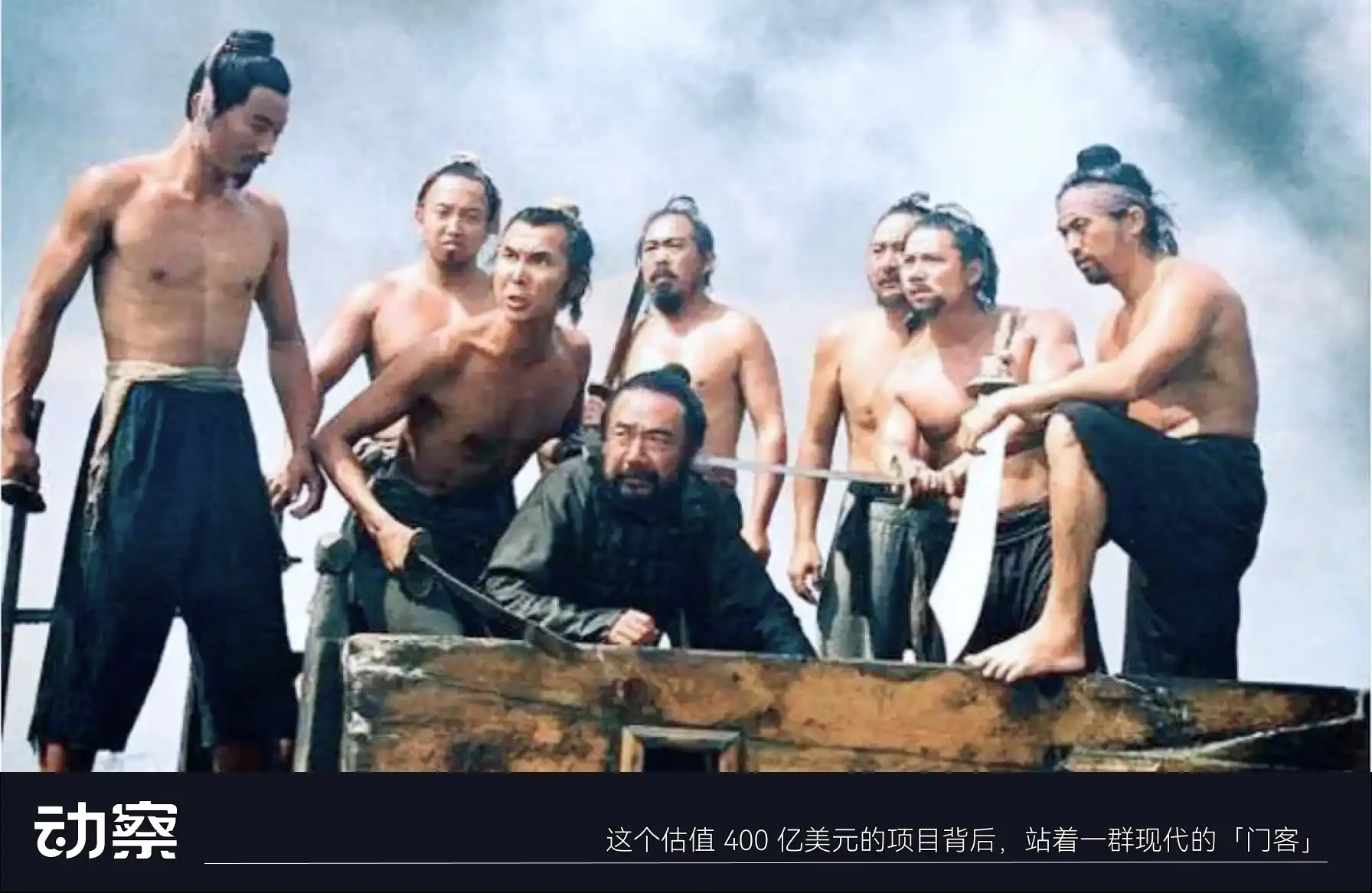
Image Source: "Water Margin" (1998 Version)
In 298 BC, under the rule of Lord Pingyuan of the State of Zhao, there were 3,000 followers who could hold their own in debates among scholars in the State of Chu, with just one named Mao Sui, bringing vitality to the State of Zhao.
Over two millennia later, on September 1, 2025, a token named WLFI landed on a global exchange. The trans-Pacific Chinese capital network is upholding a digital empire of the American presidential family.
Behind this $40 billion project stands a group of modern-day "followers." There's a Chinese billionaire who put up $75 million, the founder of a trading platform seeking a presidential pardon, a stablecoin expert deeply rooted in the Asian market, and a force from the East known to both skyrocket the Trump family's wealth and reduce it to poverty overnight when overstepping.
As the wealth of American political families intertwines with Eastern capital, and as China influences the global crypto landscape through the Hong Kong market, a new geopolitical game is unfolding.
Binance, the Central Node of the Chinese Network
To understand the influence of the Chinese in the WLFI project, one must start with Binance, the world's largest cryptocurrency exchange. Founded by a Chinese individual, this exchange has now become the nerve center of the entire Chinese crypto network.
Binance accounts for about one-third of the world's cryptocurrency trading volume, with a daily turnover exceeding $20 billion. Its penetration rate in the Asian market exceeds 60%, meaning that most fund flows have to pass through its system. This level of control has positioned Binance close to a monopoly within the Chinese network.
Binance's founder, Zhao Changpeng (CZ), was once sentenced to four months in prison for violating anti-money laundering regulations. According to insiders, CZ is seeking Trump's pardon through various channels. This rumor is not groundless. During his first term, Trump pardoned several financial criminals, including his former campaign manager Paul Manafort. For CZ, although a four-month sentence may not be long, for a business empire controlling hundreds of billions of dollars in assets, the founder's freedom is crucial to the system's stability.
On March 13, 2025, The Wall Street Journal reported that the Trump family was negotiating the purchase of a significant stake in Binance.US, a claim strongly denied by CZ. Bloomberg later stated that they were very confident in some of the content and quoted four anonymous sources familiar with the matter, including information that the two parties were about to launch a stablecoin, which is now known as USD1.
Despite strong denials from both sides, the interaction between USD1 and Binance still reflects a close relationship between the two.
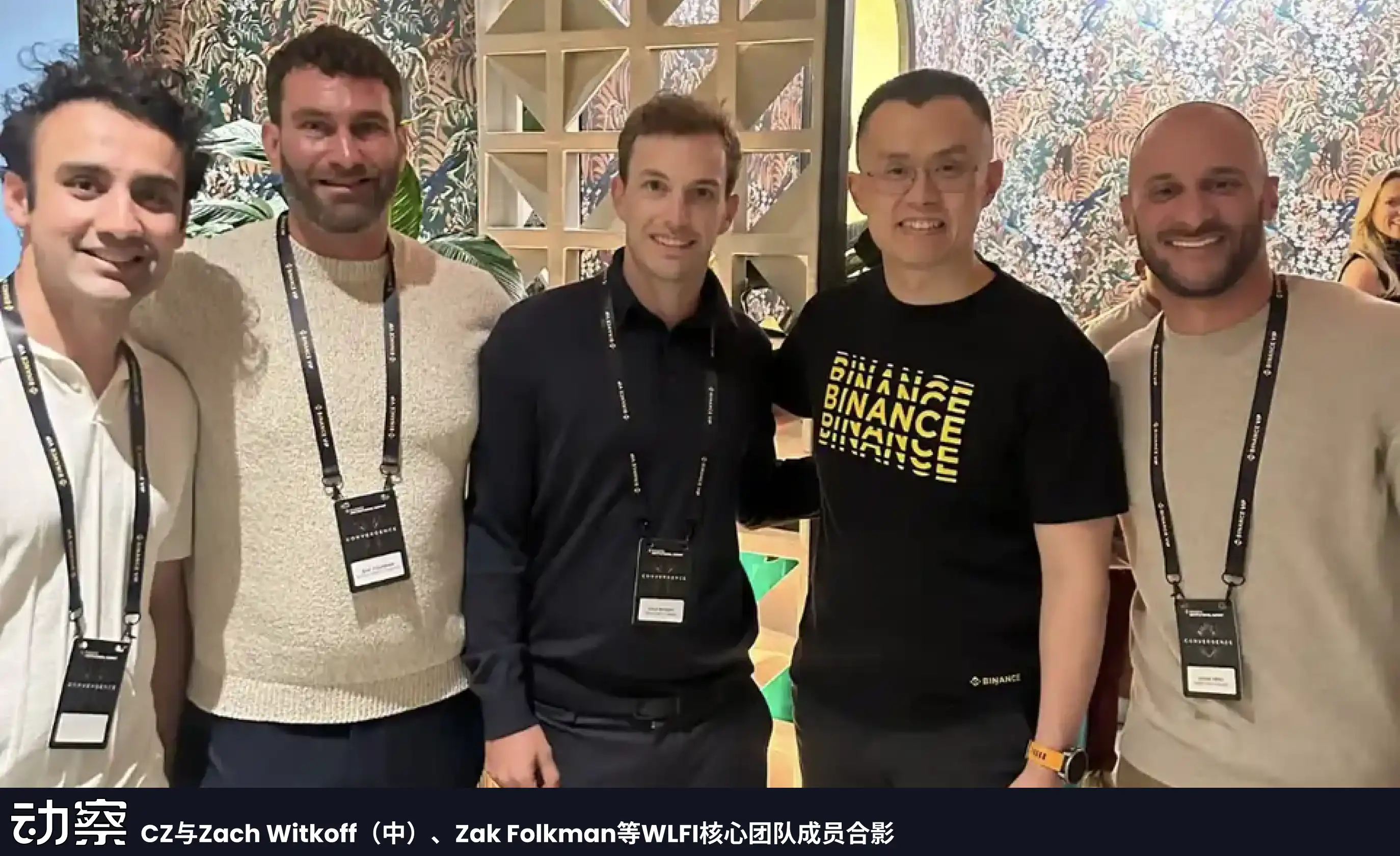
At the end of April, WLFI, as well as CZ's official social media accounts, posted a photo of WLFI's three co-founders meeting with CZ in Abu Dhabi, stating that the discussion included expanding global adoption, setting new standards, and taking cryptocurrency to new heights.
In early May, Eric Trump, son of former President Trump, revealed during the Token2049 event that the Abu Dhabi investment firm MGX had invested $2 billion in Binance, with the payment made in USD1 stablecoin. Typically, this fund should have been quickly converted to USD, but Binance left $1.9 billion in its own address, becoming the largest holder of USD1, accounting for 92.8% of the total supply.
This action directly raised USD1's market cap from $130 million to $2.1 billion. Excluding this amount, the actual circulation of USD1 is only around $100 million. The seemingly inflated data became a key support for WLFI's $40 billion valuation. This kind of liquidity injection could constitute market manipulation in traditional financial markets, but in the relatively unregulated cryptocurrency space, it has become a common practice.
In the same month, WLFI officially released an X tweet in open support of Binance BNB Chain's ecosystem development culture mascot Meme coin $B (BUILDon) and purchased around $25,000 worth of $B. The market was stunned by the news, and the token's price skyrocketed, with a market cap exceeding $300 million at one point.
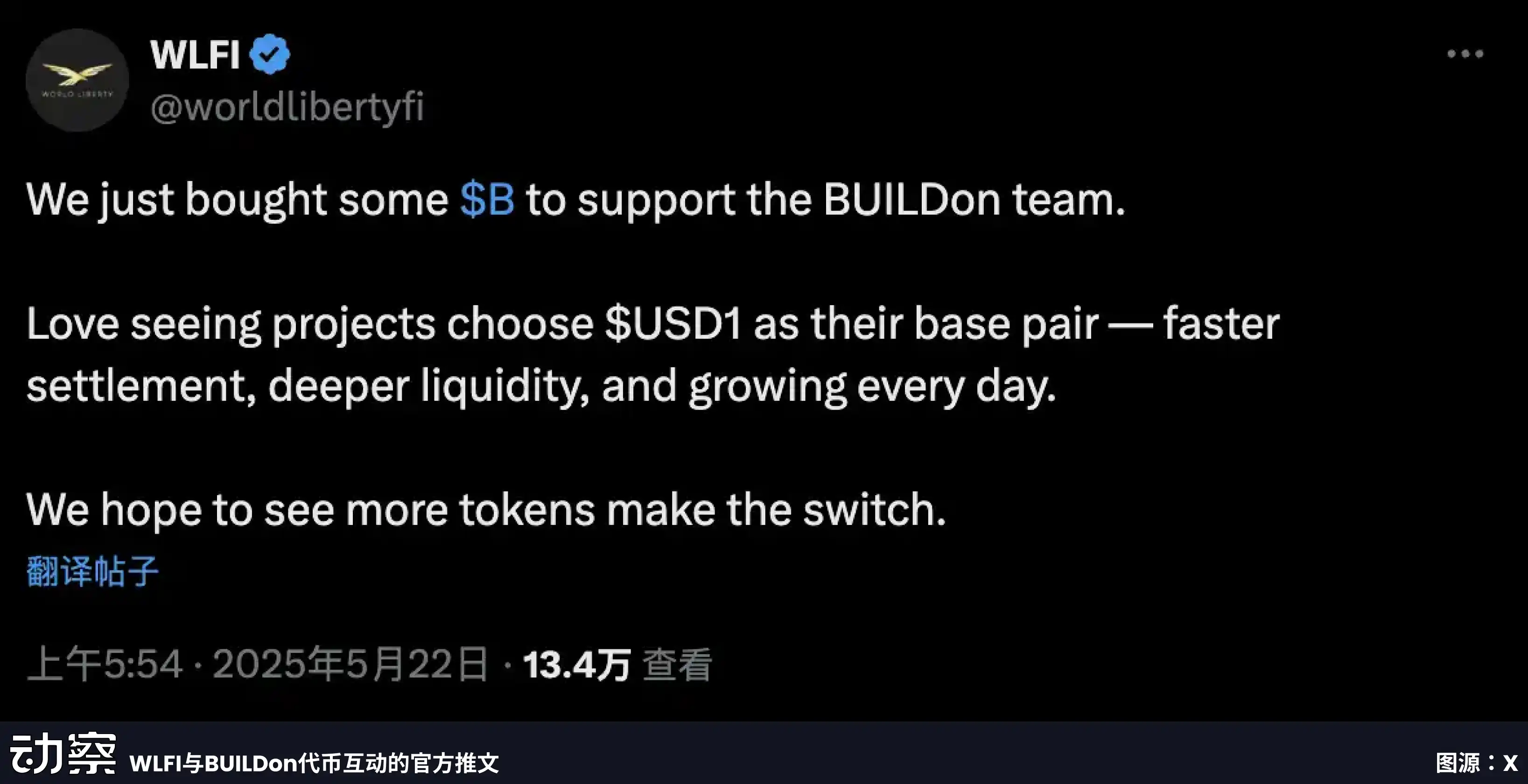
WLFI's public endorsement of $B was more than just a small investment. For Binance, the meme coin is not only an amplifier of community sentiment but also a natural entry point for traffic. The attention brought by the hype around $B quickly fed back into the narrative of USD1. It was no longer just a newly launched stablecoin but was packaged into a larger story of "ecosystem expansion" and "community co-construction."
In this system, Binance is using familiar tactics to intertwine stablecoin promotion and meme market frenzy, first attracting attention with meme coins and then embedding USD1 in the role of a "base currency." Hype has become a strategy, and buzz has become a tool for market education. As a result, USD1's ecosystem promotion quickly gained a much larger volume of voice than its actual size.
Gathering of Chinese Gatekeepers
Outside of the Binance core, there is also a group of tech-related projects that, through collaboration with WLFI, further tighten the connections within the entire ecosystem. These seemingly independent companies actually collectively weave a precise Chinese capital network.
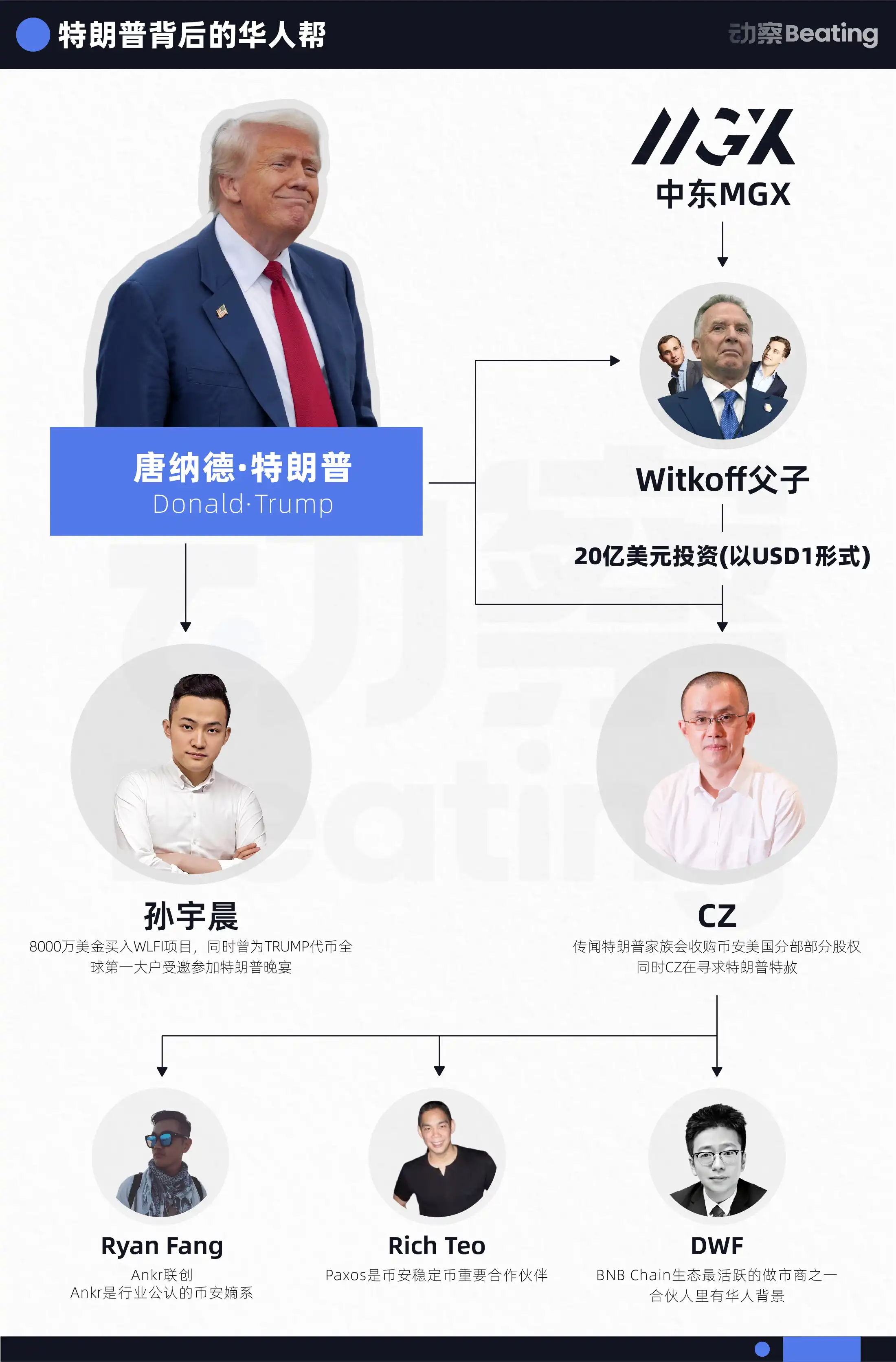
Ryan Fang: The only Chinese in the current team, Binance's most trusted project leader
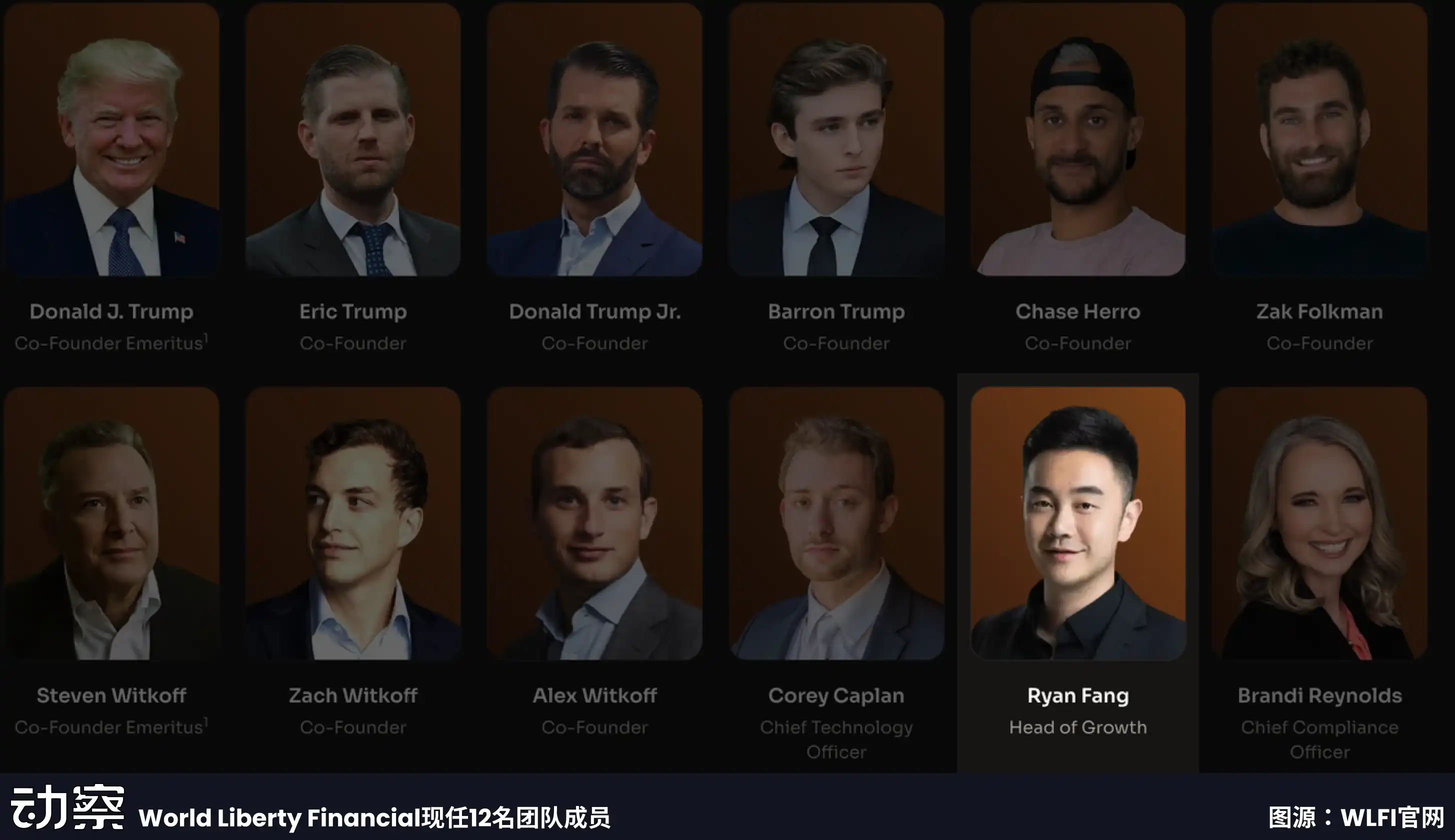
Within WLFI's Chinese tech network, Ryan Fang holds an important position, being the only Chinese in the current team. At the same time, Ankr is also industry-recognized as part of the "Binance lineage." Apart from BSC node and liquidity staking business, well-known projects in the BSC (now BNBChain) ecosystem such as BounceBit, Auction, and Neura all come from the Ankr team.
Ryan is the co-founder and COO of Ankr, who has also been involved in creating PrimeBlock and Tomo. Previously working at Morgan Stanley, he later entered the private equity industry, accumulating experience in traditional finance. These backgrounds have enabled him to quickly understand the fusion of funds and technology in the blockchain world.
As a global leading blockchain infrastructure service provider, Ankr offers RPC nodes and cross-chain tools for multiple projects, including Binance's BSC chain. The circulation of USD1 relies on these nodes to complete transaction confirmations and network stability, and through Ankr's cross-chain service, USD1 can freely move across multiple chains such as Ethereum, BNB Chain, and Polygon.
Within WLFI, Ankr plays another role. Its Liquid Staking product allows USD1 to be staked to generate rewards, transforming this type of token from a single payment tool into an asset with financial attributes. While users receive rewards, they also contribute liquidity to the entire ecosystem. Ankr has served over eight thousand blockchain projects, and these existing client relationships constitute a natural channel for the expansion of USD1. Stablecoins looking to enter new application scenarios can leverage Ankr's network for distribution.
As a modern-day "companion," Ryan Fang embeds a newly issued stablecoin into the daily operation of the global crypto market through infrastructure.
Rich Teo: Overseeing the Stablecoin Foxconn Factory
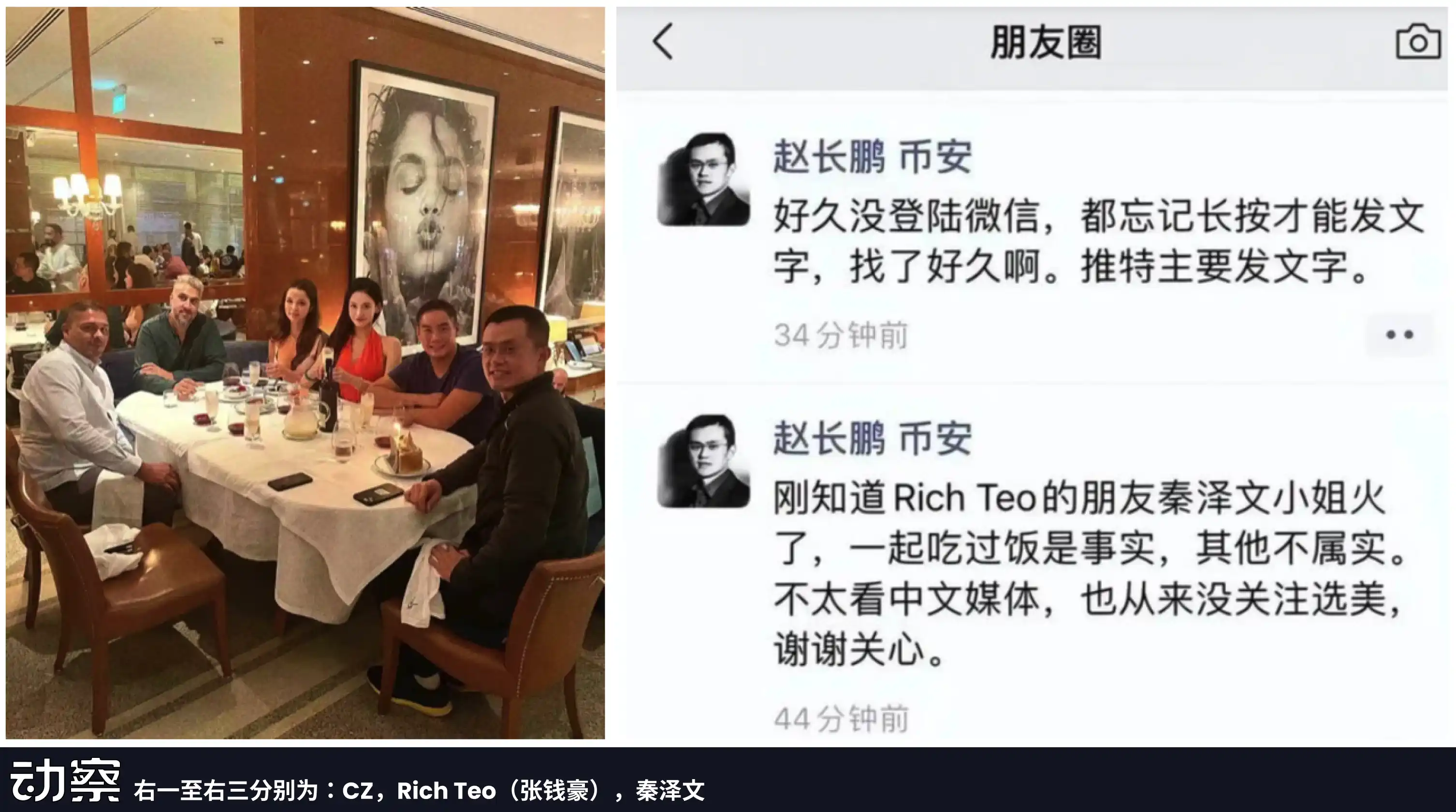
Within the WLFI project, there is also the presence of Paxos co-founder Richmond Teo.
Paxos was once Binance's key stablecoin partner. The BUSD it issued was long used as Binance's primary stablecoin, with a market cap exceeding $20 billion at one point. During 2022, Paxos briefly became the world's leading stablecoin issuer and technology provider. Its co-founder Rich Teo had a good personal relationship with Binance CEO CZ and was involved in some minor scandals in the crypto community, prompting CZ to rarely post on social media to dispel rumors.
By 2023, U.S. regulators demanded that Paxos cease the issuance of BUSD, causing the company to plummet from its peak and enter a long period of silence. The industry widely believed that Paxos had lost its competitiveness. However, with the advancement of U.S. stablecoin legislation, Paxos once again became one of the teams benefiting from regulatory advantages, issuing stablecoins like PayPal's PYUSD and DBS Bank's USDG.
During his time at Paxos, Teo was responsible for the Asian market business and was well-versed in the compliant paths of stablecoins under different regulatory frameworks. The halt of BUSD issuance was a heavy blow to him, but it also forced him to accumulate experience in dealing with regulatory challenges and market contraction. This kind of experience is particularly crucial for WLFI. The issuance and circulation of USD1 also face regulatory uncertainty.
Teo's return not only signifies his personal comeback but also indicates that Paxos is attempting to find an opportunity to re-enter the stablecoin race through WLFI. This relationship makes USD1 more easily accepted in the market and provides an additional layer of assurance for Binance's trust in WLFI. For the entire Chinese network, Teo's involvement means that a crucial piece has been added back in terms of compliance and regulation.
For the full article, please visit the 【Dynamic Insight Beating】 official account
Welcome to join the official BlockBeats community:
Telegram Subscription Group: https://t.me/theblockbeats
Telegram Discussion Group: https://t.me/BlockBeats_App
Official Twitter Account: https://twitter.com/BlockBeatsAsia