



To Claim the Airdrop, Do You Need to First "Buy Coins"? Camp Network Sparks Backlash

Original Article Title: "Reaching New Heights of 'Anti-Airdrop,' Why is the Camp Network Airdrop Met with Community Backlash?"
Original Article Author: Asher, Odaily Planet Daily
The Camp Network can be considered the project in the recent "rug pull" trend that has faced the most backlash and community criticism.
Last night, the L1 project Camp Network, which raised a staggering $30 million and focuses on addressing AI copyright issues, officially launched its mainnet, along with opening token trading and airdrop distribution.
Originally, many "rug pull enthusiasts" were diligently participating in interactions with various ecosystem projects on the testnet to "accumulate matches" with the mindset of "testing diligently for months, at least to be able to have a decent meal." However, the result was a dramatic turn of events — almost everyone was 'anti-airdropped'.
Below, Odaily Planet Daily will walk you through why, from the moment the airdrop query opened, Camp Network became the target of criticism in the 'rug pull' community.
Many Are Ineligible for the Airdrop, Those Eligible Must Spend $10 to Register
Complaint Point One: A Large Number of Early Users Are Ineligible for the Airdrop
On August 22, Camp Network announced the launch of the airdrop query. According to community feedback, unless users had previously minted NFTs or invited a sufficient number of friends, the vast majority of early users who diligently interacted with Camp Network's testnet performing numerous tasks did not qualify for the airdrop.
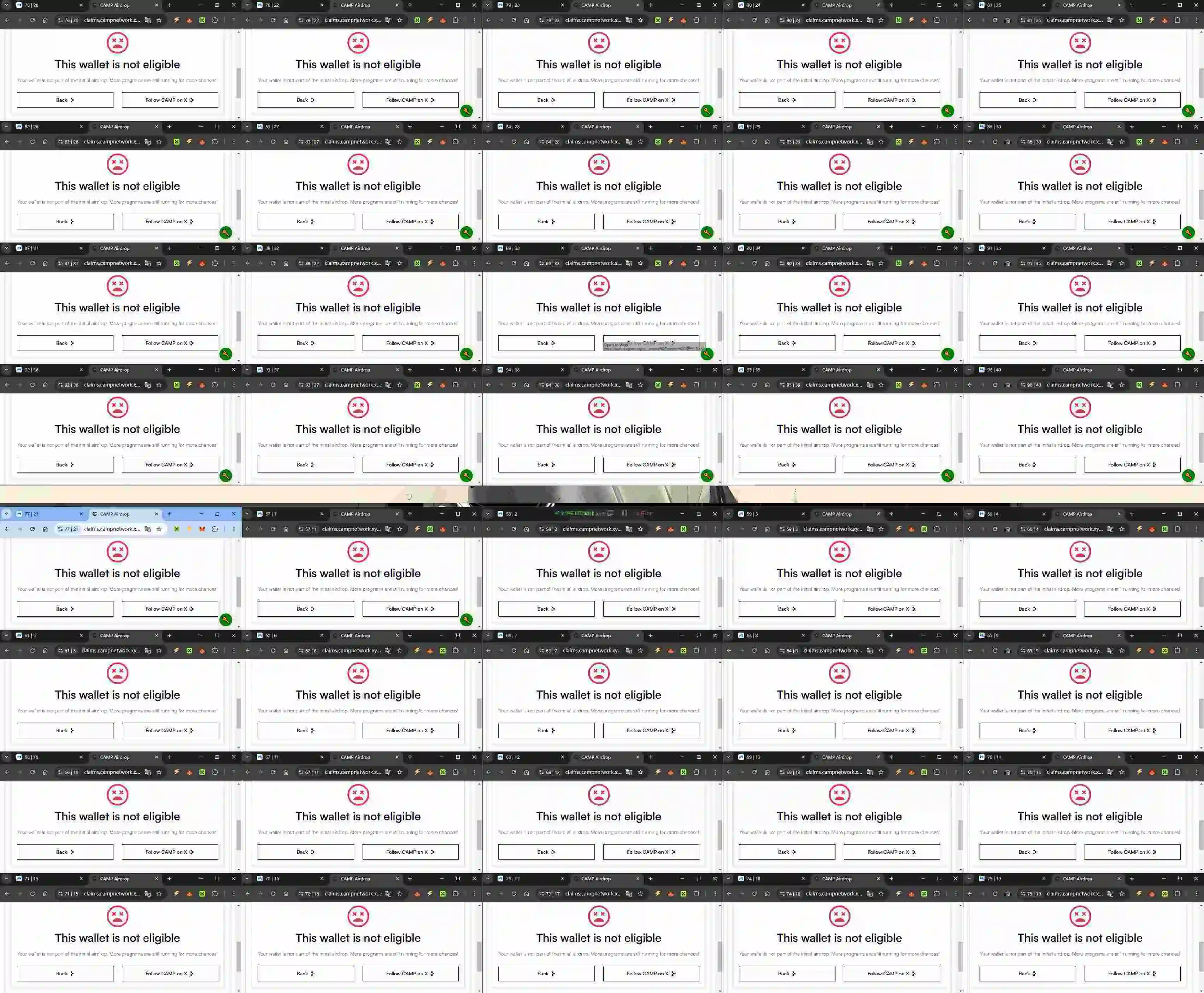
An example 'rug pull enthusiast' interacted with multiple Camp Network testnet accounts but none qualified for the airdrop
According to community statistics, the total number of wallets participating in interactions with the Camp Network testnet reached as high as 6 million, with approximately 280,000 active wallets in the Summit Series, but only 40,000 addresses were eligible for the airdrop.
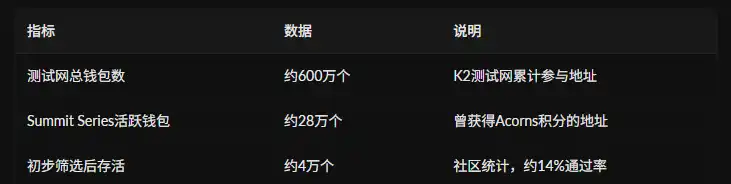
AI product Surf's statistics on Camp Network testnet addresses
Complaint 2: Airdrop Eligible Users Required to Pay $10 for Account Registration
A large number of "airdrop hunters" felt disgruntled due to being "reverse airdropped," already causing a lot of resentment in the community. Surprisingly, even the minority of users who were eligible for the airdrop were asked by the project team to pay an additional fee — they had to pay 0.0025 ETH (about $10) as a registration fee to finally confirm their receipt. This made Camp Network the first mainstream L1 airdrop project to require users to pay to participate.
However, as the negative community sentiment quickly escalated, Camp Network urgently announced the cancellation of the airdrop registration fee that afternoon, promising a full refund to users who had already paid 0.0025 ETH.
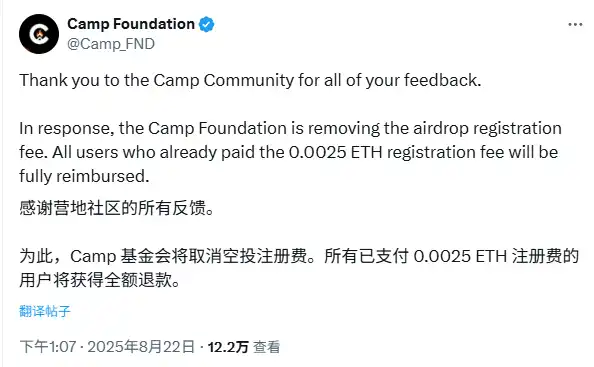
Under community pressure, the official cancellation of the airdrop registration fee
Complaint 3: Stringent KYC Requirements
Even those lucky enough to qualify for the airdrop could not successfully claim it due to the inability to complete stringent KYC verification. According to feedback from users who qualified for the airdrop, more frustrating than paying a $10 registration fee was the stringent KYC identity verification process, which required camera access. Additionally, the KYC provider blocked VPNs and certain countries, resulting in the exclusion of a large number of international users.
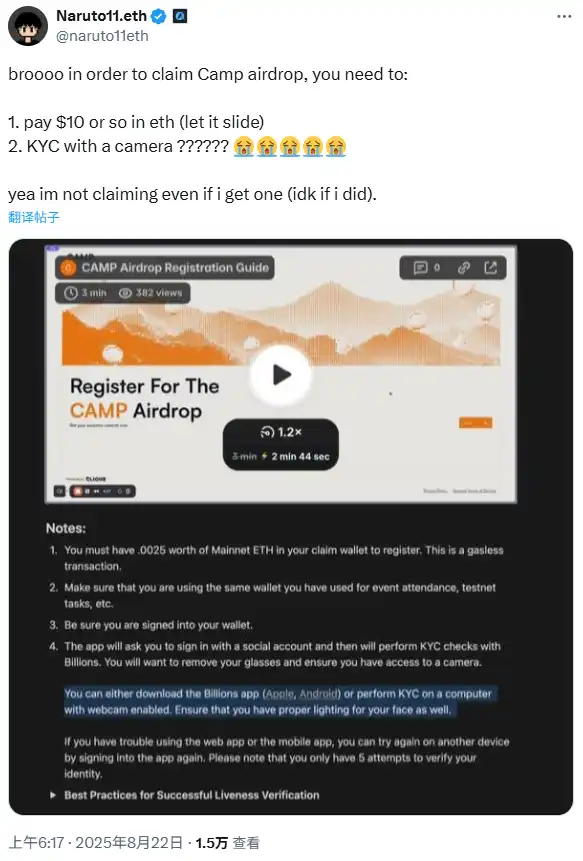
Community members' complaints about stringent KYC verification
TGE Unlocked Only 20%, Claiming Requires Purchasing Coins on Exchange First to Pay Gas Fee
In comparison to many early users being excluded, what further fueled community dissatisfaction was that during the TGE, one had to first spend money to buy coins on an exchange to pay the gas fee to claim the airdrop. As shown below, the early user received 100 CAMP tokens but could only unlock 20% at the launch, which is 20 CAMP tokens. Currently priced at $0.09 per token, the value is less than $2.
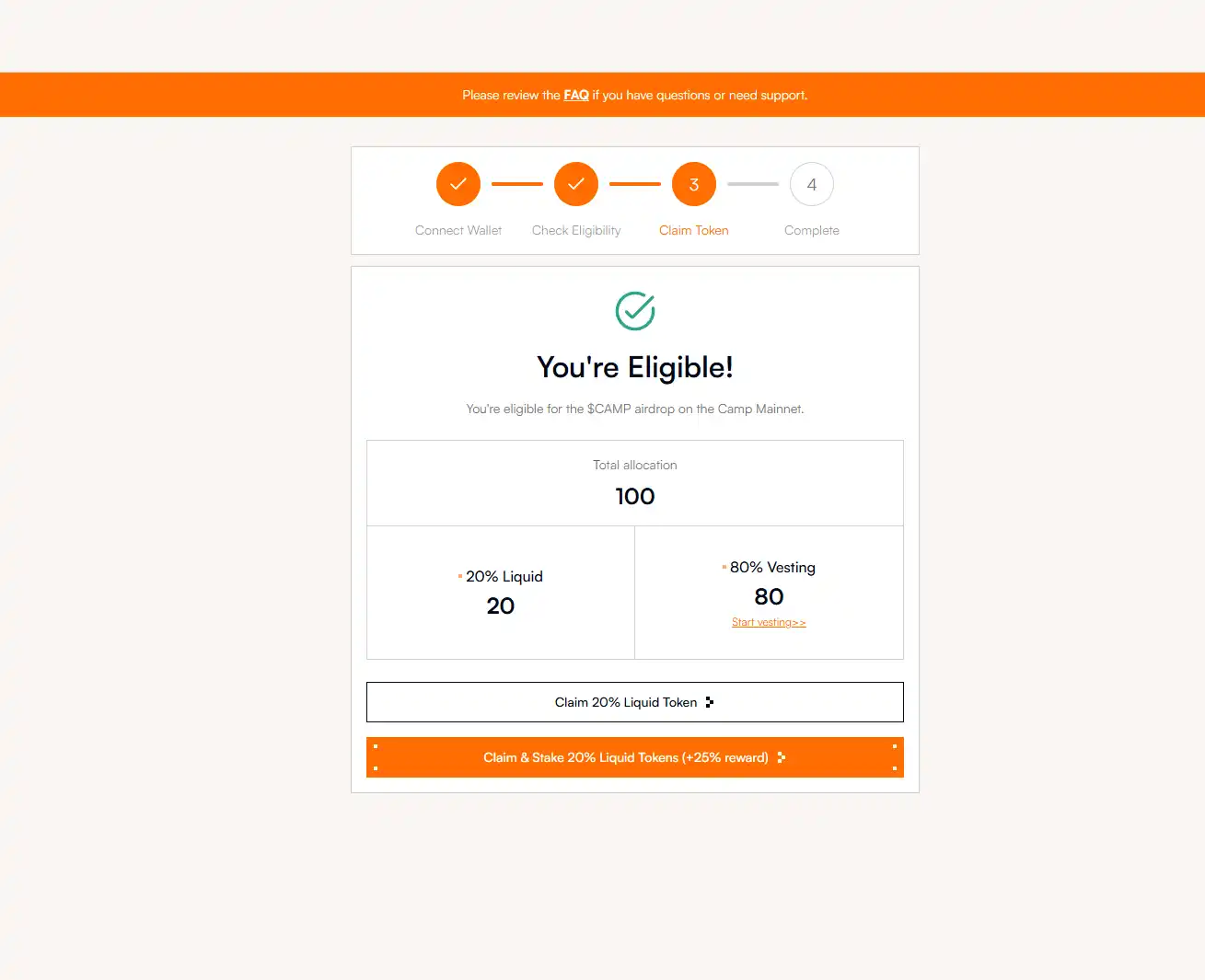
Claim CAMP Token Airdrop Interface
To claim the token, you need to first purchase coins on an exchange to pay for the airdrop Gas fee, but the exchange does not yet support withdrawals
Even more absurdly, to claim the airdrop, you need to first buy CAMP tokens on an exchange to pay the Camp Network mainnet Gas fee, but some exchanges that have listed CAMP still cannot process withdrawals (as shown in the image below of Bitget exchange).
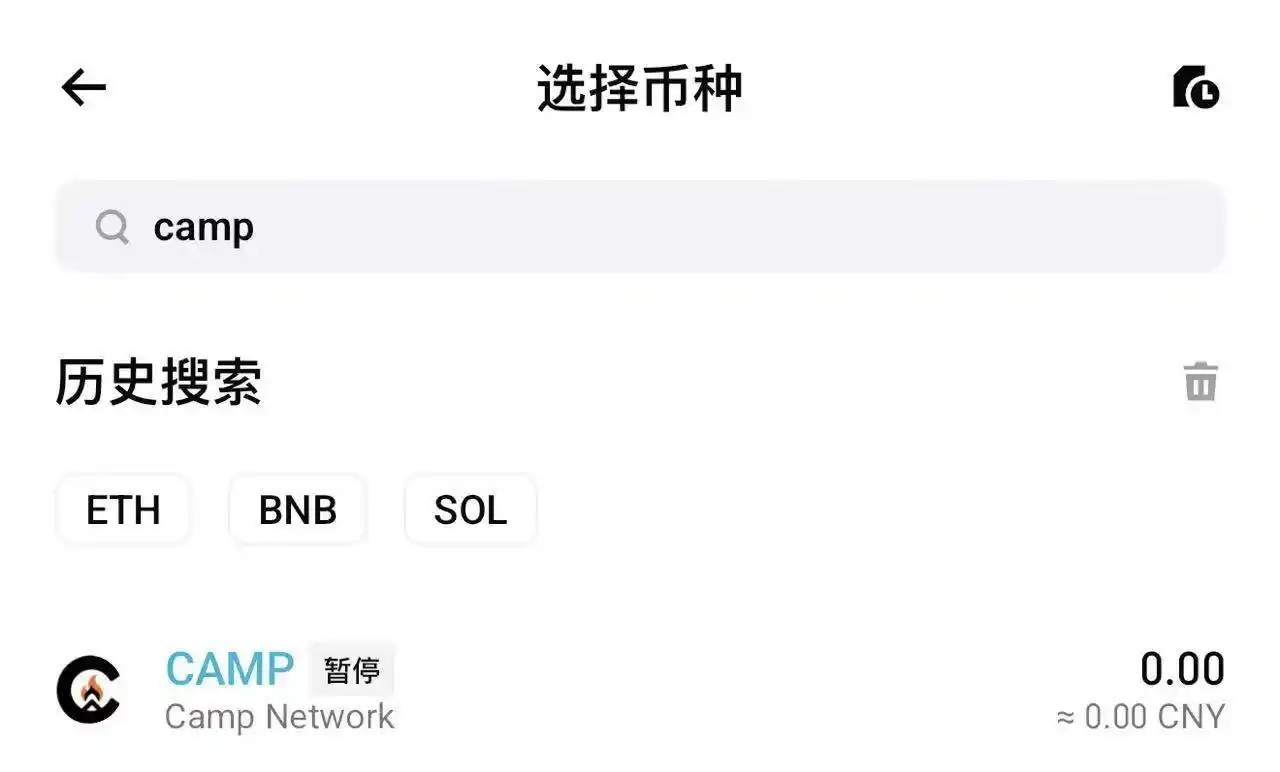
Bitget Exchange Platform Currently Unable to Withdraw CAMP
It is evident that the Camp Network project has heavily restricted the airdrop process, making it impossible for the vast majority of early users to smoothly claim the tokens. Such a tightly controlled token mechanism inherently implies significant uncertainty and risk. Whether choosing to go long or short, everyone needs to think twice and act prudently, avoiding impulsive decisions driven by emotions or short-term market trends.
Welcome to join the official BlockBeats community:
Telegram Subscription Group: https://t.me/theblockbeats
Telegram Discussion Group: https://t.me/BlockBeats_App
Official Twitter Account: https://twitter.com/BlockBeatsAsia







