OKX Research | Ethereum Genesis Block Tenth Anniversary: The Myth of the World Computer
Author: @c_luyishisi (Fourteen Lord)
In 2011, a 17-year-old Russian-Canadian teenager initially wrote articles for a website called "Bitcoin Weekly," with each article being paid 5 bitcoins. "This was my first real job, with an hourly wage of about $1.30," he later recalled.
Those 5 bitcoins are worth $600,000 today—a witness to the crazy growth of the entire cryptocurrency era by tens of thousands of times.
Even more astonishing is the development speed of this teenager, Vitalik Buterin's creation, Ethereum, which is no less than Bitcoin itself: now with a market cap of over $400 billion, processing over $5 trillion in transactions annually.
Please follow this article to look back on the decade since the launch of the Ethereum genesis block. This was also a decade of rapid development in the blockchain industry. See how he transformed from an $1.30 per hour freelance writer's imagination into the infrastructure that changes the logic of the entire digital world's operation. In this process, what technological changes at the base layer have brought about the migration of the superstructure.
Prehistoric Story—Bitcoin is the Beginning of a Dream
From Bitcoin Inspiration to Ethereum Genesis
In 2013, the soaring price of Bitcoin ignited Vitalik's boundless imagination but also made him see the limitations of Bitcoin. As a writer for "Bitcoin Magazine," he delved deep into the Bitcoin community, only to find that this revolutionary financial system faced great difficulties in transitioning to a new programmable goal, trying to expand the blockchain's system beyond the dimension of pure financial products.
Moreover, in the blockchain world at that time, smart contracts were just a very vague concept with no definition, no samples, and no direction.
In the initial conception, contracts only supported some fixed-function scripts—such as simple multi-signature, time locks, or two-party contracts like Mastercoin, where participants A and B both invest funds and then distribute profits based on a predetermined formula. This script language was not Turing complete at all, could only describe terms of the two-party relationship, far from a real "world computer," let alone intelligence.
Vitalik once advocated to Bitcoin core developers that the Bitcoin platform should have a more sophisticated programming language for people to develop programs. However, the conservative and minimalist philosophy of the Bitcoin community clashed fundamentally with Vitalik's more universal and open blockchain vision. Moreover, at that time, various expansion solutions in the market were all patching up, and no one dared to propose a completely redesigned solution.
And so he made a decision that, in retrospect, truly changed the world: to develop a new platform.
While he had the resolve to move forward, the path backward was not so clear. Even though it was a new platform, the specific details of how to design and implement it were a major question.
A turning point at the end of 2013 occurred during Vitalik's long walk in San Francisco. He suddenly realized that contracts could be generalized—if it was a smart contract, it could itself be a fully-fledged account, capable of holding, sending, and receiving assets, and could even maintain some state in permanent storage. So why not go further, break away from scripts that describe fixed relationships, and design a virtual machine that could execute any computation?
The initial design of Ethereum even adopted a register-based architecture (rather than the later stack-based architecture) and featured a novel fee mechanism: with each computational step, a contract's balance would decrease slightly, and if the contract's funds were depleted, execution would stop. This was the embryonic form of the early "contract pays" model, later evolving into the familiar "sender pays" and the Gas system.
By the end of 2013, Vitalik wrote the Ethereum White Paper with the core definition of the goal—to create a general-purpose decentralized computation platform where anyone can deploy and run decentralized applications, not fixed-function scripts, but a truly Turing-complete computational environment.
However, there was still a huge gap between the ideal vision and the achievable technical specification. At this point, Gavin Wood's contribution became a key turning point. In 2014, Gavin Wood authored the famous "Ethereum Yellow Paper," which formalized the technical specification of the Ethereum Virtual Machine's operation.

https://ethereum.org/content/whitepaper/whitepaper-pdf/Ethereum_Whitepaper_-_Buterin_2014.pdf

https://ethereum.github.io/yellowpaper/paper.pdf
The Whitepaper outlined the "why" and "what," while the Yellowpaper precisely defined the "how." The combination of these two documents guided Ethereum from concept to reality.
Key Technical Decisions and Evolution in Berlin
From 2014 to 2015, Berlin became the spiritual center of Ethereum. Vitalik frequently "pilgrimaged" in the Bitcoin Kiez area of Berlin, and Room 77 bar became an early gathering place for the crypto community. In the office at Waldemarstraße 37A, just 1.5 kilometers away from Room 77, Ethereum's core team tirelessly coded through the night.
During this phase, the Ethereum protocol underwent numerous technical iterations: transitioning from a register-based architecture to a stack-based architecture, evolving from a "contract pays" model to a "sender pays" Gas system, and shifting from asynchronous internal transaction calls to synchronous execution, with many decisions having far-reaching implications.
For example, the Ethereum Virtual Machine (EVM) adopted a unified 256-bit integer model initially to accommodate the common bit widths of hash functions and encryption algorithms while designing to mitigate overflow risks. Although it seemed overly conservative at the time, it naturally adapted to the complex high-precision mathematical operations in DeFi (such as fixed-point, multiplication, division, and rounding), also avoiding precision issues in JS/float-like languages.
Furthermore, if a transaction runs out of Gas, the entire execution rolls back instead of partially completing. This design eliminates the entire attack surface of "partially executed attacks" and becomes the cornerstone of security for all smart contracts later on. Moreover, this design has economic incentives: on the one hand, from a technical perspective, the Gas required for contract execution cannot be predicted in advance, and on the other hand, due to the failure and loss, the sender has more incentive to control costs and behavior, avoiding blindly sending transactions.
The community's technical creativity brought many pleasant surprises. For example, Vitalik initially envisioned an asynchronous contract call model, but Gavin Wood, considering engineering and semantic consistency, naturally adopted synchronous calls in the implementation. This seemingly unintentional deviation laid a vital technical foundation for the composability of DeFi later on—allowing one contract to call another and synchronously return the execution result, creating the predictability and atomicity of "money Lego."
It's important to note that Ethereum DeFi applications are highly interdependent, not a single ecosystem. For example, lending protocols will use DAI/USDC as collateral, stablecoin mint modules will call Chainlink as an oracle, and many liquidity protocols will provide leverage based on Aave and Compound. In this series of linkages, synchronous calls play a crucial role, but they have pros and cons. Due to the difficulty of performance extension with synchronous calls, Ethereum had to choose more complex scaling solutions later on (see the L2 section below).
Furthermore, the well-known POW mining algorithm has also undergone multiple iterations, from Vitalik's proposed Dagger algorithm, to Dagger-Hashimoto in collaboration with Thaddeus Dryja, and then to Ethash which emphasizes ASIC resistance. Throughout these processes, various directions such as adaptive difficulty, memory-hard structure, and random access circuits have been continuously explored.
Of course, many challenges have led to unexpected discoveries, which have naturally become technical debt. In 2025, when Vitalik proposed replacing the EVM with RISC-V, he admitted, "Ethereum has often failed to stay simple in its history (sometimes due to my decisions), leading to our excessive development spending, various security risks, often in pursuit of benefits that have been proven to be illusory."
A Historic Moment: July 30, 2015
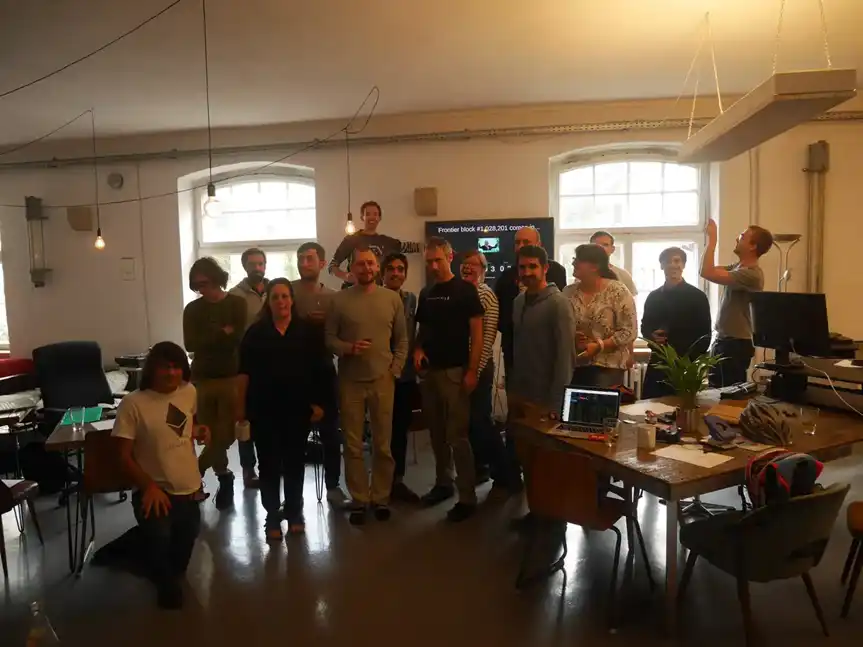
On July 30, 2015, Vitalik still remembers the scene in the Berlin office that day: "Many developers gathered together, and we were all watching the block count on the Ethereum testnet reach 1,028,201, as this marked the automatic start of the Ethereum mainnet. I still remember we were all sitting there waiting, and then it finally reached that number, and about half a minute later, Ethereum blocks began to be generated."
At that moment, Ethereum had less than 100 developers in total, and the entire ecosystem was just a technical experiment. The first decentralized Twitter-like app, "EtherTweet," had a rudimentary interface resembling the "Wright brothers' plane," and each tweet required a high on-chain fee. Smart contracts were still just a toy for a few geeks, and DeFi, NFTs, and Layer 2 existed only in the imagination of whitepapers.
If you search for that address on Google Maps now, you can still see the "Ethereum Network Launch (30/07/2015)" marked, along with a group photo of the early Ethereum core members — one of the most important photos in crypto history.
On July 30, 2025, when Ethereum celebrated its tenth anniversary, as of the first half of 2025:
· In the first quarter of 2025, a record 6.1 million wallets participated in on-chain governance voting.
· Ethereum is adding approximately 350,000 new wallets per week, thanks to users joining through Layer 2 solutions.
· As of March 2025, the active Ethereum wallet count has reached 127 million, representing a 22% year-over-year growth.
· Leading the stablecoin market by a wide margin, with a market cap of $821 billion, comprising 60.0% of the total market cap.
· The total value locked (TVL) across various DeFi protocols has exceeded $450 billion.
· Uniswap's daily trading volume has surpassed $21 billion, with lending platforms like Aave and Compound collectively holding over $130 billion in locked assets.
· Over the past 12 months, Ethereum has seen over 28,400 GitHub commits in its core repositories.
· The number of active developers contributing to Ethereum-related projects has now exceeded 5,200.
There are many more data points that the author is not listing. The key point to highlight here is that what was once an "edge experiment" with fewer than 100 developers has evolved into the most scalable development platform and ecosystem in the Web3 world.
Over the span of a decade, from scarce daily transactions to facilitating $5 trillion in annual value transfer, from high transaction fees in the dollars range to less than 1 cent on Layer 2, from energy-intensive PoW mining comparable to a small nation to the more energy-efficient PoS mechanism consuming less electricity than a building, from a rudimentary EtherTweet demo app to a mature DeFi ecosystem where 80% is ETH-denominated—each number represents countless developers' relentless efforts and users' trust and choices. And as the U.S. SEC approves 9 ETH spot ETFs and sees first-day trading volumes exceeding $1 billion, this once "crypto edge experiment" has become a globally leading large-scale asset, positioned at the core of the mainstream financial system, causing increasingly profound impacts.
However, from a youth in a Berlin office to a builder of the new generation's global financial infrastructure, this journey has not been without challenges. Over the course of a decade, Ethereum has weathered the pains of technical upgrades, tests of hacks, market cycles, and numerous crucial life-or-death decisions. Each crisis has been a reshaping, each upgrade a transformation, each controversy a growth. It is these ups and downs of key moments that have shaped the Ethereum we see today.
Let us revisit those defining moments and reexamine how this legend was forged in the storms.
A Ten-Year Journey—Key Moments and Evolutionary Logic
2015-2017: From Genesis to Hard Fork and the ICO Craze
The summer day when the Ethereum mainnet went live marked the beginning of the smart contract era.
Early Ethereum resembled more of an experimental technology showcase platform rather than a fully usable product. Most of the applications running on the network were simple demos, such as EtherTweet (a decentralized Twitter clone), WeiFund (a crowdfunding platform), and various rudimentary voting contracts.
The volatile Gas prices made each interaction feel like a gamble, sometimes taking up to 1 hour to get confirmed on-chain. What was even more frustrating for developers was the immaturity of the Solidity language. The compiler often suffered from peculiar bugs (such as variable shadowing, stack overflow, and jump logic errors), with smart contract security heavily relying on developers' individual experiences.
Despite the immature technology, the Ethereum community showcased unprecedented idealistic enthusiasm. The weekly developer meetings were always packed with programmers from around the world discussing how to use smart contracts to redesign the entire world — from decentralized autonomous organizations to prediction markets, from identity systems to supply chain management, which now seem to have truly blossomed. This optimistic sentiment was accompanied by an almost vehement belief: code is law, math is truth, decentralization is freedom.
Fueled by this sentiment, in May 2016, a project called "The DAO" launched on Ethereum, hailed as the "largest crowdfunding experiment in human history." Within a mere 28 days, it raised 1.5 billion USD worth of ETH (representing 14%-15% of the entire network), becoming the world's largest venture capital fund at that time.
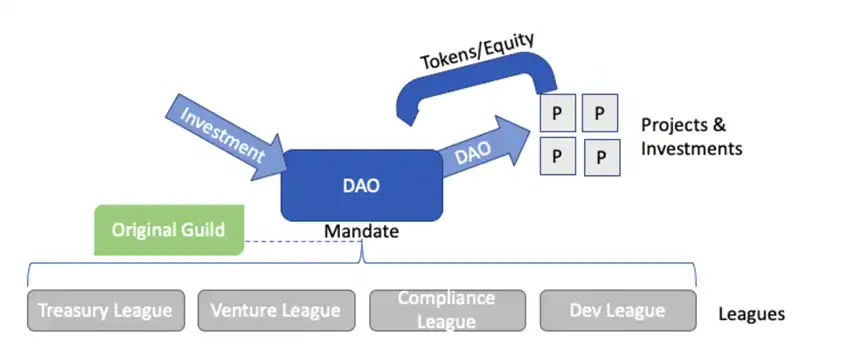
Image Source | The DAO Whitepaper: https://github.com/the-dao/whitepaper
At this point, a massive crisis quietly unfolded. On June 17, a hacker exploited a reentrancy attack vulnerability in The DAO smart contract, successfully siphoning off 3.6 million ETH (approximately 5% of Ethereum's total supply at that time).
The core of this attack lay in a typical reentrancy attack in the splitDAO function of The DAO smart contract — a classic attack pattern later included in smart contract security literature.
When a user calls the split DAO feature, the contract performs the following steps: first, it sends the user a reward through the withdrawRewardFor function and then updates the user's balance. The issue lies in the fact that the withdrawRewardFor function ultimately uses the call.value() method to send ETH to the recipient using a low-level call() (the use of such a low-level transfer mechanism is also a point of concern). Subsequently, when the recipient (attacker) contract receives the ETH, its fallback function is triggered, immediately calling the splitDAO function again. This creates a reentrancy attack, where since the first call has not completed (balance has not been updated), the attacker can repeatedly withdraw funds based on the same balance.
The attacker deployed two identical malicious contracts and achieved up to 29 rounds of repeated withdrawals through recursion. Each withdrawal was based on the same original balance calculation, ultimately successfully transferring tens of millions of dollars worth of ETH to a sub-DAO under their control. Ironically, this vulnerability was identified and warned about by multiple developers before the attack occurred, but due to the belief in "code is law," no one thought to pause the contract's operation.
This situation plunged the entire Ethereum community into an unprecedented philosophical crisis. On one hand were the tech purists, who insisted that blockchain immutability was sacrosanct and believed that while the attack was ethically wrong, it was technically "legal" because the attacker was merely acting in accordance with the contract's code logic. On the other hand were the pragmatists, who believed that protecting investor interests and sustaining the Ethereum ecosystem were more important than abstract principles.
In response, Gavin Wood (Co-founder, original CTO, and Yellow Paper author) stated in a public interview: "The blockchain was supposed to be immutable, and the on-chain code should be the true logic control code." But he also admitted, "If I see someone being robbed on the street, I would intervene to stop the robbery and return the stolen goods."
Later, Vitalik Buterin wrote in a blog post: "I spent the whole night sleepless, contemplating what true decentralization is. If we can freely modify history, what sets Ethereum apart from a traditional database? But if we watch the attacker walk away with the community's funds, how do we face those who trust us?"
After intense community debate, Vitalik ultimately opted for a hard fork (marking the Ethereum and Ethereum Classic split). He later reflected, "We learned a harsh truth - absolute decentralization is a beautiful ideal, but in the real world, we must find a balance between pure principles and human needs." This lesson has been manifested in every subsequent network upgrade: technical decisions must serve the overall interest of the community rather than abstract ideology.
If the DAO event was Ethereum's coming-of-age ceremony, then the 2017 ICO craze was its adolescence. In that year, over 50,000 ERC-20 token contracts were deployed on the Ethereum network, raising over $40 billion, and the blockchain began to rewrite the rules of traditional venture capital.
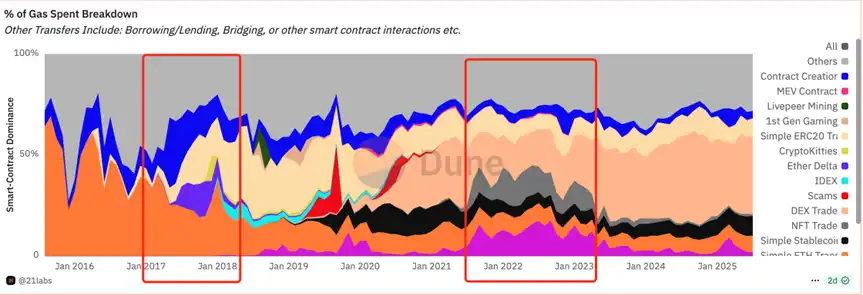
Image Source | dune: https://dune.com/queries/2391035/3922140
Historical data shows that, based on Gas consumption analysis, from 2017 to 2018, there was a large number of contracts deployed (highlighted in yellow in the red box on the left side of the graph), and ERC-20 Transfer transactions also became popular. The types of on-chain assets shifted from the native coin (ETH) to a wide variety of ecosystem applications.
There was also a digital cat game called CryptoKitties that, within a few days, accounted for 15% of the network's transaction volume, causing Gas fees to soar from a few cents to tens of dollars, transaction confirmation times to extend from minutes to hours. It was this lesson learned that, after the London upgrade completed in 2021, allowed the calm handling of the NFT craze of CryptoKitties Phase Two (highlighted in gray in the red box on the right side of the graph).
Each ecosystem breakout cycle continuously raised the demand for on-chain space, making people acutely aware of how far the processing capacity of 15 transactions per second is from the grand vision of a "global computer."
2018-2022: Forging the Future in Silence — From Technological Accumulation to Ecological Eruption
Ongoing Technological Revolution (2018-2022)
When the ICO bubble burst in 2018 and speculators exited en masse, the number of Ethereum developers increased rather than decreased. It was in this forgotten silent era that Ethereum completed a series of critical technical upgrades, laying a solid foundation for the subsequent explosive growth of the ecosystem.
Almost annual upgrades, such as the Byzantium fork, Constantinople fork, and Istanbul fork, followed one after another. Many of these changes were actually imperceptible to users, bringing more underlying changes. By reducing the block reward from 5 ETH to 3 ETH, Ethereum began to seek a balance between inflation and security; these upgrades introduced various underlying support for Layer 2 scaling solutions, including hints at zero-knowledge proof technologies like zk-SNARKs. The introduction of the CREATE2 opcode allowed multi-chain contracts to have deterministic address creation capabilities.
As mentioned earlier, the real solution to alleviate user-perceived transaction congestion is the EIP-1559 implemented during the 2021 London upgrade. This proposal introduced a dual mechanism of Base Fee and Priority Fee, addressing the shortcomings of the traditional "blind auction" mechanism. Prior to EIP-1559, users had to guess the appropriate Gas price—bidding too low could result in a long delay before the transaction is included, while bidding too high would waste a significant amount of funds. Moreover, during network congestion, users would often panic and significantly increase their bids, leading to a spiraling increase in fees and a "fee war."
However, the congestion did not completely disappear after EIP-1559, as it tackled the "price discovery" issue rather than the "capacity" issue.
The actual throughput of the Ethereum mainnet did not significantly increase as a result—still processing only about 15 transactions per second. It simply made the price more predictable during congestion through the automatic adjustment of the base fee until some users were priced out. It's like building a better toll booth to make the queue more orderly and fees more transparent, but without increasing the number of lanes on the highway itself.
True "lane expansion" still relies on Layer 2 solutions—which is why technologies like Arbitrum, Optimism, various rollup solutions, and EIP-4844's blob have become core to Ethereum's scalability roadmap.
During this period, there was also a fundamental technological transition: Ethereum's consensus mechanism evolution. Initially inheriting Bitcoin's PoW model, Ethereum began exploring PoS solutions as early as 2015, going through multiple technical routes such as Casper FFG, Casper CBC, and finally solidifying direction with the successful launch of the Beacon Chain.
On December 1, 2020, 520,000 ETH were staked in just one month, leading to the successful launch of The Merge in 2022, reducing Ethereum's energy consumption by 99.95%. This not only met the environmental requirements of regulators and institutional investors but also laid the foundation for future sharding scalability and further optimization of the Beacon Chain, truly transitioning from "mining equals security" to "staking equals governance."

Image Source | Ethereum Staking Data: https://dune.com/hildobby/eth2-staking
Today, Ethereum has over 1.1 million validators, with 3.6 million ETH staked, representing approximately 29.17% of the total supply. The significant scale of staking participation has provided Ethereum with unprecedented economic security—should an attacker attempt a 51% attack, the cost would amount to millions of ETH, making it extremely costly. The staking participants are also diverse, making the overall security very robust.
However, consensus is not meant to be unchanging, and Ethereum's successful transition to Proof of Stake (POS) without compromising its level of decentralization is largely due to its years of running Proof of Work (POW). As a result, the token distribution is already highly decentralized, a native advantage that not any POS chain can easily match. On the other hand, the existing consensus still brings limitations to user experience.
For example, Ethereum still operates with a mechanism of finality delay, requiring confirmation through multiple epochs to determine block finality. This is somewhat inconvenient for cross-chain and rollup settlement scenarios. Therefore, in the future, the Single Slot Finality (SSF) solution aims to compress finality to a single slot (12 seconds). There is also the concept of Beam Chain, which offers several possible directions for future consensus design, such as allowing validators to participate in consensus without full state ownership, enhancing the feasibility of lightweight clients. Coupled with designs like EIP-4844 and Danksharding, the Beam mode can support more flexible data access paths, accelerating the decoupling between validators and executors.
Hence, the path of consensus continues to evolve, constantly adapting to higher levels of decentralization requirements and matching user experience.
The Eco Marvel of DeFi/NFT Summer (2020-2023)
After years of infrastructure iteration, when the technical foundation is solid enough, innovation will emerge rapidly.
In the summer of 2020, Compound's liquidity mining, as a singularity, ignited the DeFi spark. Still, what truly made this revolution possible was the technical foundation accumulated over the preceding three years. Innovations like Uniswap's automated market maker model, Aave's flash loans, Curve's stablecoin trade optimization—each innovation was built upon Ethereum's increasingly mature smart contract infrastructure. Moreover, the high interdependence among Ethereum's leading DeFi protocols has formed a genuine "money Lego" ecosystem, leveraging Ethereum's years of technological accumulation.

Image Source | dune: https://dune.com/queries/4688388/7800121
In this image, you can see the trend of DeFi application transactions on various EVM-based chains. Although some EVMs are not Ethereum and its L2 ecosystem, you can see from the most disruptive period of 2021, where several major players vied for dominance, to now, where it's hard to see how many colors (projects) are on various chains, each flourishing to meet diverse financial needs on different chains.
On the other hand, from CryptoPunks to the Bored Ape Yacht Club, NFTs have not only redefined digital ownership but have also allowed Ethereum to find new value anchors in the digital art and culture space. The rise of OpenSea/Blur proves Ethereum's huge potential as cultural infrastructure, and all of this is built on Ethereum's robust token standards.
It is worth mentioning that even now, a single project like CryptoPunks (as shown in the gray section on the left in the image below), still holds a significant share of the entire NFT market. It appeared even before the NFT standard, with the contract itself built-in with trading market functionality, a full-chain architecture, and the ability to interact directly with the chain for on-chain trading without the need for a front-end.

Image Source | dune: https://dune.com/queries/2704953/4502619
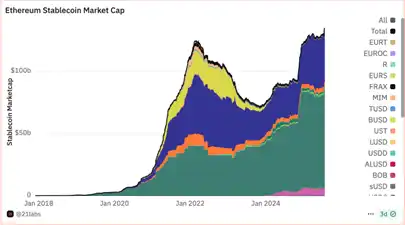
Image Source | dune: https://dune.com/queries/2452131/4030703
Regarding stablecoins, after the DeFi Summer of 2021, a fund size exceeding 130 billion, divided among USDC, USDT, DAI, and others.
Looking back over the past decade, from the initial ERC-20 to ERC-721, ERC-1155, and now the exploratory ERC-3525, ERC-3475, among other emerging standards, Ethereum has built a digital framework capable of representing almost all real-world asset types.

These five major standards constitute a comprehensive expressive system from simple currency to complex financial contracts. There are still more standards in progress and gradually being adopted in various applications, leaving room for continuous innovation.
This is also the source of innovation—a market built on a more open protocol layer, providing more space for creativity and leveraging EIPs (Ethereum Improvement Proposals). EIPs do not create products themselves but rather are a mechanism for proposing Ethereum improvements, enabling protocol participants to achieve consensus at various levels, whether it be contract standards, client implementations, or user experience-related process optimizations. Thus, each improvement proposal can be recorded in history, undergo technical review, and ultimately be adopted or rejected by the network.
2023-2025: The Divergence of the Rollup-Centric Era
Ethereum's Scaling Journey: Layer 2
This path has come a long way, with Layer 2 now being a key part of the Ethereum ecosystem. Layer 2 transactions account for 85% of the total, transaction volume accounts for 31%, and the number of active addresses has reached 3-4 times that of the Ethereum mainnet. Behind this flourishing scaling success lies a more complex process of technological and business model restructuring.
As mentioned earlier, Ethereum's TPS was previously 15/s. What is the overall TPS of the Ethereum ecosystem now?

Image Source | L2beat: https://l2beat.com/scaling/activity
Vitalik once used Blob to calculate: With EIP-4844, we now have 3 blobs per slot, with a data bandwidth of 384 kB per slot, translating to 32 kB per second. Each on-chain transaction requires about 150 bytes, resulting in ~210 tx/sec.
Comparing the actual numbers on L2beat, the improvement is quite similar, achieving over a tenfold increase in just a few years, which is indeed very powerful.
How can we understand EIP-4844's Blob? There's an interesting website where you can feel the difference.
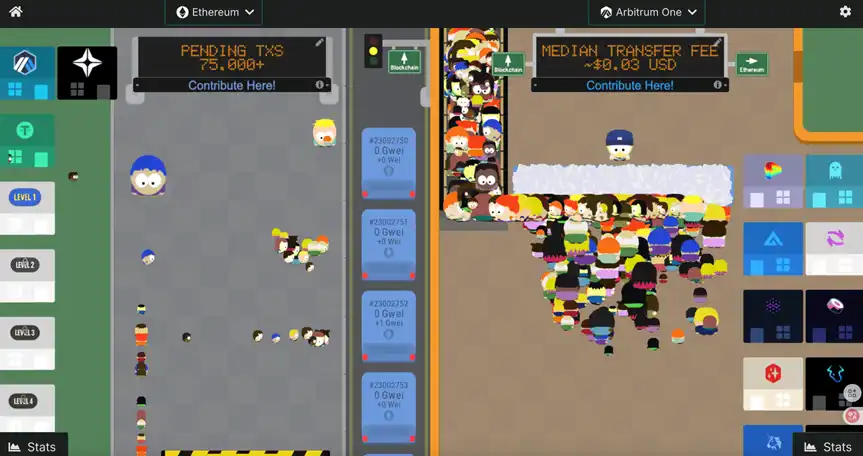
Image Source | TxCity: https://txcity.io/v/eth-arbi
First, let's look at the left side, which is Ethereum's block creation process. Each person in the image represents a transaction interacting with a decentralized application. Based on the gas price, these transactions are included in different blocks, completing the block creation process.
Now, let's look at the right side, which is one of Ethereum's Layer 2 solutions, Arbitrum One. Similarly, each person is engaging in a transaction with a specific application. Instead of being immediately recorded on the blockchain, they leave a note on a counter. After a certain period, a mailman comes to collect all these transactions, forming the current blob. The mailman then walks over to the Ethereum mainnet on the left side to submit them into a specific train car.
This way, the Blob avoids unnecessary long-term data writes on the Ethereum mainnet. It only functions in validation for a period, allowing Layer 2 to reduce fees by 90%.
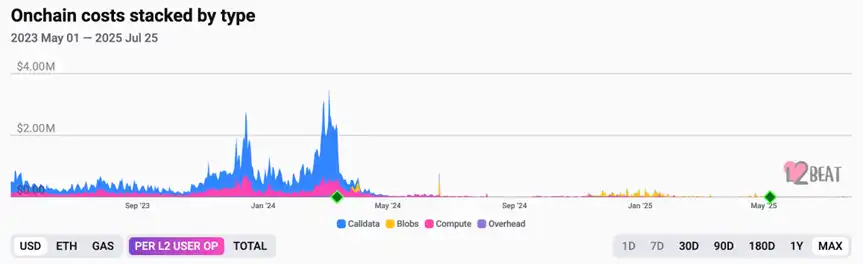
Image Source | L2beat: https://l2beat.com/scaling/costs
However, the market's view on this matter is mixed because Layer 2 has not brought a proportional increase in revenue to Ethereum. The EIP-1559, once celebrated for introducing a mechanism to burn ETH for deflation, elicited cheers from the community since deflation often signifies a rise in value for hodlers.
Yet today, with 85% of transactions shifting to L2, where MEV revenue is naturally captured by various rollup layers, the mainnet has once again entered an inflationary state. Inflation itself can affect the security of Ethereum staking (as a currency that devalues over time naturally tends to be held long-term).
However, in the author's view, Ethereum has consciously forgone profit in exchange for ecosystem prosperity and has not adopted the traditional "corporate" approach—maintaining profit by raising fees or limiting competition. Instead, it chose to give back, repositioning itself as a highly decentralized, permissionless L2 issuance protocol.
This strategy has led to a collision of various viewpoints. Regardless, it can be said that what we are witnessing today is a new value capture model—ETH no longer relies on a burning mechanism to control supply to simply gain value; instead, it acquires value assessment within an expanding ecosystem driven by a strong network effect.
Furthermore, going beyond the early scalability roadmap: we are now transitioning from the early vision of "homogeneous sharding" to the reality of an "heterogeneous ecosystem." The sharding vision in 2016 aimed to create multiple identical EVM replicas processed by different nodes; however, today's L2 has actually achieved this vision but with a fundamental difference—each "shard" is created by different participants following different standards, forming a sort of de facto heterogeneous network.
The traditional "single-chain governance" model is giving way to a "multi-chain federation," where each L2 has its governance mechanism, economic model, and community culture. Base may focus on providing a seamless experience for Coinbase users, Arbitrum may pursue maximum EVM compatibility, not to mention unique experiences like ZkEVM. This diversity is impossible to achieve under a single-chain architecture.
However, this heterogeneity also brings new challenges. How can we make using Ethereum feel like using a single ecosystem rather than 34 different blockchains? Yet, this is a more complex coordination challenge than The Merge as it involves more participants, distributed interests, and tighter timeframes.
The exploration of L2 is still ongoing; but regardless of the outcome, Ethereum's "self-sacrifice" has already become one of the most unique experiments in blockchain history—a technical system voluntarily relinquishing power for its ideals, a protocol renouncing monopoly profits for ecosystem diversity.
Perhaps this is precisely what Vitalik meant by "The technical project and the social project are inherently intertwined."
2015-2025: A Decade-Long Journey of Account Abstraction
The vision of account abstraction is even older than Ethereum itself. It is a dream about "making technology invisible"—just as we don't need to understand the underlying Unix system when using an iPhone today, blockchain users should not be forced to become cryptography experts.
Imagine this scenario: You need to remember a string of 12 random words to access your bank account, and if you forget, you'll never be able to recover your funds. If your assets are ever revealed, they will be stolen in full. This may sound like a plot point from a sci-fi novel, but it has been the real experience of blockchain users for the past decade.
This seemingly "pure" design of self-sovereignty actually stems from a technical compromise in the early days of Ethereum: EOA (Externally Owned Account) couples ownership and signing authority to the same private key. In plain terms, your "ID card" is also your "bank password"; a compromised private key means wide-open doors and total loss.
The root of this design comes from Ethereum's transaction structure—standard transactions do not have a "From" field, and the sender's address is reverse-engineered from the VRS parameters (i.e., user signature).
The very issue that account abstraction aims to solve is this "technically necessary" hijacking of the user experience.
In November 2015, just four months after the Ethereum mainnet launch, Vitalik proposed EIP-101—the first account abstraction proposal. The vision at that time was radical yet succinct: turn all accounts into smart contracts, where the code, not the private key, is the sole controller of the account.
But ideals are lofty while reality is harsh. Ethereum bears a heavier historical burden than any new chain—millions of existing EOAs, assets worth billions of dollars, and a vast and complex ecosystem. Any radical change could have catastrophic consequences. Thus began a long technological march:
· EIP-101 in 2015 envisioned the blueprint for contract-based accounts;
· EIP-859 in 2018 attempted to achieve contract wallets at deployment time;
· EIP-3074 in 2021 sought to add smart contract capabilities to EOAs;
· ERC-4337 proposed in 2021, launched in 2023, achieved account abstraction without protocol changes;
· EIP-7702 based on EIP-3074 proposed in 2024, finally deployed on the mainnet during the 2025 Pectra upgrade;
This decade-long exploration has been akin to changing engines on a plane mid-flight—ensuring safety while upgrading; every step must be taken with utmost caution. EIP-7702 brings not only a change in technical architecture but also serves as the cornerstone for enhancing user experience. Let's look forward to the upcoming future:
·Passkey Technology: You no longer need to remember 12 mnemonic words; you can securely access your digital assets with Touch ID or Face ID.
·Gmail Recovery: If you forget your wallet access method, you can use ZK Email technology to send a zero-knowledge proof to your Gmail to regain wallet control without disclosing any privacy. It sounds like magic, but it is indeed a real technology.
·One-Click Complex DeFi Operations: For heavy on-chain users, multiple transactions can be bundled together and executed—from borrowing to trading to staking—in a complex operation sequence completed in one click, significantly reducing wait times and failure risks. Of course, a reliable wallet is needed to construct such transactions for you.
Reflecting on the Pectra upgrade, we once again see Ethereum's thinking and persistence toward the future direction. The L2 grand strategy has entered a stable execution phase, and while there have been some changes in Ethereum's roadmap details, the core goal remains consistent: to build a secure, decentralized, highly scalable, and easy-to-verify green blockchain. The introduction of various user experience proposals represents Ethereum's relentless exploration of enhancing competitiveness while ensuring decentralization—even in the face of fierce competition from the new generation of public blockchains, it remains committed to becoming the ideal world computer.
A Galaxy in the Ocean—Moving Towards Openness and Fairness
On July 30, 2024, the ninth anniversary of Ethereum, Vitalik posed a profound question of the era at EDCON: "The past ten years of Ethereum were ten years when we focused on theory, and by 2024, we have this technology. In the next ten years, do we really have to change our focus, not only considering L1 but also truly thinking about the actual impact we have on the world?"
Ten years ago, a 19-year-old youth in an office in Berlin was coding with teammates, dreaming of creating a "world computer." A decade later, his dream has partially come true: today's Ethereum carries trillions of dollars in value transfer, connects tens of millions of users worldwide, and supports an unprecedented decentralized financial ecosystem.
However, like all great innovations, Ethereum's story is far from over. From the trauma of the DAO Hack to the euphoria of DeFi Summer, from the victory of The Merge to the fragmentation of Layer 2, and through the ups and downs of the decade-long journey of account abstraction, every crisis is a new beginning, and every controversy drives the evolutionary process forward.
Ten years on, Ethereum is still the unfinished world computer, a myth in progress. In the early days, with nothing to lose, it eschewed efficiency thinking, allowing Ethereum to operate as a protocol, becoming a resilient system.
It carries humankind's collective imagination of a more open, fair, and self-sovereign digital future. And perhaps, that is its greatest value.
Disclaimer:
This article is for reference only. The views expressed in this article are those of the author and do not necessarily represent the views of OKX. This article is not intended to provide (i) investment advice or investment recommendations; (ii) an offer or solicitation of an offer to buy, sell, or hold digital assets; or (iii) financial, accounting, legal, or tax advice. We do not guarantee the accuracy, completeness, or usefulness of this information. Holding digital assets (including stablecoins and NFTs) involves high risk and may experience significant volatility. You should carefully consider whether trading or holding digital assets is suitable for you based on your financial circumstances. For your specific situation, please consult your legal/tax/investment professional. You are responsible for understanding and complying with relevant local laws and regulations.
This article is contributed content and does not represent the views of BlockBeats.
Welcome to join the official BlockBeats community:
Telegram Subscription Group: https://t.me/theblockbeats
Telegram Discussion Group: https://t.me/BlockBeats_App
Official Twitter Account: https://twitter.com/BlockBeatsAsia

 Related Articles