The FTX Creditor Compensation Controversy continues to simmer, with the Fair 3 community holding a public discussion: Spotlight on the Chinese FTX Creditor Rights Dilemma
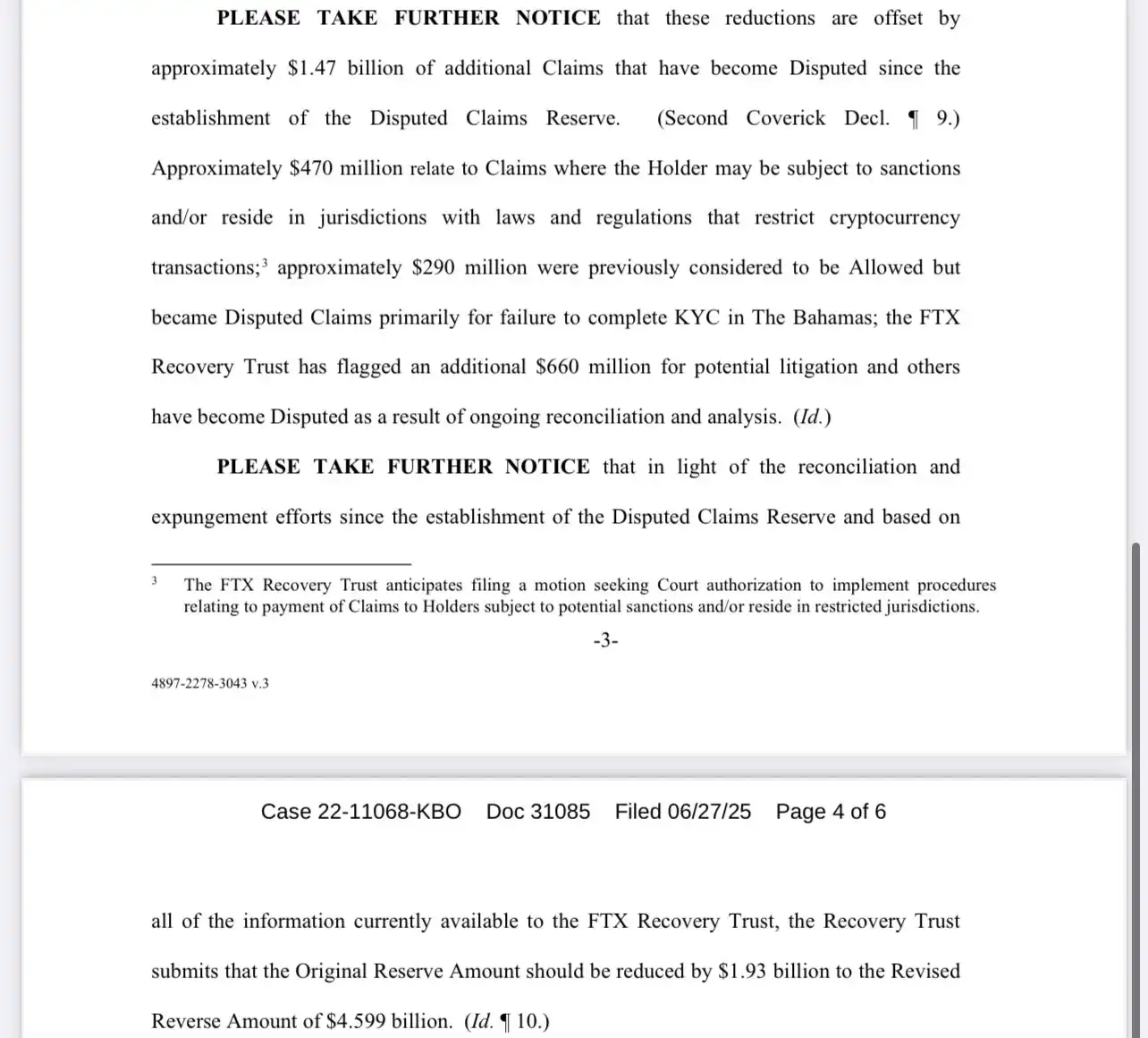
Recently, the FTX bankruptcy liquidation process has entered a crucial stage. According to the latest allocation plan document disclosed by the bankruptcy trustee, in the second round of compensation, creditors from 49 jurisdictions including mainland China are planned to be excluded from the main compensation list, sparking widespread controversy. On July 22, the U.S. bankruptcy court held a hearing on this resolution to formally hear statements of opinion from different groups, including Chinese creditors.
In response to this hearing and the potential issue of compromised repayment rights for Chinese users, the decentralized equity advocacy organization Fair 3 Community recently initiated an online public discussion on the theme of "Revealing the Truth Behind FTX Chinese Creditors' Rights Protection." The purpose of this event is to establish a dialogue platform across regions and perspectives, inviting representatives of Chinese creditors such as Will, lawyer Tian, as well as community members who have experienced the declaration, communication, and compensation processes to jointly clarify the legal structure, procedural risks, and rights protection paths behind the FTX liquidation case, providing information support and action references for a wider range of affected users.

FTX Bankruptcy Progress Review: Creditors from 49 Countries and Regions May Be Excluded from Compensation Eligibility
FTX has been insolvent since the end of 2022. According to recent materials submitted by the official bankruptcy trustee, FTX's second round of compensation will follow a stricter "compliance review" system, identifying users from specific jurisdictions as "Restricted Claimants" based on account registration, KYC, transaction activities, etc., hence excluding them from the compensation plan. This list covers 49 countries or regions including mainland China, Russia, Iran, with the estimated amount of claims conservatively exceeding hundreds of millions of dollars.
During the hearing held on July 22, FTX's lawyers cited U.S. financial sanction and anti-money laundering regulations in an attempt to defend this policy, claiming the existence of "legal enforcement risks" and "political sensitivity" in the aforementioned regions. However, several creditor representatives have made it clear that this exclusion criteria not only lacks legal basis but also fails to fully consider the completed data verification process during the claim declaration, implying "selective compensation" and constituting procedural unfairness.
Rights Protection Representative Will: From the Eve of Insolvency to Courtroom Testimony, Narrating a Two-Year Journey
Will (X Account: @zhetengji), an early BTC believer and one of the representatives of FTX's Chinese creditors, shared his rights protection journey in an AMA session.
Entry and Asset Loss: Will was a heavy user of FTX, mainly due to its advanced collateralized lending feature and convenient deposit/withdrawal channels. In November 2022, a few hours before FTX suspended withdrawals, despite noticing abnormal on-chain funds, due to company management structure restrictions and insufficient response time, he ultimately failed to successfully withdraw his assets.
Psychological and Behavioral Phase Transition: Initially, he chose to remain silent, but as awareness of his rights increased, he gradually shifted to active engagement, first speaking out on social media, then joining various creditor discussion groups, and managing to join the creditors' committee.
Creditor Transfer Game: An institution once offered to buy his debt, he requested the other party to provide formal email documentation to ensure security, ultimately abandoned the sale due to poor communication, choosing to hold onto it to this day.
Evolution of Rights Protection Strategy: In 2024, Will submitted a ten-page legal opinion to the FTX management, and on July 22, 2025, he personally attended the bankruptcy court hearing to advocate for the fair rights of Chinese creditors.
Throughout the entire event, Will went through the entire process from shock and anger to organized action. Not only did he join the creditors' committee in the bankruptcy proceedings, but he also actively collected legal materials, contacted legal teams, and tried to provide a voice for Chinese users. After FTX set up the "restricted regions" clause, he immediately organized a Chinese community to write a legal opinion and continued to push for transparency through public letters, Twitter, and hearing testimonies.
Will said, "This is not just my story, but the reality of countless Chinese investors whose rights have been ignored. We must continue to speak out until we are heard."
Legal Advisor Tian: Exclusionary Compensation Scheme Lacks Legal Justification
Guest Tian Xiaowan Tian, a lawyer from Beijing DHH Law Firm (X Account: @DarrenT934332), who has long focused on cryptocurrency regulatory policies and cross-border bankruptcy cases, analyzed from a professional perspective the "territorial exclusion policy" that appeared in the FTX liquidation case.
He pointed out that U.S. bankruptcy law does not explicitly authorize a bankruptcy trustee to deprive creditors of property rights on the grounds of "jurisdiction." Even when referencing the international sanction system, specific applicability evidence must be clearly stated and cannot be generalized. Lawyer Tian quoted the exclusion logic provided by the FTX management side and rebutted each point, believing that the relevant judgments are mostly based on geopolitical factors rather than the legal responsibility of the creditors themselves, which may violate the principle of equal treatment of creditors.
He also mentioned that China's current policy towards virtual currency is mainly focused on trading and risk control in the financial system and there is no clear legal definition of illegality for users holding cryptocurrency on overseas trading platforms. "If FTX management cannot provide sufficient evidence to prove the illegality of Chinese users' claims, they cannot unilaterally exclude them in the liquidation process."
Lawyer Tian also urged all affected users to keep complete declaration records and pay attention to possible follow-up collective litigation and administrative appeal opportunities.
KOL Advocate Woody: Collective Voice is More Impactful Than Individual Protest
As one of the guest speakers in this discussion, Web3 content creator Woody (X Account: @woodycryptow) shared his observations on community action and communication influence. He pointed out that FTX's liquidation dispute is not just a legal issue, but also a topic that involves global user rights expression and media visibility.
Woody stated that faced with a complex judicial system and international information gap, individual rights protection often faces challenges. However, by mobilizing community strength to form systematic communication and sustained attention, there is an opportunity to change public opinion and judicial perspective. He emphasized, "Community unity and collaboration are key variables that influence major platform decisions and drive public perception shifts."
He called for more users to participate in the action, whether by sharing real-life cases, providing leads to the media, engaging in community discussions, or promoting data collection, all of which are part of shaping the collective voice. Woody believes that the fermentation of such issues is not only about the current FTX case but also a profound reflection on the governance, fairness, and responsibility boundaries of the entire crypto industry.
He also commended the initiative organized by Will and Fair 3 Community, seeing it as a grassroots collaboration example and demonstrating the potential of decentralized communities in dealing with centralization crises.
Comparison with Other Cases: Why Did FTX Take Such an Extreme Path?
During the AMA process, host Wang Xin also raised the question that there are many similar cases in the crypto industry, so why is FTX's path to vindication so difficult? Guest Will added that FTX's exclusivity in the compensation mechanism is rare. Drawing comparisons to cases like Mt. Gox and OKX, he analyzed that these platforms tried to adopt a unified approach during liquidation to avoid escalating international conflicts. In contrast, FTX directly excluded specific jurisdictions, which is relatively less common in the industry's history.
Lawyer Tian also pointed out from a policy and legal perspective that although China regulates virtual currency transactions, it does not deny users' rights to claim legitimate interests overseas. He believes, "When a platform globally attracts users and charges fees, it should bear cross-regional compliance obligations, rather than dividing eligible and ineligible users based on sovereignty during liquidation."
Future Paths: Three Types of Rights Protection Action Recommendations
At the end of the meeting, the three guests each put forward three types of rights protection recommendations for the future:
·First, continue to pressure the U.S. Bankruptcy Court by submitting complete legal materials, requesting a review of the legality of the restricted jurisdiction's establishment;
·Second, expand user story dissemination through social platforms, create community consensus, and form a cross-language, cross-jurisdiction voice network;
·Third, collaborate with international lawyers to promote representative creditors' participation in the next round of distribution negotiations and seek the right to speak on procedural legitimacy.
Will emphasized, "The most important thing is to make the judge hear our voice, see that we are not anonymous numbers, but real users with stories, legitimate rights, and community support."
The Role of Fair 3 Community: A Collective Action Platform in a Decentralized Context
Fair 3 Community is an open collaboration platform initiated by decentralized advocates, dedicated to providing organized action mechanisms for global Web3 users facing unfair practices. In the FTX compensation event, Fair 3 launched the "FTX Co-creation Whiteboard" plan, encouraging excluded users to submit complete claim records, assisting in data and case collection, and facilitating connection with legal aid and media resources. In the future, Fair 3 will also provide expression space for anonymous users through forms such as "legal interpretation drafts" and "consensus canvases," continuing to drive broader collective action.
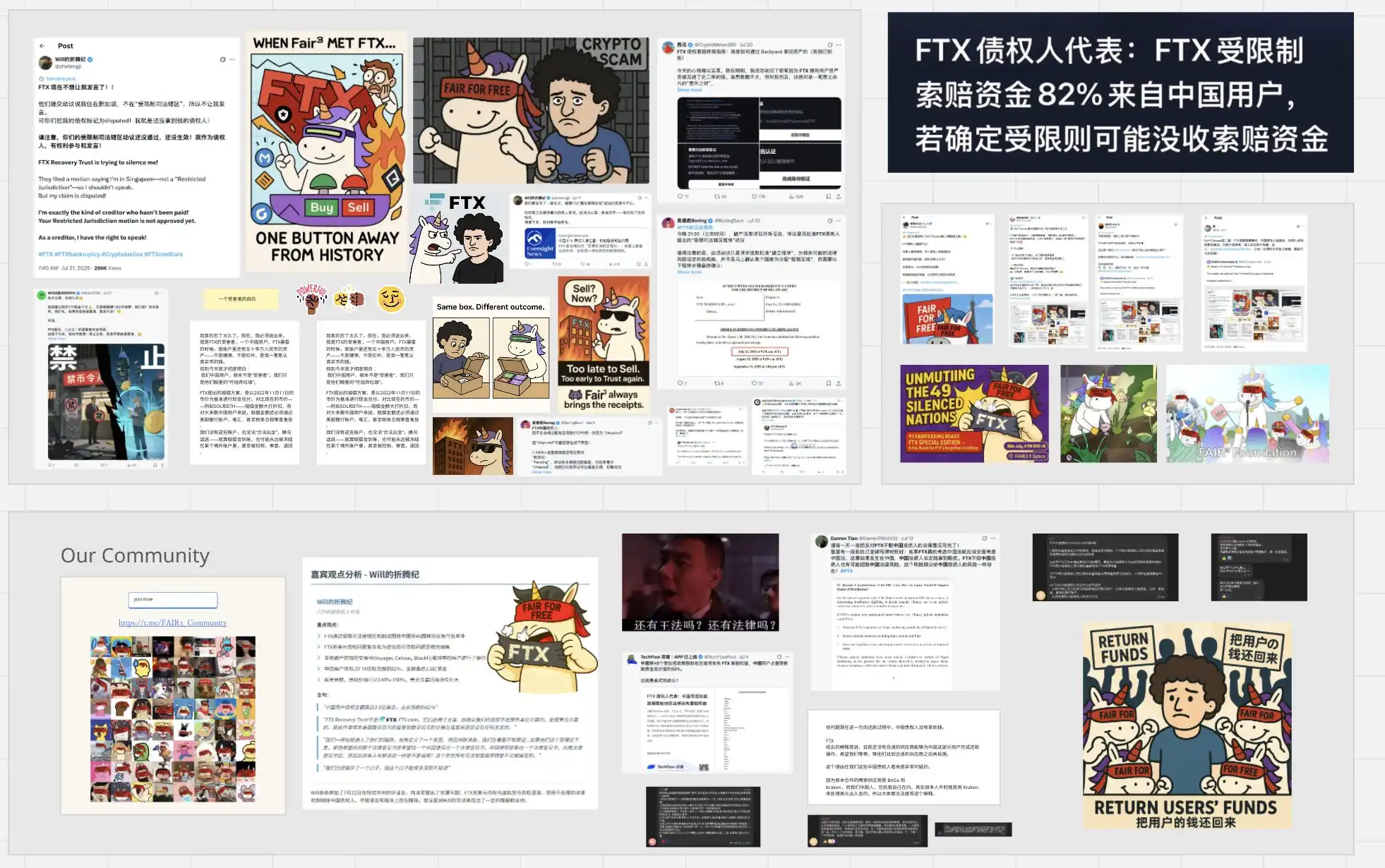
Fair 3 stated that it will continue to track legal developments in the FTX liquidation process and promote possible class actions or legal negotiations based on community consensus. This event will also serve as a key case for Fair 3 to promote the establishment of a "Web3 User Cross-Border Asset Protection Mechanism" globally.
If you are also an affected user of FTX, you can join the Fair 3 Creditor Rights Protection Discussion Group
This article is contributed content and does not represent the views of BlockBeats
Welcome to join the official BlockBeats community:
Telegram Subscription Group: https://t.me/theblockbeats
Telegram Discussion Group: https://t.me/BlockBeats_App
Official Twitter Account: https://twitter.com/BlockBeatsAsia

 Related Articles