Cryptoeconomic Trilogy Grand Finale: Interest Rate
Original Author: Musol
“Interest Rate, Interest Rate, Interest Rate!”
Presumably, readers who have been exposed to the crypto market for a long time are more or less familiar—the crypto market is highly sensitive to the interest rate decisions of the United States, and Bitcoin often serves as a signal reflecting the volatility driven by the Federal Reserve. In the context of this year's continuous rate cuts, this phenomenon has become more and more prominent. Looking back at the past market, perhaps, since 2022 when the Federal Reserve began actively raising interest rates to combat runaway inflation, digital assets have long been reflecting the volatility of the traditional financial market, and the Federal Reserve's interest rate decisions have become a make-or-break moment for the crypto market.
“This correlation will not disappear quickly, and if it does, it is becoming the new normal.”
In fact, there is always a joking saying in the market—“We have all become stock traders,” because the crypto market not only closely follows the movements of the stock market, but traders also need to closely monitor US economic data.
Among them, leading the pack is the Federal Reserve interest rate, as one of the most important data points. So, why should we pay attention to this data? What is the significance of this data?
What is the Federal Reserve & Interest Rate?
The Federal Reserve is the central bank of the United States, equivalent to the People's Bank of China in China, determining the bank's interest rate policy. However, the Federal Reserve has a high degree of independence. In principle, it does not submit to the US government or even the president and independently formulates interest rate policies. In simple terms, the US president has no power to intervene in the Federal Reserve's decisions.
The Federal Reserve makes independent interest rate decisions based on its assessment of the macroeconomic situation, that is, raising or lowering the bank's benchmark interest rate, also known as interest rate hikes or cuts.
In general, the Federal Reserve will have the following three types of interest rate adjustment behaviors:
Maintain the interest rate: Market expectations are stable, and there will be no significant impact on economic signals
Interest rate hike: Suppress inflation, adopt a contractionary monetary policy
Interest rate cut: Stimulate the economy, adopt an expansionary monetary policy
Usually, when we mention the Federal Reserve's interest rate hike/cut, we are actually adjusting the US Federal Funds Rate, which is the interest generated when banks borrow money from each other.
Using Interest Rate Hike as an example: When the Federal Reserve increases interest rates, it raises the federal funds rate in the United States. This increases the interest/cost of borrowing money between banks, causing banks to control costs by increasing reserves. The main way to increase reserves is by raising deposit rates to attract people to deposit money in banks. The eventual result is an inflow of dollars into banks, reducing the circulating currency in the market to curb inflation.
A Federal Reserve interest rate hike leads to a stronger dollar (increased supply), causing more dollars to flow into banks and reducing money flowing into investment markets such as the stock market, which is considered bearish.
Similarly, a Federal Reserve interest rate cut (commonly known as “liquidity injection”) increases the circulating dollars in the market, devaluing the dollar. More funds then flow into investment markets like the stock market, which is considered bullish.
Regarding the Federal Reserve interest rate itself, we will stop here for now. In order to better help readers deeply understand its relationship with the crypto market, this article will first analyze its decisions and their impact on the U.S. Treasury bond yield, the U.S. Dollar Index, the relationship between the U.S. Dollar Index and gold and oil prices, the U.S. Dollar Index and the Chinese Yuan exchange rate, and the relationship between Federal Reserve or central bank interest rate decisions and economic growth.
1. Relationship Between Federal Reserve Interest Rate Decisions and U.S. Treasury Bond Yields
U.S. Treasury bonds, commonly seen as ten-year and two-year U.S. Treasury bonds.
The Treasury bond yield refers to the yield of holding U.S. Treasury bonds until maturity, calculated through a very simple formula: the total interest at maturity divided by the purchase price (Treasury Bond Yield = Total Interest at Maturity ÷ Purchase Price).
The face value interest rate of Treasury bonds is usually fixed, meaning the interest rate of the Treasury bonds is predetermined when they are issued, and this rate remains constant throughout the bond's term, calculating the interest to be paid accordingly.
Treasury bonds can be traded on the capital market, similar to stocks. Therefore, their price fluctuates constantly; this price represents the buying and selling price, and not the bond's face value. The face value and interest rate of the bond are only used to calculate the principal and interest payment amount, while the trading price on the market is independent.
Since Treasury bond prices fluctuate, meaning the denominator in the Treasury bond yield calculation fluctuates, the Treasury bond yield fluctuates accordingly.
When Treasury bond prices rise, the Treasury bond yield falls, and conversely, when Treasury bond prices fall, the Treasury bond yield rises.
So, someone who is not very familiar with this might mistakenly think that the rise in US Treasury yields means that the Treasury market is booming and everyone is buying Treasuries, when in reality, people are selling Treasuries, causing Treasury prices to fall. Actually, it's when everyone is buying Treasuries and pushing prices up that Treasury yields fall.
Replacing "Treasuries" here with "bonds" works the same way, whether it's US bonds or Chinese bonds. When bond yields rise, it means people are selling bonds; when bond yields fall, it means people are buying bonds.
Bond yields and the health of the bond market are inversely related.
Figure 1 shows the trend of the 10-year US Treasury yield from December 1-6, 2024
So what is the relationship between the Fed's rate decisions and Treasury yield fluctuations?
The Fed's interest rate policy determines the high or low interest rates on bank deposits and loans. When the Fed raises rates, bank deposit rates increase, allowing people to earn higher interest by depositing money in the bank. Since the rate on Treasuries is fixed until the bond matures, when banks' deposit rates rise, it attracts more people to deposit money in the bank or buy financial products calculated at the new rate. This leads to selling off Treasury bonds, reducing demand for Treasury purchases, causing Treasury prices to fall, and thus increasing Treasury yields. Conversely, when the Fed cuts rates, it encourages people to reduce deposits and increase bond purchases, causing Treasury prices to rise and Treasury yields to fall.
Typically, the most sensitive to the Fed's interest rates are two-year Treasury notes because of their shorter term. The fluctuation in bank rates more clearly prompts people to compare interest rates on deposits and Treasury bonds for the next two years. On the other hand, ten-year Treasury notes have a longer term, so short-term fluctuations in bank rates have a smaller impact on interest on deposits over the next ten years, implying that there may be many rate hikes and cuts over the ten-year period.
Therefore, a Fed rate hike leads to an increase in Treasury yields, and conversely, a Fed rate cut leads to a decrease in Treasury yields.
The Fed started raising rates from 2022 until the second half of 2024, with rates climbing from 0% to 5.5% (Figure 2). Along with this rate hike cycle, the 10-year Treasury yield surged from below 2% to a peak of 5% (Figure 3).
Figure 2 Bank of America Benchmark Interest Rate Trend from January 2022 to December 2024
Figure 3: 10-Year Treasury Yield Trend from January 2020 to December 2024
II. Relationship Between Federal Reserve Rate Decisions and the US Dollar Index
The US Dollar Index refers to the index measuring the exchange rate of the US dollar against other countries' currencies in the international market. A higher US Dollar Index indicates a stronger dollar, while a lower index indicates a weaker dollar.
A Federal Reserve rate hike means that both deposit and loan interest rates at banks will increase. An increase in deposit rates will attract more people to deposit money in banks, reducing the circulating currency in the market. Deposit rates represent the cost for banks to acquire funds, and an increase in rates means increased costs. Consequently, banks will raise loan interest rates. Higher loan rates mean increased borrowing costs for entities such as businesses, individuals, and governments, leading to reduced borrowing and a decreased circulating currency in the market.
This means that a Federal Reserve rate hike results in more US dollars being deposited in banks, thereby reducing the circulating dollars in the market.
In the foreign exchange market, the appreciation or depreciation of a currency is directly determined by the supply and demand relationship of that currency. A reduction in the US dollar's supply ultimately leads to a stronger US Dollar Index.
A Federal Reserve rate cut means that both deposit and loan interest rates at banks will decrease. A decrease in deposit rates leads to fewer people willing to deposit money in banks, increasing the circulating currency in the market. Lower loan rates encourage more borrowing, further increasing the circulating currency in the market.
This means that a Federal Reserve rate cut leads to more US dollars flowing into the market, thereby reducing the dollars deposited in banks.
In the foreign exchange market, an increase in the US dollar's supply ultimately leads to a weaker US Dollar Index.
Therefore, the Federal Reserve rate level is directly proportional to the US Dollar Index. The interest rates of each country's banks and the exchange rate of that country's currency in the foreign exchange market share this relationship.
Figure 4: US Dollar Index Trend from July 2021 to December 2024
III. Relationship Between Federal Reserve Rate Decisions, the US Dollar Index, and Gold and Oil Prices
In the international market, gold and oil are priced in US dollars. This means that when the US dollar strengthens, its purchasing power increases. The same amount of dollars can buy more gold and oil, causing gold and oil prices to fall. Conversely, when the US dollar weakens, gold and oil prices rise.
Chart 5 2021.01-2024.12 Gold Price Trend
Chart 6 2021.01-2024.12 Crude Oil Price Trend
Understanding this logic, we know the close relationship between the Fed interest rate decision and the US Dollar Index with the prices of gold and crude oil.
When the Fed raises interest rates, the US Dollar Index strengthens, and the prices of gold and crude oil fall; when the Fed lowers interest rates, the US Dollar Index weakens, and the prices of gold and crude oil rise.
This is the theoretical logic relationship between them as well as the direct impact of the Fed interest rate decision and the US Dollar Index on gold and crude oil prices, it does not mean that the actual trends of gold and crude oil prices will necessarily follow this relationship, as gold and crude oil prices depend on a variety of factors.
IV. Relationship Between Fed Interest Rate Decision, US Dollar Index, and RMB Exchange Rate
With the knowledge base from earlier, this part is quite simple. In the foreign exchange market, a stronger US Dollar means that foreign currencies exchangeable with it will depreciate; conversely, a weaker US Dollar means those foreign currencies will appreciate.
Therefore, when the US Dollar strengthens, the RMB depreciates relatively, and conversely, when the US Dollar weakens, the RMB appreciates relatively.
When the Fed raises interest rates, the US Dollar Index strengthens, and the RMB exchange rate weakens; conversely, when the Fed lowers interest rates, the US Dollar Index weakens, and the RMB exchange rate strengthens.
Chart 7 2021.01-2024.12 RMB Exchange Rate Trend
Key Note: In the foreign exchange market, the RMB is usually quoted with USD, commonly known as the offshore RMB exchange rate. Its quote is not based on how much USD can be exchanged for 1 RMB; instead, it is based on how much RMB can be exchanged for 1 USD because USD is the globally accepted currency. Hence, when this index rises, it signifies a depreciation of the RMB, meaning that 1 USD can be exchanged for more RMB. Conversely, when this index falls, it indicates an appreciation of the RMB. Do not confuse this relationship.
In a market with free capital movement and a floating exchange rate, when the Federal Reserve raises interest rates, other countries' currencies passively depreciate against the US dollar. To prevent their own currency from depreciating against the dollar, other countries' central banks need to follow the Federal Reserve's rate hikes to offset the Fed's interest rate impact on the exchange rate. Conversely, when the Federal Reserve lowers interest rates, other countries' currencies passively appreciate against the US dollar. To offset the impact of the Fed's rate cut on the exchange rate, other countries' central banks need to follow the Fed's rate cut.
This results in a loss of domestic monetary policy independence. Countries like Canada, South Korea, Brazil, Argentina, and Hong Kong, China, which do not want to lose monetary policy independence, passively accept the impact of the Federal Reserve's interest rate decisions on the foreign exchange market exchange rate fluctuations. This is also a manifestation of US dollar hegemony.
This is why we often hear many countries in the news expressing dissatisfaction with the Federal Reserve's interest rate policy, because the Fed's rate decisions directly affect the currency exchange rates of many countries worldwide and the interest rate decisions of their central banks.
As for whether these expressions of dissatisfaction are justified, enlightened individuals will naturally understand. Any country's monetary policy should and can only be based on national interests and cannot and should not simultaneously consider the interests of other countries. Even if you try to formulate monetary policy by considering the interests of other countries while prioritizing national interests, you will not have the capacity to achieve the intended goals.
Therefore, criticism from other countries of the Federal Reserve's monetary policy is meaningless and ineffective. Only by being strong enough can a country avoid being constrained by others.
Section Five: The Relationship Between Federal Reserve or Central Bank Interest Rate Decisions and Economic Growth
The market is an invisible hand that directs economic trends, but this invisible hand has its inherent flaws, one of which is the lack of a brake function. Like a car without brakes that cannot anticipate an imminent traffic accident and apply the brake in advance, if the market lacks a brake function, it cannot predict and avert the impending economic recession and crisis. Allowing the market's invisible hand to freely direct economic development will result in a cyclical pattern of prosperity and recession.
Figure 8 Economic Cycle Diagram (Please excuse the antiquated image.)
Figure 9 US Economic Prosperity followed by Recession and the Great Depression of 1929
Figure 9-11 Dow Jones Industrial Average around 1929
The reason behind this is that the lifeblood of the market is capital, and capital is profit-driven. Where there is money to be made, capital will flow; where there is ample profit, capital will rush. This is the invisible hand that guides the economy.
For example, when an industry emerges with high demand, prices surge, profits soar, attracting a flood of capital into the industry. This increased supply leads to a shift from high demand to supply equilibrium to eventual oversupply, causing prices to plummet or crash, profits to decline, eventual losses, industry collapse, and crisis. After a crisis, the market self-corrects, capital exits, supply decreases until there is high demand again, and the cycle repeats. This is the law of the market economy—from scarcity to equilibrium to oversupply, from growth to saturation to decline to crisis, a perpetual cycle.
The entire economic development follows this same law.
It is because we recognize this law, the inherent flaws of the invisible hand of the market, that we need to install a “brake” on the market economy and not leave it entirely to its own devices; this “brake” is “government macroeconomic regulation”.
Before a crisis occurs, we should anticipate it and take preemptive measures to prevent it, applying the brake appropriately.
Interest rate policy is an important tool in macroeconomic regulation.
During sustained strong economic growth, to avoid overcapacity leading to recession or even crisis, the Federal Reserve will increase interest rates to contract the money supply in the market, encouraging people to deposit money in banks, reducing consumption, lowering demand for goods. The rise in interest rates prompts businesses, individuals, and governments to reduce borrowing and investment, leading to a reduction in the supply of goods.
Conversely, when the economy is weak or in recession, to stimulate economic prosperity, the Federal Reserve will lower interest rates to expand the money supply in the market. People are less inclined to deposit money in banks and engage more in consumption, increasing demand for goods. The decrease in interest rates encourages businesses, individuals, and governments to borrow and invest more, increasing the supply of goods.
Therefore, the Federal Reserve uses interest rate decisions to adjust the balance of supply and demand in the market, striving to achieve a healthy upward economic spiral without overcapacity, severe inflation, deflation, recession, depression, or crisis.
Our most desired state is economic growth with price stability, or price growth much lower than our income growth, which is the optimal economic growth.
Our income growth allows us to purchase more and better goods, businesses can earn more profits. The faster the economic growth under this premise, the better, indicating that our societal wealth is constantly increasing, the happiness index is continuously soaring, and prosperity can be sustained. This is the benign spiral of economic growth.
For example, China's nearly 40 years of rapid economic growth since the reform and opening up is a benign spiral of growth, with GDP continuously growing rapidly, people's income levels continuously rising, price increases far below the rate of our income growth, and people's purchasing power continuously strengthening.
Readers may also consider the current situation.
From 1978 to 2017, China's GDP grew at an average annual rate of about 9.5%, China's per capita disposable income grew at an average annual rate of about 8.5%, and the price level grew at an average annual rate of about 4.86%.
Figure 11 China's GDP Growth After Reform and Opening Up
Here it is important to note that the essence of GDP refers to societal total output, which can be simply understood as the total quantity of goods (services) produced by society. The more produced, the wealthier the society. This output is measured in currency, meaning the societal total output needs to be converted into money, often referred to as trillions. However, this value is just a number, and the number itself has no real meaning. To evaluate the true wealth of society, one must look at the actual goods (services) output represented by this number. Hence, the differentiation between nominal GDP growth rate and real GDP growth rate.
Nominal GDP refers to the GDP growth rate calculated based on current prices relative to previous GDP without considering price changes, which does not necessarily represent the actual GDP growth rate. For example, if the current price level has increased compared to the past, then in a situation where the societal total output has not changed relative to the past, the calculated GDP will be higher than the previous GDP, showing GDP growth. This is due to the different prices used in calculating the current GDP and the previous GDP. In reality, the societal total output has not increased, and societal wealth has not changed. The real GDP growth rate, on the other hand, excludes the factor of price changes. It calculates the current GDP and the previous GDP at the same prices. In this scenario, a change in current GDP relative to the previous GDP indicates a true change in societal total output and societal wealth.
Let's continue to dive into the relationship between interest rate decisions and economic growth.
The Federal Reserve's interest rate decisions depend on the assessment of the current economic situation, with key indicators being the GDP growth rate, CPI, new job additions, etc., among which the core indicator is CPI, the Consumer Price Index, which is also the target regulated by the Fed.
CPI is considered the most reflective indicator of the economic situation. When the economy grows, people's income increases, purchasing demand rises, pushing up prices; when the economy recedes, people's income decreases, demand decreases, leading to price declines.
Therefore, the Fed aims to keep CPI within a reasonable range (around 2%-2.5%).
When it exceeds this range, it indicates the economy is growing too fast and overheating. To avoid supply-demand imbalances that could lead to a recession and crisis, the Fed will raise rates;
When it falls below this range, it indicates weak economic growth, downturn, or recession. To stimulate economic growth, the Fed will cut rates;
If it stays within this range, it suggests the economy is in a benign upward spiral, and the Fed will hold steady.
Therefore, the Fed's interest rate does not have an absolute direct or inverse relationship with the speed of economic growth and CPI.
When the economy is reasonably growing, the interest rate may remain unchanged or continue to decrease, or there may be appropriate rate hikes to control prices. Generally, maintaining a low-interest rate for an extended period is conducive to stimulating economic growth.
The first graph here has been mentioned before, so we won't elaborate further. From the first quarter of 2021 to the second quarter of 2022, the year-on-year growth rate of the US CPI has been rising continuously, even reaching 9%. The inflation level has been steadily increasing, and at the same time, the GDP has grown rapidly, indicating strong economic growth.
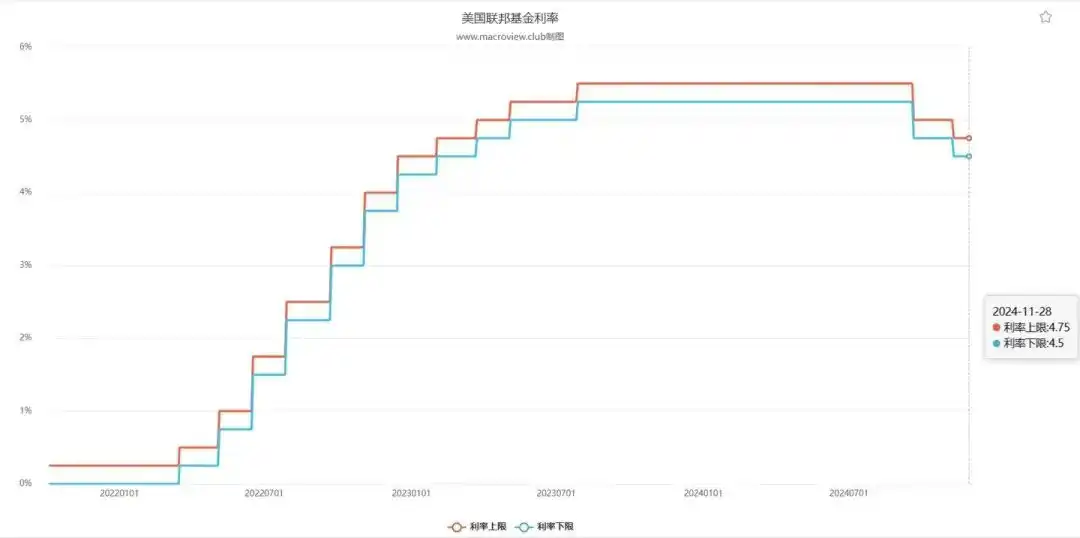
Figure 12: US CPI Year-on-Year Trend from January 2021 to October 2024
However, to avoid spiraling into hyperinflation, the Federal Reserve started raising interest rates in 2022 until the first half of 2024, maintaining a tightening cycle and high rates. With continued rate hikes, the year-on-year CPI growth rate steadily declined to 3%, and the GDP growth rate also dropped from the 6%-7% range to 2%-3%. Therefore, starting from the second half of 2024, the Fed began a rate-cutting cycle.
Figure 13 2021Q1-2024Q3 US GDP Growth Rate
The interest rate decisions of various central banks are also related to the economic growth of the country.
First of all, thank you very much to all readers for being able to read up to this point. Being able to read up to this point indicates that you already have a relatively clear understanding of interest rates, so let's talk about some of the impacts of the Fed's rate cuts.
The Multi-dimensional Impact of Fed Rate Cuts
Today, in an increasingly globalized world, the Fed, as a key indicator of the global economy, we all know—its rate cut policy undoubtedly has far-reaching international influence.
A rate cut directly leads to a decrease in the US dollar deposit rate, causing capital to overflow from the banking system like a tide, seeking higher-yield havens. This not only promotes cross-border investment activities but also accelerates signs of global economic recovery.
However, for the cryptocurrency market, the impact of this capital flow is not simply direct. What we need to understand is that its impact is not immediate, but multi-dimensional.
The Dual Nature of the Market
On one hand, the increased market liquidity brought about by a rate cut does enhance investors' risk appetite, making them more willing to invest in high-risk, high-return areas. Mainstream cryptocurrencies like Bitcoin, with their unique decentralized nature and potential for high returns, have become the new darling of many investors.
Furthermore, a rate cut often accompanies a devaluation of the US dollar, further enhancing the attractiveness of cryptocurrencies as a safe haven asset (this is also what the market has silently done this year), attracting a large influx of funds seeking asset preservation.
On the other hand, historical data shows us a different picture. Although a rate cut should theoretically benefit the price increase of cryptocurrencies, in practice, this impact is often constrained by multidimensional factors—economic uncertainty, market sentiment fluctuations, policy expectation changes, and the complexity of investor behavior can all lead to the cryptocurrency market exhibiting performance contrary to expectations after a rate cut. For example, in times of economic recession or high market panic, more people may actually prefer to withdraw funds from high-risk markets, including the crypto market, to avoid potential losses.
Looking back at the past 35 years of the U.S. interest rate cycle, we can see that the impact of rate cuts on the crypto market is not set in stone. In the 1980s and 1990s, although the Fed's rate cuts were aimed at stimulating economic growth and combating inflation, the rebound in asset prices often lagged behind the policy implementation and was strongly influenced by economic uncertainty.
Entering the 21st century, with the rise of the crypto market, the impact of rate cuts on it has become more complex and varied. During the 2008 financial crisis, the Fed's rate cuts and quantitative easing indeed provided strong support for risk asset markets, including cryptocurrency, but this support was not unconditional and long-lasting. The wave of rate cuts after the outbreak of the COVID-19 pandemic in 2020 pushed the cryptocurrency market to unprecedented heights, but this rally was more of a result of market sentiment and safe-haven demand working together, rather than a single effect of rate cuts.
The Fed's rate cut policy has a multifaceted, complex, and uncertain impact on the crypto market; capital is not charitable either. While rate cuts can increase market liquidity, boost investment risk appetite, and potentially support cryptocurrency price increases, this impact is not one-way and absolute. In the current complex and ever-changing environment, when facing monetary policy adjustments such as rate cuts, we should be more calm and cautious, taking a holistic view of factors such as economic environment, market sentiment, and policy expectations. Only in this way can we slowly stand firm in the ever-changing market.
As the dust settles and the waves subside, only a few in the rivers and lakes will return.
Welcome to join the official BlockBeats community:
Telegram Subscription Group: https://t.me/theblockbeats
Telegram Discussion Group: https://t.me/BlockBeats_App
Official Twitter Account: https://twitter.com/BlockBeatsAsia

 Related Articles