Analyzing the PT Leverage Yield Farming Flywheel Mechanism and Risks of AAVE, Pendle, and Ethena
Original Article Title: "Beware of Discount Rate Risk: AAVE, Pendle, Ethena PT Leverage Yield Farming Mechanism and Risks"
Original Article Author: @Web3_Mario
Abstract: Recently, work has been slightly busy, so there has been a delay in updates for a while. Now, I am back to the weekly update frequency, and I also thank all the dear friends for their support. This week, an interesting strategy in the DeFi field has been widely discussed and received attention, which utilizes Ethena's staking yield voucher sUSDe in Pendle as the source of fixed income voucher PT-sUSDe and leverages the AAVE lending protocol as a source of funds to conduct interest rate arbitrage and achieve leverage yield. Some DeFi KOLs on platform X have given quite optimistic reviews of this strategy, but the author believes that the current market seems to overlook some of the risks behind this strategy. Therefore, there are some insights to share with you all. Overall, the AAVE+Pendle+Ethena PT leverage mining strategy is not a risk-free arbitrage strategy. The discount rate risk of the PT asset still exists, so participating users need to objectively assess, control the leverage ratio, and avoid liquidation.
Analysis of PT Leverage Yield Mechanism
First, let's briefly introduce the mechanism of this yield strategy. Friends familiar with DeFi should know that DeFi, as a decentralized financial service, compared to TradFi, its core advantage is the so-called "interoperability" advantage brought by using smart contracts to carry core business capabilities. Most DeFi experts, or DeFi Degen, usually work on three things:
· Discovering arbitrage opportunities between DeFi protocols;
· Finding leverage funding sources;
· Discovering high-interest, low-risk yield scenarios;
The PT leverage yield strategy comprehensively embodies these three characteristics. This strategy involves three DeFi protocols: Ethena, Pendle, and AAVE. These three are popular projects in the current DeFi race. Here is a brief introduction only. First, Ethena is a yield-bearing stablecoin protocol that, through a Delta Neutral hedging strategy, captures the bearish fee rate in the perpetual contract market of centralized trading platforms with low risk. In a bull market, due to the extremely strong long demand from retail investors, they are willing to bear a higher fee rate cost, so the strategy's yield is high, where sUSDe is its yield voucher. Pendle is a fixed-rate protocol that decomposes yield-bearing token with a floating interest rate into Principal Token (PT) similar to zero-coupon bonds and Yield Token (YT) through synthetic assets. If an investor is more pessimistic about future interest rate changes, they can lock in the interest rate level for a period of time by selling YT (or buying PT). AAVE is a decentralized lending protocol where users can use specified cryptocurrencies as collateral and borrow other cryptocurrencies from AAVE to achieve increased capital leverage, hedging, or shorting effects.
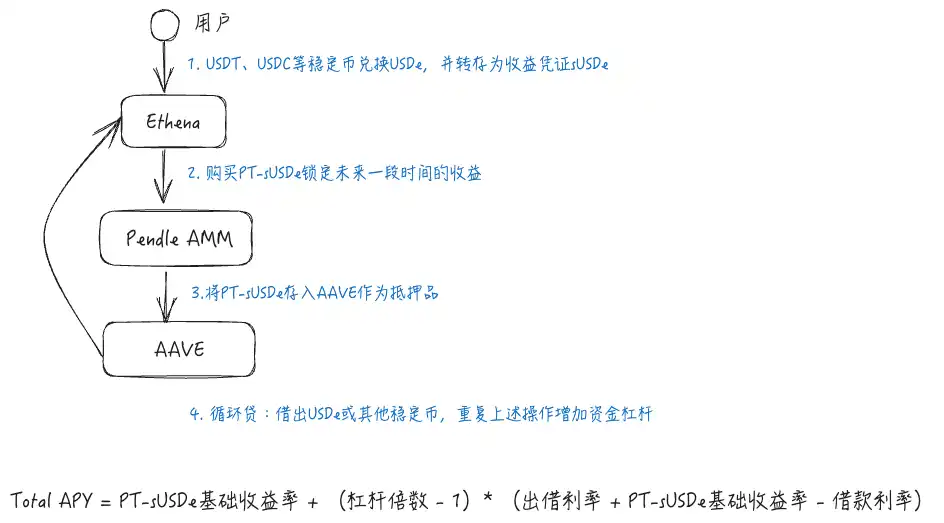
And this strategy is precisely the integration of three protocols, leveraging Ethena's staking yield-bearing asset sUSDe in Pendle as the source of fixed income through Pendle's PT-sUSDe, and utilizing the AAVE lending protocol as a source of funds to engage in interest rate arbitrage for leveraged returns. The specific process is as follows: first, users can obtain sUSDe from Ethena and then fully exchange it for PT-sUSDe with a locked interest rate through Pendle. Next, they can deposit PT-sUSDe into AAVE as collateral and borrow USDe or other stablecoins through flash loans to repeat the aforementioned strategy and increase capital leverage. The calculation of returns is primarily determined by three factors: the base interest rate of PT-sUSDe, the leverage ratio, and the interest rate spread in AAVE.
Current Market Status and User Participation in the Strategy
The popularity of this strategy can be traced back to AAVE, the largest lending protocol by TVL, recognizing PT assets as collateral, unlocking the borrowing capability of PT assets. In fact, before this, other DeFi protocols had already supported PT assets as collateral, such as Morpho, Fuild, etc., but AAVE, with more available lending funds, can provide lower borrowing rates, amplifying the strategy's yield, and AAVE's support carries more symbolic significance.
Since AAVE started supporting PT assets, the staked funds quickly rose, indicating the strategy's adoption by DeFi users, especially some whale users. Currently, AAVE supports two PT assets, PT sUSDe July and PT eUSDe May, and the total supply has reached approximately $1 billion.

The maximum leverage currently supported can be calculated based on its E-Mode's Max LTV. Taking PT sUSDe July as an example, this asset's Max LTV in E-Mode is 88.9%, meaning that theoretically, leveraging could reach about 9x through flash loans. The specific calculation process is shown in the following diagram. This means that when leverage is maximized, excluding Gas fees, flash loan costs, or asset conversion costs from flash loans, the strategy's yield, for example, with the sUSDe strategy, can theoretically reach 60.79%. Moreover, this yield does not include Ethena token rewards.

Next, let's take a look at the actual participant distribution, still using the PT-sUSDe pool on AAVE as an example. The total supply of 450M is provided by 78 investors, indicating a high concentration of whales with a significant leverage ratio.
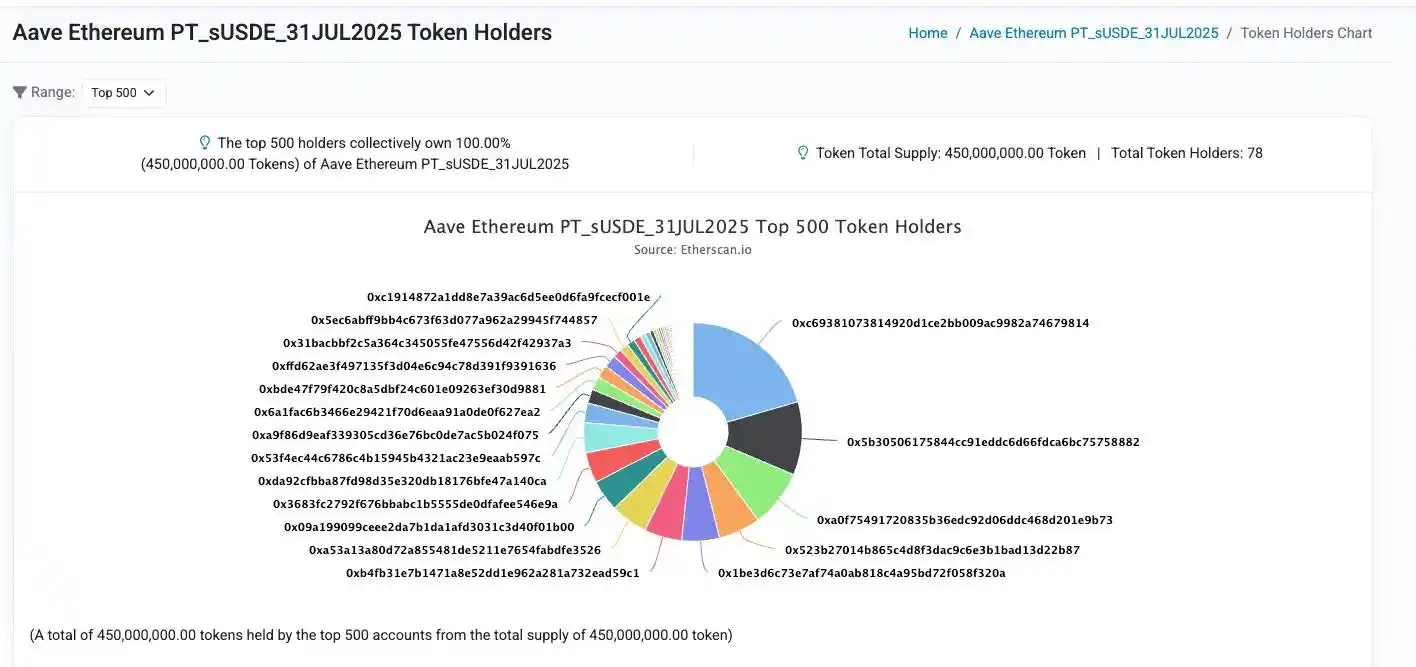
Looking at the top four addresses, the first address 0xc693...9814 has a leverage ratio of 9x with a principal of around 10M. The second address 0x5b305...8882 has a leverage ratio of 6.6x with a principal of around 7.25M, the third address analytico.eth has a leverage ratio of 6.5x with a principal of around 5.75M, and the fourth address 0x523b27...2b87 has a leverage ratio of 8.35x with a principal of around 3.29M.
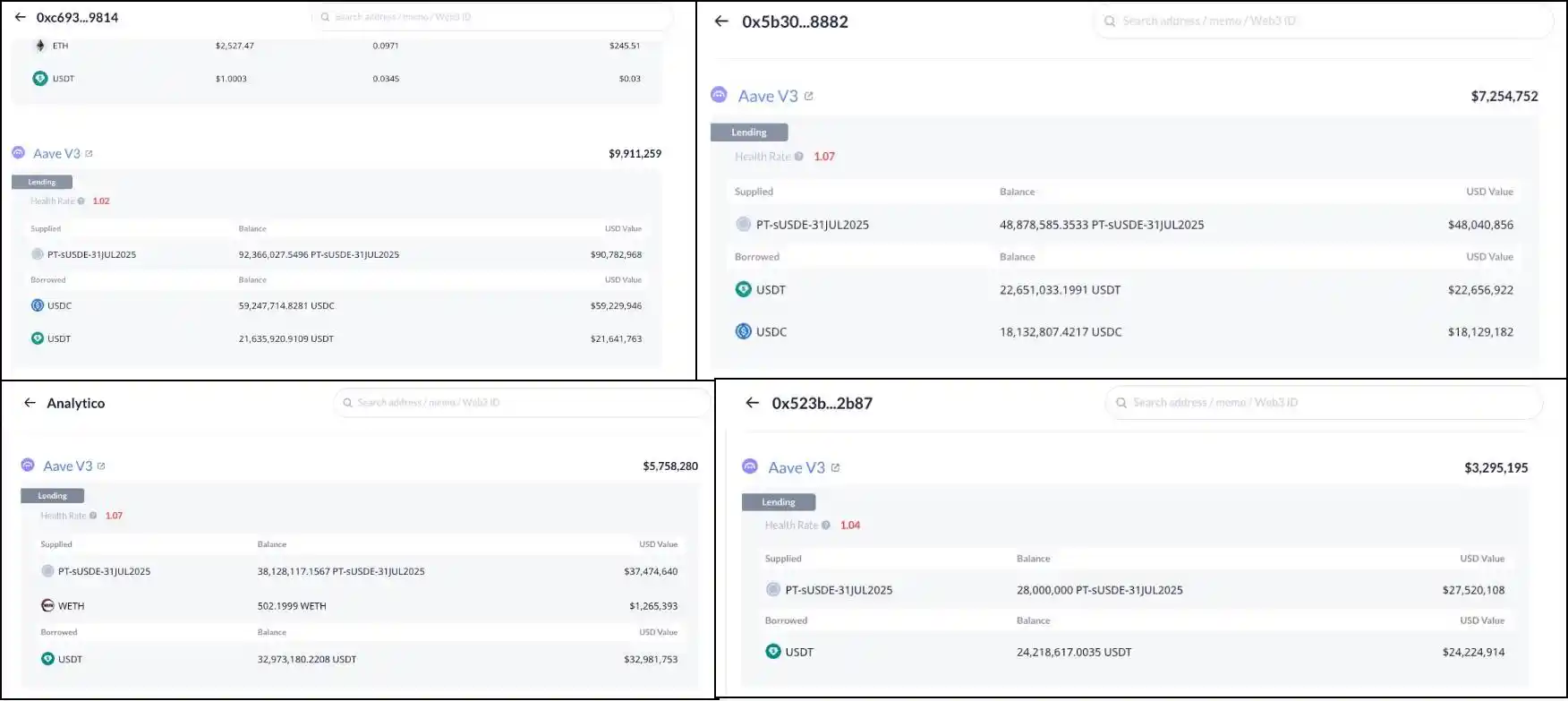
Therefore, it can be seen that investors are mostly willing to allocate high leverage to this strategy. However, the author believes that the market may be somewhat too aggressive and optimistic. This emotional and risk perception deviation is likely to lead to large-scale liquidation cascades. Next, let's analyze the risk of this strategy.
Discount Rate Risk Cannot Be Ignored
The author has noticed that most DeFi analytical accounts tend to emphasize the low-risk nature of this strategy, even promoting it as a risk-free arbitrage strategy. However, the reality is different. We know that leveraged mining strategies mainly face two risks:
Exchange Rate Risk: When the collateral-to-loan asset exchange rate decreases, there is a liquidation risk. This is relatively easy to understand as the collateral ratio will decrease during this process.
Interest Rate Risk: If borrowing rates increase, it may lead to an overall negative yield for the strategy.
Most analyses believe that the exchange rate risk of this strategy is extremely low. As a more mature stablecoin protocol, USDe has withstood market tests, and the risk of price deviation is relatively low. Therefore, as long as the borrowing asset is a stablecoin type and specifically USDe, the exchange rate risk is low. Even if deviation occurs, as long as the borrowing asset is USDe, the relative exchange rate will not experience a significant decline.
However, this judgment overlooks the uniqueness of PT assets. We know that the key function of a lending protocol is to ensure timely liquidation to avoid bad debt. However, PT assets have a concept of tenure. During the tenure period, if you want to redeem the principal asset early, you can only do so through discount transactions on Pendle's AMM secondary market. Therefore, transactions will affect the price of PT assets, or rather the PT yield, making the price of PT assets subject to continuous change due to trading, but the general trend will gradually approach 1.
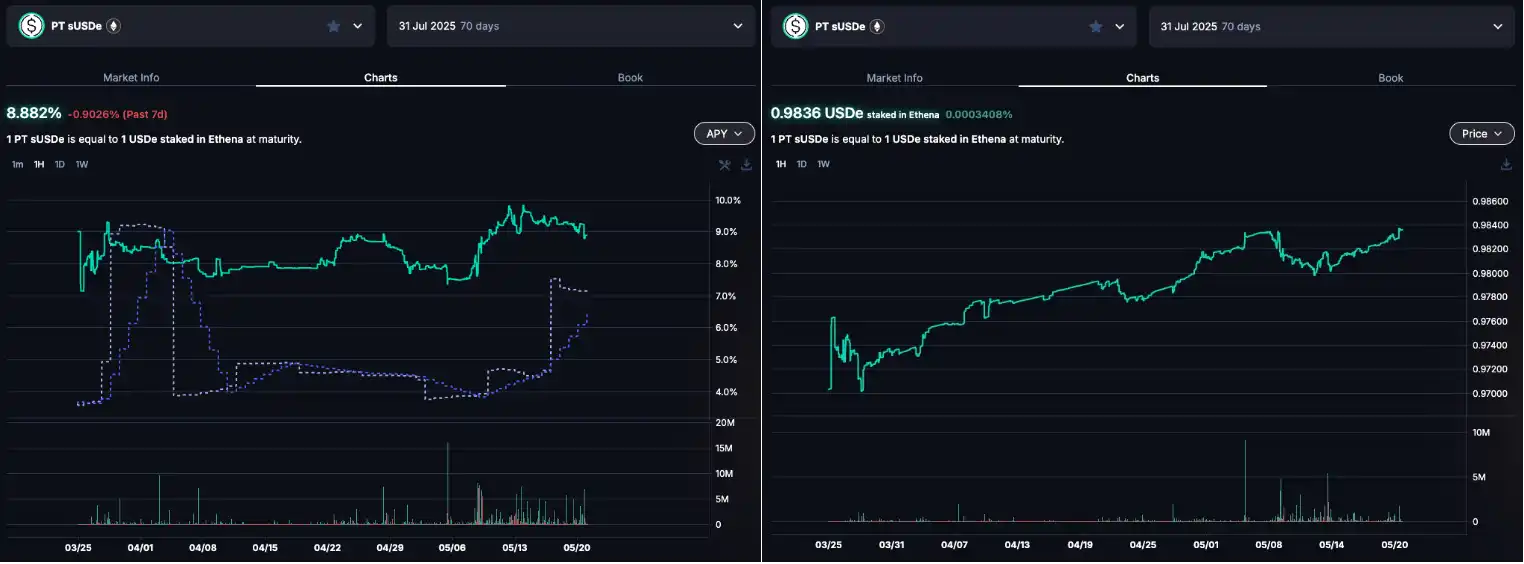
After clarifying this feature, let's take a look at AAVE's PT asset price oracle design. In fact, before AAVE supported PT, the strategy mainly utilized Morpho as a source of leverage funding. In Morpho, the price oracle for PT assets was designed using PendleSparkLinearDiscountOracle. Simply put, Morpho believes that during the bond's maturity period, the PT asset will earn a fixed interest rate relative to the native asset, ignoring the impact of market trading pair rates. This means that the exchange rate of the PT asset relative to the native asset is continuously increasing linearly. Therefore, exchange rate risk can be naturally ignored.
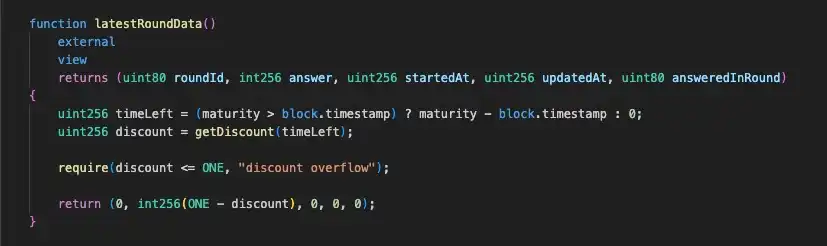
However, during AAVE's research process on the PT asset oracle scheme, it was believed that this was not a good choice because the scheme locks in the yield for the PT asset during its maturity period and is not adjustable. This means that the model is unable to reflect the impact of market trading or underlying yield changes on the PT price. If, in the short term, market sentiment is bullish on interest rate changes, or there is a structural upward trend in underlying yields (such as a significant rise in incentive token prices, new yield distribution schemes, etc.), it may lead to the PT asset's oracle price in Morpho being far above the true price, potentially resulting in defaults. To mitigate this risk, Morpho typically sets a benchmark interest rate significantly higher than the market rate. This means that Morpho actively depresses the value of the PT asset, creating a wider fluctuation range, which in turn leads to the issue of underutilization of funds.
To optimize this issue, AAVE adopted an off-chain pricing solution that can make the oracle price follow the structural changes in the PT rate as much as possible while avoiding short-term market manipulation risks. Here we will not delve into the technical details, as there are dedicated discussions on this matter in the AAVE forum. Interested readers can also explore this topic with the author. Here, we will only present a possible price-following effect of the PT Oracle in AAVE. It can be seen that in AAVE, the Oracle price performance will be similar to a piecewise function, following the market rate, which, compared to Morpho's linear pricing model, offers higher capital efficiency and better mitigates default risks.
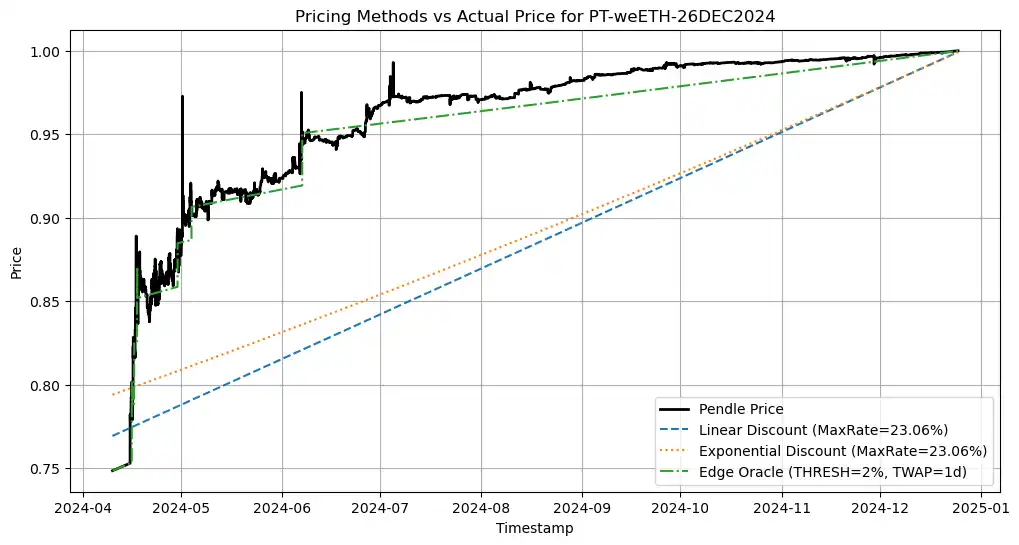
Therefore, this means that if there is a structural adjustment in the PT asset's rate, or if the market consistently moves in one direction regarding rates in a short period, the AAVE Oracle will follow these changes. Thus, this introduces discount rate risk to the strategy, assuming that if the PT rate increases for some reason, the PT asset price will decrease accordingly. High leverage in this strategy may pose liquidation risks. Therefore, it is necessary to understand AAVE Oracle's pricing mechanism for PT assets in order to rationally adjust leverage and achieve an effective balance between risk and reward. Here are some key features to consider:
1. Due to the mechanism design of the Pendle AMM, over time, liquidity will concentrate around the current interest rate. This means that price changes resulting from market trades will become less and less significant, leading to smaller and smaller slippage. Therefore, as the expiration date approaches, the price impact from market activities will diminish. To address this characteristic, the AAVE Oracle has introduced the concept of a heartbeat to indicate the frequency of price updates. As the expiration date nears, the heartbeat increases, reducing the update frequency, meaning that the discount rate risk is lower.
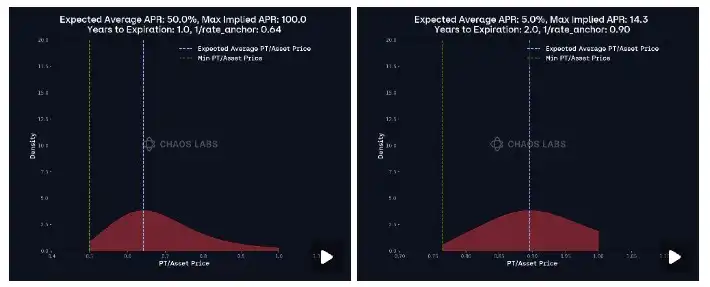
2. The AAVE Oracle follows a 1% interest rate change as another adjustment factor for price updates. When there is a 1% deviation between the market rate and the Oracle rate, and this deviation persists beyond the heartbeat duration, a price update is triggered. This mechanism provides a time window to timely adjust leverage and avoid liquidation. Therefore, for users of this strategy, it is recommended to proactively monitor interest rate changes and adjust leverage accordingly.
Welcome to join the official BlockBeats community:
Telegram Subscription Group: https://t.me/theblockbeats
Telegram Discussion Group: https://t.me/BlockBeats_App
Official Twitter Account: https://twitter.com/BlockBeatsAsia