Do not overlook every "!" of the OKX Web3 Wallet.
Source: OKX
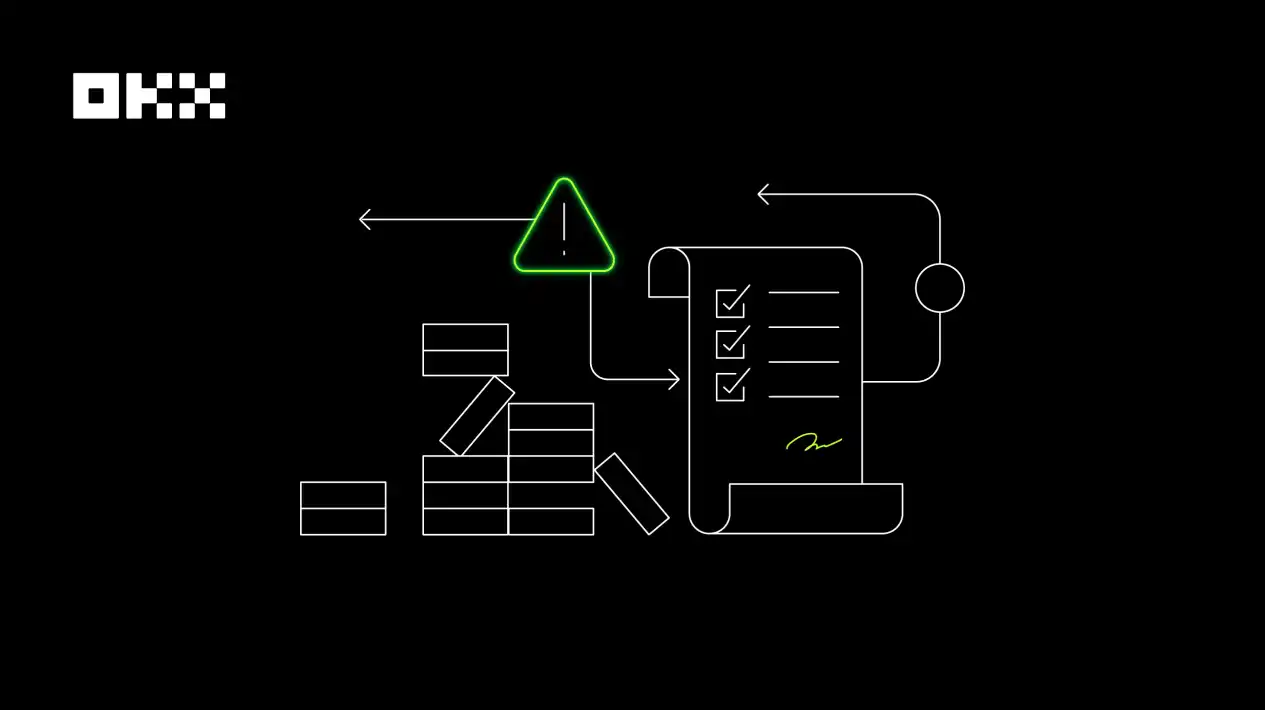
The cryptocurrency industry has reached its current state thanks to technological innovation. From Layer2 to DePIN, from post-quantum encryption to ZKML, from homomorphic encryption 2.0 to adaptive consensus mechanisms, these cutting-edge technologies and concepts are bringing forth new vitality. However, in this encryption jungle constructed by code, the security front line is constantly being tested by sophisticated attacks.
In a world where "scientists" manipulate MEV bots at millisecond speeds to precisely snipe at transaction slippage, smart contracts of flash loan attacks weave a one-way fund cage, phishing websites disguise malicious authorization pop-ups as tickets to freedom, localization tools hide clipboard hijacking Trojan horses that steal private data, rug pull schemes from scam projects, and overnight tweet deletions and exits from star project teams in the large-scale "on-chain battlefield," "security" is the toughest narrative to survive in both bull and bear markets.
From the absurd drama of mnemonic phrases running naked in browsers to cryptographic security proverbs shouted in group chats, we often only pay attention when security issues occur, but that does not mean they are not important. Because in the world of blockchain, you can be skeptical, but you cannot go without your "bulletproof vest." A little cautiousness will help you live longer. We must realize that security DNA must evolve rapidly, and choosing the right transaction tools is crucial—true security in a decentralized world relies on a more robust "trust infrastructure." Today, let's talk about my perspective on the security capabilities of the OKX Web3 wallet, covering token detection, authorization detection, DApp detection, private key protection, and more, and how it safeguards our on-chain transactions and assets.
1. Malicious Token Detection
The most common interaction we have in the cryptocurrency space is with various tokens, but we cannot identify their risks. Common malicious tokens include flash loan attack coins, phishing airdrops, and high-risk coins. The first type is "flash loan attack coins." These tokens can be bought on the surface but cannot be sold smoothly, or require a high selling tax, or users may be blacklisted and unable to trade. For example, a user may realize after buying that they need to pay a 95% selling tax, or when trying to withdraw, they may find that the address has been blacklisted, preventing any transactions.
The second type is "garbage airdrops," where the token itself has no value but may share the name of a valuable token and be precisely airdropped to a few users for targeted phishing. Users may mistakenly believe they have received a valuable coin, but after buying, they find that the token pool depth is insufficient, leading to being stuck when trying to exchange, or it may be a flash loan attack coin that cannot be sold, or hackers may instantly drain the liquidity pool, leaving users holding nothing but air.
While using the OKX Web3 Wallet, I received the above two types of malicious tokens and found that they would be automatically hidden, effectively preventing me from mistakenly trading these junk tokens. Additionally, the wallet set the value of these worthless tokens to zero, helping me quickly identify their risk and avoid accidental trades. Furthermore, if I attempted to trade these tokens via OKX DEX, the system would display a risk warning and intercept the transaction, further safeguarding my asset security.
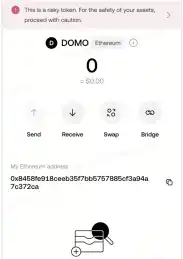
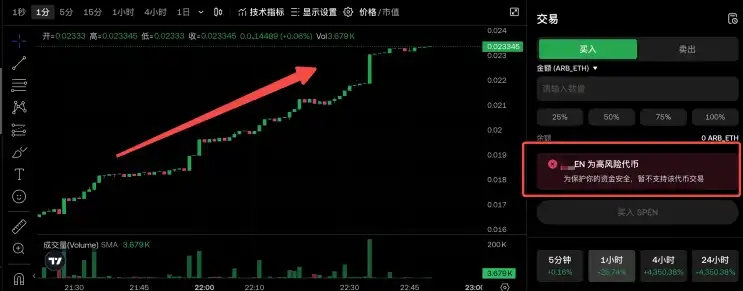
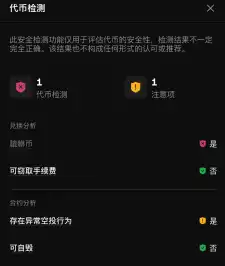
OKX Web3 Risk Token Trading Protection Concept
The third type is medium-risk tokens, which include low liquidity tokens, wash trading tokens, and restricted user tokens. Low liquidity tokens mean that it may be difficult to sell shortly after purchase; wash trading tokens artificially inflate trading volume through frequent trades to attract traders, ultimately draining liquidity; restricted user tokens only allow specific users to trade, misleading other traders. In such cases, the OKX Web3 Wallet will set the price of these third-class risk tokens to zero and provide me with a risk warning.
II. KYS Risk Identification
Apart from token trading, the most common on-chain interaction scenario is accessing DApps. Generally, the upgrade steps for Web3 wallet interaction with DApps are as follows: connecting the wallet, authorization, transaction signing, and transaction confirmation.
We often encounter risks during the authorization process, such as when trading tokens on a DEX, where we need to authorize the DApp to access specific tokens in our wallet and permit the DApp to execute operations on our behalf by signing the transaction. This way, we can avoid the need for reauthorization every time. The signing process actually confirms the transaction's amount, price, etc., ensuring that each operation aligns with our intentions.
The KYS risk identification feature of the OKX Web3 Wallet, similar to the traditional KYC mechanism, focuses more on monitoring and analyzing our transaction behavior, especially transaction authorization and signing, to identify any abnormal or malicious activities. Next, I must discuss with everyone the "authorization risk scenarios" and the "protection" features of the OKX Web3 Wallet in critical moments.
Scenario One: Transferring to a "Blacklist Address"
Have you ever had this experience? When making a transfer, you didn't even think twice and entered an address off the top of your head. I almost transferred money to a "regular blacklist address" myself, but fortunately, the OKX Web3 Wallet popped up a prominent red warning at a critical moment, stating, "This transaction is at risk," thus avoiding a loss.
However, even scarier than a 'Regular Black Address' is a 'Black Contract.' These addresses often masquerade as the official contract of a popular project, with the token name and icon being identical, making it extremely difficult for us to distinguish between the real and the fake. Unlike the straightforward warning for a regular black address, when the OKX Web3 wallet detects interaction with a 'Black Contract,' it directly intercepts the transaction to ensure the security of our assets and prevent risks arising from accidental operations."
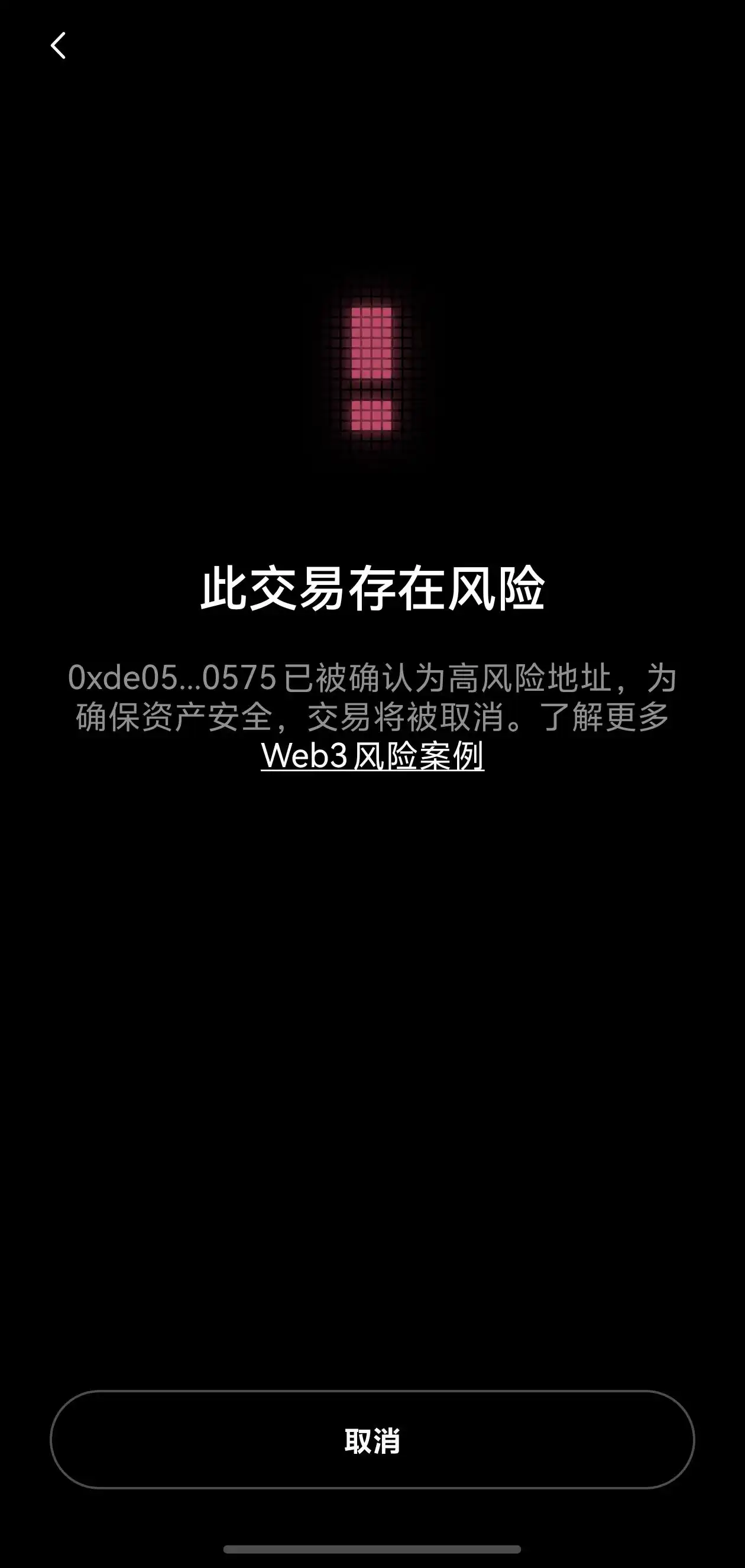
OKX Web3 Wallet Intercepting Interaction with a 'Black Contract' Illustration
Scenario Two: Mistakenly Authorizing an EOA Account Instead of a DApp Contract Address
When carrying out an authorization operation, the usual target for authorization should be a DApp's smart contract, not an EOA account. If authorization is given to an EOA account, it means that our wallet has been granted permission to another wallet/person, significantly increasing the risk to our assets. When I attempt to authorize an EOA account, the OKX Web3 wallet issues a warning, reminding me to carefully check the authorization target to prevent asset loss due to trusting the wrong entity.
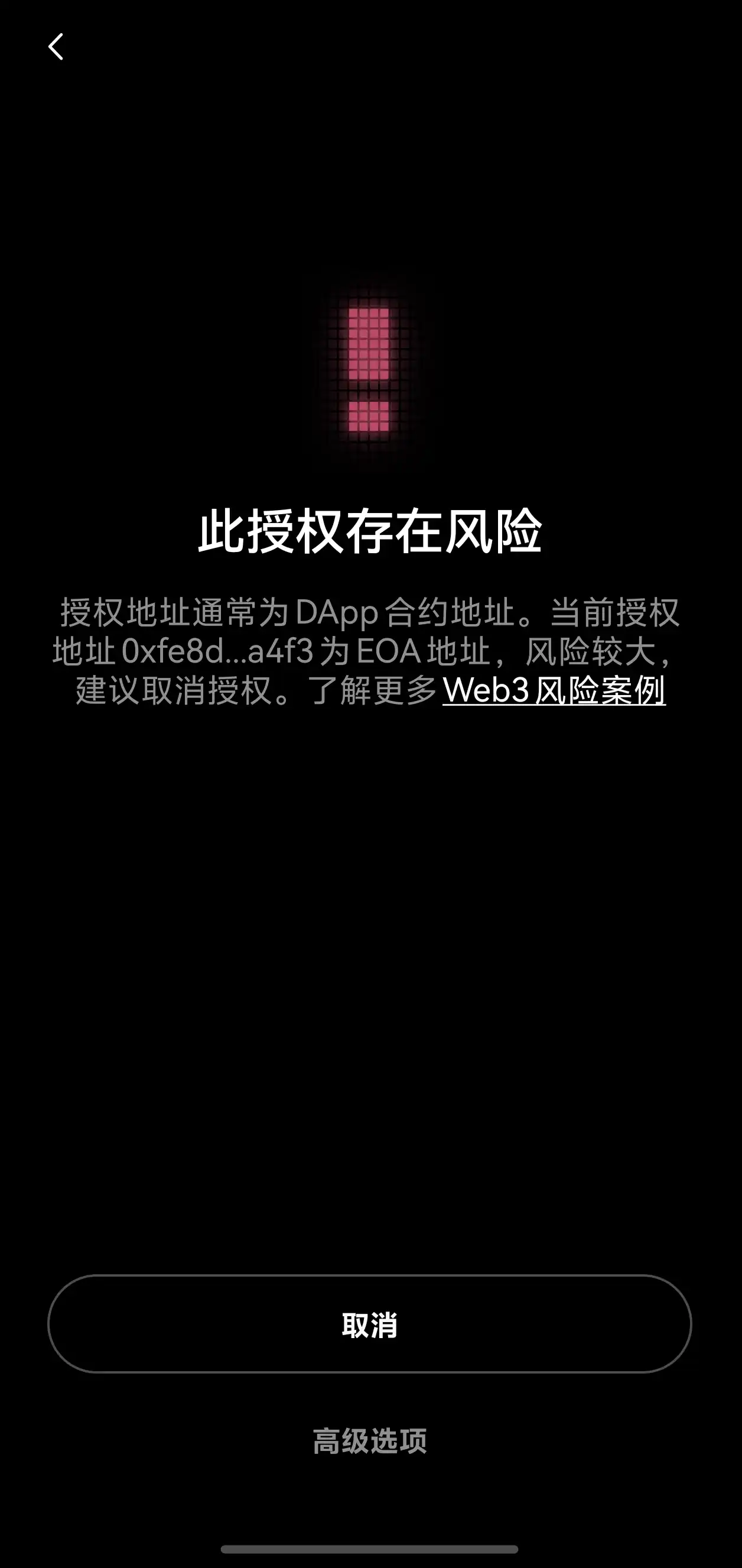
OKX Web3 Wallet EOA Authorization Interception
Scenario Three: Transferring Funds to a Similar Address
Scammers often try to deceive us by creating an address highly similar to our commonly used interaction address to commit fraud, such as changing 0x1230...321 to 0x1238...32, leading us to transfer funds to the wrong address. These addresses look almost identical to the naked eye, and many times we fall victim to these schemes due to a lack of attention. Fortunately, the OKX Web3 wallet checks the similarity of the transfer addresses and issues a risk warning when detecting any anomalies, helping us verify the transfer destination and avoid inadvertently sending funds into the hands of scammers.
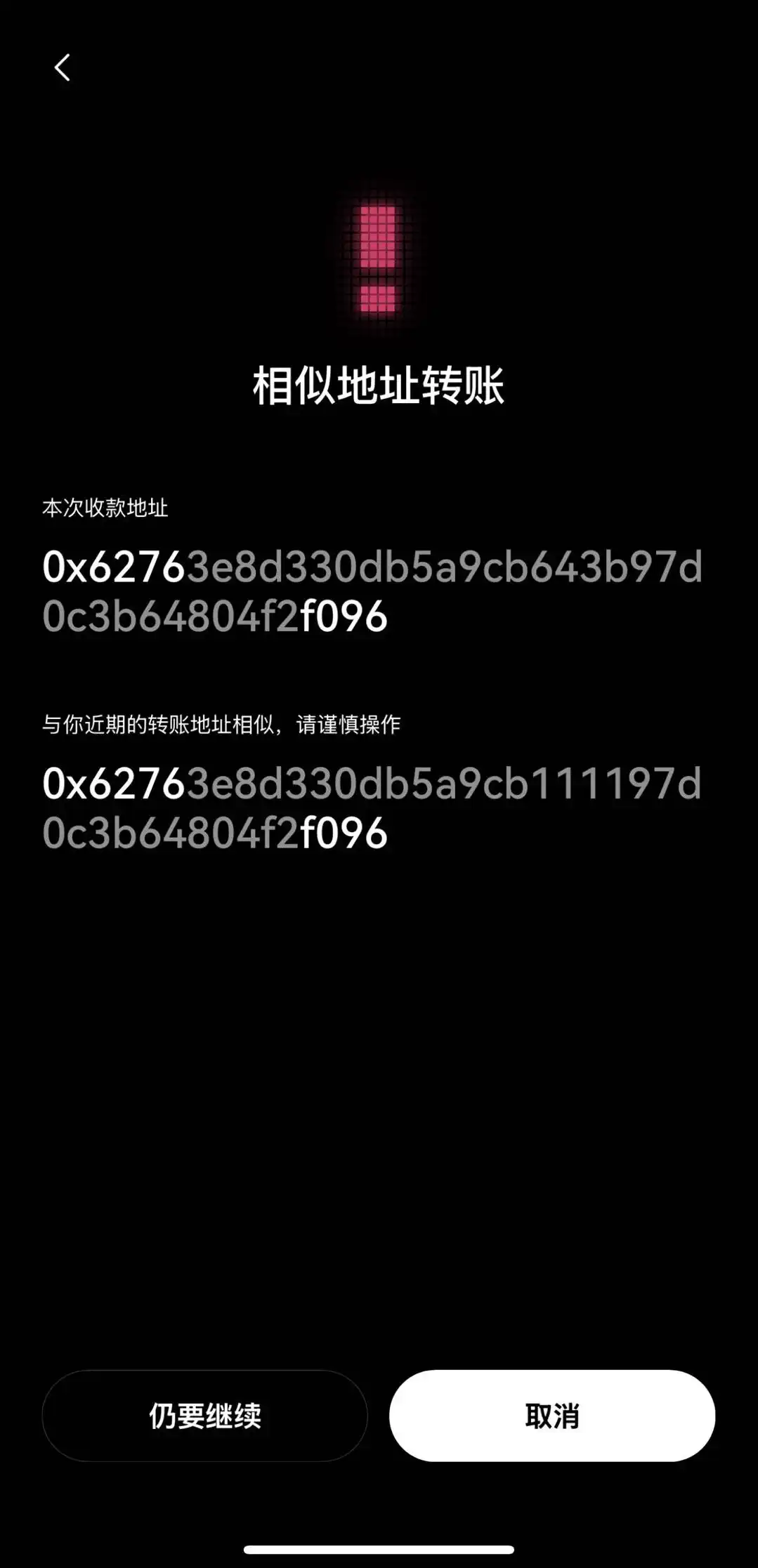
OKX Web3 Wallet Warning for Transferring Funds to a Similar Address Illustration
Scenario Four: ETHSign Signature Risk
ETHSign is a signing method commonly used for Ethereum authorization or transaction confirmation. However, if the signature content is maliciously tampered with or exploited, we may inadvertently sign an insecure transaction, resulting in asset loss. To avoid such risks, the OKX Web3 Wallet will promptly issue a risk warning when a user performs a signing operation, helping the user identify potential threats in the signature content to ensure the security of each operation.
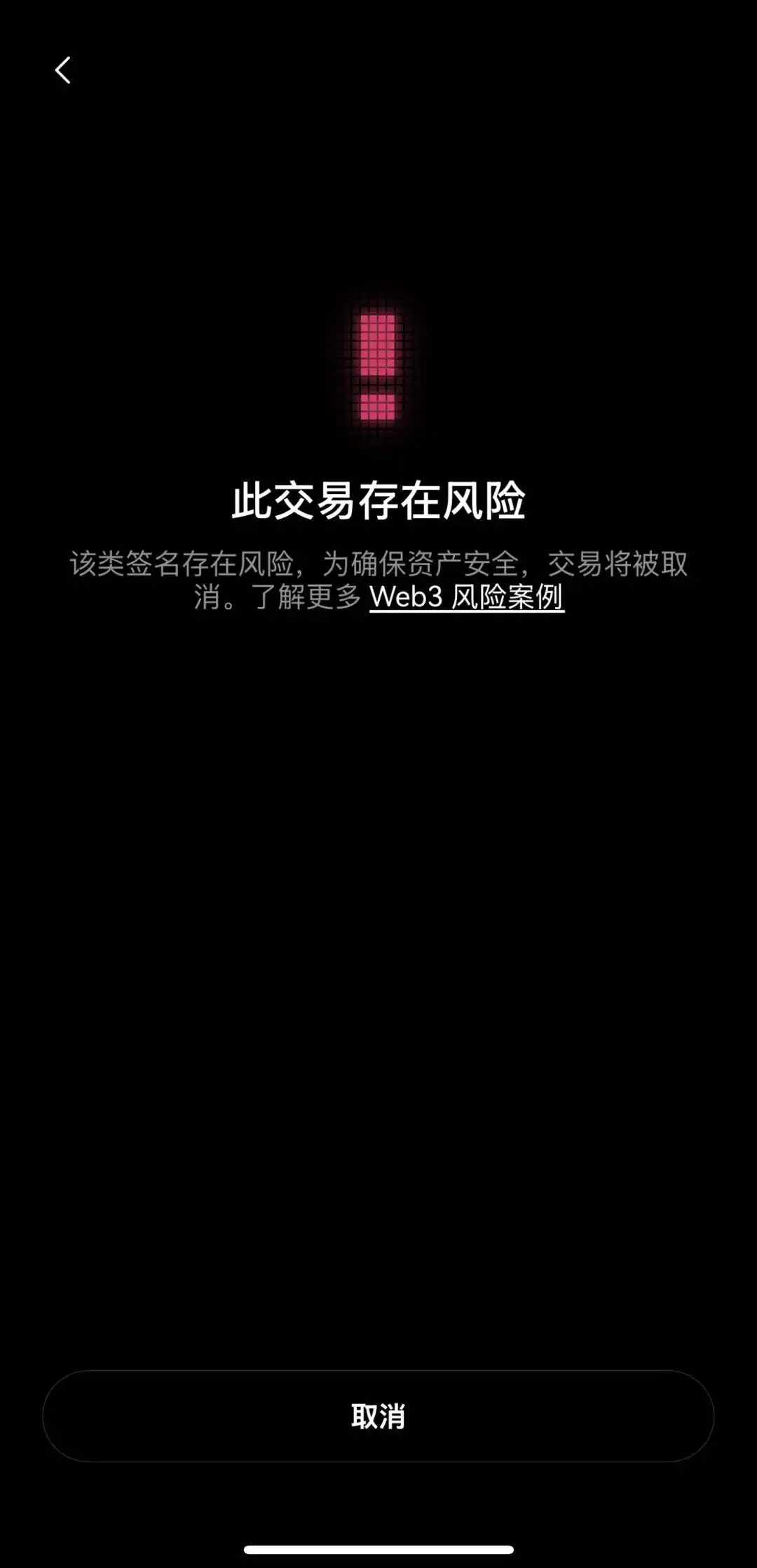
OKX Web3 Wallet ETHSign Signature Risk Warning Illustration
Scenario Five: "HexData Hijacking" on the TRON Chain
On the Tron network, malicious actors may modify HexData (the hexadecimal data of a transaction) to alter the transaction content, causing us to execute unexpected operations. The OKX Web3 Wallet will monitor modifications to HexData and issue a risk warning when anomalies are detected, protecting our transaction security on the Tron network.
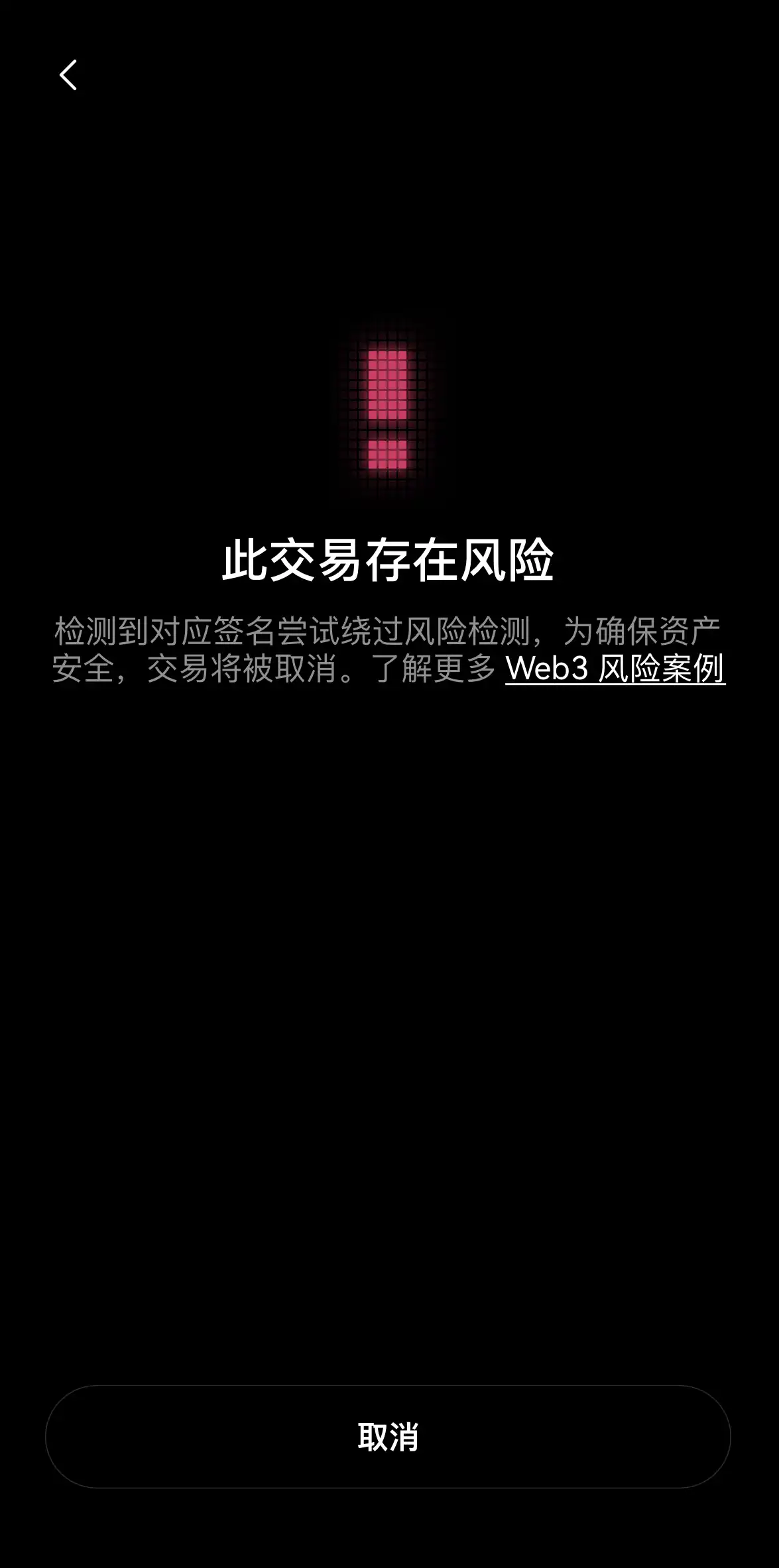
OKX Web3 Wallet Monitoring of HexData Modification Behavior Illustration
Scenario Six: Purchasing "Malicious Tokens"
There is also the risk of purchasing "malicious tokens." Let me briefly explain – "malicious tokens" may contain a backdoor or trap, such as the inability to sell or automatic asset transfer, which can result in fund loss upon purchase. When we attempt to buy a suspicious token, the OKX Web3 Wallet will issue a warning and provide the option to cancel the transaction, helping users avoid falling into the trap of token scams.
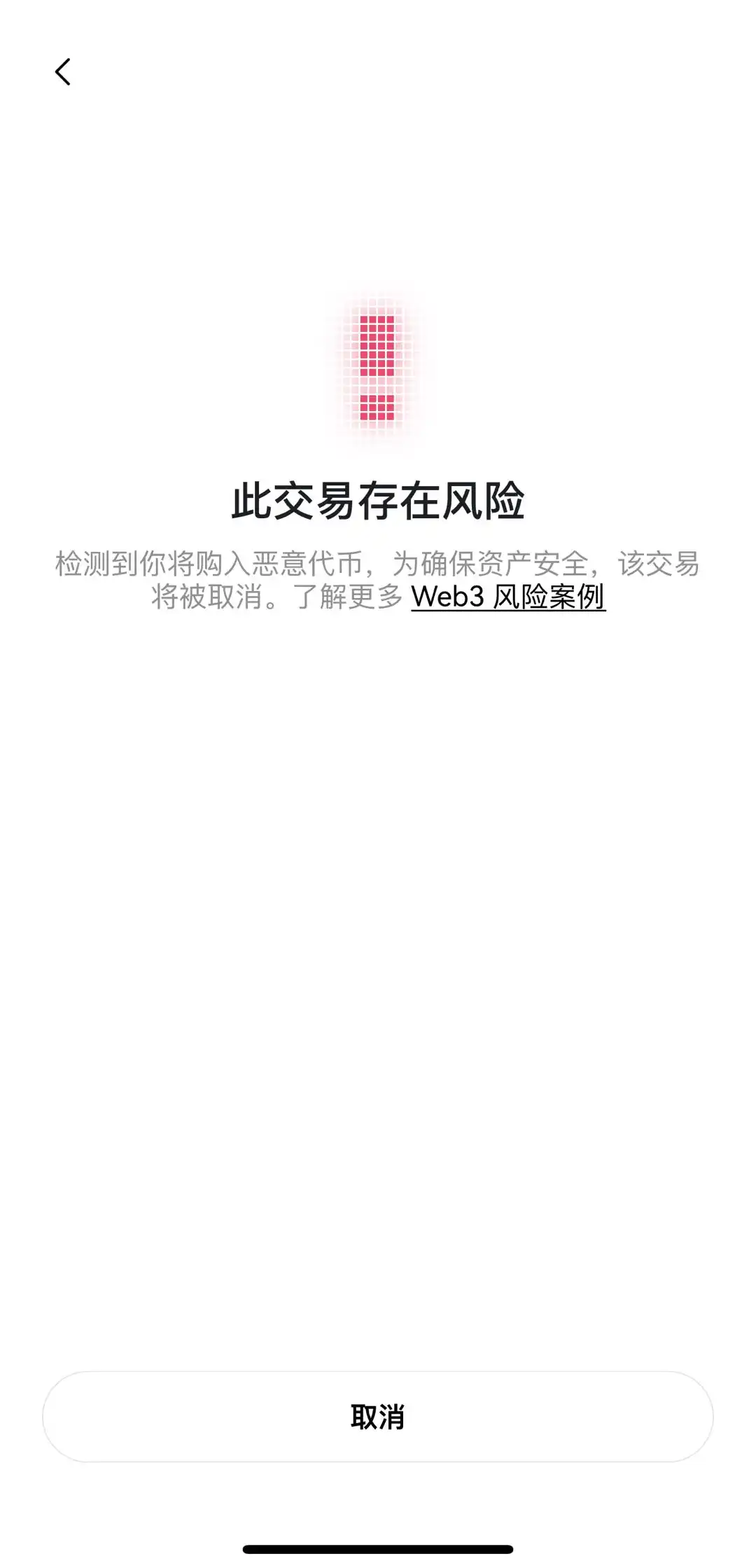
OKX Web3 Wallet Alert "Malicious Token" Purchase Risk Illustration
Scenario Seven: Solana Account Owner Modification
This year, playing MEME on the Solana network became very popular. If our account's owner is maliciously altered, we could likely lose control of the account, leading to asset theft. The OKX Web3 Wallet will monitor changes to the account owner and issue a warning when risks are detected, ensuring the security of our account.
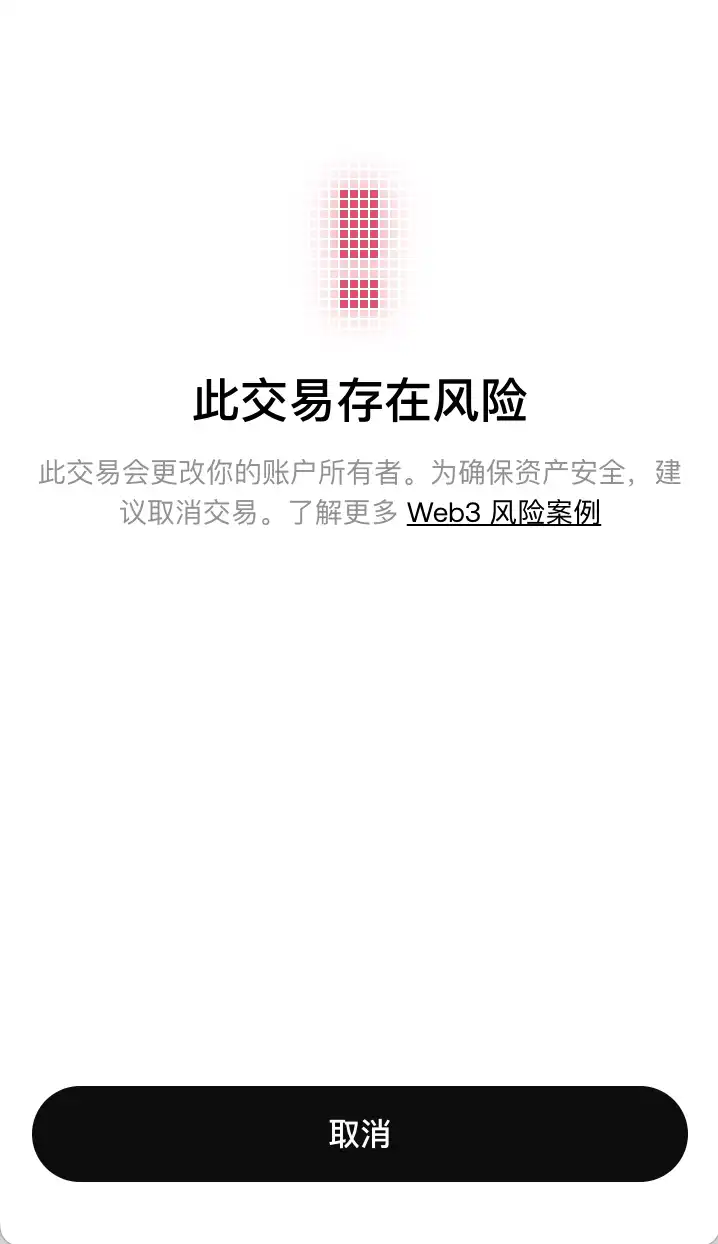
OKX Web3 Monitors Solana Account Owner Change Risks
In addition to the common authorization risk interception mentioned above, the OKX Web3 Wallet will also provide security protection against other potential risk scenarios. For example, when "modifying Calldata to change a transfer operation to an authorization" or "Permit signature authorizing a non-whitelisted DApp" occurs, the wallet will promptly issue a security alert, reminding us to pay attention to potential risks in the operation, ensuring that every authorization step is within a secure and controllable range.
Three, Private Key Protection
In addition to malicious token detection and DApp authorization detection, the OKX Web3 Wallet has carefully designed protective features for private key, mnemonic backup, and export processes. Everyone must remember, security comes first! Especially in private key protection, as most asset theft occurs due to private key and mnemonic leaks. The OKX Web3 Wallet has implemented a very high standard of protection, not even allowing screenshots or screen recordings of private keys and mnemonics, completely avoiding the risk of information leakage. Additionally, it supports private key segmented copying to ensure each step is more secure, leaving hackers no chance. Currently, only the OKX Web3 Wallet supports this feature. These measures are like putting a "security door" on our wallet.
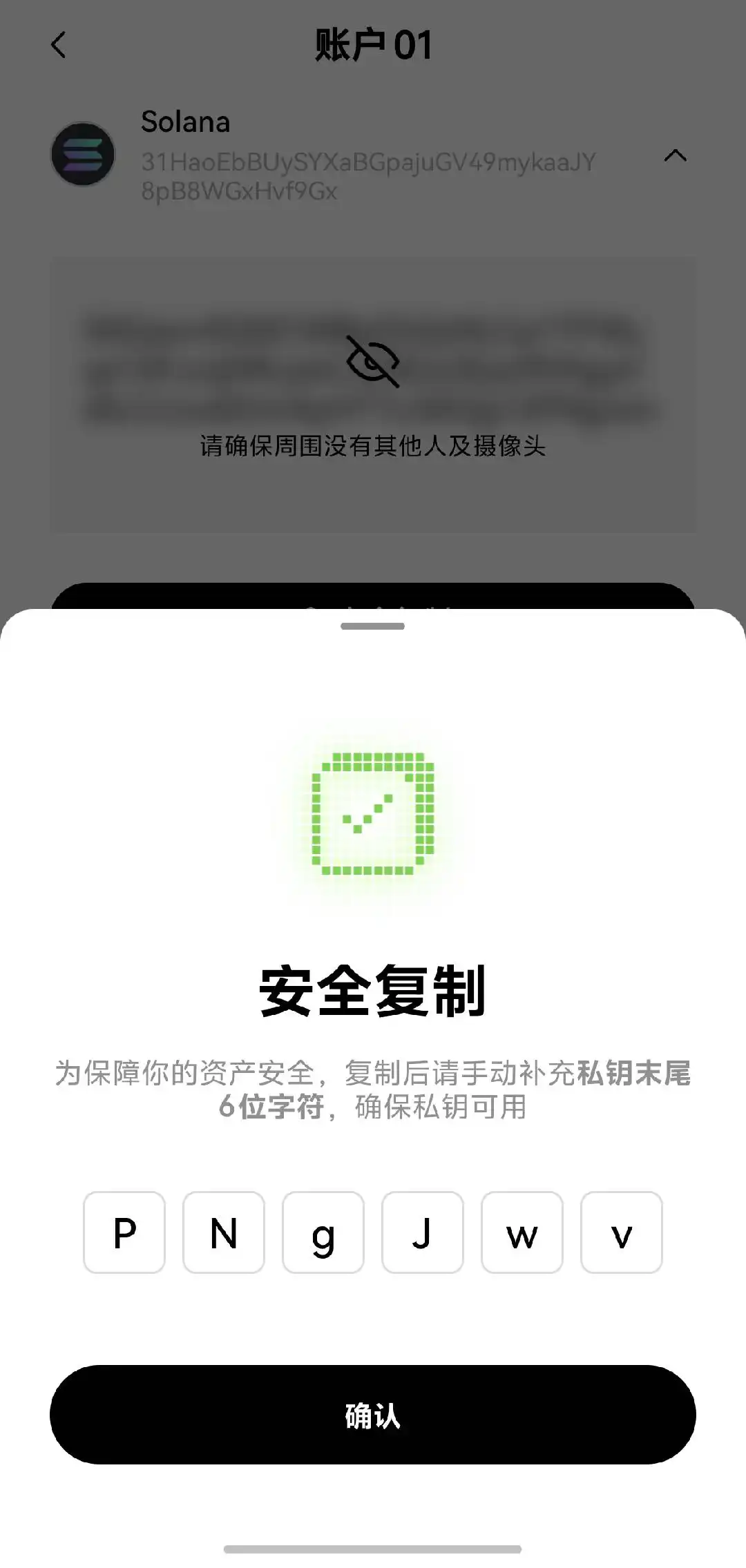
Four, Anti-MEV Sandwich Attack
The sandwich attack is a common arbitrage behavior on decentralized exchanges (DEXs), where attackers take advantage of the transaction visibility on the blockchain to insert two of their transactions before and after a user's transaction, profiting from it. Since transactions on the blockchain are public, attackers can monitor the mempool for unconfirmed transactions. They first send a transaction to raise the price of the target asset (if the victim is a buyer) or lower the price (if the victim is a seller). The victim's transaction proceeds as planned, but because the price has been manipulated by the attacker, they end up buying at a higher price (or selling at a lower price). After the victim's transaction is completed, the attacker sells the previously bought asset to profit. The OKX Wallet has integrated multiple MEV protection providers covering mainstream MEME ecosystem networks to protect users from sandwich attacks.
Five, Choose the Right Tool for Secure Trading
In the world of crypto, security incidents are not scary; what's truly scary is our split-second misjudgment. Every time I use the OKX Web3 wallet, I always feel like it's just a tad quicker than me, able to preempt my recklessness, greed, and negligence, helping me avoid those unnecessary risks.
After a few years of ups and downs in the coin circle, I finally understand what "risk control" is: it's not about eliminating all threats but about making these threats visible, guiding us to choose the right tools and enhancing our security awareness. The OKX Web3 wallet is like a breathable "symbiotic armor"—it doesn't prevent me from touching the flame, but it does repair it the moment my skin burns. Isn't this balance between danger and safety the coolest survival rule in the crypto world?
Only by winning security can we win wealth and freedom.
Disclaimer
This article is for reference only. It represents the author's views and not those of OKX. This article is not intended to provide (i) investment advice or investment recommendations; (ii) an offer or solicitation to buy, sell, or hold digital assets; or (iii) financial, accounting, legal, or tax advice. We do not guarantee the accuracy, completeness, or usefulness of this information. Holding digital assets (including stablecoins and NFTs) involves high risk and may experience significant volatility. You should carefully consider whether trading or holding digital assets is suitable for your financial situation. For your specific circumstances, please consult your legal/tax/investment professionals. You are responsible for understanding and complying with local laws and regulations.
This article is contributed content and does not represent the views of BlockBeats
Welcome to join the official BlockBeats community:
Telegram Subscription Group: https://t.me/theblockbeats
Telegram Discussion Group: https://t.me/BlockBeats_App
Official Twitter Account: https://twitter.com/BlockBeatsAsia

 Related Articles